
This blog originally appeared at CNN Politics.
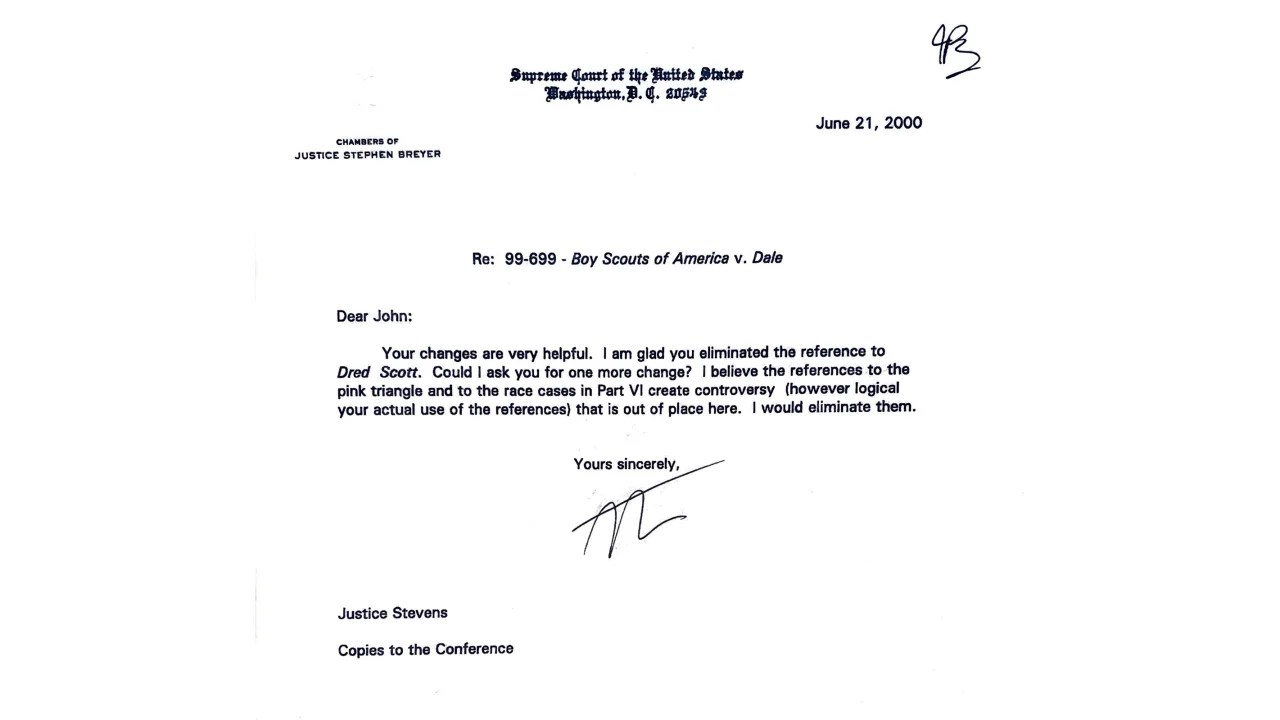
In a historic gay rights case, Supreme Court Justice John Paul Stevens began drafting an impassioned dissent that likened the majority’s decision to Nazi persecution. In a private first draft of his opinion, Stevens made a thought-provoking connection, stating, “What is this but a constitutionally prescribed pink triangle?” The reference to the pink triangle, a symbol forcibly worn by gay prisoners during the Holocaust, aimed to highlight the discriminatory nature of the ruling.
However, the other liberal dissenting justices, including David Souter, Ruth Bader Ginsburg, and Stephen Breyer, expressed reservations about Stevens’ approach. In a series of personal memos, they cautioned that his strong emotions and comparison to Nazi persecution could potentially undermine the persuasive force of their legal arguments. They recognized the importance of presenting a solid legal foundation to support their dissenting views, emphasizing the need to convince their fellow justices and shape public opinion through reasoned analysis rather than inflammatory rhetoric.
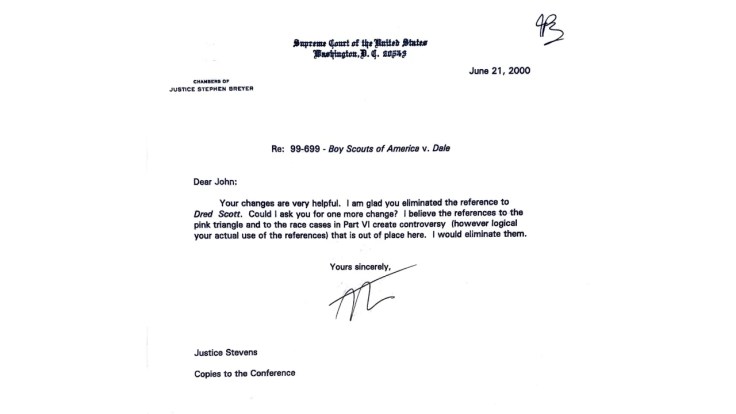
Memo from Justice Stephen Breyer urging the removal of “pink triangle” references from a dissent.
While Stevens’ initial draft underscored the gravity of the case and the deep emotions it evoked, his colleagues’ concerns about maintaining a persuasive legal argument prevailed. Ultimately, the dissenting justices refined their opinions, focusing on the constitutional principles and precedents at stake, aiming to sway both the court and the public through reasoned discourse. This internal dialogue among the liberal justices serves as a testament to the complexity and strategic considerations involved in crafting dissenting opinions that can effectively shape the direction of legal discourse and influence societal perceptions of LGBTQ+ rights.
Were the Boy Scouts discriminating against gay people?
Back in 2000, the Boy Scouts controversy was one of the most contentious of the session. “This case is about the freedom of a voluntary association to choose its own leaders,” the Scouts’ lawyer told the justices during oral arguments. “Boy Scouting is so closely identified with traditional moral values that the phrase, he’s a real Boy Scout, has entered the language.”
 fleeredstates.blog
You must be logged in to post a comment.