
This blog originally appeared at The Washington Post.
GOP state lawmakers in red states engage in an extraordinary crackdown on transgender civil liberties this year
According to an analysis by The Washington Post, this year’s state legislative sessions in the United States have seen a record number of bills targeting LGBTQ rights, particularly transgender rights. These bills have been introduced and passed into law at a higher rate than ever before in U.S. history.
Some notable examples include Iowa’s ban on transgender female athletes from participating in high school and college sports. This law also allows cisgender female athletes to sue school districts if they fail to comply with the ban. Utah has enacted a law prohibiting transgender youth from changing their gender markers on identification cards and birth certificates. Arkansas has granted transgender adults up to 15 years to file a medical malpractice lawsuit against their doctors for gender-affirming care received during their time as minors.
These laws, along with others, are set to take effect in the coming months. In total, at least 29 bills targeting transgender rights have become law in 14 states so far this year, surpassing the previous record of 20 such bills in 12 states from last year. It’s important to note that all these bills have been signed into law by Republican governors or enacted by GOP legislatures overriding vetoes from Democratic governors.
The analysis also reveals that a total of 408 similar bills have been introduced in 45 states this year, compared to 156 bills in 35 states last year, indicating a significant increase in legislative efforts targeting transgender rights.
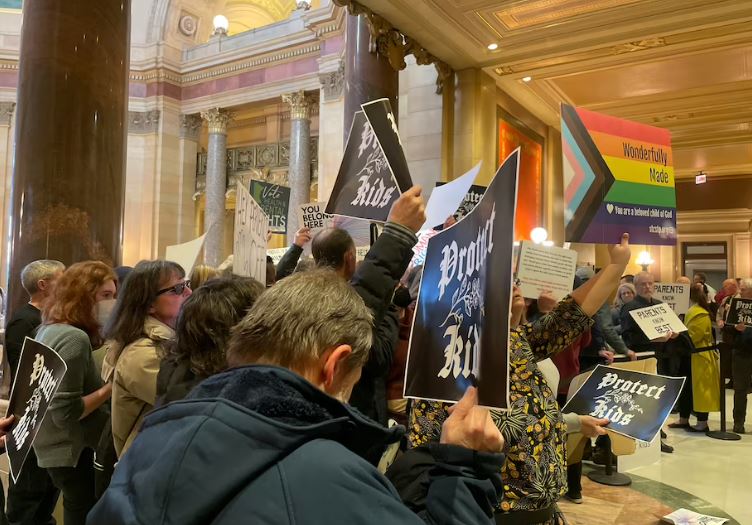
Protesters hold signs as they chant for and against a bill that would make Minnesota a transgender refuge state and strengthen protections for kids and their families who come to the state for gender-affirming care, in March. (Trisha Ahmed/AP)
“LGBTQ people are under fire, unlike possibly ever before and across virtually every aspect of our lives,” said Logan S. Casey, who serves as a senior researcher at Movement Advancement Project, which tracks the legislation. “This is part of a very clear and identifiable national effort in state legislatures that is and has been going on for years — and it’s really culminating this year.”
 fleeredstates.blog
You must be logged in to post a comment.