
This blog originally appeared at CNN US.
A year after the reversal of Roe v. Wade, medical professionals describe a world of uncertainty in the field of reproductive healthcare. The landmark decision, which gave states the right to ban abortion, has led to a patchwork of abortion access across the country, with some states imposing severe restrictions or outright bans on abortion. This has created significant challenges for healthcare providers and patients seeking reproductive care.
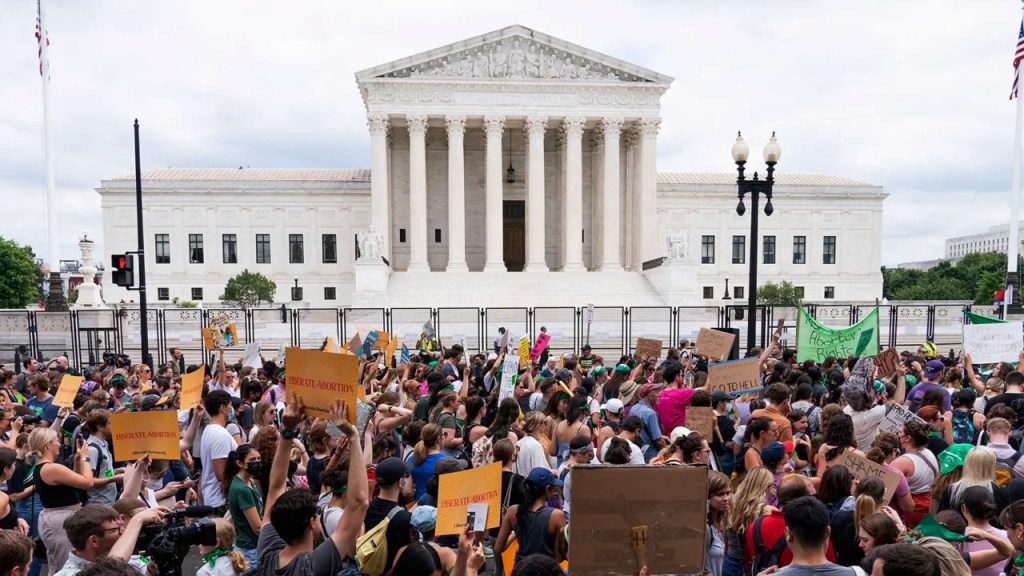
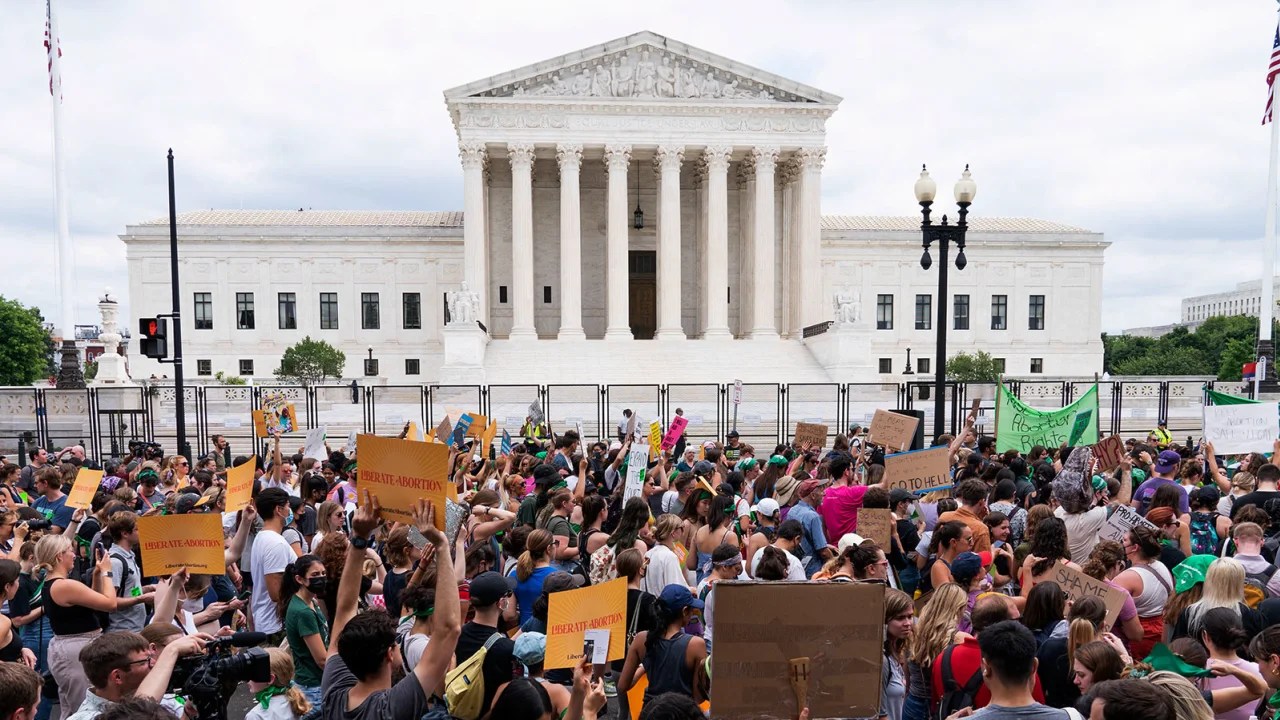
Protesters gather outside the Supreme Court in Washington, Friday, June 24, 2022, following the Supreme Court’s decision to overturn Roe v. Wade.
(CNN)_ It’s been over a year since Roe v. Wade was overturned by the US Supreme Court, eliminating the constitutional right to abortion nationwide. The opinion was one of the most consequential Supreme Court decisions in decades and paved the way for states to pass laws to limit or ban access to the procedure.
Abortion has already become one of the defining issues of the 2024 campaign and is expected to continue to be a key topic as candidates face questions about whether they support banning the procedure on the local and national level.
CNN spoke with doctors and medical professionals who responded to a request for stories about how people’s lives have changed in the wake of the ruling. Those who responded all shared stories of their professional lives being disrupted by abortion bans and severe restrictions — including in Idaho and Arizona.
Some no longer want to practice in states with limitations on the procedure. Others worry about the safety of their patients as more bans loom in the future.
Below we share the stories of three medical professionals who agreed to give us full interviews about their experiences.
Katie A., Michigan
Idaho native Katie A. had plans of returning to her home state to practice as an obstetrician/gynecologist, but after Roe v. Wade was reversed and the state passed a near-total abortion ban, she is unsure of where she will go when she completes her residency in Michigan.
Katie, who asked CNN not to use her full name due to safety concerns, was born and raised in Boise, Idaho, and went to medical school in Washington state to specialize in rural patient care.
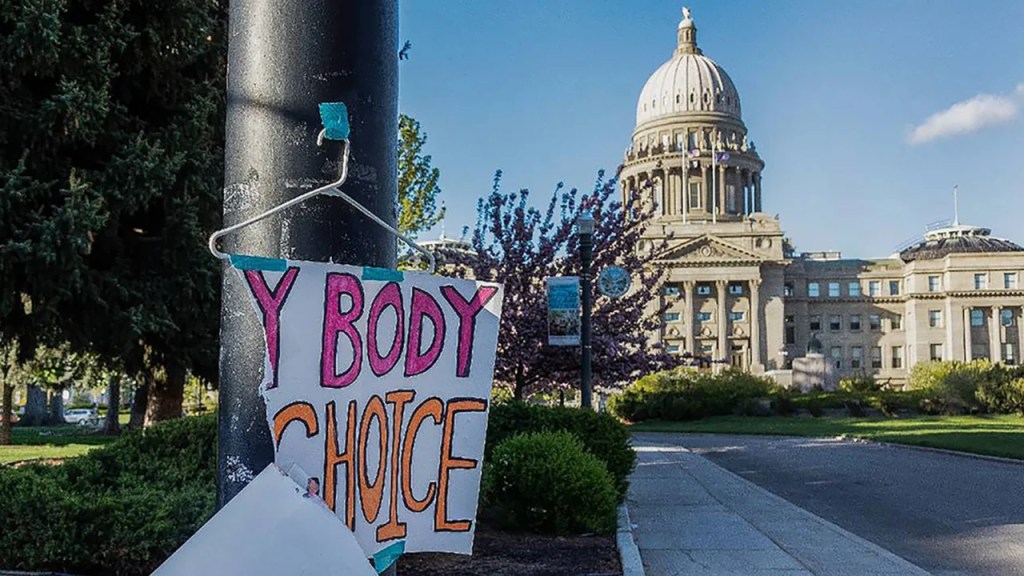
A sign taped to a hanger hangs near the Idaho Capitol in Boise after protests against the state’s new abortion laws, which effectively banned the procedure.
“As I was doing my clinical rotations in Idaho, I could really see myself working with the population there,” she told CNN. “Idaho is a state that for a long time has had a shortage of physicians. There’s a huge centralization of medicine in Idaho, most of the hospitals and specialists are in Boise.” Because of this, Katie said many people outside of the city do not have easy access to care.
The medical resident told CNN that she envisioned making a difference in the state, especially by specializing in gynecological and obstetrics care.
“I was really excited about the idea that I get to move home with this population that I grew up with — I could make a difference,” she said.
When Roe v. Wade was overturned, Katie’s plans to practice in her native state quickly changed as she witnessed the medical landscape transform there.
“I really felt called, like I felt that was where I could still make the most difference and it was really important to me to continue to pursue obstetrics and gynecology — whatever that might look like,” she said.
“But for my safety and for my ability to really treat my patients, I knew as soon as Idaho started passing laws, criminalizing transportation across state lines and all that sort of thing that it would not be a hospitable place for me to practice medicine. And that you know is sort of heartbreaking, right?” the medical resident added.
See where abortions are banned and legal — and where it’s still in limbo
Idaho made abortions illegal last August — with only two exceptions: if the mother’s life is in danger, and in the case of rape or incest, but only after a police report has been filed and provided to the doctor. Since then, doctors who care for pregnant people and perform abortions have been fleeing the state due to new abortion restrictions.
In April, health care providers sued the state’s attorney general after he wrote in a legal opinion that the state’s abortion ban prohibits medical providers from referring patients out-of-state for abortion services. Gov. Brad Little, a Republican, also approved legislation that makes it much harder for minors in the state to obtain out-of-state abortions without parental consent. The law creates an “abortion trafficking” crime that makes it illegal for adults in the state to assist a minor with obtaining an abortion without informing the pregnant person’s parents or guardians.
Katie hopes that once she finishes her residency in four years, the situation will have evolved, helping her to more easily decide where she could eventually practice.
“I think wherever I practice; it might be Michigan, it might be Washington — I don’t know, it could be anywhere — will really depend on what local politics are and what protections are in place for physicians and patients,” she told CNN.
For the time being, she feels a sense of relief for matching with a program in a state without restrictive abortion laws.
Katie’s decision is on trend with new data which suggests that these restrictions are having an impact on where — and what — future doctors plan to practice.
The number of medical school seniors who applied to residency training programs went down by nearly 2% last year, and applications to programs in states with abortion bans dropped the most, dipping by 3%, according to an analysis in April from the Association of American Medical Colleges.
Interest in the Ob-Gyn specialty took a notable dip, according to the analysis, with applications dropping 5% nationwide and twice as much in states where abortion is banned.
click here to see full blog: https://edition.cnn.com/2023/07/23/us/doctors-reactions-roe-v-wade-reversal/index.html
 fleeredstates.blog
You must be logged in to post a comment.