

This blog originally appeared at BBC News.
Ohio has rejected a Republican motion to make it harder to change the state’s constitution – a move seen as a defeat for anti-abortion groups.
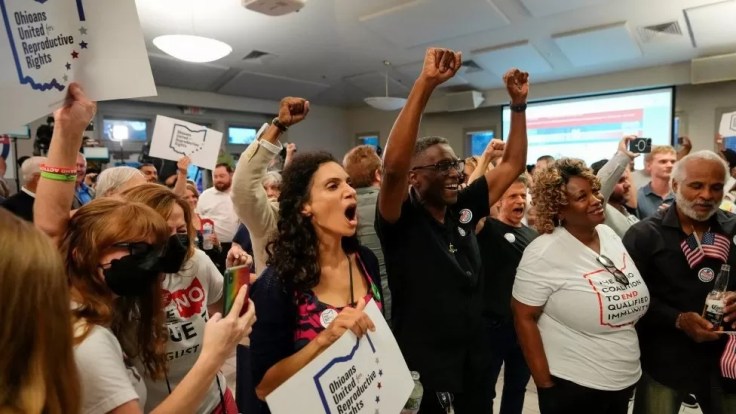
The Republican-controlled state legislature had hoped to raise the bar for constitutional amendments to 60% instead of a simple majority.
It was largely seen as a move to derail a planned referendum to place abortion rights into the constitution.
President Joe Biden called it a victory for democracy and for women.
The Republican-backed move was a “blatant attempt to weaken voters’ voices and further erode the freedom of women to make their own health care decisions”, Mr Biden said.
When the US Supreme Court ended the nationwide right of women to have an abortion a year ago, a ban on the procedure after six weeks of pregnancy came into effect in Ohio – although it is currently on hold following a legal challenge.
Pro-choice groups in Ohio are planning on using November’s elections to reverse this, by getting the right to have an abortion enshrined into the midwestern state’s constitution.
The measure being voted on, called Issue 1, was rejected by a margin of 57% to 43% with nearly all voting precincts tallied by Wednesday morning.
A campaign group One Person, One Vote told Politico in a statement that Issue 1 was a “deceptive power grab designed to silence” the voice of voters.

Ohio Democratic Party Chair Liz Walters told the Columbus Dispatch that the result is “a victory for the kind of state we want to see”.
More than 600,000 submitted early ballots on the issue – a historically high turnout for August elections in the state.
So was the vote on Issue 1 about protecting the constitution, as its supporters claim, or was it really about abortion?
What is Issue 1?
Issue 1 was the only question on the ballot in Ohio’s 8 August special election.
If passed, it would have changed the threshold for approving amendments from 50% to 60%. And Issue 1 would have also made it harder to put amendments before voters in the first place, asking petitioners to gather signatures from 5% of eligible voters in each of Ohio’s 88 counties, instead of the current 44.
In the 111 years since Ohio first granted voters the power to introduce citizen-led amendments, just 19 of 71 proposed measures have passed the 50% benchmark.
click here to see full blog: https://www.bbc.com/news/world-us-canada-66442370
 fleeredstates.blog
You must be logged in to post a comment.