
This blog originally appeared at EuroNews.
A village in Sardinia opens its doors to its first digital nomad as part of a program that provides rent-free accommodation to remote workers.
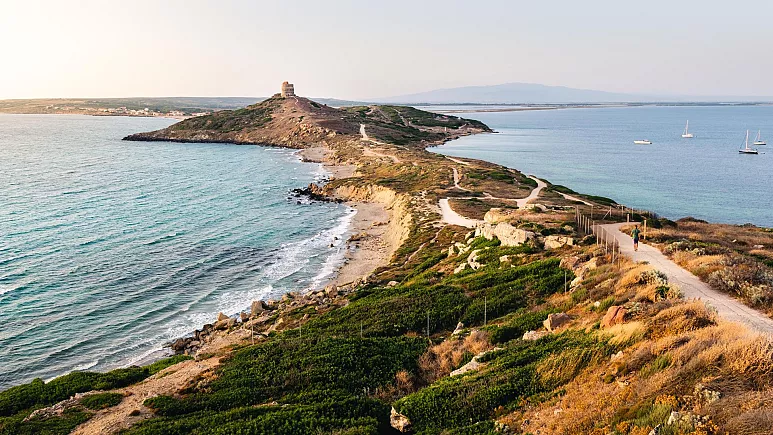
Interested in working from a location so picturesque it could outshine even the scenes on chocolate boxes?
Your dreams can come true as you settle into a charming setting with rolling hills and charming terracotta rooftops, all without paying rent for three months. This opportunity is thanks to a fresh initiative in Sardinia.
The inaugural beneficiary of this offer is Clarese Partis, a 39-year-old software designer hailing from Los Angeles.
Eager to evade the hustle and bustle and embrace a more off-the-grid lifestyle, she hopped on a flight from the US, touching down on the island last week. She has now settled into her new abode in the quaint village of Ollolai.
“I felt I needed a change of place,” she explains.
“Not a touristy one” Partis insists but one “surrounded by nature, fresh air, mountains, beautiful beaches, where I could find more solace, peace and a slower-paced lifestyle.”
This is a desire that many employees have been yearning for since the onset of the COVID-19 pandemic. As a result, accommodations and travel packages catering to digital nomads have been working tirelessly to meet this surging demand.
Situated in central Sardinia, Ollolai is a world apart from the country’s well-frequented and frequently overcrowded coastlines. It serves as a kind of time capsule, preserving Italy’s cultural heritage, which is still very much alive. This cultural richness is clearly evident in the way of life that thrives in the village.
“I love going to the farmers’ market to pick fresh ingredients such as truffles, making pasta and gnocchi with pesto,” Partis says. “The food is amazing.”
Why is Ollolai offering digital nomads a free stay?
While Ollolai is undeniably beautiful and a tourist attraction, its population has been steadily declining. Over the past century, it has decreased from 2,250 residents to just 1,300. This issue is part of a larger demographic challenge that Italy has been grappling with for some time, which they have classified as a national emergency. In 2022, Italy experienced historically low population growth.
Italy has been making efforts to attract visitors, both for short-term and long-term stays. One of their initiatives, known as the ‘buy a house for €1’ program, has successfully drawn residents from various parts of the world. Ollolai also joined this initiative with the hope that foreigners would invest in renovating its historic district.
“That was a major success – many foreigners bought and restyled dozens of forsaken dwellings,” Mayor Francesco Columbu told CNBC.
Columbu is now backing his vision with concrete actions. Through the ‘Work from Ollolai’ program, he intends to develop the village into a digital nomad hub, allocating €20,000 euros for this purpose. In the coming two years, Ollolai will welcome individual remote workers for stays of up to three months each (the maximum duration for non-European visitors without a visa). Aspiring digital nomads must submit their applications online before December’s end.
What is the accommodation like for digital nomads in Sardinia?
For those enticed by the idea of immersing themselves in local culture, Ollolai provides an ideal setting. Prospective residents in Ollolai will inhabit homes that once served as dwellings for farmers and shepherds, who shared their living spaces with animals and slept on the floor. Now, these same spaces are equipped with office setups and high-speed internet connections.
As the sole nomad in the vicinity, socializing becomes effortless. The local community is enthusiastic about welcoming visitors, extending invitations to partake in regional fairs and festivals.
“Locals are so warm and welcoming,” Partis says, “and it’s not because they want to sell you something, like in touristy places.”
The municipality covers expenses such as rent, utilities, bills, and service taxes for the nomads, but transportation costs are not included.
Not quite a free stay
There’s a minor condition, if you can even call it that.
“This is not a free holiday,” said Veronica Matta, head of local cultural association Sa Mata.
“[Workers] must have a proven background as a digital nomad and leave a concrete piece of work at the end of their stay – be it a conference, an essay, research paper or documentary.”
She stressed that “professional remote workers from all fields are encouraged to apply: technology, media, finance, real estate, architecture — also artists, writers, musicians, scientists and academics.”
Everyone is welcome as long as they are open to the reciprocal agreement, agreeing to leave behind a “knowledge jolt” that enriches the village culture.
 fleeredstates.blog
You must be logged in to post a comment.