
This blog originally appeared at Houston Landing.
The Katy Independent School District’s choice to disclose information about transgender students to their parents is not just what an attorney labeled as “bullying in the guise of policy” — it also contravenes the code of ethics established by the Texas Education Agency.
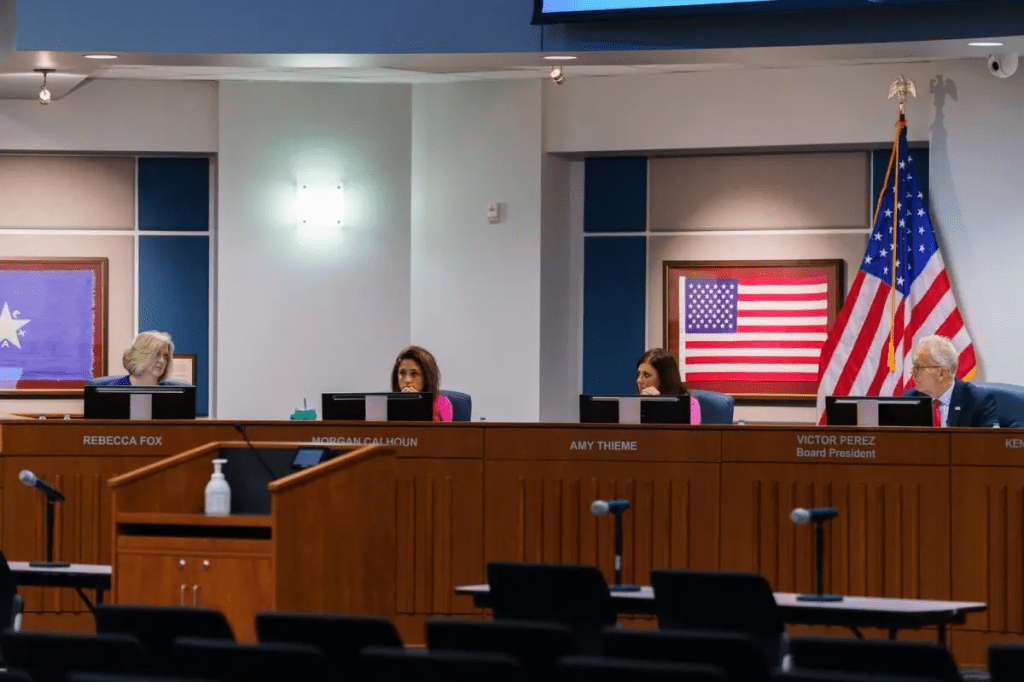
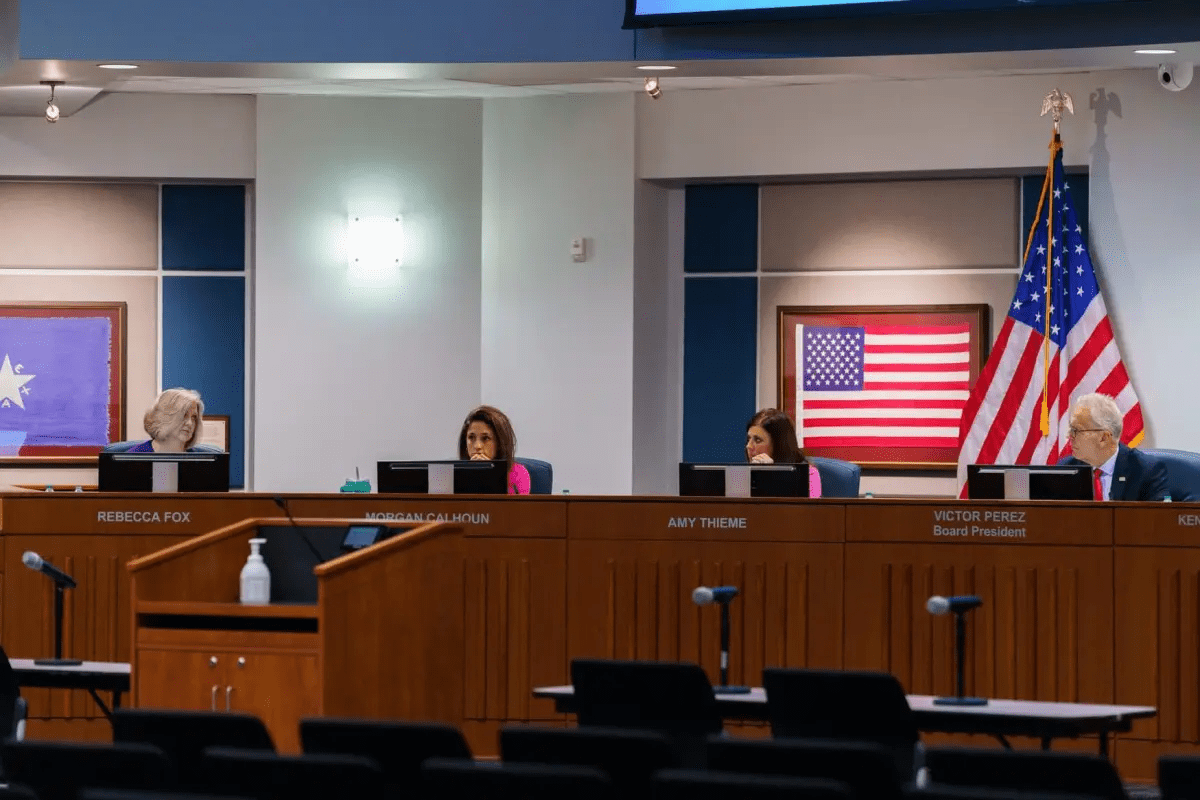
In the previous week, Miranda Dunlap, my colleague at Houston Landing, reported that Katy ISD had contacted the parents of 19 students, notifying them that their child identifies as transgender or has expressed a desire to be addressed by a different name or pronouns at school. This figure, obtained by Dunlap through a public records request, averages about two children per week since August when the school board initially approved its policy mandating staff to inform parents in such instances.
As the school year unfolds, it’s probable that the tally will rise, causing more harm to these students. Some of them may have been exposed to families that might not affirm their identities.
“This policy, in particular, has a distinct and really dangerous set of harms,” says Chloe Kempf, an attorney at the American Civil Liberties Union of Texas. “We know that outing children against their will places them at risk of rejection, abuse in the home, and places them at an elevated risk of homelessness.”
This is not just rhetoric; it’s a factual statement. Approximately 12.5 percent of individuals aged 18 to 25 report experiencing homelessness at some point in their lives. However, the rate for transgender adults in the same age group is nearly twice as high, standing at 23.5 percent.
Another fact: People who experience homelessness at younger ages are more likely to be chronically homeless throughout their lives.
Would you like another example? The Trevor Project, a suicide-prevention nonprofit for LGBTQ+ youth, reveals that LGBTQ+ youth facing housing instability and homelessness are over twice as likely to report depression and almost four times as likely to attempt suicide compared to those without housing instability.
In summary, disclosing a child’s transgender identity to their family can trigger a series of irreversible harms. According to Kempf, this constitutes a violation of the Texas Education Agency’s code of ethics, which mandates that an educator “shall not intentionally, knowingly, or recklessly treat a student or minor in a manner that adversely affects or endangers the learning, physical health, mental health, or safety of the student or minor.”
Moreover, Kempf emphasizes that “outing a student against their will unfortunately does all of those things.”
The TEA has not provided a response regarding how Katy ISD’s actions align with the agency’s policies, and Katy ISD’s spokesman, Craig Eichhorn, has not responded to my messages.
This silence is telling.
I queried Kempf about the potential that perhaps most of these students’ parents were already aware of their child’s identity. Could it be that the district did not breach TEA policy, as all 19 families might, in theory, be supportive.
The Trevor Project reports that 57 percent of parents would be accepting if their child came out as transgender or nonbinary. While this figure is higher than anticipated, it still means that over 40 percent of parents might not be comfortable.
“Logistically, I don’t see how it’s possible for the school district to be able to know with the required level of certainty that outing a student will not lead to abuse or neglect or other forms of harm in the home,” Kempf remarks. “There’s just no way of knowing that in advance of making a disclosure like this, which is why we believe that the policy as written is in violation of the law, no matter how it’s enforced.”
Indeed, the law. The ACLU argues that compelling the disclosure of a child’s gender identity to their parents violates the students’ privacy rights.
“It’s a risk, coming out to anybody,” says Carrie Rai, Executive Director of Tony’s Place, a nonprofit supporting LGBTQ+ youth in Montrose. “They come out in their trusted safe space, and I can’t tell you what that safe space is to an individual because it’s different for each person. And it should be that individual’s choice.”
Tony’s Place serves as a “safe haven” for LGBTQ+ youth under 25, offering resources like meals, laundry, gender-affirming clothing, showers, and case management. Rai notes that most of the youth they assist are homeless or living in unstable or unsafe conditions, and “family rejection is the number one reason” these youth end up without a safe and stable home.
It’s not immediately evident if Katy ISD is the first Texas school district to compel the outing of students. With over 1,200 districts in Texas, the ACLU can’t confirm such a claim. However, they are certain it’s the state’s largest district to take such action. The same week Katy ISD enacted its policy, California’s attorney general sued a school district near Los Angeles, seeking to prevent the district from enforcing a similar policy.
This scenario is unlikely to unfold in Texas, where the state’s leadership has shown considerable hostility toward transgender youth. In recent years, the state legislature has restricted life-saving, gender-affirming healthcare options for transgender youth and limited their participation in sports. Simultaneously, a wave of book bans has removed representative stories from school libraries, including in Katy.
“This is essentially bullying posing as policy – targeting an already marginalized group of young people in the state and making their lives even more challenging,” states Kempf. “Every aspect of life for these kids, being a student, being a healthy and successful student, is essentially under attack.”
The act of outing these kids is just the latest cruel step in a series of forced hardships. The fact that this happened to 19 children violates more than just ethics codes and laws; it violates a fundamental human code of what it means to be good and decent. Even if Katy ISD had sent home just one notification in the past two months, that would have been one too many.
 fleeredstates.blog
You must be logged in to post a comment.