
This blog was originally appeared at The New York Times.
Lubbock County, situated near the New Mexico border and home to over 300,000 residents, has now joined three other Texas counties in prohibiting travel assistance for abortions, marking the largest county in the state to implement such restrictions.
In the past few months, anti-abortion activists in Texas have achieved success in establishing numerous local regulations aimed at preventing individuals from assisting women in traveling to neighboring states where abortion is still permitted.
On Monday, Lubbock County, a conservative stronghold with over 300,000 residents near the New Mexico border, became the most populous county to implement such a ban. In a public meeting marked by occasionally impassioned testimony, the county commissioners court voted to criminalize the transportation of a pregnant woman through the county, or funding her travel, with the intent of obtaining an abortion.
The county, encompassing Lubbock city and Texas Tech University, has now aligned with three smaller counties — one along the New Mexico border and two centrally located — in enacting ordinances influenced, in part, by the architect of Texas’s six-week abortion ban implemented in 2021, preceding the U.S. Supreme Court’s overturning of Roe v. Wade last year.
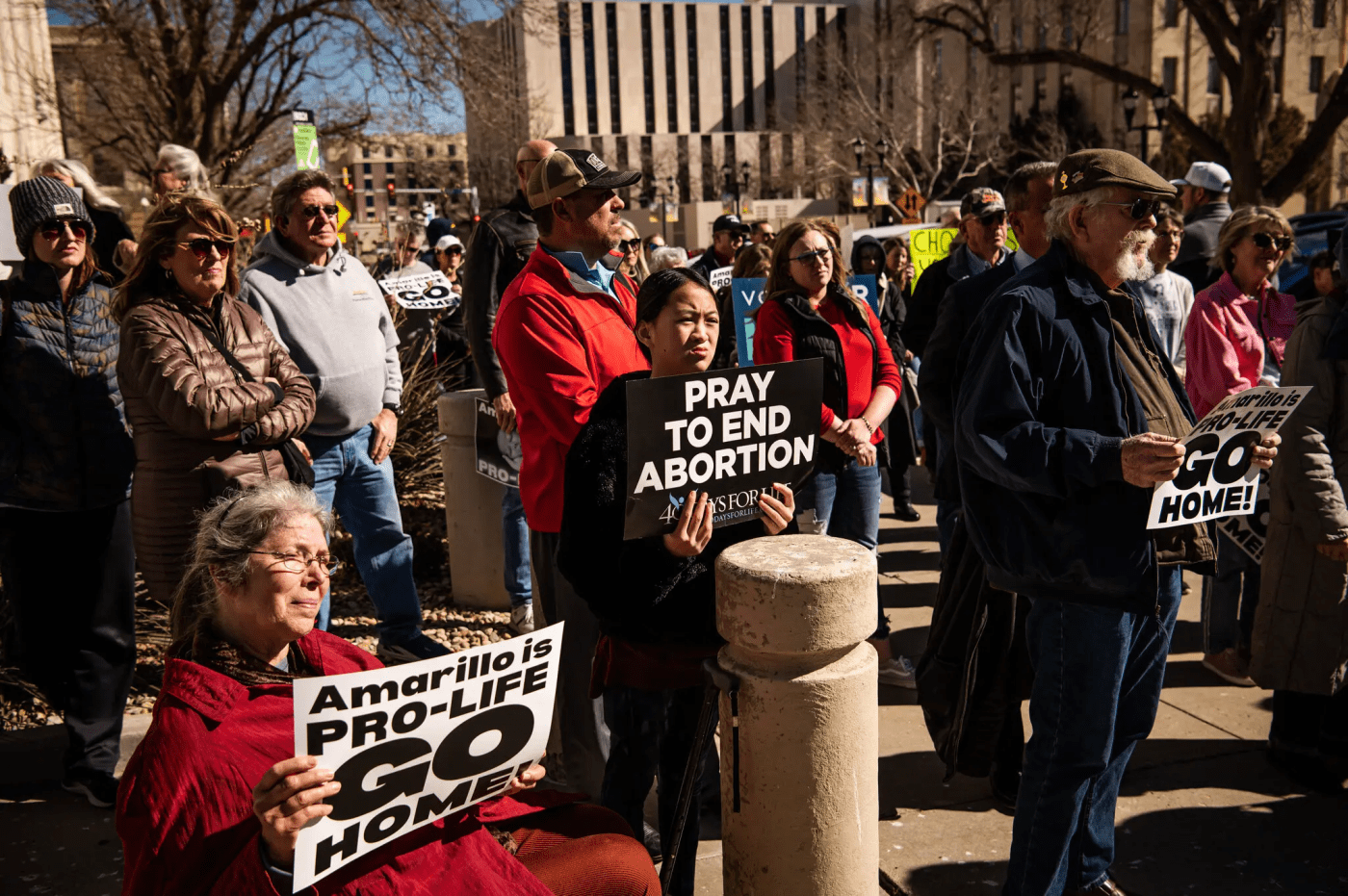
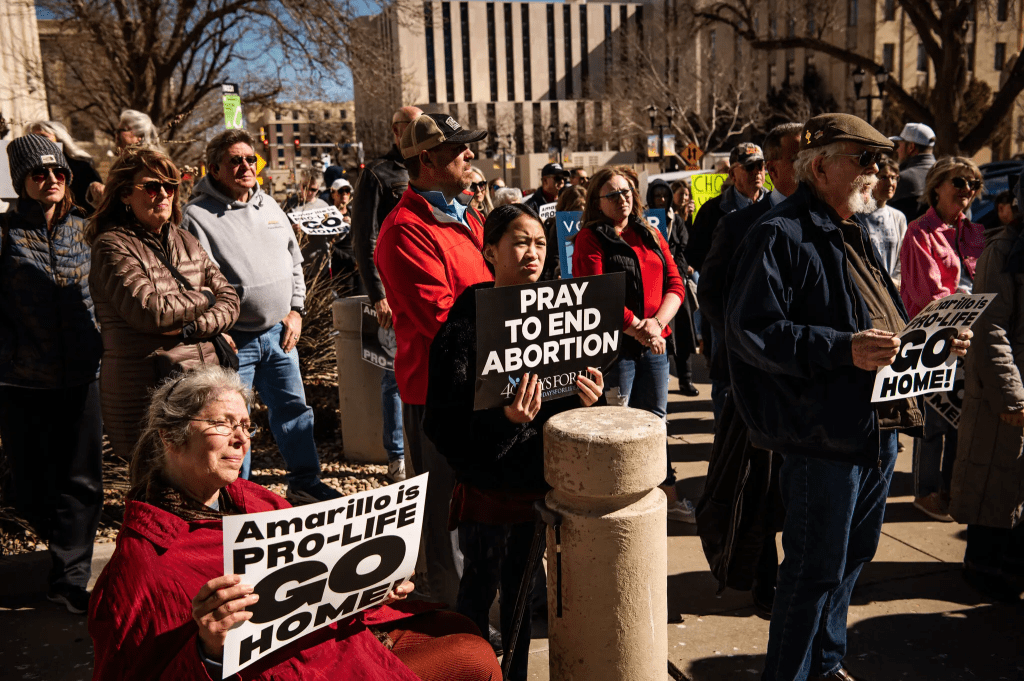
Amarillo, situated in the Texas Panhandle, conducted an extensive public hearing on Tuesday to deliberate a similar ordinance. This proposal would impact a network of roads and highways traversing the city of 200,000, leading toward New Mexico and Colorado, popular destinations for Texas women seeking reproductive procedures.
“These ordinances against abortion trafficking are the next step towards achieving an abortion-free America,” stated Mark Lee Dickson, an anti-abortion activist supporting these measures across the state. He anticipates several more counties adopting similar ordinances in the coming months.
Crafted by Mr. Dickson and Jonathan F. Mitchell, the former solicitor general of Texas responsible for the state’s 2021 abortion ban, these ordinances employ the same enforcement mechanism: lawsuits initiated by private citizens. Notably, they explicitly prohibit law enforcement or county officials from enforcing the ban, strategically avoiding immediate legal challenges and potential injunctions.
In practical terms, someone must become aware of an individual aiding a pregnant woman in traveling out of state for a procedure to initiate legal action. Similar to the six-week abortion ban, these ordinances are expected to have a chilling effect, although they might attract few cases.
Some legal scholars argue that these ordinances could potentially violate constitutional protections. Jeffrey B. Abramson, emeritus professor of government and law at the University of Texas at Austin, pointed out that even Justice Kavanaugh, in his concurring opinion in the Dobbs decision overturning Roe v. Wade, acknowledged that a state would infringe upon the constitutional right to interstate travel by attempting to prohibit women from traveling out of state for a lawful abortion.
Mr. Dickson argued that the ordinances are enforceable because they pertain to individuals providing assistance to a pregnant woman with travel, encompassing financial support, while not prohibiting a woman from driving herself or using alternative means of travel.
“We don’t see this as a travel ban,” he emphasized. “We see this as a prohibition on abortion trafficking.”
Planned Parenthood of Greater Texas expressed dissatisfaction with the ordinances, with spokeswoman Autumn Keiser deeming them “unnecessary, confusing, and fear-inducing barriers to essential health care” in a statement.
The Texas branches of Planned Parenthood, having ceased abortion services in the state, are contending with a lawsuit filed by Texas Attorney General Ken Paxton. The lawsuit alleges Medicaid program fraud and is slated for trial, as ruled by Matthew J. Kacsmaryk, a federal judge appointed by Donald Trump, on Monday. Texas is seeking nearly $2 billion in damages.
The adoption of the travel ordinance by Lubbock County commissioners in a 3 to 0 vote was expected. In 2021, voters in the city of Lubbock endorsed an abortion ban shortly before the statewide six-week prohibition took effect. On Monday, numerous residents expressed support for the measure, often citing religious reasons.
“I come to this from God’s side,” said Tonya Gilliam, recounting an abortion she had nearly 50 years ago. “This is very dear to God. Life is everything.”
Other women expressed opposition to the ordinance, supporting abortion rights. Charlotte Dunham, who couldn’t attend due to work, stated, “There are thousands of people out there who believe that a woman’s body is her decision.”
County Judge Curtis Parrish, while not opposing the intent, abstained, citing legal concerns with the ordinance as written.
Mr. Parrish questioned the ordinance’s impact, noting its limitation to unincorporated areas, excluding the city of Lubbock. He highlighted the possibility of driving a pregnant woman to the airport in Lubbock for an abortion, not violating the law.
Commissioner Gilbert Flores, 77, abstained, grappling with the authority to dictate women’s choices. “I have a difficult time with that,” he expressed, reflecting on past experiences of having his own rights violated.
Commissioner Terence Kovar, aligning with his anti-abortion stance and constituent sentiments, justified the ordinance vote. Drawing from his experience at a crisis pregnancy center, he suggested that local assistance might influence mothers facing difficult decisions, potentially leading them to choose alternatives closer to home rather than traveling to New Mexico.
 fleeredstates.blog
You must be logged in to post a comment.