
This blog originally appeared at BUSSINESS INSIDER.
From Red to Blue: A Journey of Political Realization and Healthcare Struggles in Texas, Leading to a Return to Oregon
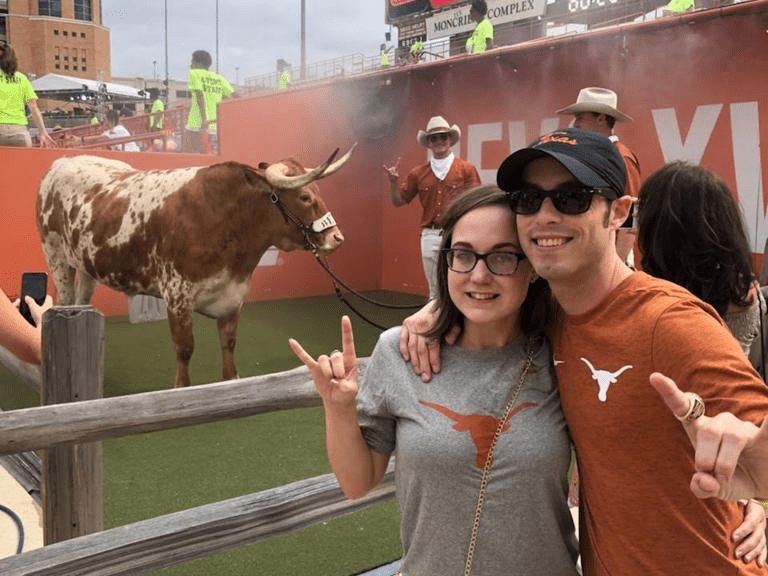
Jules Rogers relocated to Houston for employment but departed due to disagreements with the local political landscape, particularly concerning relaxed gun regulations and restrictive laws governing women’s healthcare decisions. Additionally, factors such as transportation expenses, adverse weather conditions, and complexities in the voting process further influenced her decision to leave.
Although I was born in Houston, I spent my formative years in Portland, Oregon. In 2018, I returned to Texas as an adult to take a job at a local newspaper. While Houston offered a lower cost of living and proximity to family, the reality didn’t quite match the nostalgic memories of visiting Grandma for Christmas. After encountering several eye-opening experiences that clashed with my envisioned quality of life, I made the decision to leave approximately two years later.
I became aware of an issue with a local school district that I couldn’t believe
A concerned parent contacted my newsroom to report that her child’s school district was segregating students learning English as a second language, placing them in a building across a major highway from the school.
Initially skeptical, I reached out to the school district for clarification and was dismayed to discover that the reports were indeed accurate. I found the situation deeply unjust. Although my paper published the story I wrote, it received limited readership.
This incident was just one of many experiences I encountered as a journalist in a predominantly conservative city. These stories, unlike my previous work in Oregon, challenged me to maintain objectivity and separate my personal convictions from my professional duties.
Gun laws were loosened
In September 2019, the state’s gun laws underwent revisions by the local legislature, which were perceived as regressive. HB 1143 granted licensed gun holders the authority to store firearms, handguns, and ammunition in locked cars within school-campus parking lots. Additionally, the legislation removed the prohibition of guns from large religious gathering areas such as churches and synagogues.
I hold the belief that increasing the presence of firearms does not contribute to safer environments in the face of shootings. Many other countries implement policies aimed at tightening gun regulations, suggesting opportunities for improvement in our approach to gun control.
The voting process was outdated
For the first time since I began casting my ballots by mail in Oregon, I voted in person. In Texas, voting by mail is restricted to those over 65, individuals who are ill or disabled, incarcerated, or meeting specific criteria.
Although my white-collar company provided a day off for voting, which was considered a perk, I realized that many shift workers likely did not enjoy this privilege. Standing in a physical line for hours, I was surprised to find that “materials,” including my newspaper with annotated campaign officials and bill details, were prohibited upon reaching the front of the room.
Contrasting my voting experience in Portland, where I have ample time to research each item before marking my ballot and receive text notifications at each processing step, the voting machines I encountered in Houston felt outdated, and I received no form of receipt.
I didn’t feel in control of my own body
During my time living in Texas, the state’s abortion restrictions were intensifying, culminating in the overturning of Roe v. Wade. This mirrored Texas’ stringent approach to cannabis, in stark contrast to Oregon’s decriminalization policies, with many individuals fervently supporting abortion bans.
One Saturday evening in Texas, I attended a Right to Life dinner at the invitation of a City Council member, unaware of the atmosphere I would encounter. A talented teenage student delivered a meticulously rehearsed speech, painting a picture of aborted embryos or fetuses potentially becoming astronauts, presidents, or cancer-curing doctors. Despite her youth, I couldn’t help but wish for her to aspire to those achievements herself.
Every individual should have the autonomy to safeguard their body, boundaries, and home. Yet, in Texas, I felt vulnerable amidst the politicization surrounding my reproductive rights. The prospect of a pregnant woman in Texas being denied care for conditions as severe as sepsis unless her life is directly threatened, subjected to the judgment of a board, was daunting. These were odds I couldn’t reconcile with, even as someone not desiring children, ultimately contributing to my decision to leave Texas prior to the abortion ban implementation.
I knew when it was time for me to go
In addition to the political-environment mismatch, other reasons contributed to my move.
I lived in a suburb of Houston and traveled on highways daily. I didn’t like the high transportation costs, including toll roads and all the gas needed to make my commute.
The extreme weather, which included hurricanes, major lightning storms, hail, and smoggy air, was also not aligned with the quality of life I desired.
I loved the radio stations, the Tex-Mex, and the barbecue — and I was earning more money — but I knew when it was time to go. It’s more expensive, but I’m happier in Portland.
 fleeredstates.blog
You must be logged in to post a comment.