
This blog originally appeared at ADVOCATE.
LGBTQ+ Americans and registered voters in general want politicians to work more on the economy and climate and less on restricting the rights of women and trans people.
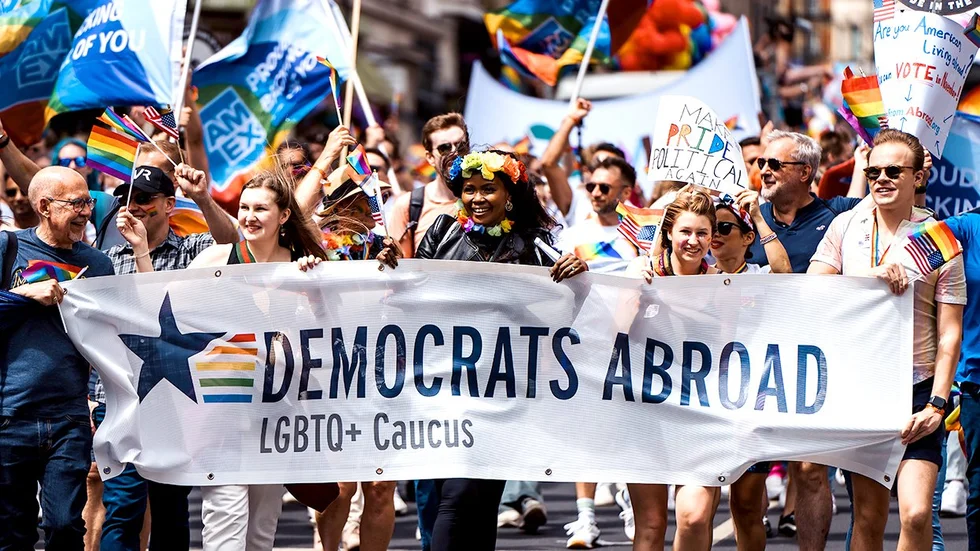
A recent poll conducted by Pathfinder Opinion Research for GLAAD suggests that restrictions on transgender rights and women’s rights are unpopular even among swing voters and supporters of Donald Trump. Notably, the survey also reveals that LGBTQ+ voters exhibit high levels of motivation to participate in the upcoming election, with a strong preference for President Joe Biden. These findings, released on Thursday, stem from a national survey of registered voters carried out in late January, along with interviews specifically targeting LGBTQ+ voters.
Highlighted in a GLAAD press release, the poll underscores that a majority of all voters express opposition to candidates who frequently advocate for limiting access to healthcare and youth sports participation for transgender youth. Moreover, a resounding 81% of respondents believe that healthcare decisions for youth should be determined by parents. Regardless of their political affiliation, whether LGBTQ, registered voters, Trump supporters, or swing voters, respondents unanimously agree that politicians should prioritize addressing inflation, job creation, and healthcare costs over restrictions on women’s rights and medical care for transgender youth.
Among LGBTQ+ registered voters, 83 percent expressed certainty in voting in November, with an additional 11 percent indicating a strong likelihood of doing so. Nationally, 68 percent of LGBTQ+ likely voters favored Biden, contrasting starkly with the 15 percent in favor of Trump. This disparity was even more pronounced in swing states, where 72 percent showed support for Biden compared to only 15 percent for Trump.
Nationwide, LGBTQ+ likely voters overwhelmingly leaned towards Democratic congressional candidates, with a substantial 77 percent in favor compared to a mere 14 percent for Republicans. Similarly, in crucial U.S. Senate races, 79 percent of these voters expressed their intent to support Democrats, while only 12 percent leaned towards Republicans.
Echoing broader voter sentiments, LGBTQ+ voters emphasized economic issues as significant priorities, particularly highlighting concerns regarding inflation and job creation. Additionally, issues such as abortion rights and climate change also featured prominently on their list of priorities.
Key motivations for LGBTQ+ voters included concerns about the nation veering towards a more conservative path, potentially resulting in the appointment of further right-wing Supreme Court justices, increased restrictions on abortion and parental rights regarding transgender children, and renewed efforts to outlaw same-sex marriage.
Moreover, a summary of the findings reveals that LGBTQ+ voters highlighted significant adverse effects on their emotional well-being and personal safety stemming from the current political climate. A majority reported experiencing negative impacts on their mental health and emotional well-being, strained personal relationships, and fears for their own or their family’s safety due to the prevailing state of political discourse in the country. Additionally, nearly half reported experiencing real-world or online harassment and bullying related to politics on a regular basis.
The summary emphasizes that these factors have LGBTQ+ voters poised to participate actively in the upcoming November elections, rallying behind candidates dedicated to protecting their rights, ensuring their safety, and addressing their economic concerns.
GLAAD President and CEO Sarah Kate Ellis highlighted the significance of LGBTQ+ Americans’ readiness to influence electoral politics and advocate for equality through their voting power. She stressed that the majority of voters, regardless of orientation, reject harmful anti-LGBTQ rhetoric and prioritize pressing national issues such as inflation, abortion rights, and climate change. Ellis urged candidates, parties, strategists, and reporters to recognize the influence of the LGBTQ vote and the critical issues that demand attention, including fundamental freedoms and collective safety and well-being.
 fleeredstates.blog
You must be logged in to post a comment.