
This blog originally appeared at BBC.
Anti-abortion activists are strategizing a covert approach aimed at potentially enacting a nationwide ban on abortion in the United States. Their backdoor strategy poses significant implications for reproductive rights and legal precedents, prompting heightened scrutiny and debate over the future of abortion access in the country
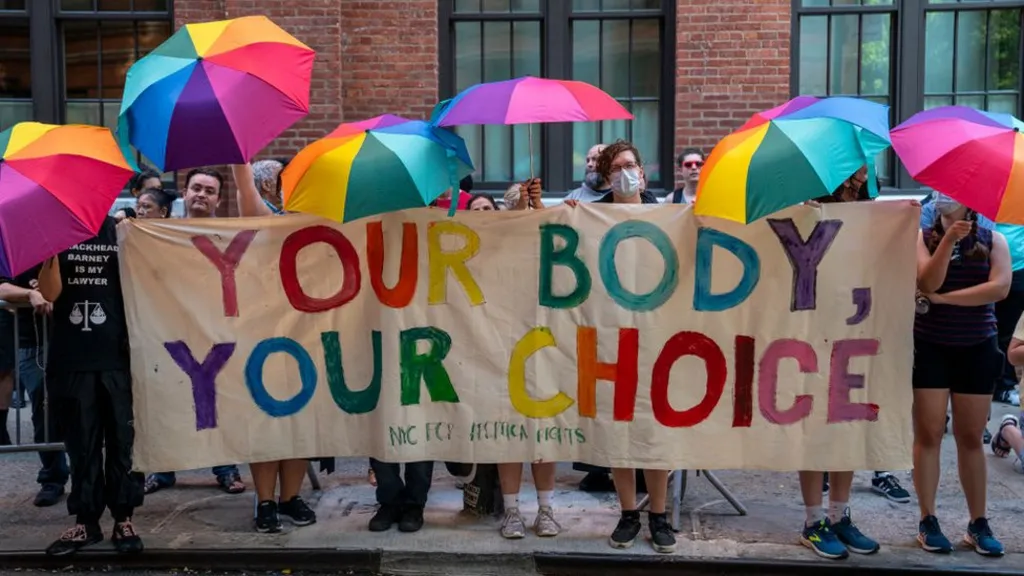
Anti-abortion activists in the United States, including allies of former President Donald Trump, are pursuing a strategy to institute a nationwide abortion ban. This plan circumvents Congressional approval and public opinion, relying instead on Mr. Trump’s potential re-election in November and the utilization of an obscure 19th-century law.
During this year’s annual “Pro-Life Summit” held on January 20th, attendees were treated to a keynote address delivered by Marjorie Dannenfelser, the head of Susan B. Anthony Pro-Life America, one of the nation’s most influential anti-abortion organizations.
Ms. Dannenfelser is widely recognized for persuading Donald Trump to nominate three anti-abortion justices to the Supreme Court during his presidency. In June 2022, these appointees played a pivotal role in overturning Roe v. Wade, effectively revoking the nationwide right to abortion.
The overturning of Roe v. Wade marked a significant triumph for the anti-abortion movement, with activists heralding it as a generational victory that paved the way for an abortion-free future. However, in the nearly two years since, their efforts have encountered notable obstacles. Despite concerted efforts, public opinion in America has consistently favored maintaining access to abortion, even in traditionally conservative states.
The movement’s ultimate objective—a federal abortion ban—has proven elusive, a formidable challenge in a politically divided Congress that struggles to find consensus on legislative priorities.
This political reality hasn’t escaped the notice of anti-abortion advocates. Speaking to a captivated audience in the grand ballroom of a Washington DC hotel, comprised of the movement’s most ardent supporters, Ms. Dannenfelser devoted a significant portion of her speech to instilling hope.
“It’s not lost on any of us, right? That it’s been difficult,” she acknowledged. “We’re all aware.”
However, anti-abortion activists may possess a trump card. Conservative leaders, including allies of Mr. Trump, have devised a new strategy to criminalize abortion. Experts suggest that this plan could succeed if the former president returns to the White House.
“If Trump wins, there’s potential for a de facto nationwide ban he could seek to enforce immediately,” explained Mary Ziegler, a prominent law professor specializing in the US abortion discourse at the University of California, Davis. “It’s rooted in the Comstock Act.”
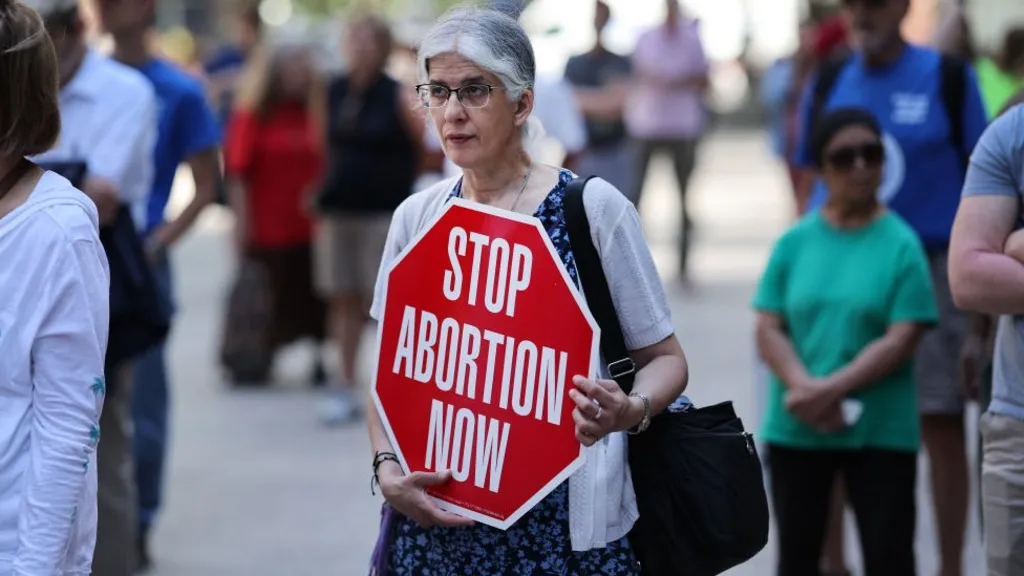
A 150-year-old law
Enacted in 1873, the Comstock Act, spearheaded by anti-vice advocate Anthony Comstock, criminalized the transmission or receipt of materials deemed “obscene, lewd, or lascivious.” Notably, the statute explicitly addressed birth control and abortion, prohibiting materials intended for “the prevention of conception or procuring of abortion.”
Over the ensuing century, judicial interpretations gradually narrowed the law’s application. In 1971, Congress substantially relaxed Comstock’s restrictions on contraceptives, and two years later, the Supreme Court affirmed a constitutional right to abortion through Roe v. Wade. Consequently, the act was largely perceived as an unenforceable relic, lying dormant for five decades.
However, the Comstock Act is now experiencing a resurgence within conservative circles.
Without the protections of Roe v. Wade ensuring abortion access, the reasoning is clear. Under an expansive interpretation of the law, the mailing of any abortion-related materials—whether through the United States Postal Service or private carriers like UPS and FedEx—would constitute a violation.
By obstructing the delivery of medications and tools essential for the procedure to hospitals and clinics, the Comstock Act could effectively impede abortions without the need for Congress to enact new legislation.
“Its language is remarkably broad,” explained Rachel Rebouché, dean and professor of law at Temple University Law School and a noted authority in reproductive health law. “If interpreted literally, the Comstock Act could indirectly impose a ban on abortion, as all supplies for abortion clinics are typically delivered by mail.”
The conservative strategy
Anti-abortion activists and prominent conservative organizations are gearing up for this tactic, formulating legal arguments and political maneuvers to reinterpret the Comstock Act as a viable tool for enforcing an abortion ban.
Josh Craddock, a lawyer and scholar affiliated with the conservative James Wilson Institute, has been vocal in his opposition to abortion. He noted that fellow anti-abortion activists have rallied around the Comstock Act, hailing it as “one of the most promising avenues for advancing the pro-life agenda in America today.”
“It doesn’t hinge on Congress taking action or the Supreme Court making a ruling; there’s existing federal law safeguarding unborn life,” he asserted. “It’s quite straightforward.”
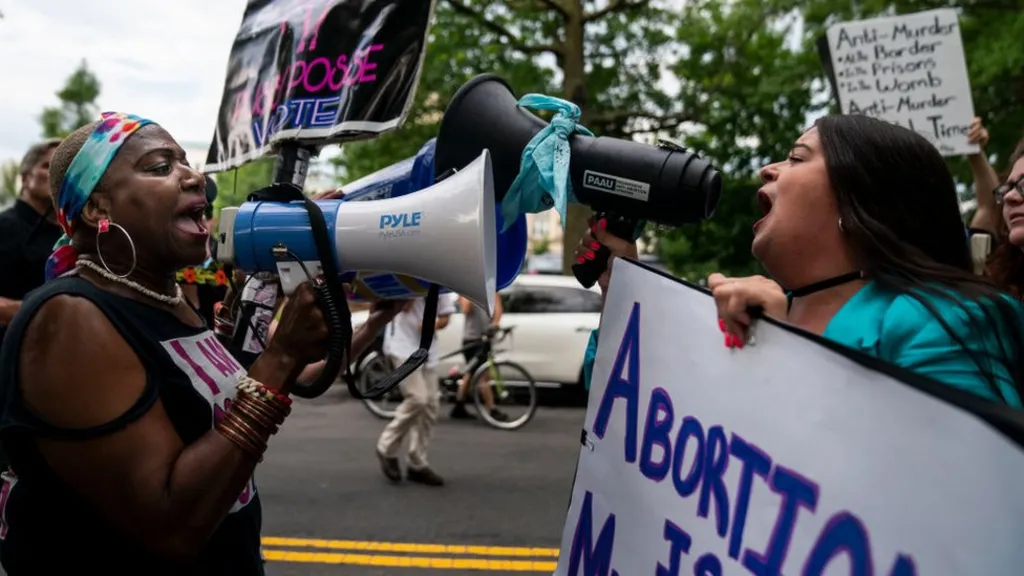
This week, the Comstock Act will be brought before the Supreme Court as part of arguments presented by a coalition of anti-abortion activists and medical professionals seeking the withdrawal of federal approval for the abortion medication mifepristone.
Furthermore, the conservative Heritage Foundation has specifically referenced the Comstock Act in its strategic blueprint for the upcoming Republican administration, known as Project 2025.
In light of the Supreme Court’s decision to overturn Roe v. Wade, the Foundation asserts that there are no longer any barriers to enforcing this statute. “The Department of Justice in the next conservative Administration should therefore announce its intent to enforce federal law against providers and distributors of such pills,” it stated, referring to abortion pills.
The abortion segment of Project 2025 was developed by former Trump administration official Roger Severino, who declined to comment when contacted by the BBC. Notably, the project boasts the participation of leading anti-abortion organizations on its advisory board, including SBA Pro-Life America led by Ms. Dannenfelser and Students for Life headed by Kristan Hawkins.
Can it work?
Anti-abortion activists find the legal framework of the Comstock strategy compelling. However, translating it into action hinges on a federal government’s willingness to enforce the law after years of dormancy.
Nevertheless, experts argue that this is not only feasible but also probable, especially with Mr. Trump in the White House.
“All it requires is an administrative determination from the Department of Justice to pursue individuals for breaching the Comstock Act,” explained David Cohen, a law professor at Drexel University specializing in abortion law. “The barriers to implementation are minimal, apart from securing an electoral victory.”
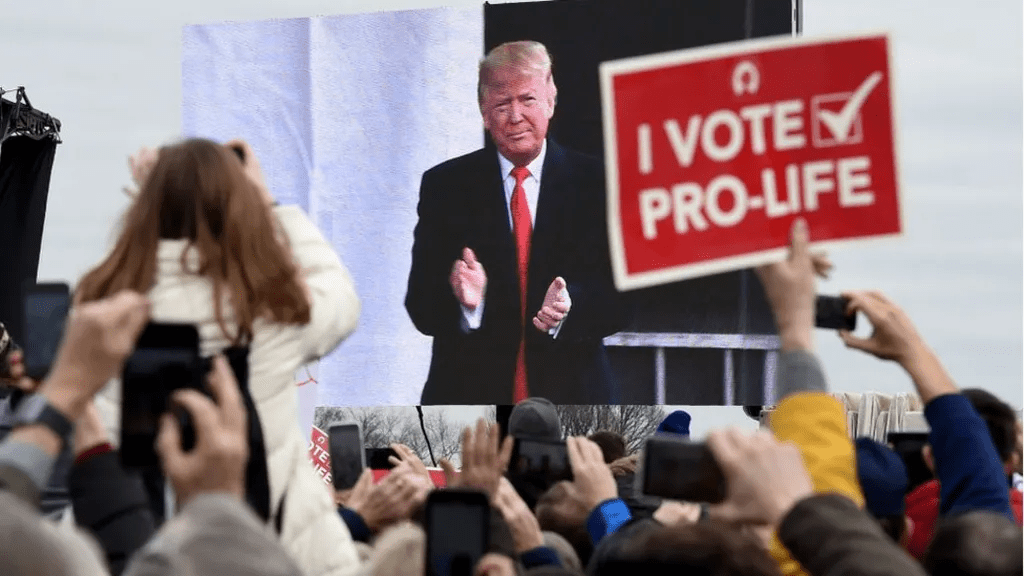
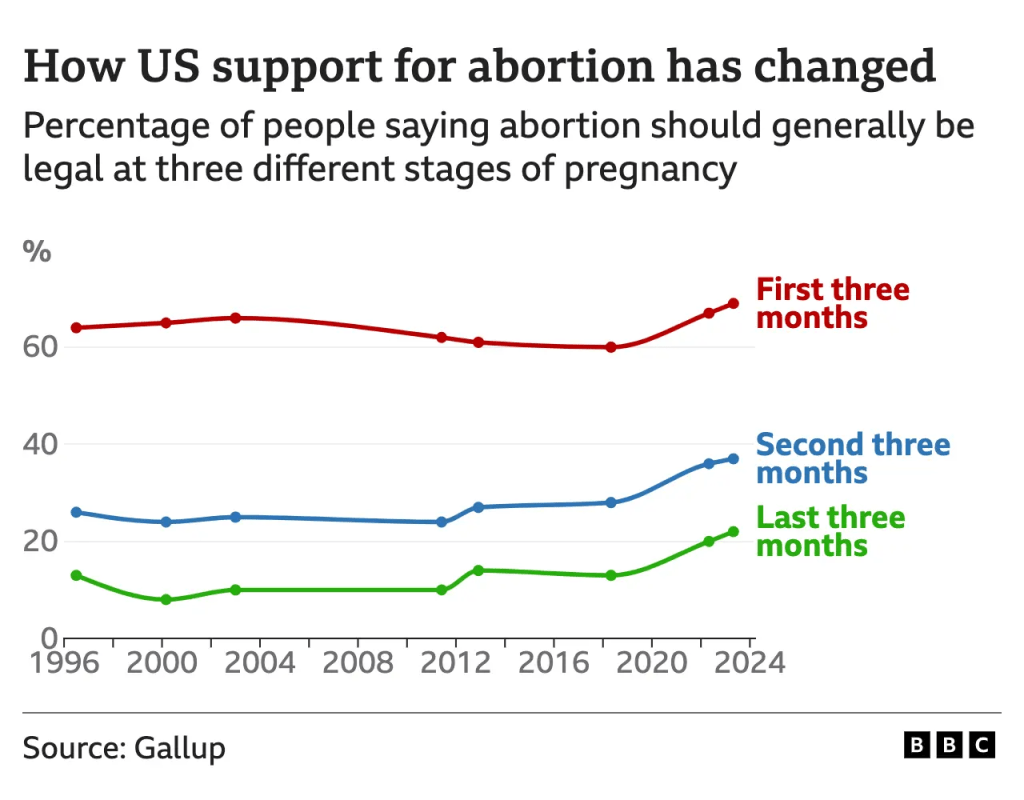
Enforcing the Comstock Act in this manner would likely trigger a flurry of legal disputes, potentially culminating in a Supreme Court review. A federal ban on abortion would have far-reaching consequences and could face significant public opposition. A recent Gallup poll indicates that approximately 69% of voters believe abortion should be legal during the first three months of pregnancy, which is when the majority of abortions occur.
A political liability
Some critics argue that anti-abortion activists have deliberately kept their Comstock strategy under wraps.
“They [Republicans] understand that this approach is unpopular,” remarked Ryan Stitzlein, vice president of government relations at the pro-choice organization Reproductive Freedom for All (formerly NARAL). “Therefore, they resort to methods of obfuscation or concealment.”
In New Mexico, where efforts to establish abortion-free “sanctuary cities” have invoked the Comstock Act, activists primarily reference its statute numbers—18 USC 1461 and 1462.
Similarly, in Project 2025, while the law is directly quoted, the term “Comstock” is conspicuously absent from the 920-page document, with only the statute numbers being cited.
Jonathan Mitchell, an anti-abortion attorney who has been an advocate for the Comstock strategy, recently advised anti-abortion groups to maintain a low profile until the election, according to reports from the New York Times.
Reportedly, Mitchell, who has previously represented Mr. Trump, expressed a desire for the former president to remain unaware of the Comstock strategy, stating, “because I just don’t want him to shoot off his mouth.” Despite attempts to contact him, Mitchell did not provide a response to the BBC’s request for comment.
All eyes on the White House
If Mr. Trump returns to the White House next year, his endorsement of the Comstock Act will be crucial for any significant enforcement of the law.
Thus far, he has made no public remarks regarding the statute, and his stance on abortion more broadly remains somewhat ambiguous.
While Mr. Trump previously declared himself “the most pro-life president ever,” he has recently displayed public frustration with stringent abortion restrictions, expressing a desire for compromise on legislation.
In a September interview on NBC’s Meet the Press, he remarked, “It could be state, or it could be federal. I don’t, frankly, care.”
However, last week, Mr. Trump indicated support for a federal ban on abortions after 15 weeks of pregnancy, with exceptions for rape, incest, and the life of the mother.
Experts suggest that if re-elected, Mr. Trump is likely to approach abortion policy in a manner similar to his first term, deferring to conservative activists in his circle.
“The past approach has been that Trump delegates responsibility to individuals who are very conservative,” explained Mary Ziegler of the University of California.
Those advocating for the Comstock strategy are not fringe figures but rather former Trump administration officials and other allies of the former president.
According to the Heritage Foundation, the first Trump administration heavily relied on its policy agenda, embracing nearly two-thirds of its proposals within a year in office.
“While it doesn’t guarantee Trump’s support, it does lend credibility to those asserting it,” Ms. Ziegler noted. “These are individuals deeply embedded in Trump’s circle who have his ear.”
 fleeredstates.blog
You must be logged in to post a comment.