
This blog originally appeared at CNN NEWS.
When the Supreme Court Overturned Roe v. Wade: The Impact Unleashed – Opening the Floodgates for Abortion-Related Lawsuits and Legal Turbulence.
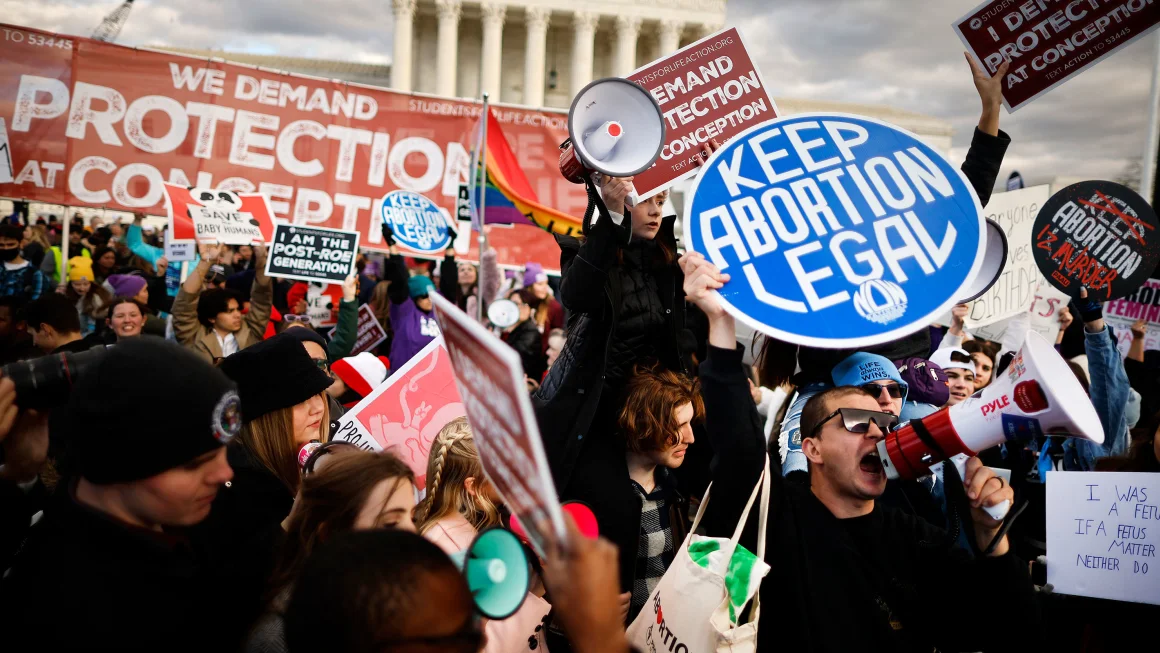
On Tuesday, the Supreme Court is set to review its inaugural abortion case following the 2022 overturning of Roe v. Wade, marking a significant shift in reproductive rights in America.
The impact of the justices’ ruling is palpable across the nation:
Fourteen states have implemented complete bans on abortion, while seven others have enacted significant limitations on abortion access.
Certain states prohibiting abortion are actively preventing the transportation of abortion medication across their borders. Additionally, they are endeavoring to thwart a federal statute permitting emergency room doctors to terminate pregnancies when medically warranted.
A decision by the Alabama Supreme Court affecting in vitro fertilization—a method aimed at initiating rather than terminating pregnancy—has been criticized by opponents, including President Joe Biden, who attribute it to the Supreme Court’s erosion of women’s privacy rights following the overturning of Roe v. Wade.
Abortion has surged to the forefront of election-year debates, with Democrats banking on continued public concern over restrictions to bolster their candidates. Meanwhile, Republican presidential contender Donald Trump has floated the idea of a nationwide abortion ban at 15 weeks of pregnancy.
Simultaneously, public trust in the Supreme Court has deteriorated.
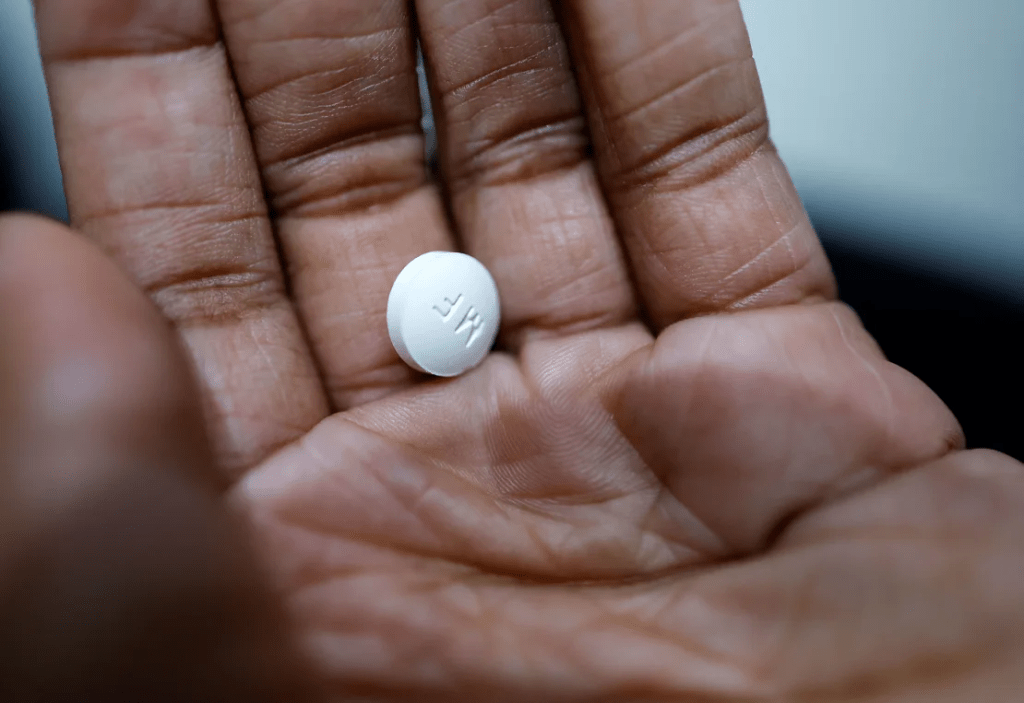
This culturally charged atmosphere will set the stage as the justices deliberate on Tuesday regarding the controversy surrounding Food and Drug Administration (FDA) regulations for accessing the abortion pill mifepristone. A faction of anti-abortion physicians has filed a lawsuit against the FDA, contesting the agency’s safety assessment of the drug and alleging the improper removal of “critical safeguards” for its usage.
The group aims to restrict women’s access to the pill, which forms part of a two-drug regimen for terminating early-stage pregnancies and has become the most prevalent method of abortion in America. Key points of contention include a 2016 provision extending the drug’s usage window to 10 weeks of pregnancy from seven, and a 2021 change allowing women to obtain their prescription via mail rather than in-person.
Since the Dobbs v. Jackson Women’s Health Organization case, which overturned Roe v. Wade, medication-induced abortion has led to an unexpected increase in abortions. Last year saw over 1 million abortions performed in the US, marking the highest rate in over a decade and a 10% rise from 2020.
In its defense of the FDA, the Biden administration strategically avoids mentioning the Dobbs decision in its written brief for the new case, perhaps to sidestep constitutional contention and emphasize broader concerns regarding federal regulation and expertise. Instead, the focus remains on the drug approval process.
“The government acknowledges that this case represents the first instance in which any court has curtailed access to an FDA-approved drug by questioning the FDA’s expert judgment regarding the necessary conditions for ensuring its safe use,” stated Solicitor General Elizabeth Prelogar to the justices, referencing a federal appellate court’s 2023 ruling against the FDA.
Prelogar further noted that since mifepristone was first approved for market in 2000, over 5 million American women have utilized it to terminate their pregnancies.
However, various groups submitting “friend of the court” briefs invoke the Dobbs case and its aftermath in America since the Supreme Court dismantled nearly fifty years of abortion rights precedent.
Backing the FDA, New York, along with 22 states and the District of Columbia, underscore the broader disruption to reproductive healthcare since Dobbs, highlighting a significant surge in telemedicine-based medication abortion in the first year post-Dobbs.
On the opposing side, the Susan B. Anthony Pro-Life America and the United States Conference of Catholic Bishops draw from the Dobbs opinion to bolster their arguments against the FDA, citing the Dobbs majority’s assertion that “Abortion is a unique act.”
The lawyers representing the anti-abortion groups informed the justices, citing previous court decisions, that “This Court acknowledges that ‘(a)bortion is inherently different from other medical procedures, because no other procedure involves the purposeful termination of a potential life.'”
Expect more abortion debates at the Supreme Court, retired Justice Breyer says
Since June 24, 2022, when it nullified the constitutional right enshrined in the 1973 Roe v. Wade decision, the composition of the court slated to hear the mifepristone case has seen minimal change.
Following the retirement of Justice Stephen Breyer a few months after the ruling, Justice Ketanji Brown Jackson succeeded him, becoming the first Black woman to serve on the high court. The succession of these two liberal, Democratic-appointed justices preserved the 6-3 conservative-liberal majority that has been reshaping American law.
In the year following the Dobbs ruling, the justices overturned yet another pivotal decision, a 1978 ruling regarding racial affirmative action in higher education institutions.
Meanwhile, Justice Samuel Alito, author of the Dobbs opinion, and other justices have expressed skepticism towards various social milestones, including the 2015 Obergefell v. Hodges decision affirming the right to same-sex marriage.
The ideological divide within the court mirrors political rifts: all six conservative justices were appointed by Republican presidents, with three nominated by Trump, who has boasted about his influence on the Dobbs decision; the remaining three liberal justices were appointed by Democrats.
Breyer, a dissenter in the Dobbs case, criticized the majority in his recent book, published on Tuesday, for suggesting that court cases concerning abortion could be brought to an end.
“The Dobbs majority’s expectation that legislatures, not courts, will address the abortion issue will not come to fruition. Different states will enact varying laws and enforce them differently,” Breyer wrote, outlining numerous potential issues that could reach the Supreme Court in the coming years.
He further stated, “Whether the Constitution guarantees a woman’s right to an abortion necessary for her life, physical health, or mental health; whether it provides abortion rights for victims of rape or incest; whether states can prohibit the mailing of abortion-inducing medications; whether states can prosecute individuals within their borders aiding or abetting out-of-state abortions; and other abortion-related queries may result in further court cases, not solely legislative determinations (many of which may also be subject to judicial review).”
How the case got to the Supreme Court
The upcoming Supreme Court case scheduled for Tuesday has spurred planned protests, setting the stage for a scene reminiscent of traditional abortion rights cases outside the marble-columned court. However, FDA v. Alliance for Hippocratic Medicine carries broader implications that could impact the regulation and accessibility of all drugs.
Last year, US District Judge Matthew Kacsmaryk ruled in favor of the Alliance in its lawsuit against the initial FDA approval of mifepristone in 2000 and subsequent regulations that expanded women’s access to the drug.
Although the 5th US Circuit Court of Appeals reversed Kacsmaryk’s decision regarding the 2000 approval, deeming it untimely, it concurred that the FDA’s relaxation of requirements in 2016 and 2021 lacked sufficient justification.
The 2016 changes included extending the gestational age limit to 10 weeks of pregnancy, reducing the mandatory number of in-person medical visits, and permitting non-physician healthcare providers to prescribe the drug. In 2021, the FDA determined that the in-person dispensing requirement was no longer necessary, allowing prescriptions to be obtained via mail.
As the case heads to appeal, Justice Department lawyers representing the FDA argue that the changes were based on extensive studies and scientific review over the years. Regarding the 2021 decision to eliminate the in-person dispensing requirement, they stated, “The agency concluded, based in part on actual experience during the pandemic, that the requirement was no longer necessary to ensure mifepristone’s safe use.”
A key contention in the case is whether the anti-abortion physicians challenging the FDA have legal “standing” to bring the case. The FDA argues that these physicians, who do not prescribe mifepristone, lack sufficient injury to establish standing.
However, the challengers argue that as they handle emergency room duties, they would be compelled to care for women experiencing complications from medication abortion. They assert that the loosening of restrictions in 2016 and 2021 has increased the likelihood of dangerous conditions such as ectopic pregnancies.
Erin Hawley, lead lawyer for the Alliance for Hippocratic Medicine, argued in a court filing, “In removing crucial safeguards for the use of abortion drugs, FDA expressly counted on OB/GYN hospitalists and emergency-room doctors to manage abortion-drug complications. When faced with these emergencies, (the doctors) have no choice but to provide immediate treatment, even though this kind of participation in an elective abortion harms their consciences and injures them in other ways.”
The Department of Justice counters these arguments, stating that hypothetical scenarios cannot establish imminent injury required for legal standing and that the challengers have not provided evidence of any instances where their members were forced to provide such care.
 fleeredstates.blog
You must be logged in to post a comment.