
This blog originally appeared at AP NEWS.
Governor Youngkin backs one measure supported by abortion-rights groups but vetoes others, showcasing his nuanced stance on the issue.
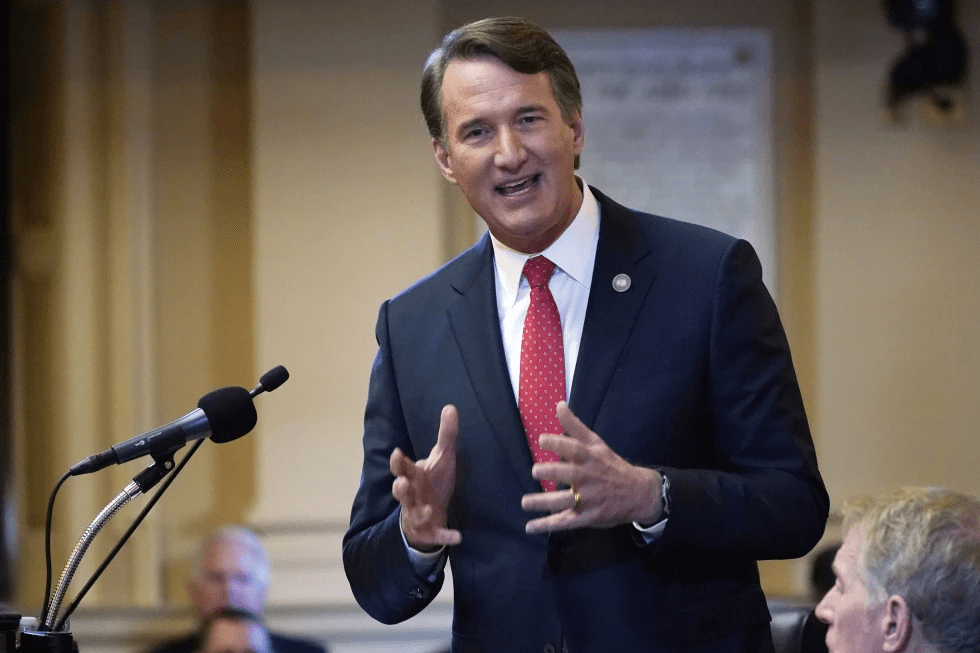
In Richmond, Virginia, Governor Glenn Youngkin, a Republican, took action on Friday by signing 88 bills into law while vetoing 11 others. Among the bills rejected was one intended to safeguard women and medical practitioners involved in legal abortion services from potential legal ramifications. Advocates had supported this legislation as a means of protecting individuals in the abortion process.
Governor Youngkin stated that these measures would disrupt the established legal framework governing extradition processes. However, in a surprising turn, he approved separate legislation supported by abortion rights groups. This new law prohibits the issuance of search warrants, subpoenas, or court orders for electronic or digital menstrual health data.
The decision received mixed reactions, with Tarina Keene, executive director of REPRO Rising Virginia, commenting on social media about the inconsistency in Youngkin’s approach.
Supporters of the approved legislation argued that it is crucial for safeguarding women’s privacy, particularly in preventing the potential misuse of information stored in period-tracking apps for legal purposes.
Senator Barbara Favola, a Democrat and the sponsor of the bill, emphasized its importance in light of the current political climate, marked by efforts to impose new restrictions on abortion following the Roe v. Wade decision. While Favola acknowledged that there hadn’t been instances of such data being sought for legal proceedings, she stressed the need for proactive measures to protect individuals’ rights in the face of potential threats.
Critics of the legislation argued that it appeared to be a solution in search of a problem.
Christian Martinez, press secretary for Governor Youngkin, stated in a release that the governor believes the legislation, opposed by nearly all legislative Republicans, “safeguards a woman’s personal health data while still allowing for its voluntary use in law enforcement investigations.” Martinez also expressed Youngkin’s gratitude for Senator Favola’s efforts on the bill.
Similar legislation failed to advance last year in the GOP-controlled House of Delegates, but Youngkin had previously voiced opposition to it.
Advocates for the vetoed measure against extradition pointed to the increasing necessity for women in states with abortion bans to seek termination of pregnancies elsewhere.
In a statement attached to the veto, Youngkin expressed concern that the cooperative extradition system of the United States could be compromised if individual states chose not to recognize codified laws based on differing political stances.
Additionally, the governor vetoed a bill that aimed to prevent state regulators from penalizing doctors for providing abortion care legal in Virginia, regardless of where it was administered or received.
Youngkin argued that such a bill could lead to a resurgence of unsafe abortions outside clinical settings and would hinder the Board’s ability to take disciplinary action against unprofessional conduct during abortions.
Democrats criticized Youngkin’s decisions, with party chairwoman Susan Swecker condemning the veto of a bill meant to protect women traveling to Virginia for abortions from potential extradition, portraying it as another example of Republicans limiting women’s options.
Virginia stands out as the lone Southern state yet to enforce new restrictions on abortion since the overturn of Roe v. Wade in 2022, emphasizing its comparatively liberal stance on abortion access within the region. Governor Youngkin’s efforts to implement a 15-week ban were thwarted by Democrats, who wield control over the state Legislature.
In addition to the abortion-related bill, Youngkin signed several others on Friday, including measures aimed at reinstating the Virginia Minority Business Commission and expanding tax credits for secure firearm storage devices. Conversely, he vetoed a bill proposing a paid family and medical leave program, citing existing employer offerings and deeming the proposal unfair for exempting state government.
The governor also made amendments to 11 bills, one of which permits the city of Petersburg to pursue a referendum concerning the establishment of Virginia’s fifth casino. This move follows unsuccessful attempts in Richmond, where voters twice rejected similar proposals. Youngkin’s amendment removes a provision requiring legislative reconsideration next year.
With a Monday deadline looming for the completion of his legislative review, lawmakers will reconvene in Richmond on April 17 to deliberate on Youngkin’s proposed amendments and potentially seek to override his vetoes. However, Democrats’ slim majorities in both chambers fall short of the necessary two-thirds threshold for override success.
 fleeredstates.blog
You must be logged in to post a comment.