
This blog originally appeared at CNN.
Arizona’s Supreme Court mandates state compliance with a century-old statute prohibiting almost all abortions.
On Tuesday, the Arizona Supreme Court upheld a 160-year-old law that prohibits most abortions, except in cases deemed necessary to save the pregnant person’s life. This ruling revives a Civil War-era statute, dating back to 1864, which was officially codified in 1901. The law imposes prison sentences of two to five years for abortion providers, positioning Arizona among the states with the strictest abortion regulations, alongside Texas, Alabama, and Mississippi, which have similarly stringent bans with few exceptions.
The enforcement of the law has been temporarily postponed by the state Supreme Court for 14 days. This delay allows plaintiffs the opportunity to pursue further legal challenges, particularly regarding the law’s constitutionality, in lower courts if they choose to do so.
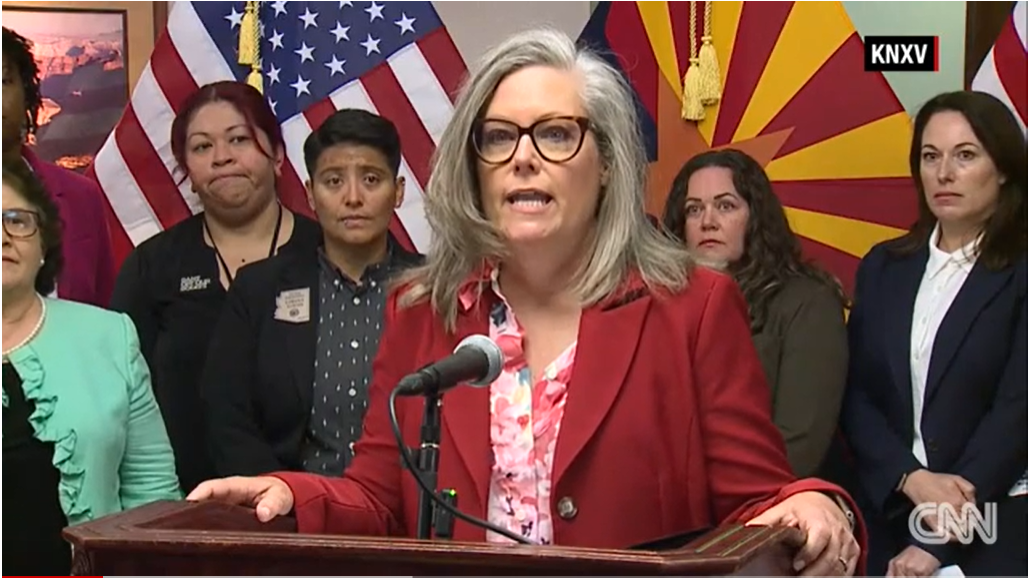
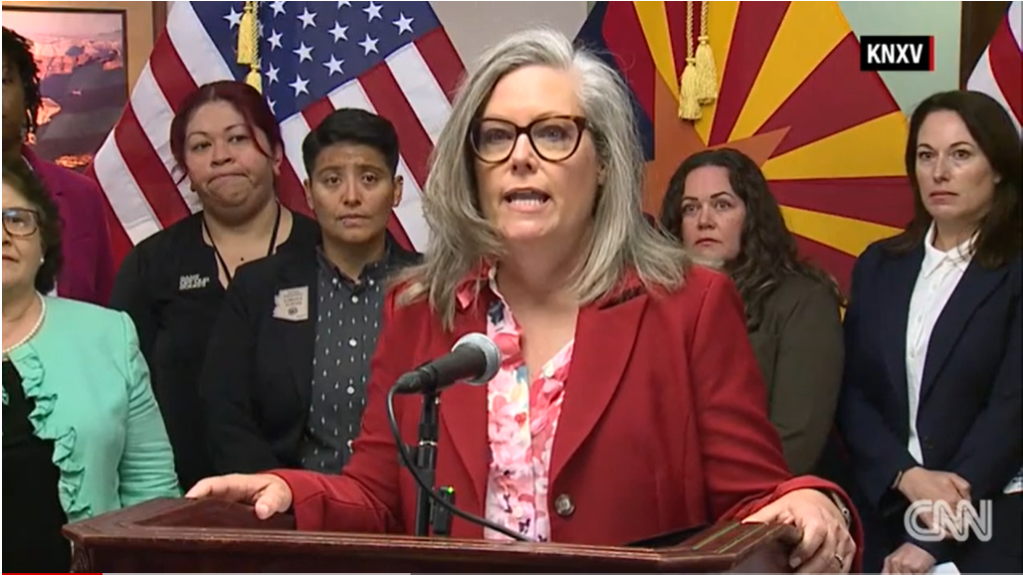
Arizona Attorney General Kris Mayes, speaking at a news conference following the court’s decision, assured that neither women nor doctors would face prosecution under this law during her tenure. She pledged to prevent its implementation, exploring all available options through her office.
Mayes expressed strong opposition to the court’s decision, labeling it as a regressive step backward in Arizona’s history. She emphasized the law’s antiquity, dating back to a time when Arizona was not yet a state, the Civil War was ongoing, and women lacked the right to vote. Mayes characterized the court’s ruling as a blemish on the state’s record, signaling her commitment to resisting its enforcement.

The 4-2 decision arose from a case resurrected following the US Supreme Court’s invalidation of Roe v. Wade in June 2022, which eliminated the federal constitutional right to abortion. Arizona’s former attorney general pushed to reinstate the state’s near-complete abortion ban, facing opposition from Planned Parenthood Arizona, initiating protracted legal battles culminating in Tuesday’s verdict.
The court’s majority declared, “Physicians must now adhere to the prohibition on all abortions except those crucial to preserving a woman’s life,” stipulating potential criminal penalties for abortions conducted beyond 15 weeks of pregnancy.
Vice Chief Justice Ann A. Scott Timmer dissented, joined by Chief Justice Robert M. Brutinel.
This case marks the latest prominent confrontation regarding abortion access since Roe v. Wade’s reversal. In the wake of that decision, nearly twenty states have restricted or outright banned abortion access. Medical professionals caution that such restrictive measures endanger patients’ health and expose doctors to legal jeopardy.
“A couple of weeks ago, I had an abortion – a safe, legal abortion here in Arizona for a pregnancy I very much wanted, a pregnancy that failed,” Arizona Sen. Eva Burch said Tuesday at a news conference. “Somebody took care of me. Somebody gave me a procedure so that I wouldn’t have to experience another miscarriage – the pain, the mess, the discomfort. And now we’re talking about whether or not we should put that doctor in jail.”
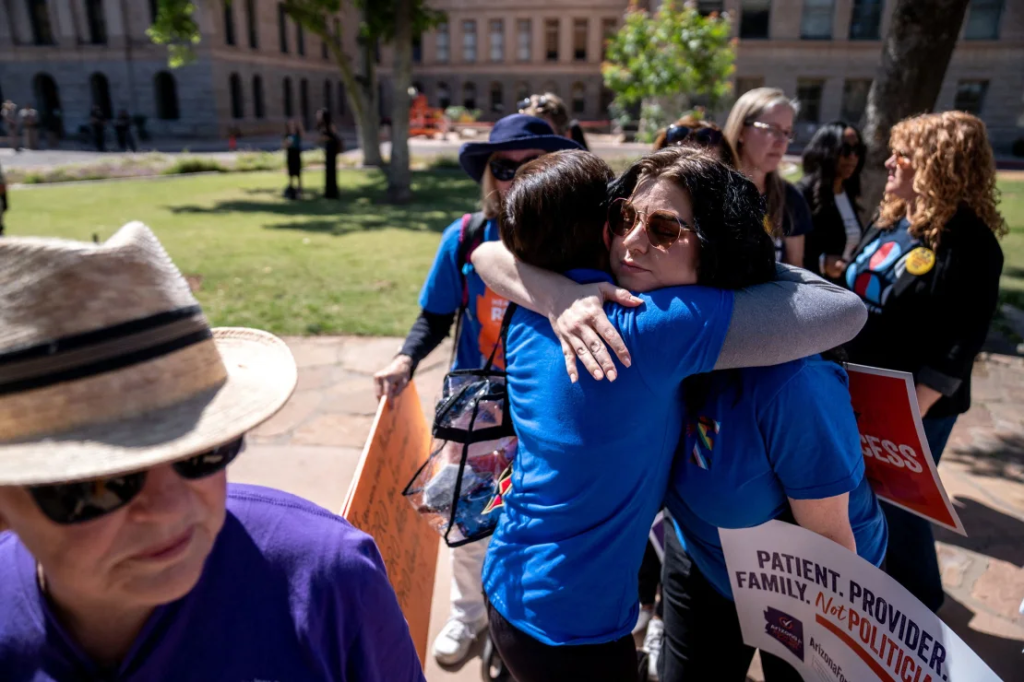
Dr. Jill Gibson, chief medical director of Planned Parenthood Arizona, emphasized the devastating impact of the state Supreme Court’s decision on patients in their community. In an interview with CNN, she expressed grave concern over the forthcoming consequences for individuals seeking abortion services in Arizona, stating, “The state Supreme Court decision is going to have ‘absolutely unbelievable consequences for the patients in our community and we just … cannot state enough how dire the situation is going to be for the patients who need to access abortion here in Arizona.'”
Gibson stressed the importance of allowing healthcare providers to offer essential care without the looming threat of legal repercussions and criminalization. She remarked, “Providers need to be able to take care of their patients without fear for legal repercussions and criminalization.”
Echoing these sentiments, Arizona’s Democratic Governor, Katie Hobbs, condemned the ruling, asserting that the fight for reproductive freedoms is far from over. In an online video statement, Hobbs empathized with individuals facing pregnancy-related challenges, highlighting her personal experience with pregnancy loss. She declared, “I’ve personally experienced the anguish of losing a pregnancy and I know it’s outrageous to have the government tell you that the best decision for your health or future could now be considered a crime. I will not stop fighting until we have fully secured the right to reproductive healthcare in our state.”
President Joe Biden also criticized the decision, warning of the severe consequences it would impose on millions of Arizonans. In a statement, he remarked, “Millions of Arizonans will soon live under an even more extreme and dangerous abortion ban, which fails to protect women even when their health is at risk or in tragic cases of rape or incest.”
Another law was already in place
In December of last year, Supreme Court justices commenced hearings in the case, wherein abortion opponents argued for a return to the near-total ban, while advocates for reproductive rights urged the court to uphold a 2022 state law permitting abortions up to 15 weeks.
Then-Governor Doug Ducey, a Republican, endorsed the law just under three months prior to the Supreme Court’s overturning of Roe v. Wade. This law, enacted in 2022, included an exemption for medical emergencies and mandated physicians to report post-15-week abortions to the Arizona Department of Health Services. However, it lacked provisions for cases of rape and incest.
Upon signing the law in March 2022, Ducey clarified that it would not supersede the older legislation.
Subsequent to the US Supreme Court’s decision, the Arizona Court of Appeals ruled that both abortion laws in the state needed reconciliation or “harmonization.” According to prior CNN reports, abortion was deemed legal up to 15 weeks when performed by licensed physicians in accordance with Arizona’s existing laws and regulations.
Amidst months of legal ambiguity and contention over the applicable law within the state, the state Supreme Court was petitioned for clarification.
Voters will have a say in this
Arizona voters will soon have a pivotal role in shaping the state’s stance on abortion. Arizona for Abortion Access, a coalition of reproductive rights organizations, has announced that they have successfully collected enough signatures to place a ballot measure on November’s 2024 ballot. This measure aims to embed abortion rights into the state’s constitution.
This initiative is part of a broader nationwide campaign to bring the issue of abortion to the forefront of the 2024 ballots in multiple states. Advocates for abortion rights are optimistic that this approach will empower voters to have a direct say, rather than relying solely on decisions made by state courts.
State Attorney General Mayes expressed confidence in the voters’ ability to make a definitive judgment on the matter. Speaking with CNN’s Wolf Blitzer, Mayes stated, “The people of Arizona are going to have the final say over this. I think the people of Arizona are going to overwhelmingly approve that ballot measure.”
Following the recent court ruling, an emergency physician and abortion provider, Dr. Atsuko Koyama, emphasized the ongoing importance of activism. In a joint news conference with local and state officials, Dr. Koyama urged residents to persist in their efforts to ensure the success of the ballot measure. She stressed that Tuesday’s decision does not mark the end of the fight.
Dr. Koyama highlighted the vital role abortion plays in addressing various medical situations, including miscarriages, ectopic pregnancies, and instances of domestic violence. She lamented that the ruling forces physicians to navigate legal and administrative hurdles instead of focusing on patient care. Dr. Koyama emphasized the detrimental impact of criminalizing essential healthcare services and urged for the preservation of the doctor-patient relationship in such critical matters.
 fleeredstates.blog
You must be logged in to post a comment.