
This blog originally appeared at THEM.
Over the past year, there has been a notable shift in the number of anti-LGBTQ+ bills being enacted into law, prompting advocates to feel “cautiously optimistic” about a potential change in the legislative landscape.
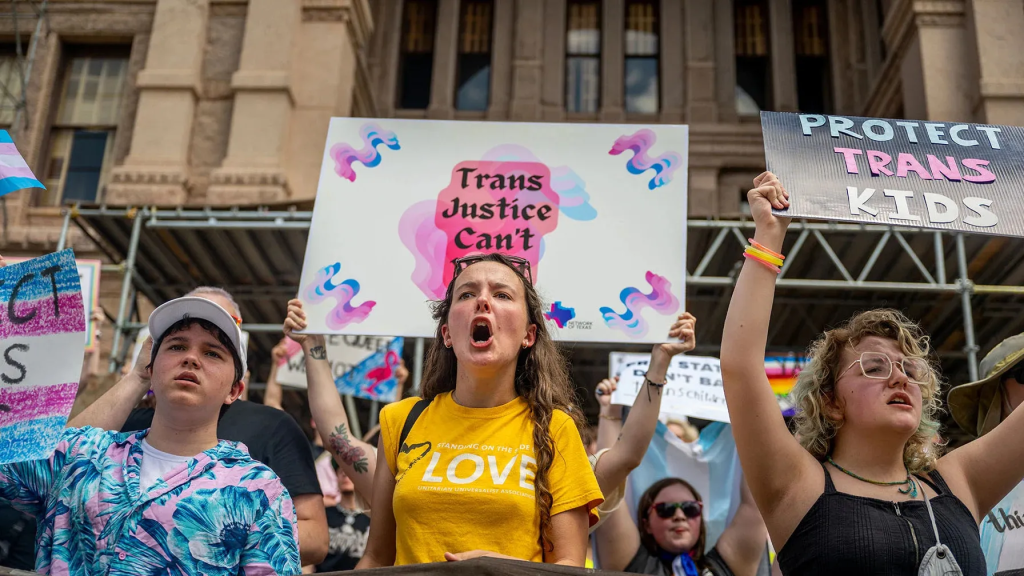
Transitioning to a new physician, holding hands in public, simply entering a bar, or using a public restroom—these mundane activities have morphed into sources of fear for over 60 percent of transgender Americans, as revealed by recent polling conducted by the left-leaning firm Data for Progress.
Amidst a surge in efforts by far-right politicians and conservative policy groups to limit LGBTQ+ rights—a movement that has honed in on transgender individuals through hostile legislation and rhetoric—the resultant hostility is exacting a toll on the safety perceptions of trans Americans.
Yet, signs suggest a potential political shift concerning anti-LGBTQ+ legislation. The Human Rights Campaign, along with various state advocacy groups, perceive a shift in momentum against such bills. Notably, Florida and West Virginia concluded their legislative sessions with only one bill each, while Georgia Republicans failed to push through any anti-LGBTQ+ bills this session. Kentucky seems poised to follow suit, with its general assembly failing to advance any such legislation in time to meet the deadline for veto-proof bills.
For advocates in these states, there is a palpable sense of relief, hinting at a possible resurgence in legislative attention toward other initiatives. However, despite the evident decline in the number of anti-LGBTQ+ bills enacted this year compared to last, some advocates remain cautiously vigilant.
“I’m cautiously optimistic,” remarked Chris Hartman, executive director of the Fairness Campaign, a Kentucky LGBTQ+ advocacy group. “This could signal a return to the status quo before anti-trans rhetoric reached a fever pitch nationwide.”
According to Hartman, prior to 2022, Kentucky had abstained from passing such legislation for almost a decade. Yet, as Florida and Texas dominated headlines with anti-trans political assaults, this rhetoric disseminated to other Southern states, including Kentucky.
Last year, Kentucky enacted arguably the most extreme anti-trans law in the nation. In one sweeping motion, the state prohibited students of all ages from receiving education on gender identity or sexual orientation, barred students from utilizing restrooms corresponding to their gender identity, forbade gender-affirming care for trans youth, and barred students up to the fifth grade from learning about human sexuality and development.
As the final gavel fell in late March, signaling the end of Kentucky’s General Assembly session before the veto recess, Chris Hartman found himself in a state of disbelief. This legislative term had posed significant challenges, with anti-LGBTQ+ measures seemingly gaining momentum. Republicans had been pushing to expand the state’s religious freedom law, prohibit public drag performances, and grant doctors the right to refuse treatment on religious or moral grounds.
“It’s a surprise to all of us, myself included, that we’ve reached the veto period without any of these anti-LGBTQ+ bills advancing,” Hartman expressed. He recounted staying in the Kentucky House gallery until midnight on March 28, anxiously awaiting the fate of the bills. “It was a nail-biter up to the very last minute… It wasn’t until 11:30 p.m. that I realized, oh my gosh, we might actually make it.”
Similarly, in Georgia, advocates fought against anti-LGBTQ+ legislation until the eleventh hour of the legislative session in late March. Despite Republican majorities in both chambers, none of the bills managed to pass or even come up for a vote in the Georgia House.
Jeff Graham, executive director of Georgia Equality, recalled being at the statehouse until 1 a.m. on March 29, accompanied by around 25 to 30 individuals, the majority of whom were transgender Georgians and parents of transgender children. Many had spent the entire day there, tirelessly lobbying lawmakers. After it was all over, the collective feeling among the group was one of relief mixed with exhaustion. They had just combated the largest number of anti-LGBTQ+ bills ever introduced in a single legislative session in Georgia.
In the final three weeks of Georgia’s session, Republicans resorted to amending unrelated bills—such as one concerning overdose remedies and another about student athletes’ mental health—in an effort to sneak in bathroom bans and bans on gender-affirming care for trans youth.
While the practice of adding amendments to unrelated legislation is not uncommon in the state, Jeff Graham interpreted these maneuvers as a sign that Republicans were aware of the lack of broad public support for anti-LGBTQ+ measures. Particularly concerning was the fact that such changes were not always reflected in a bill’s title or summary, and they were made without providing opportunities for public input.
“It really speaks volumes to me that they understand these measures aren’t popular, and they’re trying to slip them through without attracting too much attention,” Jeff Graham remarked.
Graham believes that certain Republicans in swing seats within the state House were apprehensive about voting on anti-LGBTQ+ bills and being held accountable for their decisions come November. He also credits emotional testimonies from parents of transgender youth for swaying lawmakers and stalling the progress of these bills.
Meanwhile, in Florida, 21 out of 22 anti-LGBTQ+ bills were thwarted during the legislative session. Nadine Smith, executive director of Equality Florida, attributes this success partly to LGBTQ+ constituents who consistently visited the statehouse to elucidate the harm these bills would inflict. Smith emphasized that these conversations played a pivotal role in dissuading lawmakers from prioritizing the bills.
Last year, Florida saw the enactment of six anti-LGBTQ+ bills into law—more than the cumulative total of the preceding seven years, as reported by the Human Rights Campaign. Additionally, Florida has implemented anti-LGBTQ+ policies through state agencies rather than the legislature, indicating a willingness to advance such policies outside the legislative process. Notable examples include a rule by the Florida Department of Highway Safety and Motor Vehicles barring transgender individuals from updating their driver’s licenses.
In Kentucky, Hartman witnessed a surge of support from Republican lawmakers in February during a House judiciary committee meeting regarding a proposed bill to broaden the state’s religious freedom law. According to Hartman, six Republicans voiced their support for LGBTQ+ discrimination protections during the debate—either explicitly endorsing such safeguards or expressing a reluctance to interfere with local policies.
“It was unprecedented to see that many sitting Republican legislators go on record, especially within such a short timeframe, in favor of local LGBTQ+ discrimination protections,” Hartman remarked. While some of these Republicans had previously demonstrated supportive stances, others were unexpected allies.
Nationwide, 59 percent of Republicans currently endorse nondiscrimination protections for LGBTQ+ individuals, according to the Public Religion Research Institute. This support among GOP voters dipped by seven percentage points from 2022 to 2023, coinciding with increased anti-LGBTQ+ rhetoric among Republican candidates and the passage of more anti-LGBTQ+ bills.
Nonetheless, the majority of Americans, including many religious individuals, advocate for protecting LGBTQ+ people from discrimination, according to the survey. Republican lawmakers may finally be realizing that anti-LGBTQ+ policies are not as widely supported among their constituents as they assumed. However, the pervasive anti-trans rhetoric underpinning these laws has left transgender Americans fearful of harassment within their own communities.
Kirby Phares, a senior analyst at Data for Progress, was struck by the significant number of transgender individuals who reported being unable to access or afraid to seek healthcare in the current political climate.
According to the Data for Progress poll, nearly a quarter of transgender respondents—24 percent—indicated that their access to gender-affirming medical care had been disrupted or ceased in the past year due to anti-trans policies. Additionally, 54 percent stated that accessing gender-affirming medical care in general was currently challenging. Alarmingly, 20 percent of transgender individuals expressed feeling unsafe visiting doctors or hospitals when sick or injured due to the fear of mistreatment.
The poll also highlighted the detrimental impact of recent anti-LGBTQ+ policies and rhetoric on LGBTQ+ Americans’ mental health, particularly among transgender individuals. More than half of LGBTQ+ adults, including a staggering 79 percent of transgender adults, reported that recent anti-LGBTQ+ developments had adversely affected their mental well-being.
Despite the slowdown observed in states like Florida and Georgia, a significant number of anti-LGBTQ+ bills have been passed by state houses this year. The ACLU counts 16 such bills, while the Trans Legislation Tracker lists 21. Discrepancies in bill tallies among advocacy groups can arise due to differences in updating schedules and categorization methods. Of the anti-LGBTQ+ bills passed, thirteen have been signed into law thus far, according to the Trans Legislation Tracker.
Many of these bills impose restrictions on funding for gender-affirming care for transgender adults, prohibit gender-affirming care for transgender youth, and establish religious exemptions for LGBTQ+ nondiscrimination laws affecting employers and businesses. Other measures target transgender students, preventing them from using school restrooms and banning discussions of LGBTQ+ issues in classrooms.
Approximately 180 anti-LGBTQ+ bills are still progressing through state legislatures, as reported by the ACLU.
“We’re not out of the woods yet,” cautioned Graham. “I anticipate many of these bills will resurface in 2025.”
 fleeredstates.blog
You must be logged in to post a comment.