
This blog originally appeared at COURTHOUSE NEWS SERVICE.
The high court, siding with the state, concluded that the laws adequately specify the circumstances under which an abortion to save the life of the mother is allowed.

AUSTIN, Texas (CN) — In a highly anticipated decision, the Texas Supreme Court ruled on Friday that the state’s total abortion ban permits the procedure if the pregnancy poses a risk of serious bodily impairment or death.
“Texas law permits a life-saving abortion,” wrote Justice Jane Bland in her 38-page majority opinion. “Under the Human Life Protection Act, a physician may perform an abortion if, exercising reasonable medical judgment, the physician determines that a woman has a life-threatening physical condition that places her at risk of death or serious physical impairment unless an abortion is performed.”
The unanimous opinion from the all-Republican high court vacated a lower court injunction that had blocked the state from enforcing the ban against doctors performing life-saving abortions, establishing a new standard for physicians to follow. The state had filed an accelerated appeal to the Texas Supreme Court, which stayed the injunction.
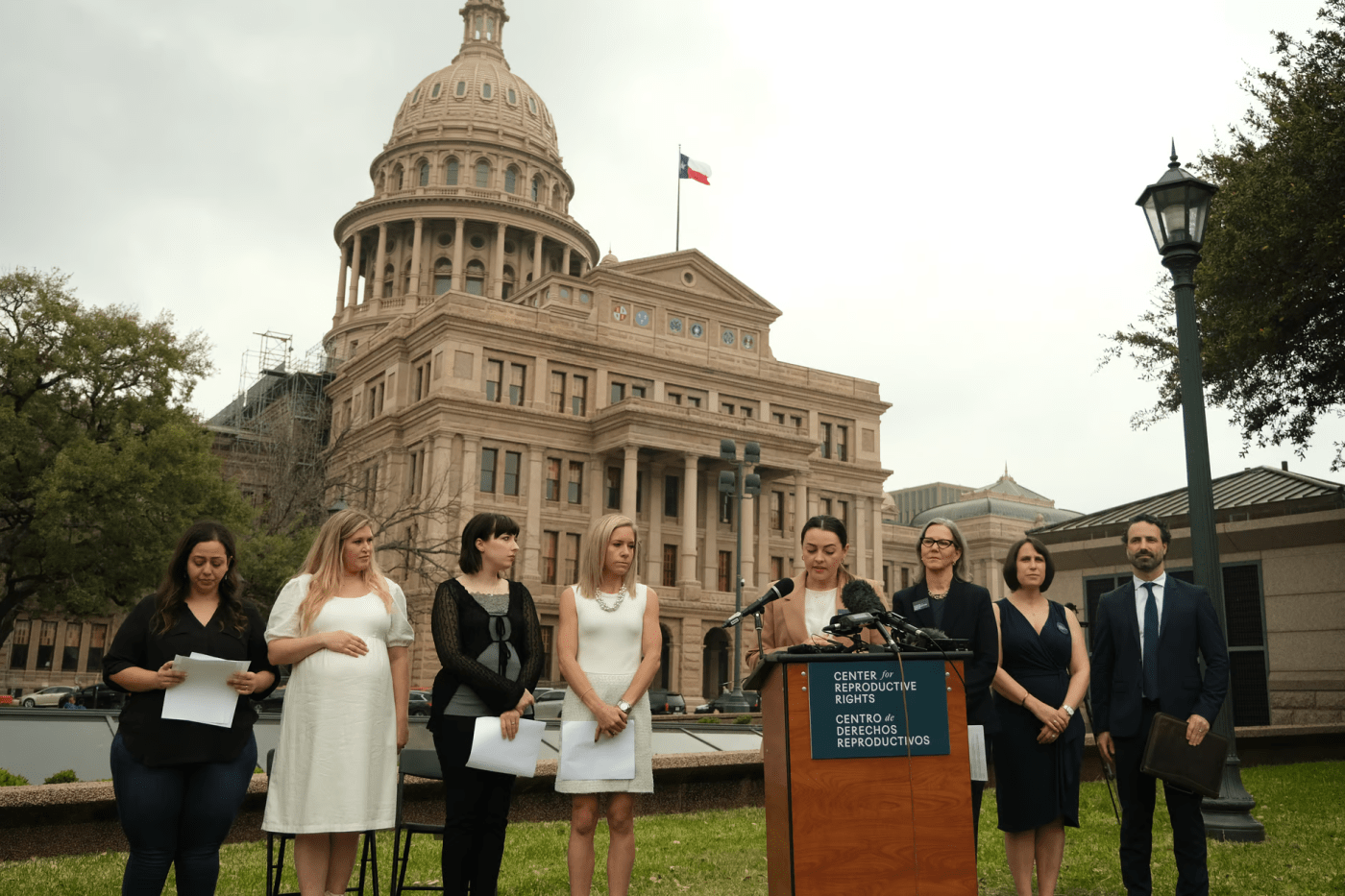
The lawsuit at the center of this case began over a year ago when five women who experienced life-threatening pregnancy complications, along with two doctors, sued Texas Attorney General Ken Paxton and the Texas Medical Board. Represented by the Center for Reproductive Rights, they sought clarity on the law. As the lawsuit gained attention, an additional 15 women with similar experiences joined. The plaintiffs argued that the laws as written deprived them of their right to equal protection under the state constitution.
The lawsuit challenges three laws: the Human Life Protection Act, the Texas Heartbeat Act, and a 1925 abortion ban that was revived following the U.S. Supreme Court’s reversal of Roe v. Wade in 2022.
The Human Life Protection Act and the 1925 ban impose both civil and criminal penalties for anyone found to have performed an abortion. Doctors face up to 99 years in prison, a minimum fine of $100,000, and the loss of their medical license if found guilty. The Texas Heartbeat Act, also known as Senate Bill 8, imposes a civil private right of action, allowing any citizen to sue anyone they believe performed or facilitated an abortion for a minimum of $10,000.
Molly Duane, senior staff attorney for the Center for Reproductive Rights and lead attorney in the case, described the court’s ruling as providing a “feeble answer” to the question of when a person in Texas can receive an abortion under the medical exception. Despite the ruling, she believes it falls far short of what is necessary to ensure the safety of pregnant individuals.
“I am disturbed that the court rejected so many of our clients’ claims to a constitutional right to life, health, and fertility,” Duane said on Friday. “These are women who came to court citing risks to their physical and mental health and continuing a pregnancy that would never result in a new baby joining their families. But now we know the courthouse doors are closed to them.”
The Center for Reproductive Rights argued that the exceptions in the state’s three abortion bans are too vague, causing doctors to avoid providing necessary care due to fear of prosecution. To address this, the group requested that courts establish a standard allowing the procedure when a doctor has a “good faith belief” that an abortion is necessary to save the mother’s life or prevent severe bodily impairment.
However, Justice Bland pushed back against the Center’s request to clarify what “reasonable medical judgment” means under the statute. The Center argued that a “good faith belief” standard would create uniformity in the standard of care among doctors, whereas “reasonable medical judgment” could vary from one physician to another.
While acknowledging that not all doctors would reach the same conclusion, the state must demonstrate that a reasonable physician would not have determined that a woman with pregnancy complications required a life-saving abortion.
“The Center’s ask is for a court to substitute a different standard for the one that is expressly written in the statute,” Bland wrote in Friday’s opinion. “This is a call for amending the law, not for interpreting it.”
The 20 women central to the case were not directly mentioned in Bland’s opinion. Instead, the court focused on explaining why it believes the exception to the laws, as written, is sufficient.
Justice Bland did, however, address lead plaintiff Amanda Zurawski’s experience, using it as an example of how the law should function. During her second trimester, Zurawski’s pregnancy became nonviable when the membrane surrounding her daughter, Willow, prematurely ruptured. Despite being informed by doctors that she faced a serious risk of infection, they refused to terminate the pregnancy because Willow still had a heartbeat, fearing prosecution. After being sent home, infection set in, causing damage to Zurawski’s reproductive organs and placing her life in jeopardy.
“Ms. Zurawski’s agonizing wait to be ill ‘enough’ for induction, her development of sepsis, and her permanent physical injury are not the results the law commands,” wrote Bland.
Zurawski said Friday that the ruling felt like a gut punch.
“The Texas Supreme Court had the opportunity to provide clarity, but they didn’t, and we are right back where we started. While this feels like the end of Zurawski v. Texas, it is not the last that you will be hearing from us in this fight for justice,” Zurawski said.
All but one of the plaintiffs’ claims survived the court’s ruling. Damla Karsan, an obstetrician from Houston, was found to have standing to sue the state because she was threatened with enforcement by Texas Attorney General Ken Paxton.
The threat came after a judge in Austin issued an order allowing Kate Cox, a mother of two from Dallas, to terminate her nonviable pregnancy. Karsan was set to provide the procedure when Paxton sent letters to three hospitals, warning they could be held liable if Karsan was allowed to perform the abortion at their facilities. The Center for Reproductive Rights is still determining how it will proceed with this final claim.
While the court did not provide guidance on the state’s abortion laws, it left open the possibility for the Texas Medical Board to intervene. The board is currently considering new guidance for physicians to clarify when a patient qualifies for the exception. However, this has sparked controversy, with abortion rights advocates arguing that the proposed plans do not sufficiently protect women.
In a statement praising the ruling, Paxton said he would continue to defend the state’s pro-life laws.
“Today, the Supreme Court of Texas unanimously upheld the Human Life Protection Act, one of our state’s pro-life laws,” Paxton said. “I will continue to defend the laws enacted by the Legislature and uphold the values of the people of Texas by doing everything in my power to protect mothers and babies.”
For abortion rights advocates, federal action remains the only viable solution to what they see as dangerous state laws. During Friday’s press call, Nancy Northup, president and CEO of the Center for Reproductive Rights, renewed calls for a law legalizing abortion nationwide.
“It is clear that the state of Texas and many other states are not going to protect their own pregnant people,” Northup said. “The federal government must step in and reestablish a nationwide right to abortion.”
 fleeredstates.blog
Leave a comment