
This blog originally appeared at LGBTQ NATION.
The law exposes libraries to liability if they fail to restrict access to books that receive complaints from the public, keeping them away from children.
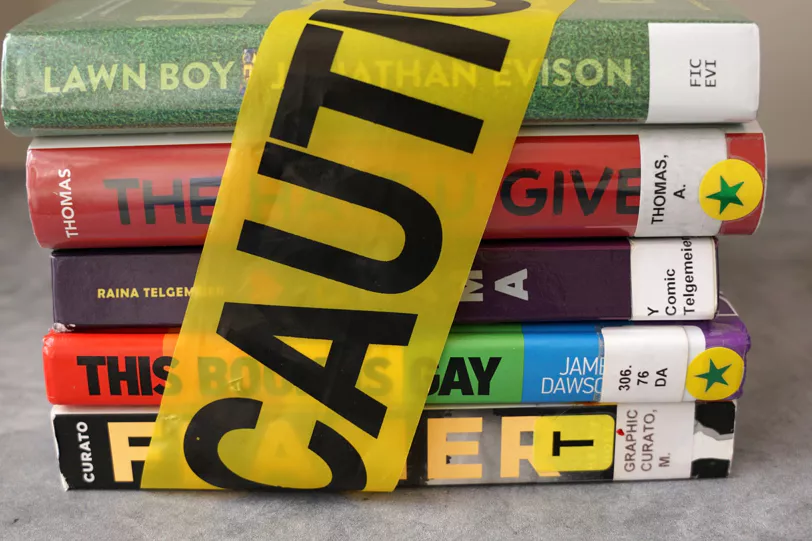
Parents, students, and private schools and libraries are suing the state of Idaho over a law they argue infringes on their First Amendment free speech rights and Fourteenth Amendment due process rights.
H.B. 710, which took effect in early July, permits citizens and government officials to file lawsuits against schools and libraries that fail to relocate books with “adult content” to “adults only” sections within 60 days of receiving a complaint.
H.B. 710 does not provide concrete guidelines, stating that “obscene content” will be “judged by the average person, applying contemporary community standards.”
The law has forced some libraries to go “adults only.” A library in rural Idaho, which lacks the square footage to comply with state standards separating children’s and adults’ books, has decided to prohibit children entirely. The library fears that a lawsuit could bankrupt it and end all programming.
“H.B. 710 is the product of a social climate in Idaho (and elsewhere) in which schools and libraries have been inaccurately and unfairly castigated and villainized for using and making available constitutionally protected materials with content that the state and some Idahoans disapprove of,” the plaintiffs state in the 57-page complaint.
Sun Valley Community School and Foothills School of Arts and Sciences, two private schools, along with the privately funded public library Community Library Association and Collister United Methodist Church, a lending library, have brought the suit forward.
Two high school students are also plaintiffs in the lawsuit. They argue that the law hinders their education by restricting access to books they deem essential for learning.
“The Act encompasses works of significant cultural, historical, literary, and scientific import that are central to an informed education,” the high school plaintiffs assert.
“Indeed, the broad language of the Act subjects the Private Entity Plaintiffs to suit for providing minors with health education textbooks, images of canonical works of art like Michelangelo’s David, significant works of literature like Toni Morrison’s The Bluest Eye, and even the Bible, if a Defendant or citizen complainant subjectively believes members of their community would find them offensive,” the complaint states.
“The Constitution does not permit the State to engage in content-based censorship to mollify a community’s most sensitive and censorious members.”
“The Act’s vague and overbroad definition of ‘harmful to minors’ conflicts with decades of settled constitutional law and extends well beyond the state’s limited authority to restrict the materials that private parties, like the private entity plaintiffs, may provide to minors,” the lawsuit concludes.
 fleeredstates.blog
Leave a comment