
This blog originally appeared at POLITICO.
The legislation has sparked nationwide protests and drawn condemnation from human rights organizations.
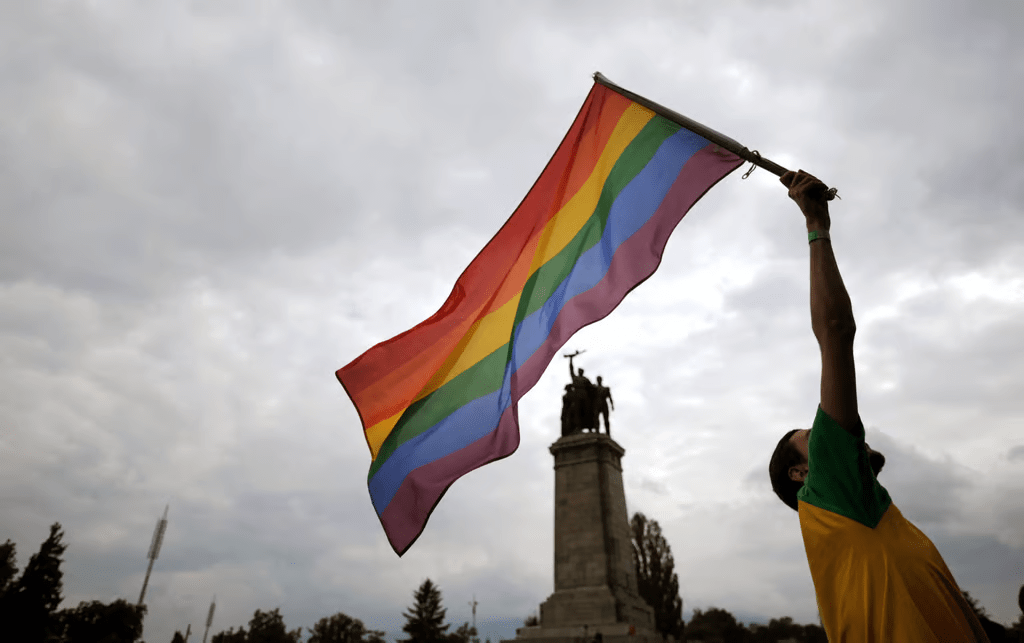
On Friday, Bulgaria officially published the text of a contentious law banning LGBTQ+ “propaganda” in schools after President Rumen Radev declined to veto the bill. The amendment to the education code, introduced by the far-right, pro-Russian Revival party and unexpectedly supported by pro-European Union parties, prohibits the “propaganda, promotion, or incitement” of LGBTQ+ “ideas and views” in schools, though the specifics remain vague. The law passed with a significant majority in parliament on August 7, sparking protests across the country, including the most recent demonstration in front of the presidential palace on Thursday.
“This law isn’t just a Bulgarian issue; it’s a Russian law that has infiltrated the heart of Europe,” said Rémy Bonny, executive director of Forbidden Colours, an LGBTQ+ rights advocacy group, in an interview with POLITICO’s Brussels Playbook. He called on the European Commission to intervene and hold Bulgaria accountable.
Senior members of the European Parliament’s LGBTI Intergroup also urged action, sending a letter last week to European Commission President Ursula von der Leyen and Equality Commissioner Helena Dalli. The letter implored the Commission to “urgently condemn” the new law.
“This law is a direct attack on the LGBTIQ+ community, particularly targeting children,” wrote group co-presidents Kim van Sparrentak from the Netherlands and Marc Angel from Luxembourg. “Such ‘anti-propaganda’ bills endanger children and youth by fostering a hostile environment where LGBTIQ+ children may face bullying, harassment, and increased health risks.”
In response, the European Commission confirmed that Commissioner Dalli had sent a letter on August 13 to Bulgarian Education and Science Minister Galin Tsokov, seeking more information about the legislation.
“The Commission remains unwavering in its commitment to addressing discrimination, inequalities, and the challenges faced by LGBTIQ individuals, including in education, as highlighted in our LGBTIQ Equality Strategy of November 2020,” a Commission spokesperson stated.
Human rights organizations, including Action, Buditelkite, Forbidden Colours, LevFem, Feminist Mobilisations, and Deystvie, have condemned the bill. A petition asking the Bulgarian president to veto the amendment garnered about 7,000 signatures, and academics have issued an open letter urging the same.
Kostadin Kostadinov, chairman of the Revival Party that introduced the legislation, hailed the adoption of the law as a “historic breakthrough” last week, declaring that “LGBT propaganda is anti-human and won’t be accepted in Bulgaria.”
Same-sex marriage remains unrecognized in Bulgaria, and the country has yet to ratify the Istanbul Convention, which aims to combat violence against women.
In 2024, Bulgaria was ranked the third-worst in the EU for LGBTQ+ rights protections, with only Romania and Poland scoring lower, according to ILGA-Europe, an LGBTQ+ advocacy group that annually evaluates the state of LGBTQ+ rights across Europe.
Bulgaria’s law mirrors similar legislation passed in Russia and Hungary in recent years, which also target LGBTQ+ rights. Georgia’s government has introduced a comparable draft law as well.
Bulgaria’s Ministry of Education, Ministry of Justice, and the prime minister’s office did not immediately respond to requests for comment.
 fleeredstates.blog
Leave a comment