
This blog originally appeared at Arizona’s Family.
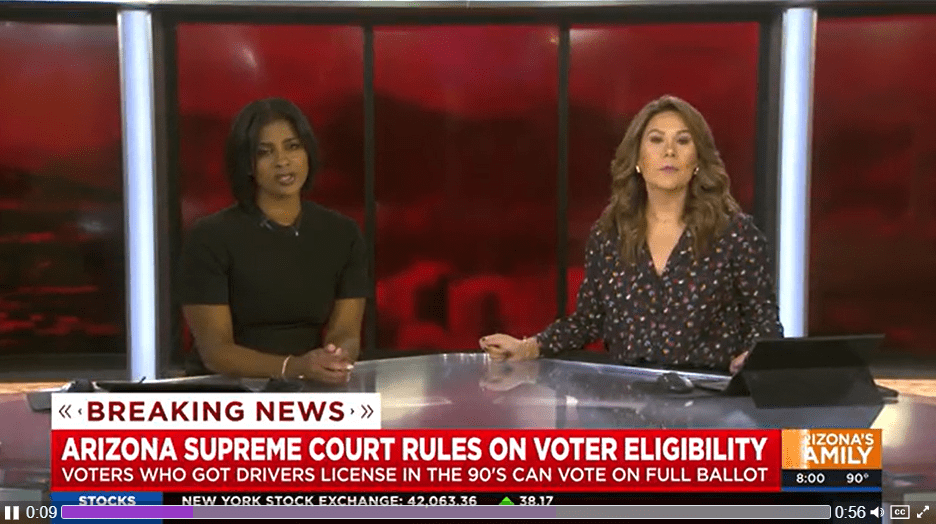
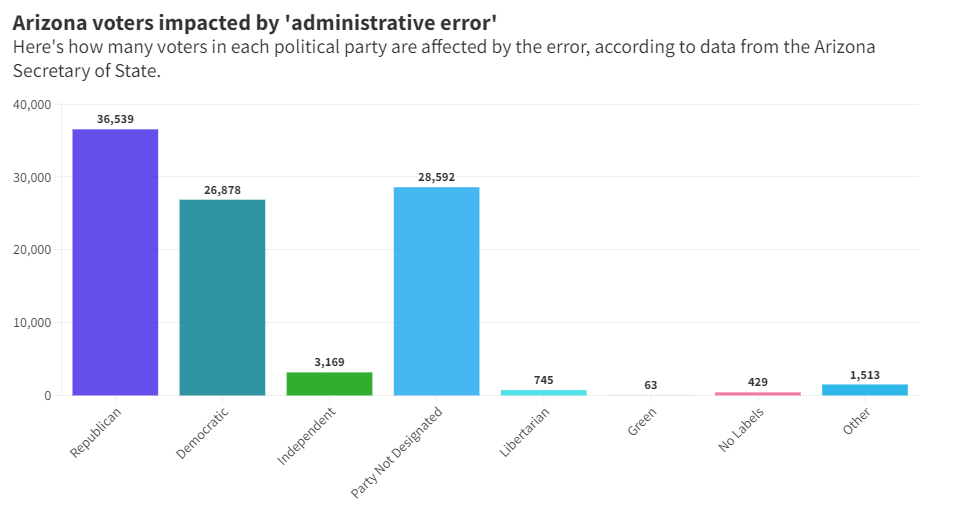
PHOENIX (AZFamily/AP) — The Arizona Supreme Court ruled on Friday that nearly 98,000 voters whose citizenship documents had not been confirmed can cast their full ballots in the upcoming November election, including in state and local races.
The court determined that Maricopa County Recorder Stephen Richer and other county recorders do not have the authority to restrict voters to federal-only ballots, as these individuals had registered to vote long ago.
“We are unwilling on these facts to disenfranchise voters en masse from participating in state contests,” Chief Justice Ann Scott Timmer wrote in the ruling. “Doing so is not authorized by state law and would violate principles of due process.”
While county recorders are obligated to verify citizenship, the court found no evidence suggesting that the affected voters are not U.S. citizens. As Chief Justice Timmer explained, “Fontes and Richer acknowledge that ‘[i]t is possible that Affected Voters have, in fact, provided satisfactory evidence of DPOC [documentary proof of citizenship].’”
The court also noted the urgency of the situation, with Timmer stating, “This Court has also accepted original special action jurisdiction over election matters in which there is a need for immediate relief based on rapidly approaching election deadlines and where the key facts are not in dispute.”
Maricopa County Elections Director Adrian Fontes celebrated the ruling, calling it “a significant victory for those whose fundamental right to vote was under scrutiny.” He continued, “The court faced a stark choice: to allow voters to participate in just a few federal races on a limited ballot, or to make their voices heard across hundreds of decisions on a full ballot that includes a variety of local and state offices. We deeply appreciate the Arizona Supreme Court for their prompt and just resolution.”
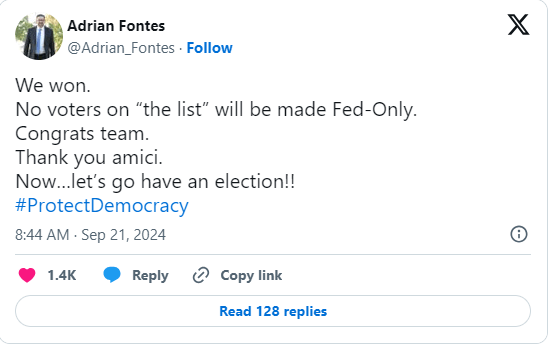
Meanwhile, Maricopa County Recorder Stephen Richer, a Republican, expressed gratitude to the court, stating, “Thank you Arizona Supreme Court for your extremely quick and professional review of this matter.”
The issue stemmed from a 2004 Arizona law requiring residents to provide documentary proof of citizenship (DPOC) to register as “full-ballot voters,” allowing them to vote in all federal, state, and local races. Voters who fail to provide proof of citizenship are restricted to voting only in federal races.
The controversy arose when a problem was discovered in how duplicate driver’s licenses were issued, which meant certain voters who had received a license before October 1, 1996, may not have citizenship records on file.
Fontes and Richer had been at odds over the status these voters should hold. Richer, seeking clarity, asked the high court to intervene.
Arizona’s swing state status is unique in that it distinguishes between voters who can participate only in federal elections and those eligible to vote in federal, state, and local elections. To qualify for the latter, voters must submit proof of citizenship.
 fleeredstates.blog
Leave a comment