
This blog originally appeared at Euro News.
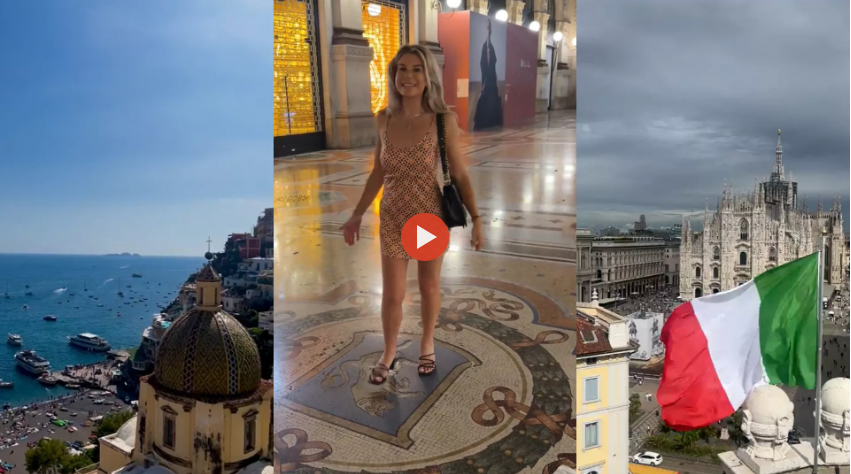
After years of anticipation, Italy officially introduced its digital nomad visa in April this year, allowing remote workers to live and work in the country for up to a year.
Though the visa has only been available for a few months, adventurous travelers are already seizing the opportunity.
Chelsea Waite, a US native, started her own business in 2020 and has been working remotely ever since. After visiting Italy for the first time in 2017, she knew it was where she wanted to settle.
“When I found out in April that Italy launched the digital nomad visa, I was so excited and knew I had to pursue it with everything I had,” she told Euronews Travel.

I tried to do as much research as possible… But since this is such a new visa, there’s barely any information available beyond the fact that it exists,” she explains.
Fortunately, Chelsea navigated the process and is now one of the first to be granted the visa, currently living in Milan.
Here, she shares her experience and top tips for securing Italy’s digital nomad visa.
Is it difficult to get Italy’s digital nomad visa?
Navigating the process of this new visa came with several challenges. Chelsea attributes her success to perseverance and thorough preparation.
One major hurdle she encountered was securing a rental contract, a critical document for the digital nomad visa application.
“In Italy, it’s notoriously difficult to get a rental contract,” Chelsea says. Many assume you need a ‘codice fiscale’—an Italian tax code—to sign a lease. This code, issued to Italians at birth, is essential for services like opening a bank account or getting a phone number. However, obtaining a codice fiscale can be tough if you’re not already living in Italy or don’t yet have a visa.
Chelsea found that working with a real estate agent was key.
“My real estate agent informed me that there’s a way to register the contract for individuals moving to Italy who don’t yet have a codice fiscale,” she explains. “So if you get pushback from a property owner or management company, let them know this option exists and see how they can help.”
Italy’s digital nomad visa also differs from others in Europe. It targets highly skilled workers performing “highly qualified work activities” and earning at least €28,000 a year.
Part of Chelsea’s application involved having her degree certified. Initially, she thought having it notarized by the US Secretary of State’s office would suffice. However, Italy requires foreign degrees to be verified through CIMEA (the Information Centre on Academic Mobility and Equivalence), which manages recognition of degrees.
“You need to upload your degree, transcripts, and then it goes through an internal review that can take days or months,” she says. Nuanced requirements like these can slow down the process.
What are Chelsea’s top tips for getting Italy’s digital nomad visa?
Chelsea shares three key tips for anyone pursuing Italy’s digital nomad visa:
- Come overprepared:
“Make sure you have all the necessary documents upfront,” she advises. “It’s better to be overprepared than underprepared so you don’t risk having to restart the whole process.” - Seek help in Italy:
She recommends getting local support for crucial steps, especially when it comes to finding accommodation.
“I would also recommend, if possible, visiting Italy between the time you schedule your appointment with the Italian consulate and the actual appointment date,” Chelsea suggests.
She explains that building relationships with locals is much easier in person than online.
“And my third piece of advice would be to stay flexible and come financially prepared,” she adds.
Chelsea emphasizes that digital nomads should factor in costs like deposits for housing, health insurance, document verification fees, and the visa fee itself.
“The whole process ended up costing a bit more than I expected.”
The non-refundable visa application fee alone is €116 per person.
With limited information available on how to apply for Italy’s digital nomad visa, Chelsea is now writing a guide to help others navigate the process.
Watch the video above to learn how Chelsea became one of the first recipients of Italy’s digital nomad visa.
“I would also recommend, if possible, visiting Italy between the time you schedule your appointment with the Italian consulate and the actual appointment date,” Chelsea suggests.
She explains that building relationships with locals is much easier in person than online.
“And my third piece of advice would be to stay flexible and come financially prepared,” she adds.
Chelsea emphasizes that digital nomads should factor in costs like deposits for housing, health insurance, document verification fees, and the visa fee itself.
“The whole process ended up costing a bit more than I expected.”
The non-refundable visa application fee alone is €116 per person.
With limited information available on how to apply for Italy’s digital nomad visa, Chelsea is now writing a guide to help others navigate the process.
Watch the video above to learn how Chelsea became one of the first recipients of Italy’s digital nomad visa.
“I would also recommend, if possible, visiting Italy between the time you schedule your appointment with the Italian consulate and the actual appointment date,” Chelsea suggests.
She explains that building relationships with locals is much easier in person than online.
“And my third piece of advice would be to stay flexible and come financially prepared,” she adds.
Chelsea emphasizes that digital nomads should factor in costs like deposits for housing, health insurance, document verification fees, and the visa fee itself.
“The whole process ended up costing a bit more than I expected.”
The non-refundable visa application fee alone is €116 per person.
With limited information available on how to apply for Italy’s digital nomad visa, Chelsea is now writing a guide to help others navigate the process.
Watch the video above to learn how Chelsea became one of the first recipients of Italy’s digital nomad visa.
 fleeredstates.blog
Leave a comment