Three Wisconsin counties are recognized among America’s ‘Healthiest Communities’ by U.S. News

This blog originally appeared at MILWAUKEE JOURNAL SENTINEL.

Exercise, a balanced diet, and safe habits play crucial roles in determining both the quality of life and life expectancy. However, did you know that your location also significantly impacts these metrics? U.S. News and World Report reveals that health outcomes are often shaped by factors such as a community’s economic performance, educational strength, housing availability, and affordability, among others.

In its latest “Healthiest Communities” report, U.S. News assessed nearly 3,000 counties across 92 metrics within 10 health categories—ranging from food and nutrition to housing, population health, education, and the economy—to identify the 500 healthiest counties in the nation. The analysis included factors such as housing affordability, food accessibility, and crime rates. Additionally, U.S. News ranked counties based on mental health, life expectancy, safety, and healthcare access.

Three southern Wisconsin counties secured top-25 positions in U.S. News’ rankings—Ozaukee and Waukesha counties were recognized as the 7th and 23rd healthiest counties overall, while Iowa County was ranked 17th for mental health.

Let’s take a closer look at how these Wisconsin communities achieved their impressive rankings.

Ozaukee County ranks among the healthiest in the U.S.

Home to Cedarburg, Mequon, and Port Washington, this northern neighbor of Milwaukee County was named the seventh-healthiest community in the nation by U.S. News.

Ozaukee County excelled in several categories, particularly in food and nutrition, population health, and infrastructure. The county boasts a food insecurity rate of just 4.4%, significantly lower than the national average of 11.5%. Moreover, its residents have lower rates of diabetes and obesity compared to state and national averages.

In terms of population health, Ozaukee County shines with a life expectancy of 81.3 years, which is 5.5 years longer than the national average of 75.8. Additionally, only about 4% of residents are uninsured, compared to 11.5% of Americans nationwide. Smoking rates are also lower, with only 11% of residents smoking compared to 19% nationally. The county also has a significantly lower rate of deaths of despair (suicide or drug/alcohol-related deaths), occurring at about half the national average. Residents here are more likely to engage in regular physical activity than both state and national averages.

Ozaukee County also surpasses national standards in infrastructure. Over 98% of residents have reliable internet access, compared to about 83% nationwide. The county is more walkable than average, and only 3.6% of residents have a commute longer than an hour, which is less than half the national average of 8.3%. Additionally, nearly three-quarters of Ozaukee residents live within walking distance of a library, museum, or park, compared to about 47% of Americans.

It’s important to note that Ozaukee County is one of Wisconsin’s wealthiest counties in terms of both per capita and median family income, according to U.S. Census data. U.S. News reports that the county’s median household income is just over $97,000, compared to the national median of just under $65,000. Clearly, wealth and privilege can significantly influence access to the resources and opportunities that contribute to a long and healthy life.

Waukesha County ranks among the top 25 healthiest counties in the U.S.

Continuing the trend, Wisconsin’s other wealthiest county secured the 25th spot on U.S. News’ list of the nation’s Healthiest Counties. Waukesha County excelled in the population health, economy, and infrastructure categories.

With a life expectancy of 80.7 years, Waukesha residents live nearly five years longer than the national average. Only 4.1% of residents are uninsured, compared to 11.5% nationwide. The county also boasts lower-than-average rates of smoking and heart disease, and its teen birth rate is just 3.3 per 1,000, significantly lower than the national rate of 21.7 per 1,000.

In terms of the economy, Waukesha County boasts an unemployment rate of just 2.6%, one percentage point lower than the national average. The median household income in the county is over $107,000, nearly $38,000 higher than the national average, and the poverty rate is a low 5%, compared to over 14% nationwide.

Similar to its neighbor Ozaukee, Waukesha County excels in infrastructure. Almost all residents have reliable internet access, while only about 83% of Americans can say the same. The rate of residents commuting over an hour to work is less than half the national average. The county is also rated as more walkable than average, with approximately 72% of residents living within walking distance of a library, museum, or park.

Iowa County is recognized as one of the best counties for mental health in the U.S.

Located in southwestern Wisconsin, Iowa County ranked 79th among the nation’s overall healthiest counties and 17th on U.S. News’ list of the Best Counties for Mental Health.

Home to Dodgeville, Mineral Point, and several major state parks, Iowa County scored 90 out of 100 points in U.S. News’ mental health category. In the county, 14.4% of adult residents report experiencing “frequent mental distress,” compared to just over 17% of U.S. adults. The county has a rate of 28.6 deaths of despair (suicide or drug/alcohol-related deaths) per 100,000 residents, significantly lower than the national rate of 63.5 per 100,000 and Wisconsin’s rate of 53.5 per 100,000.

Additionally, U.S. News found that 13% of Medicare beneficiaries in Iowa County have depression, compared to nearly 18% of beneficiaries nationwide and in Wisconsin.
What are the healthiest counties in Wisconsin?

These 10 Wisconsin counties ranked highest on U.S. News’s Healthiest Communities list:

  1. Ozaukee County (No. 7)
  2. Waukesha County (No. 23)
  3. Washington County (No. 46)
  4. St. Croix County (No. 65)
  5. Iowa County (No. 79)
  6. Calumet County (No. 89)
  7. Dane County (No. 97)
  8. Outagamie County (No. 120)
  9. Green County (No. 132)
  10. Portage County (No. 194)
Read more.

Kim Coco Iwamoto will make history as Hawaii’s first transgender lawmaker after defeating the House Speaker

Despite being the most powerful Democrat in the state, he was defeated by her.

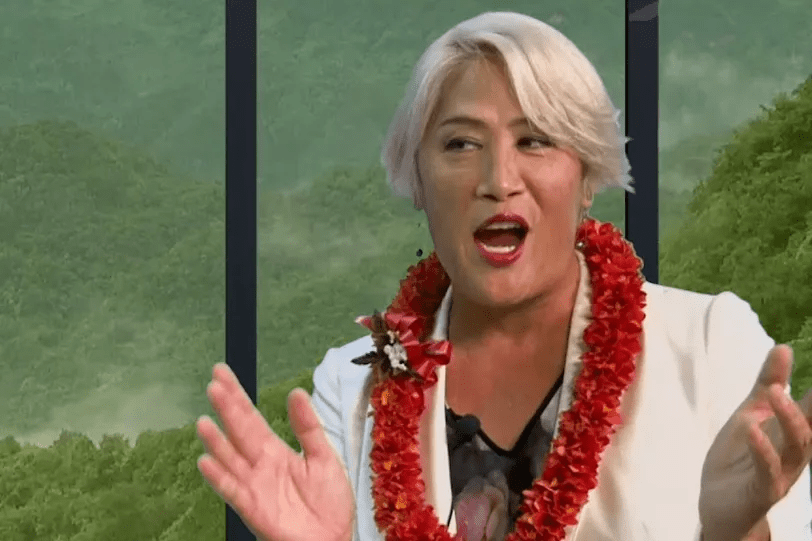
In Hawaii, transgender woman Kim Coco Iwamoto (D), a former member of both the Hawai’i Civil Rights Commission and the Hawai’i Board of Education, has just made history. She defeated the incumbent in her district’s Democratic primary, becoming the first transgender person elected to the legislature. Iwamoto unseated state House Speaker Scott Saiki, who had held the position for three decades, winning by a margin of about 5%. Iwamoto received 49.3% of the votes, while Saiki garnered 44.6%.

“It feels incredible, especially knowing that so many powerful figures endorsed him,” said Iwamoto. “I wasn’t just running against him; I was up against the entire Democratic establishment.”

Kim Coco Iwamoto has a distinguished career as an attorney and has been elected twice to the Hawai’i Board of Education. In the mid-2010s, she was appointed as a commissioner to the Hawaii Civil Rights Commission. Despite previous unsuccessful runs for office, including a bid for lieutenant governor in 2018 and two challenges for Saiki’s seat, Iwamoto has remained a prominent figure in progressive politics.

Recognized by former President Barack Obama for her work, Iwamoto is a strong advocate for progressive causes. She aligns with groups that share the politics of U.S. Sen. Bernie Sanders (I-VT), supporting initiatives like the Green New Deal, increasing funding for public education, mass reform of the criminal justice system, and investment in affordable housing.

Iwamoto is also a staunch supporter of LGBTQ+ rights. Her campaign website outlines her commitment to prohibiting discrimination based on sexual orientation, gender expression, and identity. She advocates for fully funding enforcement divisions at state agencies to ensure compliance with non-discrimination laws. Additionally, she believes that every unaccompanied minor deserves a safe home, including LGBTIQ+ minors in foster and group homes.

In contrast, Saiki has let his long record of public service define his policy stance. His contributions include helping to pass a ban on conversion therapy, supporting Title IX protections in the state, fighting financial inequality between men and women, and allocating millions to combat homelessness. Saiki has served as the speaker of the House since 2017.

Gay man released from Qatar after being “honey-trapped” by police in Grindr sting operation

This blog originally appeared at LGBTQ NATION.

Aviña’s family, along with LGBTQ+ rights advocates worldwide, launched a campaign for his return, which finally succeeded this week.

A British gay man, who was jailed in Qatar after being entrapped by the police, has finally been allowed to leave by Qatari authorities and has returned to the United Kingdom after enduring months of imprisonment in inhumane conditions.

Manuel Guerrero Aviña, a dual British-Mexican citizen, was arrested in February 2024 in Qatar, where homosexuality is illegal. Aviña, a former employee of Qatar Airways, was convicted of drug possession in what has been described as a “honey trap.”

Aviña revealed that he had responded to fake messages on Grindr, which were actually sent by the police.

Aviña explained that he was lured to a location in Doha after responding to a Grindr profile, which he believed would lead to a meeting with other gay men. However, the police were waiting to arrest him. During the arrest, authorities claimed they found methamphetamine in his apartment, though Aviña insists the drugs were planted.

He was jailed on February 4 and, in June, was handed a suspended six-month prison sentence and a fine by the Al Sadd Criminal Court in Doha.

While in jail, Aviña, who is HIV-positive, was deprived of the antiretroviral medication he needed. He was also forced to sign documents written in Arabic, a language he does not speak, without the assistance of a translator. Additionally, he was coerced into identifying which contacts in his phone were his sexual partners and endured what he described as “psychological torture.”

Aviña’s family and LGBTQ+ rights advocates around the world launched a campaign for his release, which was finally successful this week.

The X account @QatarFreeManuel announced yesterday, “At this moment, Manuel flies free and dignified towards London! We are grateful for the unwavering support in this fight for justice. There is no doubt that ‘solidarity is the tenderness of peoples.'”

A statement posted on the account reads, “Manuel and his family thank you for your tireless support in this emblematic struggle against injustice, homophobia, and in favor of human rights for all people. But, as the saying goes, the struggle goes on, it is not over, and it will not end until there is justice for all. Manuel’s case, and all the cases we have defended, teach us that only organization, solidarity, and courage can change this world and its injustices.”

Aviña himself spoke about his release, stating, “Although I welcome the fact that I can leave the country, I still condemn the unfair trial I have been subjected to and the torture and ill-treatment I endured during my preliminary detention.”

He added, “I urge the UK and Mexican governments to raise concerns with the relevant Qatari authorities about the unfair trial and the violations of due process.”

Read more.

Texas Attorney General Ken Paxton Urges State Fair to Remove Gun Ban

Texas Attorney General Ken Paxton is threatening legal action against the city of Dallas and the State Fair of Texas after the fair announced a new policy prohibiting guns on the fairgrounds this year.

Why it matters: The updated safety protocols come in response to a shooting incident last year that left three people injured. Previously, the fair allowed visitors with a valid handgun license to carry firearms. The shooter involved in last year’s incident did not have a license.

The latest: The State Fair of Texas recently announced new security measures, including a ban on all firearms except those carried by licensed peace officers. Paxton responded by sending a letter to interim city manager Kim Bizor Tolbert, claiming that the gun ban violates state law because the fairgrounds are city-owned. He warned that if the issue isn’t resolved within 15 days, he will take the matter to court.

The big picture: Texas has some of the most permissive gun laws in the nation, allowing most adults over 21 to carry firearms without a license. While schools and courtrooms are exceptions, private entities, like amusement parks, can impose their own restrictions.

Friction point: Fair Park, where the State Fair is held, is owned by the city of Dallas, but the fair leases the grounds during the event. Paxton argues that because the property is city-owned, the State Fair cannot legally ban firearms. However, fair officials contend that, as a private entity, they have the right to enforce their own safety policies.

State of play: The State Fair of Texas is a major event, drawing over 2.3 million attendees last year. In response to safety concerns, the fair has implemented measures like weapons detection systems at entry points and restrictions on unaccompanied minors after 5 p.m.

Context: More than 70 Republican state legislators have signed a petition urging the fair to reconsider its gun ban, arguing that gun-free zones are less safe. Fair officials, however, maintain that banning guns is in line with practices at other large gatherings and is necessary to ensure a safe, family-friendly environment.

What they’re saying: In a statement, fair officials acknowledged the significance of the issue for many Texans but stood by their decision, emphasizing their commitment to safety.

Zoom in: Cameron Alexander Turner, the 22-year-old accused shooter from last year’s incident, has been indicted on multiple felony charges, including aggravated assault with a deadly weapon. His trial is scheduled for October.

What’s next: Paxton has given Dallas 15 days to change the ban, threatening civil penalties of $1,000 to $1,500 per day if they do not comply. The State Fair is scheduled to run from September 27 to October 20.

Arkansas Supreme Court Affirms Decision to Reject Abortion Rights Petitions | AP News

This blog originally appeared at AP News.

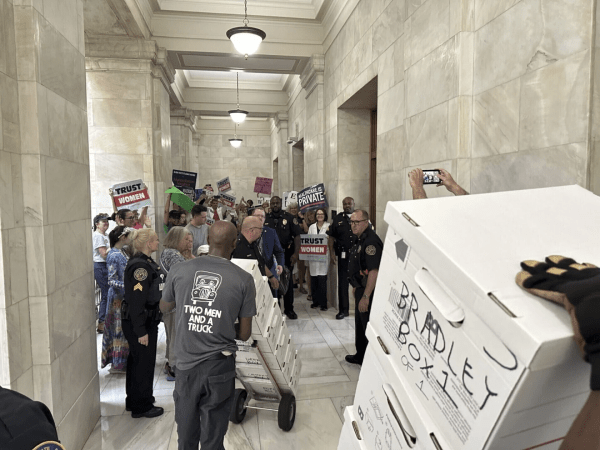
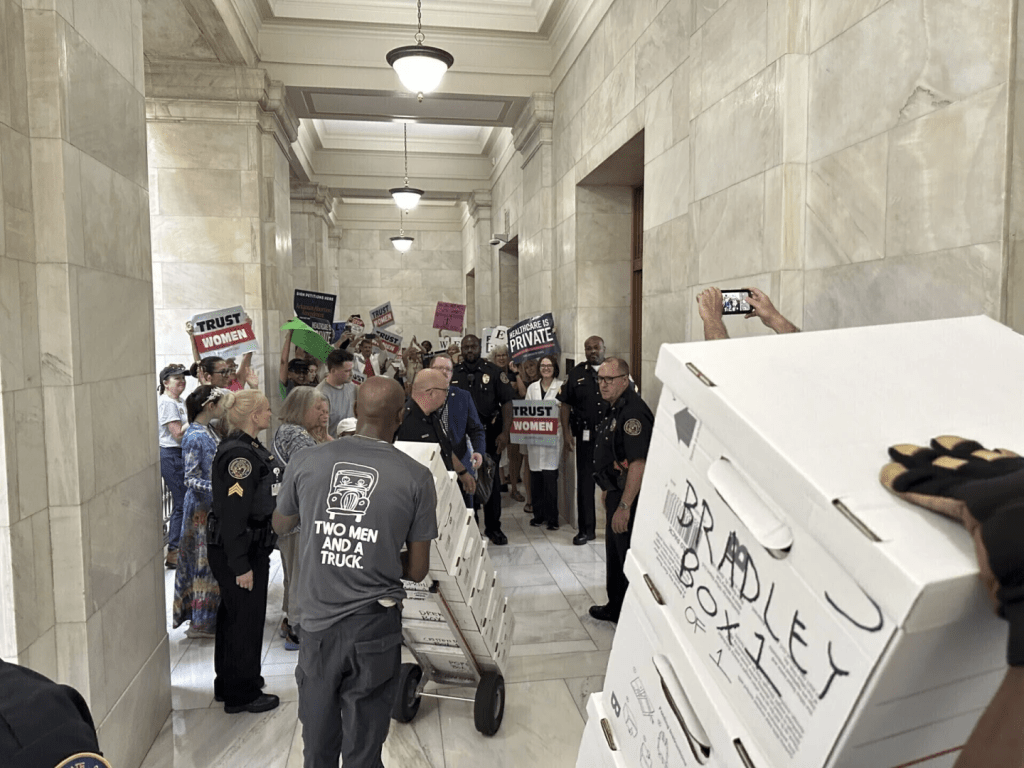
LITTLE ROCK, Ark. (AP) — On Thursday, the Arkansas Supreme Court upheld the state’s decision to reject petitions for an abortion rights ballot initiative, preventing the measure from appearing on the November ballot.

The ruling is a setback for organizers seeking a constitutional amendment in the heavily Republican state, where opposition to abortion is widely supported by top leaders.

Election officials ruled that Arkansans for Limited Government failed to meet state legal requirements, primarily because they submitted documents related to paid signature gatherers separately instead of as one bundle. The group argued they should have been allowed more time to submit any additional required documents.

“We find that the Secretary correctly refused to count the signatures collected by paid canvassers because the sponsor failed to file the paid canvasser training certification” in the proper manner required by law, Justice Rhonda Wood wrote in the 4-3 majority opinion.

A dissenting justice argued that the decision undermines Arkansans’ rights and essentially alters the state’s initiative process.

“Why are the respondent and the majority determined to keep this particular vote from the people?” wrote Justice Karen Baker, who is currently running against Wood for chief justice. “The majority has succeeded in its efforts to change the law in order to deprive the voters of the opportunity to vote on this issue, which is not the proper role of this court.”

Since the U.S. Supreme Court’s 2022 decision overturning the nationwide right to abortion, efforts have been made to let voters determine the issue state by state. On Tuesday, Montana became the eighth state to place an abortion measure on the ballot for this fall.

Supporters of abortion rights have prevailed in all seven states where abortion questions have gone before voters since Roe v. Wade was overturned.

In a statement, Arkansans for Limited Government called the ruling “a dark day in Arkansas.”

“This effort has generated a wave of fiercely engaged Arkansas women,” the group stated. “We are outraged. We will not back down. And we will remember this in November.”

Republican Gov. Sarah Huckabee Sanders took credit for the ruling on Thursday: “Proud I helped build the first conservative Supreme Court majority in the history of Arkansas, and today that court upheld the rule of law, and with it, the right to life,” she posted on X.

Arkansas currently enforces a near-total abortion ban, allowing the procedure only when the woman’s life is endangered by a medical emergency.

The proposed amendment would have blocked laws banning abortion within the first 20 weeks of pregnancy and permitted it afterward in cases of rape, incest, threats to the woman’s health or life, or if the fetus was unlikely to survive birth. However, it would not have established a constitutional right to abortion.

The ballot measure did not gain backing from major national abortion rights organizations like Planned Parenthood, as it still allowed abortion to be banned after 20 weeks—an earlier cutoff compared to other states where the procedure remains legal.

Had all the signatures been verified, the more than 101,000 signatures submitted by the July 5 deadline would have been enough to qualify the measure for the ballot. The threshold was 90,704 signatures from registered voters across at least 50 counties.

In a prior court filing, election officials stated that 87,675 of the signatures were collected by volunteers. However, they could not determine if 912 signatures came from volunteers or paid canvassers. The court’s majority ruled that only signatures gathered by volunteers could be counted, resulting in the campaign falling short of the required number.

“This is a win for the rule of law in Arkansas and for those who have followed the rules for years to participate in the state’s ballot initiative process,” said Republican Attorney General Tim Griffin, who represented the secretary of state’s office.

Arkansans for Limited Government and election officials clashed over whether the petitions complied with a 2013 state law that requires campaigns to identify each paid canvasser by name and confirm that they were informed of the rules for gathering signatures.

Supporters of the measure argued that they had followed the law regarding their documentation, including identifying each paid signature gatherer. They also claimed that the abortion petitions were being treated differently compared to other initiative campaigns this year, citing similar filings by two other groups.

State records indicate that on June 27, the abortion campaign submitted a signed affidavit with a list of paid canvassers and a statement affirming that the petition rules had been explained to them. Additionally, the July 5 submission included affidavits from each paid worker, acknowledging that the group had provided them with all the rules and regulations required by law.

The state argued in court that the documentation was non-compliant because it was signed by someone from the canvassing company, rather than a representative of the initiative campaign. The court did not issue a ruling on this specific point.

However, the majority on Thursday emphasized that the required documents needed to be submitted as one bundle to ensure that “the Secretary has all the necessary information together and organized when he begins the process.”

The court also noted that the June 27 filing did not account for 74 of the paid gatherers used by the abortion campaign.

In a separate dissent, Chief Justice Dan Kemp argued that the court should have instructed the state to count all of the signatures and appointed a special master to examine the contested facts.

“This case presents an anomaly in Arkansas jurisprudence,” Kemp wrote.

https://apnews.com/article/abortion-ballot-arkansas-supreme-court-48c208d49d82b467fbcc4b9c2724617a

Former gay and bisexual students of Tim Walz praise his life-changing guidance

This blog originally appeared at REDDIT.

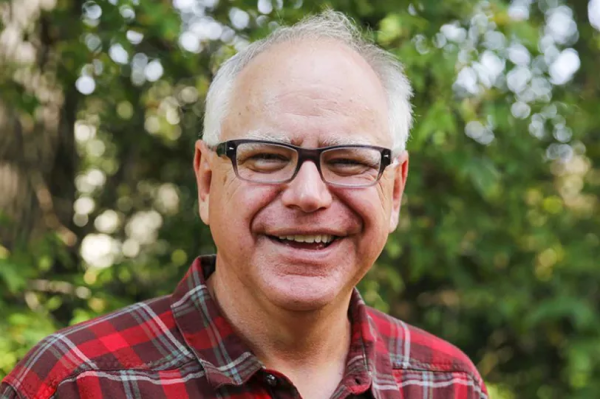
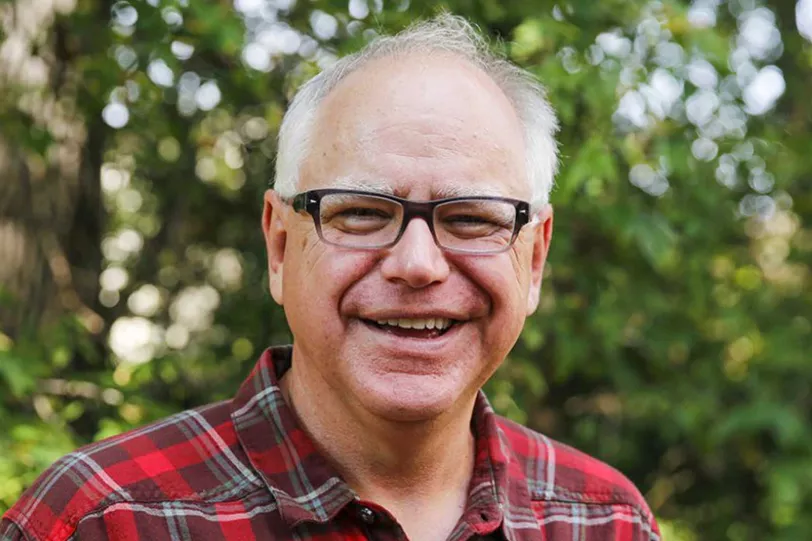
In 1999, as a teacher, Tim Walz founded his high school’s first gay-straight alliance. His former GSA students still hold fond memories of him.

Minnesota Governor and Vice Presidential hopeful Tim Walz (D) left a lasting impact on generations of students through his work as the founder of the Gay-Straight Alliance (GSA) at Mankato West High School. Today, some of his former GSA students are sharing stories about how Walz and his wife, Gwen, provided them with personal support and guidance.

One such student, Jacob Reitan, recalls being bullied for his sexuality. Turning to Walz for help, he found a mentor who made a profound difference in his life.

“Both Tim and Gwen were incredibly supportive of their gay students, and they modeled values of inclusivity and respect,” Reitan shared with MSNBC. “I was bullied in high school, and their values not only helped me, but also, I believe, helped the bully. It showed the bully a better path forward, and I can’t think of anyone better than Tim Walz to guide America on that better path.”

While introducing Tim Walz as her running mate to a crowd of 14,000 in Philadelphia last Wednesday, Vice President Kamala Harris highlighted his work as a high school teacher and football coach in 1999. Walz played a key role in advising the school’s first Gay-Straight Alliance (GSA) to support LGBTQ+ students.

“Tim understood the importance of a football coach getting involved,” Harris noted. “He became the group’s faculty advisor, making the school a safer place for everyone.”

At that time, the AIDS epidemic was still fresh in the nation’s memory, having devastated the LGBTQ+ community, and Minnesota had laws criminalizing same-sex sexual encounters and banning same-sex marriage. The U.S. Supreme Court did not overturn these laws until 2003 and 2015, respectively.

Seth Elliot Meyer, a bisexual former student, initially thought he’d clash with Walz, given that Walz was a hunter and football coach.

“I was a leftist punk rock, anti-everything kind of kid,” Meyer told MSNBC. “But in the year that I had him, I learned that he truly cared about everyone and wanted us all to feel seen.”

Meyer added, “High school was tough for me, and I often felt like teachers wanted me to be someone else. But Walz was one of the few who encouraged me to be myself and speak my mind. He welcomed challenges and wanted to challenge things himself.”

Larissa Beck, an ally who attended the GSA and had Walz as a history teacher, ran into him years later at the state Capitol, where he remembered her.

“We’re talking about 20-something years ago, and to have your 10th-grade geography teacher remember you after all that time means something,” she said. “I couldn’t call him ‘Gov. Walz’—he’ll always be ‘Mr. Walz.’ He was the teacher who greeted every kid every morning, giving high fives and fist bumps. He was deeply involved in the school community.”

Another former student, Emily Scott, recalled how Walz inspired her during a trip to China. “We were on a riverboat cruise in Guilin, and I turned to Mr. Walz and said, ‘I love this. I love China. I want to do this for the rest of my life.’”

“And then he set up the next 10 years of my life. He told me, ‘Emily, you’re going to go to the University of Wisconsin at Madison, major in Chinese, and then move to China to get a job.’ That’s exactly what I did for the next decade.”

Walz’s commitment to LGBTQ+ rights has been a consistent thread throughout his career. When he ran for Congress in the early 2000s, he consulted with the Reitan family about running on a platform supporting gay marriage. He wanted to look his gay students in the eyes and say he was on their side.

As a U.S. House member, Walz supported the repeal of the military’s ban on out gay, lesbian, and bisexual service members and worked to secure enhanced funding for and prosecution against hate crimes motivated by anti-LGBTQ+ bias.

As governor, Walz has continued his advocacy. He has opposed bans on trans athletes in school sports and, in April 2023, signed a law protecting people seeking gender-affirming care from out-of-state investigations and prosecutions. He also signed an executive order directing the Minnesota Department of Health to report on the safety and effectiveness of gender-affirming healthcare.

In May 2023, Walz signed a bill outlawing the use of anti-LGBTQ+ “panic defenses” and legislation preventing libraries from removing books with LGBTQ+ themes. In April 2023, he also banned so-called conversion therapy, the widely discredited practice aimed at changing someone’s sexual orientation or gender identity.

Controversial ex-NBA player known for anti-LGBTQ+ views wins primary, set to challenge pro-LGBTQ+ Sen. Amy Klobuchar

This blog originally appeared at LGBTQ NATION.

He is accused of spending thousands of campaign funds at a strip club and has been criticized for derogatory remarks towards his critics, calling them “beta cuck f-gs.”

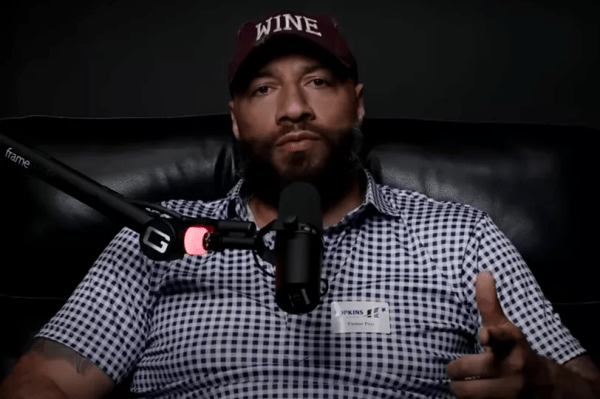
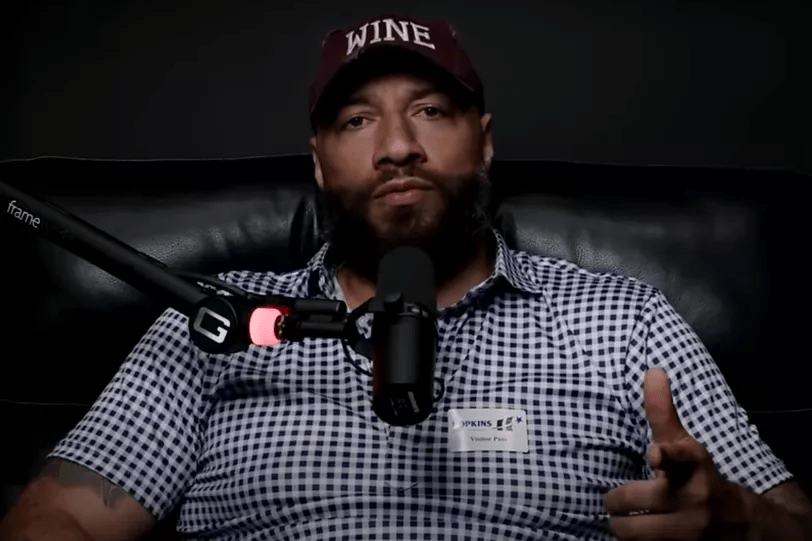
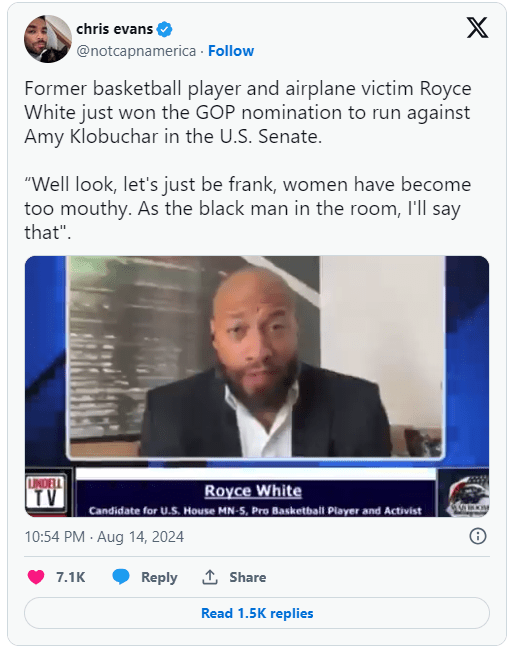
Royce White, a former NBA player known for his conspiracy theories and use of homophobic slurs, won the primary election for the U.S. Senate seat in Minnesota, defeating his opponent, Joe Fraser. White will now compete against incumbent Sen. Amy Klobuchar (D) in the general election this November.

Despite suspicions of potential campaign finance violations, including allegations that he spent thousands of donor dollars at a strip club, the Minnesota Republican Party endorsed White in May.

According to CBS News, Joe Fraser was anticipated to win the race but secured only 29% of the votes. Royce White emerged victorious with 38%.

Royce White, a staunch supporter of former President Donald Trump and a vocal critic of LGBTQ+ rights, is known for his offensive posts on X (formerly Twitter). His account has been described by The Daily Dot as “littered with derogatory statements and offensive slurs,” including multiple instances of homophobic language.

White has specifically targeted several news outlets with derogatory remarks, referring to The Guardian, The Washington Post, Mother Jones, and The Star Tribune as “beta cuck f-gs” and accusing them of being “foot soldiers of the New World Order.”

A Federal Election Commission complaint has been filed against White for allegedly misappropriating over $157,000 from his 2022 campaign funds, including expenditures at a strip club. Additionally, he reportedly owes tens of thousands of dollars in childcare payments.

White frequently appears on Alex Jones’s Infowars, which promotes anti-LGBTQ+ conspiracy theories. He recently made headlines for criticizing Vice Presidential presumptive nominee Gov. Tim Walz (D-MN) after Walz called conservatives weird. White retorted, “You freaks support Pride festivals where grown men are getting p**sed on and sucking each other off in public. You’re a clown and you’re lucky your term wasn’t up or I would’ve run against you. The People Are Coming! You communists are exposed.”

White first gained attention in 2022 when he ran against Democratic Minnesota Rep. Ilhan Omar (D), but lost the Republican primary to Cicely Davis. During that campaign, he made anti-Semitic remarks, which he later attempted to dismiss by referencing Jesus, who was Jewish.

Despite his high-profile controversies, White’s chances of winning the Senate seat are slim. Sen. Amy Klobuchar, who won over 60% of the vote in her 2018 reelection, has nearly $19 million in campaign funds, compared to White’s $85,000.

Read more.

JD Vance’s foreword to the Project 2025 founder’s book describes Democrats as “wolves” that need to be eliminated

This blog originally appeared at LGBTQ NATION.

He also claims that “liberals” have contaminated America’s foundation.

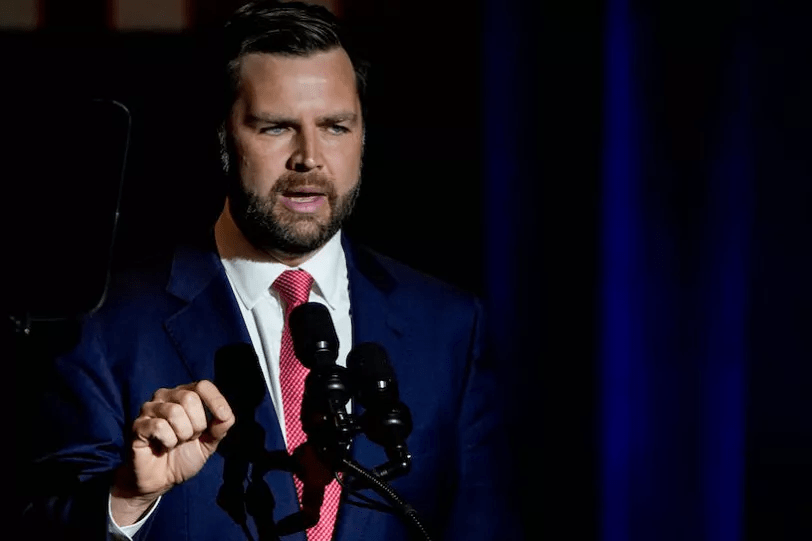
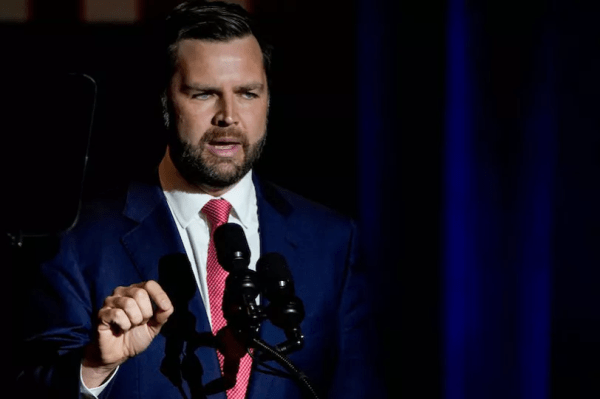
Vice presidential candidate JD Vance addressed supporters at a rally held inside Middletown High School on Monday, July 22, 2024. The Ohio senator is running as the vice presidential candidate alongside former President Donald Trump.

Republican vice presidential nominee Sen. J.D. Vance (R-OH) likened Democrats and left-leaning liberals to “wolves” that need to be eliminated and to gardeners who have poisoned American soil in his foreword to Dawn’s Early Light: Taking Back Washington to Save America, authored by Kevin Roberts. Roberts employs similarly violent and dehumanizing language throughout the book.

Roberts, president of the right-wing Heritage Foundation and the architect of Project 2025—a blueprint for dismantling federal agencies and reversing longstanding civil rights under a potential second term for Donald Trump—drives the book’s controversial message.

Vance opens his 1,091-word foreword to Roberts’ book by referencing Pulp Fiction, a 1994 Quentin Tarantino film known for portraying its three gay characters as violent kidnappers, rapists, and BDSM enthusiasts.

Near the end of his foreword, Vance writes, “We need an offensive conservatism, not merely one that tries to prevent the left from doing things we don’t like.” He then employs a garden metaphor to vilify liberals as gardeners who have poisoned American soil, echoing Trump’s claim that immigrants are “poisoning the blood of our country.”

Vance describes his analogy: “Imagine a well-maintained garden in a patch of sunlight. It has some imperfections, of course, and many weeds… In an effort to eliminate the bad, a well-meaning gardener treats the garden with a chemical solution. This kills many of the weeds, but it also kills many of the good things. Undeterred, the gardener keeps adding the solution. Eventually, the soil is inhospitable.”

In this analogy, Vance explains, “modern liberalism is the gardener, the garden is our country, and the voices discouraging the gardener were conservatives. We were right, of course: in an effort to correct problems—some real, some imagined—we made a lot of mistakes as a country in the 1960s and 1970s.”

While Vance does not specify these mistakes, it’s notable that the 1960s marked the height of the first U.S. Civil Rights Movement, leading to landmark legislation that outlawed segregation, discriminatory voting practices, and workplace, educational, housing, and public accommodation discrimination based on race, color, religion, sex, or national origin. The era also saw significant anti-war, pro-worker, women’s liberation, and LGBTQ+ rights movements, as well as the introduction of birth control pills, which gave women greater control over their reproductive rights.

Vance returns to his garden metaphor, stating, “To bring the garden back to health, it is not enough to undo the mistakes of the past… It needs to be recultivated. The old conservative movement argued if you just got government out of the way, natural forces would resolve problems—we are no longer in this situation and must take a different approach.”

He continues, “As Kevin Roberts writes, ‘It’s fine to take a laissez-faire approach when you are in the safety of the sunshine. But when the twilight descends and you hear the wolves, you’ve got to circle the wagons and load the muskets.’”

Vance emphasizes Roberts’ violent rhetoric with urgency, writing, “We are now all realizing that it’s time to circle the wagons and load the muskets. In the fights that lay ahead, [Roberts’] ideas are an essential weapon.”

While some might interpret Vance’s pioneer imagery—referring to covered wagons and old-timey firearms—merely as historical references, the metaphor of wolves as deadly predators poses a more primal threat. Vance is aware of the right-wing’s affinity for gun rights, and similar imagery has been used by other conservatives to “defend” traditional values.

Roberts himself has called for a “Second American Revolution,” a modern-day repeat of the historic conflict that resulted in significant American casualties. Though Roberts describes this revolution as “bloodless,” he adds it will only be so “if the Left allows it to be.”

Roberts’ suggestions have generated such controversy that Trump has denied any association with Project 2025, while the Heritage Foundation has claimed to have shut it down, despite ongoing recruitment for a second Trump administration. Roberts’ ideas have become so unpopular that he has postponed his book’s release until after the election.

Read more.

Red Sox’s Jarren Duran Suspended for Two Games After Using Anti-Gay Slur Toward Fan

This blog originally appeared at THEM.

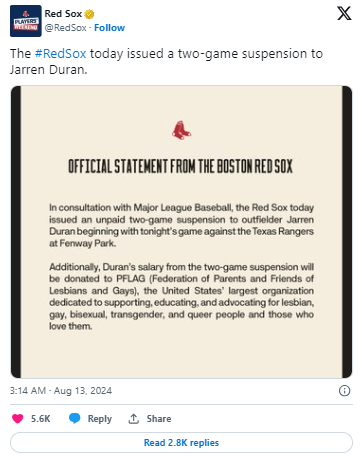
The salary Duran forfeits due to his suspension will be donated to PFLAG.

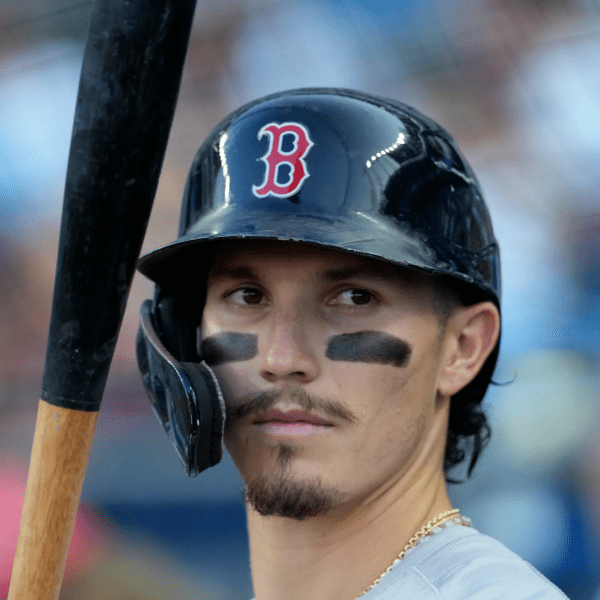
Boston Red Sox player Jarren Duran was suspended for two games without pay on Monday after directing a homophobic slur at a fan. The incident occurred during Sunday’s game against the Houston Astros at Fenway Park when the 27-year-old outfielder was at bat and was being heckled by a fan.

“Tennis racket!” the fan shouted, according to the Associated Press. “You need a tennis racket!”

In response, Duran turned around and yelled, “Shut up, you fucking faggot!”

After the game, the Red Sox released a statement in which Duran apologized for his actions.

“During tonight’s game, I used a truly horrific word when responding to a fan,” Duran said, apologizing to “the entire Red Sox organization, but more importantly to the entire LGBTQ community.”

“Our young fans should be able to look up to me as a role model, but tonight I fell far short of that responsibility,” he continued. “I will use this opportunity to educate myself, my teammates, and to grow as a person.”

In an August 12 statement, the Red Sox announced that, in consultation with Major League Baseball (MLB), Duran has been issued a two-game unpaid suspension starting with Monday night’s game against the Texas Rangers. His salary from the suspension — amounting to $8,172, according to ESPN — will be donated to the LGBTQ+ organization PFLAG, previously known as Parents and Friends of Lesbians and Gays.

This isn’t the first time an MLB player has been suspended for using an anti-gay slur. In 2017, the league banned Toronto Blue Jays star Kevin Pillar for two games after he directed a homophobic slur at Atlanta player Jason Motte. That same year, Oakland Athletics outfielder Matt Joyce was also suspended for two games after using a slur toward a fan. Back in 2012, Blue Jays player Yunel Escobar received a three-game suspension for wearing eye-black strips with a Spanish anti-gay slur written on them.

Read more.

Beloved 20-Year-Old Trans Woman Dylan Gurley Tragically Killed in Texas

This blog originally appeared at THEM.

According to the Human Rights Campaign, Texas is responsible for over 10% of all trans murder victims.

Dylan Gurley, a young transgender woman who was just shy of her 21st birthday on August 18, was tragically killed in Texas on July 23.

As reported by the Fort Worth Star-Telegram, police discovered Gurley with “traumatic injuries” at a residence in Denton, Texas around 11 p.m. that evening. She was rushed to the Medical City Denton hospital, where she succumbed to her injuries about 40 minutes later. According to the Tarrant County Medical Examiner’s Office, Gurley’s official cause of death was “blunt and sharp force injuries with strangulation,” indicating that she may have been beaten, cut, and strangled.

Few details have emerged about her death, other than that she was unhoused at the time, according to the Human Rights Campaign (HRC). A suspect has yet to be identified. An online obituary states that Gurley was born in Arlington, Texas, and is survived by her parents, step-parents, grandparents, and siblings. “Many other family members and friends loved Dylan,” the obituary reads.

Dylan’s sister, Senica Ciarallo, has launched a GoFundMe campaign to help raise funds “to give Dylan the memorial she wanted and deserved.” The money will be used for urns, bracelets, and necklaces to hold her ashes for those closest to Gurley. The family is also planning a special event to honor what would have been her 21st birthday.

Read more.

Blog at WordPress.com.

Up ↑