A blog for LGBTQIA+ migrating to more welcoming states or counties
Author: Bob McCranie
I am so proud to run Texas Pride Realty Group. We set out on a mission in 2009 to serve the diverse communities of Texas and to hire kick-ass agents who practice the highest ethics and professionalism. I believe that the agent's role is to help the consumer make well-educated decisions, even if those decisions lead away from a purchase or sale.
I believe that education is vital in this industry. I currently have over 1300 hours of real estate courses on my transcript with the State of Texas. Additionally, I am a Real Estate Business Coach at Tom Ferry International, the largest-real-estate specific coaching company in the world. I coach agents in the US and Canada, and have coached clients in Australia, New Zealand, Brazil, and Switzerland. I also have knowledge of the UK and Irish markets.
Opening Texas Pride Realty was always a goal of mine and I am working night and day to be sure it is successful. The best way to do that is to be sure clients are satisfied and agents are busy. What better legacy could someone leave in this industry than a group of well-trained, high-quality brokers who do your job better than you?
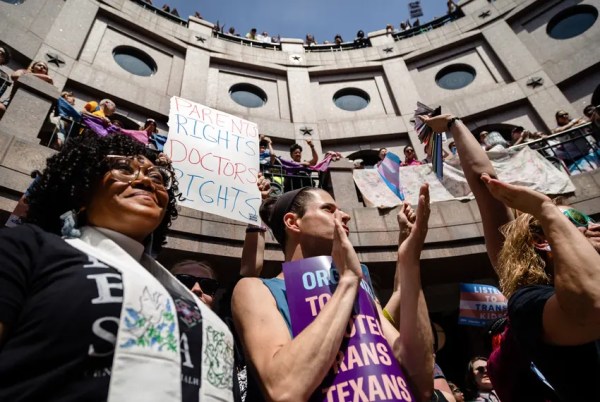
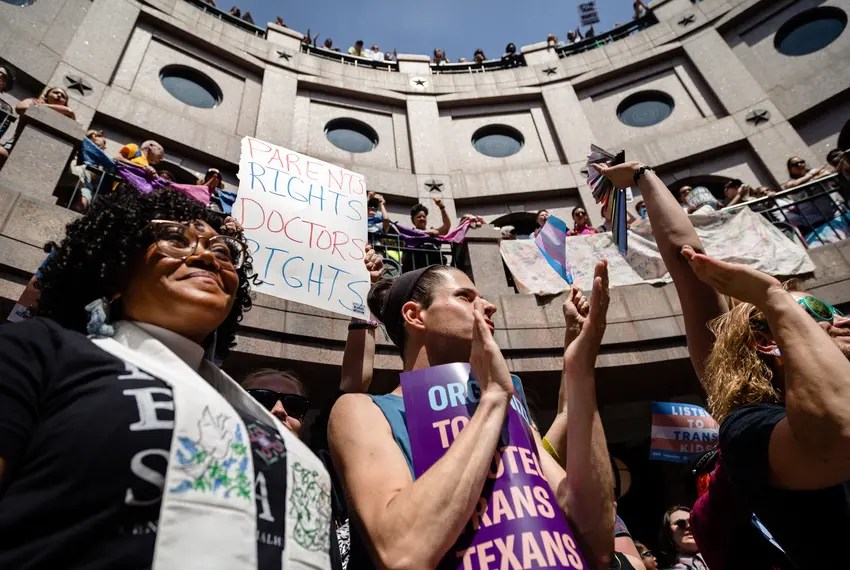
People line the railing on all three levels of the outdoor rotunda of the state Capitol in Austin, and wave signs during a “Fight for Our Lives” rally in opposition of anti-LGBTQ bills on March 27.
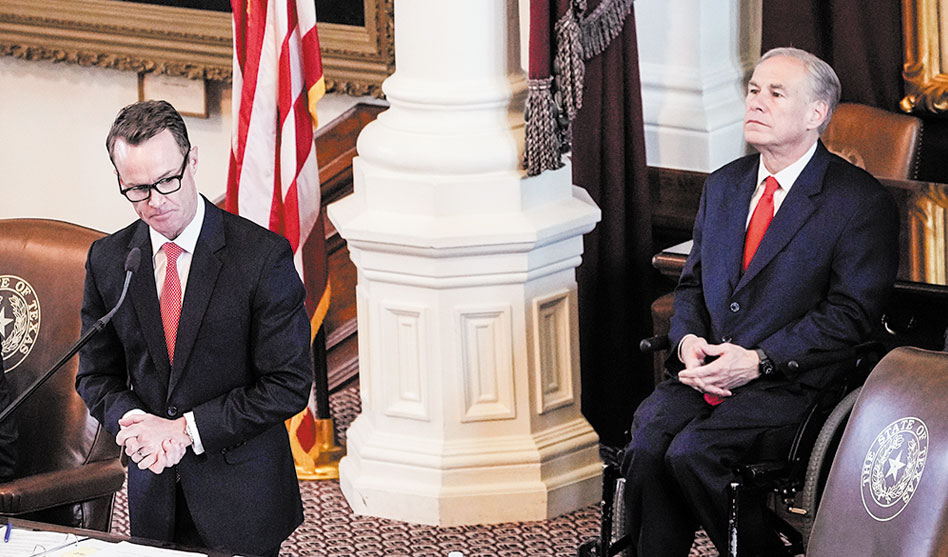
On Friday, Governor Greg Abbott of Texas signed Senate Bill 14 into law, effectively prohibiting transgender children from accessing puberty blockers and hormone therapies. However, the new law may face legal challenges before it becomes effective on September 1st.
The passage of Senate Bill 14 marks a significant victory for the Republican Party of Texas, which has consistently opposed any measures that recognize transgender identities. In contrast, trans children, their parents, and LGBTQ advocacy groups vehemently oppose the law, with some pledging to fight against its implementation.
With this development, Texas joins the ranks of 18 other states that restrict transition-related care for transgender minors. Notably, Texas is home to one of the largest transgender communities in the United States, underscoring the impact and implications of this legislation on a significant portion of the population.
States Are Silencing the Will of Millions of Voters
The upcoming bill, expected to be signed by Governor Greg Abbott of Texas, has raised concerns about limiting the autonomy of cities within the state. The bill would significantly curtail the ability of cities to govern themselves, stripping them of the power to establish local workplace standards, safeguard civil rights, and enhance their environments. This would effectively undermine the authority of local officials elected by voters to carry out these responsibilities.
If enacted, the bill would invalidate any city ordinance or regulation that contradicts existing state policies in these key areas. It would also grant private citizens and businesses the right to file lawsuits and seek damages if they perceive discrepancies between city and state regulations. Consequently, cities would be unable to enact measures such as prohibiting discrimination against LGBTQ employees, implementing rules to curb predatory payday-lending practices, or addressing issues like overgrown lots, unsafe festivals, or inadequate waste storage. Local worker protections, including essential provisions like water breaks for laborers in the Texas heat, would also be prohibited.
Proponents of the bill, including business lobbyists and Republican legislators, argue that its purpose is to eliminate conflicting regulations within the state. However, the presence of such conflicting regulations primarily exists in a few predominantly Democratic cities within an overall conservative state. This bill represents the latest endeavor by Republicans to eradicate any policies that clash with their conservative agenda, even if those policies have garnered substantial support from the voters in those cities who elected representatives to act in their best interests.
Already the state won’t let cities ban discrimination against low-income renters, and it prohibits them from cutting their police budgets. Dozens of other bills have been introduced to restrict election reforms by Texas cities and counties, including one that would let an official, most likely a Republican, overturn election results in a single place: largely Democratic Harris County, which includes Houston. “The bill is undemocratic,” Mayor Ron Nirenberg of San Antonio told The Texas Tribune. “It is probably the most undemocratic thing the legislature has done, and that list is getting very long. Local voters have created city charters, and I can’t imagine that they will be pleased to have their decisions usurped by lawmakers.”
As Texas anti-LGBTQ legislation reaches boiling point, so do queer homeowners.
When Bob McCranie initially launched a website to assist LGBTQ individuals in leaving Texas due to the state’s anti-queer legislative agendas, some of his friends dismissed it as exaggeration. However, within just 60 days of the site’s launch, McCranie found himself needing to expand his resources to keep up with the overwhelming demand.
As a result, McCranie’s organization, Flee Texas, transformed into Flee Red States. Over the past few years, he explained, queer Texans have frequently engaged in discussions centered around the question, “Where are you going?” Recognizing the increasing threat posed by anti-LGBTQ legislation, gay homeowners in Texas are making the decision to leave the state in search of more welcoming environments. Faced with the looming presence of discriminatory laws, these individuals are opting to jump ship from the Lone Star State in pursuit of greater acceptance and equality elsewhere.
Gov. Greg Abbott has pledged to sign several bills coming out of the 88th Texas Legislature that target transgender Texans
“If you eat at a restaurant, and you had horrible food, you would never go back and spend money at that restaurant,” McCranie said.
“You’d find a better restaurant and tell your friends to go there. States should compete for our money like restaurants do. [Texas] needs to treat us better than this, or we’ll take our tax money somewhere else.”
Drawing on his extensive experience as a gay Realtor and his deep roots in Texas, Bob McCranie, the founder of Texas Pride Realty, has taken on the role of providing a sanctuary for marginalized individuals not only in Texas but also across the country. In response to the increasing need for support, he established Flee Red States, a platform that connects LGBTQIA Realtors to assist homeowners seeking to sell their properties in states predominantly governed by Republican lawmakers.
Recognizing the importance of having a network of real estate professionals who understand the unique challenges and concerns faced by LGBTQIA individuals, McCranie has created a community of Realtors dedicated to helping people find refuge in more inclusive and accepting areas. Through Flee Red States, homeowners can access the expertise and guidance of these LGBTQIA Realtors, ensuring a smooth transition and a sense of security as they navigate the process of selling their homes and moving to more progressive regions.
As more and more Red States pass hateful laws concerning LGBTQ people, more of us are packing and moving. Are you an LGBTQ person living in a Red state and looking to move to a more accepting and safer place? This video is for you! Join us as we discuss some of the best states and countries for LGBTQ people to live in. We’ll cover everything from legal protections and anti-discrimination laws to community resources and social events. Whether you’re looking for a new home or just curious about the LGBTQ scene in different parts of the world, this video has something for everyone. Don’t miss out on this essential guide to LGBTQ-friendly places to live!
TALLAHASSEE, Fla. (AP) — Debate surrounding Florida’s new restrictions on gender-affirming care focused largely on transgender children. But a new law that Republican presidential candidate and Gov. Ron DeSantis signed last month also made it difficult – even impossible – for many transgender adults to get treatment.
Eli cuddles his dog on the couch at his home in Casselberry, Fla., May 29, 2023. Eli and his fiancé Lucas, both transgender men, plan to move to Minnesota with their dog and two cats later this year. The Associated Press is not using Eli’s and Lucas’ last names because they fear reprisal.
The discussions in the Legislature surrounding the ban on gender-affirming care for minors in Florida have had a significant impact on transgender individuals like Eli and Lucas, who are a couple. As trans men, they have been closely following the debates, with Democrats warning about the increased risk of suicide among trans children if the ban is implemented, and Republicans sharing misguided stories of mutilated kids. However, what caught Eli and Lucas off guard was the realization that the bill’s language would also disrupt their own lives.
Feeling blindsided by the lack of communication and discussions in their circles, Eli, aged 29, expressed the challenges they now face. The couple, like many other transgender adults in Florida, is confronted with difficult choices. They must decide whether to uproot their lives and seek access to gender-confirming care elsewhere, as the restrictive regulations in Florida make it a test case for limitations on care for adults. This situation has left individuals like Eli and Lucas, as well as clinics providing gender-affirming services, grappling with uncertainty and trying to navigate a challenging landscape.
Anti-trans bills and threats leave adults and children fearing for their safety at home
This month, Lauren Rodriguez will move out of her home in Texas, a state where she has lived for 20 years, to relocate to New Zealand. “People think we are dramatic for leaving, but when you look at what’s happened to my family, we’re not,” she says, amid packing up her life’s belongings. “It has been a total witch-hunt. It takes its toll.”
Six years ago, Rodriguez’s son Grey told her that he was transgender. That first night, she stayed up Googling “what to do when your kid tells you they’re trans”. From there, she took him to get his “first boy haircut” and contacted local LGBTQ+ organizations for advice.
Although she describes the climate against trans people then as less hostile than it has become, the news was not well received by some in their neighborhood. At the extreme, neighbors, a teacher, and even family members reported Rodriguez to Child Protection Services (CPS) for helping her son, who was then under 18, access gender-affirming medical care. Rodriguez, a social worker, has been on the receiving end of more than 10 complaints to the CPS. All cases were opened, investigated and closed.
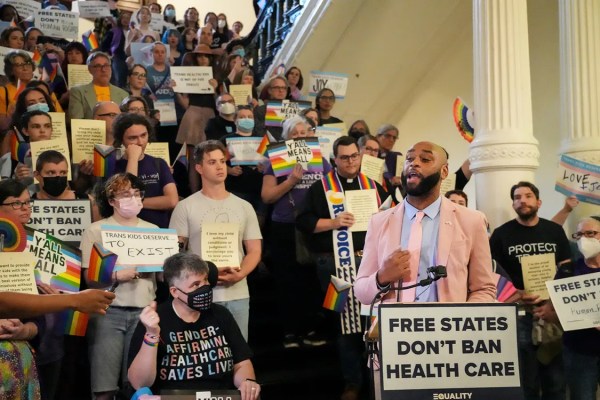
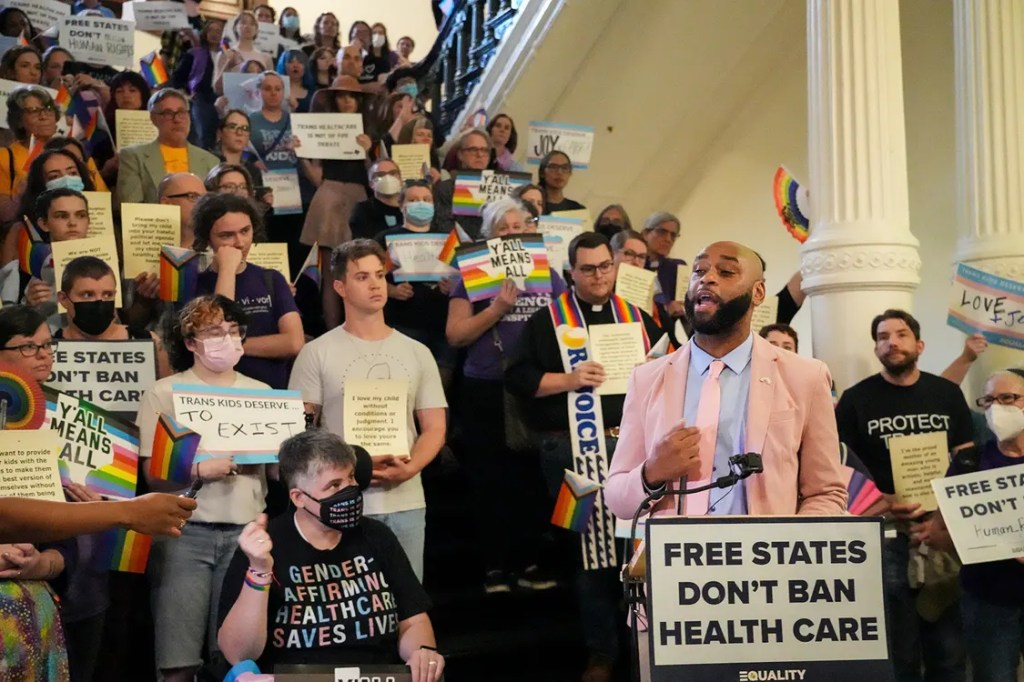
The state representative Christian Manuel speaks as LGBTQ+ activists protest against SB14 at the Texas capitol last month. Photograph: Mikala Compton/AP
During this period, Texas was one of a number of Republican-led states where the political mood was changing. The current legislative session in Texas has seen an unprecedented number of anti-gay and anti-trans bills pass through the senate. Some restrict teaching about gender and sexuality in schools. One bill has a section that would allow anyone to criminally prosecute an individual librarian in a school for distributing “harmful material”.
Rodriguez’s story is one of many; swathes of LGBTQ+ Americans are either migrating or want to migrate due to anti-LGBTQ+ sentiment in their states. The Miami Heat basketball player Dwyane Wade, who has a teenage trans daughter, recently made headlines for moving his family to California because he did not feel safe raising a child in south Florida amid mounting hostility and regressive legislation. The bill SB254, signed by Governor Ron DeSantis in May 2023, would not only prohibit gender-affirming care for anyone under the age of 18 in Florida, and restrict adult access to this care, but would allow the state to temporarily remove parental custody of trans children.
These laws encourage the “financial and emotional destruction” of LGBTQ+ people, says Bob McCranie, a Texas real estate agent who runs Flee Red States, an initiative he decided to launch in 2021 after observing intimidation of LGBTQ+ friends and colleagues.
Flee Red States operates almost like a refugee organization – except that the migration is internal. People with the financial capital and flexibility to do so are fleeing political persecution in their own country.
So far he has facilitated moves to Illinois, Colorado, Connecticut, New England, New York and California, working on behalf of those looking to leave states where legislation is making life unlivable, including Texas, Missouri, Alabama, Florida, Indianapolis and Tennessee.
As more and more Red States pass hateful laws concerning LGBTQ people, more of us are packing and moving. Are you an LGBTQ person living in a Red state and looking to move to a more accepting and safer place? This video is for you! Join us as we discuss some of the best states and countries for LGBTQ people to live in. We’ll cover everything from legal protections and anti-discrimination laws to community resources and social events. Whether you’re looking for a new home or just curious about the LGBTQ scene in different parts of the world, this video has something for everyone. Don’t miss out on this essential guide to LGBTQ-friendly places to live!
GOP state lawmakers in red states engage in an extraordinary crackdown on transgender civil liberties this year
According to an analysis by The Washington Post, this year’s state legislative sessions in the United States have seen a record number of bills targeting LGBTQ rights, particularly transgender rights. These bills have been introduced and passed into law at a higher rate than ever before in U.S. history.
Some notable examples include Iowa’s ban on transgender female athletes from participating in high school and college sports. This law also allows cisgender female athletes to sue school districts if they fail to comply with the ban. Utah has enacted a law prohibiting transgender youth from changing their gender markers on identification cards and birth certificates. Arkansas has granted transgender adults up to 15 years to file a medical malpractice lawsuit against their doctors for gender-affirming care received during their time as minors.
These laws, along with others, are set to take effect in the coming months. In total, at least 29 bills targeting transgender rights have become law in 14 states so far this year, surpassing the previous record of 20 such bills in 12 states from last year. It’s important to note that all these bills have been signed into law by Republican governors or enacted by GOP legislatures overriding vetoes from Democratic governors.
The analysis also reveals that a total of 408 similar bills have been introduced in 45 states this year, compared to 156 bills in 35 states last year, indicating a significant increase in legislative efforts targeting transgender rights.
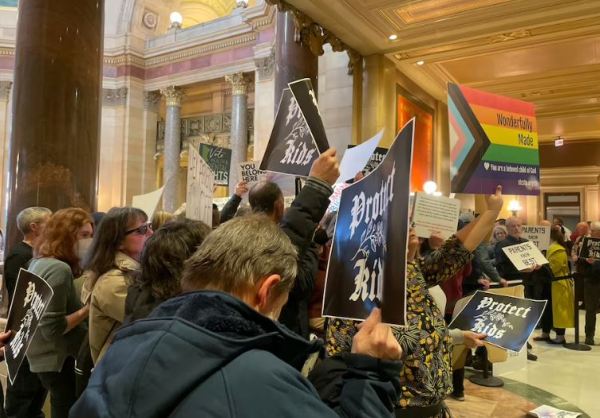
Protesters hold signs as they chant for and against a bill that would make Minnesota a transgender refuge state and strengthen protections for kids and their families who come to the state for gender-affirming care, in March. (Trisha Ahmed/AP)
“LGBTQ people are under fire, unlike possibly ever before and across virtually every aspect of our lives,” said Logan S. Casey, who serves as a senior researcher at Movement Advancement Project, which tracks the legislation. “This is part of a very clear and identifiable national effort in state legislatures that is and has been going on for years — and it’s really culminating this year.”
In recent times, there has been a concerning trend of states passing legislation to limit or ban gender-affirming health care for young people. This year alone, at least 12 states have enacted such restrictions, joining several others that already had similar laws in place. In Missouri, the recently announced restrictions by the state attorney general would apply to individuals of any age, further tightening the limitations.
As legislative sessions continue across the country, it is possible that more states may introduce additional restrictions on gender-affirming health care for young people. These limitations can have significant implications for transgender and gender non-conforming individuals, affecting their access to necessary medical interventions and support.
However, amid this landscape, there are also states that have taken steps to protect transgender health care. Colorado, Illinois, Maryland, New Mexico, and Minnesota have passed bills aimed at providing legal protections, health care coverage, and access to transgender individuals. Recently, the Minnesota legislature passed a bill that extends protections to youth and parents seeking health care, as well as to the providers offering it. Governor Tim Walz, a supporter of the bill, has expressed his intention to sign it into law.
The contrasting approaches in different states reflect the ongoing debates and discussions surrounding transgender rights and access to gender-affirming care. The situation remains dynamic, with differing viewpoints and legislative actions taken across the country.
Activists and community members march into the Minnesota State Capitol building during a Trans Day of Visibility rally on March 31, 2023.
“We are going to lead on this issue,” said Walz, a second-term Democrat at an LGBTQ rights rally last week. “And I want to make note, not only do you belong here, you are needed here, you’re part of the fabric that makes Minnesota the best place in the country to live.”
Last year, California passed a similar bill, calling itself a “refuge” state for transgender youth and their families. Also this year, Oregon Democrats are proposing a constitutional amendment to protect care. Washington State and Vermont have their own protective bills.
Minnesota
The bill’s passage in Minnesota aims to protect individuals receiving or providing gender-affirming health care from out-of-state requests for child removal, extraditions, arrests, or subpoenas. Physicians and families seeking such care have expressed relief, as it ensures continued access to treatment and alleviates concerns regarding the limitations imposed by laws in other states. Some healthcare providers have already noticed an increase in prospective patients from states where options for gender-affirming care have been restricted.
“Frequently, we will talk about gender-affirming care as life-saving health care. And we’re not saying that to be dramatic,” says Dr. Angela Kade Goepferd, chief education officer and medical director of the Gender Health program at Children’s Minnesota. Kade Goepferd says kids who can’t access care “are at significantly higher risk of worse mental health outcomes, including suicidality.“
Republicans in the state legislature have opposed extending legal protections to families traveling for gender care services.
“The bill makes Minnesota a sanctuary state for so-called gender-affirming care, while simultaneously infringing on the fundamental right of parenting,” said state Rep. Peggy Scott, a Republican, last month.
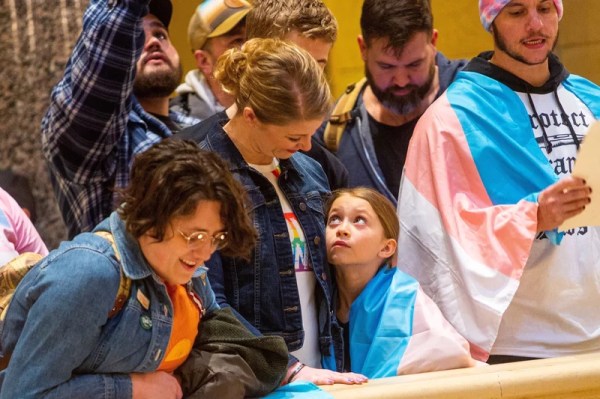
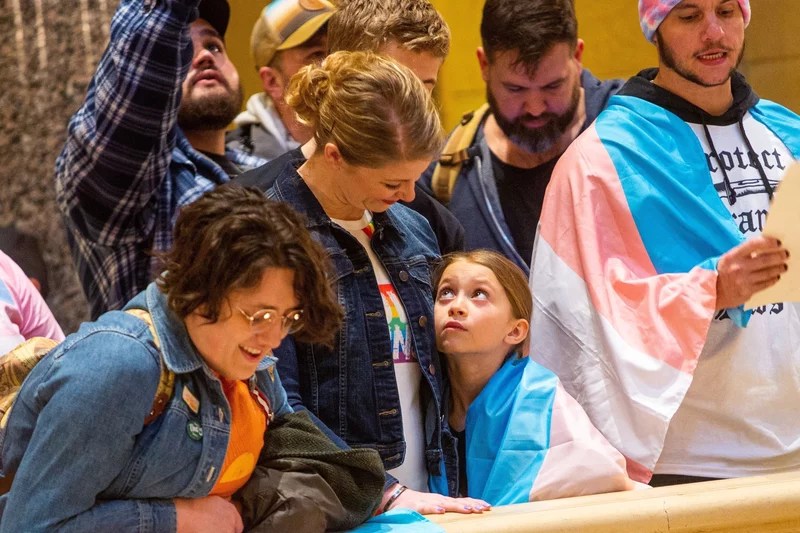
Bella Mendez, 8, stands with her mother during a Trans Day of Visibility rally at the Minnesota State Capitol building on March 31, 2023.
Maryland: Broadening Medicaid coverage
The Maryland Trans Equity Act, which came into effect on January 1, 2024, represents a significant step forward in expanding access to gender-affirming treatments for individuals covered by the state’s Medicaid plan. This act aligns Medicaid coverage with what is offered by private insurers, ensuring that transgender individuals have access to essential treatments. These treatments can include procedures such as hair modifications, facial or neck alterations, and voice therapy.
By providing coverage for gender-affirming care, the Maryland Trans Equity Act aims to address disparities in healthcare access and promote equality for transgender individuals. It is estimated that around 25 additional individuals will be able to access gender-affirming treatments through the Medicaid program as a result of this act.
Research has consistently shown the positive impact of gender-affirming care on the mental health and well-being of transgender individuals. Studies published in the Journal of the American Medical Association and other reputable sources have demonstrated that access to gender-affirming care can help reduce rates of anxiety, depression, and other adverse psychological outcomes. By expanding coverage for these treatments, Maryland aims to support the overall health and well-being of its transgender population.
The Maryland Trans Equity Act represents a significant advancement in promoting inclusivity and equality in healthcare, ensuring that transgender individuals have access to the necessary treatments that can positively impact their lives.
Colorado: Expanded legal protections
Last week, Democratic Governor Jared Polis signed a bill into law in Colorado to provide legal protections and ensure access to reproductive healthcare and gender-affirming care for people from other states. The law aims to create a safe haven for individuals seeking services such as abortion, puberty blockers, and gender-affirming care without fear of prosecution.
Under this law, Colorado will not participate in out-of-state investigations targeting providers or recipients of abortion or gender-affirming care. This includes ignoring search warrants, arrests, subpoenas, summons, or extraditions to another state, as long as the activity took place in Colorado and there is no indication of a violation of Colorado law.
Democratic State Representative Meg Froelich, one of the main sponsors of the legislation, emphasized that the laws of other states seeking to punish providers of reproductive healthcare or gender-affirming care do not apply in Colorado.
The effort to make Colorado a safe haven for transgender individuals was initially proposed by Colorado’s only transgender state lawmaker, Democratic Representative Brianna Titone, last year. However, Democrats decided to address the issue in the current legislative session.
The bill faced extensive hearings and debates, but Republicans did not have enough votes to defeat it. Supporters of the legislation argue that it extends legal protections and expands insurance coverage to ensure access to essential healthcare services. However, there were concerns from some individuals, such as Cynthia Halversion from Colorado Springs, who testified against the bill, expressing worries about potential risks and illegitimate practices.
Overall, the new law in Colorado aims to safeguard the rights and access to reproductive healthcare and gender-affirming care for individuals from other states, while providing legal protections to providers offering these services.
Michigan: Growing the state’s Civil Rights Act
Michigan has taken steps to protect individuals based on “sexual orientation” and “gender identity” under the state’s civil rights law, known as the Elliott-Larsen Civil Rights Act. This expansion was signed into law by Democratic Governor Gretchen Whitmer last month.
The Elliott-Larsen Civil Rights Act initially provided protection against discrimination based on categories such as religion, race, color, national origin, age, sex, height, weight, familial status, or marital status. With the recent amendment, the law now includes “sexual orientation” and “gender identity” as additional protected classes.
While Michigan has not explicitly addressed the protection of gender-affirming care in its statutes, the inclusion of “gender identity” as a protected class under the civil rights law is seen as a step toward recognizing and safeguarding the rights of transgender and gender non-conforming individuals.
By expanding the protected classes, Michigan aims to provide legal protections and prohibit discrimination based on sexual orientation and gender identity in various areas, such as employment, housing, public accommodations, and public services. This move reflects efforts to promote equality and ensure that individuals are not subjected to discrimination or unfair treatment based on their sexual orientation or gender identity.
“I am so proud to be here and I am excited to put our state on the right side of history,” Whitmer said as she prepared to put her signature to the bill. That move capped nearly four decades of efforts to add LGBTQ protections to state law.
The changes were adopted by the legislature’s Democratic majorities over the objections of Republicans and the Michigan Catholic Conference.
“While I fully support this original intent of the Elliott-Larsen Act and understand the importance of protecting individuals from discrimination, I also believe that it is crucial to respect the religious beliefs of small business owners and employers,” said Republican state Rep. Rachelle Smit.
But former Rep. Mel Larsen, a Republican who the original law is partially named for, says gay rights were always intended to be part of the protections.
Dana Ferguson is Minnesota Public Radio’s politics reporter, Bente Birkeland is Colorado Public Radio’s public affairs reporter, Scott Maucione is WYPR’s health reporter, Rick Pluta is Michigan Public Radio’s managing editor and state Capitol bureau chief, Colin Jackson is Michigan Public Radio’s capitol bureau reporter and Acacia Squires is NPR’s States Team editor.
In terms of LGBTQ rights and acceptance, the United States has made significant progress, but the level of LGBTQ-friendliness can vary across states. In this article, we will discuss five states that are considered the best for LGBTQ couples, taking into account factors such as anti-discrimination laws, marriage equality, and LGBTQ community resources.
California:
California is known for its welcoming environment for LGBTQ individuals and couples. The state legalized same-sex marriage early on and has strict anti-discrimination laws. Cities like San Francisco have vibrant LGBTQ communities and host large-scale pride events.
New York:
New York has a rich history of LGBTQ activism and a sizable LGBTQ population. The state legalized same-sex marriage in 2011 and has strong anti-discrimination laws. New York City, particularly neighborhoods like Chelsea and Greenwich Village, is known for its LGBTQ-friendly atmosphere and iconic landmarks.
Virginia:
Although not typically mentioned among LGBTQ-friendly states, Virginia has made significant progress recently. The Virginia Values Act protects LGBTQ individuals from discrimination, and the state has a growing LGBTQ community with events like Hampton Roads Pride and Virginia PrideFest.
Massachusetts:
Massachusetts holds the distinction of being the first state to legalize same-sex marriage in 2004. It has a robust network of LGBTQ community centers, progressive anti-discrimination laws, and a vibrant LGBTQ tourism industry. Boston, in particular, has a thriving LGBTQ population.
Washington:
Washington state legalized same-sex marriage in 2012 and has enacted progressive legislation to protect LGBTQ rights. Seattle, in particular, has a strong LGBTQ community with ample resources and support services. The state is also known for its progressive politics and environmental activism.
It is important for LGBTQ couples to carefully consider their options and prioritize their needs when choosing a place to live or visit in the United States. The states mentioned above offer a welcoming environment, legal protections, vibrant LGBTQ communities, and an abundance of resources and support services.










 fleeredstates.blog
You must be logged in to post a comment.