Study Reveals Hawaii as the Most Expensive State for Homebuyers in the U.S.

This blog originally appeared at The Hill.

A recent study analyzing Zillow data conducted by Studio City realtors has unveiled the exorbitant costs of purchasing a home in certain states. According to the study, Utah, California, and Colorado saw monthly median sale prices exceeding $500,000, while Hawaii emerged as the most expensive state with an astonishing average home price of $805,775.

The findings highlight the ongoing challenges faced by homebuyers in these states, particularly in Hawaii, where housing affordability has reached unprecedented levels. Tony Mariotti, a realtor from Studio City, attributed the surge in house prices to market turbulence, which has led to a significant increase in home values across the United States.

The nationwide trend of rising home prices in February, following a period of decline due to low inventory and a slight uptick in demand, is indicative of the ongoing struggles faced by prospective homebuyers. Experts predict that affordability will remain a persistent issue in the coming months, further complicating the housing market for those aspiring to own a home.

Here are the priciest and cheapest U.S. states to buy a home:

Kelly Slater surfs in the In Memory of Eddie Aikau big wave surf contest on the North Shore at Waimea Bay near Haleiwa, Hawaii. (Michael Goulding/The Orange County Register via AP, File)

The most expensive states to buy a home

A comprehensive analysis of housing data has revealed the states with the highest price tags for homeownership. Eight states, along with Washington, D.C., experienced a monthly median sale price of $400,000 or more last year, with Oregon reaching that exact figure. Washington state, Nevada, Montana, and Washington, D.C., followed closely behind, with prices ranging from $402,900 to $487,500.

Taking the top spots as the most expensive states were California, Colorado, and Hawaii, with monthly median sale prices of $537,000, $537,125, and a staggering $805,775, respectively.

It is important to note that within these states, costs varied significantly across different areas. For instance, California’s cheapest city, Red Bluff, had a median monthly sale price of $320,000, while the most expensive city, San Jose, skyrocketed to a staggering $1,370,000.

These findings shed light on the challenging landscape of the housing market, with steep prices posing obstacles for potential homebuyers across various regions. As housing costs continue to fluctuate, aspiring homeowners must navigate these disparities in order to find suitable and affordable options.

The most expensive states to buy a home

Last year, the housing market showcased significant variations in home prices across different states in the United States. A total of eight states, along with Washington, D.C., experienced a monthly median sale price of $400,000 or higher, with Oregon precisely hitting that mark. Meanwhile, Washington state, Nevada, Montana, and Washington, D.C., fell within the range of $402,900 to $487,500.

Taking the lead as the most expensive states for homebuyers were California, Colorado, and Hawaii, with monthly median sale prices of $537,000, $537,125, and an astonishing $805,775, respectively.

It is worth noting that housing costs within these states varied significantly across different regions. For example, in California, the median monthly sale price of a house in the cheapest city, Red Bluff, was $320,000, while in the most expensive city, San Jose, the price soared to an eye-watering $1,370,000.

These disparities in housing costs underscore the complexities and challenges faced by prospective homebuyers across the country. Affordability remains a key concern as individuals seek suitable housing options amidst fluctuating market conditions.

CLICK HERE TO READ MORE

Oklahoma Families and Doctor Challenge State’s Ban on Gender-Affirming Care for Transgender Minors

This blog originally appeared at The Hill.

Five Oklahoma families with transgender children, along with a doctor who specializes in treating transgender youth, have filed a lawsuit challenging the recently enacted ban on gender-affirming health care for minors in the state. They argue that the new law discriminates against transgender individuals and violates the constitutional right to parental autonomy.

The lawsuit, filed in federal court on Tuesday by the ACLU, Lambda Legal, and the law firm Jenner & Block LLP, asserts that Oklahoma’s Senate Bill 613, signed into law by Governor Kevin Stitt, causes significant and irreparable harm to transgender adolescents and their parents. The law prohibits health care providers from administering gender-affirming medical care to minors, making Oklahoma the 18th state to enact such legislation.

Notably, Oklahoma is among the four states, alongside Alabama, Idaho, and North Dakota, that have made it a felony to provide gender-affirming health care to transgender children and teenagers, carrying a potential sentence of up to ten years in prison. However, a federal judge previously issued a temporary block on the Alabama law pending a legal challenge by the ACLU.

The lawsuit argues that the Oklahoma law unjustly discriminates against transgender youths and contradicts best-practice standards for gender-affirming care, thereby violating their constitutional rights. While the law prohibits health care providers from offering “gender transition procedures” to minors, it does not prevent the same treatments from being administered to cisgender youths for managing conditions like precocious puberty.

The plaintiffs, including the five transgender minors who are identified using pseudonyms for their safety and privacy, assert that the law jeopardizes their access to safe and medically necessary health care. By specifically targeting transgender adolescents and imposing a discriminatory and categorical ban on their medical treatments, Oklahoma endangers their health and well-being, according to the lawsuit. Furthermore, the law infringes upon the fundamental right of parents to make decisions regarding their children’s care.

The Oklahoma Attorney General’s office acknowledged the filing of the lawsuit and stated that they would review it, reaffirming their commitment to defend the state’s laws. In response, Omar Gonzalez-Pagan, counsel and health care strategist at Lambda Legal, criticized Governor Stitt and the Oklahoma legislature for their actions, stating that the ban on gender-affirming care is rooted in animus towards transgender individuals and fueled by misinformation and disinformation campaigns.

This legal challenge in Oklahoma underscores the ongoing national debate surrounding transgender rights and the restrictions being imposed on gender-affirming care for minors. As the lawsuit progresses, its outcome could have far-reaching implications for the rights and well-being of transgender youth not only in Oklahoma but across the United States.

CLICK HERE TO READ MORE

Kansas City declares itself a sanctuary city for LGBTQ+ people

This blog originally appeared at WFAA.

Kansas City’s new sanctuary status sets it apart as a Democratic-leaning city in a state with a Republican governor and GOP-controlled Legislature.

In a bold move, officials in Kansas City, Missouri, have passed a resolution declaring the city a sanctuary for individuals seeking or providing gender-affirming care, despite a recent state-level ban on such care for minors. The 12 to 1 vote demonstrates the city’s commitment to being an inclusive and safe haven for the transgender and LGBTQ+ community, setting it apart from the state’s Republican-led government.

Similar actions have been taken in other cities across the country where there is opposition to state-level restrictions on transgender rights. This sanctuary status aligns Kansas City with places like Austin, Texas, that have taken a stand against legislation limiting transgender healthcare options.

Governor Mike Parson, a Republican, is expected to sign the ban on gender-affirming care into law, making Missouri one of over 16 states to enact similar restrictions or bans for minors. Meanwhile, a judge is currently reviewing a proposed emergency rule from the state’s Attorney General, which would impose additional requirements and a lengthy therapy process before individuals can access gender-affirming treatments.

Credit: AP

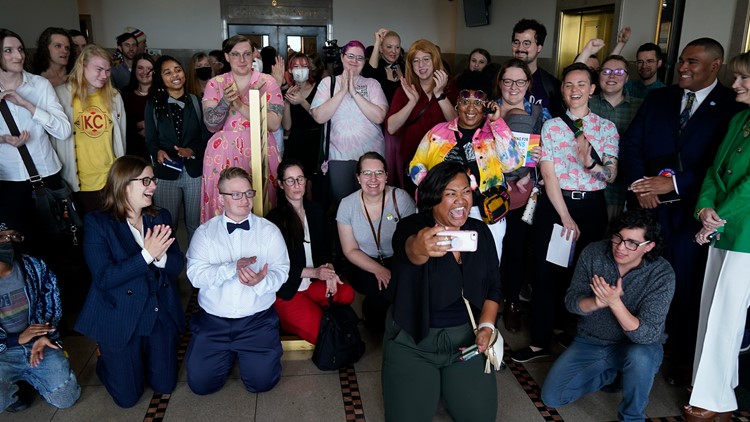
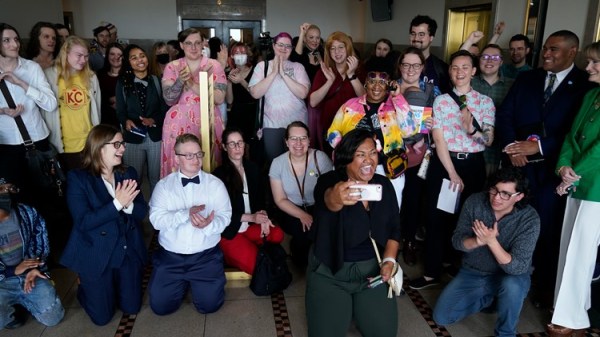
Supporters of a resolution that would make Kansas City, Mo, a sanctuary city for transgender people celebrate outside of city council chambers.

The recently passed resolution ensures that Kansas City will not prosecute or penalize anyone seeking, providing, or receiving gender-affirming care, including puberty blockers, hormones, or surgeries. Moreover, if the state enacts laws or resolutions imposing punishments or fines, city personnel have committed to making enforcement of such requirements their lowest priority.

Opponents of gender-affirming care, typically Republican lawmakers, argue that they are safeguarding children from decisions they may later regret. However, gender-affirming care for minors has been available in the United States for more than a decade and is supported by major medical associations.

Kansas City’s sanctuary status represents a significant step forward in protecting the rights and healthcare options of transgender individuals. By openly defying state legislation and providing a safe haven for gender-affirming care, the city is sending a powerful message of inclusivity and support for the LGBTQ+ community. The outcome of this resolution and ongoing legal battles will have broader implications for the rights and well-being of transgender individuals across the state of Missouri and potentially influence the national conversation on transgender healthcare rights.

“This is an important first step in Kansas City’s commitment to trans and nonbinary people,” Merrique Jenson, founder of Transformations KC, said in a written statement after the vote. “I look forward to trans leaders and Kansas City working together to address the health disparities in our communities and ways we can have sustainable funding & programming reaching all trans people.”

CLICK HERE TO READ MORE

Austin doctors who treated trans kids leaving Dell Children’s clinic after AG Paxton announces investigation

This blog originally appeared at The Texas Tribune.

Attorney General Ken Paxton previously announced an investigation into “potentially illegal” activity. Parents are scrambling to find transition-related care for their kids as the Legislature appears poised to ban it altogether.


Dell Children’s Medical Center in Austin has faced backlash and controversy as it halted the provision of transition-related care to transgender teenagers. Concerned parents were informed that they would have to search for new healthcare providers after the physicians who previously staffed the clinic decided to depart. This decision coincided with Attorney General Ken Paxton’s announcement of an investigation into potential illegal activity at the medical center, following a video report from the controversial far-right activist group Project Veritas, known for its deceptive practices in conducting hidden camera-style investigations. The situation highlights the tense landscape surrounding transgender healthcare and the intersection of political pressure, medical decision-making, and the rights of transgender individuals.

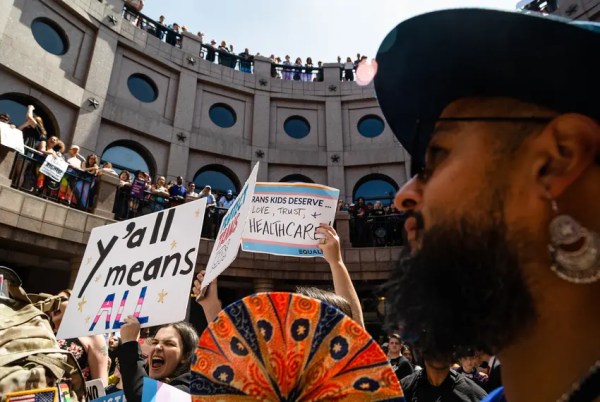
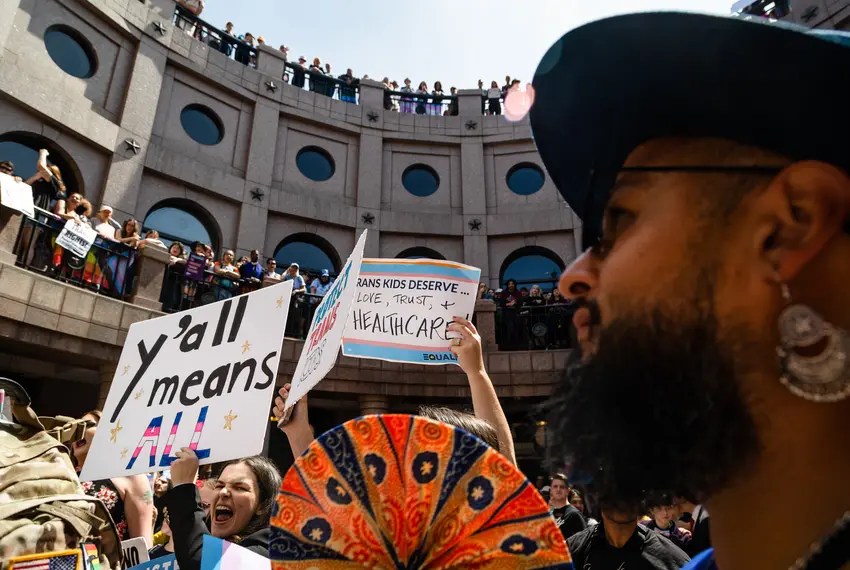
People line the railing on all three levels of the outdoor rotunda of the Texas Capitol in Austin, waving signs during the “Fight for our Lives” rally in opposition of bills affecting LGBTQ people in March. Credit: Evan L’Roy/The Texas Tribune

In a recent video that has sparked controversy, a social worker from Dell Children’s Medical Center in Austin allegedly claimed that the hospital provided gender-affirming treatments to patients as young as eight or nine years old, sometimes after just one consultation. In response to the video, the medical center released a statement clarifying that they do not offer hormone therapy or gender-affirming surgery to children, and they are actively investigating the allegations.

The timing of this investigation coincides with the Texas Legislature’s consideration of a bill that could prohibit transgender minors from accessing puberty blockers and hormone therapy. If Senate Bill 14 becomes law, those already receiving such treatments would be required to discontinue them, which many transgender individuals and their parents argue is a form of forced detransitioning. The proposed ban, scheduled to take effect on September 1, has sparked intense debate regarding the rights of transgender youth in Texas.

Gender-affirming care encompasses a wide range of treatments aimed at addressing gender dysphoria, a condition where an individual’s gender identity does not align with the sex assigned at birth. This care can include social transitioning, such as using different pronouns or adopting a different style of dress, as well as medical interventions such as puberty blockers, hormone therapy, and surgical procedures. It’s important to note that surgeries are rarely performed on transgender minors, particularly those involving sex organs.

The allegations against Dell Children’s Medical Center have ignited a broader conversation about the availability and appropriateness of gender-affirming care for young transgender individuals. Advocates argue that such treatments are crucial in supporting the mental health and well-being of transgender youth, as they alleviate gender dysphoria and help individuals live authentically. On the other hand, opponents claim that these treatments can have long-term consequences and argue that decisions regarding medical interventions should be delayed until individuals reach adulthood.

The controversy surrounding Dell Children’s underscores the broader challenges faced by the transgender community in accessing adequate healthcare. Transgender individuals often encounter significant barriers to receiving gender-affirming care, ranging from limited insurance coverage to discriminatory practices and biased healthcare providers. These challenges can have severe implications for the mental and physical health of transgender individuals, reinforcing the urgent need for inclusive and affirming healthcare systems.

As the investigation into Dell Children’s Medical Center unfolds, the outcome will likely have implications not only for the hospital but also for the broader landscape of transgender healthcare in Texas. The debate surrounding the proposed ban on gender-affirming treatments for trans minors highlights the ongoing clash between those advocating for the rights and well-being of transgender individuals and those seeking to restrict access to such care based on ideological or moral beliefs.

In conclusion, the video allegations against Dell Children’s Medical Center have sparked an investigation and reignited the contentious discussion surrounding gender-affirming care for transgender youth. As the debate unfolds, it is crucial to prioritize the well-being and rights of transgender individuals while considering the medical and ethical complexities of providing such care to minors. Ultimately, the outcome of this investigation and the fate of the proposed ban will shape the landscape of transgender healthcare in Texas and potentially influence the lives of countless transgender youth seeking support and acceptance.

CLICK HERE TO READ MORE

DeSantis signs bill to defund DEI programs at Florida public colleges – CNNPolitics

This blog originally appeared at CNN Politics.

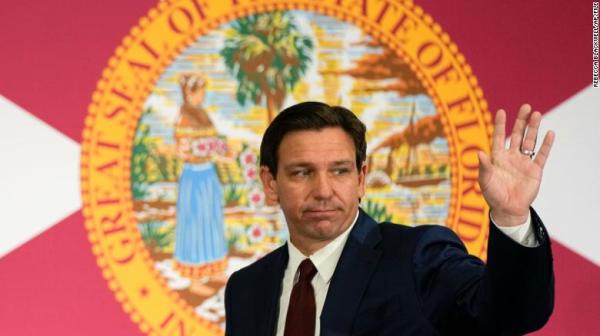
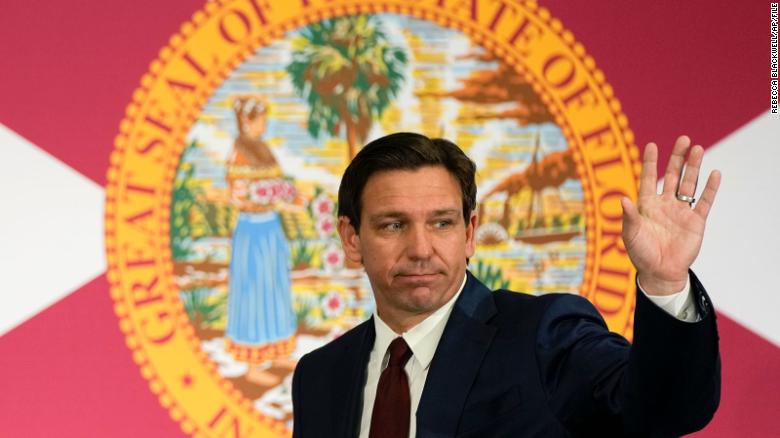
(CNN)Florida Gov. Ron DeSantis on Monday signed legislation to defund diversity, equity and inclusion programs at all state universities, which he called a “distraction from the core mission.”

“This is better viewed as standing for discrimination, exclusion and indoctrination, and that has no place in our public institutions,” DeSantis said at a news conference in Sarasota.

“If you want to do things like gender ideology, go to (the University of California) Berkeley,” DeSantis added. “There’s nothing wrong with that, per se, but for us with our tax dollars, we want to focus on the classical mission of what a university is supposed to be.”

Florida Gov. Ron DeSantis on Monday signed legislation to defund diversity, equity and inclusion programs at all state universities, which he called a “distraction from the core mission.”

Under the law, Florida state universities are barred from spending state or federal funds to promote, support or maintain any programs that “advocate for diversity, equity, and inclusion, or promote or engage in political or social activism.”

“What this does is reorient our universities back to their traditional mission and part of that traditional mission is to treat people as individuals, not to try to divvy them up based on any type of superficial characteristics,” DeSantis said.

CLICK HERE TO READ MORE

Texas Legislature Bans Transgender Medical Care for Children

This blog originally appeared at The New York Times.

Despite facing strong opposition from Democrats and drawing loud protests at the Capitol this month, the Texas Legislature made a decisive move on Wednesday by voting to approve a controversial bill that effectively bans hormone and puberty blocking treatments, as well as surgeries, for transgender children. If the bill is signed into law, Texas will mark a significant milestone as the largest state to prohibit transition medical care for minors.

The final version of the bill includes a limited exemption for transgender children who were already receiving medical treatment prior to the bill’s passage. However, these individuals would still be required to gradually “wean” themselves off the medications over an unspecified period of time, adding an additional layer of complexity and uncertainty to their healthcare journey.

The scope of the legislation extends beyond prohibiting medical procedures. It would also prevent doctors from performing mastectomies or surgeries that may result in sterilization, remove healthy tissue or body parts, or prescribing medications that could induce temporary or permanent infertility in transgender youth. The bill now awaits its fate as it heads to the governor’s desk for final approval.

This bill is just one among several proposals being considered by the Republican-dominated Legislature this year, as they attempt to regulate various aspects of the lives of transgender individuals. In another move, the State House recently advanced a separate measure that would require athletes in public colleges to compete based on the sex listed on their birth certificate at the time of their birth, further adding to the mounting challenges faced by transgender athletes.

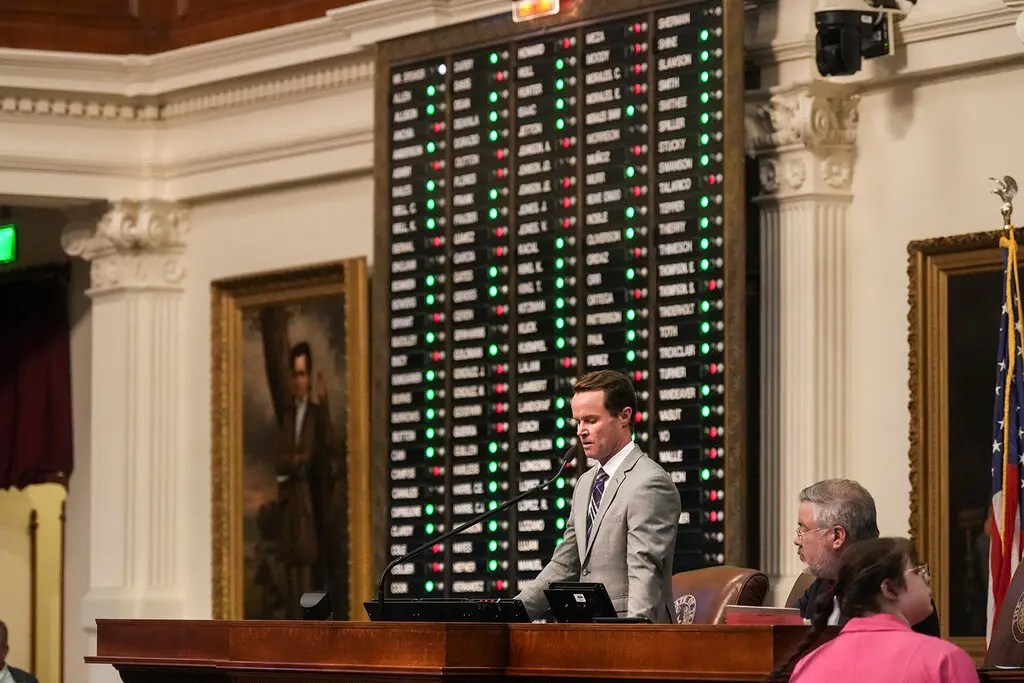
Representative Dade Phelan took the final vote for Senate Bill 14 in the Texas House in Austin on Friday.Credit…Mikala Compton/Austin American-Statesman, via Associated Press

The passage of these bills reflects an ongoing ideological battle surrounding LGBTQ+ rights, as conservative lawmakers continue to champion legislation that targets transgender individuals. The resulting implications for the transgender community in Texas are significant, raising concerns about access to essential medical care, bodily autonomy, and the overall well-being of transgender youth.

As the nation closely watches the fate of these bills, their impact extends beyond the borders of Texas, potentially setting a precedent and influencing discussions around transgender rights and healthcare for minors across the country.

CLICK HERE TO READ MORE

Houston’s only lesbian bar denied insurance for hosting drag shows

This blog originally appeared at CHRON.

Julie Mabry, owner of Pearl Bar in Houston, warned that insurers are “adding drag in as a risk factor.”

Julie Mabry remembers walking with her sister into the Bonham Exchange, San Antonio’s iconic queer bar, for the first time in 1989. “I just saw a completely different person. She was just happy, she was in a great mood,” Mabry said. 

Mabry had watched her sister struggle for years before that night: “From a very young age, my sister’s identity was more like a boy,” Mabry explained. “And we didn’t have these terms, we didn’t have this knowledge when we were kids. It’s just how she was born.” 

After watching her fight through years of isolation and addiction, Mabry says the memory of her sister’s happiness that night in San Antonio inspired her to open Pearl Bar, the only remaining lesbian-specific bar in Houston.

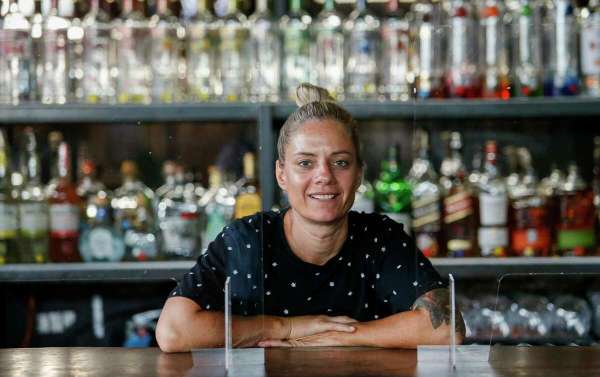
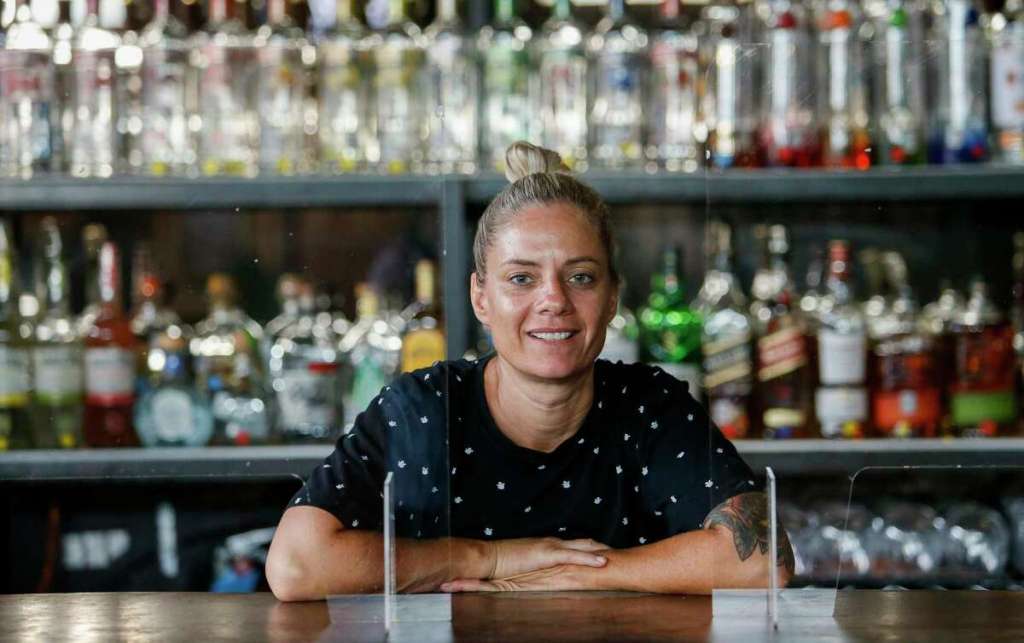
Julie Mabry, owner of Pearl Bar, poses for a photograph at the bar Tuesday, Sept. 15, 2020, in Houston. The Human Rights Campaign awarded Pearl Bar, Houston’s only lesbian bar, funding to help preserve it during the COVID-19 pandemic.

“It became something I was obsessed with. The idea was to provide an environment for people like my sister so she could have something to do so she wasn’t [using drugs], or going through things where she hated herself, because people on the outside didn’t see her as normal. That was the purpose of Pearl Bar,” said Mabry. 

CLICK HERE TO READ MORE

Tampa Pride Event Canceled Over Gov. Ron DeSantis’ Anti-LGBTQ+ Laws

This blog originally appeared at Huff Post.

Florida just enacted a slew of new restrictions on LGBTQ+ rights.

Due to the recent enactment of several anti-LGBTQ+ bills by Governor Ron DeSantis, an LGBTQ+ pride event known as Tampa Pride on the River has been canceled. The event, which includes drag performances, will not take place in September as planned due to a new law in Florida that specifically targets drag shows visible to minors at public venues. This cancellation highlights the impact of the legislation on the LGBTQ+ community and their ability to express their identities freely.

“In the end, we didn’t want to take any chances,” West told the Tampa Bay Times on Thursday.

“Really, I’m sorry,” West told WFLA, an NBC affiliate.

The event usually draws around 20,000 people to downtown Tampa for food, drinks and entertainment in an area without any fencing, according to a St. Petersburg CBS affiliate.

CLICK HERE TO READ THE ORIGINAL BLOG

Behind the scenes in 2000 when Supreme Court liberals thought Nazi references in gay rights dissent were distracting – CNN Politics

This blog originally appeared at CNN Politics.

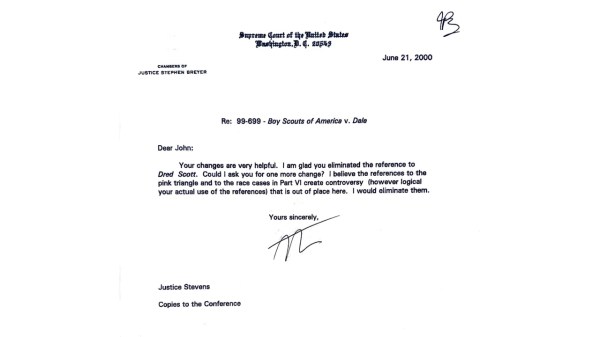
In a historic gay rights case, Supreme Court Justice John Paul Stevens began drafting an impassioned dissent that likened the majority’s decision to Nazi persecution. In a private first draft of his opinion, Stevens made a thought-provoking connection, stating, “What is this but a constitutionally prescribed pink triangle?” The reference to the pink triangle, a symbol forcibly worn by gay prisoners during the Holocaust, aimed to highlight the discriminatory nature of the ruling.

However, the other liberal dissenting justices, including David Souter, Ruth Bader Ginsburg, and Stephen Breyer, expressed reservations about Stevens’ approach. In a series of personal memos, they cautioned that his strong emotions and comparison to Nazi persecution could potentially undermine the persuasive force of their legal arguments. They recognized the importance of presenting a solid legal foundation to support their dissenting views, emphasizing the need to convince their fellow justices and shape public opinion through reasoned analysis rather than inflammatory rhetoric.

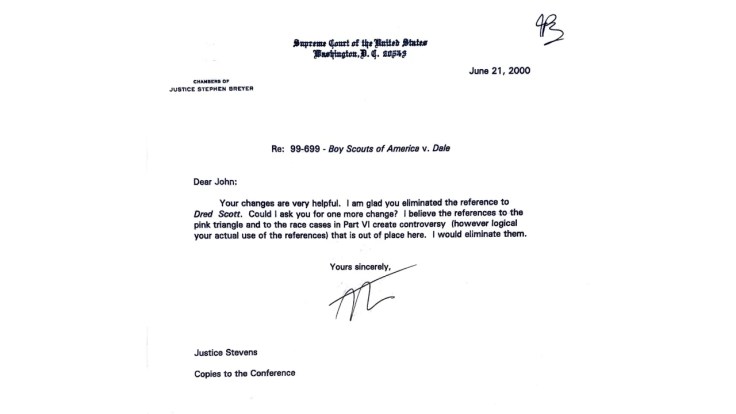
Memo from Justice Stephen Breyer urging the removal of “pink triangle” references from a dissent.

While Stevens’ initial draft underscored the gravity of the case and the deep emotions it evoked, his colleagues’ concerns about maintaining a persuasive legal argument prevailed. Ultimately, the dissenting justices refined their opinions, focusing on the constitutional principles and precedents at stake, aiming to sway both the court and the public through reasoned discourse. This internal dialogue among the liberal justices serves as a testament to the complexity and strategic considerations involved in crafting dissenting opinions that can effectively shape the direction of legal discourse and influence societal perceptions of LGBTQ+ rights.

Were the Boy Scouts discriminating against gay people?

Back in 2000, the Boy Scouts controversy was one of the most contentious of the session. “This case is about the freedom of a voluntary association to choose its own leaders,” the Scouts’ lawyer told the justices during oral arguments. “Boy Scouting is so closely identified with traditional moral values that the phrase, he’s a real Boy Scout, has entered the language.”

CLICK HERE TO READ MORE

The staggering fine print of Texas and Florida’s new anti-trans bills

This blog originally appeared at VOX.

Two sweeping bans on gender-affirming care for trans teens could have devastating implications.

Two of the largest conservative-leaning states, Texas and Florida, are on the verge of implementing new bans on gender-affirming healthcare for transgender children. In Texas, the legislature recently passed a bill prohibiting gender-affirming care, including hormone treatments and surgeries, for individuals under 18. While trans teens already undergoing hormone treatments will be allowed to continue temporarily, they are required to gradually cease the treatments. Governor Greg Abbott is expected to sign the bill into law. Similarly, Florida Governor Ron DeSantis signed a similar ban that imposes felony penalties on healthcare providers offering gender-affirming care to minors. This law includes a provision concerning custody disputes for children receiving gender-affirming care, raising concerns that it may override rulings from other states.

These bans are part of a coordinated national campaign by the GOP to undermine LGBTQ rights within state legislatures. Florida has already passed more anti-LGBTQ legislation this session than it did in the past seven years, while Texas is on track to surpass its previous record with more than double the number of similarly restrictive laws. Cathryn Oakley, the State Legislative Director and Senior Counsel at the Human Rights Campaign, highlights the alarming trend.

The implementation of these bans could potentially uproot many families with transgender children in Texas and Florida, forcing them to consider relocating to more accepting environments. Removing access to gender-affirming care has profound and life-altering impacts on these families, as noted by Oakley. The well-being and safety of their children become paramount concerns. Families with the means to do so have been contemplating moving to states where their children can receive the necessary care and protection.

The consequences of these bans extend beyond immediate access to healthcare. The emotional toll on trans youth and their families is immense, as they face a hostile legislative landscape that disregards their identities and rights. These measures reflect a broader trend of conservative lawmakers prioritizing their political agendas over the well-being and lives of LGBTQ individuals. As these bans become enacted, trans families and their allies continue to advocate for inclusivity, understanding, and equal treatment, emphasizing the urgent need for education and awareness surrounding the experiences of transgender and non-binary communities.

Supporters of trans rights rally on the steps of the Texas Capitol ahead of an advocacy day of meetings with state representatives. Julia Robinson for The Washington Post via Getty Images

What’s in the Florida law

Advocates are challenging parts of the Florida law on an emergency basis in court, arguing that it violates parents’ fundamental rights to make medical decisions for their children and that it violates the Constitution by discriminating against transgender children. A hearing in the case is scheduled for Friday.

CLICK HERE TO READ THE ORIGINAL BLOG

Blog at WordPress.com.

Up ↑