A blog for LGBTQIA+ migrating to more welcoming states or counties
Author: Bob McCranie
I am so proud to run Texas Pride Realty Group. We set out on a mission in 2009 to serve the diverse communities of Texas and to hire kick-ass agents who practice the highest ethics and professionalism. I believe that the agent's role is to help the consumer make well-educated decisions, even if those decisions lead away from a purchase or sale.
I believe that education is vital in this industry. I currently have over 1300 hours of real estate courses on my transcript with the State of Texas. Additionally, I am a Real Estate Business Coach at Tom Ferry International, the largest-real-estate specific coaching company in the world. I coach agents in the US and Canada, and have coached clients in Australia, New Zealand, Brazil, and Switzerland. I also have knowledge of the UK and Irish markets.
Opening Texas Pride Realty was always a goal of mine and I am working night and day to be sure it is successful. The best way to do that is to be sure clients are satisfied and agents are busy. What better legacy could someone leave in this industry than a group of well-trained, high-quality brokers who do your job better than you?
This is the first instance of a city allowing individuals to sue transgender people for using public restrooms.
The city of Odessa, Texas, has implemented a $10,000 bounty on any transgender individual who uses a restroom that corresponds with their gender identity, according to independent journalist Erin Reed.
The ordinance allows individuals—excluding local and state government officials—to sue transgender people for using bathrooms that align with their gender. The rewards for successful lawsuits include “injunctive relief sufficient to prevent the defendant from violating the provisions of this ordinance,” along with potential “nominal and compensatory damages” if the plaintiff claims to have suffered harm. The law also stipulates statutory damages of at least $10,000 for each violation, as well as court costs and reasonable attorney’s fees.
While the bounty is set at a minimum of $10,000, there is no maximum limit on how much the reward could ultimately be.
In addition to the $10,000 bounty, the ordinance imposes criminal penalties on individuals who use restrooms that align with their gender identity. According to the provision, anyone violating the ordinance will be guilty of a Class C misdemeanor, subject to a fine of up to $500. If a person refuses to leave a restroom after being asked by a building owner, they could also face charges of misdemeanor trespassing.
The law defines “biological sex” based on the gender listed on birth certificates—either at birth or corrected in the case of clerical errors. This means that even if a transgender individual updates their birth certificate to reflect their gender identity, they would still be in violation of the law if they use a restroom that matches their gender.
The ordinance makes no exceptions for disabled individuals who may be accompanied by a person of a different gender, and it could open the door to lawsuits targeting anyone who appears gender non-conforming.
While bathroom bans with criminal penalties have been enacted in states like Utah and Florida, other states, such as North Dakota, have passed similar bans without clear penalties or enforcement mechanisms. Erin Reed has drawn comparisons between the Odessa bounty and Texas’ anti-abortion bounties, which allow private citizens to sue anyone who aids someone seeking an abortion. Both strategies rely on private individuals to enforce the law, bypassing government enforcement mechanisms.
Johnathan Gooch, communications director for Equality Texas, criticized the measure in an interview with the Texas Tribune: “It’s a very aggressive way to alienate trans people from public life, and I think it is counter to the spirit of friendship that most Texans embody.”
He continued, “It enables vigilantes to target anyone they don’t think matches the type of gender expression they expect to see in the bathroom, and that is truly insane.”
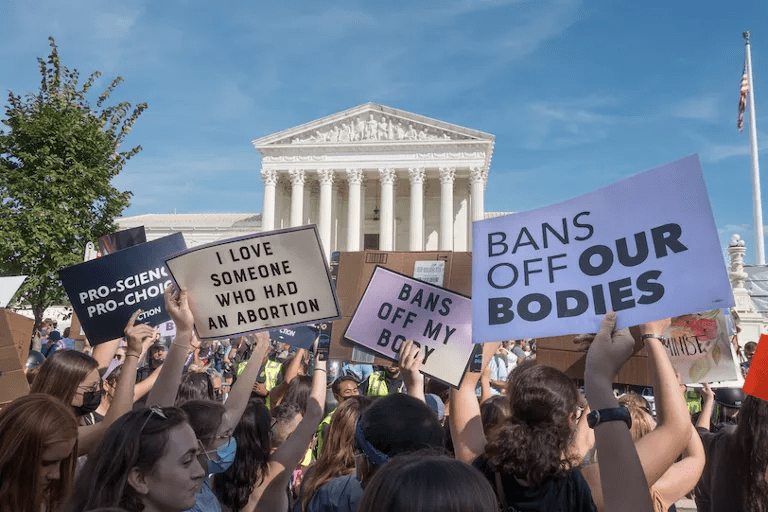
It took 20 hours and three visits to the ER before doctors finally admitted the 18-year-old, pregnant and critically ill, to the hospital as her condition continued to deteriorate. She is one of at least two women who have died as a result of Texas’ abortion ban.
By Lizzie Presser and Kavitha Surana, ProPublica Nov. 1, 2024 4 AM Central Share
Candace Fails desperately screamed for help at the Texas hospital, pleading with staff to assist her pregnant daughter. “Do something,” she cried out on the morning of October 29, 2023.
Nevaeh Crain, 18, was wracked with pain, too weak to stand, and blood was soaking her thighs. The day of her baby shower, she had been feverish and vomiting. Within 12 hours, she had been to two different emergency rooms, only to return home each time feeling worse.
At the first hospital, doctors diagnosed her with strep throat, neglecting to investigate her intense abdominal cramps. At the second, medical records show, she tested positive for sepsis — a life-threatening infection. But despite this, doctors dismissed her condition, pointing to the baby’s heartbeat and telling Crain she was stable enough to leave.
On her third visit to the hospital, an obstetrician ordered two ultrasounds to “confirm fetal demise,” as a nurse noted, before transferring her to intensive care.
By the time Crain arrived at the hospital, more than two hours had passed, and her blood pressure had dropped dangerously. A nurse noted that her lips had turned “blue and dusky.” Her organs began to fail.
Hours later, she was dead.
Fails, who would have seen her daughter turn 20 this Friday, still cannot comprehend why Crain’s life-threatening emergency wasn’t treated as an urgent crisis.
But this is the grim reality many pregnant women now face in states with strict abortion bans, as doctors and lawyers have explained to ProPublica.
“Pregnant women have become essentially untouchables,” said Sara Rosenbaum, a health law and policy professor emerita at George Washington University.
Texas’s abortion ban imposes severe penalties, including prison time, for any intervention that ends a fetal heartbeat, regardless of whether the pregnancy is wanted. While the law allows exceptions for life-threatening conditions, doctors told ProPublica that widespread confusion and fear of legal repercussions are changing how they approach complicated cases.
In states with strict abortion bans, patients with pregnancy complications are sometimes shuffled between hospitals like “hot potatoes,” with healthcare providers hesitant to offer care that could attract legal scrutiny, doctors explained. In some instances, medical teams spend critical time debating legalities and documenting their decisions, preparing for the possibility of having to defend their actions in court.
Dr. Jodi Abbott, an associate professor of obstetrics and gynecology at Boston University School of Medicine, pointed out the anxiety patients face in these situations: “Am I being sent home because I really am OK? Or am I being sent home because they’re afraid that the solution to what’s going on with my pregnancy would be ending the pregnancy, and they’re not allowed to do that?”
A federal law exists to prevent emergency room doctors from withholding lifesaving care.
Passed nearly four decades ago, this law mandates that emergency rooms must stabilize patients in medical crises. The Biden administration argues that this requirement extends to situations where an abortion might be necessary to save the patient’s life.
No state has fought this interpretation more vigorously than Texas. The state has warned doctors that its abortion ban takes precedence over the administration’s guidance on federal law, threatening up to 99 years in prison for those who violate it.
In response, ProPublica condensed more than 800 pages of Crain’s medical records into a four-page timeline, consulting two maternal-fetal medicine specialists in the process. The timeline was then reviewed by nine doctors, including researchers from prestigious universities, OB-GYNs with expertise in managing miscarriages, and specialists in emergency medicine and maternal health.
Some of the doctors consulted said the first ER missed critical warning signs of infection that should have been addressed. All agreed that the doctor at the second hospital made a grave error in sending Crain home when her symptoms of sepsis had not improved. And when Crain returned for the third visit, every expert agreed there was no medical justification for delaying action—such as waiting for two ultrasounds—before taking decisive steps to save her life.
“This is how these restrictions kill women,” said Dr. Dara Kass, a former regional director at the Department of Health and Human Services and an emergency room physician in New York. “It is never just one decision, it’s never just one doctor, it’s never just one nurse.”
While the doctors were cautious in saying whether Crain’s death could have been definitively prevented, they agreed that earlier admission for monitoring and continuous treatment could have increased the chances of saving both Crain and her fetus.
There was a possibility that Crain could have remained pregnant with medical intervention, they said. If an early delivery had been required, the hospital was fully capable of caring for a baby born at the edge of viability. In another scenario, if the infection had progressed too far, ending the pregnancy might have been necessary to save Crain’s life.
Doctors involved in Crain’s care did not respond to several requests for comment. The two hospitals—Baptist Hospitals of Southeast Texas and Christus Southeast Texas St. Elizabeth—declined to answer detailed questions about her treatment.
Fails and Crain both believed abortion was morally wrong. The teenager could only support it in cases of rape or life-threatening illness, a sentiment she often shared with her mother. They didn’t focus on the legality of abortion; for them, it was about how their Christian faith guided their personal choices.
When they learned Crain was pregnant with a girl, the two of them dreamed together about the little dresses they could buy and what kind of mother Crain would become. Crain chose the name Lillian, and Fails was eager to meet her granddaughter.
But when her daughter became seriously ill, Fails expected doctors to do everything in their power to prevent a potentially fatal emergency, even if it meant losing Lillian. In her view, however, the medical team seemed more focused on monitoring the fetal heartbeat than on treating Crain’s deteriorating health.
“I know it sounds selfish, and God knows I would rather have both of them, but if I had to choose,” Fails said, her voice breaking, “I would have chosen my daughter.”
“I’m in a lot of pain” Crain had just graduated from high school in her hometown of Vidor, Texas, in May of 2023, when she discovered she was pregnant.
She and her boyfriend of two years, Randall Broussard, were inseparable—always side by side, whether they were playfully wrestling over vapes or snuggling on the couch, watching vampire movies. Crain was drawn to his gentle nature, while he admired how easily she made friends and how quickly she could make people laugh. Though they were young, they’d already talked about starting a family. Broussard, who had eight siblings, dreamed of having a large family; Crain, on the other hand, envisioned having a daughter and the kind of close relationship she shared with her own mother. Earlier that year, Broussard had given Crain a small diamond ring — “a promise,” he said, “that I will always love you.”
On the morning of their baby shower, October 28, 2023, Crain woke with a headache. Her mom had decorated the house with pink balloons, and Crain had laid out Halloween-themed platters for the guests. But soon, nausea set in. Crain started vomiting and developed a fever. As the guests arrived, Broussard opened gifts—onesies, diapers, and bows—while Crain kept closing her eyes, unable to stay awake.
Around 3 p.m., her family insisted that Crain needed to go to the hospital.
Broussard drove her to Baptist Hospitals of Southeast Texas, where they sat in the waiting room for four hours. When Crain began vomiting, the staff gave her a plastic pan. When she wasn’t retching, she rested her head in her boyfriend’s lap.
A nurse practitioner ordered a test for strep throat, which came back positive, according to medical records. However, physicians told ProPublica that in a pregnant patient, abdominal pain and vomiting should not have been quickly attributed to strep; a doctor should have also evaluated her pregnancy.
Instead, Baptist Hospitals discharged Crain with a prescription for antibiotics. She was home by 9 p.m. and soon fell asleep, but within hours, she woke her mother. “Mom, my stomach is still hurting,” she said in the dark bedroom at 3 a.m. “I’m in a lot of pain.”
Fails drove Broussard and Crain to another hospital in town, Christus Southeast Texas St. Elizabeth. Around 4:20 a.m., OB-GYN William Hawkins observed that Crain had a temperature of 102.8°F and an abnormally high pulse, according to medical records. A nurse noted that Crain rated her abdominal pain as a seven out of 10.
Her vital signs suggested the possibility of sepsis, records show. Medical experts told ProPublica that it’s standard practice to immediately treat patients showing signs of sepsis, a potentially life-threatening condition that can escalate rapidly. These patients should be monitored closely until their vital signs stabilize, and tests and scans are done to identify the source of the infection. If the infection was in Crain’s uterus, the fetus would likely need to be removed via surgery.
In a room at the obstetric emergency department, a nurse wrapped a sensor belt around Crain’s belly to check the fetal heart rate. “Baby’s fine,” Broussard told Fails, who was sitting in the hallway.
Despite receiving two hours of IV fluids, one dose of antibiotics, and some Tylenol, Crain’s fever remained high, her pulse stayed elevated, and the fetal heart rate was abnormally fast, according to medical records. Hawkins noted that Crain had strep and a urinary tract infection, wrote a prescription, and discharged her.
Hawkins had a history of missing infections. Eight years earlier, the Texas Medical Board found that he had failed to diagnose appendicitis in one patient and syphilis in another. In the latter case, the board noted that his error “may have contributed to the fetal demise of one of her twins.” As a result, the board ordered that Hawkins’ medical practice be monitored, though the order was lifted two years later. (Hawkins did not respond to multiple attempts to contact him.)
All of the doctors who reviewed Crain’s vital signs for ProPublica agreed that she should have been admitted. “She should have never left, never left,” said Elise Boos, an OB-GYN in Tennessee.
Kass, the New York emergency physician, put it in starker terms: When they discharged her, they were “pushing her down the path of no return.”
“It’s bullshit,” Fails said, watching as Broussard rolled Crain out in a wheelchair, unable to walk on her own. Fails had expected the hospital to keep her overnight. Her daughter was breathing heavily, hunched over in pain, pale in the face. Normally talkative, the teen was eerily quiet.
Back home, around 7 a.m., Fails tried to make her daughter as comfortable as possible as she cried and moaned in pain. Crain told her mother she needed to pee, and Fails helped her into the bathroom. “Mom, come here,” Crain called from the toilet. Blood stained her underwear.
The blood confirmed Fails’ worst fear: This was a miscarriage.
At 9 a.m., a full day after the nausea began, they were back at Christus St. Elizabeth. Crain’s lips were drained of color, and she kept saying she was going to pass out. Staff began administering IV antibiotics and performed a bedside ultrasound.
Around 9:30 a.m., Dr. Marcelo Totorica, the OB on duty, couldn’t find a fetal heartbeat, according to records. He told the family he was sorry for their loss.
Standard protocol when a critically ill patient experiences a miscarriage is to stabilize her and, in most cases, rush her to the operating room for delivery, medical experts told ProPublica. This is especially critical when there is a spreading infection. But at Christus St. Elizabeth, the OB-GYN continued only antibiotic treatment. A half-hour later, as nurses placed a catheter, Fails noticed her daughter’s thighs were covered in blood.
At 10 a.m., Melissa McIntosh, a labor and delivery nurse, spoke with Dr. Totorica about Crain’s deteriorating condition. The teen was now having contractions. “Dr. Totorica states to not move patient,” McIntosh wrote after their conversation. “Dr. Totorica states there is a slight chance patient may need to go to ICU and he wants the bedside ultrasound to be done stat for sure before admitting to room.”
Although an ultrasound had already been performed, Totorica requested a second one.
The first ultrasound hadn’t preserved an image of Crain’s womb in the medical record. “Bedside ultrasounds aren’t always set up to save images permanently,” explained Dr. Abbott, the Boston OB-GYN.
Under Texas’ abortion laws, doctors are required to document the absence of a fetal heartbeat before performing any procedure that could end a pregnancy. Exceptions for medical emergencies mandate that physicians carefully document their reasoning. “Pretty consistently, people say, ‘Until we can be absolutely certain this isn’t a normal pregnancy, we can’t do anything, because it could be alleged that we were doing an abortion,’” said Dr. Tony Ogburn, an OB-GYN in San Antonio.
By 10:40 a.m., Crain’s blood pressure was dropping. Minutes later, Totorica called for an emergency team over the loudspeakers.
Around 11 a.m., two hours after Crain had arrived at the hospital, a second ultrasound was performed. A nurse wrote: “Bedside ultrasound at this time to confirm fetal demise per Dr. Totorica’s orders.”
When doctors wheeled Crain into the ICU at 11:20 a.m., Fails stayed by her side, rubbing her head as her daughter drifted in and out of consciousness. Crain was unable to sign consent forms due to “extreme pain,” according to the records, so Fails signed a release for “unplanned dilation and curettage” or “unplanned cesarean section.”
But the doctors quickly determined that it was now too risky to operate. They suspected Crain had developed disseminated intravascular coagulation, a dangerous complication of sepsis that causes internal bleeding.
Frantic and crying, Fails locked eyes with her daughter. “You’re strong, Nevaeh,” she said, her voice shaking. “God made us strong.”
Crain sat up in the cot. Old, black blood poured from her nostrils and mouth.
“The Law Is on Our Side” Crain is one of at least two pregnant Texas women who died after doctors delayed treating miscarriages, ProPublica found.
Texas Attorney General Ken Paxton has succeeded in making his state the only one in the country that isn’t required to follow the Biden administration’s efforts to ensure that emergency departments don’t turn away patients like Crain.
After the U.S. Supreme Court overturned the constitutional right to abortion, the Biden administration issued guidance on how states with abortion bans should adhere to the Emergency Medical Treatment and Labor Act (EMTALA). This federal law requires hospitals receiving Medicare funds — which includes virtually all hospitals — to stabilize or transfer anyone who arrives in their emergency rooms, including pregnant patients, even if that means providing an abortion in life-threatening cases.
Paxton responded by filing a lawsuit in 2022, arguing that the federal guidance “forces hospitals and doctors to commit crimes” and was an “attempt to use federal law to transform every emergency room in the country into a walk-in abortion clinic.”
A central part of the legal battle has been the definition of who qualifies for an abortion. The federal EMTALA guidelines apply when the health of the pregnant patient is in “serious jeopardy,” a broader standard than the Texas abortion law, which only allows exceptions for a “risk of death” or a “serious risk of substantial impairment of a major bodily function.”
The lawsuit moved through three layers of federal courts, each time with rulings from judges appointed by former President Donald Trump, whose court appointments played a key role in overturning Roe v. Wade.
After U.S. District Judge James Wesley Hendrix, a Trump appointee, quickly sided with Texas, Paxton celebrated the decision as a victory over “left-wing bureaucrats in Washington.”
“The decision last night proves what we knew all along,” Paxton said. “The law is on our side.”
In 2024, the U.S. Court of Appeals for the 5th Circuit upheld the order in a ruling written by Judge Kurt D. Engelhardt, another Trump appointee.
The Biden administration appealed to the U.S. Supreme Court, urging the justices to clarify that some emergency abortions are permitted. Yet, even amid reports of preventable deaths tied to abortion bans, the Supreme Court declined to intervene last month.
Paxton hailed the ruling as “a major victory” for Texas’ abortion ban.
He has also made it clear that he will pursue charges against physicians who perform abortions, unless they can prove the cases fall within the narrow exceptions outlined by state law.
In 2023, Paxton sent a letter threatening to prosecute a doctor who had received court approval to perform an emergency abortion for a Dallas woman. Paxton insisted that the doctor and the patient hadn’t proven that the patient’s condition posed a life-threatening risk.
Many doctors say this kind of messaging has led to a widespread reluctance to treat pregnant patients with complications.
Since the abortion bans took effect, an OB-GYN at a major hospital in San Antonio reported seeing an increase in pregnant patients being transferred from hospitals across Southern Texas for complications that could have been treated locally. This well-resourced hospital is perceived as having more institutional support to handle abortion and miscarriage management. “Other providers are transferring those patients to our centers because, frankly, they don’t want to deal with them,” the doctor said.
After Crain died, Fails couldn’t stop thinking about how Christus Southeast Hospital had ignored her daughter’s condition. “She was bleeding,” Fails said. “Why didn’t they do anything to help it along instead of waiting for another ultrasound to confirm the baby is dead?”
In the end, it was the medical examiner, not the doctors at the hospital, who removed Lillian from Crain’s womb. His autopsy didn’t answer Fails’ lingering questions about what the hospitals missed and why. He classified the death as “natural” and attributed it to “complications of pregnancy.” However, he did note that Crain had been “repeatedly seeking medical care for a progressive illness” just before she died.
In November 2023, Fails reached out to medical malpractice lawyers to explore seeking justice through the courts. But a new legal barrier stood in her way.
If Crain had experienced the same delays while being an inpatient, Fails would have only needed to prove that the hospital had violated medical standards. That, she believed, would have been relatively easy to do. But because the delays and discharges occurred in the hospital’s emergency room, lawyers told her that Texas law set a much higher burden of proof: “willful and wanton negligence.”
No lawyer has agreed to take the case.
Texans need truth. Help us report it. Independent Texas reporting needs your support. The Texas Tribune delivers fact-based journalism for Texans, by Texans — and our community of members, the readers who donate, make our work possible. Help us bring you and millions of others in-depth news and information. Will you support our nonprofit newsroom with a donation of any amount?
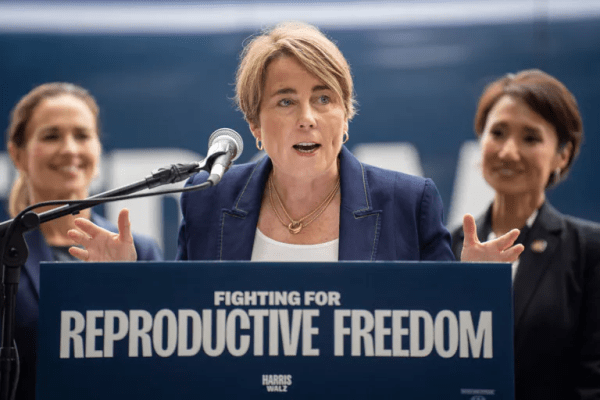
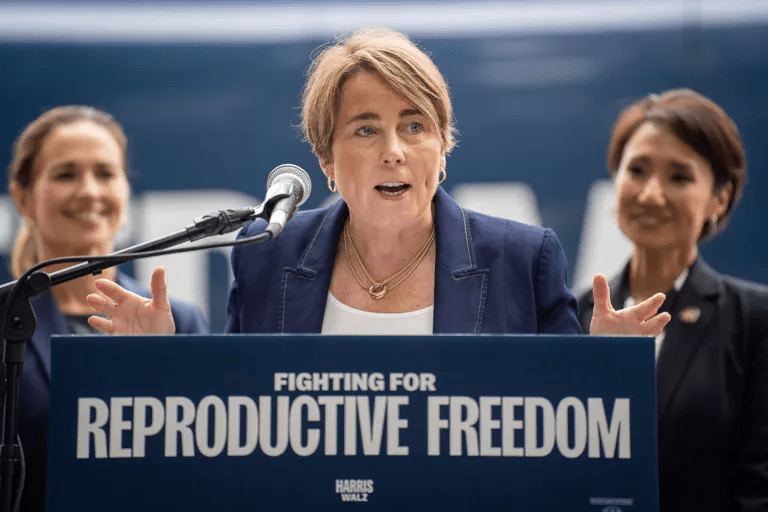
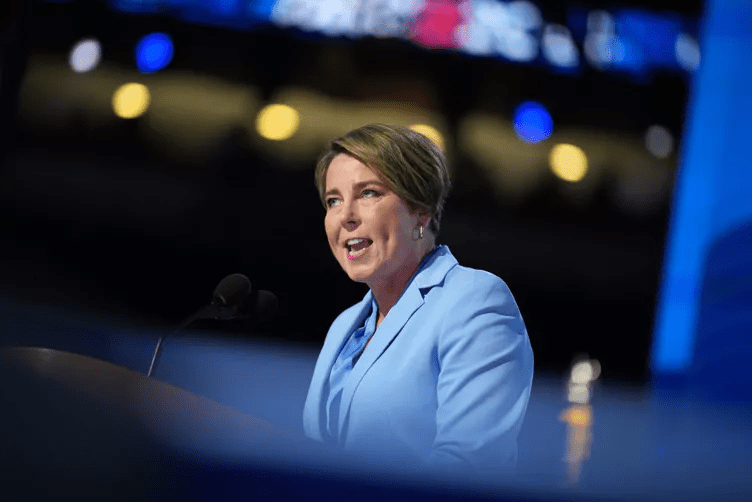
As a lesbian governor who took on the Trump administration nearly 100 times in court, Maura Healey understands that now is not the time to step away from the fight.
The Alabama Supreme Court’s decision granting embryos the same legal rights as children has sent a jolt through the LGBTQ+ community, threatening access to IVF and jeopardizing the future of queer family-building. LGBTQ+ couples, who often rely on fertility treatments like IVF to grow their families, already navigate steep financial, legal, and social obstacles. Now, with the GOP’s escalating opposition to LGBTQ+ and reproductive rights, hostility toward queer families is intensifying.
Still, the LGBTQ+ community remains resilient. Massachusetts Governor Maura Healey, an openly gay leader, offers a clear response: “Vote them out of office, and vote people who will stand with us and protect us into office.”
“I meet so many people who are using surrogacy, IVF, and other forms of assisted reproduction because of the rights and freedoms they enjoy under Massachusetts law,” Healey shared with LGBTQ Nation. “I’m proud of who I am, of the work I do every day, and of the freedoms we get to stand up for. We advance policies that foster inclusivity and protect our community, and people should take pride in that and not let the bullies and haters defeat our spirit.”
Healey’s administration is the embodiment of support and protection for LGBTQ+ rights.
Since becoming one of the country’s first out lesbian governors, Healey has led with purpose. In her first year and a half, she signed a landmark parentage act to secure legal protections for LGBTQ+ families, passed legislation ensuring IVF coverage for LGBTQ+ veterans, enacted a critical maternal health bill, issued an executive order to protect emergency abortion care, and increased funding to support LGBTQ+-owned businesses.
In addition, Healey has been a strong ally on the campaign trail for Vice President Kamala Harris, actively participating in the Democratic National Convention, speaking at Zoom rallies, and joining forces with other governors in the push for inclusive, forward-thinking leadership.
“People who believe in and want to protect civil rights and freedoms need to go vote,” Healey urged. “And they need to go vote for Kamala Harris and Tim Walz.”
Healey praised Vice President Harris and Governor Tim Walz as unwavering advocates for women’s rights and personal freedom. “They are champions of women and the freedom that women should have to make decisions for themselves,” she said. Healey also highlighted their dedication to LGBTQ+ rights, noting Harris’ longstanding commitment to equality and support for the LGBTQ+ community.
Healey and Harris served concurrently as attorneys general in their respective states. While Healey was actively suing then-President Donald Trump’s administration nearly 100 times, she noted that Harris was equally committed to advocating for LGBTQ+ rights.
She commended Harris for establishing a hate crimes unit dedicated to investigating anti-LGBTQ+ violence and for her efforts to eliminate the gay and trans panic defense in California. “She famously refused to defend Prop 8, which sought to outlaw same-sex marriage in the state,” Healey remarked. “Later, as a senator, she co-sponsored the Equality Act, defended the Affordable Care Act, and as vice president, she’s helped Joe Biden lead probably the most pro-equality administration in history.”
When asked about her concerns regarding a potential second term for Donald Trump, particularly in relation to bodily autonomy and family rights, Healey didn’t hesitate: “Everything.”
“It’s really, really scary,” she continued. “Trump probably led the most anti-LGBTQ administration in American history, stripping away freedoms and protections—banning transgender people from serving in the military, arguing in court that businesses should be allowed to refuse service to LGBTQ individuals, and eliminating medically necessary care for young people. Based on Project 2025 and his own statements, we know it will be even worse. They want to go after marriage equality, implement a national abortion ban, and restrict access to contraception.”
She expressed profound concern for the mental health of LGBTQ+ youth as lawmakers across the country propose hundreds of bills aimed at rolling back their rights and, in some cases, eliminating their right to exist altogether.
According to the Trevor Project, LGBTQ+ youth are over four times more likely to attempt suicide than their peers, and in the organization’s 2024 national mental health survey, 90% of LGBTQ+ young people reported that their well-being has been negatively affected by recent political developments.
“Rates of suicide are up,” Healey said. “And since Trump overturned Roe—let’s be clear, he did overturn Roe… he followed through on that—now one in three women in America lives in a state with an abortion ban. These are very real threats we face.”
The Trump campaign has consistently sought to distance itself from the alarming vision outlined in the Heritage Foundation’s Project 2025, which presents a chilling forecast for a potential second Trump term. However, Healey emphasizes Trump’s connections to this project, cautioning the public: “Don’t believe anything that Donald Trump says” because he’ll “say anything and everything depending on where the wind is blowing.”
Yet, Healey firmly trusts Trump to execute his party’s threats against the American people. Just as he dismantled Roe v. Wade, she warns that he is fully capable of realizing the goals outlined in Project 2025, which calls for the complete elimination of LGBTQ+ rights and explicitly states that “only heterosexual, two-parent families are safe for children.”
“These are promises he will fulfill,” Healey warned, drawing from her experience as a stepmother to two children. “It’s a very dangerous time right now.”
Trump and Project 2025 would undoubtedly disrupt the lives of LGBTQ+ families, but Healey highlights significant economic implications that would make their policies catastrophic.
“There’s a reason Massachusetts is ranked number one for our schools, for healthcare, and as the best place to have a baby and live if you’re a woman,” Healey stated. “Part of that is because we’re a state that has long protected civil rights and freedoms. I believe this is a critical piece of our economic competitiveness. We want colleges, universities, and businesses to have the opportunity to attract the very best talent to Massachusetts.”
“We want people to come, succeed, and thrive here—to grow families, build businesses, and develop careers. One of the ways we achieve this is by being a state that, through both government policy and the actions of our businesses and corporate stakeholders, emphasizes respect for and support of civil rights and freedoms.”
Reflecting on her time as the chief of civil rights in the attorney general’s office, Healey recounted her successful challenge against the Defense of Marriage Act, which helped lay the groundwork for nationwide marriage equality. “One of the briefs we prepared for the First Circuit, and later for the Supreme Court, was an amicus brief signed by businesses in support of equality,” she explained. “They understood the economic imperative: companies perform better when there’s greater representation on their boards and in their C-suites. This has been proven. Promoting an inclusive and open environment leads to better policies, ideas, results, and outcomes.”
Healey highlighted the importance of her state’s diverse elected officials as a key factor in the progress made to protect the rights of marginalized communities. As the nation’s first out lesbian governor, alongside Oregon Governor Tina Kotek, she and Lieutenant Governor Kim Driscoll represent the country’s first all-woman governor/lieutenant governor team.
“I know that we’ll achieve better policies and outcomes—most importantly, for people—when we have more representation,” she stated.
However, Healey is quick to emphasize that increased government representation is just part of the equation. “We owe so much to families and advocates who have bravely shared their stories over the years,” she said. “These community members, with lived experiences, have gone to the state legislature, testified in hearings, and spoken to the media. They truly deserve the credit.”
She urged LGBTQ+ families to continue to “speak out and speak up against the lies” and the “vile misinformation” that is often spread, particularly by figures like Trump and Vance.
“If you look at the arc of history in this realm, you can see the progress made for our community. Let’s build on that. Let’s draw upon that during what I acknowledge is a really challenging time. But people need to stand together and vote for equality leaders like Kamala Harris and Tim Walz.”
Omar Guido Chávez, the 51-year-old owner of Sodoma NightClub, a popular LGBTQ+ gogo bar in Tijuana, Mexico, was discovered dismembered in the trunk of his own car on October 18.
Authorities have indicated that evidence linking the Sinaloa drug cartel to the crime was found in Chávez’s vehicle. While police have arrested two suspects, they are not treating the murder as a hate crime.
In the back seat of the car, investigators found a “narco-banner,” a message commonly used by drug cartels to convey threats and warnings.
On Friday, two suspects, identified in reports as “Gabriel N.” and “Juan Diego N.,” were taken into custody. Surveillance footage reportedly connected Gabriel N. to Chávez’s abandoned vehicle. The suspects allegedly attempted to flee when stopped by police for driving without headlights and seatbelts, running from the scene on foot.
Baja California homicide prosecutor Miguel Ángel Gaxiola stated there is no evidence suggesting that anti-LGBTQ+ bias played a role in the murder, noting that there were no prior threats against Chávez or the nightclub. Investigators believe the murder may be linked to ongoing conflicts between rival drug cartels.
In a heartfelt Instagram post, Sodoma NightClub expressed their sorrow over Chávez’s passing, remembering him as a beloved friend and outstanding leader. “We will always remember his smile, love for life, and noble heart,” the club wrote, extending condolences to his family and friends.
On the night of October 27, the nightclub hosted a showcase of guest artists as a tribute to Chávez.
Local LGBTQ+ organization Comunidad ABC shared an open letter on Facebook, calling on authorities to ensure the safety of all individuals in Baja California. The letter emphasized the need for thorough investigations, sensitivity towards diverse communities, and a commitment to preventing future tragedies. “We will not cease our pursuit of justice for Omar Guido and all victims of violence in our community,” it stated.
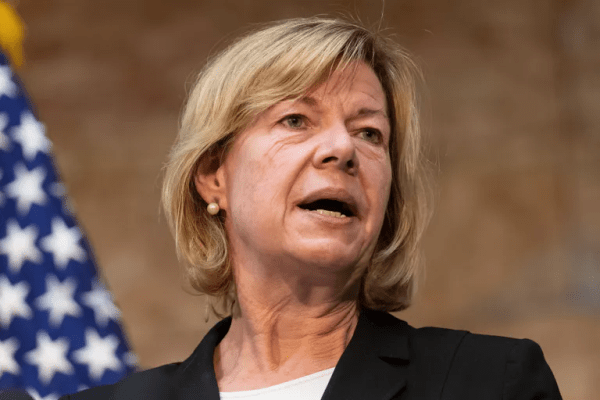
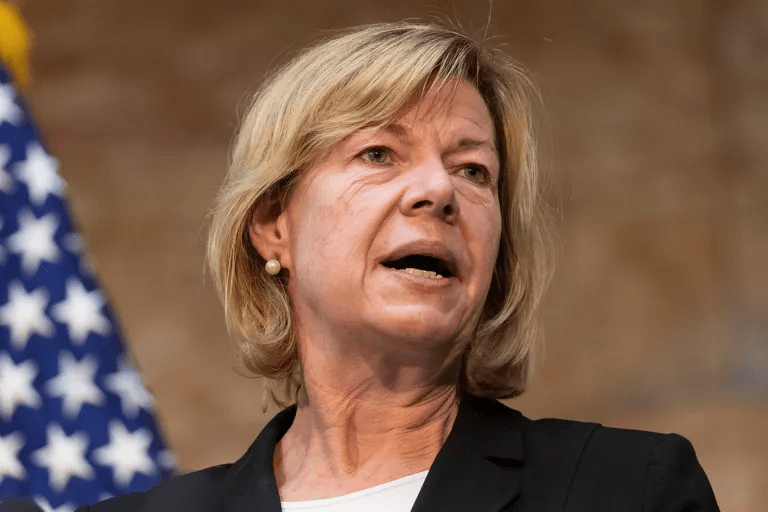
In a closely contested Senate race in Wisconsin, Republican candidate Eric Hovde is heavily investing in ads targeting incumbent Sen. Tammy Baldwin (D-WI) and her longtime partner.
When asked by CNN if she believes Hovde aims to remind voters of her sexual orientation, Baldwin responded, “I think he is.”
The ads feature Baldwin’s partner, Maria Brisbane, who heads a private wealth management division at Morgan Stanley, questioning Baldwin’s ethics while subtly highlighting her sexual orientation.
One ad shows a woman in her kitchen stating, “Baldwin’s in bed with Wall Street,” referencing the senator’s relationship with Brisbane. In other instances, Brisbane is labeled Baldwin’s “girlfriend.”
All these ads convey a similar dual message, funded by a significant influx of cash from Republican sources and Hovde’s own wealth.
While Democrats are expected to outspend Republicans overall in the Senate race, Hovde and his supporters have reserved $51 million for advertising from October 1 through Election Day, compared to $39 million for the Democrats.
Hovde’s latest advertisement twists Baldwin’s previous statements against her, featuring a 2009 Senate hearing where she discussed domestic partner benefits.
“Married members must disclose important information about their spouse’s income, investments, gifts, and debts. Surely the public interest would require that these obligations apply to partners of gay and lesbian officeholders,” Baldwin states in a C-SPAN clip.
The ad’s narrator then contrasts this with a recent debate where Baldwin, addressing Hovde, said, “Stay out of my personal life,” highlighting that she and Brisbane are not married.
Baldwin further asserted, “And I think I speak for most Wisconsin women that he should stay out of all of our personal lives.”
Despite Baldwin’s arguments, she faces challenges regarding financial disclosures related to her partner. She clarified to CNN that, unlike a previous domestic partnership, she is not required to disclose Brisbane’s clients due to a lack of a legally recognized relationship. The couple does own a $1.3 million condominium in Washington together.
Baldwin condemned Hovde’s tactics as a dog whistle, designed to distract from his own financial conflicts tied to owning a $3 billion bank.
“I disclose everything I’m required to,” she stated. “I think he’s trying to divert attention from his own questionable judgments.”
“Imagine him on the Banking Committee, regulating banks,” she added. “This is a serious conflict of interest he wants to deflect from.”
Hovde’s ad campaign also targets the transgender community, linking Baldwin to claims about allowing men to compete in women’s sports and supporting a clinic that allegedly provides transgender therapy to minors without parental consent, which has been proven false.
For the latest headlines affecting LGBTQ+ communities worldwide, subscribe to the LGBTQ Nation newsletter.
He laughed along as the gay conservative he was speaking with mocked trans kids, describing “a 9-year-old girl” with “a beard.”
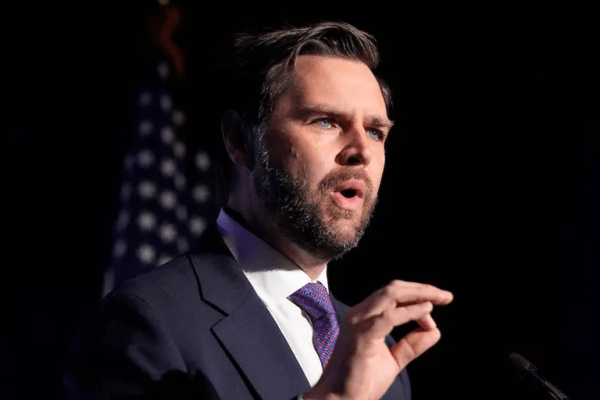
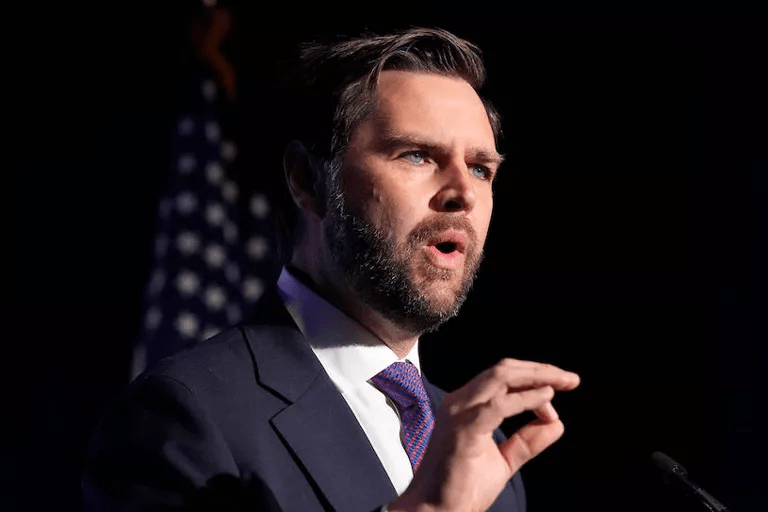
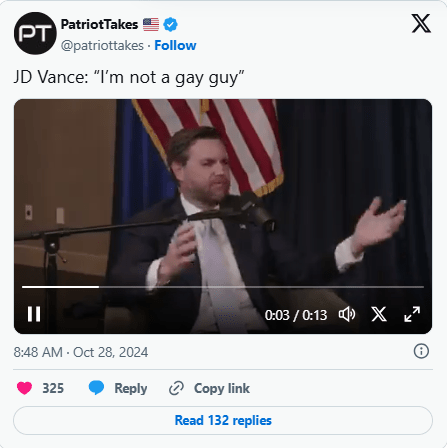
During an interview last weekend, Sen. J.D. Vance (R-OH) and conservative podcaster Tim Dillon echoed transphobic right-wing rhetoric, with Vance notably stressing to Dillon that he isn’t gay. Dillon claimed that supporters of transgender rights want nine-year-old girls “to have a beard,” while Vance argued that medical transitioning is a form of “conversion therapy” aimed at turning gay individuals transgender. Vance also alleged that the medical industry is profiting from transitioning minors and suggested that “they” are pushing gay kids to believe they’re actually transgender.
“I’m not a gay guy, but I’ve heard this from gay friends of mine…” Vance began, prompting Dillon to burst into laughter at Vance’s insistence on clarifying his sexuality.
“I’ve discussed this with gay friends who feel personally affronted [by gender-affirming care for youth],” Vance claimed. “They wonder if, at 14 and feeling confused, someone would have pushed them to transition. In some ways, it’s like a new version of conversion therapy through pharmaceuticals, as if to say, ‘Oh no, you’re not gay; you’re actually a different gender!’”
In the recent interview, Vance presented no evidence for his claim that cisgender gay youth are being pressured into transitioning. Earlier, Dillon sarcastically questioned why children can’t undergo “life-altering” surgeries, framing it as a sign of “fascism” for opposing it. He joked, “Why wouldn’t you allow an eight-year-old to fully transition?… Why can’t a nine-year-old girl have a beard?” In reality, gender-affirming surgeries are not performed on pre-pubescent children and are almost never performed on minors. Gender-affirming care for young children typically includes choices about clothing, names, and play preferences.
Vance continued, alleging that the medical industry profits from transitioning minors and manipulates government policy to push this, stating, “the very people who are getting rich off this are also lobbying the American Medical Association [AMA] and the U.S. government.” However, the AMA and other medical associations have recommended gender-affirming care as safe and essential for trans youth. According to the Williams Institute, only an estimated 300,000 trans individuals ages 13 to 17 could require such care—a small fraction of the U.S. population.
Dillon expressed skepticism over puberty blockers and hormone therapy for minors, saying many believe young children should be left alone, adding, “A lot of gay people feel that way…[but] none of them are ever listened to.” Vance mentioned a friendship strained by his stance on trans youth, citing a former classmate who had argued that puberty blockers are reversible—a point the Mayo Clinic supports, stating that puberty restarts once treatment stops.
The conversation then shifted, with Dillon criticizing “extreme” voices in public debate and calling for a focus on traditional subjects like math and science, echoing right-wing claims against teaching “critical race theory or gender theory.” This reflects the Republican platform, which opposes federal funding for schools promoting “radical” ideologies. Vance criticized anti-racist education as “bullshit” that divides people.
In a tangent about U.S. foreign policy, Dillon mocked the idea of promoting gender inclusivity abroad, saying, “we are there so that drag queens in Russia can have more of a say.” Vance replied that taxpayer funds are “funding programs to teach people that there are nonbinary genders out there.” This exchange, underscoring right-wing criticism of the military’s inclusivity efforts, continued their alignment with far-right narratives on gender and foreign policy.
The interview’s exchange on LGBTQ+ topics begins at the 29:40 mark.
On a scorching hot day in Las Vegas, George Escarero was on a water break from knocking on doors in one of the city’s sprawling gated communities.
The gay, longtime banquet server at the Mirage, whose first language is Spanish, estimated the temperature at 105 but said, “That’s how we go, just walk and walk and walk and sweat and drink water, and if they cuss us out, kind of ignore it. We’re just there to open up, you know, so people can open up their eyes and just see it.”
“In Michigan, it really does feel like democracy is on the line,” says Progress Michigan’s Denzel McCampbell.
Escarero is one of an “army” of canvassers deployed by the Culinary Workers Union in Nevada and was adamant that “it’s time for a big change.”
Your LGBTQ+ guide to Election 2024
Stay ahead of the 2024 Election with our newsletter that covers candidates, issues, and perspectives that matter.DailyWeeklyGood News
“Instead of taking stuff away and making the rich richer,” Escarero shared from his pitch, “Kamala is there to help out, and she knows what we’re going through because she was one of us.”
“Kamala Harris was middle class, like all of us,” he said. “She was a hard worker, started from the bottom, worked her way up. They cannot, like, say, ‘Well, you know what, Kamala, you got juiced in.’ No, she worked from the bottom.”
Escarero said his experience meeting with voters was “probably like 50% are really nice, and 50%” the ones who cuss him out.
Culinary UnionGeorge Escarero, banquet server at The Mirage, canvasses on a hot summer day in Las Vegas. | Culinary Union
Those numbers track with election polls in Nevada, which show an electorate evenly divided between Vice President Kamala Harris and former President Donald Trump supporters in a swing state that could determine the outcome of a dead-heat presidential election.
Nevadans have an unpredictable history at the polls. Out of the last 12 national elections, the state split six to six voting for a Democratic or Republican presidential candidate, while the margin for Democrats has narrowed in every election since Obama won in 2008. President Joe Biden carried the state by just 2 points in 2020.
Share Your Opinion
What are you feeling as we approach Election Day?
Anxiety
Excitement
Sadness
Relief
JoyResultsVote
While Democrats hold majorities in the State House and Senate, Nevadans chose conservative Republican Joe Lombardo for governor over Democratic incumbent Sisolak in 2022. However, U.S. Sen. Jackie Rosen, a Democrat running for her second term this year, holds a narrow lead over Trump-endorsed Republican Sam Brown.
Adding to the voter volatility: an electorate where unaffiliated voters outnumber both Democrats and Republicans in the state.
In 2018, Nevada voters approved a new Automatic Voter Registration system, mandating the Department of Motor Vehicles register new voters or those with lapsed party registration as “unaffiliated” unless they opt out or choose a party.
AVR created 142,484 new Nevada voters in 2020; less than a third chose to call themselves Democrats or Republicans.
It’s a new, mostly young pool of voters open to persuasion and put off by the status quo, said Nevada state Rep. Cecelia González (D), who identifies as queer and bisexual and is running for a second term in the Nevada Assembly.
“Younger voters and people of color really feel alienated by this two-party system, and they really connect with candidates that meet voters on a more personal level, right?” she said. “The shift reflects a growing frustration with traditional party politics and a desire for candidates who speak to the real issues, and not just these partisan talking points.”
The 32-year-old, of Mexican and Thai descent, says she feels the same frustrations. ” Because I’m younger, that’s where I focus on to try to get out the vote.”
Cecelia GonzálezNevada State Rep. Cecelia González (D) speaks with a student in her district in Las Vegas | Cecelia González
18 to 34 year olds make up a whopping 30% of registered voters in Nevada and are the largest block after those over 55, who are historically less persuadable but more inclined to vote than their younger peers. Less than half of the youngest cohort claim Democratic or Republican party allegiance.
While she’s running as a Democrat, González says she knows where those voters are coming from when they meet on the campaign trail.
“They identify with me not just because I’m a woman, not just because I’m Mexican or Latino or Asian. It’s the fact that I resonate with these lived experiences because I come from the same backgrounds.”
“Young people, Latinos, and Asian communities are really what’s going to get the vice president and Walz across the finish line,” she said.
As for canvassing the day we spoke, González said door-knocking was off the table.
“It’s so hot. It’s literally 114 today,” she gasped.
Even before the large influx of unaffiliated voters, party loyalty was on the decline in Nevada. The state’s libertarian “live and let live” ethos has further blurred the distinction between Democrats and Republicans.
That’s reflected in some of the most progressive LGBTQ+ policies and legislation in the country, and it’s one reason the Human Rights Campaign, the country’s largest LGBTQ+ advocacy group, is targeting “equality voters” in Nevada, hoping to appeal to Democrats, Republicans and unaffiliated voters alike in their swing state efforts to get voters to the polls.
But no constituency is a monolith, including the fast-growing Latino population, whose rapid growth has helped transform Nevada into a majority-minority swing state.
The minority share of the population in Nevada rose to just over 54% with the last U.S. Census. Meanwhile, the percentage of the non-Hispanic white population in the state continues its historical decline, dropping from over 83% in 1980 to just 46.4% in 2022.
Those facts haven’t translated, however, to guaranteed loyalty to Democrats, who in years past — as defenders of civil rights and the working class — could count on Latino voters. Their once-uniform support has narrowed and fractured.
The shift is even greater among young Latino men in Nevada: 53% of male Latino voters ages 18 to 34 support Trump while just 40% support Harris. Similar numbers among Latino men ages 35 to 49 add up to a major deficit in a key constituency that could tip the election.
It’s why getting face-to-face with those voters before Election Day is the “number one priority” for both González and George Pappageorge, Secretary-Treasurer of the Culinary Union and lead organizer of what he proudly calls “the largest walk program in the state of Nevada.”
“They come and work for the union,” Pappageorge said of the hundreds of canvassers on leave of absence from their day and night jobs, including guest room attendants, cocktail and food servers, porters, bellmen, cooks, bartenders, and laundry and kitchen workers from the union’s membership.
“They work six days a week. They have Friday off and they’re out in the heat, getting chased by dogs and knocking on doors to turn out the vote,” he said.
The Culinary Union and its affiliates represent more than 60,000 workers in the state, with members from 178 countries. Estimates put the number of LGBTQ+ hospitality workers at one in five, and the union is one of the largest healthcare consumers in the state, with coverage provided for more than 145,000 Nevadans.
Who is elected in any election — locally, statewide, or nationally — has a direct bearing on the union’s ability to thrive, or survive.
A second Trump administration, Pappageorge said, would be “a threat to our existence.”
“This is a guy that jokes with his billionaire buddies about firing striking workers, who brags about crossing picket lines and really has a lot of promises, a lot of promises. But the problem with Trump is that he lies, and he lies a lot.”
Ted Pappageorge, Secretary-Treasurer of the Culinary Union, speaks with a fellow member at a get-out-the-vote meeting in Las Vegas.
“Look, if the election was today, we think Trump would win,” Pappageorge said, “but the election is not today, and our job is to make sure that here in Las Vegas we are contesting every single vote. We’re knocking on every single door. We’re talking to every single person in that household, to union members and their family members, and we’re driving the votes.”
“When you have those kinds of conversations” with voters, Pappageorge said, “you have an opportunity to drive votes and persuade folks. And we think these votes are winnable.”
“But we’ve got to do the work,” he added. “It’s going to be extremely close.”
Escarero, the banquet worker, agreed, sharing, “I even get goosebumps. But I feel, even though it’s going to be a tight, I know she’s going to win.”
Asked what Harris’ pledge to fight for “the freedom to love who you love” meant to him, the longtime union member paused and asked, “To me?”
Then he started to cry.
“I was living the life that it wasn’t,” Escarero said through tears. “I had to fake — I had to fake who I was, and now we have a freedom. Now we can get married. No discrimination. Do the military.”
“That’s why I get very emotional, because I had a tough life, because I had to act like somebody that I wasn’t. You know what I mean?”
With people cursing and dogs chasing him, Escarero shared what kept him going through the hot days canvassing.
He remembered “a knock not too long ago” when he asked a middle-aged white woman, “‘If you don’t mind,’ I said, ‘What side are you on?’ I said, ‘Do you have a plan? Are you on the Trump side or…?”
“‘Oh no, no, no, no, honey,’” she interrupted, pointing to a small Harris-Walz sign in her car. “‘You see my sign out there in the window?’ She goes, ‘Give me a big one and I’ll put it in the front yard.’”
“Let’s fight for our rights,” Escarero said, before heading back out into the heat.
Subscribe to the LGBTQ Nation newsletter and be the first to know about the latest headlines shaping LGBTQ+ communities worldwide.
With rising concerns about the stability of Obergefell, states nationwide are moving quickly to safeguard protections for LGBTQ+ residents.
Since the overturning of Roe v. Wade has created a national crisis in abortion access, fears have surged within the LGBTQ+ community and among allies that marriage equality could face a similar fate. Several conservative voices have indicated a desire to revisit Obergefell v. Hodges, the ruling that legalized same-sex marriage nationwide, with Justice Clarence Thomas openly suggesting it merits reconsideration.
In response, states across the country are working to place marriage equality measures on their ballots to help secure protections if Obergefell is ever overturned. In this upcoming election, three states will feature ballot measures addressing marriage equality.
California: Proposition 3
On the California ballot, Proposition 3 aims to repeal Proposition 8, a 2008 measure that restricted marriage to unions between a man and a woman. Although the Supreme Court ruled Proposition 8 unconstitutional in 2013, it remains embedded in California’s Constitution. Should Obergefell be overturned, California’s existing constitutional language would once again restrict same-sex marriage.
The ballot text states:
A YES vote: Updates the California Constitution’s language to reflect current marriage laws, with no change to who can marry.
A NO vote: Maintains the existing language, with no change to who can marry.
Supporters of Prop 3 emphasize the urgency of enshrining marriage equality in California’s Constitution. “In California, we believe in the fundamental right to marry the person you love,” said State Sen. Toni Atkins (D). “With civil rights under attack across the nation, the time to act is now.”
California Rep. Robert Garcia (D) added, “Prop 3 is about defending equality for all. As ballots go out, I urge every Californian to vote yes and stand with us in supporting love and respect for all.”
Colorado: Amendment J
In Colorado, Amendment J seeks to remove language in the state’s Constitution defining marriage exclusively as a union between a man and a woman. The amendment’s ballot language reads:
A YES vote: Removes the clause limiting marriage to heterosexual unions.
A NO vote: Retains the existing constitutional language on marriage.
However, Amendment J does not introduce new protections, leaving marriage equality ambiguous. “It’s our responsibility to uphold justice and equality in our Constitution,” said State Sen. Joann Ginal (D), who sponsored the measure. “While protections exist now, our Constitution still contains outdated language.”
State Sen. Sonya Jaquez Lewis (D) shared that “our LGBTQ community fears the potential rollback of their rights.”
Hawaii: Question 1
Hawaii’s Question 1, also known as the “Hawaii Remove Legislature Authority to Limit Marriage to Opposite-Sex Couples Amendment,” proposes removing a 1998 provision that permits the legislature to restrict marriage to heterosexual couples. Same-sex marriage is currently legal in Hawaii, but if Obergefell is overturned, this constitutional language could threaten it.
The ballot language reads:
A YES vote: Removes the legislature’s authority to limit marriage to opposite-sex couples.
A NO vote: Retains the legislature’s authority to limit marriage.
Governor Josh Green (D) expressed his support for Question 1, stating, “Our Constitution should protect the civil rights of all Hawaiians. Voting yes on this amendment advances equality for our LGBTQ+ community.” U.S. Senator Brian Schatz echoed this sentiment, saying, “Hawai’i’s Constitution should reflect our values of diversity and dignity for all, which is why I’m voting yes on Question 1.”
These ballot measures reflect a nationwide effort to protect marriage equality amid uncertainty around the future of Obergefell, as states work to ensure protections for LGBTQ+ residents.
This information was originally featured on our Voronoi app. Download it for free on iOS or Android to explore incredible data-driven charts from a variety of trusted sources.
The federal minimum wage, set at $7.25 per hour, has seen a steady decline in its real value since its last increase 15 years ago.
While discussions about raising it continue, many states have proactively raised their own minimum wages.
In this graphic, we highlight the U.S. states that offer wages above the federal minimum, along with their respective minimum wage rates. The data for this graphic is sourced from the Federal Reserve as of 2024.
Ranked: State Minimum Wages
A total of thirty states have established minimum wages that exceed the federal minimum of $7.25 per hour.
*Federal district.
Among these states, Washington has the highest minimum wage at $16.28 per hour, closely followed by California at $16.00 per hour. Both states are known for their high cost of living, as illustrated by how little $100 can stretch in each.
However, the top spot nationwide belongs to Washington D.C., where the minimum wage is set at $17.50 per hour and is adjusted according to inflation.
Eighteen states either align with the federal minimum wage or lack a state minimum altogether, making the federal wage applicable in those areas.
Meanwhile, two states—Wyoming and Georgia—have established minimum wages below $7.25 per hour, which means the federal minimum wage applies instead.
What is the Minimum Wage Discourse?
The minimum wage debate in the U.S. centers around two primary opposing perspectives. Advocates for raising the minimum wage argue that doing so is essential for improving the living standards of low-wage workers, alleviating poverty, and addressing income inequality. They contend that moderate increases in the minimum wage have little effect on employment levels and can actually enhance consumer spending.
A significant aspect of their argument is that the federal minimum wage has gone without an increase for an extended period, marking the longest stretch since its establishment in 1938.
On the other hand, critics argue that substantial increases in the minimum wage could result in job losses, particularly affecting low-skilled and younger workers, which might inadvertently raise poverty rates for certain groups.
They contend that such hikes could price low-skilled workers out of the job market and negatively impact small businesses with narrow profit margins. Both sides reference economic studies to bolster their arguments, but the debate ultimately mirrors deeper societal values regarding fairness, opportunity, and the government’s role in the economy.
Since 2017, the Raise the Wage Act has been introduced in Congress annually to propose an increase in the federal minimum wage. However, none of these bills have successfully passed through the legislature thus far.
Learn More on the Voronoi App
Current proposals to “Raise the Wage” aim to elevate the minimum to $17/hour. In our feature on the Share of Workers Earning Less Than $17/Hour, we map out which states would experience the most significant changes.
The vice-presidential candidate received an even lower score than Rep. Marjorie Taylor Greene.
Republican vice-presidential candidate Sen. J.D. Vance (R-OH) received a zero rating on the Human Rights Campaign’s (HRC) newly released Congressional Scorecard for the 118th Congress.
This biannual report evaluates each member of Congress on their record regarding LGBTQ+ rights, assigning scores out of 100. Vance’s zero score indicates he did not support HRC’s stance on any LGBTQ+-related legislation.
This comes as no surprise, as Vance recently attributed America’s educational challenges to transgender inclusion, alleging that teachers are too occupied with “radical ideas” about gender to focus on fundamental academics. He also opposed the federal Respect for Marriage Act and, last year, refused to confirm U.S. foreign ambassadors, claiming they lacked sufficient opposition to LGBTQ+ rights. Additionally, Vance introduced Senate legislation aimed at banning gender-affirming care for trans youth and limiting access for trans adults.
Sen. Vance’s close alignment with Donald Trump—who worked to dismantle LGBTQ+ rights during his first term—further underscores his adversarial stance toward LGBTQ+ people.
Other senators who scored zero on the HRC report include Mitt Romney (R-UT), Ted Cruz (R-TX), Lindsey Graham (R-SC), Josh Hawley (R-MO), and Marco Rubio (R-FL). In the House, members receiving zeros included Reps. Lauren Boebert (R-CO), Jim Jordan (R-OH), James Comer (R-KY), Greg Steube (R-FL), Dan Bishop (R-NC), and House Speaker Mike Johnson (R-LA), who is noted for his outspoken anti-LGBTQ+ positions.
Interestingly, Rep. Marjorie Taylor Greene (R-GA), despite her frequent opposition to LGBTQ+ rights, scored an 8 for supporting HRC’s position on four bills—having voted against larger spending bills containing anti-LGBTQ+ measures. However, the report did not analyze her reasons for these votes.
On the opposite end of the spectrum, 217 members of Congress scored 100, demonstrating a full commitment to advancing LGBTQ+ rights and countering anti-LGBTQ+ legislation. Among those with perfect scores were senators Tammy Baldwin (D-WI), Bernie Sanders (D-VT), John Fetterman (D-PA), Tammy Duckworth (D-IL), and Laphonza Butler (D-CA), the first Black lesbian to serve in the Senate. Independent Sen. Kyrsten Sinema (I-AZ) scored a 93, as she missed two votes and did not co-sponsor specific anti-discrimination bills.
In the House, representatives like Adam Schiff (D-CA), Ayanna Pressley (D-MA), Jamie Raskin (D-MD), and Steny Hoyer (D-MD) achieved scores of 100. Every out LGBTQ+ House member also received a perfect score. Former Rep. George Santos (R-NY) was excluded from the scorecard due to his expulsion before completing his term.
Steny Hoyer, celebrating his perfect score, highlighted Congress’s duty to combat discrimination, especially against LGBTQ+ Americans facing hostility from MAGA Republicans. “I will continue to work with Democrats to advocate for LGBTQ+ Americans and their rights,” Hoyer stated.
HRC president Kelley Robinson underscored the increasing attacks on LGBTQ+ inclusion in Congress, condemning the addition of anti-LGBTQ+ measures to key legislation. She also noted the success of organizers in blocking over 100 anti-LGBTQ+ riders. “With a record-high 75 million Equality Voters nationwide, informed voting and representation matter now more than ever,” Robinson affirmed, emphasizing the LGBTQ+ community’s resilience and the Senate’s critical role in protecting rights against extreme measures from the House.




















 fleeredstates.blog
You must be logged in to post a comment.