A blog for LGBTQIA+ migrating to more welcoming states or counties
Author: Bob McCranie
I am so proud to run Texas Pride Realty Group. We set out on a mission in 2009 to serve the diverse communities of Texas and to hire kick-ass agents who practice the highest ethics and professionalism. I believe that the agent's role is to help the consumer make well-educated decisions, even if those decisions lead away from a purchase or sale.
I believe that education is vital in this industry. I currently have over 1300 hours of real estate courses on my transcript with the State of Texas. Additionally, I am a Real Estate Business Coach at Tom Ferry International, the largest-real-estate specific coaching company in the world. I coach agents in the US and Canada, and have coached clients in Australia, New Zealand, Brazil, and Switzerland. I also have knowledge of the UK and Irish markets.
Opening Texas Pride Realty was always a goal of mine and I am working night and day to be sure it is successful. The best way to do that is to be sure clients are satisfied and agents are busy. What better legacy could someone leave in this industry than a group of well-trained, high-quality brokers who do your job better than you?
The Florida Department of Education (FLDOE) has mandated that local school districts submit their sex education plans for state approval. According to the FLDOE, these classes must focus on promoting abstinence and are prohibited from discussing contraception or displaying images of reproductive health organs.
This shift in policy strips local districts of their autonomy over sex education classes and materials.
Florida law has long required that sex education lessons for grades 6 through 12 highlight the “benefits of sexual abstinence as the expected standard” and address the consequences of teenage pregnancy. However, the new regulations eliminate any local authority regarding supplementary information that districts may wish to provide their students.
A memo from Broward County administrators, obtained by The Orlando Sentinel, summarized discussions with state officials about the state’s control over sex education. Notably, no written guidelines were given to the districts.
State officials conveyed that “pictures of external sexual/reproductive anatomy should not be included in any grade level.” While they noted that contraception could be referenced as a “health resource,” they specified that “pictures, activities, or demonstrations illustrating their use should not be included in instruction at any grade level.” Furthermore, discussions on “different types of sex (i.e., anal, oral, and vaginal) cannot be part of instruction in any grade level,” according to the Broward memo.
Previously, Orange County schools introduced sex education in 5th grade, focusing on the physical changes of puberty, while high school students engaged in discussions about contraception and sexually transmitted diseases. Now, any additional curriculum must receive state approval, which may lead to the cancellation of sex education classes until the state addresses the districts’ plans.
Elissa Barr, a public health professor at the University of North Florida and a member of the advocacy group Florida Healthy Youth Alliance, has been in contact with local school officials to compile a list of terms they’ve been instructed to omit from their reproductive health plans. This list includes words like abuse, consent, domestic violence, fluids, gender identity, and LGBTQ-related content.
Barr pointed out that excluding the term “fluids” complicates discussions about HIV transmission, as it can spread through blood, breast milk, semen, and vaginal fluids. “That’s science,” she remarked.
Officials from the Orange school district received clear instructions: discard their current plans and adhere strictly to the state-adopted textbook. The district stated, “The FDOE strongly recommended the district utilize the state-adopted text.”
This state textbook emphasizes abstinence as the only effective means to prevent STDs and pregnancy, omitting any mention of contraception. It also advises students to participate in group activities instead of spending time alone with a date.
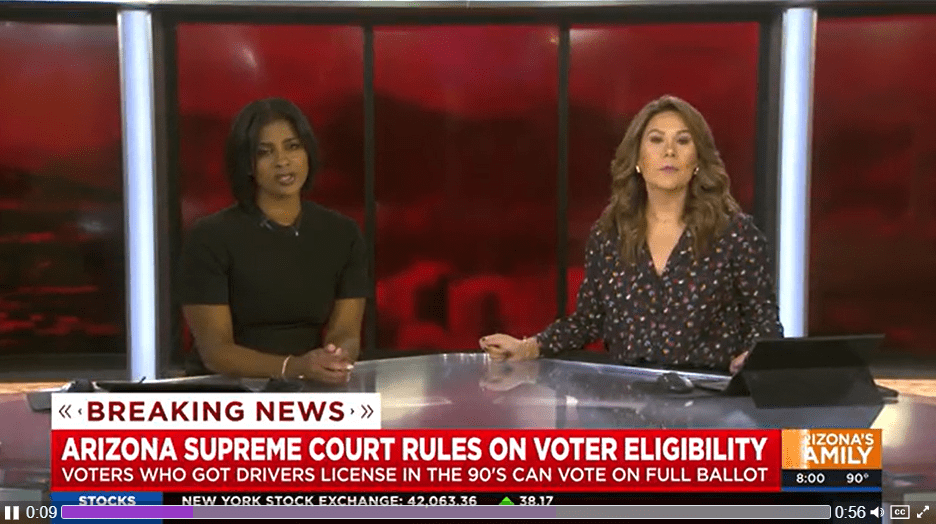
PHOENIX (AZFamily/AP) — The Arizona Supreme Court ruled on Friday that nearly 98,000 voters whose citizenship documents had not been confirmed can cast their full ballots in the upcoming November election, including in state and local races.
The court determined that Maricopa County Recorder Stephen Richer and other county recorders do not have the authority to restrict voters to federal-only ballots, as these individuals had registered to vote long ago.
“We are unwilling on these facts to disenfranchise voters en masse from participating in state contests,” Chief Justice Ann Scott Timmer wrote in the ruling. “Doing so is not authorized by state law and would violate principles of due process.”
While county recorders are obligated to verify citizenship, the court found no evidence suggesting that the affected voters are not U.S. citizens. As Chief Justice Timmer explained, “Fontes and Richer acknowledge that ‘[i]t is possible that Affected Voters have, in fact, provided satisfactory evidence of DPOC [documentary proof of citizenship].’”
The court also noted the urgency of the situation, with Timmer stating, “This Court has also accepted original special action jurisdiction over election matters in which there is a need for immediate relief based on rapidly approaching election deadlines and where the key facts are not in dispute.”
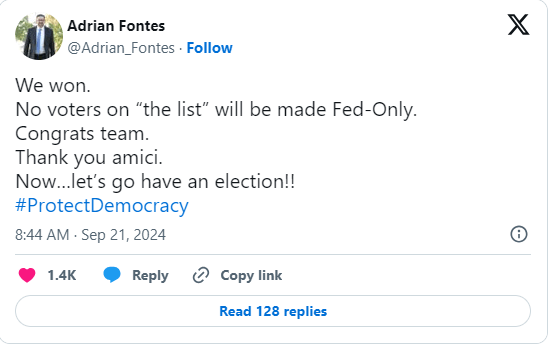
Maricopa County Elections Director Adrian Fontes celebrated the ruling, calling it “a significant victory for those whose fundamental right to vote was under scrutiny.” He continued, “The court faced a stark choice: to allow voters to participate in just a few federal races on a limited ballot, or to make their voices heard across hundreds of decisions on a full ballot that includes a variety of local and state offices. We deeply appreciate the Arizona Supreme Court for their prompt and just resolution.”
Meanwhile, Maricopa County Recorder Stephen Richer, a Republican, expressed gratitude to the court, stating, “Thank you Arizona Supreme Court for your extremely quick and professional review of this matter.”
The issue stemmed from a 2004 Arizona law requiring residents to provide documentary proof of citizenship (DPOC) to register as “full-ballot voters,” allowing them to vote in all federal, state, and local races. Voters who fail to provide proof of citizenship are restricted to voting only in federal races.
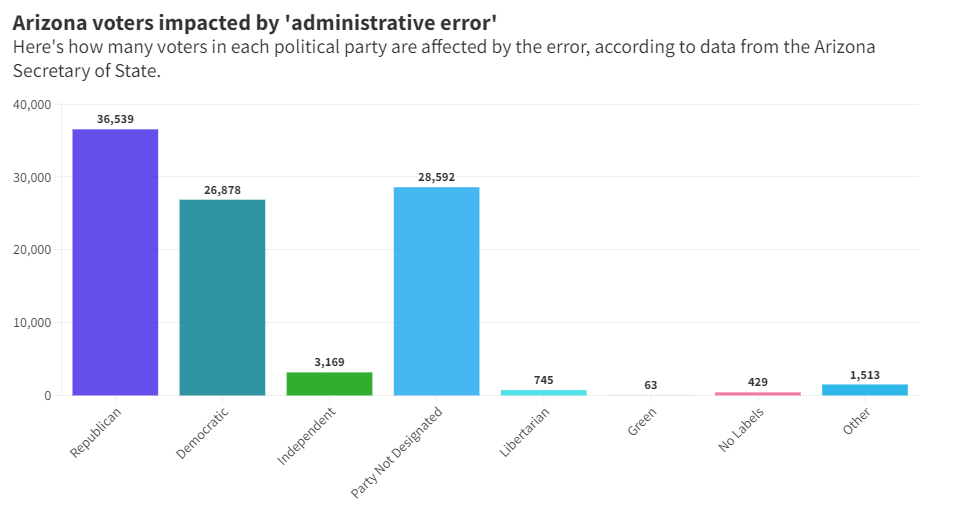
The controversy arose when a problem was discovered in how duplicate driver’s licenses were issued, which meant certain voters who had received a license before October 1, 1996, may not have citizenship records on file.
Fontes and Richer had been at odds over the status these voters should hold. Richer, seeking clarity, asked the high court to intervene.
Arizona’s swing state status is unique in that it distinguishes between voters who can participate only in federal elections and those eligible to vote in federal, state, and local elections. To qualify for the latter, voters must submit proof of citizenship.
She was placed on leave for her safety after local conservatives escalated their violent rhetoric against her.
A South Carolina middle school teacher has filed a defamation and libel lawsuit against five individuals — including a state representative — after being publicly accused of “grooming” children. The accusations followed her decision to distribute a questionnaire asking students for their personal pronouns. The defendants claimed her so-called “secret sex survey” violated state laws and school policies, asserting that her teaching license should be revoked.
Mardy A. Burleson, a computer science teacher at Hilton Head Island Middle School (HHIMS), is at the center of this controversy. HHIMS is located in a predominantly white, Christian coastal community of 38,069 people, most of whom are over 45. Burleson, who has a transgender son, was personally affected by the death of her son’s friend, who died by suicide after struggling to come out to their family. Motivated by this experience, Burleson introduced a beginning-of-term survey for her students titled, “Who is behind those eyes?” aiming to create a supportive environment for her students.
She had conducted the survey for several years without receiving any complaints. The survey included questions about students’ families, preferred learning styles, favorite media, hobbies, and accomplishments. It also asked for their “preferred pronouns” and included the question, “Do you want me to use your pronouns in class and in messages home, or is it private between you and me?”
“I promise to keep these just between you and me,” Burleson wrote at the top of the survey. Parents could access blank copies of the survey through their children’s Google Classroom accounts.
Around January 9, 2023, an HHIMS student showed the survey to her father, David Cook, a local “Dad-vocate” who had supported recent efforts to ban “pornographic” books from school libraries.
The following day, Cook lodged a complaint with the HHIMS principal. In response, Burleson removed the pronoun-related questions to avoid further conflict, according to court documents. Cook also requested a meeting with Burleson and school officials, but he claimed the school had “hidden” them from him.
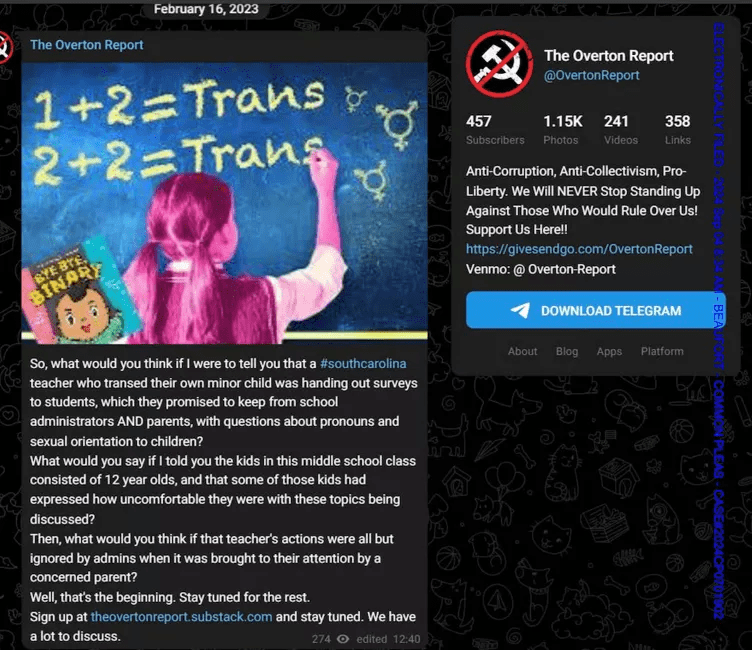
Cook allegedly shared the survey with Corey Allen Whittington, the author of the right-wing blog The Overton Report. In a post, Whittington accused Burleson of “grooming pre-teen students into an overtly sexualized lifestyle” and criticized her for having “transed her own kid,” referring to her transgender son.
“[Burleson] spent years transitioning her own daughter into a ‘son’ and has made no secret of expressing her full support for the controversial ideas behind gender ideology,” Whittington wrote.
For Burleson, Whittington’s post crossed a personal line by mentioning her transgender son, who she said had been bullied more at school as a result.
On his podcast and social media, Whittington continued to accuse Burleson of being a “predatory” teacher, claiming she was “indoctrinating 8th graders” with “secret surveys about sex” and telling students to “keep [it a] secret from administrators and parents.”
“Is there any other way to define somebody who encourages that type of thing in children?” Whittington asked on his podcast. “Is there any other way to define them than a groomer? What are you doing if not grooming them to accept kink and fetish at a young age?”
Whittington posted a link to his blog post on Facebook around January 25, 2023. Cook responded by sharing a screenshot of an article from the Rape, Abuse & Incest National Network (RAINN) titled, “Grooming: Know the Warning Signs,” with the caption, “I’ll just leave this right here for you, Corey Allen.” The article defined grooming as “manipulative behaviors that the abuser uses to gain access to a potential victim, coerce them to agree to the abuse, and reduce the risk of being caught.”
In later public comments, Cook accused Burleson of violating school district policies and her employment contract by administering a secret survey to students without parental consent.
Another local conservative activist, Elizabeth Szalai—who had previously submitted a list of books to the district superintendent for removal due to “adult” content—called Burleson a “groomer.” On her Facebook page, she vowed to make school personnel “pay” if they ever kept a secret from her about her child, promising to “exhaust every effort to have their license revoked and ensure that they never have access to children again.”
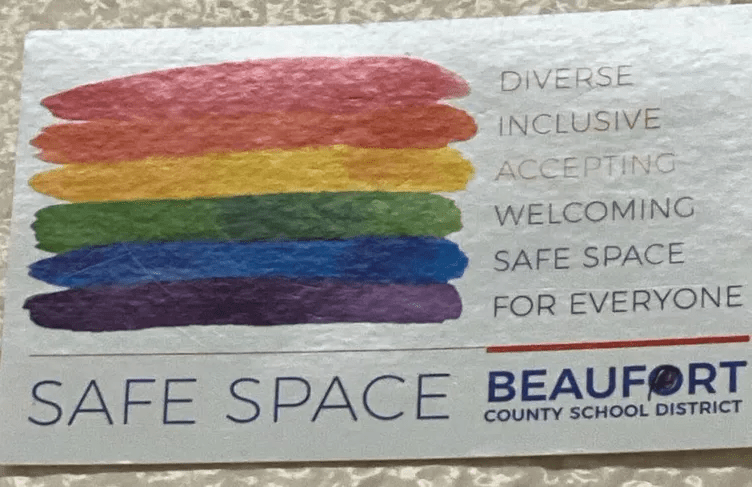
Michael Covert, a former Beaufort County Council member who supported Szalai’s book-banning efforts, reportedly called Burleson a “grooming” “pervert” who was “unfit” to teach during an appearance on his broadcast, Beaufort House of Cards. State Representative Thomas Beach (R), a current member of the South Carolina House of Representatives, also joined in the attacks, labeling Burleson a “groomer” on Facebook.
Of Burleson’s five primary harassers, only Cook has a student in the local schools, while two of the others don’t even live in Beaufort County.
Burleson explained the intent behind her survey and its pronoun question in an interview with The Packet. She said that teachers are trained to be trusted adults that students can confide in, noting, “A trusted adult is not always the family.” She also added that if a parent asked her about a student’s pronouns and it appeared to be an unsafe situation, she would consult district administrators and professionals first.
Due to the escalating harassment, Burleson was placed on leave in February for her own safety. She and another teacher, Kathleen Harper—HHIMS’s literary coach and a teacher with 25 years of experience—said the mounting negative online attention made them and their families feel unsafe both at home and in public.
Cook escalated his harassment campaign in April 2023. In a Facebook post on April 9, he wrote that schools “teach kids that the only safe people are teachers and admin. Everyone else in their lives are a danger to them, [including] parents and extended family.”
He accused Kathleen Harper, a fellow teacher, of being “sexually abusive” because one of her district-sourced texts on modern-day slavery mentioned teenage female genital mutilation.
Cook began showing up on campus, according to The Island Packet. Near the end of the school term, he handed Harper a handwritten note accusing her of indoctrinating students.
During the final week of school, Cook posted on Facebook, “If you’re in support of giving sexually explicit material to children, it’s important to remember… Dead Pedophiles Don’t Re-Offend.”
Other teachers warned Harper about Cook’s presence on campus, and escorts were assigned to accompany her to her car. School officials compiled Cook’s harassing social media posts and filed a harassment report with the Beaufort County Sheriff’s Office.
“[School officials] told me to watch my back in public,” Harper told The Packet. “They told me he is dangerous and they’re concerned for me. They encouraged me to file a police report, which I did that day.”
At a school board meeting, Cook claimed his daughter and other students were “victims” who had been subjected to “lewd and vulgar materials” by Burleson. He also accused the school and Burleson of “hiding” from a meeting with him.
At a June 2023 school board meeting, Cook made a spectacle of himself by throwing four bags of chicken feed at board members, protesting the re-shelving of books that had previously been removed for their alleged “pornographic” content.
“There’s your chicken feed,” Cook said. “I give you this gift as a way to demonstrate mine and many others’ opinion of your lack of action. Chicken. Too afraid. Matter of fact, your behavior gives chicken a bad name.”
After the meeting, the sheriff’s office issued a no-trespass order against Cook for all district campuses, though he was still permitted to attend board meetings and pick up his daughter from school.
Burleson is now suing the five individuals mentioned earlier for maliciously making false, defamatory, and harmful statements accusing her of a crime. These false accusations damaged her professional reputation and caused significant emotional distress.
Burleson is represented by Meg Phelan of the Equality Legal Action Fund, a pro-bono group that focuses on protecting members of the LGBTQ+ community, educators, and allied officials from defamation and harassment. Burleson is seeking actual and special damages, as well as punitive damages, according to The Island Packet. However, Phelan said Burleson and the organization are not focused on financial compensation.
“We’re dedicated to fighting this and trying to not only educate the public, but showing the public that no American deserves to be the target of disinformation, defamation, harassment, and intimidation,” Phelan told LGBTQ Nation.
Phelan added that the goal is to demonstrate to conservatives and extremists that their words have consequences and that not all speech is protected under the First Amendment. She noted that the defendants used the term “groomer” in a way that specifically accused Burleson of coercing children into sexual abuse, rather than simply using it as an anti-LGBTQ+ slur.
While not all states have legal definitions for grooming, South Carolina law allows lawsuits for defamation and libel if a false and malicious accusation of a crime is made.
The Equality Legal Action Fund is a nationwide network of pro-bono lawyers aiming to protect LGBTQ+ individuals, allies, teachers, and community leaders from anti-LGBTQ+ harassment. If this lawsuit succeeds, it could be one of the first court cases where anti-LGBTQ+ activists face legal consequences for using the “groomer” slur. It could also provide some peace of mind to Burleson and other teachers facing similar harassment across the country.
“We want these inspiring teachers to continue to create these safe, inclusive spaces for all of their students, particularly in these very conservative and sometimes closed-minded communities,” Phelan added. “So we don’t want them to spend all of their time and money defending both their personal and professional reputations.”
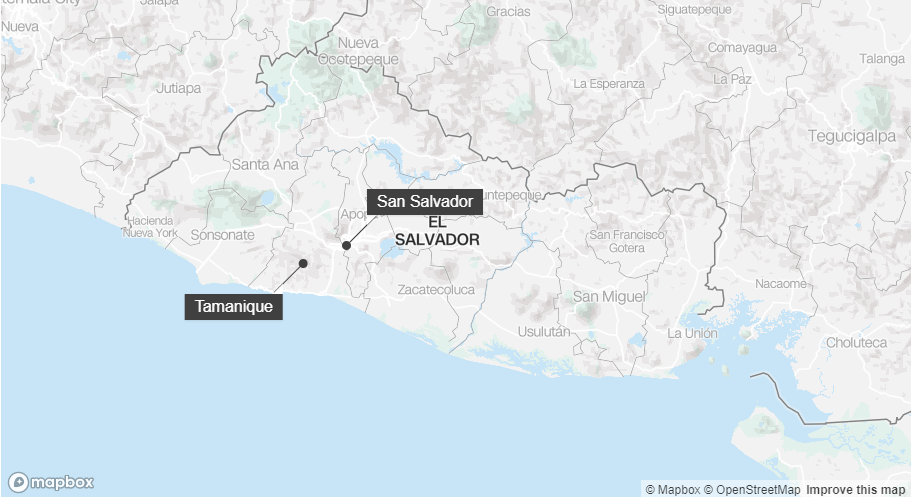
San Salvador, El Salvador — For years, many Salvadorans felt they had only two options: flee or face death. Once known as the “murder capital of the world,” El Salvador saw an average of one homicide per hour in early 2016. With a population of just 6 million—two million fewer than New York City—gang violence forced countless Salvadorans to seek refuge, mostly heading north to the US. Now, the security landscape has changed so dramatically that even those who built new lives abroad are returning.
This transformation is largely credited to President Nayib Bukele, whose firm hold on power has brought peace to the streets—but not without a cost. Emergency measures, including the suspension of constitutional rights like due process, have led to a spike in incarcerations and condemnation from human rights groups. CNN visited the country to gather insights on how Salvadorans feel about these sweeping changes.
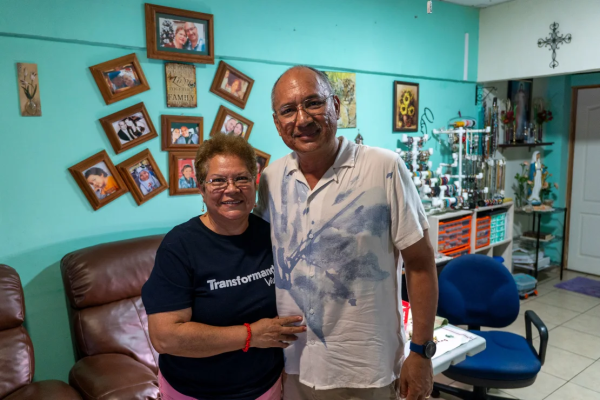
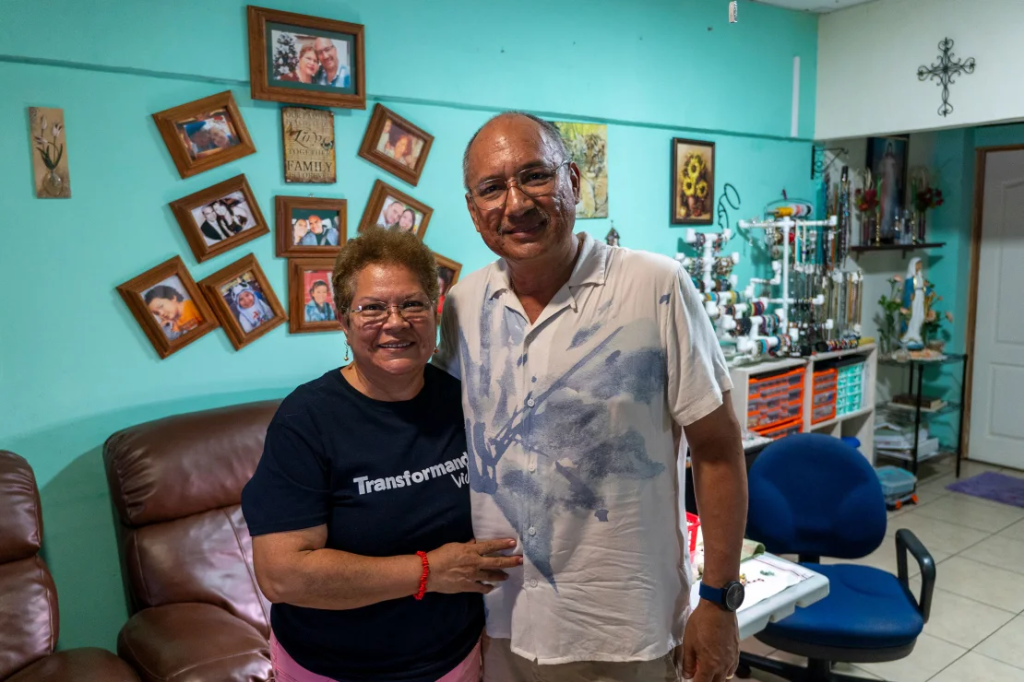
Deported and Now Grateful Victor Bolaños and his wife, Blanca, faced a harsh reality when they lost their asylum case in the US. After more than 15 years of building a life in Denver, they reluctantly accepted a voluntary departure and returned to El Salvador—the same country they had fled.
“We came back six years ago, and things were unsafe,” Victor says, sitting in their modest home in San Salvador. At 65, his voice is heavy with the memory of those difficult times. “There were lots of robberies, lots of gangs,” he recalls, describing the precarious situation they encountered in 2018.
But just a couple of years after their return, something unexpected happened. The relentless violence that had gripped El Salvador for decades began to ease, and the streets grew calmer. The constant fear that once dominated everyday life started to dissipate.
El Salvador, long associated with violence and mass emigration, saw a remarkable decline in crime. For many, this shift represented more than just safety—it offered a glimmer of hope. The world began to take notice. Suddenly, the small Central American nation seemed to be on a path to reinvention, largely credited to President Nayib Bukele. Elected in 2019 at just 37, Bukele’s leadership marked a turning point. When his New Ideas party later secured control of Congress, it became easier to bend—or break—the rules. Bukele went on to win re-election, despite the country’s constitution prohibiting a second term. A “temporary” state of emergency, initially enacted to combat gang violence, has now been in place for more than two years, giving the president sweeping powers of detention. Human Rights Watch has raised alarms, reporting that even children are being caught up in “severe human rights violations.”
Yet, in San Salvador, Blanca sits in her living room, carefully crafting handmade jewelry. “Now, one feels safe—freedom is felt in our country,” she says.
Blanca and her husband, Victor, credit the improved security for enabling them to start a small jewelry business from their home—something they once thought impossible. “Now you can have a business,” Blanca says. “If you look around, there are entrepreneurs everywhere in the country.” She reflects on how, just a few years ago, gang extortion would have crushed any attempt to start a venture like theirs.
For decades, people from Central America, especially from the Northern Triangle countries of El Salvador, Honduras, and Guatemala, fled violence and insecurity in search of protection and opportunity in the US. However, new data from US Customs and Border Protection (CBP) shows a surprising shift—fewer Salvadorans are now heading north.
In 2022, CBP reported over 97,000 encounters with Salvadoran citizens at the US southern border. By 2023, that figure dropped to just over 61,000, and 2024 is expected to see a continued decline.
While these numbers may seem encouraging, the underlying reasons for migration remain complex. Many Salvadorans still leave their homeland due to economic struggles and limited opportunities. Despite steady economic growth under Bukele’s presidency, as reported by the World Bank, El Salvador continues to face challenges in creating sufficient jobs for its population.
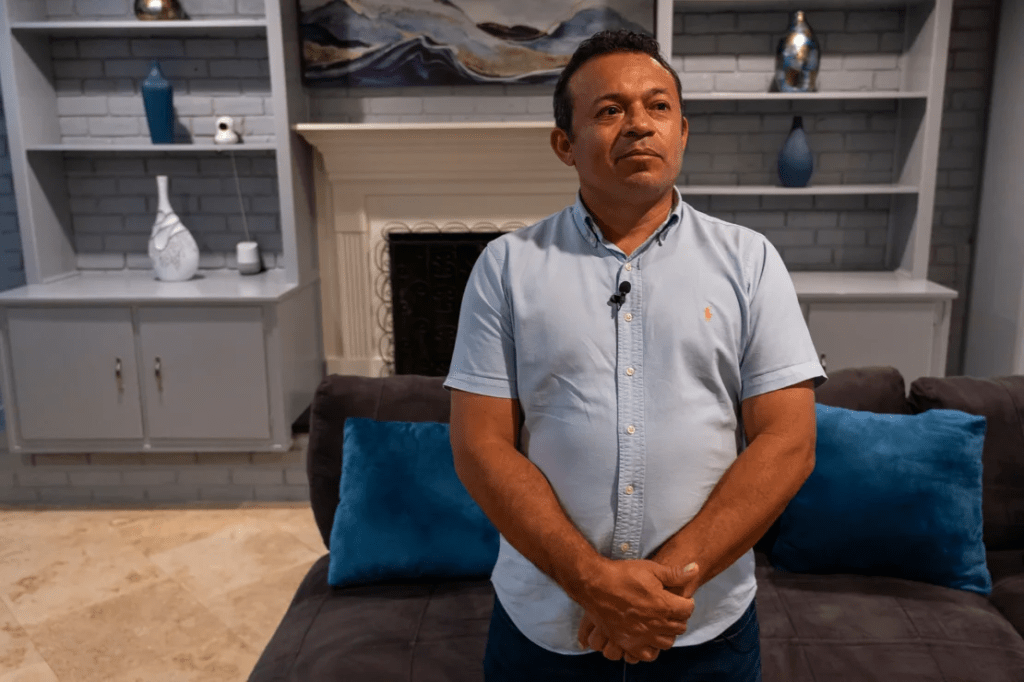
Leaving Houston to Build a Beach Resort For 27 years, Diego Morales built a life far from home. Now 48, the real estate investor, husband, and father of three left El Salvador in 1997 in pursuit of the safety, stability, and opportunity that the US could offer. The thought of returning had never crossed his mind—until the grim stories of violence that plagued his homeland were replaced by accounts of newfound safety.
Diego’s childhood was shadowed by constant danger. “I’d wake up, go to school, and find dead bodies on the street,” he recalls, his voice heavy with the weight of those memories as he sits in his suburban Houston home.
But today, El Salvador is no longer the country Diego fled. “Now it’s safe, and many people are going back,” he says, echoing the growing optimism among Salvadorans and those in the diaspora.
The country’s image has undergone a profound transformation. Once infamous for violence, El Salvador is now drawing waves of investors. “Many people, even Americans—we have friends from Florida, from Austin, from Hawaii—are looking to buy property,” Diego says, a testament to how far the nation has come.
Diego himself is preparing to return to the homeland he once left behind. He has already invested in Tamanique, his hometown about an hour from the capital, where he built a beach resort that he now manages remotely.
Along El Salvador’s coastline, beach towns like El Tunco, El Zonte, and La Libertad are buzzing with new construction, drawing the interest of tourists and real estate developers eager to capitalize on the country’s resurgence. Cliffs that once served as gang lookouts are now being eyed as prime locations for scenic hotels.
“As soon as President Bukele brought security to this country, everything skyrocketed in value,” Diego explains. He notes that land which sold for around $100,000 just five years ago is now going for ten times that amount, reflecting the rapid transformation and growing demand for property in the area.
And the Salvadoran dream isn’t just Diego’s—his 23-year-old son, Jairo, a natural-born US citizen, also plans to follow in his father’s footsteps. “We’ve had conversations… it’s already starting,” Jairo says, his eyes bright with the promise of reconnecting with his roots.
El Salvador’s government is actively encouraging the return of those who left, offering tax exemptions on belongings and vehicles for citizens who come back. Since 2022, nearly 19,000 Salvadorans have moved home under this initiative, according to government figures.
‘No Mercy’ for Gang Members A decade ago, gangs like MS-13 and Barrio 18 terrorized communities, extorting businesses and waging violent turf wars for control of neighborhoods, making El Salvador the most violent country in the Western Hemisphere, according to InSight Crime.
But something extraordinary has happened since then. By 2022, the murder rate dropped dramatically, and in 2023, there were only 154 homicides—a staggering 97.7% decrease from 2015, according to government data. Bukele even tweeted that El Salvador now had the lowest homicide rate in all of the Americas.
This sharp decline followed Bukele’s introduction of emergency measures, which granted police the power to detain suspects without charges for up to 15 days and involved deploying the military across the nation. These rules, still in effect, have led to an unprecedented crackdown on gang activity, with more than 80,000 people detained since the state of emergency was declared in March 2022.
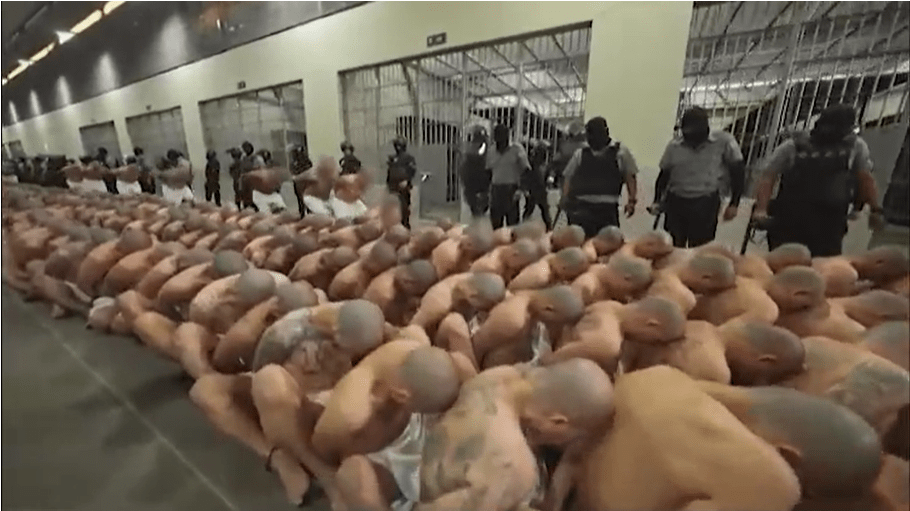
Central to this effort is the newly built “Terrorist Confinement Center,” or Cecot, a massive prison complex designed to hold up to 40,000 inmates. Currently, it houses 14,000 gang members, all accused of having committed at least one murder. Disturbing images from Cecot show heavily tattooed men with shaved heads packed into warehouse-sized concrete rooms, filled with metal bunks or seated in tight rows on the ground. Dressed only in white shorts, their heads are bowed, hands behind their backs. According to Salvadoran authorities, those sent to Cecot will never be released.
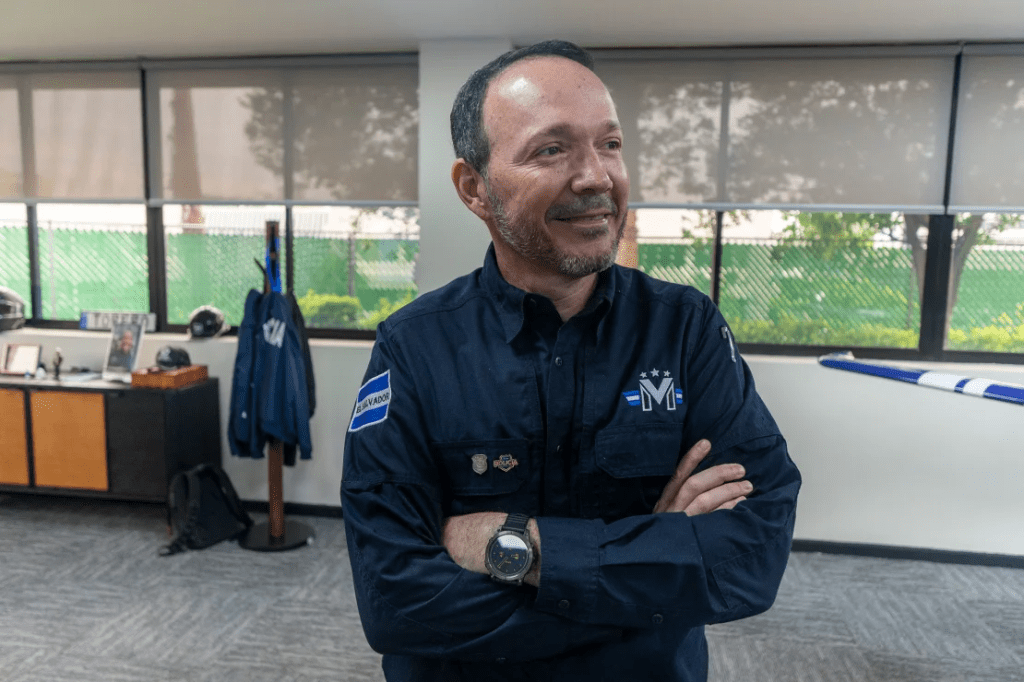
“We have no mercy for crimes against life,” Security Minister Gustavo Villatoro told CNN. “This is how you deal with a serial killer. You need laws that ensure once they’re imprisoned, they never get out—because society deserves better,” he emphasized. “Someone who kills people daily, who rapes our girls… How can you change their mind? We are not fools.”
Villatoro’s words reflect the harsh reality El Salvador has faced for years. He claims that gang members from groups like MS-13 and Barrio 18 were required to commit at least one murder as part of their initiation.
“Imagine a serial killer in your state, in your community, being released by a judge—how would you feel as a citizen?” Villatoro asks. “We have no evidence that a serial killer can be rehabilitated, and we have more than 40,000 of them in El Salvador.”
The government’s hardline approach was not a spontaneous decision; it was meticulously planned. Security Minister Gustavo Villatoro and members of President Bukele’s cabinet began studying the gangs as early as 2017.
“Before you start a war, you have to know your enemy,” Villatoro explained.
While the government’s aggressive campaign has been praised by many for restoring peace, it has also drawn significant criticism. Human rights groups accuse the Bukele administration of widespread abuses in its fight against the gangs. Villatoro, however, dismisses these accusations, arguing that the focus should be on the victims, not the criminals.
“What about the society, the good citizens in our country? Where were these human rights groups when we were losing 30 Salvadorans a day?” he asks pointedly.
Bukele has remained firm in his stance. In 2022, he famously challenged human rights advocates, telling them to “take” the gang members if they cared so much. “Come pick them up—we’ll give them to you, two for the price of one,” he declared.
Bukele’s iron-fist approach has garnered praise from some US conservatives, who applaud his tactics. However, during this year’s Republican National Convention, former US President Donald Trump unexpectedly criticized Bukele while addressing El Salvador’s newfound safety.
“In El Salvador, murders are down 70 percent. Why are they down? Because they’re sending their murderers to the United States of America,” Trump claimed, without providing any evidence.
When CNN asked Villatoro whether there was any truth to Trump’s assertion, Villatoro flatly denied it. “No,” he responded. “The problem is, you (Trump) don’t have facts, you don’t have evidence, but we have evidence of where we put our terrorists,” referring to Cecot, the massive prison where thousands of gang members are detained.
For months, CNN has sought access to Cecot, but the Salvadoran government has repeatedly denied requests to visit the facility.
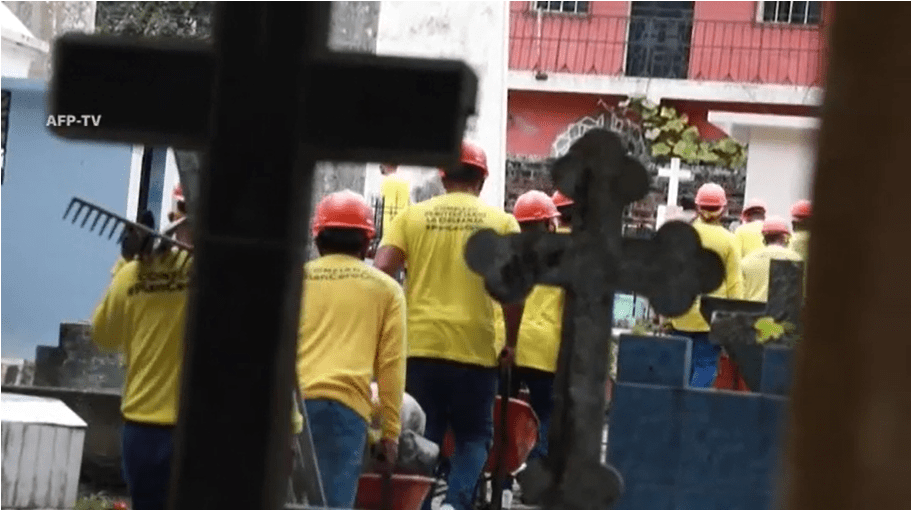
In other detention centers, lower-ranking gang members and criminals are tasked with repairing what the gangs destroyed. Some inmates rebuild homes, while others smash tombstones commemorating underworld leaders, erasing the gangs’ presence bit by bit.
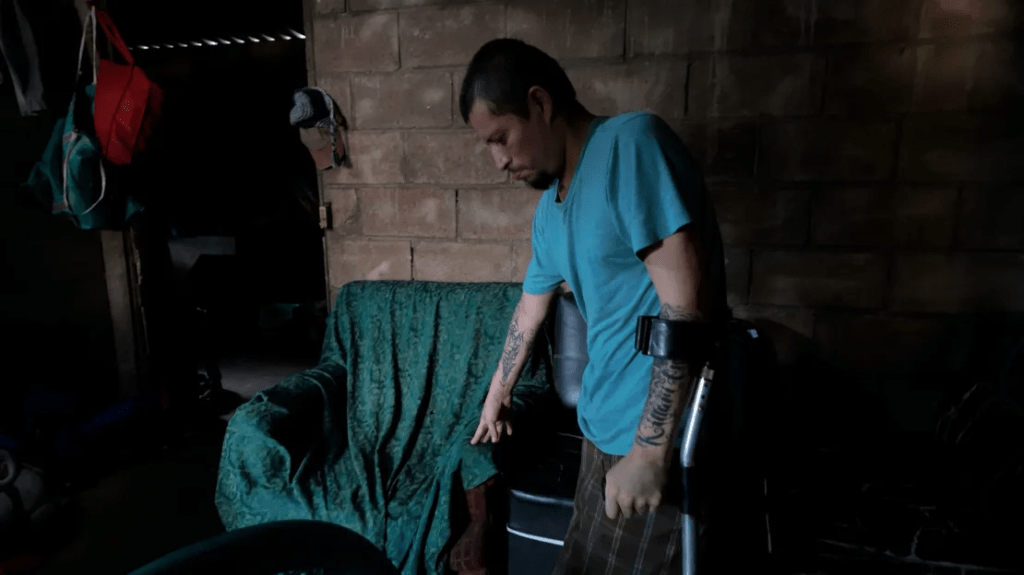
Jailed ‘for Having Long Hair and Tattoos’ In early 2024, Juan Carlos Cornejo was swept up in Bukele’s mass arrests after an anonymous tip accused him of “illicit association.” Hours later, he found himself in jail, confused and terrified.
Juan Carlos believes he was targeted solely based on his appearance.
“I was accused of illicit association, but I have nothing to do with that. I love music, especially rock, so my look is different. I had long hair,” he explained from his dimly lit, mosquito-ridden home in Santa Ana, a city about 35 miles from the capital. “I have tattoos, but they are just artistic expressions,” he added, frustration evident in his voice.
“There was no investigation, nothing,” he claims.
Juan Carlos spent five long months in prison. Before his detention, he had been working as a veterinary assistant, caring for sick or injured pets, and insists he had never been arrested before.
His release came only after Socorro Jurídico Humanitario (SJH), a group dedicated to providing legal counsel in human rights violation cases, successfully filed a writ of habeas corpus on his behalf. However, Juan Carlos’ story is far from unique. According to SJH, between 33,000 and 35,000 people have been “detained arbitrarily without any justification” since the state of emergency began.
“The only argument given was that his arrest stemmed from an ‘anonymous call’ that had been received, but no proof of this alleged call was ever provided,” the organization told CNN.
Despite widespread criticism of these tactics, the Bukele government remains resolute. Officials argue that these measures—though harsh—are lawful and necessary for securing the country’s future. They also emphasize efforts to rehabilitate tens of thousands of inmates convicted of lesser crimes.
Armed Soldiers on the Streets — and Thanked Critics contend that Salvadorans have traded freedom for security, but the people we met express that they have never felt so free. There’s the mother laughing as she takes her skipping toddler to the park, unafraid of getting caught in a gun battle, stumbling over a corpse, or paying gang extortion “rent” just to enter her own neighborhood. There’s the father, relieved that his son is no longer at risk of being recruited by gangs. Unlike in places like Cuba or China, where residents may seem hesitant to criticize repressive regimes, the optimism in El Salvador appears genuine.
Teresa Lilian Gutierrez is caught in the middle, and her experience illustrates the complexities of life in El Salvador today.
“Now it’s safe, it’s calm,” she told us on a street in La Campanera, once one of the most dangerous neighborhoods in San Salvador. “Before, no one would visit, not even family.”
However, her son, who used to help her financially, is unable to visit.
“He’s been detained for two years in Mariona prison. He is not a gang member; he was arrested during the state of emergency,” she explained, showing pictures of her son working as a cashier in a restaurant.
“I ask the government to release him, please… I spoke to the lawyer last year because they were supposed to let him go, but she said no; they’re not going to release him,” she added.
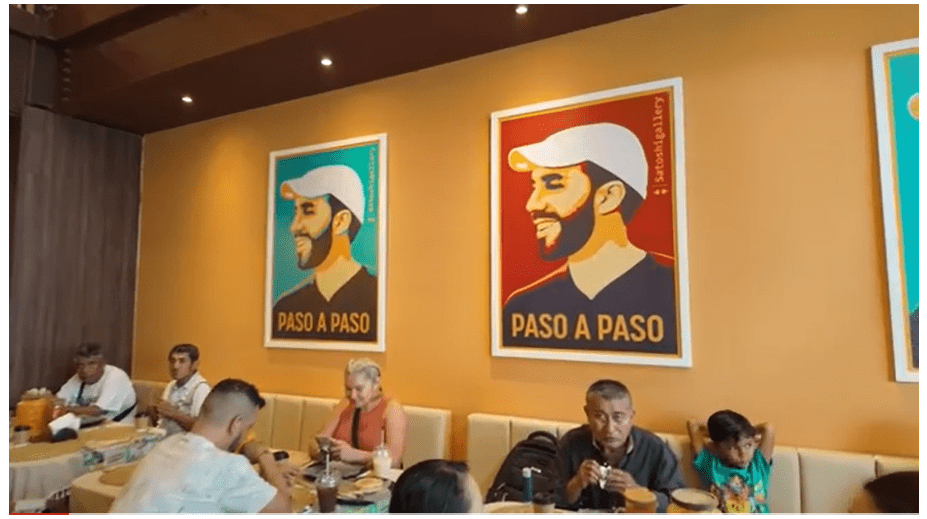
President Bukele enjoys one of the highest approval ratings in Latin America, a sentiment echoed by the people we meet while touring a previously gang-infested area outside San Salvador with the Salvadoran army.
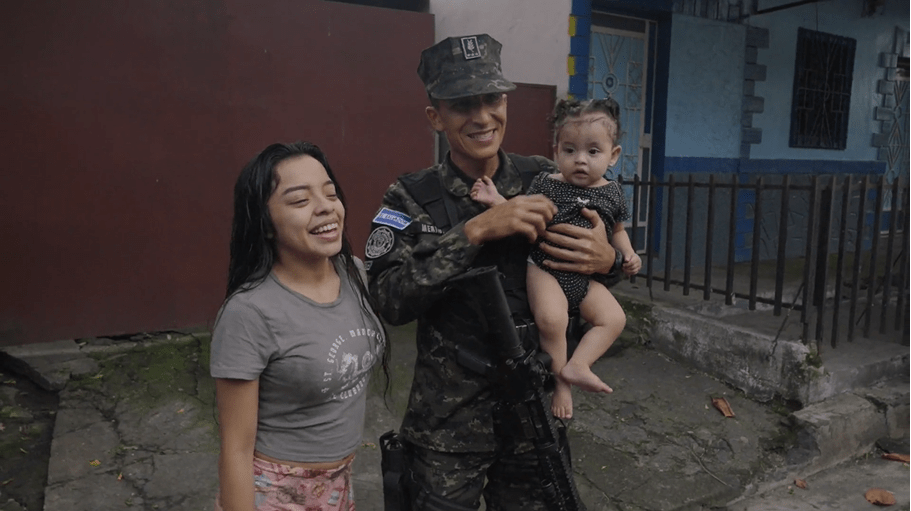
Armored cars and uniformed soldiers, once sources of fear, have transformed into opportunities for curious children to ask questions or for supporters to take selfies.
“It was so bad before; you couldn’t go anywhere,” one woman beams as she snaps a picture with Defense Minister René Merino, who has become a symbol of the government’s hardline security strategy. A few years ago, no one in this area would have dared to look police or army members in the eye, Merino recalled, but now everything has changed. Moments later, another resident steps forward to thank the minister and pose for a photo, apologizing for interrupting our interview. It feels more like a victory parade than a law enforcement patrol, as we stop dozens of times over the course of a couple of hours while residents excitedly express their gratitude.
“Only God knows how we were living before,” one woman told CNN, her voice trembling with emotion as tears filled her eyes. Her feelings reveal the deep scars left by the violence that once engulfed their daily lives — and the relief that has followed.
But the looming question remains: what will happen after 2029, when Bukele’s term ends? In a recent interview, the president declared he would not seek a third term, leaving many to ponder the future.
For some, like Blanca Bolaños, the answer is already clear. “I voted for Nayib this time, and the last time, and if he runs again, I will vote for him,” she says with unwavering conviction.
As the country grapples with its transformation, Bukele’s legacy and controversial tactics will face scrutiny. Whether El Salvador’s newfound stability endures or falters remains to be seen. But for now, among those who say their lives have changed, there is little doubt: they believe in Bukele and would follow him again.
What exactly are we defending? What remains of the United States worth protecting?
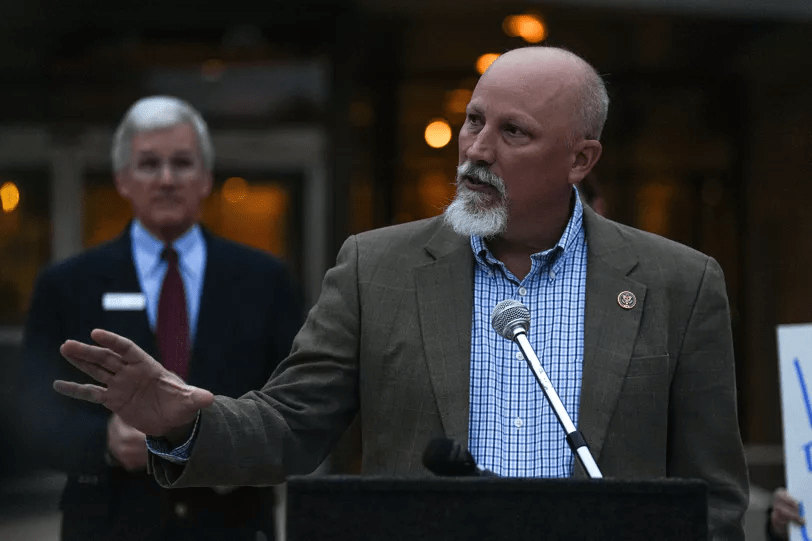
Rep. Chip Roy (R-TX) gave an extended speech on the anniversary of the September 11 attacks, during which he stated that the U.S. is no longer worth defending, citing a friend’s child’s transgender music teacher as a reason. He began his remarks by recognizing the significance of September 11 before transitioning to criticisms of immigrants.
“It serves as a reminder of the consequences of leaving your country vulnerable to attacks,” he stated before providing examples of immigrants involved in criminal activities. Roy expressed his support for mass deportations in response to these crimes, despite data indicating that immigrants are less likely to commit offenses than those born in the U.S.
In the midst of his speech, Roy launched into a tirade about what he considered wasteful government spending, labeling defense expenditures as unnecessary because, in his view, the U.S. isn’t worth defending anymore.
“In this town, we can’t effectively advocate for you, the American people, to ensure a secure border, safe communities, and an economy that isn’t devastated by reckless government spending,” Roy exclaimed. “And you want to know why? In the name of defense, they tell me every year that if I don’t support these inflated spending bills, we won’t get a new submarine or carrier.”
“What exactly are we trying to defend? What is left of the United States to protect? A school where I can’t send my child to pray without paying $20,000 a year on top of my taxes?” he questioned, referring to the private school he chooses for his child, despite the fact that students are permitted to pray in public schools, according to the Department of Education.
“A school where my friend’s sixth grader has a transgender music teacher asking students to participate in a dance class? Yes, that’s a true story,” he emphasized, as if it were shocking that sixth graders would be dancing in music class. “Is that what we’re defending with carriers, missiles, and endless wars?”
This isn’t the first instance in which Roy has claimed that the U.S. shouldn’t be defended due to LGBTQ+ individuals. Last year, he pointed to a Pride event at a U.S. Air Force Base in Georgia as a rationale for opposing military funding.
“What’s next, rainbow uniforms during Pride Month?” Roy questioned at the time. “The Air Force and Defense Department endorse this absurd use of taxpayer dollars and then expect members of Congress—who represent Americans outraged by this—to approve an $800 billion-plus budget for the Department of Defense (DOD). If the DOD doesn’t put an end to these divisive and frankly embarrassing events, Republicans should withdraw their support for this year’s National Defense Authorization Act.”
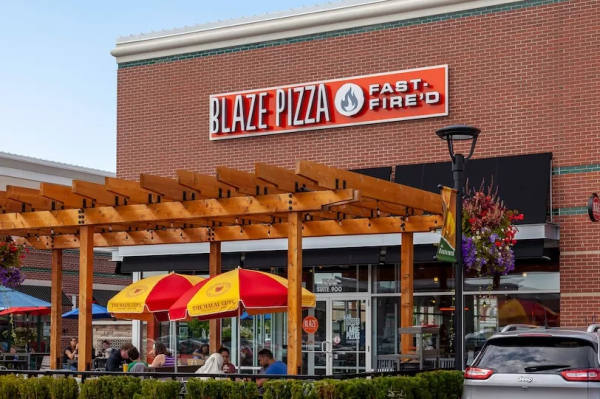
Police in Roseville, California, are searching for three suspects in connection with a hate crime at a Blaze Pizza restaurant, where workers were assaulted after one suspect tore down a Pride flag on display. The assault was captured on a smartphone video.
The incident took place at 10:50 p.m. on a Thursday when a food delivery driver entered the restaurant, noticed the Pride flag near the register, and threw it to the ground. When the store manager and employees confronted him, the man allegedly used a homophobic slur before leaving. He later returned with two other men, who then attacked the restaurant staff.
Haters yelled obscenties, sent a threatening letter, and vandalized their Pride flag and political signs. But the reaction has emboldened the targeted men.
A witness named Chance Chacon told KCRA that the manager and employee had defended the flag’s display, but then, when the three assailants returned, “It was like a mob. They were just kind of swinging at him.”
A video captured inside the restaurant shows one worker repeatedly shouting at the assailants, “Get the f**k out of here!” while another employee urges a co-worker to “Call the cops.”
The three men fled the scene before police arrived, but an ambulance later transported one employee on a stretcher. This worker was taken to the hospital, where he was briefly treated for a concussion and head trauma but has since been released.
A still image from the footage shows a shoeless, light-skinned suspect wearing a torn dark-colored t-shirt and hand wraps commonly used in mixed martial arts.
Police have asked for the public’s help in identifying the assailants involved in the September 20 incident. Anyone with information can submit an anonymous tip online or contact their non-emergency line at 916-774-5000.
Ruby Shields, a lesbian who owns a restaurant in the nearby town of Granite Bay, told The SacramentoBee that she doesn’t consider the area LGBTQ+ friendly. She has been too scared to display a rainbow flag at her own restaurant, and is often mistaken as the wife of her male business partner, even though she has a wife.
“We’ve been looked at with respect, but it’s always on the back of your mind, you know, ‘Should I be saying this?’” Shields said of not knowing whether to come out to restaurant patrons. “It’s not even something that I really even want to put out there because you never know. I mean, it’s horrible that it’s so close to home. Roseville is right down the street from where we’re at.”
This wouldn’t be the first time that an anti-LGBTQ+ person has committed violence in California after tearing down a Pride flag. Last August, Travis Ikeguchi — a 27-year-old man who posted anti-LGBTQ+, antisemitic, anti-vaccination Christian Nationalist content online — murdered Laura Ann Carleton, a 66-year-old LGBTQ+ ally and mother of nine, complained about the Pride flag hanging in front of her Cedar Glen, California business.
Police killed Ikeguchi shortly afterward.
Paul Feig — the director of Bridesmaids, Ghostbusters (2016), and other films — wrote, “We are all devastated for her husband Bort and her family and the LGBTQ+ community, for whom Lauri was such a true ally…. This intolerance has to end. Anyone using hateful language against the LGBTQ+ community has to realize their words matter, that their words can inspire violence against innocent loving people. Let’s all keep moving forward with tolerance and love. Let’s not let Lauri’s tragic death be in vain.”
Carleton’s friend, director Paul Feig, wrote of the incident, “Lauri Carleton was my friend. She was a wonderful person who did so much for the LGBTQ+ community as well as the community at large. What happened to her is an absolute tragedy. If people don’t think anti-gay & trans rhetoric isn’t dangerous, think again.”
Subscribe to the LGBTQ Nationnewsletter and be the first to know about the latest headlines shaping LGBTQ+ communities worldwide.
The Department of Justice disclosed that Tenet Media was primarily funded by Russian state media and frequently gives a platform to anti-LGBTQ+ broadcasters. N
According to a Department of Justice (DOJ) indictment, several anti-LGBTQ+ right-wing broadcasters, including Tim Pool and Dave Rubin (who is gay), have unknowingly worked for a Russian government-funded media company designed to spread propaganda and disinformation to U.S. audiences. While there is no evidence suggesting the broadcasters were aware of the company’s Russian ties, unsealed court documents revealed that Russia supports former President Donald Trump in the 2024 election, as reported by The Hill.
The FBI is now investigating the case, drawing parallels to Russian “troll farms” that spread anti-Democratic content during the 2016 and 2020 elections. In response, the Biden administration confirmed ongoing Russian efforts to influence the 2024 election, and the DOJ seized 32 web domains used by Russia to propagate its messaging in the U.S.
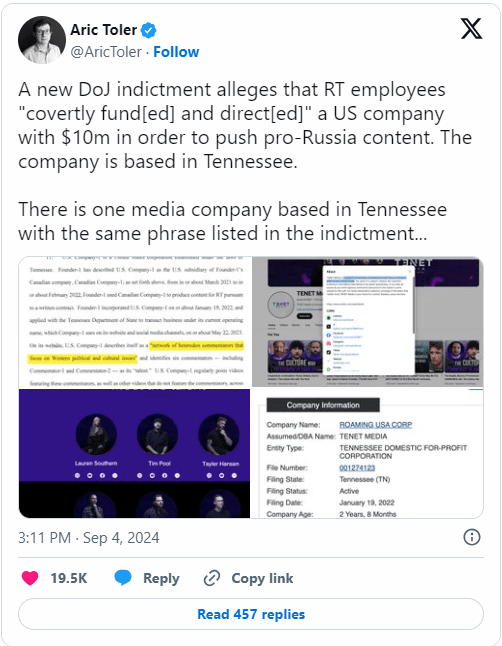
The DOJ indictment claims that two employees of RT (formerly Russia Today), a Russian state-controlled media outlet, secretly funneled nearly $10 million over the past year to fund and manage Tenet Media, a Tennessee-based online content creation company. This company, which platforms the aforementioned broadcasters, has produced over 2,000 videos in the past 10 months on TikTok, Instagram, X, and YouTube. These videos have garnered more than 20 million views collectively, according to the DOJ.
Although the indictment doesn’t explicitly name Tenet Media, referring to it only as “U.S. Company 1,” it does describe the company as a “network of heterodox commentators that focus on Western political and cultural issues.” This description aligns with the one Tenet Media uses on its YouTube channel, as noted by New York Times reporter Aric Toler.
The RT employees, Kostiantyn Kalashnikov and Elena Afanasyeva, operated under the aliases Helena Shudra and Victoria Pesti, managing the funding, hiring, and content editing for the company.
Tenet Media’s YouTube channel features several anti-LGBTQ+ videos, including titles like “Fellas, Is It Gay To Date A Trans Woman?”, “The TRUTH About Gender Ideology,” videos claiming Pride parades expose children to nudity, and another falsely accusing the drag queen segment of the Olympic Opening Ceremonies of “mocking Christianity.” The segment’s artistic director clarified it depicted a Dionysian feast.
In alignment with this rhetoric, Russian President Vladimir Putin has accused the U.S. of imposing gender “perversions” on Russian schoolchildren, using this as a pretext for anti-LGBTQ+ policies and his continued invasion of Ukraine. Tenet Media has also published videos criticizing Ukraine, claiming it spreads violence and unrest in Russia.
The DOJ stated, “While the views expressed in the videos are not uniform, most are aligned with the publicly stated goals of the Government of Russia and RT — to deepen domestic divisions within the United States.”
Tenet Media’s website lists prominent figures like Tim Pool, Dave Rubin, Tayler Hansen, and Turning Point USA’s chief creative officer Benny Johnson — all of whom have expressed anti-LGBTQ+ sentiments on social media. The platform has also hosted discussions between former Fox News host Tucker Carlson and conservative gay commentator Glenn Greenwald.
On Wednesday, the Biden administration revealed that Russian government agents had been operating websites, social media platforms, and creating fake social media personas to push propaganda that supports Russian interests. According to The Verge, the DOJ announced it had already seized 32 web domains connected to this Russian scheme and indicated that more seizures are likely as the investigation continues.
Numerous media studies have demonstrated that Russian government-funded “troll farms” spread state propaganda aimed at deepening political divisions in the U.S. during the 2016 and 2020 elections. The exposure of Tenet Media represents the latest version of this tactic, with Russian agents seemingly using anti-LGBTQ+ media figures as part of their broader anti-American disinformation campaign.
In a major win for LGBTQ+ rights, Thailand has become the first Southeast Asian country to legalize same-sex marriage.
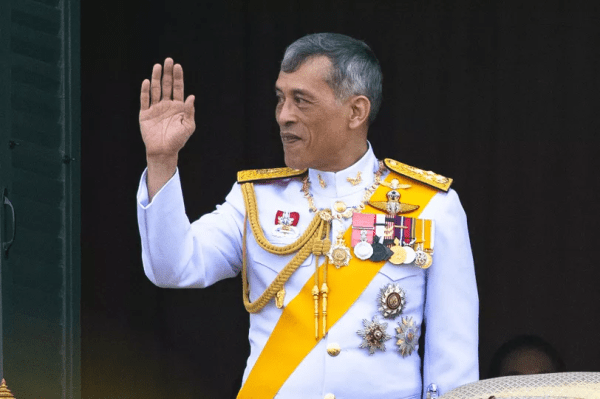
The bill, passed by Parliament earlier this year, was signed into law by King Maha Vajiralongkorn on Tuesday through Royal Assent. The law will take effect in 120 days, with the first same-sex weddings anticipated in January.
Siritata Ninlapruek, an LGBTQ+ activist, expressed, “We are all delighted and excited. We’ve been fighting for our rights for over ten years, and now it’s finally happening.”
With this historic change, marriage laws in Thailand will no longer use gendered terms like “husband” and “wife,” replacing them with inclusive, gender-neutral terms like “partner.” Same-sex couples now enjoy the same legal rights as their heterosexual counterparts, including adoption and inheritance rights.
Waaddao Chumaporn, another LGBTQ+ rights advocate, told AFP, “The law is a monumental step towards equal rights in Thailand.”
Chumaporn is planning a mass wedding for over a thousand LGBTQ+ couples in Bangkok on January 22, the first day same-sex couples can legally marry.
Though Thailand is known for being more accepting of LGBTQ+ individuals compared to neighboring countries, the legalization of same-sex marriage comes after years of political challenges. LGBTQ+ advocates like Apiwat Apiwatsayree have been waiting for this moment for over a decade.
“We’ve been waiting for a long time,” said Apiwat, who plans to marry his partner of 17 years.
Human rights and LGBTQ+ organizations worldwide celebrated this achievement. Amnesty International’s Thailand Researcher, Chanatip Tatiyakaroonwong, remarked, “Thailand has taken a historic step towards becoming the first country in Southeast Asia to legalize marriage for LGBTI couples. This landmark moment is a reward for the tireless work of activists, civil society organizations, and lawmakers who have fought for this victory.”
Thai Prime Minister Srettha Thavisin made marriage equality a key issue during his tenure, driving the law forward.
Srettha shared on X, “Another important step for Thailand. The same-sex marriage law passes. Equality is concrete here in Thailand.”
For more updates on LGBTQ+ issues worldwide, subscribe to the LGBTQ Nation newsletter to stay informed about the latest headlines shaping LGBTQ+ communities globally.
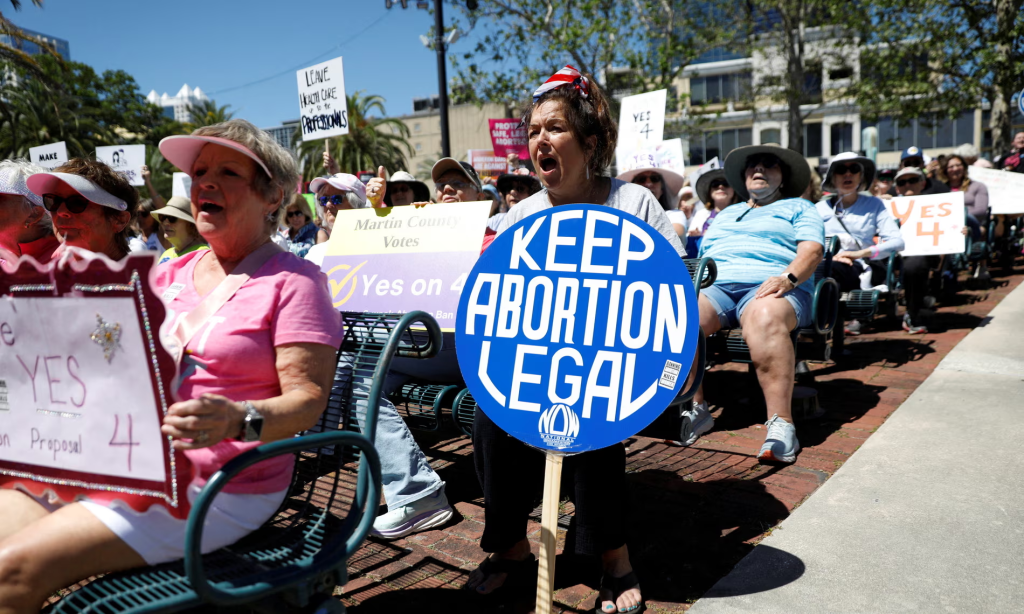
Activists claim investigation by Ron DeSantis’ agency into potential fraud is an act of voter intimidation.
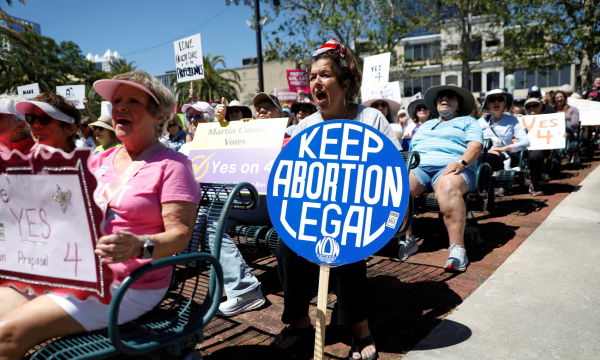
Florida law enforcement officials are investigating voters who signed a petition to place a high-profile abortion rights measure on this fall’s ballot, with officers reportedly showing up unannounced at residents’ homes. Activists argue this approach is intended to intimidate voters.
Organizers submitted over 900,000 signatures in January to secure a measure that would enshrine abortion rights in Florida’s constitution. While the deadline to challenge these signatures has passed, a state agency established by Governor Ron DeSantis to investigate voter fraud has initiated a probe into possible fraud during the signature-gathering process.
Isaac Menasche, a Fort Myers resident, signed the petition months ago at a local farmer’s market. He recalled writing down his name, birthday, and address, and quickly scribbling his signature. Last week, a law enforcement officer appeared at his door with a copy of his signature, asking him to confirm its authenticity, which Menasche did.
Menasche described the experience as unsettling. “The experience left me shaken. What troubled me was that the officer had a folder on me with about 10 pages of my personal information. I saw a copy of my driver’s license and the petition I signed,” he shared in a Facebook post. “It was clear that significant resources were used to confirm whether I had indeed signed the petition. I wonder if the same effort would be made if the petition were for a less controversial issue.”
Governor Ron DeSantis has defended the investigation, stating at a press conference, “They’re doing what they’re supposed to do.” He explained that discrepancies in signatures could arise, and if voters confirm they signed, the investigation would likely conclude. “That is absolutely possible. And if that’s what you say, I think that’s probably the end of it,” DeSantis added.
The investigation, however, coincides with broader efforts by DeSantis and Florida Republicans to block the amendment, which requires 60% voter support to pass this fall. Last week, the Florida Agency for Health Care Administration posted a webpage criticizing the amendment, a move DeSantis denied amounted to electioneering. In response, civil rights groups filed a lawsuit on Thursday, accusing the state of using the agency’s messaging to influence voters.
The Florida supreme court has also permitted a controversial financial impact statement, criticized for being misleading, to be printed alongside the amendment on the ballot.
In Florida, local election officials are responsible for verifying signatures submitted with petitions. According to Lori Edwards, the supervisor of elections in Polk County, groups sponsoring petitions must cover the costs of the verification process. This involves matching the voter’s signature, name, address, and date of birth with their registration details. Edwards noted that her office had not been asked for any information regarding the abortion amendment.
The Office of Election Crimes and Security, a multimillion-dollar agency established by DeSantis to investigate voter fraud, reported earlier this year that it had been “inundated with an alarming amount of fraud related to constitutional initiative petitions.”
However, Mary Jane Arrington, supervisor of elections in Osceola County, told the Associated Press that her office had never been asked to review already validated signatures in her 16 years in the role, raising further questions about the state’s approach to this investigation.
Florida Democrats and voting rights groups have sharply criticized DeSantis for the investigation, accusing him of using it as a blatant attempt to intimidate voters. They argue that the state’s focus on verifying signatures long after they’ve been validated is part of a broader effort to suppress participation in the ballot initiative, particularly on such a contentious issue as abortion rights.
Critics point out that this investigation, combined with other actions by DeSantis’ administration, such as the misleading financial impact statement and the Florida Agency for Health Care Administration’s public opposition to the amendment, shows a coordinated attempt to influence the outcome of the vote. Many view these tactics as part of a wider strategy by the governor and state Republicans to undermine the ballot measure and discourage voter engagement.
“This is all about theater, this is all about intimidation of the voters as people are about to go to the ballot box,” said Nikki Fried, chair of the Florida Democratic Party, during a press conference on Monday, denouncing the ongoing investigation.
Earlier this summer, the Florida Department of State informed the Florida Department of Law Enforcement (FDLE) that it had opened an investigation into over 40 individuals paid to circulate abortion-related petitions. The department claimed to have obtained “credible information” that several petition circulators in Palm Beach County had submitted fraudulent signatures. According to a letter from the department, the local supervisor of elections received complaints from voters who said they did not sign the petitions. The letter further alleged that some circulators forged signatures of deceased individuals and inserted personal information without consent.
The Department of State provided petition forms allegedly containing fraudulent signatures, with the voter details redacted, and also released three complaints from voters claiming they had not signed the petitions. Mark Ard, spokesperson for the Florida Department of State, said the agency has a duty to protect Florida citizens from fraud and will continue the investigation, referring cases to FDLE as needed.
Floridians Protecting Freedom, the group behind the amendment, hired PCI Consultants to manage most of the signature collection. Angelo Paparella, president of PCI Consultants, explained that his company reviewed all signatures before submitting them to election officials and flagged any suspicious ones. He acknowledged that a tiny fraction of the more than 1 million signatures collected appeared fraudulent but emphasized that this did not undermine the legitimacy of the vast majority of signatures.
“If they find someone who committed any kind of forgeries, then prosecute them,” Paparella said. “It takes nothing away from the nearly million valid signatures that the counties found.”
It remains unclear how many voters have been affected by the investigation, but reports indicate that at least six counties have been asked to provide information on signatures that had already been verified.
One of the counties involved is Alachua County, where state officials requested to review 6,141 petitions, all submitted by six circulators suspected of submitting fraudulent signatures. In Osceola County, the state sought to review around 1,850 petitions from specific circulators, according to Supervisor Mary Jane Arrington’s office. Similarly, in Hillsborough County, election officials were asked to review nearly 7,000 petitions.
Palm Beach County saw one of the largest requests, with state officials wanting to review 17,000 signatures, as reported by the Tampa Bay Times. In Orange County, home to Orlando, officials requested the review of 11,500 petitions. This widespread scrutiny of signatures across multiple counties is part of the state’s larger investigation into potential fraud surrounding the abortion ballot initiative.
The investigation is the latest action by the Office of Election Crimes and Security, an agency that has faced criticism since its inception, as instances of voter fraud are extremely rare. In 2022, the agency came under fire for arresting individuals with felony convictions who had voted, many of whom appeared confused about their eligibility. The agency has also targeted voter registration groups, issuing fines for relatively minor errors, which has led many of these groups to stop their activities in Florida altogether.
Brad Ashwell, director of the Florida chapter of All Voting is Local, a voting rights organization, condemned the investigation, saying, “It’s been clear from day one that the purpose of the election police was to harass voters who don’t share the same viewpoints as the governor.”
Ashwell added, “By going after a petition for Amendment 4, which is already on the ballot, Governor DeSantis is undermining the will of voters and trampling over their democratic freedoms for his own political gain.”
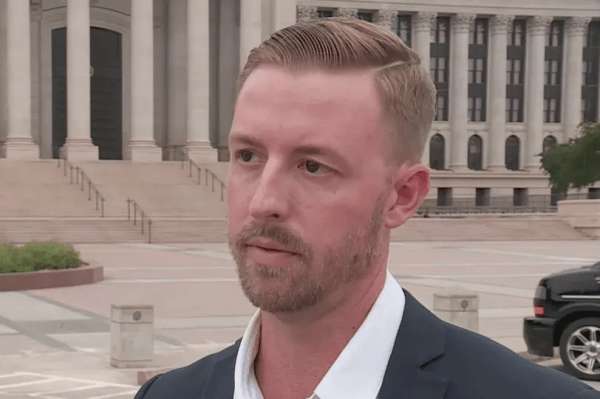
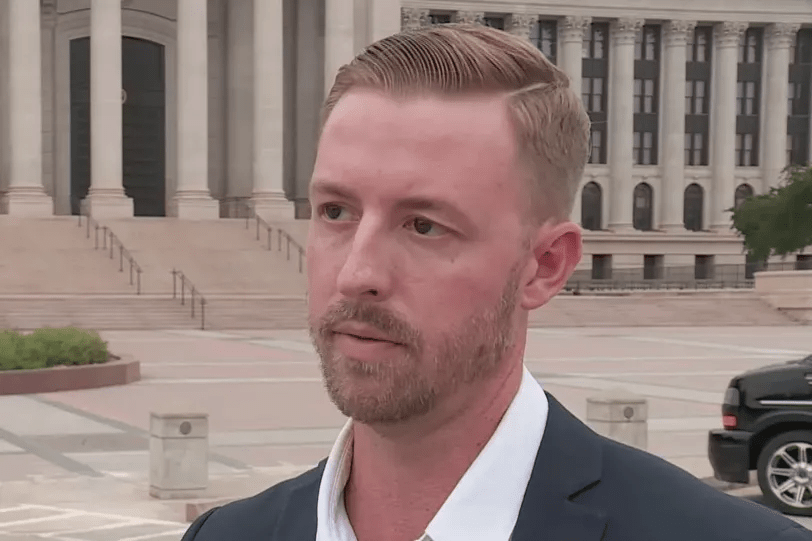
A superintendent stated that Ryan Walters’ mandate “seems more like a personal political stunt.
Nearly five dozen superintendents from Oklahoma school districts have stated they have no intention of altering their curricula to comply with Republican State Superintendent Ryan Walters’ anti-LGBTQ+ mandate to teach the Bible in public schools.
In June, Walters issued a directive for all state districts to incorporate the Bible and the Ten Commandments into their curricula for grades five through 12. The following month, the Oklahoma State Department of Education (OSDE) released guidelines on how schools should implement these changes starting in the 2024–2025 school year.
In late July, The Oklahoman reported that several of the state’s largest school districts had already refused to comply with the directive, expressing concerns that it could violate state laws. By early August, KGOU reported that at least 17 school districts across Oklahoma had announced they would not adjust their curricula to include the Bible.
The number of districts rejecting the Bible mandate has continued to rise. A recent survey by Oklahoma public radio’s StateImpact revealed that of approximately 540 public school districts and charter schools, 54 superintendents responded, with 46 stating their districts would not require teachers to incorporate the Bible into social studies or English curricula.
One respondent noted, “At best, they are uncomfortable with the mandate. At worst, they feel it infringes on personal religious beliefs and could open Pandora’s box.” Many cited state law that grants districts control over instructional materials, while others expressed concerns about violating laws by using public funds to purchase religious texts.
Despite this, Walters has threatened to penalize non-compliant schools, stating that districts refusing to teach the Bible would be held accountable. His office claims that state law mandates teaching the Bible’s historical significance, though Oklahoma’s academic standards allow for, but do not require, such inclusion.
Several superintendents criticized Walters’ directive as politically motivated. One described it as “a personal political gimmick,” while another said, “This directive is purely political and has no intention of improving education. It was designed to cause controversy and gain national attention.”
Walters has indeed attracted media attention, particularly after appointing Chaya Raichik from Libs of TikTok to a library advisory committee and facing backlash following the death of a trans teen. His anti-LGBTQ+ policies have also come under fire, with over 350 rights groups calling for his removal from office. Recently, 21 Oklahoma Republican lawmakers have even called for an impeachment investigation into Walters’ leadership of the OSDE.







 fleeredstates.blog
You must be logged in to post a comment.