A blog for LGBTQIA+ migrating to more welcoming states or counties
Author: Bob McCranie
I am so proud to run Texas Pride Realty Group. We set out on a mission in 2009 to serve the diverse communities of Texas and to hire kick-ass agents who practice the highest ethics and professionalism. I believe that the agent's role is to help the consumer make well-educated decisions, even if those decisions lead away from a purchase or sale.
I believe that education is vital in this industry. I currently have over 1300 hours of real estate courses on my transcript with the State of Texas. Additionally, I am a Real Estate Business Coach at Tom Ferry International, the largest-real-estate specific coaching company in the world. I coach agents in the US and Canada, and have coached clients in Australia, New Zealand, Brazil, and Switzerland. I also have knowledge of the UK and Irish markets.
Opening Texas Pride Realty was always a goal of mine and I am working night and day to be sure it is successful. The best way to do that is to be sure clients are satisfied and agents are busy. What better legacy could someone leave in this industry than a group of well-trained, high-quality brokers who do your job better than you?
A judge has overturned a state law that prohibited gender-affirming care in prisons and other settings.
On Tuesday, a federal judge issued a preliminary injunction halting an Idaho bill that banned gender-affirming care in state prisons. This decision allows incarcerated transgender individuals in Idaho to access hormone therapy once again.
In the ruling for Robinson v. Labrador, Judge David Nye of the U.S. District Court for the District of Idaho wrote, “Plaintiffs’ Motion for Temporary Restraining Order, Provisional Class Certification, and Preliminary Injunction is hereby GRANTED. The court certifies the protected class of all incarcerated persons in custody of the [Idaho Department of Corrections] who are, or will be diagnosed with Gender Dysphoria, and are receiving, or would receive hormone therapy. The Court enjoins enforcement of [H.B. 668]’s prohibition on the use of state funds for purposes of providing hormone therapy as against the class while this lawsuit is pending.”
H.B. 668, the bill in question, prohibited the use of public funds for any gender-affirming procedures, including hormone therapy and surgeries. Sponsored by Republican lawmakers in the House State Affairs Committee, the bill was signed into law in March of this year by Governor Brad Little (R).
The injunction applies only to the use of public funds for gender-affirming care in prisons and does not extend to non-incarcerated transgender individuals or gender-affirming surgeries.
In his ruling, Judge Nye supported the injunction by highlighting the plaintiffs’ strong arguments regarding the importance of gender-affirming care, the societal impact of such restrictions, and the consequences for transgender people across the state. Although he acknowledged areas where the plaintiffs’ case was lacking, he ultimately determined that the evidence justified the injunction.
Initially, Nye had denied the request to make the lawsuit a class action. However, after receiving data showing that 54 incarcerated individuals were receiving gender-affirming care and 70 had been diagnosed with gender dysphoria, he changed his stance.
The lawsuit involves two transgender women in prison, Katie Heredia and Rose Mills, both diagnosed with gender dysphoria and undergoing hormone replacement therapy. Their care was put at risk due to H.B. 668. The case was expanded into a class action lawsuit representing all known transgender prisoners in Idaho, with the ACLU of Idaho arguing that the ban constituted an Eighth Amendment violation.
The defendants in the case include Attorney General Raul Labrador, Governor Brad Little, Idaho Department of Corrections (IDOC) director Josh Tewalt, IDOC Chief of Staff Bree Derrick, and Centurion Health of Idaho.
Paul Carlos Southwick, legal director for the ACLU of Idaho, stated, “We are grateful that this class action lawsuit will protect the rights of both our plaintiffs and all incarcerated people diagnosed with gender dysphoria. People who are serving time have a right to access health care, adequate food, and housing conditions while in the state’s care, and we are grateful those rights were upheld today.”
LGBTQ Nation reached out to both the ACLU of Idaho and the Attorney General’s office for comment but had not received a response by the time of publication. This article will be updated as necessary.
In a departure from decades of precedent, the U.S. Court of Appeals for the Fifth Circuit ruled in a Texas case that minority groups cannot combine claims of vote dilution.
This week’s ruling, which limits the Voting Rights Act, directly affects the three states under the jurisdiction of the U.S. Court of Appeals for the Fifth Circuit, but its impact could be felt nationwide.
A federal appeals court has further restricted the 1965 Voting Rights Act, ruling that separate minority groups cannot unite to claim that a political map has been designed to dilute their collective voting power.
In a 12-to-6 decision on Thursday, the full Fifth Circuit Court of Appeals overturned nearly 40 years of legal precedent. The ruling also reversed decisions by both a three-judge panel from the same court and an earlier federal district court. Although the ruling applies only in Louisiana, Mississippi, and Texas—states under the court’s jurisdiction—it addresses a common issue in redistricting and has broader national significance.
The case centers on a district map for county commissioners in Galveston County, Texas. Mark Henry, the county judge who leads the Republican-controlled commissioner’s court responsible for drawing the map, hailed the decision as “a great win for the rule of law and the Constitution.” Henry is a defendant in the lawsuit.
The plaintiffs, including the Justice Department and groups like the N.A.A.C.P. and the League of United Latin American Citizens (LULAC), have not yet decided whether to appeal to the U.S. Supreme Court. However, the ruling leaves room for further legal challenges, as it directs the district court to reassess two other claims: that the county intentionally discriminated against minority voters and engaged in illegal racial gerrymandering. This means the map could still be ruled unlawful on those grounds.
“We still have a lifeline,” said Robert Quintero, president of the Galveston chapter of LULAC. “We won in this court before, and we hope the judge will apply the same wisdom he showed in the first ruling.”
Mark P. Gaber, a lawyer representing the Black and Latino voters involved in the case and part of the Washington-based Campaign Legal Center, stated that their claim of vote dilution remains robust.
The Detroit Regional LGBT Chamber of Commerce is leading the charge in what may be a decade-long initiative.
Detroit is working to establish an LGBTQ+ business district.
Back in the 1970s and ’80s, the city had around four dozen LGBTQ+ bars, but today, there are only eight queer spaces left, according to Kevin Heard, founder of the Detroit Regional LGBT Chamber of Commerce. As reported by Bridge Detroit, the city doesn’t have a distinct “gayborhood” like the ones in New York or Chicago.
Heard aims to change that. Earlier this year, the Detroit Regional LGBT Chamber of Commerce teamed up with the City of Detroit, LGBTQ+ research firm Community Marketing and Insights, and other organizations to create and distribute a survey. The goal is to identify which areas in the greater Detroit region are seen as the most LGBTQ+ friendly, where people want an LGBTQ+ business district, and what they envision it looking and feeling like.
“It’s a survey with multiple goals,” Heard explained. “The chamber will use it to prioritize resources in areas where many respondents live. Additionally, it will guide us toward phase two—focus groups—and phase three, which will involve selecting a site for the district.”
The survey, which launched in June, has already been completed by over 1,000 people, including 850 members of the Detroit metro LGBTQ+ community. It will close by Labor Day, after which the project will move into its next phase. Once focus groups are conducted, the chamber plans to hire a market analysis company to assist with site selection.
“They’ll assess open parcels or buildings and use survey data to guide the site choice,” Heard told Bridge Detroit. “When we narrow it down to the top three areas, we’ll launch a capital campaign to acquire property and lease it to new or existing LGBTQ-owned businesses or any business with a sustainable model that supports the LGBTQ+ community.”
Heard estimates the process of building the district could take up to a decade, but hopes the chamber can purchase its first piece of land by 2026.
He believes an LGBTQ+ business district would significantly boost Detroit’s economy. “A designated area where people know it’s safe for them, their families, and visitors will generate foot traffic and help sustain the neighborhood,” he said.
Beyond economic growth, Heard hopes the district will prevent people from leaving Detroit for more LGBTQ+ inclusive cities. “People want to be seen, heard, and valued, and they seek out those spaces. So why not create multiple spaces within Detroit?” he said. “We have one of the largest LGBTQ legislative caucuses in the country—it’s time we make this happen.”
Thailand has launched a series of new visa programs designed to simplify long-term stays and remote work. This move aligns with a global trend where governments are focusing on attracting higher-spending visitors with a smaller environmental impact.
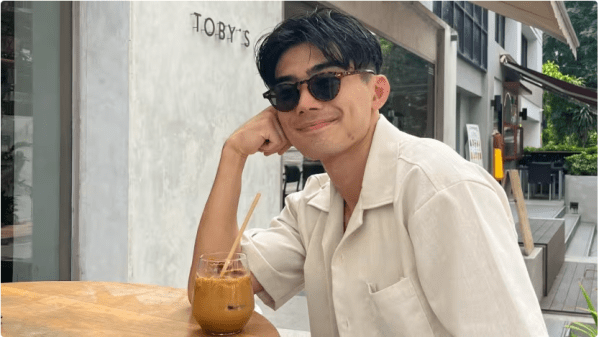
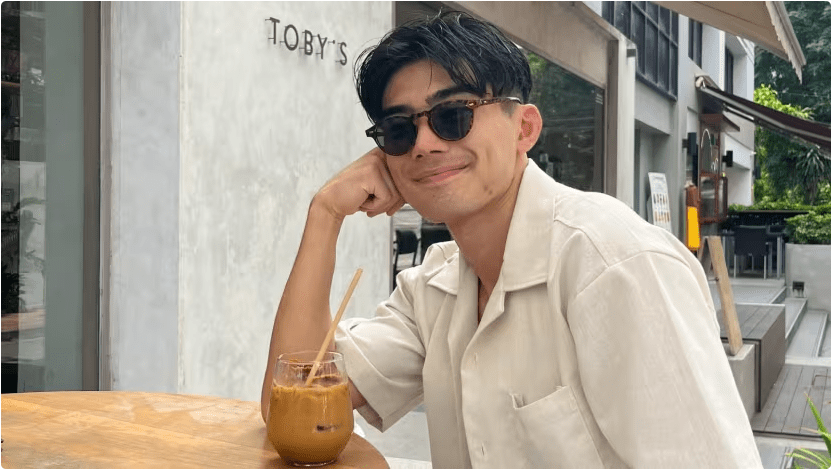
Steve Lim, a content creator, has made Thailand his home over the past two years. (Photo: Supplied)
BANGKOK: Content creator Steve Lim never intended to settle in Thailand—his original destination was New York. However, during a brief stopover in Bangkok in 2022, his U.S. visa plans collapsed, leaving the New Zealand native faced with unexpected life-changing decisions.
For Steve Lim, who has spent most of his time in Bangkok dealing with the unpredictability of short-term visas, the introduction of a visa tailored to his work needs is a relief.
“I started out on a holiday visa, constantly doing visa runs in and out of the country. It eventually became exhausting,” he said, describing a situation familiar to many expatriates and digital nomads living in Thailand.
After about six or seven months in Thailand, Lim switched to an education visa, allowing him to stay in the country while learning Thai remotely through a local institution. However, he knew it was only a temporary solution.
Within his personal network, particularly among those in the creative industry both in Thailand and abroad, Lim noticed an “influx of people” eager to secure their future in the country or come for the first time using the DTV.
“Southeast Asia has long attracted online remote workers, and for the past few years, there hasn’t been much recognition of these workers,” he explained. “Now, it’s great that we’re finally being acknowledged.”
Lim also appreciated the flexibility offered by the new visa. “During COVID, many companies and individuals realized that you don’t need to spend eight or nine hours in an office. You can work from home, travel, and still get the job done,” he added.
VISAS ARE ‘TRIED AND TESTED’
The travel industry has clearly shifted toward longer stays and higher spending over the past few years. Although Thailand’s overall visitor numbers have not yet returned to pre-COVID 2019 levels, data indicates a rise in people opting for extended stays.
Olivier Ponti, director of intelligence and marketing at travel data firm ForwardKeys, noted that a quarter of all current visitors to Thailand are staying for more than two weeks. He added that stays of 22 or more nights have fully recovered to 2019 levels, while short-term visits remain 19 percent lower.
“Visas are undoubtedly a tried and tested method for boosting tourism to a destination. Since the pandemic, many locations have introduced new visas to cater to the surge in remote workers,” Ponti said.
“The rise of digital nomads and the shift towards remote working will certainly have a global impact, including in Thailand,” Ponti said.
He also pointed out that similar visa schemes launched in other countries, like Indonesia’s B211a visa and the UAE’s Virtual Working Program, have led to positive growth in long-term visitors, even as short-term tourism remains sluggish.
In Southeast Asia, Malaysia now offers a 12-month stay for qualified digital nomads through the DE Rantau Nomad Pass, and the Philippines has plans to introduce a similar scheme.
Peter Guis, owner of TMT Visa Service Phuket, noted that interest in Thailand’s new Destination Thailand Visa (DTV) has been immediate, offering a flexible and affordable option for those who may have previously hesitated to stay longer due to unclear visa regulations. However, he acknowledged that since the DTV is still new, there are uncertainties about how it will function in the long run.
“The DTV is a game changer in many ways, but it’s still unclear just how much of one it will be. There will definitely be positive effects,” said Peter Guis.
However, he cautioned that the government needs to closely monitor the visa’s impact. “It’s also likely to attract individuals who may not have the best intentions for a long-term stay.”
Stephen Noton, international marketing advisor for Tourism.co.th, noted that broader economic factors will play a significant role in determining whether Thailand can attract as many international visitors as it hopes. For instance, Chinese travelers have been slower to return post-pandemic, despite visa schemes designed to ease their entry.
“It’s not just about visas. Global economic conditions, inflation, airline prices, and political stability also have a major influence,” Noton said. “If people feel uncertain about spending or face other barriers, the expected growth might not be as large as anticipated.”
Thailand is increasingly focused on attracting long-stay travelers, as part of its broader strategy to boost tourism. By offering more flexible visa options and targeting remote workers, digital nomads, and high-spending visitors, the country hopes to reshape its tourism landscape and recover from the pandemic’s impact on short-term tourism.
QUALITY OVER QUANTITY
Attracting travelers who prioritize “quality over quantity” brings both revenue and social benefits, according to Paul Pruangkarn, chief of staff at the Pacific Asia Travel Association (PATA).
“If I’m focused on revenue generation, I’ll definitely target long-haul markets and digital nomads. They tend to stay longer and spend more,” he explained.
He also highlighted the recent backlash from local communities against tourists, citing incidents in Barcelona where residents protested against international visitors due to rising rents driven by Airbnb listings, the closure of local businesses in favor of tourist-centric enterprises, and poor conditions for service workers.
The Thai government has set an ambitious target of 40 million visitors for 2024. Paul Pruangkarn emphasized the need to “walk a tightrope” between allowing the private sector—such as hotels and airlines—to benefit from high visitor numbers while ensuring a sustainable industry and social cohesion.
“It’s crucial to balance people, profit, and the planet, especially now that everyone is rushing to attract visitors and generate revenue post-COVID,” he noted.
This relentless pursuit of growth can strain infrastructure and negatively impact the tourist experience, a concern that longer stays could help mitigate. To address these issues, Thailand’s main airports are set to undergo capacity expansions in the coming years, including a major upgrade to U-Tapao International Airport near Pattaya, expected to start this year, and a high-speed rail network connecting it with Bangkok’s Suvarnabhumi and Don Mueang airports, scheduled for 2025.
“There is pressure on our entry and exit infrastructure, particularly at popular airports and border crossings during peak seasons. A shift towards quality tourism over quantity could alleviate some of these pressures,” said Nithee Seeprae from the Tourism Authority of Thailand (TAT).
The TAT plans to collaborate with tourism partners to offer special packages for longer stays and encourage year-round travel. “Longer stays provide more stable tourism income, helping to smooth out seasonal fluctuations,” he added.
“When we refer to ‘quality tourists,’ we mean travelers who contribute more than just economic value. They stay longer, immerse themselves in local culture, and prioritize sustainable and responsible travel practices. They seek meaningful experiences that allow for deeper connections with the places they visit,” he explained.
In a highly competitive tourism sector, Pruangkarn expects governments to continue adapting their immigration policies. While Thailand may have been slower than others to welcome this new wave of workers, he believes the country recognizes the value they bring.
“Am I surprised it took so long? Yes. Do I understand why it took so long? Of course; there are challenges,” he said. “But you have to stay competitive. You need to ask yourself, ‘What can I do to ensure I’m one step ahead of my neighbor?’”
The raids have sparked outrage and accusations of voter suppression in a state with a long history of discrimination against Mexican American citizens, a struggle that helped give rise to LULAC (League of United Latin American Citizens).
SAN ANTONIO — Raids on the homes of several South Texas Democrats, as part of an election integrity investigation led by the state attorney general, have ignited a clash with the nation’s oldest Latino civil rights organization.
The August 20 raids focused on Manuel Medina, chair of the Tejano Democrats, along with several members of the League of United Latin American Citizens (LULAC), a state House candidate, and a local mayor.
The raids have sparked outrage and allegations of voter suppression in a state with a long history of discrimination against Mexican American citizens, a struggle that led to the founding of LULAC in 1929.
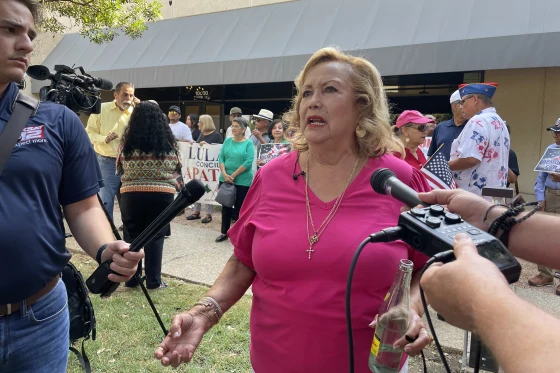
On Monday morning, LULAC leaders, state legislators, Latino activists, supporters, and some of the individuals whose homes were raided gathered outside the San Antonio office of Attorney General Ken Paxton, a Republican, to protest.
“This is outright voter intimidation, and LULAC will fight for the right of every Latino to vote,” said Roman Palomares, LULAC’s national president.
A search warrant left with LULAC volunteer Lidia Martinez, 87, provided insight into the investigation. It authorized the seizure of all electronic devices, the opening of business-, organization-, and election-related documents, and DNA swabs. The search aimed to uncover evidence of vote harvesting and identity fraud violations under Texas election laws.
Medina’s home was also “forcibly entered” in the early hours of August 20. According to his attorney, officers woke Medina, his wife, and two young daughters, and spent seven hours searching the residence, including living spaces, closets, the kitchen, and family bedrooms. Officers seized 65 phones and 41 computers and storage devices, the attorney said.
Two Democratic consultants, unfamiliar with Medina’s business or the investigation, noted that election phone banking or canvassing operations can involve numerous phones and computers for volunteers.
Medina’s attorney successfully secured an injunction to prevent the attorney general or other officials from reviewing or disseminating the seized documents. A hearing on the search and seizures is scheduled for September 12.
Domingo Garcia, LULAC’s former president, also spoke at the protest, declaring, “There is no poll tax, no white-only primary. We will not go back.”
Attorney General Paxton, who announced the raids in a news release, has been vocal in promoting unfounded claims of voter fraud, particularly involving noncitizens. He recently claimed that President Biden brought people to the U.S. illegally to vote—a claim that has no supporting evidence.
Latino leaders are urging the Department of Justice to investigate the raids, which they allege are politically motivated attempts to suppress Latino votes. Gabriel Rosales, Texas state director of LULAC, called the actions “disgraceful” and accused Paxton of using his office to instill fear in Latino communities.
Cecilia Castellano, a state House candidate whose campaign Medina is working on, was also served a search warrant for her phone early in the morning. She believes the search was politically motivated and said other campaign volunteers had also been served warrants.
Lidia Martinez, a longtime LULAC volunteer, recounted her experience. Nine armed officers knocked on her door at 6 a.m., and while still in her nightgown, she was forced to sit in her dining room while the officers searched her home for four hours. Martinez was questioned about Medina and her involvement with LULAC, and officers left with her phone, laptop, voter registration cards, and other items.
Martinez said her family has urged her to stop volunteering for LULAC and helping with voter registration efforts out of fear she may be arrested.
Mary Ann Obregon, mayor of Dilley, Texas, also had her phone seized by officers who arrived at her home. She was emotional and in tears after the incident, feeling violated by the experience.
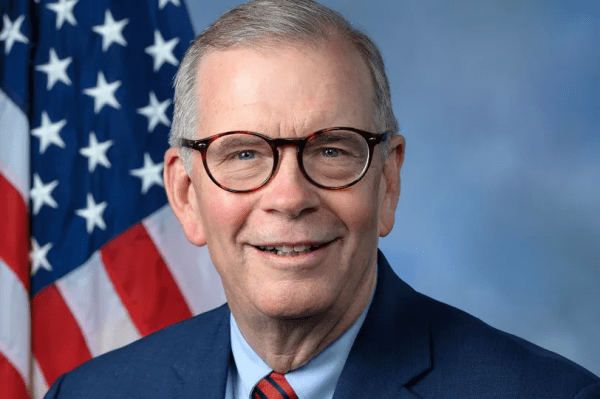
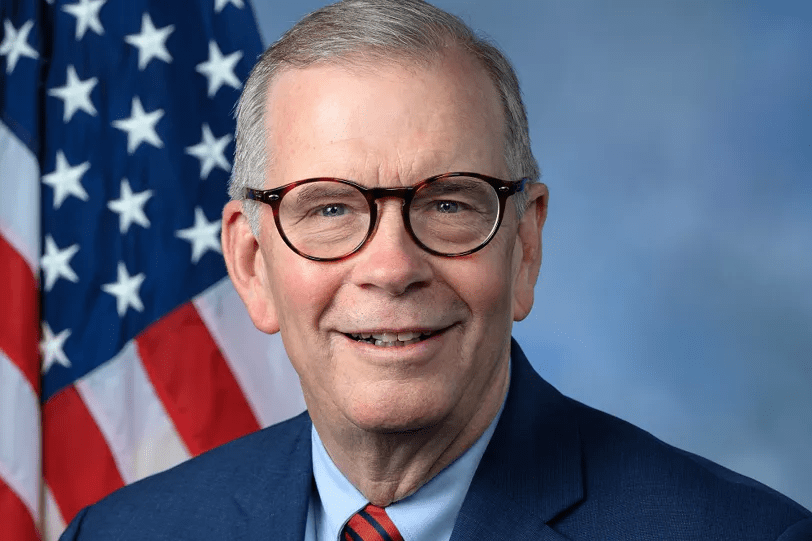
A House committee has advanced a controversial bill, H.R. 736, known as the “PROTECT Kids Act,” which would require schools to disclose transgender students’ identities to their parents if the students request to use different pronouns, a new name, or facilities aligned with their gender identity. The bill, introduced by Rep. Tim Walberg (R-MI) and Sen. Tim Scott (R-SC), would enforce this policy on all elementary and middle schools that receive federal funding, threatening to withhold funds from any school that does not comply.
Rep. Walberg, who has a history of supporting Uganda’s anti-LGBTQ+ laws, stated that parents should be informed of all decisions affecting their children. He argues that the bill would “safeguard parental rights by requiring parental consent and will help mitigate under-the-radar activism in our schools.” However, critics, including Rep. Mark Pocan (D-WI), chair of the Congressional Equality Caucus, have condemned the bill as an attack on transgender students, warning that it could put vulnerable kids at risk, particularly those without supportive families.
The bill passed the House Committee on Education and the Workforce with a 22-12 vote and will now proceed to the House floor for consideration. While it may pass the Republican-controlled House, it faces significant opposition in the Democratic Senate, and President Joe Biden is unlikely to sign it into law, as it contradicts his administration’s policies on LGBTQ+ rights.
Christopher Cole and his husband, longtime residents of the predominantly Republican and predominantly white town of Watertown, Connecticut, received a racist and homophobic letter last Friday afternoon. The letter, referencing their Democratic yard signs and the rainbow flag displayed in their front yard, was typed and anonymous. Later that same night, a group of men trespassed onto their property, stealing both the signs and the flag.
Although police say the perpetrators may never be caught, Cole—a vocal community activist—told LGBTQ Nation that he refuses to be intimidated. He and his husband have already replaced the stolen items and have been met with overwhelming support from the community, local news outlets, and even their congresswoman.
The letter, signed by someone identifying as “Americans that care,” specifically targeted the yard signs supporting the Democratic presidential ticket, Vice President Kamala Harris and Minnesota Gov. Tim Walz, as well as Black Congressional candidate Jahana Hayes. The entire hateful incident was caught on camera.
Related:
Vandals cowardly defaced a queer family’s Pride flag by urinating on it before fleeing the scene. The entire disturbing act was captured on camera.
The letter sent to Christopher Cole and his husband, signed by someone calling themselves “Americans that care,” specifically mentioned the Democratic yard signs they had displayed in support of Vice President Kamala Harris, Minnesota Gov. Tim Walz, and Black Congressional candidate Jahana Hayes.
“If you knew how goddamn foolish your rah-rah for Karmonkey and Tennessee Waltz look on your house, you’d take it down along with your Nobodywana Hayes sign and especially the Prideless flag on your front door you could use for toilet paper,” the letter said. “All I can think of you is you must be a Dumbocrat. So I feel sorry for you.”
Around 10:38 p.m., roughly seven hours after receiving a hateful letter, Christopher Cole’s security camera captured footage of a white individual wearing a dark hoodie and facemask vandalizing the rainbow flag that had flown from his home for the past 14 years. The person tore the flag down and fled, while the camera’s audio picked up the sound of him and other men shouting indistinctly.
Cole and his husband were awake in their home at the time but didn’t realize what had occurred until the following morning when Cole’s husband let their dog outside and discovered the missing flag and signs.
Cole shared images of the letter and video footage of the vandal on his Facebook page. By the next evening, he had replaced the stolen signs and flag, posting images of the new ones alongside a Bible verse from Matthew 5:39: “But I say to you: Do not resist an evildoer. But if anyone strikes you on the right cheek, turn the other also.”
“Even though we’re in Connecticut, this is a very red town, and there are Trump signs everywhere,” Cole told LGBTQ Nation. He noted that the flag had been flying for 14 years, though it had often attracted hostile reactions. People driving by would shout, “Are you f**king kidding me?” or “What the hell is wrong with you?” On one occasion, a truck driver revved its engine and spun its wheels near their yard, filling it with smoke, and during that incident, someone stole three of their signs.
Despite such incidents, Cole had dismissed these individuals as “immature, crazy people.” However, he found the racist, homophobic, and misogynistic language in the letter “really concerning.”
“It’s one thing to yell obscenities from the street, but to come onto someone’s property, rip down something that represents them, and steal their political signs is crossing a line. We felt violated, unsafe, and intimidated, so we called the police.”
Cole provided the authorities with the letter and security footage, but officers informed him that without further evidence, identifying the perpetrator would be difficult. Watertown Police Chief Joshua Bernegger told local news station WTNH that, “There’s no indication within the letter that it was motivated by hate or against any protected class of individual,” despite the clear threats.
In a statement, the Watertown Police Department emphasized, “We take this crime very seriously. No citizen should be subject to fear and intimidation tactics based on their political affiliation.”
Cole shared that, for the most part, the rainbow flag has inspired positive responses, including a crayon drawing from a six-year-old depicting Cole and his husband with the flag, and an eight-page letter from a 15-year-old high school student who wrote that seeing the flag every day gave her the courage to come out. Over the years, he has seen other rainbow flags appear in his neighborhood, inspired by his own.
In the wake of the vandalism, Cole and his husband were moved by the support from their community. Neighbors brought over replacement signs and banners, and their next-door neighbor even put up a larger Pride flag than the one that was torn down. Four news stations covered the incident, and Cole and his husband replaced the stolen signs with even bigger ones.
On Sunday morning, as news of the vandalism spread, Congresswoman Jahana Hayes, whose campaign sign had been in Cole’s yard, called him directly at 8:45 a.m. She expressed her support for Cole and his husband and apologized that their backing of her campaign had resulted in their home being targeted.
She joined Cole and his husband at their local church that morning, offering her admiration for their courage and refusal to be intimidated. Cole is active in the United Church of Christ, a progressive Christian church, where he has helped make the congregation more inclusive of LGBTQ+ people. The process was contentious, with some members leaving and others posting hateful comments on social media.
Cole also serves as the executive director of APNH (A Place to Nourish Your Health), an LGBTQ+-inclusive community health center in nearby New Haven that supports people affected by HIV, substance use, and mental health conditions. Having experienced severe bullying as a child, Cole refuses to back down now in the face of harassment.
“Especially in a very conservative town, I am committed to being an activist and speaking out. It makes a bigger impact here than in places like West Hollywood or the Upper West Side of Manhattan, where there are thousands of Pride flags. It’s a different story when you’re the only one flying a flag in a place like this, and the only church that does that.”
“I’m committed to not being silenced, to standing strong and shining light where there is darkness. In this political climate, where some think it’s okay to intimidate and spread hate, I won’t shrink back—and no one else should either.”
In 2022, before her indictment, she referred to Pete Buttigieg as a “weak little girl.”
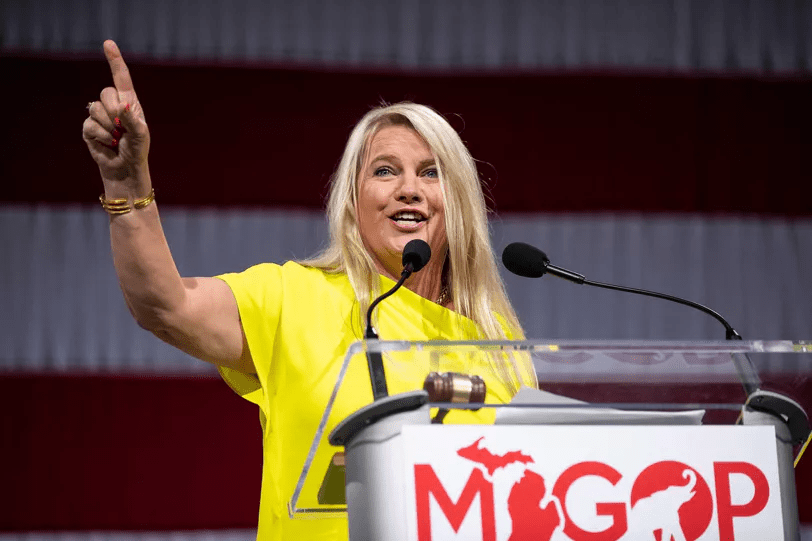
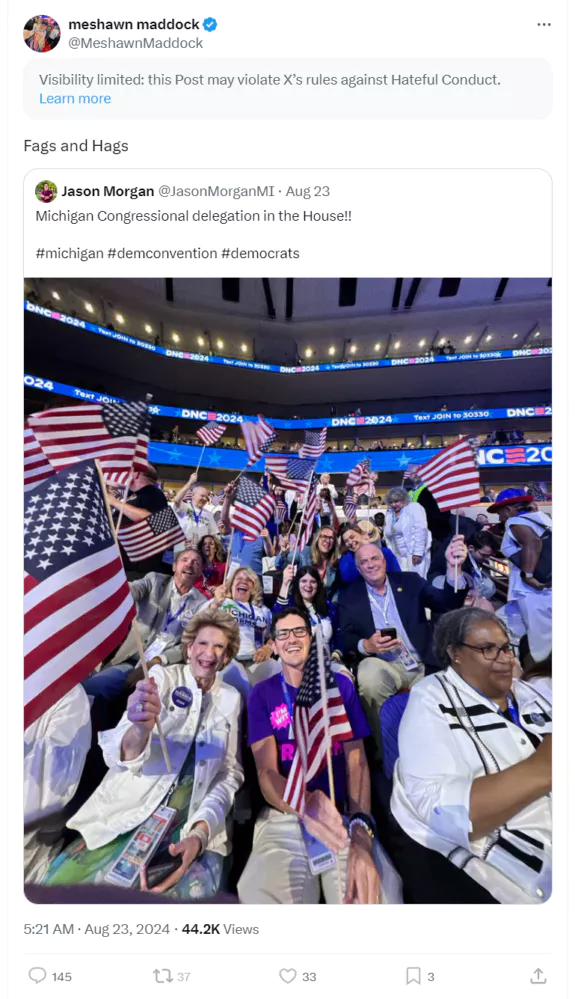
A former high-ranking state Republican official, indicted in an alleged conspiracy to overturn the 2020 election, used an anti-gay slur to insult a Democratic lawmaker. Meshawn Maddock, who led the Michigan Republican Party until her recent indictment for trying to shift Michigan’s electoral votes to Donald Trump instead of President Joe Biden, is now making offensive remarks on social media.
Maddock’s slur was in response to a post on X from Michigan state Rep. Jason Morgan (D), an openly gay lawmaker and vice chair of the state’s Democratic Party. Morgan had shared a picture of the Michigan congressional delegation at the DNC last Friday, where they were smiling and holding American flags.
Morgan responded by publicly calling her out in a thread.
“As a proud gay man who loves his husband, these hateful taunts don’t undermine my Pride, but to countless LGBTQ young people across the USA, hateful rhetoric can lead to depression and suicide,” he wrote. He followed up by sharing a photo from his wedding.
Maddock has a history of using homophobic slurs to attack LGBTQ+ politicians. In 2022, while still serving as chair of the Michigan Republican Party, she called Transportation Secretary Pete Buttigieg a “weak little girl” after learning that he and his husband, Chasten, were purchasing property in Michigan.
“If she wants to talk about little girls, Chasten and I are raising a little girl and a little boy. And we are raising them to have better values than the chairwoman,” Buttigieg responded when asked about her remarks. “The rest is politics.”
Maddock was indicted last year, alongside 15 other Trump supporters, for their role in a plot to help Trump secure the presidency. The plan involved falsifying a certificate claiming Trump had won Michigan and sending it to Congress in hopes of securing the state’s electoral votes for him.
The fake certificate falsely claimed that the 16 electoral voters had met in the Michigan Capitol on December 14, 2020, when in fact, the building was closed, and Biden’s electors had actually convened there.
Allegedly, phone records show Maddock communicating with coconspirators about the plot and how to keep it secret. She faced eight felony counts in the indictment. Maddock pled not guilty and opted not to seek another term as state party chair in February 2023.
Individuals attempting to change their gender will be entered into a database accessible by state Republicans.
According to KUT, transgender Texans can no longer update the gender marker on their state IDs, even if they have a court order or an amended birth certificate. The only exception is if the change is proven to be a clerical error. However, the Texas Department of Public Safety (DPS) stated that this rule is no longer in effect, and the relevant information was quietly removed from their website yesterday. A DPS spokesperson attributed the change to Texas Attorney General Ken Paxton (R).
“The Office of the Attorney General (OAG) has recently expressed concerns about the validity of court orders directing state agencies, including the DPS, to change the sex of individuals in government records like driver licenses and birth certificates,” the agency informed KUT.
“Neither DPS nor other government agencies are involved in the legal proceedings that result in these court orders, and the absence of legislative authority and evidentiary standards for courts to issue such orders has necessitated a thorough legal review by DPS and the OAG. Therefore, as of Aug. 20, 2024, DPS has stopped accepting these court orders as valid for changing sex identification in department records, including driver licenses,” the agency stated.
Ian Pittman, an attorney assisting trans Texans, told The Texas Tribune that this policy shift raises significant privacy concerns for transgender individuals, as they will now be forced to carry IDs that don’t reflect their gender. This mismatch can result in discrimination, harassment, violence, and barriers to accessing services that require identification.
The DPS now officially documents and scans any birth certificate changes or court orders related to gender markers but does not use them to process updates. “This policy effectively puts people on a list that could interfere with their health care,” Pittman said, urging trans Texans not to submit court orders to the DPS.
The change comes amid broader efforts in states like Florida and Kansas to block transgender individuals from altering ID markers, alongside numerous anti-LGBTQ actions by Texas Attorney General Ken Paxton and Governor Greg Abbott (R). Two years ago, Paxton directed DPS employees to create a list of individuals who had requested gender marker changes.
“Texans will now be subject to involuntary surveillance simply for trying to update a government document,” said Brad Pritchett, interim CEO of Equality Texas. “There is no clear rationale for why DPS would need this information, nor a valid reason to deny gender marker updates on driver’s licenses.”
Correction: This article has been updated to clarify that Audrey Louis’s district does not encompass Bexar County.
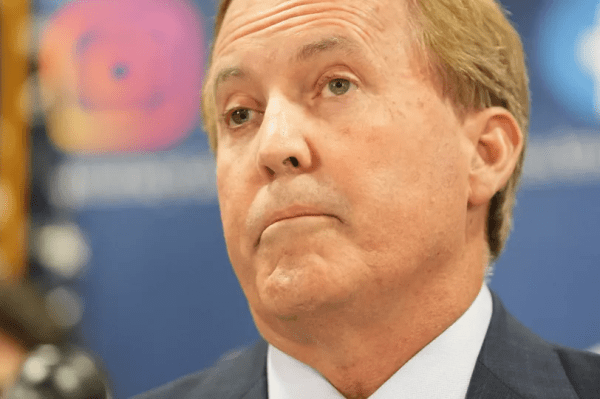
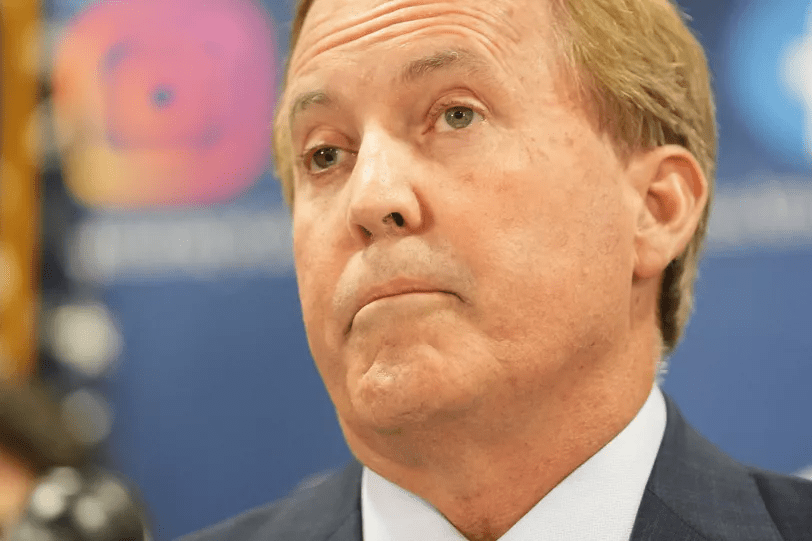
Texas Attorney General Ken Paxton’s (R) office carried out search warrants in one of the state’s largest urban counties, a major Democratic stronghold, alleging incidents of vote tampering.
On Tuesday, the Texas Attorney General’s office conducted searches in Bexar County, the fourth most populous county in the state and home to San Antonio.
The searches followed a two-year investigation, with the office stating that “secure elections are the cornerstone of our republic.”
This action is part of a broader effort by Paxton to pursue election fraud cases, an initiative that spent $2.3 million in 2023 to prosecute just four cases, according to the Houston Chronicle.
“We are completely committed to protecting the security of the ballot box and the integrity of every legal vote. This means ensuring accountability for anyone committing election crimes,” Paxton said in a statement.
The case was referred by state District Attorney Audrey Louis, a conservative Republican whose district borders Bexar County.
Louis made the referral in 2022, following a 2021 ruling by the Court of Criminal Appeals (CCA), which determined that Paxton could not independently investigate election crimes. The ruling required him to work with local district attorneys in such cases, a decision that led Paxton to encourage his supporters to inundate the court with calls.
“The CCA’s shameful decision means local DAs with radical liberal views have the sole power to prosecute election fraud in Texas — which they will never do,” Paxton wrote at the time.
Audrey Louis, a conservative Republican, unseated Democratic incumbent René Peña, her former boss, in 2016. Peña had fired her just hours after she announced her candidacy.
While Louis’s jurisdiction includes the less populous Frio and Atascosa counties, Bexar County is not part of her district.
The attorney general’s office has declined to provide further details on the ongoing investigation, which unfolds amid unexpectedly close national races for both president and Congress in Texas, following Paxton’s previous efforts to challenge the 2020 election results.
While polling shows former President Trump, a Paxton ally and the Republican presidential nominee, maintaining a lead in Texas, Democrats are closing the gap. A recent ActiVote poll showed Vice President Harris trailing by 6.6 points — a smaller margin compared to Trump’s 2020 victory over Joe Biden.
Similarly, in the Senate race between Rep. Colin Allred (D-Texas) and Sen. Ted Cruz (R), The Hill/Decision Desk HQ tracker shows a similar gap, though polling from two Texas universities in July found the race to be as close as 3 points.
In 2020, Biden won Bexar County, home to 2 million voters, by an 18-point margin, while Trump dominated rural Atascosa and Frio counties — the latter seeing a 21-point shift toward Republicans, reflecting a broader trend of some Texas Latino voters moving toward the GOP.
Paxton played a key role in Republican efforts to overturn Biden’s victory, spending years advancing false claims that the election was stolen. In December 2020, he filed a lawsuit against four battleground states that Biden had won, arguing that their “failure to abide by the rule of law casts a dark shadow of doubt over the outcome of the entire election.”
The conservative-majority Supreme Court dismissed Paxton’s lawsuit just three days after it was filed. Additionally, the Texas State Bar has moved to discipline Paxton, with a Bar disciplinary committee labeling the lawsuit “dishonest.”
Despite Paxton’s objections, a state appellate court ruled in April that the Texas Bar could discipline him for his lawsuit challenging the 2020 election results. In response, Paxton appealed the decision in June to the state Supreme Court, accusing the appellate court of engaging in “politically motivated lawfare” against him.
In his filing, Paxton urged the state’s high court “to intervene to prevent the State Bar’s continued abuse of the legal system.”














 fleeredstates.blog
You must be logged in to post a comment.