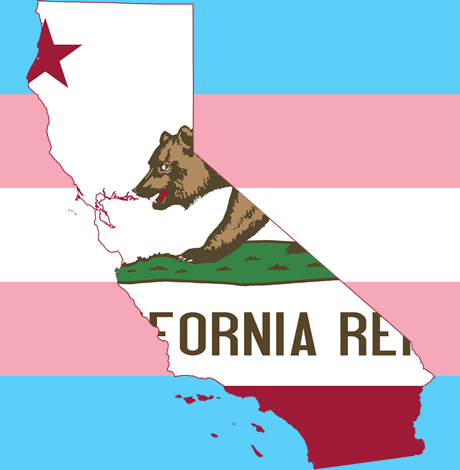
California lawmakers passed legislation this week to prevent health providers from releasing transgender patients’ confidential medical records in investigations of gender-affirming care in states that ban treatment for minors.
Senate Bill 497, introduced in February by Sen. Scott Wiener, a Democrat representing San Francisco, builds upon a 2022 state law that established California as a state of refuge for transgender people. That law, also authored by Wiener, prevents states that have banned gender-affirming care for minors from taking legal action against trans youth, their families and their doctors over treatment administered in California.
The latest bill would require law enforcement requesting health information about transgender people in California to provide a warrant, according to Wiener’s office. It would also bar medical providers from complying with out-of-state requests, including subpoenas, for information related to gender-affirming care.
“California must do everything in our power to protect the transgender community, and I’m confident that the Governor will continue his longstanding leadership on trans issues,” Wiener said in a statement on Thursday after the bill passed.
The California Senate voted 30-10 on Wednesday to pass Wiener’s bill, which the state Assembly passed earlier this week. A spokesperson for California Gov. Gavin Newsom (D) declined to comment, saying the governor’s office does not typically remark on pending legislation.
Newsom must sign or veto the measure by Oct. 13.
The vote on Wiener’s bill comes after the Justice Department announced in June that it had sent more than 20 subpoenas to doctors and clinics “involved in performing transgender medical procedures on children” in investigations of alleged health care fraud and false statements. A subpoena sent to the Children’s Hospital of Philadelphia that was made public in a court filing last month requested patients’ birth dates, Social Security numbers and home addresses, as well as “every writing or record of whatever type” from doctors related to the provision of gender-affirming care to adolescents younger than 19 years.
The subpoena requested information dating back to January 2020, more than a year before transition-related care was banned anywhere in the U.S.
On Tuesday, a federal judge blocked an effort by the Trump administration to subpoena medical records of transgender patients who received gender-affirming care at Boston Children’s Hospital, calling the Justice Department’s investigation improper and “motivated only by bad faith.”
In an email on Friday, a spokesperson for Wiener said Senate Bill 497, if signed, would “strengthen the case for any medical provider who wishes to fight Trump’s vicious assault on the transgender community.”
President Trump and administration officials have broadly sought to ban gender-affirming care for minors. A Jan. 28 executive order states that the U.S. “will rigorously enforce” laws that ban transition-related care for anyone younger than 19.
Laws adopted by more than half the nation since 2021 ban gender-affirming care for minors, which major professional medical groups say is medically necessary and often lifesaving for transgender youth and adults. In June, the Supreme Court ruled that states can ban treatment for minors, finding that Tennessee’s prohibition on puberty blockers, hormones and rare surgeries for adolescents does not constitute sex discrimination.
Ready to call Spain your new home? Join the thousands of Expats who have successfully relocated to Spain with our expert advice, resources, insider knowledge and handpicked network of service providers.
We ran into Alastair & Alison Johnson through the Expatsi organization. Find out everything you need to know about moving to Spain in this informative talk from people who know! Check them out at https://movingtospain.com/
Thinking about moving to Spain to escape political extremism in the U.S.? As part of the Flee Red States project, we sit down with Alastair Johnson of MovingToSpain.com , who has lived in Spain for many years with his wife and adult son.
In this interview, Alastair shares his first-hand experiences about:
🏳️🌈 The acceptance and visibility of the LGBTQ community in Spain
🏥 Easy access to Spain’s public healthcare system
🏡 Lifestyle, culture, and why Spain is a welcoming choice for American expats
🌞 The benefits of living abroad in a progressive, inclusive country
If you’re considering moving to Spain from the USA, becoming an American expat in Europe, or simply curious about LGBTQ rights in Spain, this video gives you practical insights and inspiration.
“These provisions… exacerbate, if not condone, the stigmatisation of homosexual persons in civil society and engender feelings of hostility fueled by persons who are inclined to take the moral high ground,” stated Eastern Caribbean Supreme Court Judge Shawn Innocent in his late July ruling striking down St. Lucia’s ban on same-sex intimacy.
The ruling coming down from the Heraldine Rock Building sparked swift, though not unanimous, reaction. The Caribbean’s LGBTQIA community celebrated the long-overdue victory, while religious conservatives issued dire warnings.
As Judge Innocent explained on the bench, many islanders and Caribbean citizens continue to navigate the fault lines between a dated colonial inheritance and a modern identity.
“It is the law itself which violates their constitutional rights,” Innocent’s ruling said. “They do not have to await prosecution under those sections to experience a violation. Without any equivocation, his liberty has been emasculated and abridged.”
The ruling made St. Lucia the latest in a growing list of Caribbean nations—including Barbados, Dominica, Antigua and Barbuda, and St. Kitts and Nevis—to decriminalize consensual same-sex relations through the courts. In doing so, it affirms what many legal scholars and LGBTQIA activists have long argued: that the region’s colonial-era sodomy laws are not just outdated, they are unconstitutional.
The win in St. Lucia comes at a time when the Caribbean LGBTQIA movement appears to not only be making progress in changing laws, but changing attitudes. This stands in contrast to the United States, where movement workers are fighting back against regressive measures, state-based legislation, and attempts by the Trump administration to gut federal civil rights protections.
For Glenroy Murray, St. Lucia’s policy change, part of a nearly decade-long strategy led by the Eastern Caribbean Alliance for Diversity and Equality (ECADE) and other local organizing groups, is the product of years of sustained advocacy.
“In the Caribbean, queer activists are saying: we deserve space, and we’re going to claim it—despite prevailing attitudes that have existed in this region for a long time,” said Murray, the Caribbean lead for Human Dignity, a legal advocacy organization that provides technical, legal, and communications support to queer organizations and governments worldwide.
What began as a debate among legal scholars, researchers, and grassroots LGBTQIA activists about the countries most ripe for a legal challenge to colonial-era sodomy laws has since evolved into a broad-based movement to decriminalize sexuality and fight for human rights across the region.
For the Caribbean movement, the struggle has been twofold: first, dismantling outdated “saving law clauses” that shield colonial-era statutes from constitutional challenge. Found in several post-independence constitutions, these clauses preserve pre-existing laws—even if they conflict with modern human-rights protections. In practice, they’ve made it far more difficult to overturn criminal statutes against same-sex intimacy. Activists argue that true equality cannot be achieved without dismantling these legal shields.
Compounding this are well-funded, transnational conservative movements determined to make LGBTQIA rights in the Caribbean harder to secure. Angelique Nixon, senior lecturer and researcher at University of the West Indies, St. Augustine Campus’ Institute for Gender and Development Studies, said that these actors, backed by U.S.-based evangelical and faith-based groups, frame equality as a Western imposition and deploy religious and moral rhetoric to stir cultural resistance.
“Globally, we’re seeing the rise of well-funded, transnational anti-rights movements that actively export homophobic and transphobic ideologies across borders, often under the guise of protecting traditional values or religious freedoms,” Nixon said.
“This transnational dimension makes our struggle particularly challenging,” she emphasized.
The American religious right has directly targeted the Caribbean: groups affiliated with the American Center for Law and Justice (ACLJ) have conducted legal training in Belize, while Alliance Defending Freedom (ADF) and other U.S. advocacy networks have bolstered local opposition to reform.
Meanwhile, Family Watch International—designated a hate group by the Southern Poverty Law Center—has expanded its regional influence, launching campaigns in Africa and elsewhere.
“Without strong political leadership, these laws will stay in place and continue to justify stigma, discrimination, and violence—even if they’re not enforced,” Nixon said. “The mere existence of these laws creates a chilling effect. Legal ambiguity and inaction can silence LGBTQI+ people and make them more vulnerable.”
Murray underscored that these laws are rooted in colonial imposition. “Many of the laws against sodomy, buggery, and so-called ‘unnatural offenses’—in other words, laws criminalizing sexuality—were imposed across the Caribbean by the British,” he said. “In Jamaica, the law criminalizing intimacy between men dates back to 1864, and it remains in effect today.”
Quick not to lay all the blame on colonial powers, Murray added: “I won’t let Caribbean governments off the hook. They could have changed these laws a long time ago—there have been repeated calls to repeal them. In some cases, governments have not only retained these provisions but made them worse. And at times, there’s been a clear intentionality to keeps them in place.”
While legal reform remains paramount, organizers have also worked diligently to change hearts and minds—advancing broader issues like health equity, education, and housing.
In its fight against liberal American misconceptions about Caribbean homophobia, the movement’s organizing strategy has centered on balancing the region’s often-professed anti-LGBTQIA identity with lived experiences that are far more varied. Murray explained that this nuance does not discount the violence, displacement, and harm faced by LGBTQIA people, but it has remained front of mind for organizers.
“For a time, much of our culture was not pro-gay, but it still allowed for a type of existence,” Murray said. “Over time, as queer people became more visible, violence escalated—and that’s when the region became known for being homophobic.”
Despite stigma, advocates have advanced regional efforts like the Pan-Caribbean Partnership Against HIV/AIDS, housing access expansion, and educational equity.
“In general, our leadership across the region is clear: they don’t support discrimination,” Murray said “When we talk about housing, we make it inclusive. When we talk about healthcare, we make it inclusive. And that matters.”
Murray’s analysis came with a caveat.
“But on hot-button issues like discrimination protections or relationship recognition, leaders tend to be far more cautious—often because of misperceptions about voters,” he said.
Beyond policy and legal reform, organizers recognize that shifting public opinion is essential. A 2023 survey by the Equality for All Foundation/J-FLAG, Jamaica’s leading LGBTQIA rights group, found that 50 percent of Jamaicans support changing laws to ensure equal rights, a dramatic shift from 2018, when 69 percent predicted strong resistance.
This change, advocates say, stems from grassroots organizing, increased visibility of LGBTQIA people, and the political engagement of younger voters. Nixon believes the movement could benefit from even greater international support.
“We need solidarity rooted in care, justice, and long-term commitment,” Nixon said. “Effective support must go beyond symbolic gestures to include sustained material and strategic assistance. That means funding community-led initiatives, creating safe spaces for healing and organizing, and backing the grassroots work that makes all this possible.”
Texas Attorney General Ken Paxton withdrew the state’s lawsuit against pediatric endocrinologist Dr. Hector Granados on Thursday after finding no evidence that he violated the state’s ban on gender affirming care for trans youth.
Paxton sued Granados in October 2024, accusing him of providing puberty blockers and hormones to patients as young as 12 in treatment for gender dysphoria. Paxton accused Granados of falsifying medical and billing records to mislead pharmacies and insurance providers into covering the care.
Paxton initially called Granados a “scofflaw who is harming the health and safety of Texas children,” and Granados wasn’t notified before the lawsuit’s filing, in worries that he might try to destroy relevant records, The Hill reported.
However, Granados said he stopped providing gender-affirming care in May 2023, after the state’s legislature passed the law. Now that Paxton’s office has dropped its charges against him, Paxton’s office will now “focus on other ongoing cases against doctors who illegally provided harmful ‘transition’ treatments and drugs to children,” an attorney general spokesperson said, according to The Hill.
The state has also sued May Lau and M. Brett Cooper, two medical providers from the University of Texas’ Southwestern Medical Center in Dallas. If found guilty, both could possibly lose their medical licenses and face hundreds of thousands of dollars in fines.
Despite Paxton’s claim about gender-affirming care being “harmful,” the medications used in such care have been used safely in children for decades for the purposes of gender transition and to treat other medical issues in cisgender children as well. In fact, Texas’ law stands in opposition to the best care practices for treating gender dysphoria recommended by every major American medical association. These associations agree that such care is safe, effective, and essential for the overall well-being of trans people.
Six months into Russia’s invasion of Ukraine in 2022, Lilia Khvylka had a decision to make.
The transgender Ukrainian, who grew up on the Crimean Peninsula, was already living under Russian occupation; Vladimir Putin invaded and annexed that Ukrainian territory in 2014.
Now Khvylka was under house arrest for posting pro-Ukrainian messages on social media, she told Mezha, an independent Ukrainian news outlet.
“They opened a case against me under Article 207.3 of the Criminal Code of the Russian Federation – discrediting the Armed Forces of the Russian Federation. This is a very serious crime, which they classify as terrorism. They were going to set a preventive measure for me literally in the coming days.”
Khvylka had already been outfitted with an ankle bracelet to monitor her movements.
She recalled taking part in the Revolution of Dignity in 2014, which ousted pro-Russian President Viktor Yanukovych and restored the 2004 Constitution of Ukraine.
The same year, Putin invaded Crimea.
“When the Russian authorities arrived, freedom of speech completely disappeared. Ukrainian activists and journalists immediately began leaving or disappearing,” Khvylka said.
At the same time, Khvylka was navigating her transition.
“At 16, I already knew I would undertake a transgender transition, because I am a girl. But I was very afraid to go to doctors in Russia or talk to anyone about it.”
In Crimea, she was forced to hide her identity; there, she was known as Illya Gantsevskyi.
Facing the prospect of 15 years in prison for her posts and terrified her true identity would come to light, Khvylka fled. The so-called head of the Republic of Crimea, Sergey Aksyonov, had already declared war on LGBTQ+ people.
“I cut off my bracelet and ran away,” she said.
Khvylka left the peninsula through Russia and Belarus, holding only a Ukrainian birth certificate. Volunteers, whom she found online through an underground network of supporters, helped in her getaway.
With her flight to freedom, Khvylka avoided a fate that other LGBTQ+ Ukrainians have been unable to escape.
“This included torture, torment, public humiliation, bodily injuries, and sexual violence,” said human rights lawyer Karolina Palaychuk.
Documented testimonies from people in the Kherson region, occupied by Russia for nine months at the start of the war, confirm the terror inflicted on LGBTQ+ people in the Russian-occupied territory.
“One of the people who gave these testimonies said that he was stopped at a checkpoint, his phone was checked, they saw the relevant content, and they immediately threw him into a basement,” said Iryna Yuzyk, manager for the Center for Human Rights, ZMINA. “There, they beat him, forced him to wear a red dress, took him to interrogations in a red dress, naked, they tormented him. He was lucky to survive.”
Another captive was Diana, a 24-year-old lesbian.
“She used to work as a shop assistant. She had colorful hair; they drew attention to her. They came with searches to her home, found a rainbow flag, and also threw her into the basement, where there were another 15 people. Then they lined them up and shot them at random. Only four survived.”
Human rights advocates are advising all LGBTQ+ Ukrainians — in particular activists who have a history of advocacy in conflict with Russia’s 2023 Supreme Court ruling declaring the LGBTQ+ community a “terrorist organization” — to leave the occupied territories, where protection under Ukrainian law no longer applies.
According to NGO Prozhektor, at least 50 people who’ve left the occupied territories have endured torture and violence due to their LGBTQ+ identity.
Seven victims have filed statements; thirteen are witnesses to other crimes.
The U.S. Supreme Court said Wednesday that South Carolina cannot enforce its anti-trans bathroom ban against one transgender student while his challenge to the law moves through the courts.
The law, which went into effect in 2024, requires students in South Carolina public schools to use bathrooms that align with their “biological sex … as objectively determined by anatomy and genetics existing at the time of birth.”
Last year, a 13-year-old transgender boy identified in court documents as John Doe was suspended for using the boys’ restroom at his Berkeley County school. Despite none of his peers objecting to his use of the boys’ restroom, when Doe returned from suspension, school staff were instructed to police his bathroom use, and teachers began dividing students into “boys” and “girls” lines before restroom breaks to enforce the policy.
Faced with constant harassment by teachers and the threat of another suspension, Doe’s parents withdrew him from the school and enrolled him in an online program.
The following November, Doe’s family, along with LGBTQ+ advocacy group Alliance for Full Acceptance, filed a class action suit challenging the South Carolina law. As MSNBC notes, a district court judge in the state halted the case in July after the Supreme Court announced it would hear two cases related to transgender women’s participation in sports. Doe appealed to the U.S. Court of Appeals for the Fourth Circuit, which issued an injunction in the boy’s favor in August, preventing the state, the school district, and other defendants from enforcing the law against him while the appeal proceeds through the courts.
According to MSNBC, the three-judge panel cited the court’s 2020 ruling in Grimm v. Gloucester County School Boardthat trans students are entitled to use restrooms aligned with their gender identity. However, George W. Bush-appointee Steven Agee stipulated that the Grimm decision was the only reason he sided with Doe and expressed hope that the Supreme Court would overturn that case, which he described as having been decided wrongly.
That same month, South Carolina asked the Supreme Court to lift the Fourth Circuit’s injunction, arguing in its emergency relief application that Grimm was wrongly decided and that the Fourth Circuit should have considered the Supreme Court’s recent decision in United States v. Skrmetti, which upheld Tennessee’s restrictions on gender-affirming care for trans youth. The state argued that it, the school district, and students were “suffering actual, ongoing, material harms” due to Doe being allowed to use the boys’ restroom at school.
On Wednesday, a six-justice majority denied South Carolina’s request, with Republican appointees Clarence Thomas, Samuel Alito, and Neil Gorsuch saying they would have sided with the state, according to HuffPost.
In its order, the Court wrote that its denial of South Carolina’s application was “not a ruling on the merits of the legal issues presented in the litigation.” Rather, the justices wrote, “it is based on the standards applicable for obtaining emergency relief from this Court.”
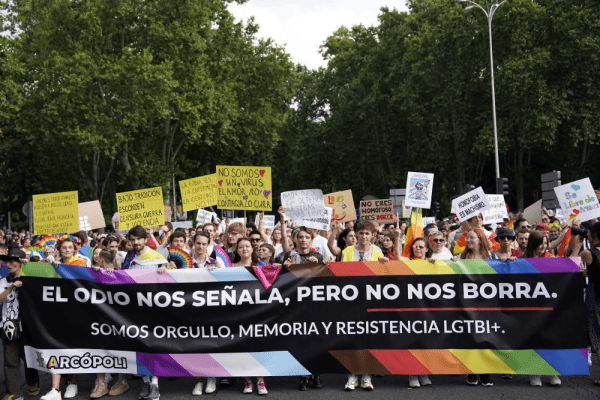
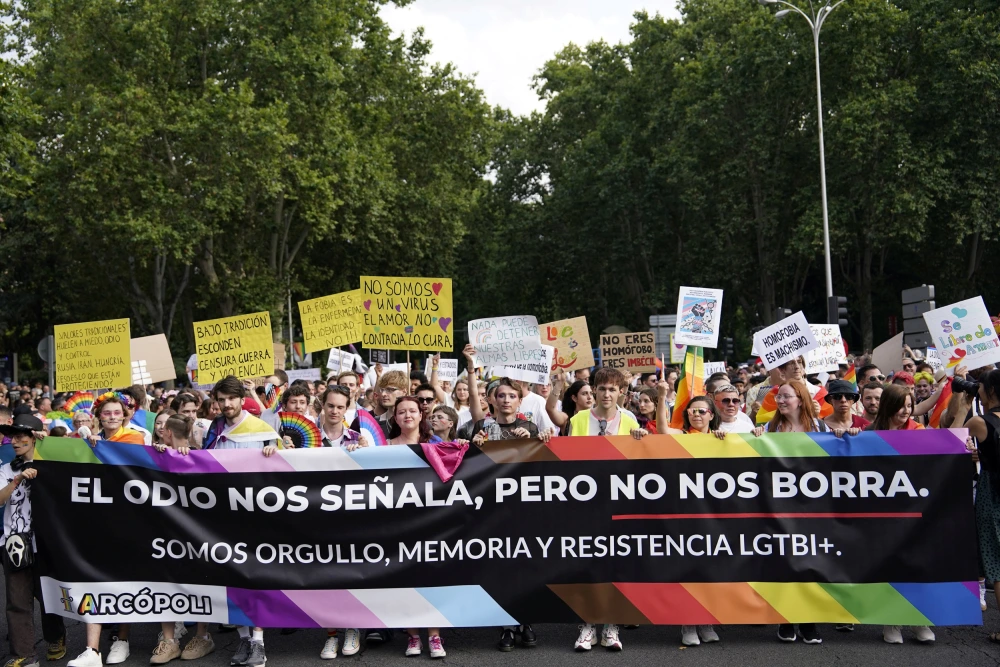
When Diana, a bisexual Russian asylum seeker, took part in her first Madrid Pride festival last year, she was delighted to see people waving the white-blue-white flag that has become a symbol of Russian opposition to its war on Ukraine.
She was also ecstatic to be among around 100 Russians who were waving LGBTQ flags and chanting, “Russia without Putin.” It felt surreal, said the 24-year-old, who did not want to give her last name for fear of retaliation.
“I couldn’t believe I would not be sent to prison. Everyone around was so happy,” she recalled as she marched again for Pride in the Spanish capital in July.
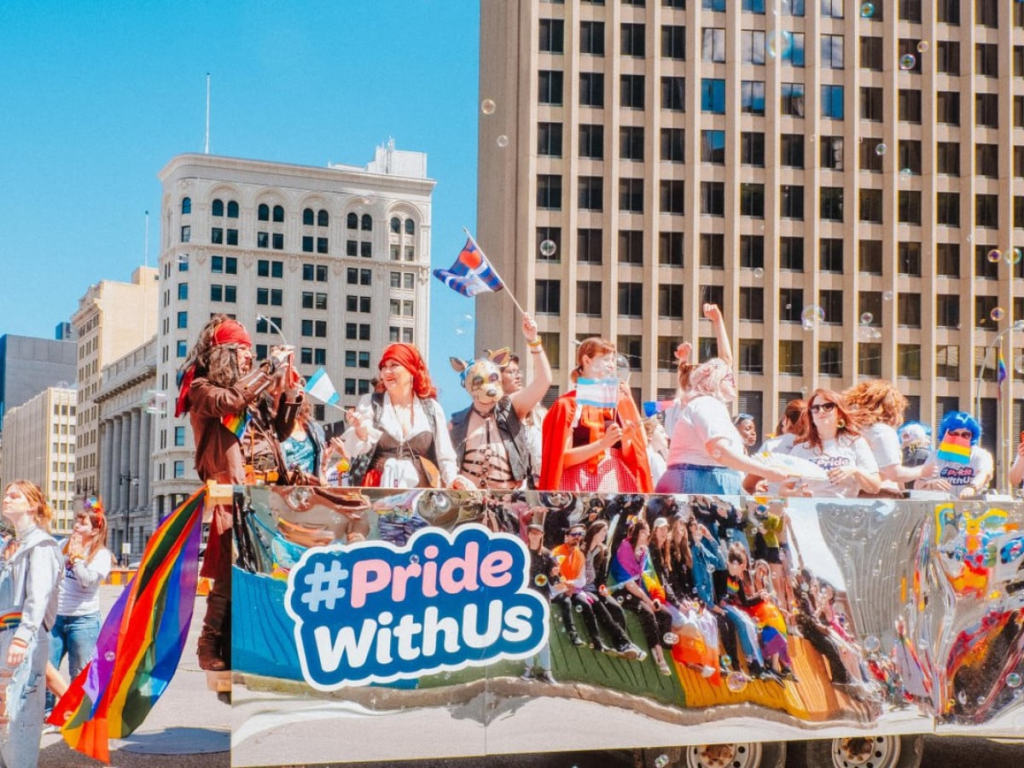
Also taking part was Ilia Andreev, who was vigorously waving a bright pink Mr Gay contest flag as the float he was perched on crept slowly through the crowds. For the 23-year-old, who fled Russia’s anti-LGBTQ laws in 2023, it was a moment to savour.
“I can be proud,” he said in Spanish.
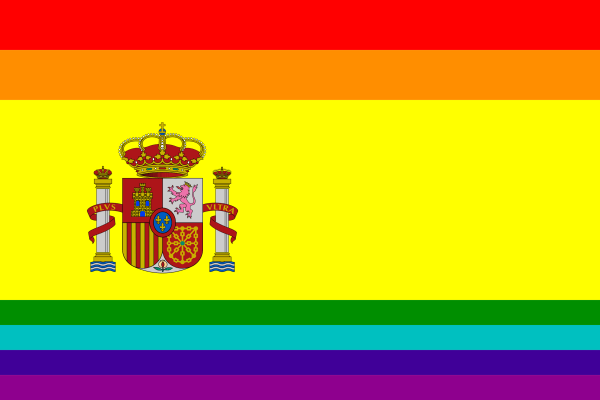
The occasion was a far cry from the repression that drove him and other LGBTQ Russians out of their homeland in recent years, with many seeking refuge in Spain, which ranks fifth in the 2025 ILGA-Europe Rainbow Index, which ranks countries’ legal and policy practices.
“Spain is internationally recognized as a country that respects human rights and in particular the rights and freedoms of the LGBTQI+ community,” said Elma Saiz, the minister for Inclusion, Social Security and Migration, on International LGBTQI+ Pride Day in June.
Asylum applications from Russians more than doubled to 1,694 in 2023 from 684 in 2022, with Russia becoming one of the top 10 origin countries for applications in Spain, according to the Spanish Commission for Refugees (CEAR).
Of those processed, 59.7% received refugee status.
Elena Munoz, coordinator of the legal team at CEAR, said there had been a rise in Russian LGBTQ-related applications, although data on specific motives for asylum applications are not yet being collected.
The main reasons Russians gave for leaving their home included forced recruitment into the armed forces and the deteriorating human rights situation, including regarding gender identity and sexual orientation.
As well as introducing a raft of anti-LGBTQ laws, Russian President Vladimir Putin has been using the LGBTQ community as a political scapegoat, said Marc Marginedas, a journalist and expert in Russian affairs.
“Propaganda has fostered a climate comparable to Nazi Germany,” Marginedas said, saying Putin was using an “external enemy” to rally society and distract from military failures.
Legal crackdown in Russia
In 2013, Russian lawmakers passed a government-sponsored ban on distributing “propaganda of nontraditional sexual relationships” among minors.
In December 2022, after Russia launched its invasion of Ukraine, Putin signed an amendment to the law, extending the prohibition to all age groups.
The crackdown has led to the arrest of journalists, lawyers and human rights activists, with many others leaving the country.
Andreev, who worked as a TV journalist in the city of Kazan in southwestern Russia, said he had to hide his identity after he was accused of spreading “LGBTQ+ propaganda.”
“When I once wore earrings on air, I was called in by the news director and the executive program producer. She told me they had received many calls complaining about so-called gay propaganda because of the earrings,” he said.
He decided to come to Spain in 2023 on the recommendation of a friend, who had also moved.
Diana said she was fired after her boss saw her kiss her partner. She did not want to give details of her job or where she lived for fear of retribution.
While on holiday in Georgia in 2022, her home in Russia was visited by authorities because of her volunteer work with Ukrainians in Russian-occupied areas, and she decided she could not return. Growing anti-LGBTQ rhetoric in Georgia pushed her to move to Spain two years later.
Red tape and barriers
Andreev and Diana both applied for asylum and are still waiting for a ruling.
The legally mandated six-month process often stretches much longer, even up to two years. After six months, asylum seekers are allowed to seek work.
But it can take months to get an initial appointment with immigration authorities, and without this, asylum applicants cannot access state aid or support from organizations like CEAR.
Delays are also driving an illegal black market.
According to NGOs, Spanish police and officials, criminals collect immigration appointments using bots and then sell these so-called “mafia de citas,” or mafia appointments, for hundreds of euros on WhatsApp or Telegram to desperate asylum seekers.
And now things are getting for Russians hoping to submit asylum claims in Spain.
From July 12, Spain requires Russian citizens to obtain transit visas to pass through the country.
In the past, Russians would buy a ticket with a layover in Spain and then seek asylum during their stopover.
“It makes it difficult to reach safe territory, in this case Spain, because they no longer have a legal and safe route,” said Munoz, adding that reforms were needed to make the system more efficient.
The Ministry of Foreign Affairs, which is responsible for visa policy, did not respond to requests for comment.
While they await their asylum decisions, Diana and Andreev are rebuilding their lives.
Andreev, who volunteers in an LGBTQ rights group, has found a home in a small town near Madrid and is working on his Spanish — he hopes to return to journalism one day. But he has struggled to build new relationships.
The stress of job hunting and trying to get all the documents he needs, plus the time it takes up make it hard to focus on building connections, he said.
Diana now has stable online work and says she has found her chosen family in Madrid, mainly thanks to online networks of LGBTQ+ Russians who offer each other support.
She feels free, even if she still fears Russian retaliation.
“If I want, I can date women, I can date men, I can date whoever. I’m not in a hurry. Why would you be in a hurry? The Spanish lifestyle relaxes you a little bit.”
As part of a legal settlement with medical associations and advocacy groups, the current presidential administration has agreed to restore more than 100 websites and online resources related to gender identity and diversity, equity, and inclusion (DEI).
“I am extremely proud of the health care community in Washington state and our partners in this case for pushing back on this egregious example of government overreach” said Dr. John Bramhall, president of the Washington State Medical Association (WSMA), the lead plaintiffs in the lawsuit. “This was not a partisan issue-open data benefits everyone and ensuring its availability should be a bipartisan priority.”
In January, the president issued an executive order directing federal agencies to eliminate references to “gender” and “gender identity” from federal policies, documents, and public-facing materials. In response, the Department of Health and Human Services (HHS) removed public health data from federal websites, including information on pregnancy risks, painkiller addiction, and the AIDS crisis. Hundreds of webpages addressing health concerns relevant to the LGBTQ+ community, including the National Institutes of Health’s (NIH) HIV risk-reduction tool, were removed.
“This action proves the … administration’s goal of making it as difficult as possible for LGBTQ Americans to find federal resources or otherwise see ourselves reflected under his presidency,” GLAAD’s President and CEO Sarah Kate Ellis said in January.
Physicians, scientists, and other medical professionals who relied on these resources were left scrambling. The Washington State Medical Association (WSMA) and other groups filed suit, arguing that the removals were “arbitrary, capricious, and unreasoned,” and violated federal transparency laws.
“This was trusted health information that vanished in a blink of an eye-resources that, among other things, physicians rely on to manage patients’ health conditions and overall care,” said Dr. Bramhall. “Not only was our ability to provide care to our patients compromised, but our trust in our federal health institutions has also been badly shaken.”
As part of the agreed settlement finalized earlier this month, the government must restore these webpages and cease deleting other resources. Graham Short, a spokesperson for WSMA, told the Associated Press that the organization expects the websites to be fully restored in the coming weeks.
Despite the settlement, HHS stated that it “remains committed to its mission of removing radical gender and DEI ideology from federal programs, subject to applicable law, to ensure taxpayer dollars deliver meaningful results for the American people.”
Separately, in July, a judge overseeing a similar lawsuit brought by Doctors for America ordered the government to restore additional websites that were removed. The Associated Press reported that 167 of those sites had been reinstated, while 33 were still under review.
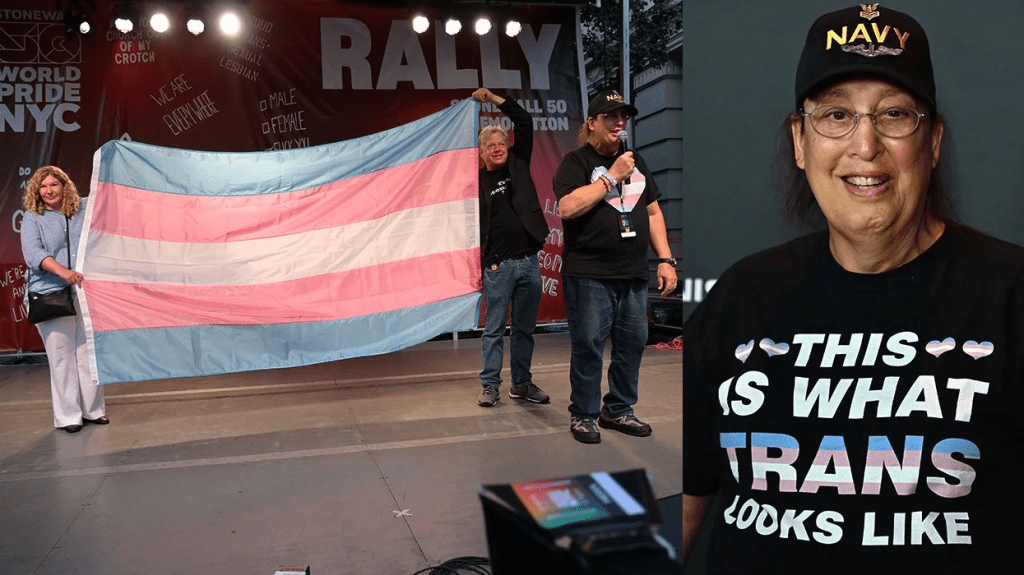
Monica Helms, the Navy veteran and creator of the original transgender pride flag, is fleeing the country due to anti-LGBTQ persecution.
She and her wife, Darlene Wagner, launched a GoFundMe earlier this year to facilitate their move abroad.
“We are worried there’s a possibility something could happen where we end up getting arrested just for being who we are,” Helms said in an interview with the Bay Area Reporterwhen the fundraiser first kicked off.
The couple currently lives in Georgia, which Erin in the Morning’s newest risk assessment map labeled as a “high risk” area for transgender people. Helms is by no means the only transgender refugee fleeing the United States. In May, a Williams Institute poll found that nearly half of all trans adult respondents had considered moving out of state or out of the country.
Since 2023, almost three dozen anti-trans bills have been introduced in Georgia, four of which have passed, according to the Trans Legislation Tracker. There was a ban on trans girls playing on scholastic women’s sports teams, a ban on using state funds to provide transition-related health care to incarcerated people, a ban on providing evidence-based medical treatment for minors with gender dysphoria, and the Georgia Religious Freedom Restoration Act—which does not explicitly target trans people, but is likely to make it easier to discriminate against them using religion as a legal defense. (Thankfully, there have been some successful and ongoing legal challenges to many of these policies.)
NBC’s Jo Yurcaba profiled families of trans kids moving to places like Australia and New Zealand. Hannah Kreager, a 22-year-old trans woman from Arizona, filed a groundbreaking asylum claim in Canada earlier this year; if granted, it would mark the first time a trans person from the United States would be given asylum in another country due to their LGBT status.
Of course, all of these stories come with the presumption of privilege. Trans people in these scenarios may have had familial support and/or a source of income or wealth that enabled them to uproot their lives to a safer place. Others resort to bouncing from state to state to receive care, uprooting their lives to live in a more tolerant community or traveling across state or international lines periodically to access health care.
As for Helms, she vowed to continue to fight for trans people no matter where she lives. “We will not abandon our activism,” she wrote in her GoFundMe.
Helms designed the transgender pride flag after having a conversation with the creator of the bisexual pride flag in 1999, she told the Bay Area Reporter. She has said it is important to her that it remains open and free to use for the public. The pink, white, and blue flag has become a household symbol for trans people and their loved ones.
“No matter how you fly it, it’s always correct, which signifies finding correctness in our own lives,” Helms said.







 fleeredstates.blog
You must be logged in to post a comment.