Gerika Mudra — an 18-year-old cis biracial lesbian high school student in Minnesota — filed a discrimination complaint against Buffalo Wild Wings, alleging that, while enjoying dinner with a friend around the Easter holiday in April, a female employee at the chicken restaurant’s Owatonna location followed her into the women’s restroom and demanded proof of her female gender.
Minnesota has no laws restricting restroom use by transgender people. However, Mudra’s lawsuit — filed with the Minnesota Department of Human Rights by the LGBTQ+-inclusive legal group Gender Justice — alleges that the employee violated the Minnesota Human Rights Act, a law that explicitly prohibits discrimination in public accommodations based on sexual orientation and gender identity.
The employee reportedly pounded on a bathroom stall door and said, “This is a women’s restroom. The man needs to get out of here.” When Mudra exited the stall, she told the employee, “I am a lady,” NBC News reported. The server reportedly responded, “You have to get out now.”
In response, Mudra unzipped her hoodie to show that she has breasts. (Mudra was wearing a shirt that covered her chest.) The employee reportedly said nothing in response, but left the restroom. Buffalo Wild Wings didn’t respond to NBC News’ request for comment.
“This wasn’t the first time something like this happened, but this is like the worst time,” Mudra said in a video created by Gender Justice. “This one… she was like, mad, screaming. She made me feel very uncomfortable.”
“After that, I just don’t like going in public bathrooms. I just hold it in,” she added. “I want to be able to use the bathroom in peace.”
Mudra’s stepmother, Shauna Otterness, said she was “enraged” upon hearing about the incident, which she called “cruel and humiliating.”
“We know Gerika was targeted because of how she looks,” Otterness said. “She didn’t do anything wrong. She just didn’t fit what that server thought a girl should look like. I was shocked and heartbroken by how many people shared similar stories after I posted about it online.”
“This shouldn’t be normal,” Otterness added. “We can do better, and we have to.”
The Minnesota Human Rights Act explicitly forbids discrimination based on gender identity, whether real or perceived. As such, if the employee’s behavior arose from the suspicion that Mudra was trans, the employee’s actions are still potentially illegal. Additionally, the law requires businesses to train staff, enforce anti-discrimination policies, and ensure their spaces are safe and welcoming to everyone, Gender Equity noted.
While Minnesota doesn’t have laws restricting trans people’s restroom use, 19 states do. Republicans nationwide have repeatedly accused trans women of “invading” women’s spaces to harm girls and women. No evidence shows that trans-inclusive restroom policies contribute to a rise in restroom-related assaults.
Gender Justice also noted that nearly one-third of LGBTQ+ people report experiencing harassment for using a bathroom, and nearly 60% of trans people have avoided using public restrooms out of fear of harassment or violence.
“The transphobia that’s happening, it really affects everyone and it’s really bad for everyone because… there’s expectations about what women should look like, what women’s bodies should look like. And if you don’t meet those stereotypes, you’re gonna be targeted,” said Jess Braverman, Gender Justice’s legal director.
Holding one’s bodily waste to avoid restrooms can result in increased urinary tract infections, constipation, the presence of blood in the urine, and even kidney disease, according to the American Medical Association. Exclusionary bathroom policies can also contribute to increased anxiety, depression, and suicidality amongst trans individuals, according to the National Institutes of Health.
“Black girls and women also face relentless policing of their appearance and identity. In schools, they are suspended at six times the rate of white girls, often for subjective reasons tied to how they dress, speak, or wear their hair,” Gender Justice added. “These same biases follow them into places like restaurants and bathrooms where they are often treated as suspicious or out of place for simply being themselves.”
Morgan Peterson, Gender Justice’s executive director, said, “A growing culture of suspicion and control is targeting trans, gender-nonconforming, and Black girls and women—anyone who doesn’t match narrow ideas of how women should look or behave. When people are harassed just for existing, none of us are truly safe.”
Cis women are regularly harassed because of transphobic restroom policies
In January, anti-trans Rep. Lauren Boebert (R-CO) reportedly told a cis woman in a Capitol women’s restroom, “You shouldn’t be here,” before storming back into the restroom with her transphobic colleague, Rep. Nancy Mace (R-SC), only to realize the woman wasn’t trans.
“I made an error regarding a mistaken identity,” Boebert said in a statement after the incident. “I apologized, learned a lesson, and it won’t happen again.”
In November 2022, a cisgender woman harassed another cis woman with short hair in the public restroom of the Rampart Casino in Las Vegas, Nevada, because she thought she was transgender.
Ten years after the Supreme Court extended marriage rights to same-sex couples nationwide, the justices this fall will consider for the first time whether to take up a case that explicitly asks them to overturn that decision.
Kim Davis, the former Kentucky county clerk who was jailed for six days in 2015 after refusing to issue marriage licenses to a gay couple on religious grounds, is appealing a $100,000 jury verdict for emotional damages plus $260,000 for attorneys fees.
In a petition for writ of certiorari filed last month, Davis argues First Amendment protection for free exercise of religion immunizes her from personal liability for the denial of marriage licenses.
More fundamentally, she claims the high court’s decision in Obergefell v Hodges — extending marriage rights for same-sex couples under the 14th Amendment’s due process protections — was “egregiously wrong.”
“The mistake must be corrected,” wrote Davis’ attorney Mathew Staver in the petition. He calls Justice Anthony Kennedy’s majority opinion in Obergefell “legal fiction.”
The petition appears to mark the first time since 2015 that the court has been formally asked to overturn the landmark marriage decision. Davis is seen as one of the only Americans currently with legal standing to bring a challenge to the precedent.
“If there ever was a case of exceptional importance,” Staver wrote, “the first individual in the Republic’s history who was jailed for following her religious convictions regarding the historic definition of marriage, this should be it.”
Lower courts have dismissed Davis’ claims and most legal experts consider her bid a long shot. A federal appeals court panel concluded earlier this year that the former clerk “cannot raise the First Amendment as a defense because she is being held liable for state action, which the First Amendment does not protect.”
Davis, as the Rowan County Clerk in 2015, was the sole authority tasked with issuing marriage licenses on behalf of the government under state law.
“Not a single judge on the U.S. Court of Appeals showed any interest in Davis’s rehearing petition, and we are confident the Supreme Court will likewise agree that Davis’s arguments do not merit further attention,” said William Powell, attorney for David Ermold and David Moore, the now-married Kentucky couple that sued Davis for damages, in a statement to ABC News.
A renewed campaign to reverse legal precedent
Davis’ appeal to the Supreme Court comes as conservative opponents of marriage rights for same-sex couples pursue a renewed campaign to reverse legal precedent and allow each state to set its own policy.
At the time Obergefell was decided in 2015, 35 states had statutory or constitutional bans on same-sex marriages, according to the National Conference of State Legislatures. Only eight states had enacted laws explicitly allowing the unions.
So far in 2025, at least nine states have either introduced legislation aimed at blocking new marriage licenses for LGBTQ people or passed resolutions urging the Supreme Court to reverse Obergefell at the earliest opportunity, according to the advocacy group Lambda Legal.
In June, the Southern Baptist Convention — the nation’s largest Protestant Christian denomination — overwhelmingly voted to make “overturning of laws and court rulings, including Obergefell v. Hodges, that defy God’s design for marriage and family” a top priority.
Support for equal marriage rights softening
While a strong majority of Americans favor equal marriage rights, support appears to have softened in recent years, according to Gallup — 60% of Americans supported same-sex marriages in 2015, rising to 70% support in 2025, but that level has plateaued since 2020.
Among Republicans, support has notably dipped over the past decade, down from 55% in 2021 to 41% this year, Gallup found.
Davis’ petition argues the issue of marriage should be treated the same way the court handled the issue of abortion in its 2022 decision to overturn Roe v Wade. She zeroes in on Justice Clarence Thomas’ concurrence in that case, in which he explicitly called for revisiting Obergefell.
The justices “should reconsider all of this Court’s substantive due process precedents, including Griswold, Lawrence, and Obergefell,” Thomas wrote at the time, referring to the landmark decisions dealing with a fundamental right to privacy, due process and equal protection rights.
“It is hard to say where things will go, but this will be a long slog considering how popular same-sex marriage is now,” said Josh Blackman, a prominent conservative constitutional scholar and professor at South Texas College of Law.
Blackman predicts many members of the Supreme Court’s conservative majority would want prospective challenges to Obergefell to percolate in lower courts before revisiting the debate.
The court is expected to formally consider Davis’ petition this fall during a private conference when the justices discuss which cases to add to their docket. If the case is accepted, it would likely be scheduled for oral argument next spring and decided by the end of June 2026. The court could also decline the case, allowing a lower court ruling to stand and avoid entirely the request to revisit Obergefell.
“Justices Brett Kavanaugh and Amy Coney Barrett seem wildly uninterested. Maybe Justice Neil Gorsuch, too,” said Sarah Isgur, an ABC News legal analyst and host of the legal podcast Advisory Opinions.
“There is no world in which the court takes the case as a straight gay marriage case,” Isgur added. “It would have to come up as a lower court holding that Obergefell binds judges to accept some other kind of non-traditional marital arrangement.”
Ruling wouldn’t invalidate existing marriages
If the ruling were to be overturned at some point in the future, it would not invalidate marriages already performed, legal experts have pointed out. The 2022 Respect for Marriage Act requires the federal government and all states to recognize legal marriages of same-sex and interracial couples performed in any state — even if there is a future change in the law.
Davis first appealed the Supreme Court in 2019 seeking to have the damages suit against her tossed out, but her petition was rejected. Conservative Justices Thomas and Samuel Alito concurred with the decision at the time.
“This petition implicates important questions about the scope of our decision in Obergefell, but it does not cleanly present them,” Thomas wrote in a statement.
Many LGBTQ advocates say they are apprehensive about the shifting legal and political landscape around marriage rights.
There are an estimated 823,000 married same-sex couples in the U.S., including 591,000 that wed after the Supreme Court decision in June 2015, according to the Williams Institute at UCLA Law School. Nearly one in five of those married couples is parenting a child under 18.
Since the Obergefell decision, the makeup of the Supreme Court has shifted rightward, now including three appointees of President Donald Trump and a 6-justice conservative supermajority.
Chief Justice John Roberts, among the current members of the court who dissented in Obergefell a decade ago, sharply criticized the ruling at the time as “an act of will, not legal judgment” with “no basis in the Constitution.” He also warned then that it “creates serious questions about religious liberty.”
Davis invoked Roberts’ words in her petition to the high court, hopeful that at least four justices will vote to accept her case and hear arguments next year.
Four North Carolina Democratic lawmakers broke with their party in voting to override Governor Josh Stein’s veto of eight bills, a move that helped push several harmful measures into law.
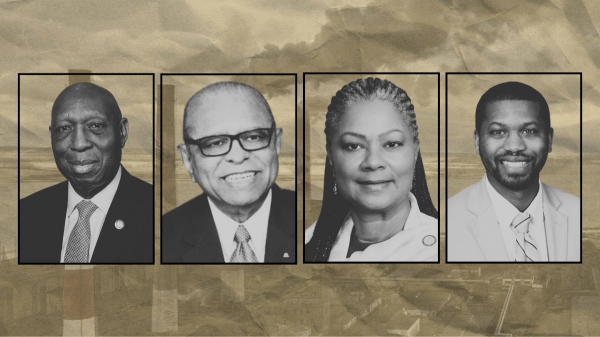
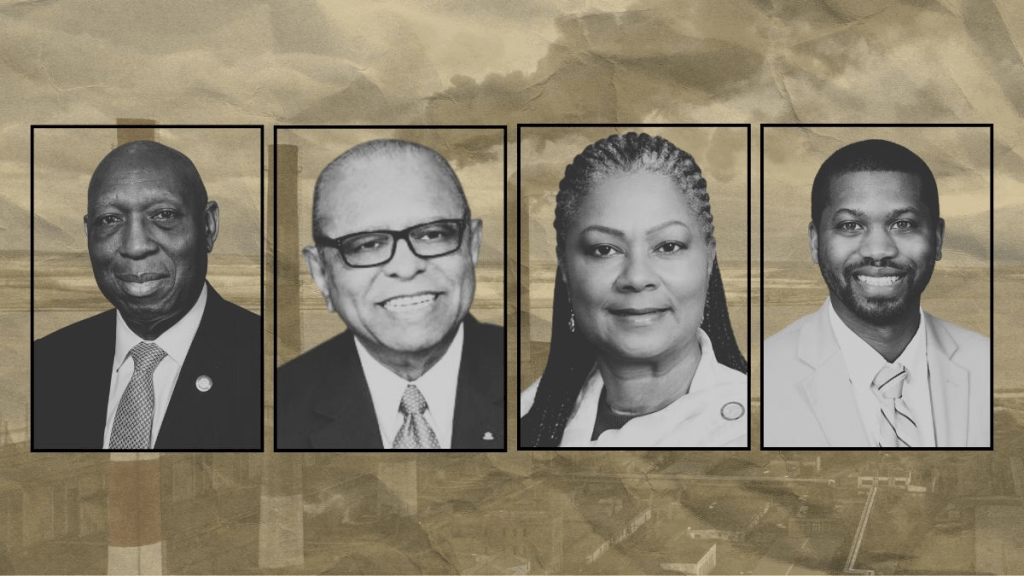
The four Democrats who voted with state Republican lawmakers on one or more of the override votes were:
In both of the state’s legislative chambers, a 60% threshold is required to override a governor’s veto of a bill. Due to the four democratic lawmakers going against their party, House Democrats were unable to sustain Governor Stein’s vetoes on eight bills, including House Bill 805, House Bill 318, Senate Bill 266, and House Bill 193.
Here is a breakdown of the bills and how the four lawmakers voted:
Senate Bill 266 is a harmful bill that will raise utility bills for North Carolinians, roll back clean energy progress, and shift costs onto working families so that large corporations pay less.
The veto override passed 74-46, with Cunningham, Majeed, and Willingham being the deciding votes.
House Bill 193 is a dangerous policy that allows nearly anyone with minimal training to carry a concealed firearm at a private school, creating a serious safety risk for students, teachers, and school support staff.
The Republican veto override passed 72-48, with Willingham being the deciding vote.
In an interview with Bryan Anderson, Willingham stated that Governor Stein personally called him on Monday night to ask him to sustain his vetoes of several harmful bills.
Willingham declined, saying, “Governor Stein, he’s just getting to know me. I think now he knows that whatever I say I’m going to do, that’s what I’m going to do. So he could take that to the bank.”
“They say, ‘Well, we want you to sustain the governor’s veto,’” Willingham said. “My thing is I sustain my vote.”
House Bill 805 was originally a bipartisan bill that would have helped people who appeared in sexually explicit photos and videos online to have them removed. However, state Republicans changed the bill to attack transgender North Carolinians along with other controversial provisions.
In his veto statement, Governor Stein said that while he agreed with the portions of House Bill 805 protecting women and minors from sexual exploitation on websites, the attacks towards transgender North Carolinians are “mean-spirited.”
Governor Stein wrote, “My faith teaches me that we are all children of God no matter our differences and that it is wrong to target vulnerable people, as this legislation does.”
Ultimately, state Republicans overrode Governor Stein’s veto, 72-48, with Majeed being the deciding vote.
House Bill 318 is an anti-immigration measure that will force sheriffs to cooperate with Immigration and Customs Enforcement (ICE).
In a statement following his veto of HB 318, Governor Stein stated, “My oath of office requires that I uphold the Constitution of the United States. Therefore, I cannot sign this bill because it would require sheriffs to unconstitutionally detain people for up to 48 hours after they would otherwise be released. The Fourth Circuit is clear that local law enforcement officers cannot keep people in custody solely based on a suspected immigration violation. But let me be clear: anyone who commits a serious crime in North Carolina must be prosecuted and held accountable regardless of their immigration status.”
Despite the bill setting up a dangerous precedent, state Republicans overrode Stein’s veto, 72-48.
Rep. Carla Cunningham, who was the deciding vote, gave a speech on the House floor defending her action to help Republicans override Gov. Josh Stein’s veto of the anti-immigration bill.
In what Rep. Cunningham referred to as sharing her “unapologetic truth”, the Mecklenburg lawmaker went on to state, “First, as a people, we need to recognize that it’s not just the numbers that matter, but also where the immigrants come from and the culture they bring with them to another country. As the social scientists report, all cultures are not equal.”
“Some immigrants come and believe they can function in isolation, refusing to adapt,” Cunningham stated. “They have come to our country for many reasons, but I suggest they must assimilate, adapt to the culture of the country they wish to live in.”
She added, “It’s time to turn the conveyor belt off.”
North Carolina Democratic Leaders Push Back
Several Democrats decried the override vetoes on the eight bills, including the Duke Energy bill, attacks towards transgender North Carolinians, and allowing concealed carry on private school grounds.
On the floor, Rep. Marcia Morey, D-Durham, a former judge, pushed back against Cunningham’s remarks, stating, “We all agree we want safe communities. That’s no longer the issue with this bill — it is scapegoating. It is scapegoating immigrants.”
“Research has shown us that the immigrant community is less likely to commit crimes than the US citizen. That is a fact. We need to work towards finding solutions, not creating divisiveness and ignoring community concerns. This is furthering an anti-immigrant agenda no matter the cost. And when police act as immigration agents, witnesses or victims of crime are going to be less likely to report crime.”
According to the News & Observer, Senate Democratic Leader Sydney Batch called Cunningham’s remarks “absolutely uncalled for.”
“The very fact that you would say that not all people, or not all immigrants, are equal, is just – one, it’s contrary to our Constitution. It’s contrary to how this country was formed. This country was formed because of Native Americans, Blacks that were enslaved, and immigrants, including every single person that was here other than Native Americans,” Batch told reporters.
“To say that we are not equal goes and flies in the face of anything that a Democrat, in my opinion, believes and holds, near and dear.”
In a statement last week, the Young Democrats of North Carolina joined Democratic members in condemning Cunningham’s remarks, saying that the lawmaker “disgraced her office with a hate-filled speech attacking the very immigrant communities she was elected to serve.”
“You will be held accountable by your community,” the group stated. “Good luck.”
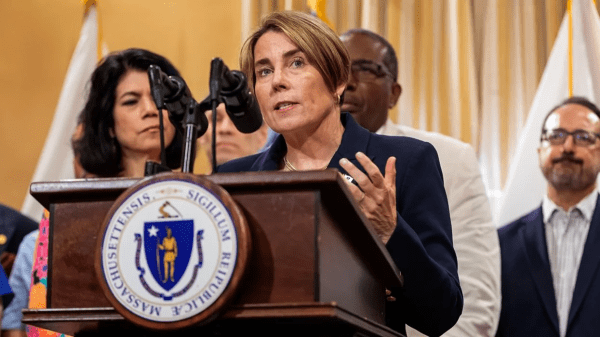
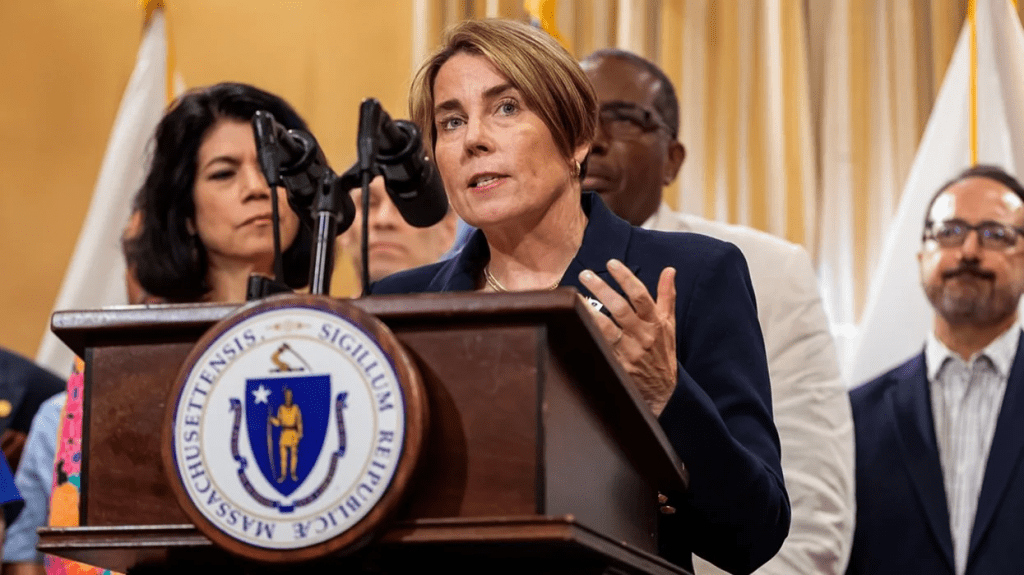
Democratic Gov. Maura Healey, the first out lesbian governor in the U.S., signed the Shield Act 2.0 into law Thursday. The bill further strengthens protections for patients and providers of reproductive healthcare, while explicitly mandating that abortions be performed when deemed medically necessary.
“Massachusetts will always be a state where patients can access high-quality health care and providers are able to do their jobs without government interference,” Healey said in a statement. “From the moment Roe was overturned, we stepped up to pass strong protections for patients and providers, and with President Trump and his allies continuing their assaults on health care, we’re taking those protections to the next level. No one is going to prevent the people of Massachusetts from getting the health care they need.”
The state’s original shield law, enacted by Democratic Gov. Charlie Baker in July, 2022, prohibits states that have banned the life-saving treatment from punishing those who travel to Massachusetts to receive it by preventing the release of information or the arrest and extradition of someone based on another state’s court orders.
The new law further prevents the disclosure of sensitive data, such as a physician’s name, and prohibits local law enforcement from cooperating with other jurisdictions in their investigations. It also directs the Department of Public Health to create an advisory group to help guide businesses as they implement privacy protections for storing or managing electronic medical records.
“Massachusetts is home to the best health care providers in the country, and we aren’t going to let them be intimidated or punished for providing lifesaving care,” said Lieutenant Governor Kim Driscoll. “Together with the Legislature, we are reminding the entire country yet again that Massachusetts is a place where everyone can safely access the health care they need and deserve.”
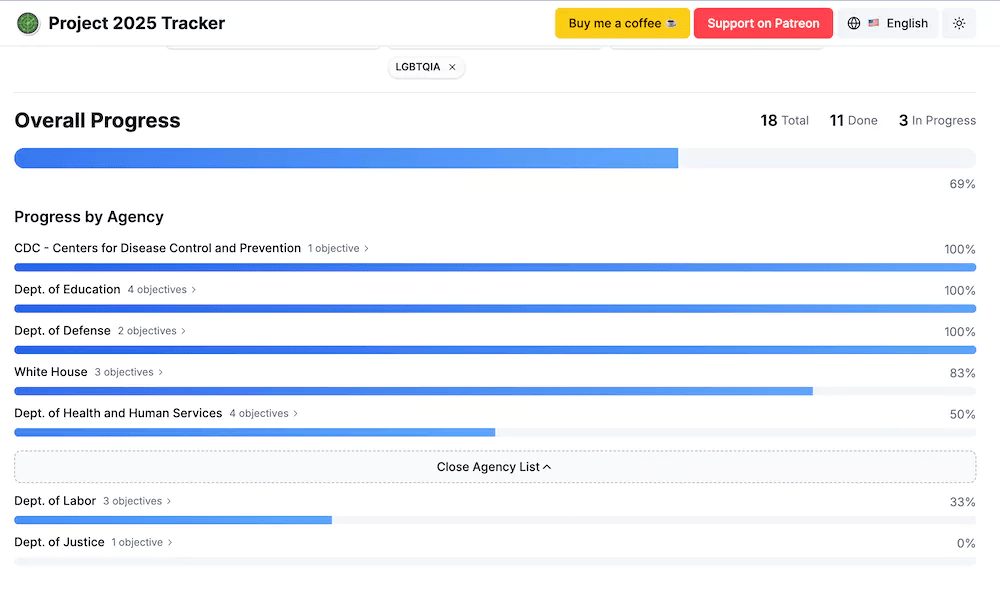
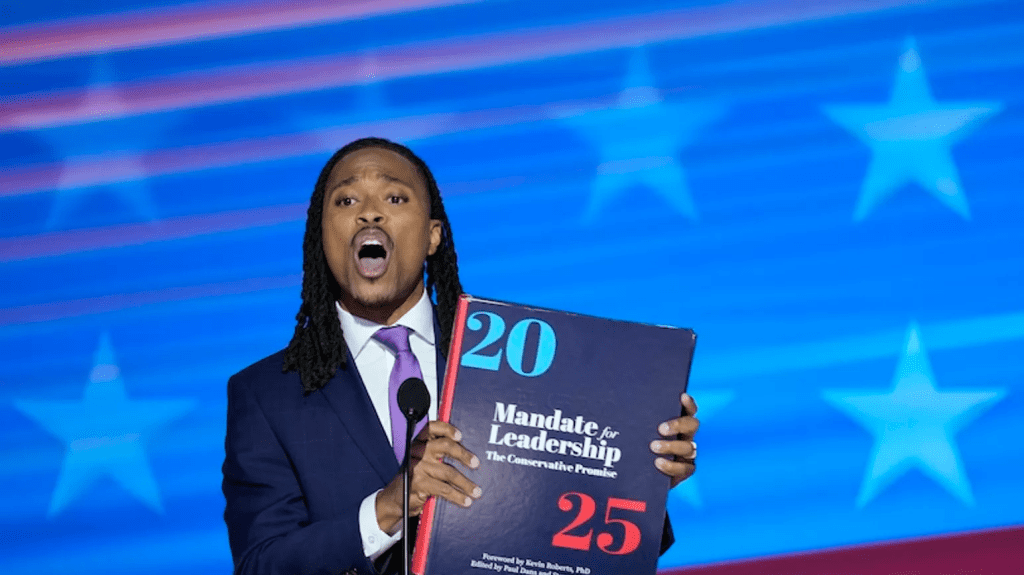
resident Donald Trump has already achieved 69% of the anti-LGBTQ+ policy goals recommended by Project 2025, the blueprint for his second term created by the Christian Nationalist think-tank The Heritage Foundation, according to the website Project 2025 Tracker.
The website, which describes itself as a “comprehensive, community-driven initiative to track the implementation of Project 2025’s policy proposals,” lists 18 LGBTQ+-related goals. Of them, the tracker categorizes 11 of the blueprint’s goals as “completed,” three as “in progress,” and four as “not started.”
Many of the “completed” goals have dealt with eradicating any funding for gender-affirming healthcare, erasing any mentions of LGBTQ+-inclusive language from federally funded groups, and reinterpreting federal anti-discrimination laws to exclude any protections for trans and nonbinary individuals.
But it’s worth noting that many of the goals that the tracker marked as “completed” were actually policy changes sought in Trump‘s executive orders. Though some of his orders have been pursued by various government agencies and upheld by court decisions, others remain partially blocked in court challenges.
Very few of the “completed” policy goals were accomplished through actual laws passed by Congress. As such, many of Trump’s orders could potentially be overturned by a future president who issues opposing executive orders upon taking office.
The three “in progress” goals involve continuing to deny federal funds to “woke” groups and prioritizing heterosexual families and children in government policies.
The four “not started” goals include protecting religious-based anti-LGBTQ+ discrimination, prosecuting any pro-trans educators and librarians as sex offenders, and ending any Medicare coverage for gender-affirming surgeries (even though most major medical associations recommend such care).
Overall, Trump has “completed” 47% of Project 2025’s goals, the tracker states, barely seven months into his second presidential term. Their completion has largely been aided by a Republican-led Congress that has not objected to his unconstitutional and illegal actions that supersede his constitutional authority, as well as by Republican-appointed judges, namely the six-member Supreme Court majority, which has largely allowed his policies to remain in effect without offering much (if any) legal reasoning.
Trump has also achieved some of his goals by illegally denying congressionally authorized federal funding to numerous groups and organizations (both domestically and internationally) or by threatening investigations and prosecutions of groups that defy his orders. Many universities, law firms, broadcasters, and other companies have complied with his orders, even though they likely violate constitutional rights to free speech.
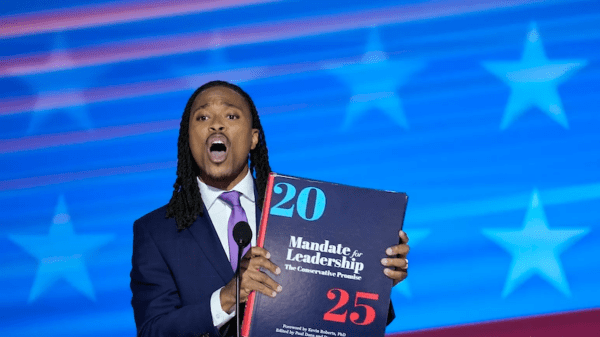
Trump feigned ignorance about Project 2025 and its goals during his 2024 re-election campaign, commenting, “Some of the things they’re saying are absolutely ridiculous and abysmal,” and “Anything they do, I wish them luck, but have nothing to do with them.”
But as the then-vice presidential nominee Gov. Tim Walz (D-MN) said during the Democratic National Convention, “I coached high school football long enough to know, and trust me on this: When somebody takes the time to draw up a playbook, they’re going to use it.”
Completed
Department of Labor – Provide robust accommodations for religious employees. (Completed July 27)
Department of Labor – Rescind Biden-era Title VII and Title IX rules that strengthened the ability to prosecute sexual assault and discrimination cases. (Completed January 30)
Department of Defense – End all use of public monies for transgender surgeries. (Completed May 12)
Department of Defense – Reverse policies that allow transgender individuals to serve in the military. (Completed May 7)
Centers for Disease Control and Prevention – End all data collection on gender identity. (Completed February 25)
White House – Remove the words “sexual orientation and gender identity,” “diversity, equity, and inclusion,” “abortion,” “reproductive health,” and “gender equality” from every federal rule. (Completed January 30)
Department of Health and Human Services – Reverse prohibitions on healthcare discrimination based on gender identity. (Completed January 27)
Department of Education – Issue rules and guidance that “sex” is properly understood as a fixed biological fact. (Completed January 19)
Department of Education – Rescind Biden-era guidance that added a “non-binary” option in civil rights data collected from schools. (Completed January 19)
Department of Education – Abandon the redefinition of “sex” to “sexual orientation and gender identity” in Title IX. (Completed on January 19, but blocked by a court order)
White House – Revoke Biden’s executive order 14020, which established the Gender Policy Council. (Completed January 19)
In progress
Department of Health and Human Services – Revoke guidance that prohibited adoption/foster agencies from discriminating based on sexual orientation and gender identity.
Department of Health and Human Services – Prioritize traditional (heterosexual) marriage in its messaging, health, and welfare policies.
White House – Cut off government contracts to entities that enforce a “woke agenda.”
Not started
Department of Health and Human Services – Rescind Medicare coverage for gender reassignment surgery.
Department of Justice – “Classify educators and public librarians” who discuss “transgender ideology” with minors as “sex offenders”.
Department of Labor – Prohibit employee retirement plans from investing based on ESG (environmental, social, and governance) factors.
Department of Labor – Issue an order “protecting religious employers and employees,” clarify they may make employment decisions based on religion.
The U.S. Air Force said Thursday it would deny all transgender service members who have served between 15 and 18 years the option to retire early and would instead separate them without retirement benefits. One Air Force sergeant said he was “betrayed and devastated” by the move.
The move means that transgender service members will now be faced with the choice of either taking a lump-sum separation payment offered to junior troops or be removed from the service.
An Air Force spokesperson told The Associated Press that “although service members with 15 to 18 years of honorable service were permitted to apply for an exception to policy, none of the exceptions to policy were approved.” About a dozen service members had been “prematurely notified” that they would be able to retire before that decision was reversed, according to the spokesperson who spoke on condition of anonymity to discuss internal Air Force policy.
A memo issued Monday announcing the new policy, which was reviewed by the AP, said that the choice to deny retirement benefits was made “after careful consideration of the individual applications.”
All transgender members of the Air Force are being separated from the service under the Trump administration’s policies.
Separation process has hit some bumps
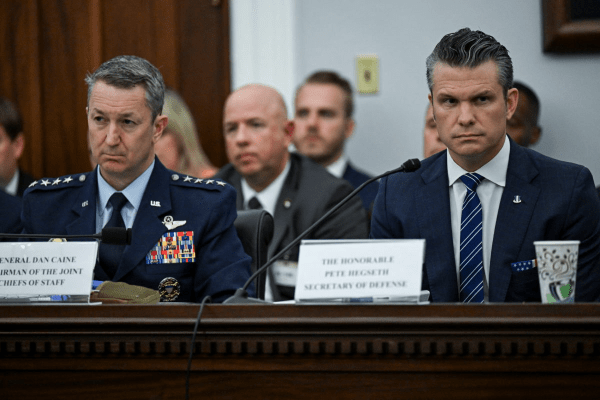
The move comes after the Pentagon was given permission in early May by the Supreme Court to move forward with a ban on all transgender troops serving in the military. Days later, Defense Secretary Pete Hegseth announced a policy that would offer currently openly serving transgender troops the option to either volunteer to leave and take a large, one-time separation payout or be involuntarily separated at later date.
A Pentagon official told reporters in May that they viewed the policy as treating “anyone impacted by it with dignity and respect.”
However, in late July, transgender troops told Military.com that they were finding the entire separation process, which has included reverting their service records back to their birth gender, “dehumanizing” or “open cruelty.”
Shannon Leary, a lawyer who represents LGBTQ+ people in employment discrimination cases, says she expects lawsuits to challenge Thursday’s decision. “It seems quite arbitrary on its face and cruel,” she said. “These military members have dedicated their lives to serving our country.”
Normally, Leary said, when early retirement is offered in the military, it’s available to all members who have served over 15 years. She said she expects other service branches to follow the Air Force’s path.
One Air Force service member says he’s ‘devastated’
Logan Ireland, a master sergeant in the U.S. Air Force who has 15 years of service, including a deployment to Afghanistan, is one of the airmen impacted by the policy. “I feel betrayed and devastated by the news,” he said.
Ireland said he was told that his retirement was being denied on Wednesday when his chain of command, “with tears in their eyes,” told him the news.
Officials have said that as of Dec. 9, 2024, there were 4,240 troops diagnosed with “gender dysphoria” on active duty, National Guard and Reserve. Pentagon officials have decided to use the condition and its diagnosis as the main way to identify troops who are trans.
However, the two are not an exact match — not every transgender person has the condition. As a result, there is an understanding that the actual number of transgender people within the military’s roughly 2 million troops may be higher.
Under the latest policy, active duty troops had until June 6 to voluntarily identify themselves and receive a payout while troops in the National Guard and Reserve had until July 7. Pentagon officials previously told reporters that they plan to lean on commanders and existing annual medical screenings to find any transgender service members who do not come forward.
The Trump administration has removed all references to violence against LGBTQ+ people and gender-based violence in drafts of the State Department’s much anticipated annual report on international human rights.
The draft of the report, which was leaked to and first reported by The Washington Post on Wednesday, scales back its critiques of abuses in countries with a record of human rights abuses. In particular, the Post learned of drafts of human rights reports for El Salvador, Israel and Russia that completely excise references of LGBTQ+ people and violence toward those communities.
The erasure of LGBTQ+ people and the abuses they face in the draft report underscores the Trump administration’s intention to scale back references to human rights broadly and take its anti-LGBTQ+ agenda worldwide.
“The 2024 Human Rights report has been restructured in a way that removes redundancies, increases report readability and is more responsive to the legislative mandate that underpins the report,” a senior State Department official, speaking on the condition of anonymity to brief the news media, told reporters on Wednesday. “The human rights report focuses on core issues.”
The State Department did not immediately respond to HuffPost’s request for comment.
In a section about El Salvador, the draft report notes the country had “no credible reports of significant human rights abuses.” In a previous report from 2023, the State Department found “significant human rights issues” in El Salvador, including “politically motivated killings” and “harsh and life-threatening prison conditions.”
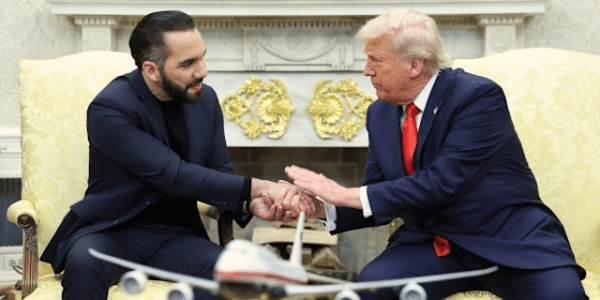
This spring, President Donald Trump secured a multimillion-dollar deal with El Salvador’s President Nayib Bukele to allow 252 Venezuelan men in the U.S. to be deported and housed within the country’s notorious new Terrorism Confinement Center, known as CECOT.
After being jailed for more than 120 days at CECOT, the men, most of who had no criminal history, told stories of being physically and mentally abused for days on end.
Jerce Reyes Barrios, one of the men held at CECOT, told HuffPost reporters Jessica Schulberg and Matt Shuham about his harrowing experience inside the prison. Reyes Barrios recalled a prison official saying, “Welcome to hell on earth, where you’ll be condemned to spend the rest of your lives; where I’m going to make sure that you never eat chicken or meat again.”
Andry José Hernández Romero, a gay Venezuelan makeup artist, alleged that CECOT guards groped him and forced him to perform oral sex while he was in solitary confinement.
A former State Department employee, Keifer Buckingham, said the removal of references to violence against LGBTQ+ people was a “glaring omission,” especially when it comes to Russia. In 2023, Russia’s supreme court deemed what it called an “international LGBT public movement” as extremist, and the courts began their first convictions of people last year under the order.
In February of 2024, a man in Volgograd was found guilty of “displaying the symbols of an extremist organisation” after posting a photo of the LGBTQ pride flag on social media. That same month, a woman near Moscow was sentenced to five days detention for wearing frog-shaped earrings that were rainbow colored.
The drafts of the reports for El Salvador and Russia were marked “finalized,” and the draft for Israel was marked “quality check,” according to the Post. It is still unclear when the reports, which are typically released to the public each March or April, will be sent to Congress and then the public, and if they will include these omissions.
U.S. diplomats have released the State Department’s annual human rights reports for nearly 50 years. Historically their findings have been widely read and anticipated by foreign leaders and diplomats, and have been used in legal proceedings both domestically and abroad.
However, this year human rights advocates decried the news about the ways in which the Trump administration has softened the descriptions of human rights abuses, especially the violence against LGBTQ+ people.
Uzra Zeya, the CEO of Human Rights First, an international human rights nonprofit, said in a statement that the changes were “a radical break” from the original goal to “objectively and even-handedly describe the human rights situation in every country and territory in the world.”
“This severely undermines their credibility and value in guiding U.S. decision-making on a wide range of critical foreign policy issues. Purging mention of elections, corruption, and global human rights abuses against LGBTQI+ persons, persons with disabilities, women and girls, refugees and other vulnerable groups runs counter to American interests and values and makes Americans abroad less safe and informed,” she continued.
Amanda Klasing, the national director of government relations for Amnesty International, said in a statement that she believes the mandate to scale back the report came from Secretary of State Marco Rubio, who instructed employees to delete sections that included stories from survivors of human rights violations and to ignore instances of repression in certain countries.
“The secretary’s instructions were to cut everything not legislatively mandated, but the leaked documents appear to show effort to narrow the scope of what the world hears about human rights abuses around the world,” she wrote.
“The downplaying or exclusion of key issues, such as discrimination and attacks on civil society, from this year’s report will hinder efforts from governments and civil society organizations around the world to respond to these abuses,” she continued.
The Trump administration’s erasure of LGBTQ+ people and gender-based violence has continued on other international stages. At a United Nations meeting in June, a U.S. delegate spent much of her time in a routing meeting on pollution to discuss the United States’ new “national position” on gender.
“Use of the term ‘gender’ replaces the biological category of sex with an ever-shifting concept of self-assessed gender identity and is demeaning and unfair, especially to women and girls,” the delegate said.
In at least six speeches before the United Nations, U.S. delegates have condemned what it calls “gender ideology,” and pushed the Trump administration’s support for recognizing so-called “biological sex,” according to ProPublica.
During his first day in office, Trump signed an executive declaring that the federal government only recognizes “two sexes, male and female,” and signaled that all references to “gender” would thus be replaced with the term “biological sex.”
The nation’s first shelter for transgender and gender-nonconforming people experiencing homelessness opened its doors this week in New York City.
The shelter, a joint venture between a local LGBTQ nonprofit and the city government, will provide transitional housing and specialized services for trans New Yorkers who are homeless, including mental health support and job training and placement. The city is fully funding the facility in Long Island City, which will cost $65 million to operate through 2030, the local news outlet Gothamist reported.
“It’s been just a labor of love to watch it manifest, to hear from community what it is that they want to see in a project, in a program, and to watch other community advocates become excited about it as well,” said Sean Ebony Coleman, founder and CEO of Destination Tomorrow, the organization that will manage the shelter.
The shelter’s name, Ace’s Place, honors Coleman’s late mother, who would have turned 72 this week.
“Ace was my mom’s nickname, and she dealt with her own challenges and struggles, but the one thing was that she always had a home because my grandmother made sure of it,” Coleman told The Hill in an interview on Wednesday. “Regardless of what my mom’s struggles were, she always had a safe place that she could come and reset and recenter. I thought that was the best way to honor her memory, while also doing the same thing for community members.”
With 150 beds — housed in 100 single bedrooms and 25 doubles — residents will each have access to their own restroom and two commercial kitchens. One of the kitchens will be used as a teaching space for the shelter’s culinary arts and hospitality program, Coleman said, part of its commitment to facilitating economic mobility.
Ace’s Place will also have a full-time, onsite psychiatric nurse practitioner who will work closely with social workers and other credentialed staff providing mental health support, according to a news release announcing the shelter’s opening. Added onsite clinical staff will provide health education through coaching and counseling sessions, and yoga and meditation classes are also available to residents.
Coleman and Destination Tomorrow plan to work closely with New York City officials in operating the shelter, Coleman said.
“We couldn’t be prouder to make this historic announcement that strongly affirms our values and commitment to strengthening the safety net for transgender New Yorkers at a time when their rights are roundly under attack,” New York City Department of Social Services Commissioner Molly Wasow Park said in a statement, referencing a string of recent Trump administration actions targeting transgender Americans.
Joslyn Carter, administrator for the city’s Department of Homeless Services, said Ace’s Place is the nation’s first city-funded shelter of its kind. “New York City has long been a leader in advancing LGBTQ+ rights,” she said.
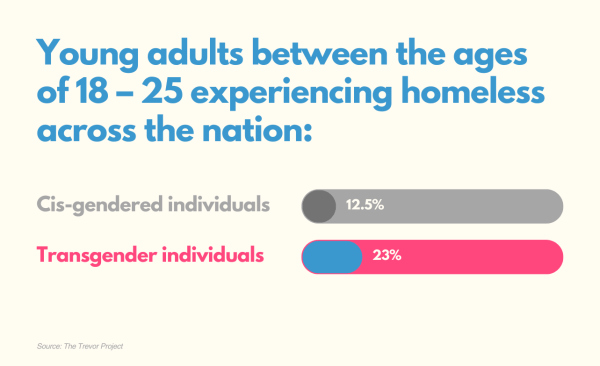
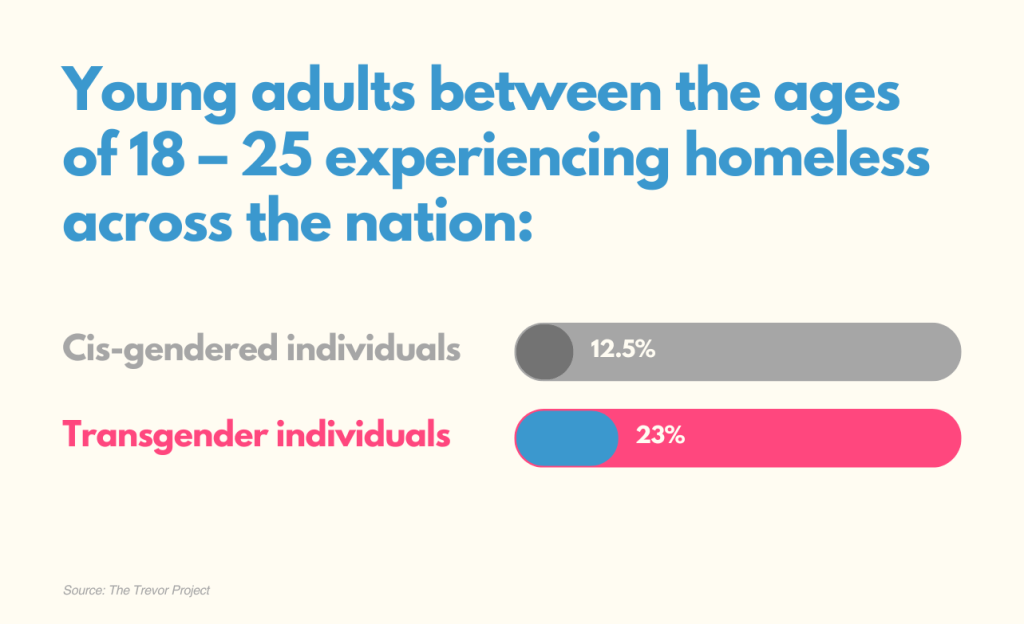
In the U.S., LGBTQ people experience homelessness at disproportionately higher rates than heterosexual and cisgender people, studies on the subject have found. Roughly 17 percent of lesbian, gay and bisexual adults have experienced homelessness at some point in their lives, the Williams Institute reported in 2020, and more than 8 percent of transgender people said they were homeless in the past year.
A 2018 National Alliance to End Homelessness analysis of Department of Housing and Urban Development (HUD) data found that transgender people accounted for approximately 0.6 percent of the general population and 0.5 percent of the nation’s total homeless population. The U.S. Transgender Survey, the largest survey of transgender people in the U.S., reported in 2024 that 30 percent of respondents said they had experienced homelessness in their lifetime.
Reported rates of homelessness are even higher among transgender people of color; more than half of Black transgender women who took the U.S. Trans Survey in 2015 said they experienced homelessness in their lifetime. Nearly 60 percent of Native American transgender women also reported experiencing homelessness, as did 49 percent of trans women of Middle Eastern descent and 51 percent of multiracial trans women.
“For far too long, Transgender and non-binary people — especially Black and Brown Trans people — have been forced to navigate systems never built for us,” said Bryan Ellicott-Cook, a New York City-based transgender rights advocate, in a statement about the opening of Ace’s Place. “This shelter, created for Trans people by Trans people, represents safety, dignity, and a tangible investment in our community’s right not only to survive, but to thrive. It continues to show what we have always known — that Trans people are the ones taking care of each other, from elders to youth, from healthcare to housing and beyond.”
A Walker’s Point intersection will soon be bursting with color — new rainbow crosswalks.
The Wisconsin LGBTQ History Project announced Aug. 1 that the City of Milwaukee’s Paint the Pavement program has approved the crosswalks at the corner of South Second Street and West National Avenue.
They’ll be installed by Oct. 1. in honor of National LGBTQ History Month.
The crosswalks honor “the changemakers who’ve been creating safe spaces for our community for over eight decades,” a Wisconsin LGBTQ History Project news release said.
The project is entirely funded by donors, sponsors and grants. Artist Jeremy Novy, who has been decorating Milwaukee streets with his koi fish since 2006, will design the crosswalks. The koi fish will be part of the design, too.
Novy’s design includes all the colors associated with the LGBTQ community and conveys the message that Walker’s Point is everyone’s neighborhood.
“This is a place of belonging, and if you’re coming here, you have to be respectful,” said Michail Takach, the Wisconsin LGBTQ History Project’s president and chair.
The Friendly Bar, Walker Point’s first known gay bar, opened in 1944. Fluid Milwaukee is located where the Friendly Bar once was, at 819 S. Second St.
“I think that a lot of people are shocked when we tell them that there have been places for gay people to go in Walker’s Point since 1944,” Takach said.
Now, Walker’s Point is home to the seven surviving queer spaces in the city, according to the History Project.
“I’m very excited by this, and I think it’s been a long time coming,” said Dave Wolz, owner of La Cage Nite Club, 801 S. Second St., which has been open since 1984.
The crosswalks are meant to show that Walker’s Point is a safe space for LGBTQ people.
“The neighborhood will have this new symbol of acceptance, belonging, inclusion and safety,” Takach said.
Fearful. Aggravated. Hurt. That’s how 16-year-old Ellie Bowling said she felt after the U.S. Department of Education told the Prince William County school division it must change its inclusive transgender policies or risk losing federal funding.
Ellie, who is trans, is a rising junior in Colgan High School’s Center for the Fine and Performing Arts. She’s excited to soon be driving and loves to be onstage. Last spring, she performed in the school’s production of “Guys and Dolls” and recently earned the role of “Candy” in the school’s fall production of “Zombie Prom.”
“I’m currently thriving in this environment; they created a great learning experience for me,” Ellie said of Prince William County schools.
Ellie was 11 when she started her transition. Since then, her parents, Adam and Erin Bowling, have legally changed her name and gender on government and school documents. After obtaining medical and psychological signoffs, Ellie began receiving gender-affirming hormone therapy at Children’s National Hospital in D.C.
At Colgan High, like all other Prince William County schools, transgender students use the bathrooms and locker rooms that match their gender identities in accordance with a regulation that guides how transgender and gender nonconforming students are treated in schools.
“I know that Colgan is a good place for me. I fit in well there, and that’s partially because these policies help me fit into this school and be able to find my place,” Ellie said. “Without these policies — I don’t know.”
The Bowlings are one of likely hundreds of Prince William County families facing uncertainty as the new school year approaches in less than two weeks. The schools are wrestling with the education department’s determination that its policies violate Title IX, a federal law that prohibits discrimination based on sex in educational settings that receive federal funding.
On July 25, the education department told five Virginia school divisions — Prince William, Fairfax, Loudoun, Arlington and Alexandria — they had 10 days to change their policies that allow transgender students to use the facilities that match their gender identities “or risk imminent enforcement consequences, including referral to the U.S. Department of Justice.”
School board has yet to act
The education department said its decision was based on a U.S. Supreme Court ruling in June that upheld Tennessee’s ban on gender affirming care for minors. The Northern Virginia school policies are based on an earlier case involving Virginia teen Gavin Grimm, who successfully sued Gloucester County schools in federal court to allow students to use restrooms that match their gender identities. In 2021, the U.S. Supreme court declined to review the case.
Babur Lateef, the Prince William County School Board chairman, called a special board meeting this week to receive legal advice on the decision, which will mostly be held in closed session. He declined further comment.
School board member Tracy Blake said he told parents to expect no changes when school begins on Aug. 18.
“Trans students and families do not need to worry about coming back to school on the first day because there will be no disruptions for trans students or any students,” he said in an interview on Friday, Aug. 1.
Blake said he believes removing the regulation would be wrong.
“We can’t discriminate against one person,” he said. “Once you let one thing go, what happens then? Then it’s the next thing. We’ve already seen this in history, and all of our students have to feel safe.”
Ruling adds to challenges for transgender youth
The move by the U.S. Department of Education wasn’t unexpected because trans people have been targeted by the Trump administration, said Lisanne Boddye, a mother of seven, including a transgender teen and a gender expansive teen who both attend Potomac High School. Boddye is also a special education teacher at Potomac High and the wife of Prince William Supervisor Kenny Boddye.
“My children, like thousands across the country, deserve to walk into their schools knowing they are respected, affirmed and protected,” Lisanne Boddye said. “When leaders target transgender students for exclusion or erasure, they send a chilling message — not just to those students, but to every family who believes in fairness, decency, and the right to learn without fear.”
About 3.3% of U.S. high school students identify as transgender, and about 2.2% of high school students are questioning their gender identity, according to a 2023 Centers for Disease Control and Prevention survey. That means about 1 in 20 high schoolers are either transgender or questioning their gender, or about 1,200 of the 24,000 students enrolled in Prince William County’s 13 high schools.
Delta Boddye, 16, a rising senior, rows on the Potomac High School crew team. She began transitioning two years ago and said her teachers have always used her correct name and “made sure they are affirming (her).”
“I’ve just been planning on just living as myself, just trying to be a kid, trying to be a student,” she said about returning to school.
But revoking the school’s policy could change that, she said. No matter the policy, Delta said she will insist that her correct name and pronouns are used at school.
The possible change in the school division’s policy comes on top of other challenges. Delta was considering joining the military but now can’t because of the recent ban on transgender troops. The Bowlings learned the Youth Pride Clinic at Children’s National Hospital, where Ellie is a patient, will no longer prescribe gender-affirming medications as of Aug. 30 due to “escalating legal and regulatory risks” to the hospital and its providers.
“This is supposed to be her happiest year, her senior year, and all of the horizons are supposed to be endless, and now most of them are not,” said Lisanne Boddye, who is an Army special operations veteran.
Both the Bowlings and Boddyes say they are speaking out not only for the safety and mental health of their own children, but for their trans classmates who may not have the same family and community support.
Equality Prince William, a nonprofit that advocates for the LGBTQIA+ community, sponsored a campaign urging the school board “to hold firm in their support for transgender and gender diverse students.” As of Aug. 5, 1,700 letters had been sent.
“Title IX exists to prevent exactly this kind of discrimination,” said Glorya Jordan, a registered nurse who is on the board of Equality Prince William and is the mother of a transgender adult. “The attempt to rescind protections for transgender youth is not only illegal but deadly. Trans youth already face staggering rates of bullying, depression and suicide.”
“Let’s stop hurting our children because of what we are afraid of and do not understand,” said the Casa BruMar Foundation, a nonprofit based in Gainesville that provides resources for the LGBTQIA+ community. “Let’s allow our children to know that being different is not dangerous.”
Adam Bowling hopes people realize there is so much more to his daughter Ellie than just being trans and she deserves to be her authentic self at school.
“Demonizing this group of people is just so wrong,” he said. “I just hope the majority of people hear stories like Ellie’s and realize that there are human beings that these decisions are affecting and it’s a life-or-death situation for some of them.”
Ellie wants people to know that she is a normal teenager.
“I hate how politicized trans youth is, because I am not a monster,” Ellie said. “There’s so much misinformation out there obviously for fear-mongering reasons. I’m not this predator who goes into women’s spaces just to, like, spy on them. I am a woman who is living her life.”









 fleeredstates.blog
You must be logged in to post a comment.