A transgender woman and several friends were harassed and assaulted in Austin, Texas last weekend, and one bystander who stepped in to defend them was hospitalized, in an incident police are investigating as a possible hate crime.
On July 26, the trans woman — who has requested anonymity during the ongoing investigation — and several friends visited Barton Springs, a public swimming hole in Austin’s Zilker Park, as Chron reported Wednesday. During their visit, three men they didn’t know flirted heavily with members of the group, the woman told Chron, but soon began harassing and pointing at her, making remarks about not “support[ing] that lifestyle.”
The three men then reportedly began shoving members of the group and poking the women “near their breasts,” according to a Reddit user who posted about the incident on Monday, claiming to be a friend of one of the victims. At that point, a bystander — identified as Jarod — intervened, and was attacked himself.
“The three men then proceeded to get violent and aggressive, yelling at us and getting in our faces until one of them decided to start swinging and punched Jarod in the jaw, knocking him unconscious,” the anonymous trans woman told Chron. “I quickly ran over to him in an attempt to help Jarod out but was then punched in the face by the assailant in the orange shorts.” The men then shoved another of the women to the ground and left the scene soon after, according to video footage of the incident posted to social media.
The Austin Police Department (APD) released a statement on Tuesday stating that the alleged assault was under investigation and could be declared a hate crime by the city’s Hate Crime Review Committee. “APD remains unwavering in its commitment to fostering a secure and inclusive Austin community,” the department stated. (Community leaders called for APD to be investigated for excessive force in March this year, after videos circulated online that appeared to show officers throwing a trans woman onto the ground during an arrest.)
Austin-area drag performer Brigitte Bandit posted about the assault on Instagram Monday, asking locals for help identifying the attackers. In a follow-up post the next day, Bandit stated that the men had been identified and the information had been shared privately with the victims. “I will not be posting their information without consent of the people involved in the attack,” Bandit wrote, adding, “[l]et’s let them decide which routes they decide [are] best.”
Jarod was treated by EMS personnel at the scene and taken to a hospital, KXAN reported. Per a GoFundMe campaign started by Jarod’s family, he suffered “gashes to his head, a bleeding ear, a broken jaw, and a concussion,” requiring surgery. The fundraiser drew more than $64,000 in donations at time of writing, more than triple its original goal.
“I just wanted to stand up for a nice person that I had just met,” Jarod wrote in a message shared by Bandit on Instagram, “but the outpouring of support from y’all’s community has been overwhelming, so thank you with all of my heart.”
In her comments to Chron, the anonymous trans woman said that she did not know Jarod prior to the assault, but called him “an absolute angel,” saying she was grateful he stepped in.
“I had never known him before that day, but he stood up for me when I was being harassed and he took the most of the assault,” the woman told Chron. “He deserves every penny to help pay for his surgery and his time off work to care of himself and his kid.” The amount of community support she received after the attack, she added, “truly helps my moral and emotional well-being, and makes me believe that this city really is a safe space for people like me.”
It had been months since Alex and Lucy, a trans couple from Arizona, felt safe enough to hold hands in public. They rediscovered that pleasure after moving to Amsterdam this year.
The couple, who did not want to give their last names because of the sensitivity of the subject, decided to leave the United States soon after Donald Trump was re-elected last year.
They arrived in the Netherlands on Jan. 19, the day before Trump was inaugurated and swiftly issued an executive order saying the government would only recognize two sexes — male and female.
“We’re both visibly trans and faced growing discrimination. It ramped up right after the election,” said Lucy, sitting alongside Alex in their De Pijp apartment in Amsterdam’s south.
“It felt like people had taken off their masks — waiting for an excuse to finally say what they wanted. We went from being tolerated to openly despised,” she added.
Alex, who is disabled, feared staying put might also mean losing access to their federal health insurance.
“In the end, it became a matter of life and death,” Alex said.
In his first six months in office, Trump has enacted multiple policies affecting the lives of LGBTQ Americans in areas from healthcare to legal recognition and education.
In the face of this rollback of rights, some LGBTQ people have voted with their feet.
While there is little official data, LGBTQ people and activists told the Thomson Reuters Foundation that many people head to Portugal and Spain, while Costa Rica and Mexico are also popular destinations, alongside France and Thailand.
The Netherlands stands out, though, for its strong legal protections, its record on LGBTQ+ inclusivity, and due to a Dutch–American Friendship Treaty (DAFT) and its affiliated visa.
DAFT — established as a 1956 act of Cold War cooperation — enables U.S. citizens to live and work in the Netherlands if they start a small business investing at least 4,500 euro ($5,200), can secure Dutch housing, and are able to prove they have enough money to live on.
The permit is valid for two years and can be renewed.
“Europe was always on the cards, but the Netherlands had a really high percentage of queer folks, and we knew people here (who) were trans and happy,” said Lucy, who got a DAFT visa.
‘Numbers increasing’
While the Dutch Immigration and Naturalization Service (IND) does not keep statistics on the sexual orientation or gender identity of DAFT applicants, overall applications have increased since 2016, with January 2025 registering the highest number of any single month on record — 80.
“The numbers are increasing. We don’t know why,” said Gerard Spierenburg, IND spokesperson.
Immigration lawyers also report an increase.
“From the day after the election, my inbox began filling up with requests of U.S. citizens wanting to move to the Netherlands,” said lawyer Jonathan Bierback, adding that about a fifth came from the LGBTQ+ community.
Three other lawyers in Amsterdam confirmed the trend in interviews with the Thomson Reuters Foundation.
Jack Mercury, a trans adult performer from California, moved to Amsterdam almost a year and a half ago — “literally the moment I knew Trump was going to be re-elected”.
He said the DAFT visa was “one of the few financially accessible visas” for him.
He now lives in west Amsterdam with a partner and two cats.
“The words to describe the U.S. in the last 100 days are uncertainty and fear. For trans people, it’s fear that they’ll lose access to healthcare, rights like housing or the ability to work. And for gay people and lesbians, it’s that they will become the next targets,” Mercury said.
This year, more than 950 anti-trans bills were introduced in U.S. state legislatures, according to the Trans Legislation Tracker, of which 120 have passed, 647 failed, and 186 are still under consideration.
“I feel very lucky. I know many people who cannot afford to move, because they’re not high earners, they are sick, have family or children,” said Mercury.
His friend Topher Gross, a trans hair stylist from New York who has been in Amsterdam for four years, offered housing tips and recommended a lawyer.
“Everyone’s exploring any possible way to get out,” said Gross. “But not everyone can — many trans people of colour can’t afford to leave. It’s terrifying.”
He noted that the climate of fear was exacerbated by deportations under Trump’s crackdown on illegal immigration.
“Basic rights are being stripped away.”
Jess Drucker, an LGBTQ relocation expert with U.S.-based Rainbow Relocation, said many U.S. clients choose to go Dutch.
“People see how quickly rights can erode, with the global rise of right-wing extremism, and want to move somewhere where those rights are more likely to hold,” Drucker said.
“We’ve seen a major increase in requests for consultations. We are absolutely full.”
Because not everyone can afford a DAFT visa, the Dutch NGO LGBT Asylum Support is urging the government to consider asylum options for LGBTQ Americans.
Spokesperson Sandro Kortekaas said about 50 trans Americans had contacted the group since Trump’s inauguration.
In June, the group asked the government to reassess the status of the United States as a safe country for queer asylum seekers. However, Bierback does not expect success as such a shift would be seen “as a provocation towards the U.S.”
Spierenburg from the IND said there had been more asylum applications from the United States this year than last, although the numbers were still low — 33 against 9 in 2024.
Lucy and Alex are grateful for their new life.
“When I came here, I felt more at home than I ever did. I have so much hope,” said Lucy.
But she does worry that a future Dutch administration — a right-wing coalition collapsed in June — could kill off DAFT.
“I’m really concerned that the treaty is going to be damaged by current political agendas. And so I’m doing everything I can to make sure that I stay within the rules. I don’t want to be extradited for any reason.”
A senior Heritage Foundation official and co-author of the far-right Project 2025 agenda has filed a comprehensive public records request targeting more than 70 courses at the University of North Carolina at Chapel Hill, demanding access to teaching materials that reference diversity, race, gender, and LGBTQ+ identities.
According to UNC’s public records portal, Mike Howell, executive director of the Heritage Foundation’s Oversight Project, submitted the request on July 2, asking UNC to turn over syllabi, lecture slides, assignments, and internal communications that include any of 30 flagged terms. Among them: “transgender,” “LGBTQ+,” “cisgender,” “queer,” “intersectionality,” “nonbinary,” “white privilege,” and “restorative justice.” The request spans content shared since Jan. 19, 2025, and directs the university to search platforms such as Canvas, Microsoft Teams, Signal, and Slack.
The courses flagged by the Oversight Project include Gender and Sexuality in Islam, Transnational Black Feminist Thought and Practice, Islam and Sexual Diversity, Race and Gender in the Atlantic World, and Black Families in Social and Contemporary Contexts. Also targeted are courses like Diversity and Inclusion at Work, Diversity in Education, Social Theory and Cultural Diversity, and Gender and Sexuality in Middle Eastern Literature.
Howell cited two executive orders signed by President Donald Trump earlier this year, Executive Orders 14151 and 14173, which condition federal funding on the elimination of DEI-related content. In the request, Howell argued that the records “will shed light on potential inconsistencies between internal practices and public representations made by officials in a matter of substantial national importance.”
Since taking office in January, Trump has aggressively implemented policies that target diversity, equity, and inclusion efforts, as well as gender and LGBTQ+ protections. Though he previously distanced himself from Project 2025, calling some of its authors “severe right” and its proposals “seriously extreme,” his administration has moved swiftly to enact many of its recommendations. The nearly 1,000-page blueprint, authored by the Heritage Foundation and allied organizations, calls for the dismantling of DEI programs, bans on transgendermilitary service, elimination of non-discrimination protections, and the closure of the Department of Education. Many of the document’s contributors now hold key posts in federal agencies.
Scholars have long cautioned that excluding race, gender, and sexuality from coursework risks reinforcing bias rather than promoting academic neutrality. The American Psychological Association encourages inclusive curricula that reflect students’ lived experiences. In a 1992 paper, psychologist Susan B. Goldstein noted that even cross-cultural psychology can marginalize women and LGBTQ+ people when it generalizes findings from white, heterosexual men as universal. She urged faculty to treat diversity as central to understanding human behavior, not an elective or ideological add-on. A study in the Harvard Educational Review found that engagement with racially diverse peers enhances students’ critical thinking, academic growth, and civic awareness.
UNC has not yet fulfilled the Oversight Project’s request. A university spokesperson told Inside Higher Ed, which first reported the story, that course materials are “the intellectual property of the preparer” and the university is still determining what, if any, documents will be released.
Chris Petsko, a professor whose course was among those targeted, told Inside Higher Ed he will not comply. He said the request is an intimidation tactic designed to distort academic work and stifle inclusive teaching. On LinkedIn, he advised fellow faculty to review institutional intellectual property policies.
Howell dismissed objections. “Syllabi are public records and belong to the public,” he told Inside Higher Ed. “If a professor is too much of a wimp to let me read his syllabus then he’s in the wrong business.”
Howell has previously drawn scrutiny for hypocrisy. In 2024, The Advocatereported on a 2012 Yelp photo showing Howell smiling beside a friend in drag, despite his vocal condemnations of drag culture and LGBTQ+ rights. When contacted, Howell confirmed the photo’s authenticity and dismissed it as Halloween mischief.
GLAAD President Sarah Kate Ellis called Howell’s behavior “the definition of hypocrisy” at the time, adding that Project 2025 is a “dangerous, unhinged playbook” that exposes the intent of “anti-LGBTQ extremists hell-bent on destroying democracy.”
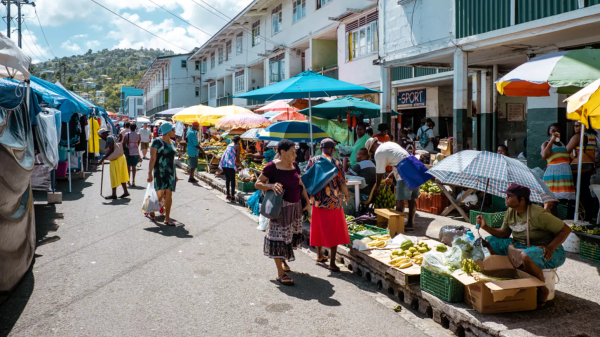
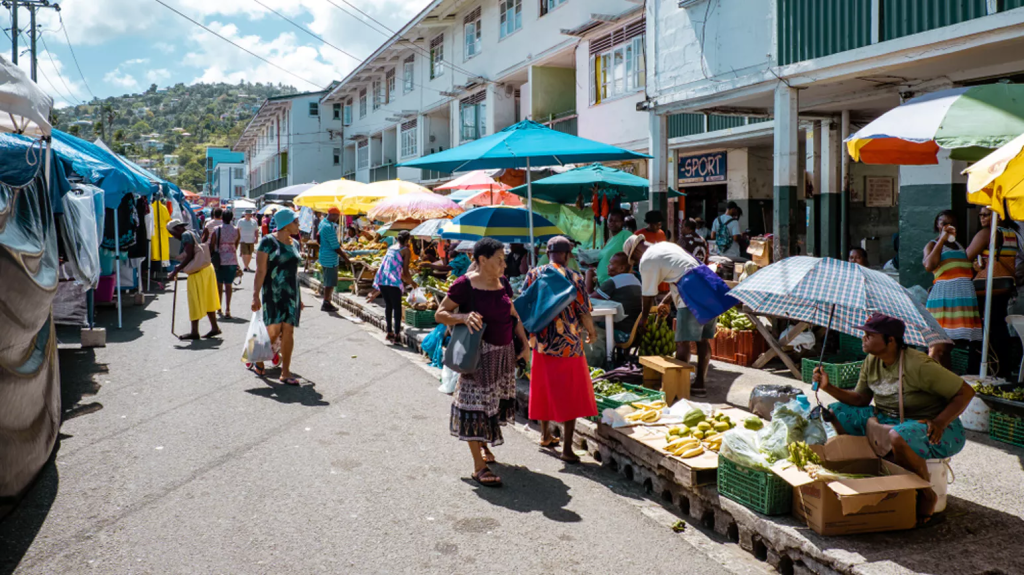
Saint Lucia’s law banning homosexuality has been declared unconstitutional in a historic ruling by the Eastern Caribbean Supreme Court.
“This decision is deeply personal. For many years, we’ve worked to see the rights, lives, and dignity of LGBTQ+ persons in Saint Lucia and the OECS protected,” said Kenita Placide, executive director of Eastern Caribbean Alliance for Diversity and Equality (ECADE), an LGBTQ+ organization in the Caribbean.
“Today’s ruling is not just a win in the courts, it also represents a step towards justice for the many lives lost to violence simply for being themselves. It signals that our Caribbean can and must be a place where all people are free and equal under the law.”
At issue were the Caribbean island nation’s gross indecency and buggery laws, sections 132 and 133 of the Criminal Code of Saint Lucia, which criminalize same-sex relations even in private. Under each of those laws, consensual male homosexuality could be punished with up to ten years’ imprisonment. Even attempting to “commit buggery” could be met with a sentence of five years.
According to ECADE, the court ruled that the sections violated the rights to privacy, life, liberty, security of the person, freedom of expression, protection from discrimination on the basis of sex, and protection of the law.
While the law wasn’t frequently enforced, the Human Dignity Trust said that the “mere existence of this provision is itself a violation of human rights and underpins further acts of discrimination.” Often, laws criminalizing homosexuality are used to justify discrimination in other areas, since anti-LGBTQ+ advocates can point to the illegality of homosexuality to justify discrimination instead of just their personal animus.
Saint Lucia has a population of just under 200,000 people, most of whom are Christian. The Eastern Caribbean Supreme Court has jurisdiction over Saint Lucia and five other member states: Dominica, Grenada, Saint Kitts and Nevis, Saint Vincent and the Grenadines, and Antigua and Barbuda.
“Human rights in the Eastern Caribbean continue to advance as the colonial legacies of these unconstitutional provisions continue to fall,” wrote Antigua and Barbuda Foreign Affairs Minister J’Moul Francis on social media. “However, more still needs to be done across the region to ensure that progress is real, practical, and effective for LGBTQ+ individuals.”
Over 100,000 people marched in London’s Trans+ Pride event on Saturday, making it the biggest trans Pride march in the world, according to The Guardian. The event’s theme, “Existence and Resistance,” was developed in response to the recent U.K. Supreme Court ruling that the legal definition of a woman in non-discrimination law is based on biological sex rather than gender identity.
“It was an emotional and powerful day,” the event’s co-founder Lewis G. Burton told the aforementioned publication. “At a time when the Supreme Court is making sweeping decisions about trans people without consulting a single trans person or organisation, and when a small, well-funded lobby of anti-trans campaigners continues to dominate headlines and waste public resources, our community came together to show what real strength, solidarity and care looks like.”
The march began at 1 p.m. local time on Saturday and proceeded for just under two miles, from near the BBC Broadcasting House to the Parliament Square Gardens. The event’s speakers included Heartstopper actress Yasmin Finney and activist Caroline Litman, whose trans daughter took her life in 2022 after waiting nearly three years for gender-affirming healthcare, the BBC reported.
London Trans+ Pride began in 2019 as an alternative to the city’s more commercial Pride march. This year’s event gained over 40,000 additional participants, compared to last year’s crowd of 60,000, the BBC noted.
“The message was clear: We will not be erased,” Burton said. “Our existence is natural, historic and enduring. You can try to take away our rights, but you will never remove us from society. We are a part of humanity – and the public will not stand by while harm is done to our community.”
The event occurred in the aftermath of a recent Supreme Court case in which For Women Scotland (FWS), an anti-trans organization, mounted a legal challenge over the definition of a woman under the country’s 2010 Equality Act. After the court ruled that the law’s definition of a woman is based on “biological sex,” the U.K.’s Equality and Human Rights Commission (EHRC) said trans women and men “should not be permitted to use” the public restroom facilities that align with their gender.
Alex Parmar-Yee, from Trans+ Solidarity Alliance — one of the groups that marched in the weekend event — said the EHRC’s guidance “has not provided any additional clarity, and actually is going to devastate the lives of trans people [who] will lose access to essential services and spaces.”
“The main concern really here is that it feels like there’s not been a consideration of trans members of the community, and that this guidance will pass behind closed doors, without the scrutiny, and without visibility, and without democracy,” Parmar-Yee added, saying that she and other trans organizations are pushing for the government to provide greater transparency around trans-related policies and guidances.
Speaking with Attitude magazine, activist Litman expressed concern over The Online Safety Act, a newly enacted U.K. law that requires websites with explicit adult material to conduct user age checks. Critics of the law worry it’ll be used to block age-appropriate LGBTQ+ resources for minors.
“It’s really scary,” Litman said. “[My late daughter] Alice got a lot of help and support online, whilst feeling very isolated in her own lived experience world that didn’t really have anything for her. Her online world really protected her – and so both these legislations are really concerning and need to be seriously looked at for reversal.”
When asked what she would tell her daughter now, Litman said, “Find your community. That’s what I’d say – find your community. Because they’ll save you, they’ll look after you, they’ll nurture you and support you and get you through this. To do this together. That’s what I’d say to her. And I love her. Love. I love, I love, love, love, I love.”
Nearly a decade after North Carolina passed its controversial “bathroom ban,” sparking nationwide backlash and corporate boycotts of the state, transgender bathroom restrictions have made a resurgence.
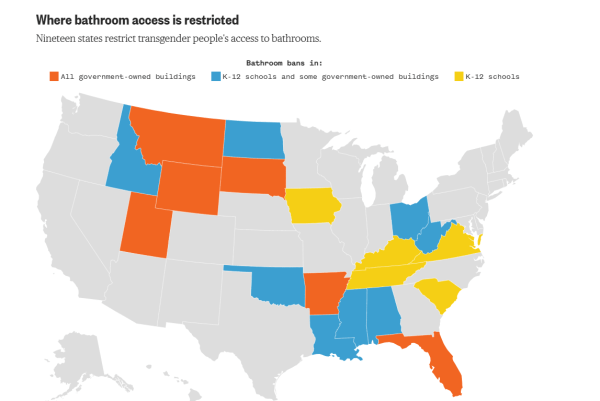
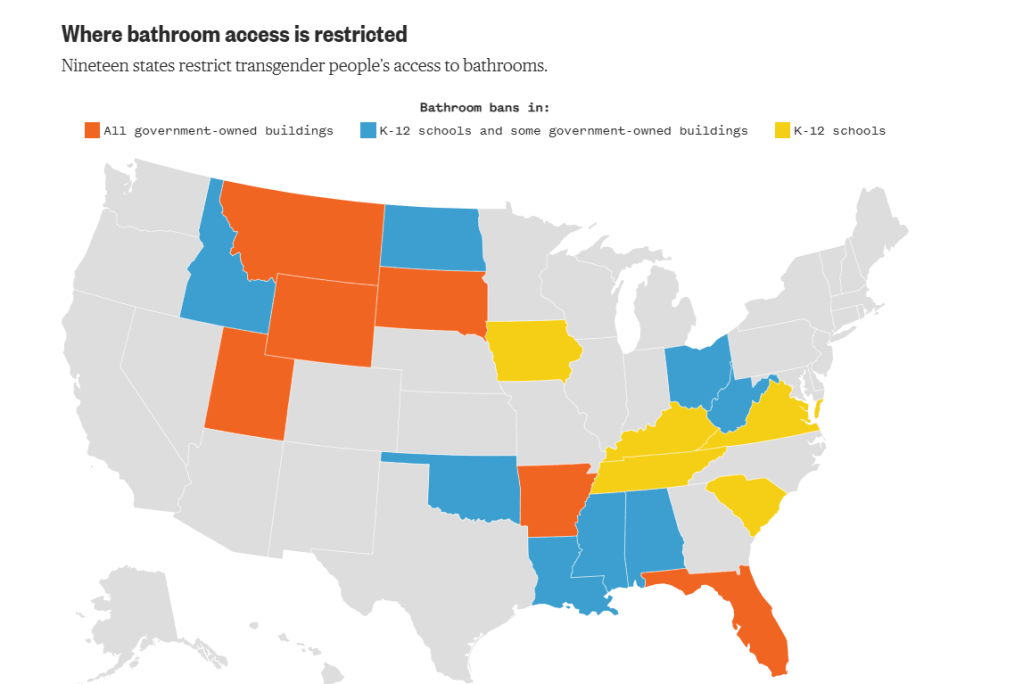
Nineteen states have laws that prohibit trans people from using the bathrooms that align with their gender identities in K-12 schools, and in many of those states the restrictions apply to other government-owned buildings as well. As a result, more than 1 in 4 trans people live in states with policies that restrict their bathroom use, according to the Movement Advancement Project, an LGBTQ think tank.
These measures are similar to North Carolina’s HB 2, a law enacted in 2016 that was widely referred to as the “bathroom bill.” The law sparked nationwide protests and corporate boycotts, most notably from the NCAA, which moved seven championship sporting events out of the state that year. The General Assembly repealed HB 2 with a compromise bill in 2017 that placed a statewide moratorium on municipalities passing nondiscrimination ordinances until 2020, and the state hasn’t passed a similar law since.
Though North Carolina’s law generated widespread protests, the bathroom policies passed over the last few years have received little national or corporate response, despite many of them being far broader than HB 2. That could be due, in part, to the dozens of other bills states have considered and passed targeting trans people.
Logan Casey, director of policy research at the Movement Advancement Project, said part of why there was more backlash to HB 2 was because it was among the first “bathroom bills.” In 2016, the year the bill became law, state lawmakers had introduced about 250 bills targeting LGBTQ rights, and many of those were bathroom restrictions and “religious freedom” bills, which are intended to protect people and businesses who say abiding by state and local nondiscrimination laws would violate their religious beliefs.
This year, Casey said, he’s tracking more than 700 anti-LGBTQ bills, up from nearly 600 last year, and they affect everything from trans people’s access to bathrooms, sports and health care to what LGBTQ materials students can be exposed to in schools.
“Just the sheer volume of attacks made it a lot harder for even just the general public to really track everything that’s been happening,” Casey said. “That’s been a big part of what has allowed so much to happen at once, is that they’re sort of flooding the zone with all these anti-LGBTQ attacks.”
‘I feel singled out’
Of the 19 states that subject trans people to bathroom restrictions, six have bans that apply to all government-owned spaces, including K-12 schools and colleges; eight states restrict bathroom use in K-12 schools and at least some government-owned buildings; and five states restrict bathroom use in K-12 schools only, according to MAP.
Most of those states also have a law or policy that legally defines “sex” in a way that could impact trans people’s access to bathrooms. Four additional states — Indiana, Nebraska, Kansas and Texas — define sex in a way that could affect trans people’s access to restrooms but don’t have official “bathroom bans” on the books.
Proponents of measures that restrict access to bathrooms and other sex-segregated facilities argue that allowing trans women to use women’s bathrooms could threaten women’s safety and privacy. However, a 2018 study from the Williams Institute at UCLA School of Law found that allowing trans people to use facilities that align with their gender identities does not increase safety risks.
Some states have expanded the scope of their bathroom restrictions in recent years. Arkansas, for example, passed a law in 2023 requiring trans people to use the bathroom of their birth sex in K-12 public schools and public charter schools. Earlier this year, the state passed another law expanding that measure to apply to shelters, correctional facilities and all public buildings, which include public colleges and universities.
A trans woman working at a university in Arkansas, who asked to be anonymous because she fears how speaking to the press could affect her current and future employment in the state, said the bathroom restriction, for her, “means segregation.” The day after the expanded law was enacted, the woman said her boss told her she would need to walk across the building to use a single-occupancy bathroom. If that bathroom is occupied, which she said it often is, she has to walk across campus to the only other single-occupancy bathroom.
“I feel singled out for something I don’t have any control over,” she said. “I’m not being treated equally to any of my cisgender colleagues. It makes me feel dehumanized.”
She added that some of her colleagues’ reactions have been upsetting, because “they’ve reacted as if I should be happy, like I have a private bathroom, and I don’t understand how they could come to that conclusion.”
As a direct result of the law, she said, she has accepted another job outside of the public university system that she’ll start next month. In the meantime, she said, more of her colleagues have started to misgender her.
“At this point, I really wish I just hadn’t come out at work,” she said.
Bathroom restrictions, Casey said, can contribute to more hostile workplaces and schools for trans people because they can be interpreted as the government “green-lighting” discrimination.
Many of the bills, like Arkansas’, also use vague language, which Casey said is intentional, because it can “provide cover” for the law to be applied more broadly.
“Because of the confusion and the fear around these bills, as well as the hostile climate that they contribute to, there can often be misperceptions that they also apply to private spaces,” Casey said. “That makes it much harder for trans people to actually know in those states what their rights are and aren’t, and can lead to far more reaching bans than the letter of the law actually calls for.”
Casey noted that there have been an increasing number of cases in which even cisgender women, who are not trans, have been questioned in restrooms. For example, in May, two women filed a discrimination complaint against a Boston hotel where they say a security guard followed them into the bathroom and accused one of them of being a man. Neither Massachusetts nor Boston has measures restricting trans people’s bathroom use.
A different environment now from in 2016
North Carolina’s General Assembly passed HB 2 in response to a 2016 Charlotte ordinance that expanded the city’s existing nondiscrimination protections to include LGBTQ people. The expansion specifically protected trans people’s right to use the bathrooms that aligned with their gender identities.
When HB 2 passed that same year, the backlash was swift and far-reaching. As a direct result of the law, PayPal announced that it would no longer open a new operations center in Charlotte, which would have included investing $3.6 million in the state. The NCAA announced that it would not hold championship events in the state, and prominent musicians including Bruce Springsteen, Ringo Starr, Demi Lovato, Nick Jonas and Maroon 5 all canceled performances, citing the law.
Michael Walden, a retired economics professor at North Carolina State University who gave interviews about the boycotts when they happened, said North Carolina’s status as one of the first states to pass such a law triggered more protest and attention on the issue, and, as a result, businesses had to quickly figure out how to respond.
“When a lot of businesses saw there was a huge backlash, they didn’t want to be associated with that at all, which is understandable,” Walden said.
Recently, however, businesses have likely “assessed that the environment is different,” he said.
“They do observe some protests. They do observe some rallies and marches, etc., but nothing like we saw 10 years ago,” Walden said.
Trans rights have also become increasingly politicized and painted as controversial. Walden noted that in the last few years North Carolina has joined the more than two dozen states that have enacted laws prohibiting certain transition-related medical care for minors and banning trans students from playing on school sports teams that align with their gender identities. Neither of those laws generated national backlash or a response from the business community in the way HB 2 did.
“My analysis would be that the average business doesn’t want to take a position on any of this, either pro or con, unless they think they really have to, to satisfy their customer base or investor base,” Walden said.
The landscape for LGBTQ rights was also much different in 2016, the year after same-sex marriage became legal nationwide, Casey said.
“Opponents of LGBTQ equality were really sort of casting around and looking for some new way to continue to use LGBTQ issues as a wedge issue for a broader radical agenda, and bathroom bans and religious exemptions were really the two things they were focused on at that time, and both of those were relatively unsuccessful,” Casey said.
He pointed both to HB 2 and Indiana’s Religious Freedom Restoration Act, which passed in 2015 and led to criticism from tech giants like Apple and Yelp. As a result of the potential business effects Indiana’s law could have on the state, lawmakers quickly amended the measure to explicitly prohibit it from being used to justify discrimination.
More bathroom bans are likely on the horizon. Fifteen states have considered them so far this year, including three that successfully expanded their existing bans, according to the American Civil Liberties Union. A judge blocked Montana’s law in May while a lawsuit against it proceeds.
A new, broader version of North Carolina’s defunct ban could also be resurrected. Earlier this month, Gov. Josh Stein, a Democrat, vetoed a far-reaching bill that would redefine sex in the state to only recognize birth sex and would prohibit trans North Carolinians from changing the sex on their birth certificates and driver’s licenses. The law explicitly requires sleeping quarters on public school trips to be separated based on birth sex and could affect what bathrooms trans people can use in schools and public buildings. Though Stein vetoed the bill, Republicans in the state’s General Assembly could override his vetoes and plan to try to do so when they reconvene on Tuesday 29.
Thinking about retiring in the Lone Star State? A new study from Bankrate says you probably shouldn’t after listing Texas as the second-to-last worst state for retirement in 2025.
Bankrate, a personal finance website, released on Monday, July 21, its findings of the best and worst states to retire in 2025. To determine ranking, Bankrate analyzed multiple data points and assigned a weight to each category, including: affordability (28%), weather (18%), neighborhood safety (17%), health care (16%), local taxes (9%), arts, entertainment and recreation (7%), people of a similar age (3%) and miscellaneous (2%).
In the ranking, Texas was ranked at No. 49, while Louisiana placed in last place. Texas did well in the taxes category, ranking seventh. However, the Lone Star State ranked dead last in health care and 49th in people of similar age, according to the study. Safety was also notably weak, as the state ranked 38th.
On the other side, New Hampshire was named the best state for retirees, ranking well in neighborhood safety (1st), health care (5th), taxes (6th) and people of similar age (7th), according to the study. Four of the top 10 best states for retirees are in New England (Maine, New Hampshire, Rhode Island and Vermont).
Bankrate used metrics from the U.S. Census, the Council for Community and Economic Research, the Environmental Protection Agency, the U.S. Department of Health and Human Services and more. The researchers also surveyed 2,260 U.S. adults between May 14-16, 2025.
The US Supreme Court’s decision to uphold Tennessee’s ban on gender identity care for transgender minors earlier this summer has fueled ongoing polarization around LGBTQ issues and controversial policies across the nation. The high court has also agreed to take on more cases dealing with trans rights in its next session that begins in October.
Twenty-seven states have passed lawslimiting access to gender identity health care for transgender children and teenagers, according to KFF, a nonpartisan health policy think tank. An estimated 40% of trans youth ages 13 to 17 live in these states.
There have already been more anti-LGBTQ bills introduced in state legislatures so far this year than in any full year since at least 2020, a CNN analysis of American Civil Liberties Union data found. These bills span various aspects of everyday life, including bathroom access, school sports and identification documents.
CNN is tracking where these laws are being passed and where these bills are being introduced. This story will be updated.
Gender identity care includes medically necessary, evidence-based care that uses a multidisciplinary approach to help a person transition from their assigned sex— the one the person was designated at birth — to their affirmed gender, the gender by which one wants to be known.
Most of the states limiting gender identity care for trans minors adopted their bans in 2023, a record-breaking year for such laws. So far this year, one state — Kansas — has passed a ban, prohibiting the use of state funds to provide or subsidize health care for transgender youth.
Not all laws are currently being enforced, however. The ban in Arkansas has been permanently blocked by a federal court, though the state said it would appeal the ruling. Montana’s ban is also permanently blocked, according to KFF. Though Arizona has a 2022 law on the books banning surgical care for transgender minors, Democratic Gov. Katie Hobbs signed an executive order in 2023 ensuring access to gender identity health care.
Nearly 600 anti-LGBTQ bills have been introduced into state legislatures as of July 11, which is already more than any other year on record, according to the ACLU.
Education and health care continue to be key targets. There were more bills restricting student and educator rights — enforcing school sports bans and targeting students’ access to facilities consistent with their gender identities, for example — than any other category of bills, according to a CNN analysis of ACLU data.
Legislators in Texas have introduced 88 anti-LGBTQ bills so far this year, more than double the number of bills being considered in any other state. Four of those — including one that limits changes to gender markers on state medical records — have been passed into law.
Lawmakers in every state, except for Vermont, have filed at least one anti-LGBTQ bill in 2025, according to a CNN analysis. Twenty-two states have signed those bills into law.
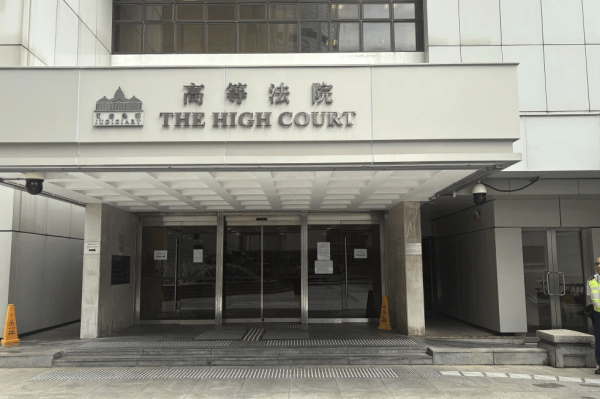
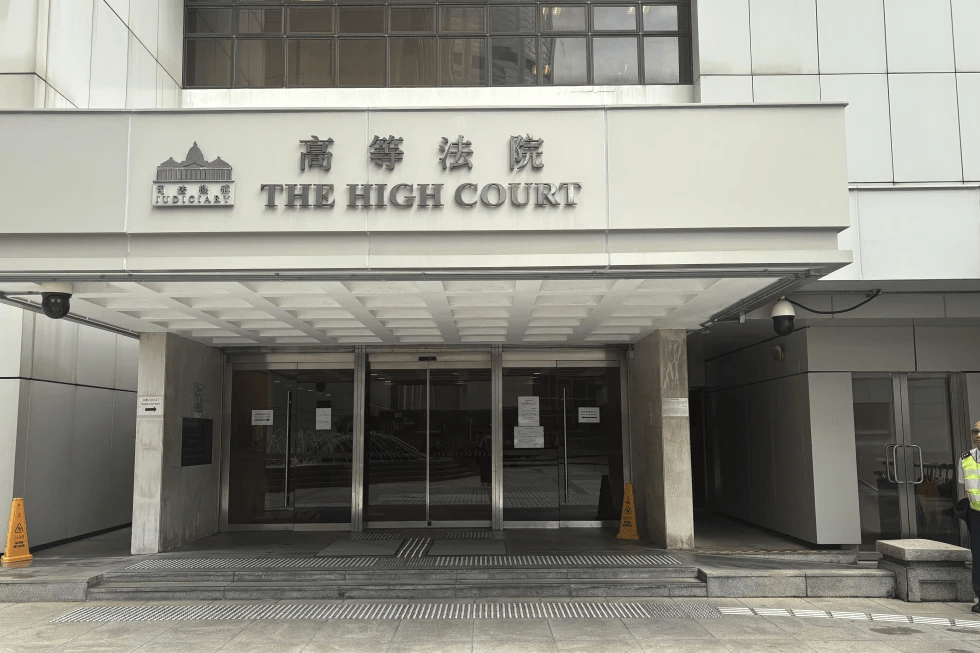
A Hong Kong judge on Wednesday ruled to strike down regulations criminalizing the use of bathrooms designated for the opposite sex, ruling in favor of transgender individuals’ rights to access public toilets matching their identity.
Judge Russell Coleman approved the judicial review of K, who was born a woman and identifies as a man, saying the regulations contravene an article of the city’s mini-constitution that stipulates all residents should be equal before the law.
But he suspended the declaration to strike down the regulations for a year to allow the government “to consider whether it wishes to implement a way to deal with the contravention.”
He said in the judgment that the regulations and “drawing the line of a person’s biological sex at birth create a disproportionate and unnecessary intrusion into the privacy and equality rights.”
The ruling marks another step forward in recognizing the rights of LGBTQ+ people in the Chinese financial hub. In recent years, the government has revised policies following activists’ wins in legal challenges.
Currently, only children under 5 years old accompanied by an opposite sex adult can enter a public washroom designated for the opposite sex. Those violating the rule face a fine of up to 2,000 Hong Kong dollars (about $255).
K launched a legal challenge in 2022, seeking to expand the exemption to pre-operative transgender people who have been diagnosed with gender dysphoria and have a medical need to undergo the process of living in their identified gender. He argued that his constitutional rights were infringed by the prohibition against him using public toilets allocated for men, the court heard.
The Environment and Ecology Bureau said in an emailed statement that the government will carefully study the judgment and consult the Department of Justice on the appropriate follow-up action.
Quarks, a group serving transgender youth in Hong Kong, welcomed the ruling, urging officials to take immediate action to rectify what it called long-standing discrimination in the system.
“The ruling is not just an affirmation of transgender rights legally but also a big step forward for Hong Kong’s overall human rights development,” it said on Instagram.
In 2023, Hong Kong’s top court ruled that full sex reassignment surgery should not be a prerequisite for transgender people to have their gender changed on their official identity cards.
The next year, the government revised its policy to allow people who have not completed full gender-affirmation surgery to change their genders on ID cards as long as they fulfill certain conditions. The conditions include the removal of breasts for transgender men, the removal of the penis and testes for transgender women, and having undergone continuous hormonal treatment for at least two years before applying.
Applicants also have to continue their hormonal treatment and submit blood test reports for random checks upon the government’s request.
In April, activist Henry Tse, who won the legal battle in 2023 and received his new ID card reflecting his gender change last year, lodged a fresh legal challenge over the new requirements.








 fleeredstates.blog
You must be logged in to post a comment.