Virginia officials have agreed not to fully enforce a 2020 law banning conversion therapy for minors as part of an agreement with a faith-based conservative group that sued over the law, authorities said earlier this week.
The Virginia Department of Health Professions, represented by the state’s office of the attorney general, entered into a consent decree with the Founding Freedoms Law Center last month, saying officials will not discipline counselors who engage in talk conversion therapy.
Shaun Kenney, a spokesperson with the Virginia Attorney General’s Office, said on Tuesday his office was satisfied with the consensus.
“This court action fixes a constitutional problem with the existing law by allowing talk therapy between willing counselors and willing patients, including those struggling with gender dysphoria,” Kenney said in a statement. “Talk therapy with voluntary participants was punishable before this judgment was entered. This result—which merely permits talk therapy within the standards of care while preserving the remainder of the law—respects the religious liberty and free speech rights of both counselors and patients.”
A Henrico Circuit Court judge signed the consent decree in June. Two professional counselors represented by the law center sued the state’s health department and counseling board last September, arguing that the law violated their right to religious freedom.
The term “conversion therapy” refers to a scientifically discredited practice of using therapy in an attempt to convert LGBTQ people to heterosexuality.
The practice has been banned in 23 states and the District of Columbia, according to the Movement Advancement Project, an LGBTQ rights think tank.
The practice has been a matter of dispute in several states. A ruling is expected any day from the Wisconsin Supreme Court over whether a legislative committee’s rejection of a state agency rule that would ban the practice of “conversion therapy” for LGBTQ people was unconstitutional.
The U.S. Supreme Court decided in March to take up a case from Colorado to determine whether state and local governments can enforce laws banning conversion therapy for LGBTQ children.
According to the law center, the Virginia consent decree applies not only to the two counselors but to all counselors in Virginia.
“We are grateful to the Defendants in this case and to the Attorney General, who did the right thing by siding with the Constitution,” the law center said in a statement.
Democratic Senate Majority Leader Scott Surovell, who backed the 2020 bill, blasted the decree.
“This was a statute that was enacted to save lives,” he told reporters during a Zoom session on Tuesday. “All the research, all the professional psychiatric organizations have condemned conversion therapy. They say it doesn’t work, and they say it’s counterproductive.”
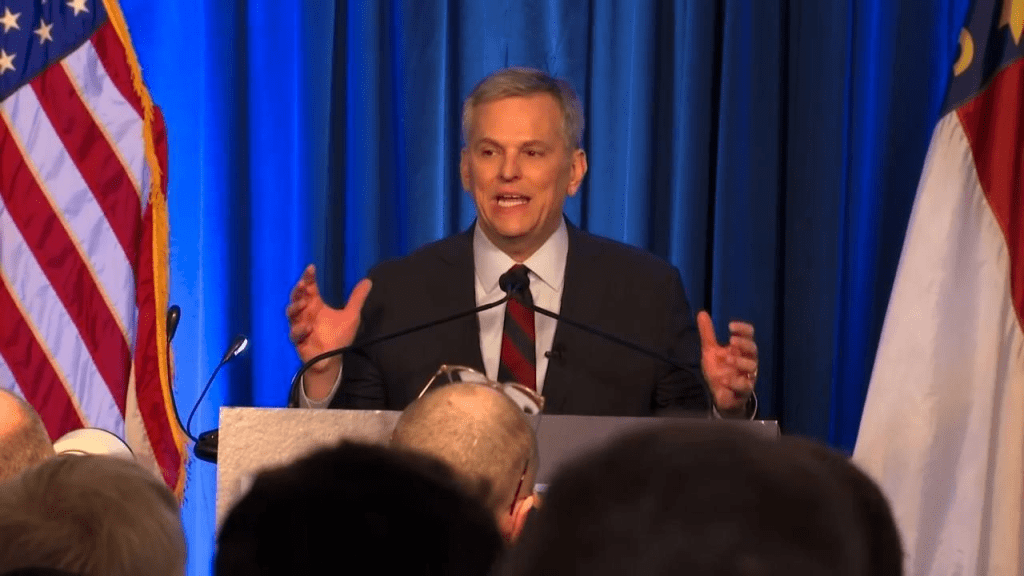
Criticizing the state legislature for failing to pass a new state budget because lawmakers are too focused on culture war political fights, Gov. Josh Stein on Thursday vetoed four bills targeting diversity and gender issues.
Senate Bill 558, Senate Bill 227, House Bill 171 all deal with efforts to crack down on pro-diversity efforts in public schools and state government agencies. Supporters have cited Republican President Donald Trump’s efforts to attack diversity, equity and inclusion programs in federal government and say North Carolina similarly needs to eliminate DEI.
The fourth bill, House Bill 805, started as an effort to help people take down private photos or videos of themselves from the internet and passed the state House unanimously. But the state Senate then turned the bill into a grab-bag of social conservative issues about transgender people and other issues related to gender and LGBTQ rights, and the House also agreed to pass that new version of the bill which Stein has now vetoed in addition to the DEI bills.
Meanwhile, when the state’s new fiscal year began this week, state lawmakers were on vacation without having passed a new budget. They’ve made no progress on negotiations for a spending plan and, just before the legislature adjourned, House Speaker Destin Hall told reporters the GOP lawmakers had such strong disagreements on how to fund state government that it’s possible no budget deal gets passed at all until sometime next year.
Stein said that his vetoes highlight his belief that the Republican-led legislature has its priorities all wrong.
“At a time when teachers, law enforcement, and state employees need pay raises and people need shorter lines at the DMV, the legislature failed to pass a budget and, instead, wants to distract us by stoking culture wars that further divide us,” Stein wrote. “These mean-spirited bills would marginalize vulnerable people and also undermine the quality of public services and public education. Therefore, I am vetoing them. I stand ready to work with the legislature when it gets serious about protecting people and addressing North Carolinians’ pressing concerns.”
State House Majority Leader Rep. Brendan Jones, R-Columbus, has been a key proponent of the anti-DEI measures and criticized Stein’s veto Thursday.
“I find it odd that Gov. Stein is against merit based hiring in state government,” Jones said. “I look forward to overriding this veto.”
The vetoes come a day after Stein also vetoed three other bills including a Duke Energy-backed bill to let the utility giant avoid climate goals and change the way it charges North Carolinians.
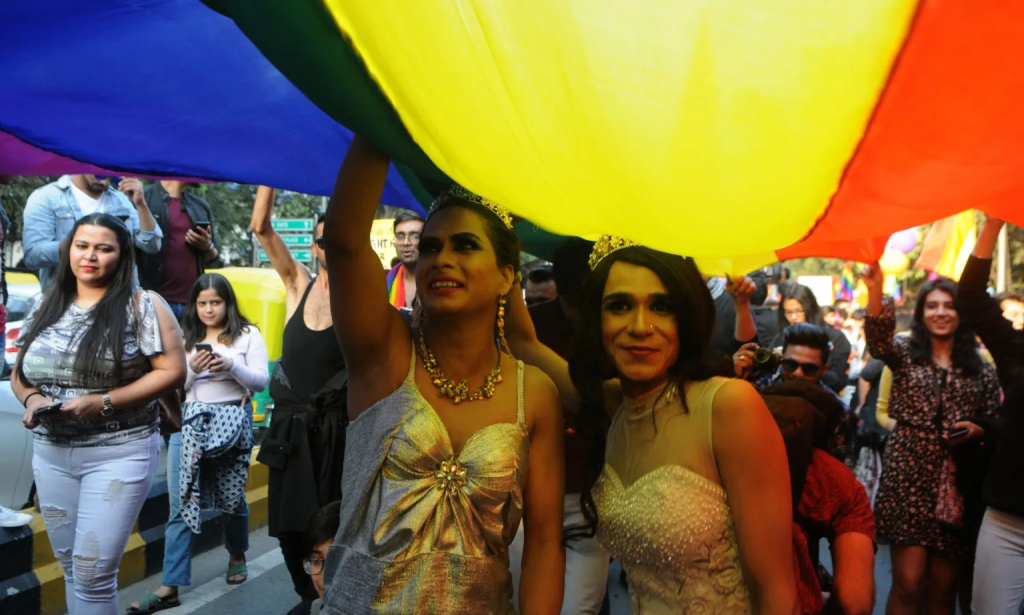
In a landmark ruling for the country, after rejecting claims that womanhood was preserved only for those who can bear children, the High Court of Andhra Pradesh ruled that trans women were “legally entitled” to recognition as women.
Presiding over the case, justice Venkata Jyothirmai Pratapa decided that tying the definition of women to pregnancy was “legally unsustainable” and contradicted India’s constitution, which emphasises equality before the law.
Quoting a Supreme Court decision from 2014, which legally recognised the rights of “third gender” individuals, Pratapa said that prohibiting trans women’s right to identify as women “amounted to discrimination”.
The case was brought to the high court in 2022 after transgender woman Pokala Shabana looked to use a section of the Indian penal code to seek protection from her in-laws, whom, she said, had been abusive towards her.
Her husband’s parents petitioned the court to deny her use of Section 498A, which protects women from cruelty by a husband or relatives, arguing that it only applied to cisgender women. They claimed that trans women don’t meet the legal definition of women under Indian law because they cannot get pregnant and said Shabana’s allegations of harassment lacked evidence.
However, the judge said that articles 14, 15 and 21 of the constitution, which guarantee a variety of discrimination protections, including the right to life and personal liberty, meant trans women’s rights to be recognised as women superseded the law.
“A trans woman, born male and later transitioning to female, is legally entitled to recognition as a woman,” he wrote in his ruling. “Denying such protection by questioning their womanhood amounts to discrimination.”
Trans activist and artist Kalki Subramaniam told the Washington Blade that she was relieved and delighted to see the court “upholding our basic human right to be identified as what we want.” She went on to say: “For [the] transgender community, especially trans women, this verdict means a lot.”
The Indian government has been under mounting pressure to modernise its laws and policies on LGBTQ+ rights. Same-sex marriage is still illegal, despite growing support for its legalisation.
Prime minister Narendra Modi’s government have previously labelled same-sex marriage an “elitist” viewpoint that “seriously affects the interests of every citizen”.
An affidavit establishing the government’s views on same-sex unions, in 2023, proclaimed that marriage was valid only between “biological males and females [and that] this definition [was] socially, culturally and legally ingrained into the very idea and concept of marriage and ought not to be disturbed or diluted by judicial interpretation”.
Pride Month is not quite over yet! Just in time for some more LGBTQ friendliness is this list from Big 7 Enjoy Travel. They rank the top 30 LGBTQ friendly cities on the planet.
For a city to rank highly as LGBTQ+ friendly, first and foremost, it needs to protect LGBTQ+ people with laws and legislation. Then, it needs a vibrant gay nightlife and dating scene, whether within a gay village or across the city. Either way, there needs to be a safe community for LGBTQ+ people, as well as open-minded citizens and low levels of hate crime.
Ranking criteria:
Gay Index Rating – measures how safe a country is for LGBT people, considering the legal situation and living conditions
Equality Index Rating – measures the status of LGBT rights, laws, and freedoms as well as public attitudes towards LGBT people
The final scores show the Top 30 LGBTQ+ Friendly Cities in the World! Here’s your ultimate gay-friendly travel list…
30. Vienna, Austria
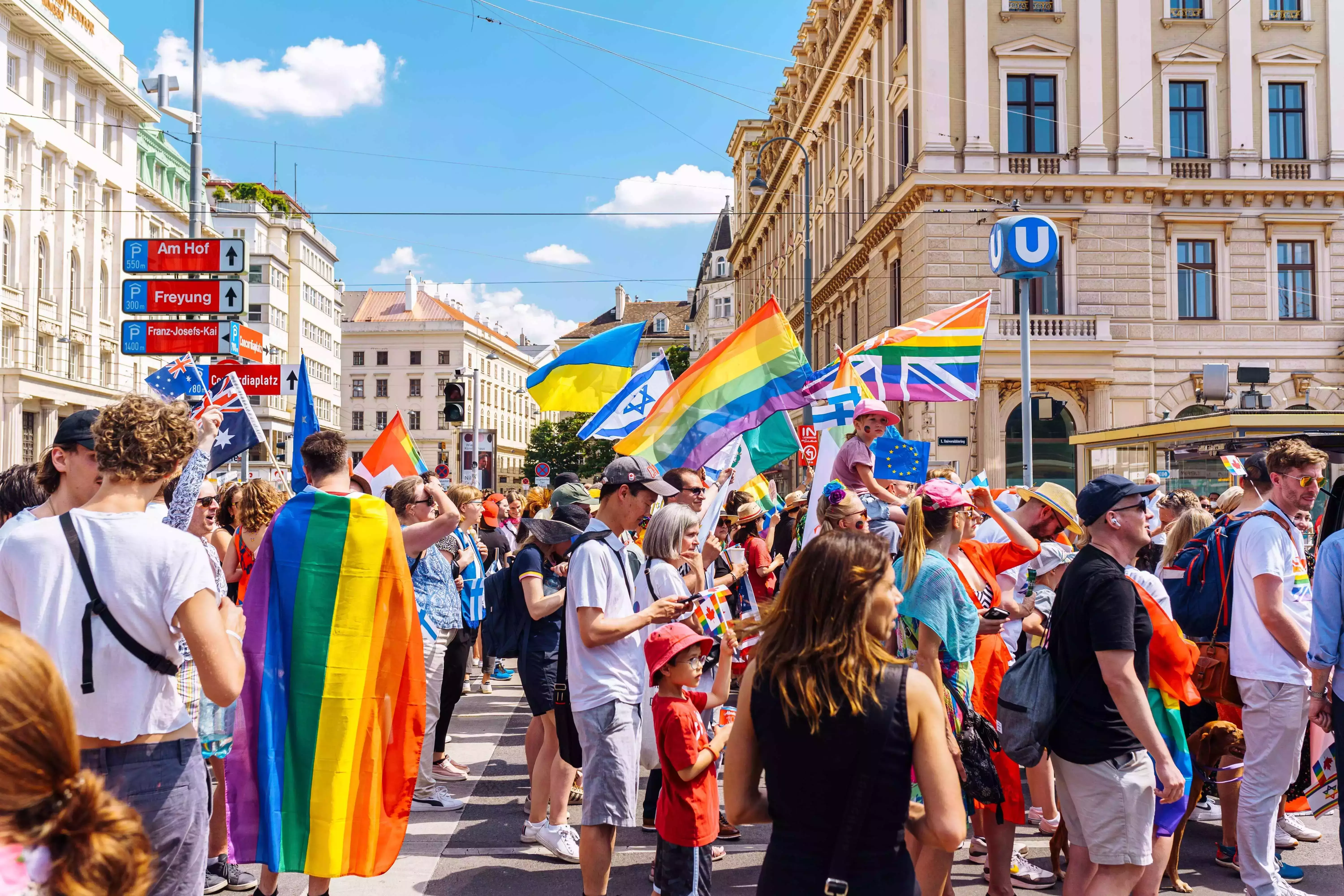
Vienna is widely known for its gender, disability, LGBTQ and racial inclusivity and equality, with many parades, pride events and specialist causes. While Vienna doesn’t have a specific gay village or district, its Naschmarkt area is full of gay bars and clubs, making it a hotspot for LGBTQ+ members.
Vienna has also hosted the EuroPride and hosts an annual citywide Pride parade in June. Vienna is also an LGBTI Core Group member and has a reasonably high Gay Index Rating, making it a safe and appealing place for LGBTQ+ members. It’s safe to say that Vienna is a welcoming and inclusive city for not just LGBTQ+ people, but for everyone, no matter your sexuality, gender, religion or ethnic group.
29. Puerto Vallarta, Mexico
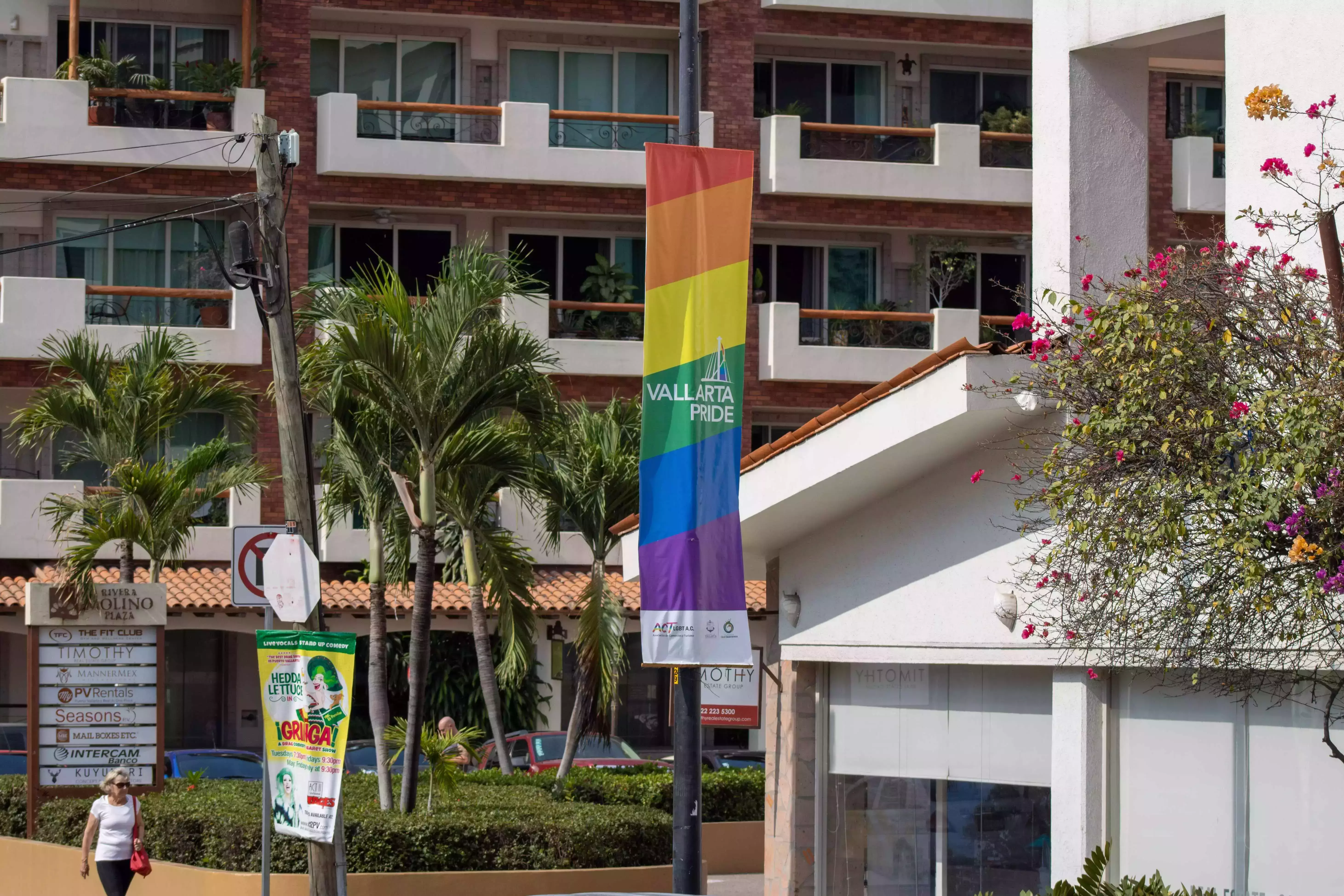
You may not have heard of this city against its larger and more tourist-centred neighbours of Mexico City and Cancun, but Puerto Vallarta deserves to be celebrated for its strong LGBTQ+ representation and inclusivity. According to our rankings, Puerto Vallarta scored highly in terms of Gay Index Rating, and attendance to the city’s annual Pride event is significant.
Puerto Vallarta has been cited as the ‘gay capital of Mexico’, thanks to its bustling Zona Romantica area, which is heavily centred around LGBTQ+, with vibrant gay bars, inclusive hotels and lively clubs. While you’re likely to find LGBTQ+ friendly areas across Mexico, Puerto Vallarta is one of the best places to celebrate being a member of the community.
28. Glasgow, UK
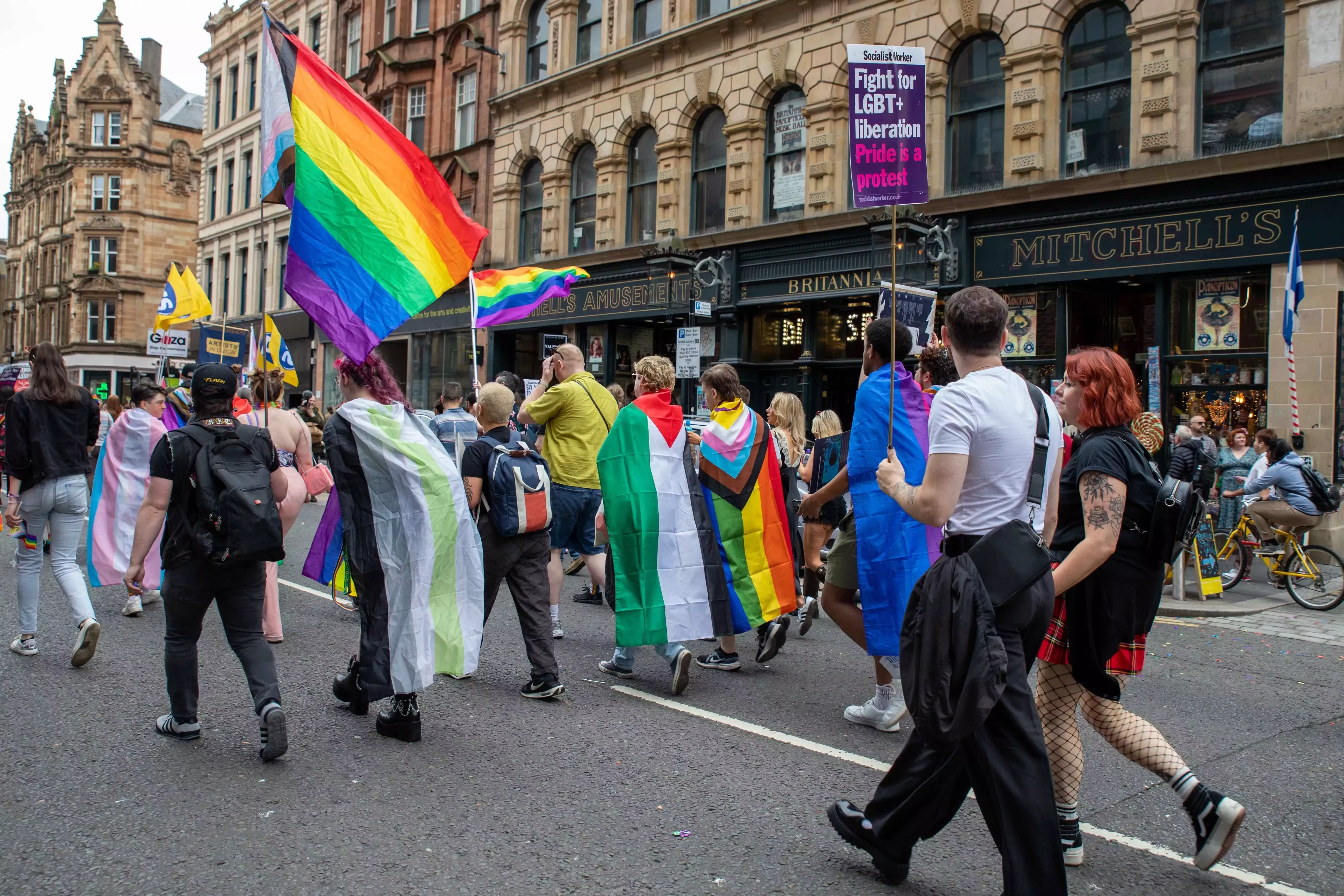
Glasgow, Scotland’s largest city, is a hub for inclusivity, with its lively Merchant City district being the LGTBQ+ capital. You can expect to find a variety of LGBTQ+ friendly bars and clubs, as well as a welcoming and open-minded atmosphere. Glasgow’s annual pride event amasses thousands of attendees each year, seeing proud members of the community come together to march and parade, surrounded by the signature rainbow flags.
Glasgow’s quality of life and general acceptance for the LGBTQ+ community is high, giving an indication of how strong its LGBTQ+ community and representation is. The city is also an LGBTI Core Group Member.
27. Melbourne, Australia
Melbourne is generally an accepting city for most types of groups within society, which gives an indication as to its welcoming and inclusive atmosphere. It scores highly on the Gay Index Rating, and is a member of the LGBTI Core Group, as well as scoring highly on the Equaldex Score. But, data aside, there is a thriving and welcoming community right at its core that appeals to all groups in society, whether members of the LGBTQ+ community or not.
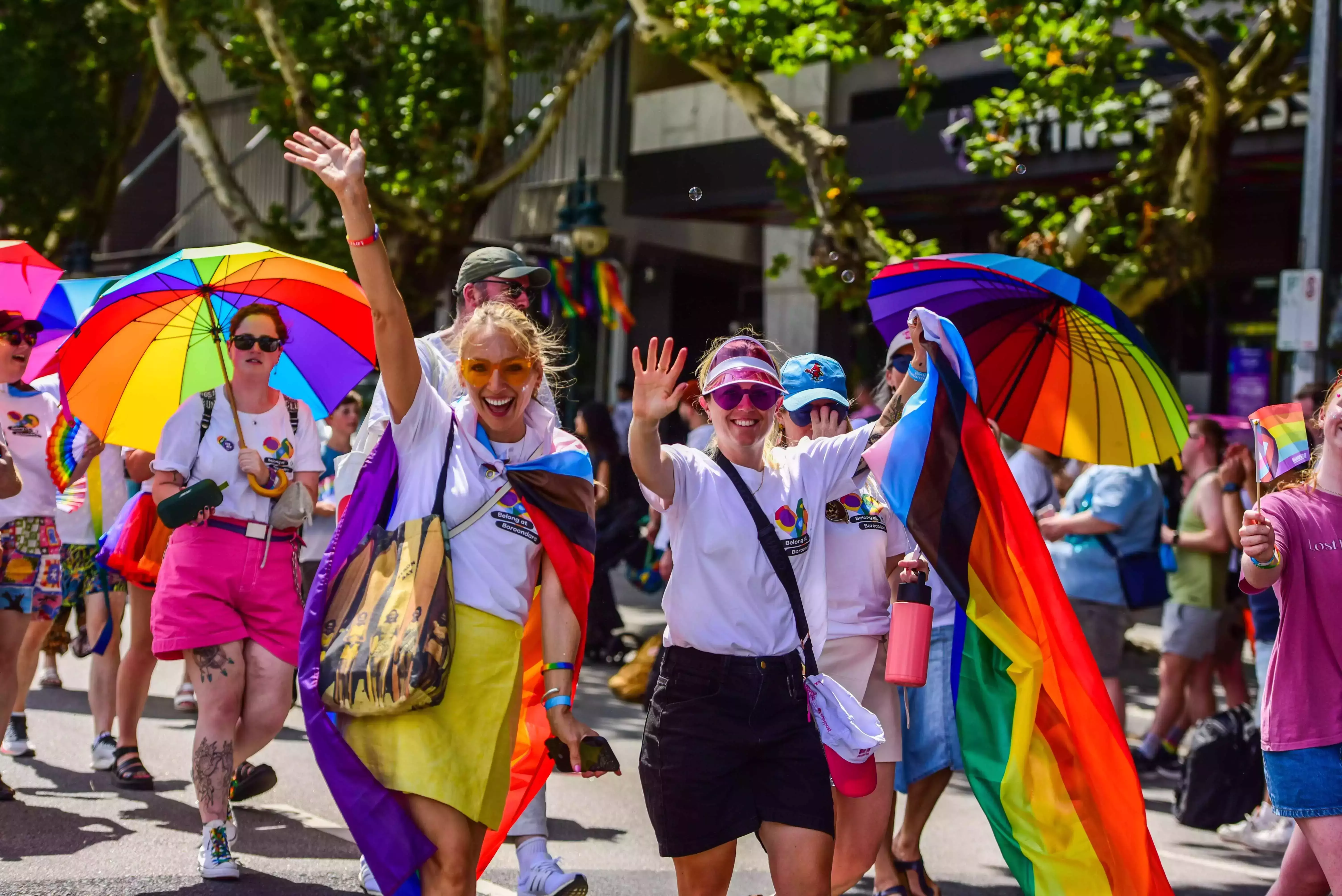
Its annual Pride march has also surpassed 60,000 attendees in recent years. Melbourne’s Fitzroy area is considered to be the ‘gay village’, with a number of LGBTQ+ friendly bars and clubs and a buzzing atmosphere both before and after dark, but generally no matter where you go in Melbourne you’ll be met with a warm and friendly welcome.
26. Taipei, Taiwan
You may not commonly associate Taiwan with LGBTQ+ communities, but its capital Taipei has one of the largest LGBTQ+ presences, with a vibrant LGBTQ+ presence in its Ximen Red House area of the city, which features a lively and bustling scene with bars and clubs. Taipei is known for its inclusivity, and is perhaps a hidden gem amongst the most LGBTQ+ friendly cities, but definitely worth a visit. Taipei also hosts its annual Pride march, which is considered to be the largest of its kind in East Asia, seeing an attendance of more than 120,000 in recent years.
25. Barcelona, Spain
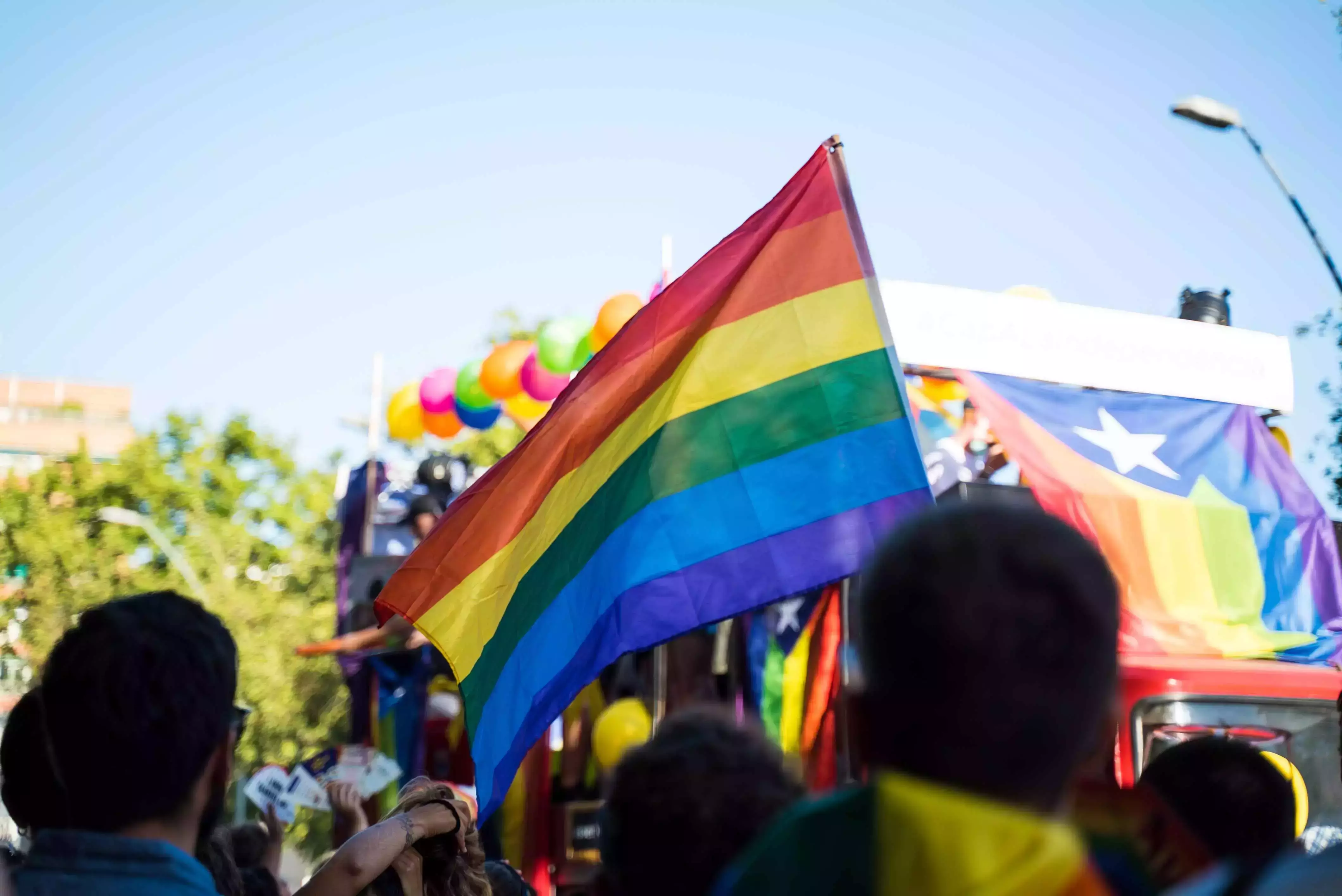
Barcelona, along with Madrid, are widely known as the LGBTQ+ capitals of Spain, with a high Gay Index Rating and a large Pride attendance across each city. Barcelona and the rest of Spain are highly regarded for their acceptance of the LGBTQ+ community, as Spain was one of the first countries in the world to legalise gay marriage in 2005. Barcelona has a thriving LGBTQ+ scene, with an abundance of gay bars, clubs and even beaches that cater to the LGBTQ + community – no matter where you go in Barcelona, you’ll be welcomed with open arms regardless of your sexual orientation or gender.
24. Oslo, Norway
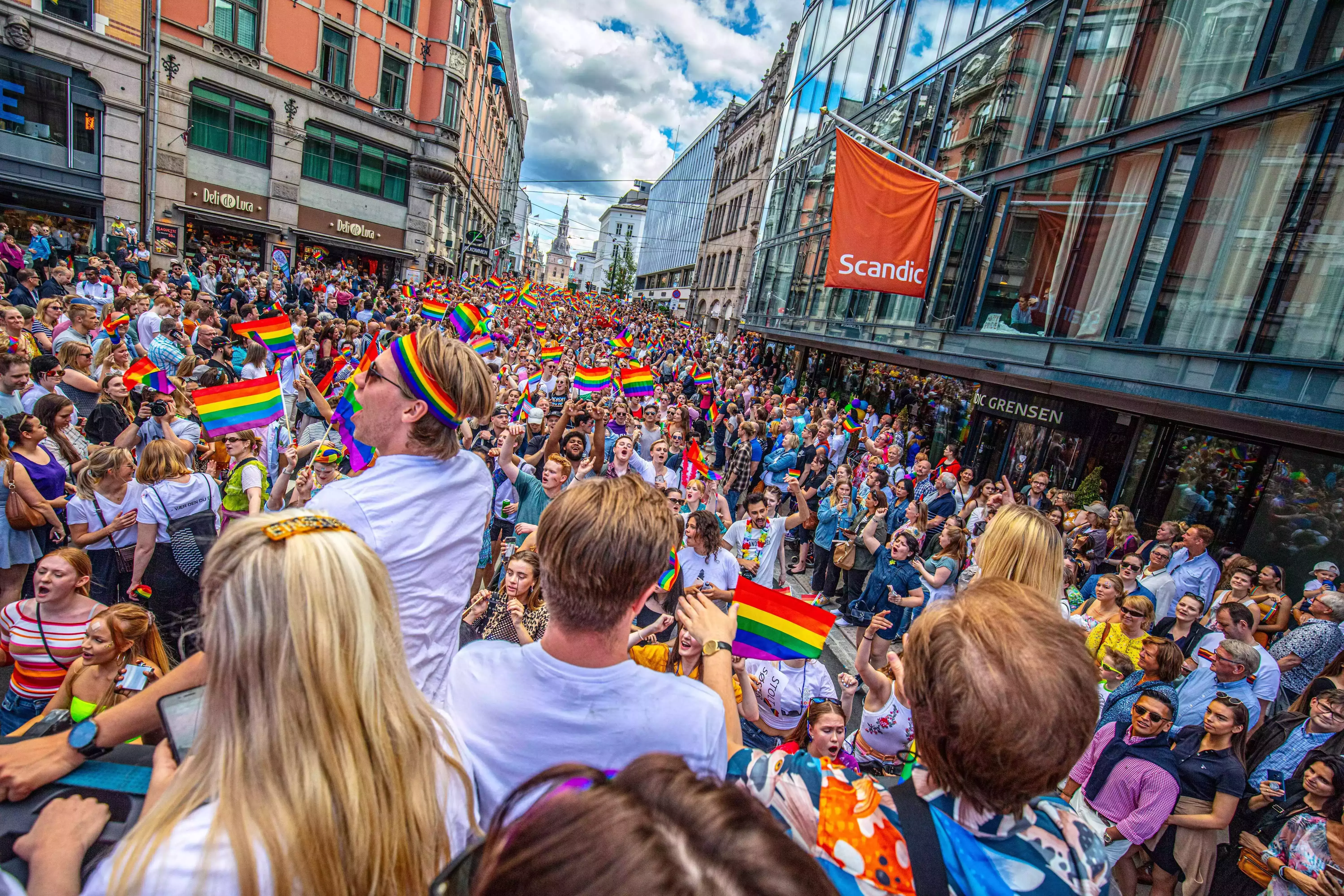
Norway is commonly associated with being a liberal, inclusive and welcoming country, and its capital Oslo comes out on top in terms of LGBTQ+ representation and inclusivity. The city has high Equaldex Score and Gay Index Rating, so is a must-visit for members of the LGBTQ+ community. Did you know that Oslo also hosts an annual Pride event that has amassed around 90,000 attendees in recent years? Oslo’s main LGBTQ+ friendly area is Grünerløkka, where you’ll find a large collection of LGBTQ+ friendly bars, restaurants and clubs, although the city as a whole is welcoming and accepting no matter where you go.
23. Helsinki, Finland
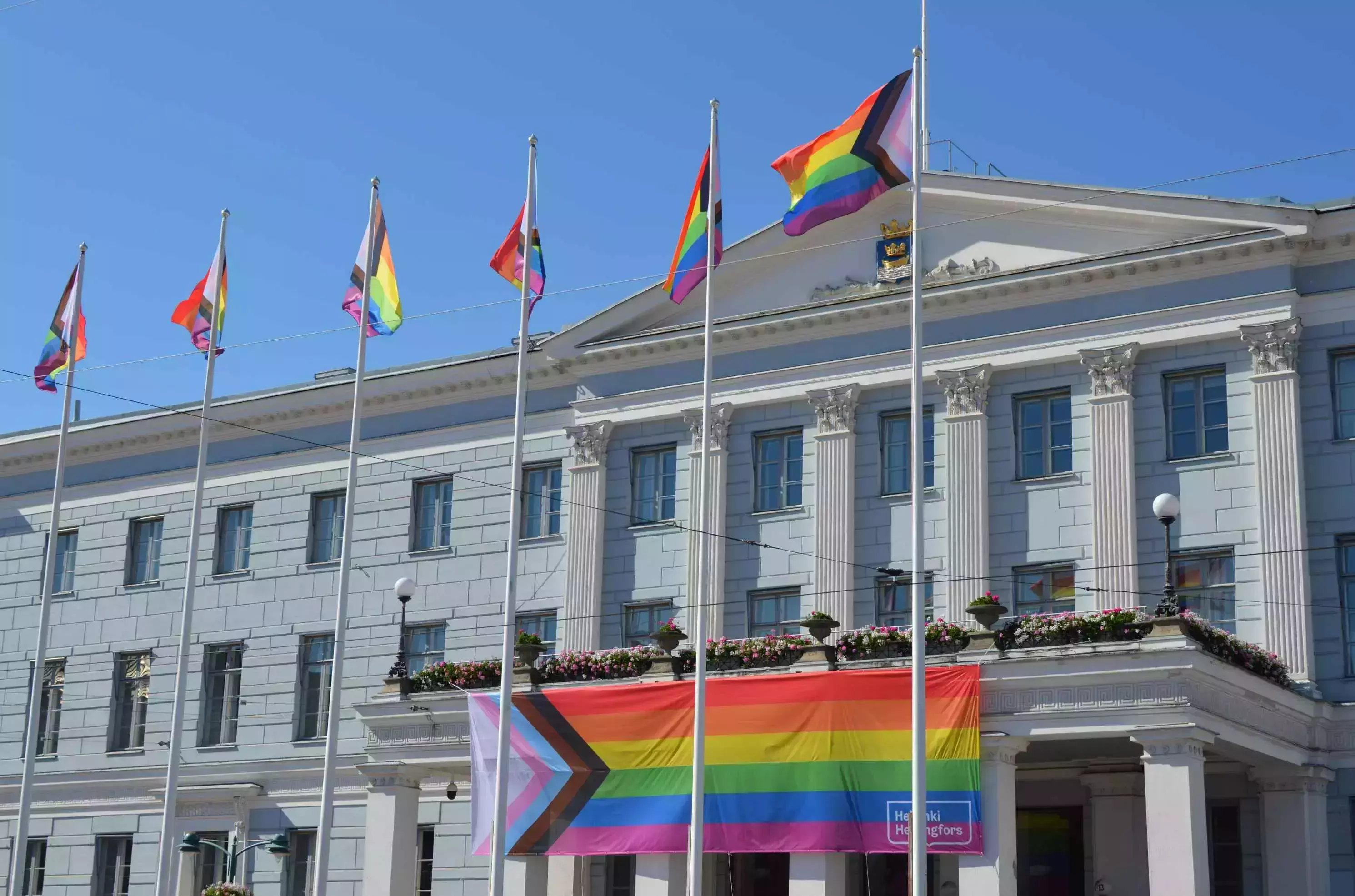
Scoring highly on both the Equaldex and Gay Index Rating, as well as having a large Pride attendance and overall LGBTQ+ presence, Helsinki is one of the best places to be if you want to feel welcomed with open arms in every corner of the city, no matter your sexual orientation, gender or who you identify as.
Helsinki’s annual Pride march and parade typically sees more than 100,000 attendees, giving an idea of how inclusive the city really is. Finland is known for being a progressive and liberal country, and same-sex marriage has been legal in the country since 2017, having been decriminalised since the early 1970s and views changing in the early 80s.
22. Montreal, Canada
Montreal is one of the LGBTQ+ capitals of Canada, celebrating the community with a designated ‘gay village’ district and a large attendance to the city’s annual Pride events. Montreal is considered a trailblazer in terms of promoting and accepting LGBTQ+ rights, as Quebec was the first province of Canada to ban discrimination around sexuality and sexual orientation in 1977. As with much of the rest of Canada, Montreal has since adopted a liberal and accepting stance on LGBTQ+ communities, and scores highly on both the Equaldex and Gay Index rankings.
21. Buenos Aires, Argentina
Argentina’s capital is often cited as the ‘gay capital of South America’, with a downtown district that is rife with gay bars, restaurants and clubs, and a high Gay Index Rating. Argentina was also the first Latin-American country to legalise same-sex marriage in 2010, and has since become the place to be in terms of inclusivity and LGBTQ+ rights.
Buenos Aires also has a large Pride attendance and citywide celebrations, with a thriving LGBTQ+ presence that makes the city rank highly for equality, inclusivity and representation. Aside from the obvious inclusivity that Buenos Aires offers, the city is a vibrant social hub and welcomes people from all social groups and communities.
20. Reykjavik, Iceland
Reykjavik has long been considered a haven for LGBTQ+ members and most groups in society, and although the city may be small, it packs a punch in terms of LGBTQ+ rights and representation. Reykjavik’s most recognisable street is so iconic thanks to its rainbow road, which indicates and highlights Reykjavik’s support for equality surrounding the LGBTQ+ community. Reykjavik’s Pride event is a large-scale affair, with thousands of locals and tourists attending to show their support. Reykjavik also has one of the highest Gay Index Ratings and Equaldex Scores.
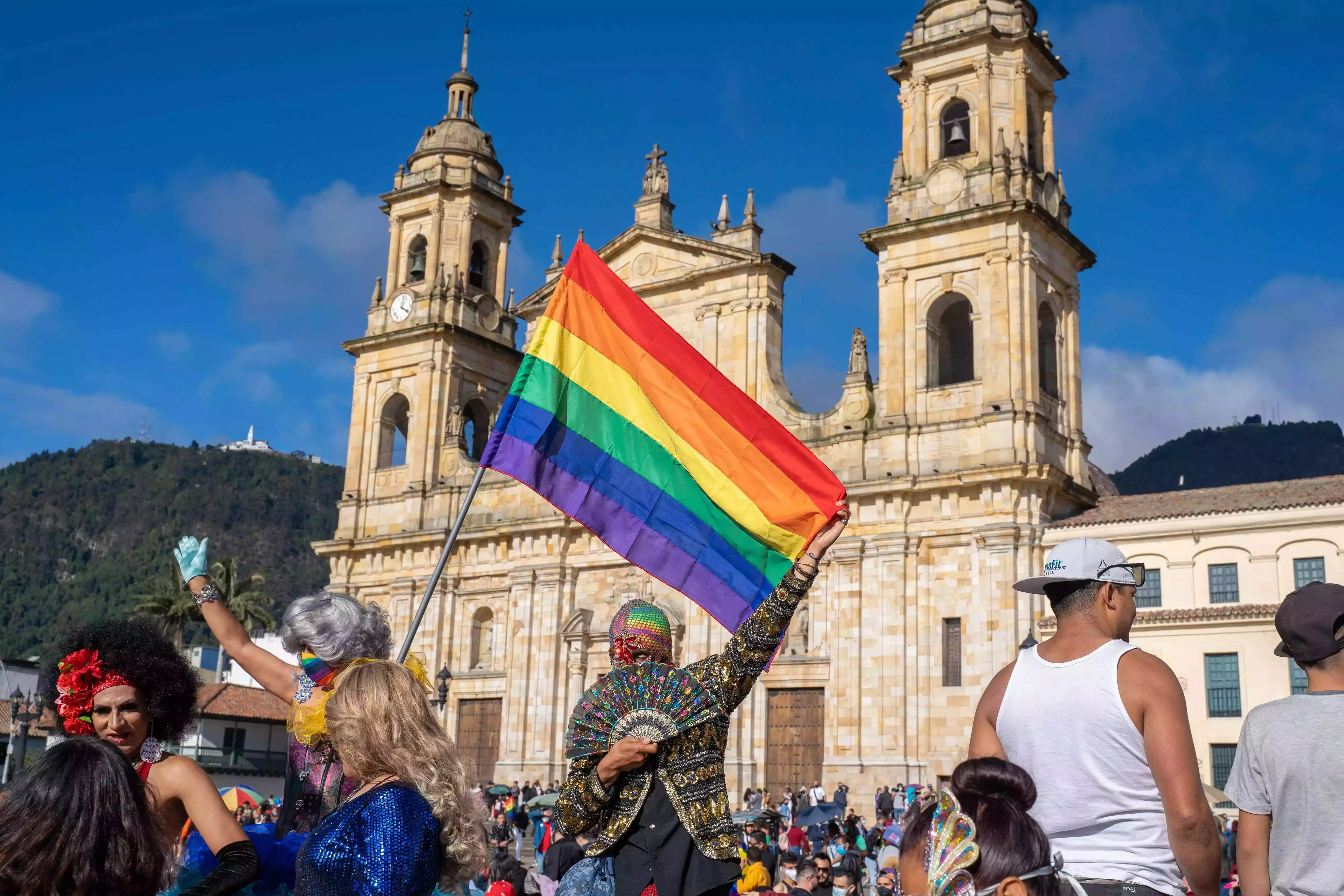
19. Bogotá, Colombia
Although Bogota has the lowest Equaldex score, it has a high Gay Index Rating and a vibrant gay village that features what is considered to be the largest gay club in South America, Theatron.
Bogota’s annual Pride event has also seen crowd sizes of more than 100,000 people, making it one of the largest Pride celebrations around. It’s clear that Bogota is a friendly, inclusive and welcoming place for every tourist, whether they’re part of the LGBTQ+ community or not.
18. Valletta, Malta
This small city packs an almighty punch in terms of LGBTQ+ inclusivity. Valletta ranks highly on both Gay Index Rating and Equaldex, with scores of 8.5 and 100, respectively, giving an idea of how supportive the city is for the rights of LGBTQ+. Valletta also sees a large turnout for its annual Pride festival and march, and has hosted the widely renowned EuroPride in 2023, adding to Valletta’s reputation as one of the most LGBTQ+ friendly cities in Europe.
17. Copenhagen, Denmark
The Scandinavian countries are known for their progressiveness, inclusivity, liberal stances and welcoming and accepting cultures, especially when it comes to LGBTQ+ rights and support. Copenhagen, Denmark’s capital, is known for its lively and thriving LGBTQ+ community, with many gay bars and clubs, as well as a large Pride event. Denmark was one of the first countries in Europe to legalise gay marriage in 2012, and has recognised and accepted homosexuality since the 1930s.
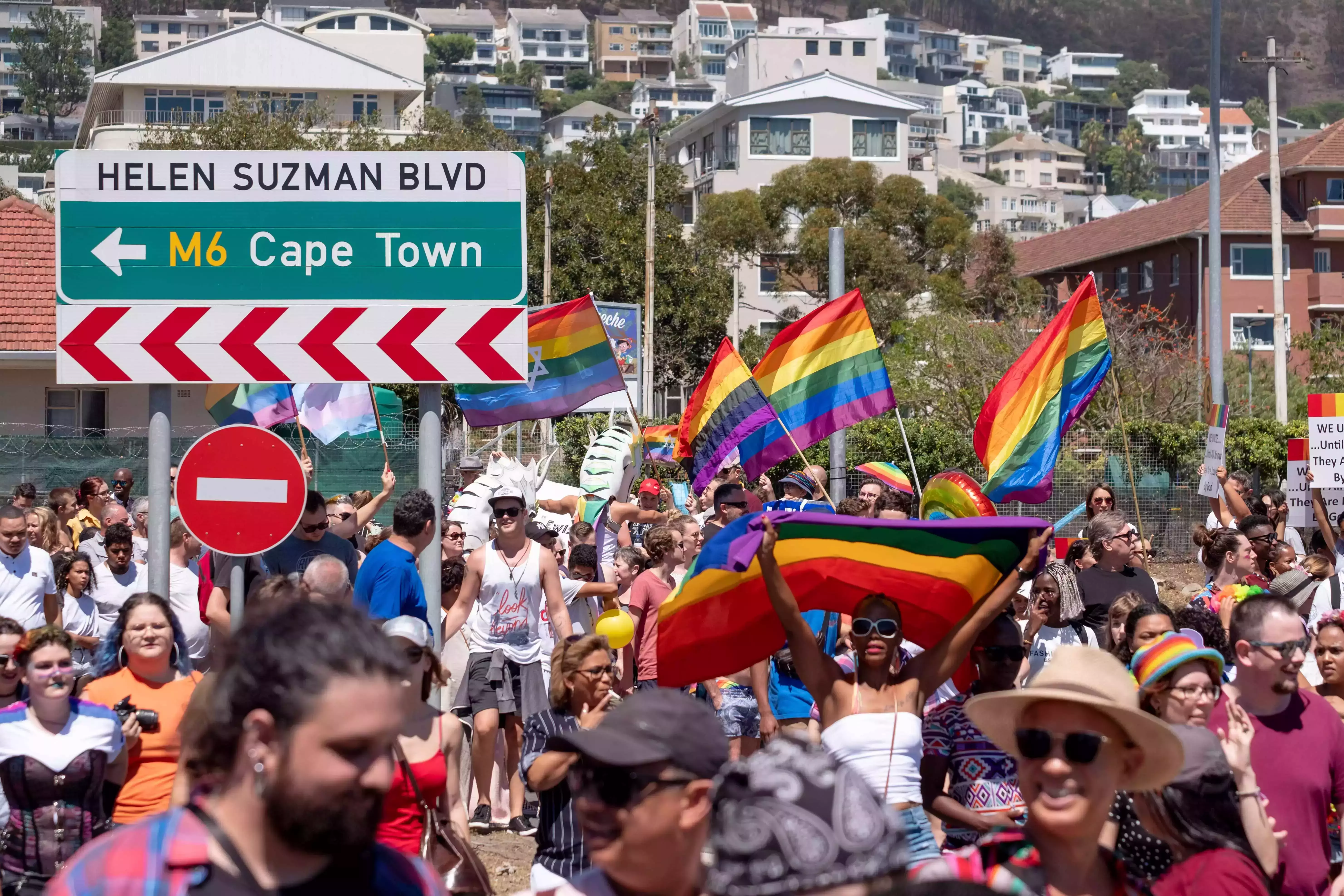
16. Cape Town, South Africa
South Africa is a trailblazer for LGBTQ+ rights on the continent, becoming the first country in Africa to legalise same sex marriage in 2006, and Cape Town is at the heart of this legacy. The progressive and inclusive stance makes the city both welcoming and fun for queer locals and visitors, with a schedule of gay-friendly events throughout the year. The coastal capital bursts into the colours of Pride every February/March, and other vibrant celebrations include the Mother City Queer Project and the Out in Africa Film Festival. The De Waterkant neighbourhood is the city’s LGBTQ+ hub, with gay-owned bars, gyms, shops, and cafes, as well as the iconic rainbow crossing – a visual representation of South Africa’s anti-discrimination laws.
15. Mexico City, Mexico
Mexico City was the first Latin American city to legalise same-sex marriage in 2007, and since then, the city has upheld their views and stances on LGBTQ+ support. The city celebrates with one of the world’s largest Pride events, having been attended by more than 1 million people in recent years.
Mexico City scores well on the Gay Index and Equaldex Rating, and its Zona Rosa region is one of the liveliest LGBTQ+ hubs around. It’s safe to say that you’ll be welcomed and supported as a member of the LGBTQ+ community in Mexico City.
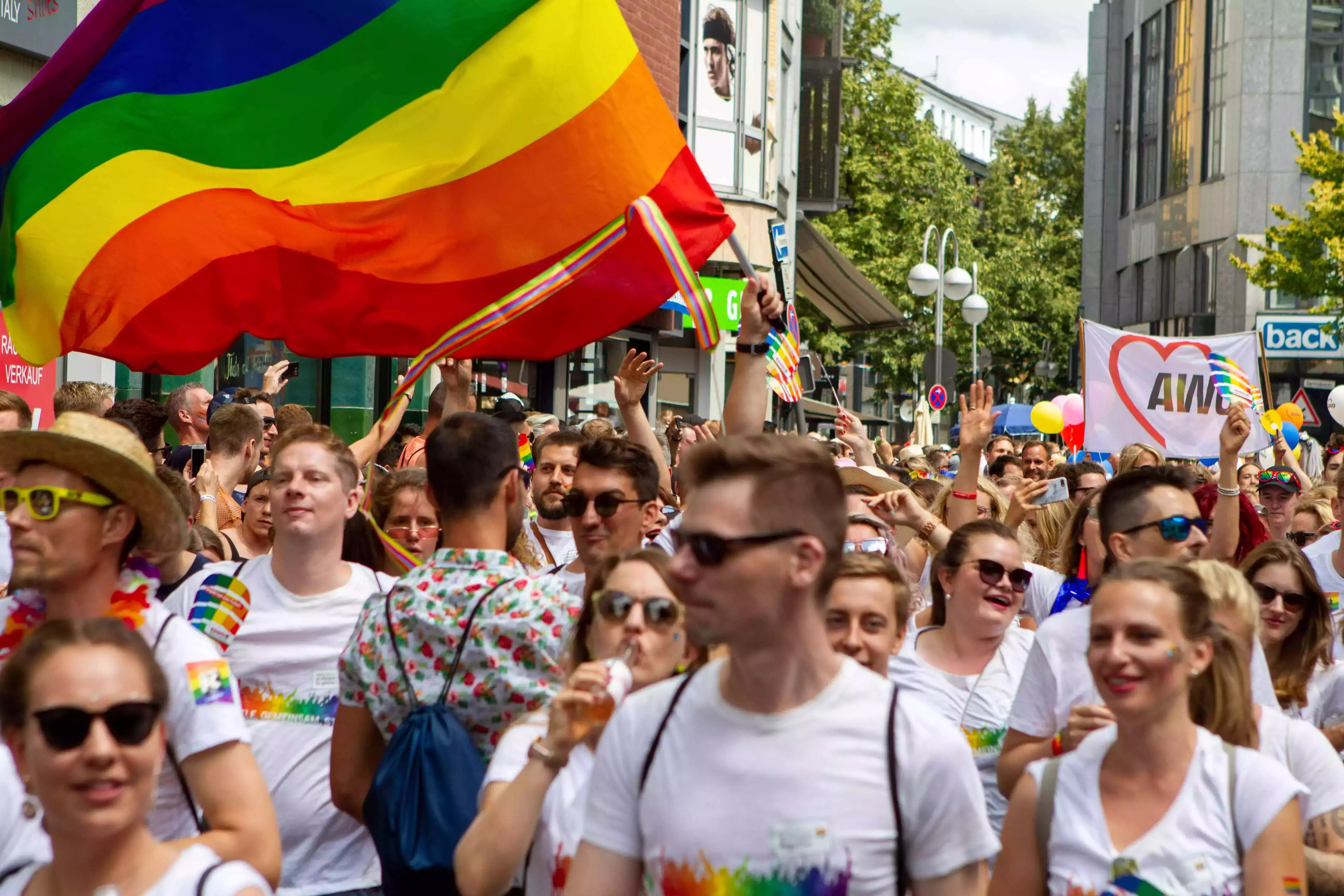
14. Cologne, Germany
Although this city underperforms on the Gay Index Rating, its quality of life and inclusivity for members of the LGBTQ+ community far outweigh this. Cologne’s Pride is the largest in Germany and one of the largest in Europe, with over 1 million attendees in recent years.
Cologne is also often considered by many as the ‘gay capital of Germany’, thanks to its large-scale Pride attendance and modern and progressive views on the LGBTQ+ community and rights. Cologne is a vibrant and lively city, with a population that is accepting, friendly and welcoming to every tourist, no matter their social group or community.
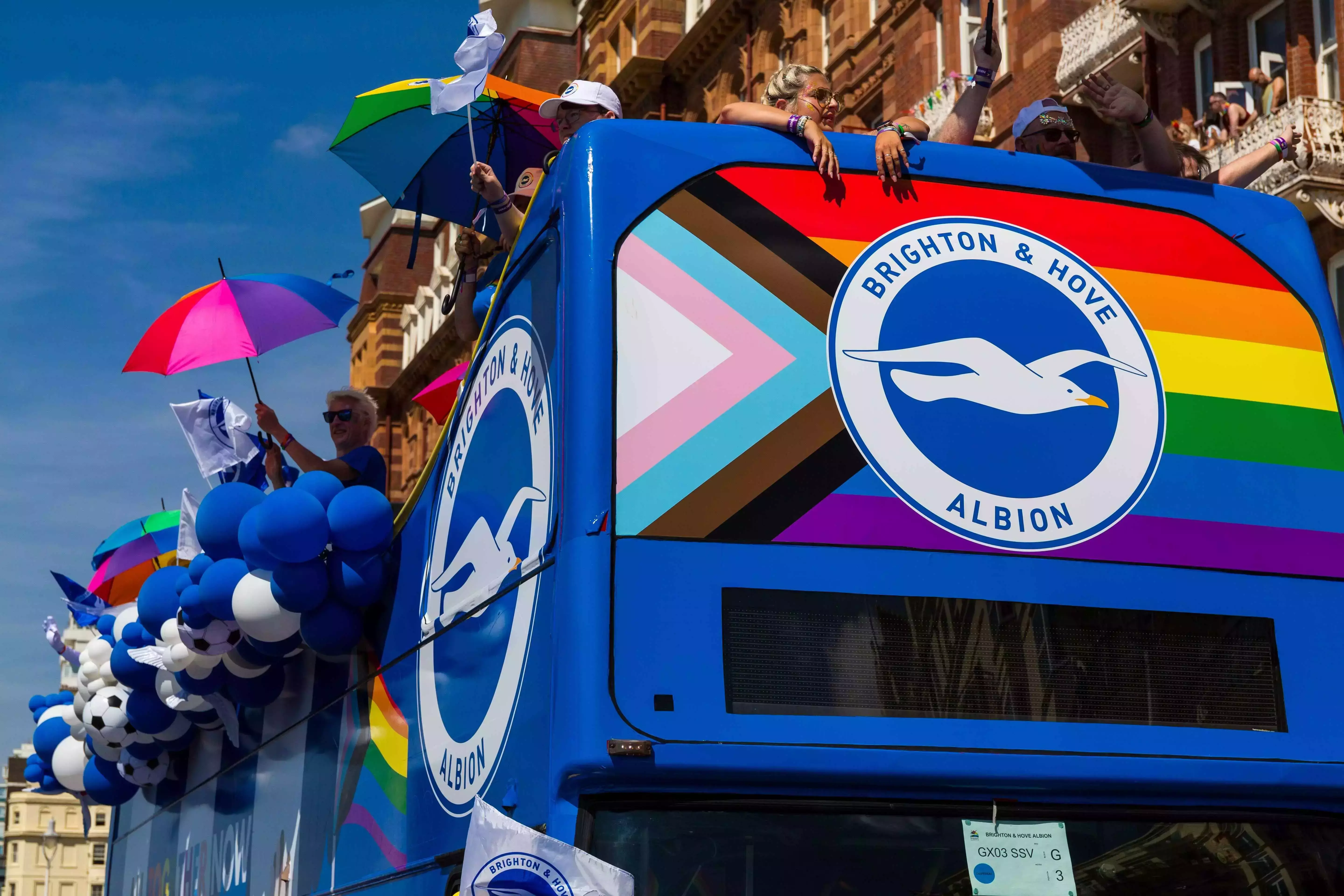
13. Brighton, UK
Brighton has a reputation in the UK for being the ‘gay capital’, with a strong sense of community, support and representation for all members of the LGBTQ+ community. Brighton has long had a reputation for its LGBTQ+ scene, dating back to the 1930s, when the city flourished as an inclusive and openly LGBTQ+ space.
The city has since embraced its LGBTQ+ population with an annual large-scale Pride event that sees more than 500,000 attendees. The city is well known for its Pride event, which has been cited as the best in the UK, and its resident gay village and LGBTQ+ district of Kemptown is rife with inclusive bars, clubs and spaces.
12. Paris, France
Paris really comes out on top with its diversity and inclusion for all groups in society. Paris’s annual pride event regularly attracts more than 700,000 attendees, and its vibrant and thriving Marais district is associated with a large LGBTQ+ population. Paris and France as a whole legalised same-sex marriage in 2013, making them one of the first countries/cities in Europe to do so.
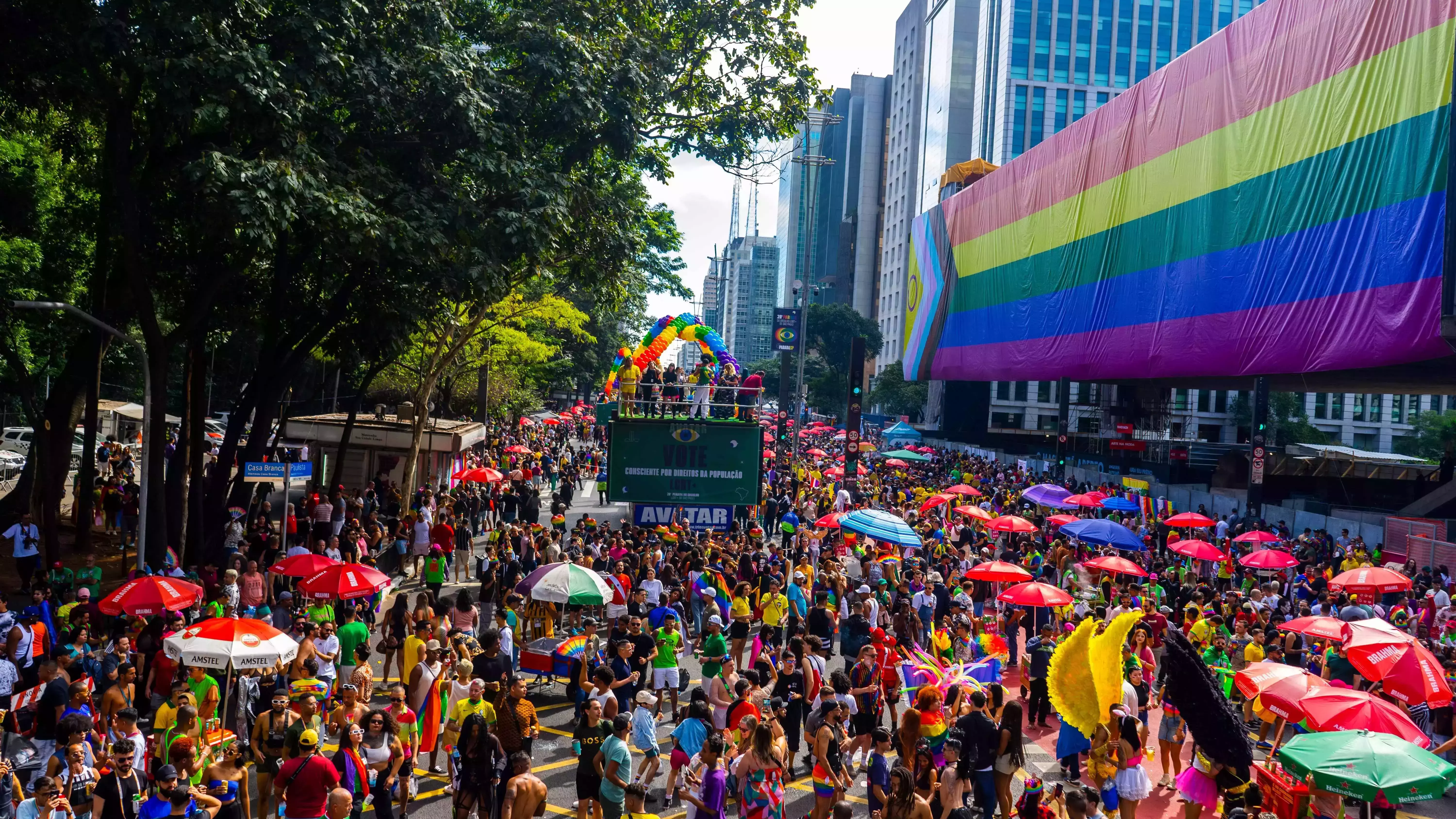
11. São Paulo, Brazil
If there’s one thing Brazil knows how to do, it’s throw spectacular street parties and parades. São Paulo’s annual Pride is often considered to be the largest in the world, with more than three million attendees in recent years. São Paulo has also featured in the Guinness World Record for the size and scale of its Pride event.
What’s more, the city is a hub for all things LGBTQ+, with a lively district dedicated to welcoming and representing its LGBTQ+ population. Although the city has a relatively low Gay Index Rating and Equaldex Score, its citywide celebration of LGBTQ+ is enough to make it rank highly for best LGBTQ+ friendly cities.
10. Sydney, Australia
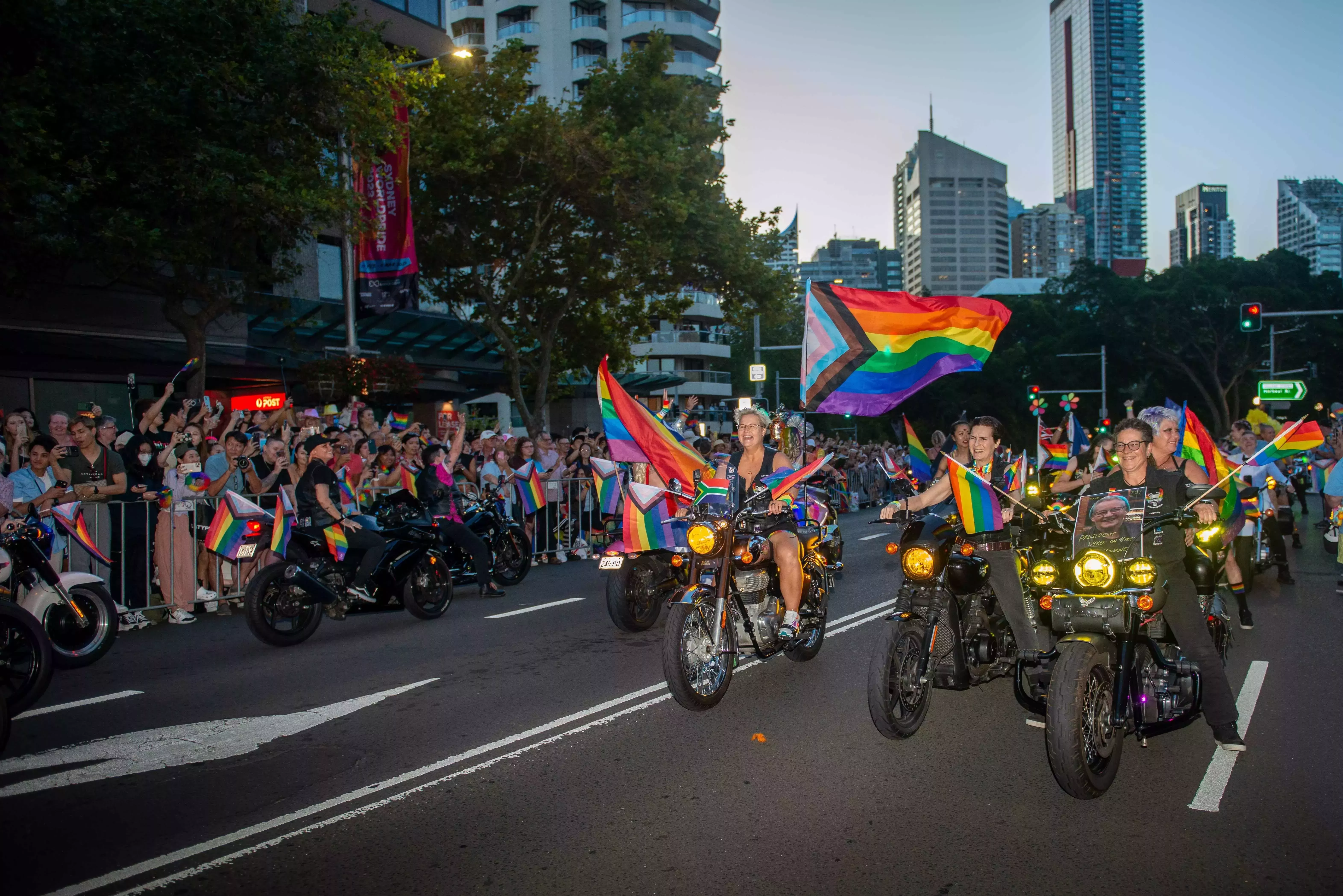
Sydney is one of the most LGBTQ+ friendly cities in the world, and the gay capital of Australia, with its annual Gay and Lesbian Mardi Gras festival leading the way in LGBTQ+ representation and support. Sydney’s Darlinghurst region is considered the gay hub of the city, and has a lengthy history of supporting and upholding LGBTQ+ community rights. Sydney ranks highly on both the Equaldex and Gay Index rankings, and it is a member of the Core LGBTI Group.
Sydney and Australia as a whole have a long history of protecting and supporting the rights of LGBTQ+ members, as homosexuality was decriminalised in the state of New South Wales in 1984, and same-sex marriage was legalised in Australia in 2017. Its annual Gay and Lesbian Mardi Gras event also sees attendees of more than 200,000, making it the largest Pride event in Australia and Oceania as a whole.
9. Toronto, Canada
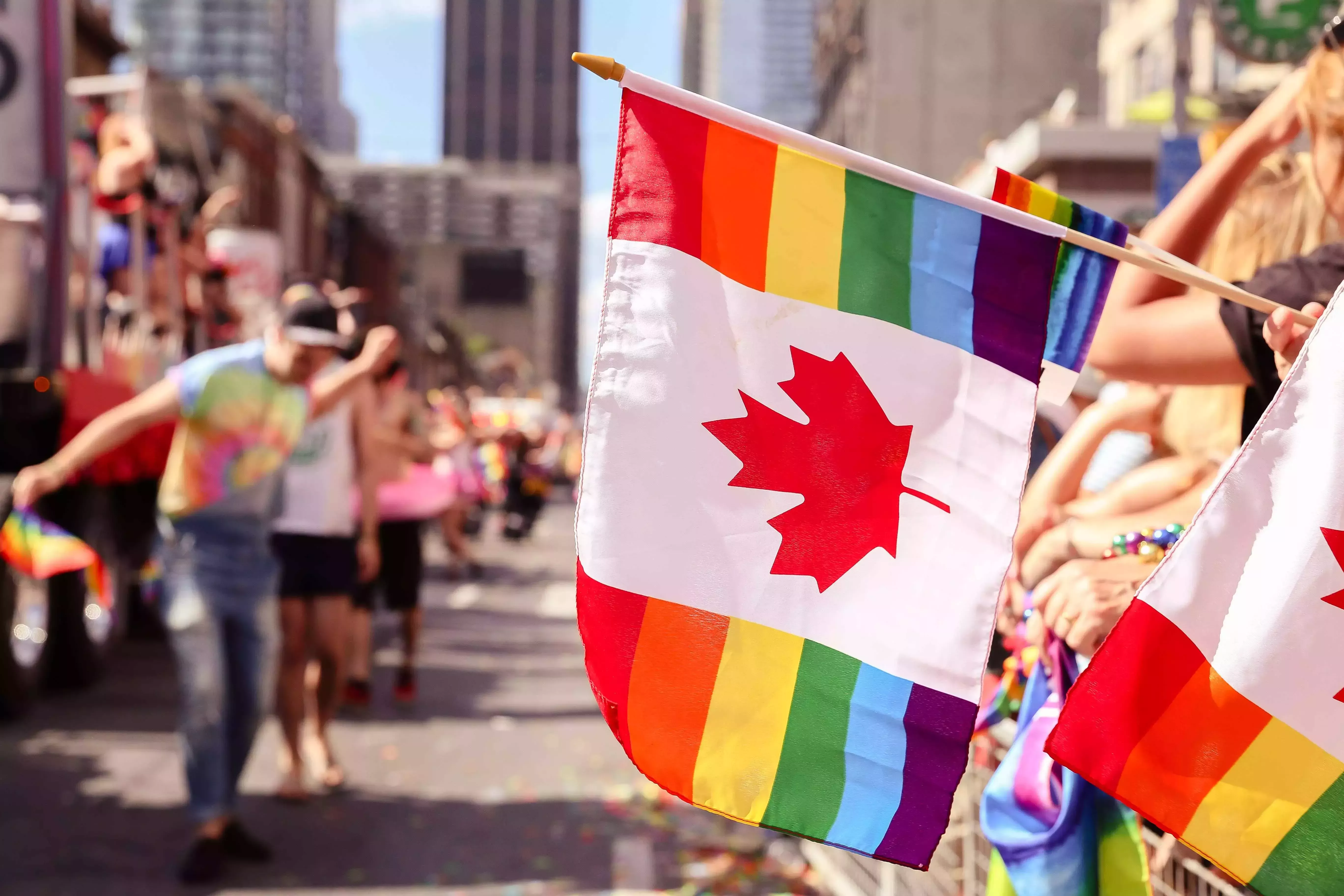
Canada’s largest city hosts the country’s largest Pride event, with just shy of 3 million attendees in recent years, making it North America’s largest and most spectacular Pride Event. Toronto is a buzzing hub for queer peoples, and is one of the most LGBTQ+ friendly cities in the world. Its Church and Wellesley district is the focal point for the LGBTQ+ community, as it is rife with bars, clubs and spaces that are openly supportive.
In terms of statistics, Toronto has a Gay Index Score of 8 and an Equaldex Score of 100, making it one of the best cities for the community. Toronto and Canada as a whole’s LGBTQ+ history is lengthy, with homosexuality becoming decriminalised in the late 1960s, and same-sex marriage being legalised in 2003 in Ontario Province, with the rest following suit not long after.
8. San Francisco, USA
San Francisco is a trendy and diverse Californian city, considered the gay capital of the state. The city is often ranked highly among the world’s most LGBTQ+ friendly cities, and has a sprawling LGBTQ+ scene and district that makes it welcoming and appealing to all members of the community. The city’s annual Pride event is also one of the largest in the US and the world, with around 1 million attendees in recent years. San Francisco and California State are known for their more liberal and progressive views on several matters, not just gay rights, so it makes sense that San Francisco adopts the same inclusive views and atmosphere.
San Francisco ranks at 8.5 on the Gay Index Ranking and at 100 on the Equaldex, giving an indication of its support of LGBTQ+ rights and representation. San Francisco was also one of the first cities in the US to allow same-sex marriage in 2004, despite it not being legal statewide until 2013. Since this, San Francisco has been recognised as one of the LGBTQ+ capitals of the US.
7. Amsterdam, Netherlands
Did you know that the Netherlands was the first country in the world to legalise same-sex marriage in 2001? The city is home to some of the most progressive and liberal views on LGBTQ+ communities in the world. It also has one of the longest LGBTQ+ histories, with homosexuality apparently being decriminalised as far back as 1811, and gay bars and clubs being established in the late 1920s. Since then, Amsterdam and the Netherlands as a whole have become inclusive, supportive and proud of their resident LGBTQ+ communities.
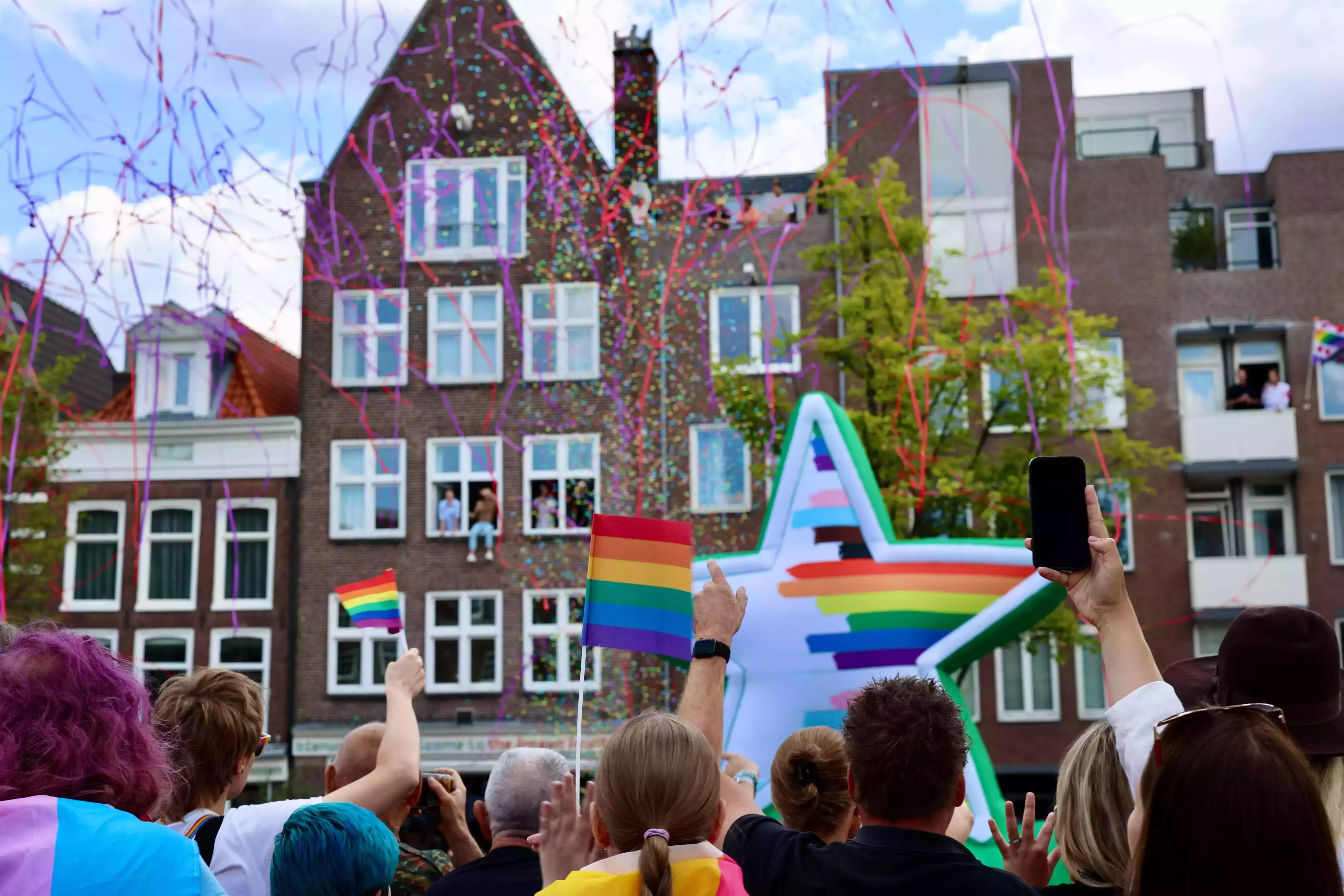
Amsterdam itself has a Gay Index ranking of 8, and an Equaldex score of 100, and its lively Canal Parade Pride event sees attendee numbers of more than 500,000, making Amsterdam’s Pride scene one of the largest in Europe and the world. Amsterdam’s Reguliersdwarsstraat region is the most significant LGBTQ+ area in the city, with a collection of LGBTQ+ friendly establishments, bars, clubs and restaurants.
6. Berlin, Germany
Berlin has a lengthy history of supporting and protecting LGBTQ+ rights, and is one of Germany’s ‘gay capitals’, and certainly one of the ‘gay capitals’ of Europe. The city has, for a long time, recognised and respected the rights of LGBTQ+ members, with a thriving gay village and a strong sense of community and inclusivity across the city.
Berlin ranks highly on the Gay Index and has a high Equaldex score, demonstrating how inclusive and safe it is for proud LGBTQ+ members. Its annual Pride event attracts between 500,000-1 million attendees, with the whole city and tourists coming together to support the community and partake in parades and marches. Germany is known for its progressive and liberal stance on LGBTQ+ rights and protection, so it makes sense that Berlin is a thriving hub for community members.
5. Madrid, Spain
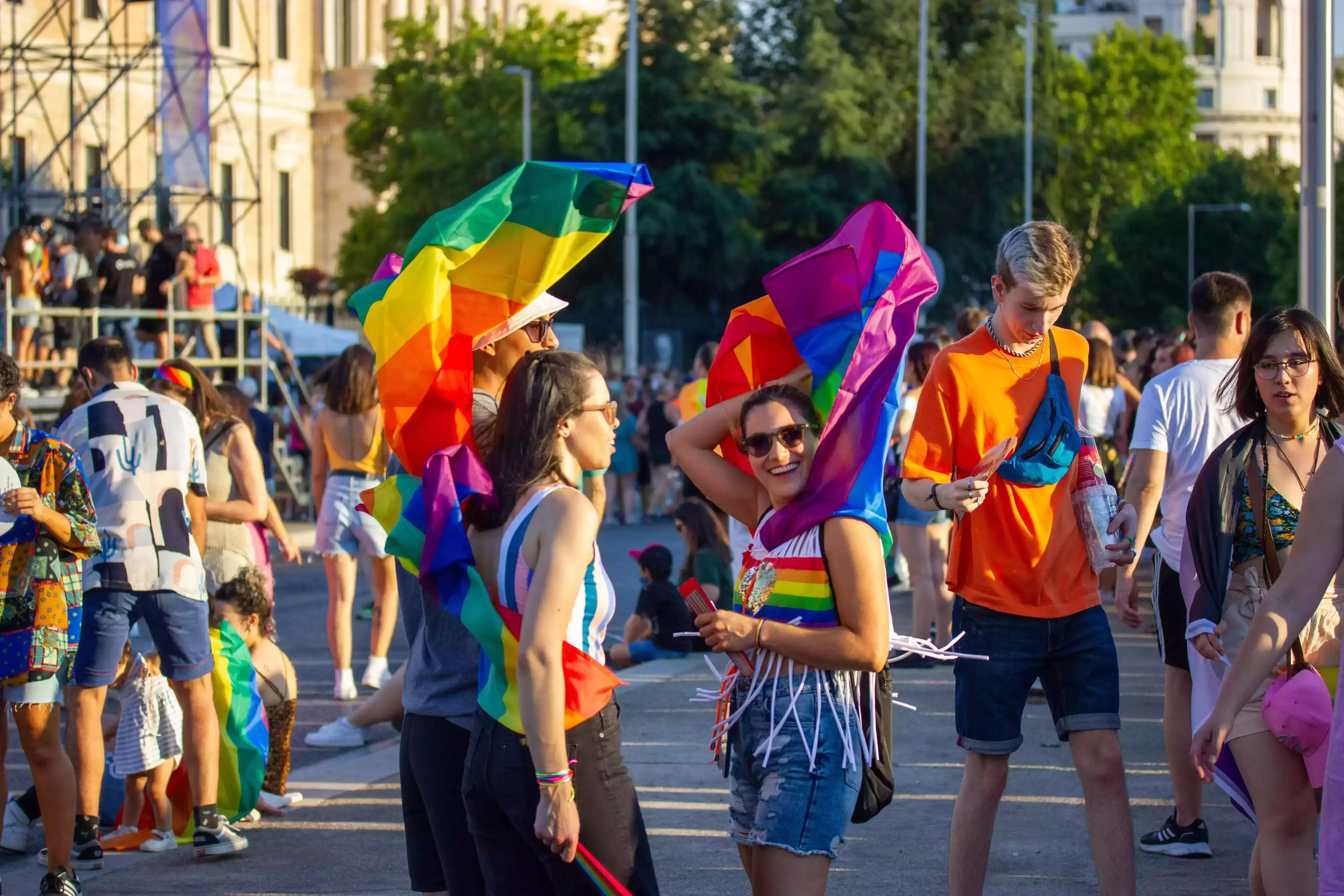
With a thriving LGBTQ+ culture, Europe’s largest Pride event with more than 2 million attendees, and a plethora of LGBTQ+ friendly bars, clubs and restaurants, Madrid is definitely the place to be. Spain was one of the first countries in the world to legalise same-sex marriage in 2005, and homosexuality was legalised in 1979.
Madrid has a thriving LGBTQ+ community and scene, and caters to the community in a number of inclusive ways. Its Pride event is one of the city’s most important events of the year, and sees well over 2 million people attend each year. Madrid also has one of the highest Gay Index scores and an Equaldex score of 100.
4. London, UK
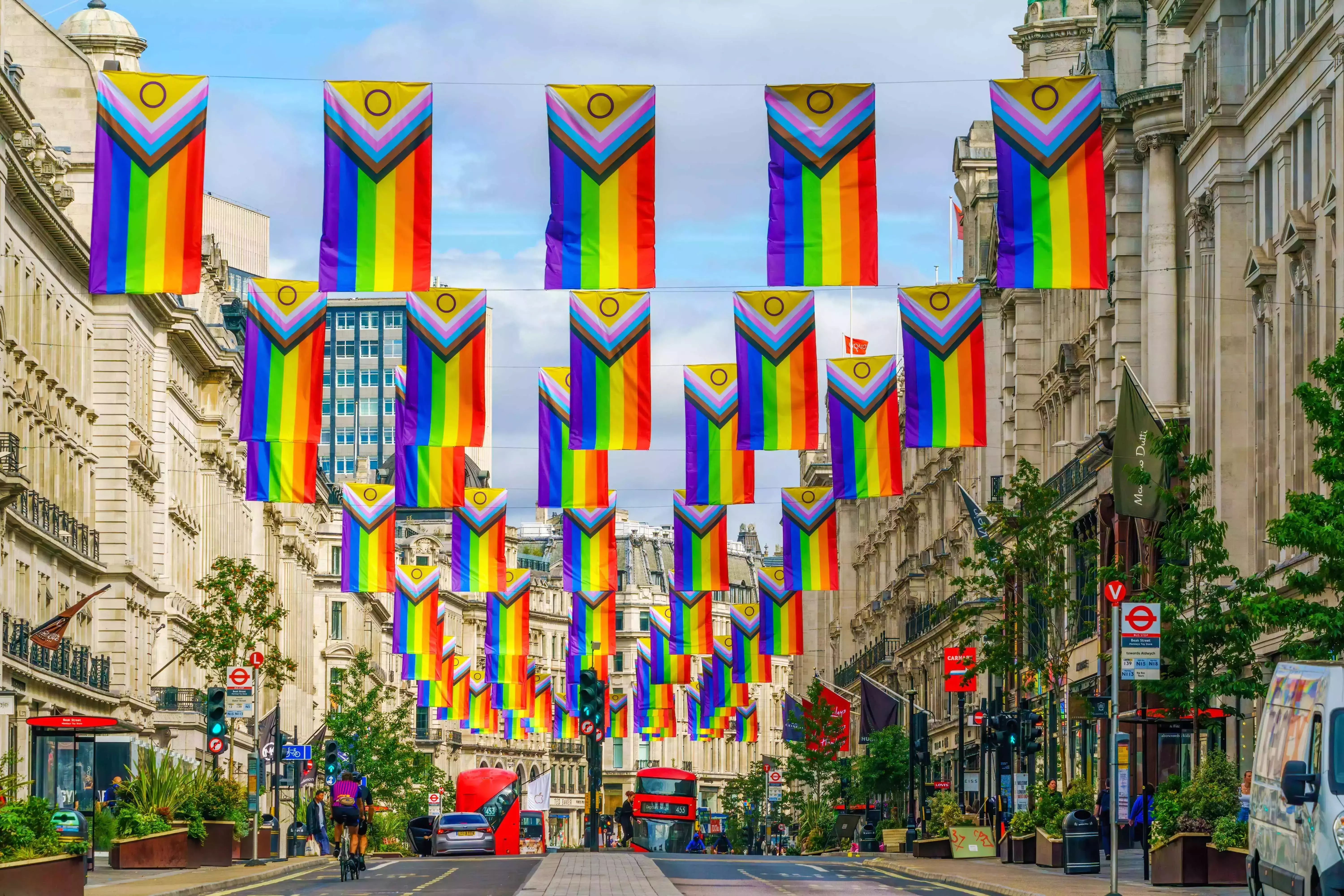
London is associated with a thriving and strong LGBTQ+ presence, and a number of gay bars, restaurants and exclusive LGBTQ+ spaces. Soho is the beating heart of the LGBTQ+ community, with a wide range of LGBTQ+ friendly spaces, but most of London is accepting and inclusive towards the community. Not only does London score highly on both the Gay Index and Equaldex rankings, but since the late 1960s, views and laws surrounding same-sex activities have become much more liberal and accepting, with same-sex marriage becoming officially legal across the UK in 2013.
London’s annual Pride event sees a turnout of more than 1 million people, making it one of the largest Pride events in the world. London also has a lengthy and significant LGBTQ+ history, with activism, marches and events being at the forefront. It’s safe to say that London is not only the capital of the UK, but it is one of the capitals of the world when it comes to LGBTQ+ rights and acceptance.
3. Porto, Portugal
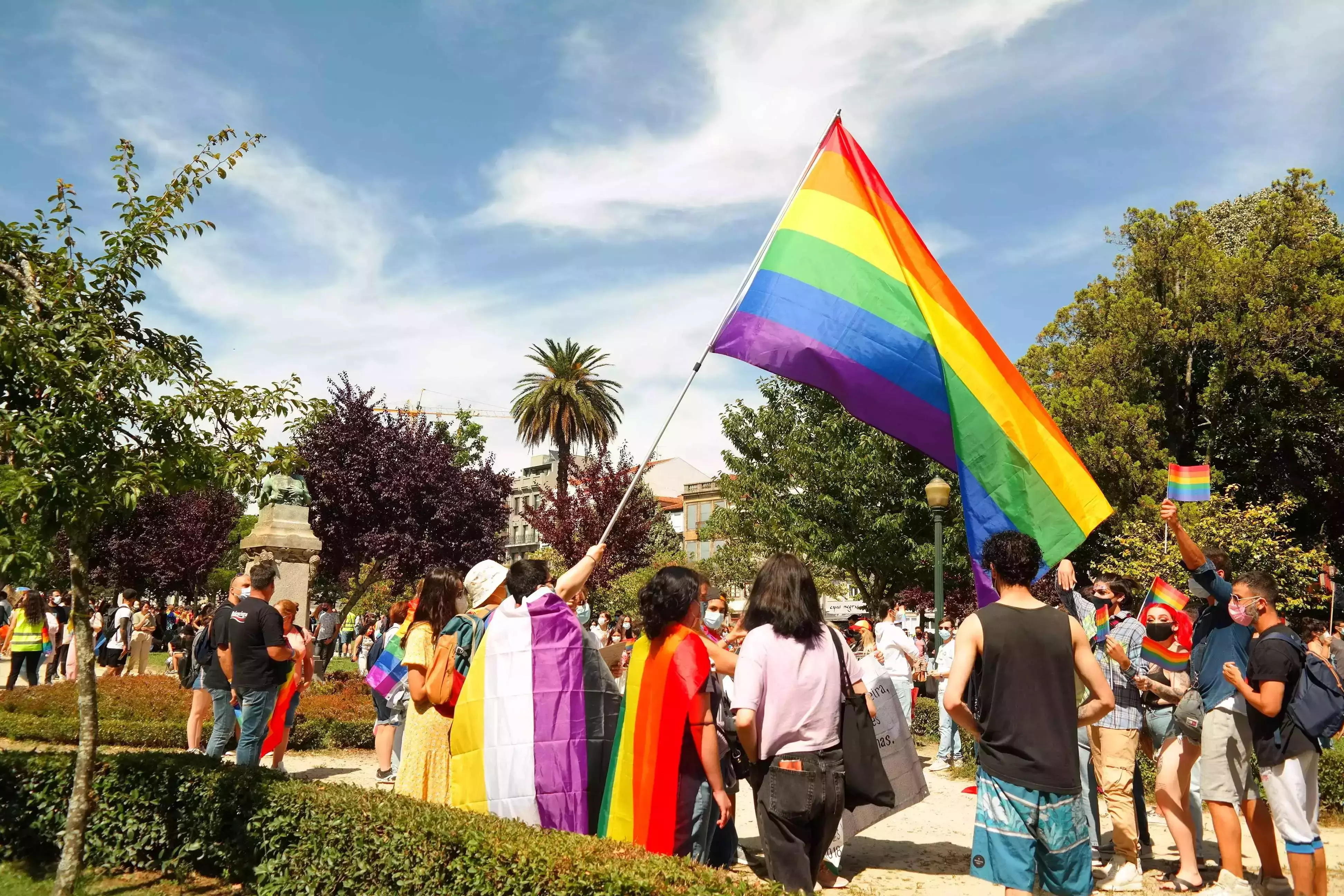
First and foremost, Portugal was one of the first countries to legalise same-sex marriage in 2010, with its cities of Lisbon and Porto becoming thriving LGBTQ+ hubs since.
,Porto’s main LGBTQ+ district is Galerias de Paris and several other spots around the city, but the city as a whole has an inclusive and accepting feel no matter where you go. Although Porto has one of the lowest Gay Index scores of 6.9, it makes up for it with its Pride celebration that sees a significant turnout and its high Equaldex score of 93.
2. Dublin, Ireland
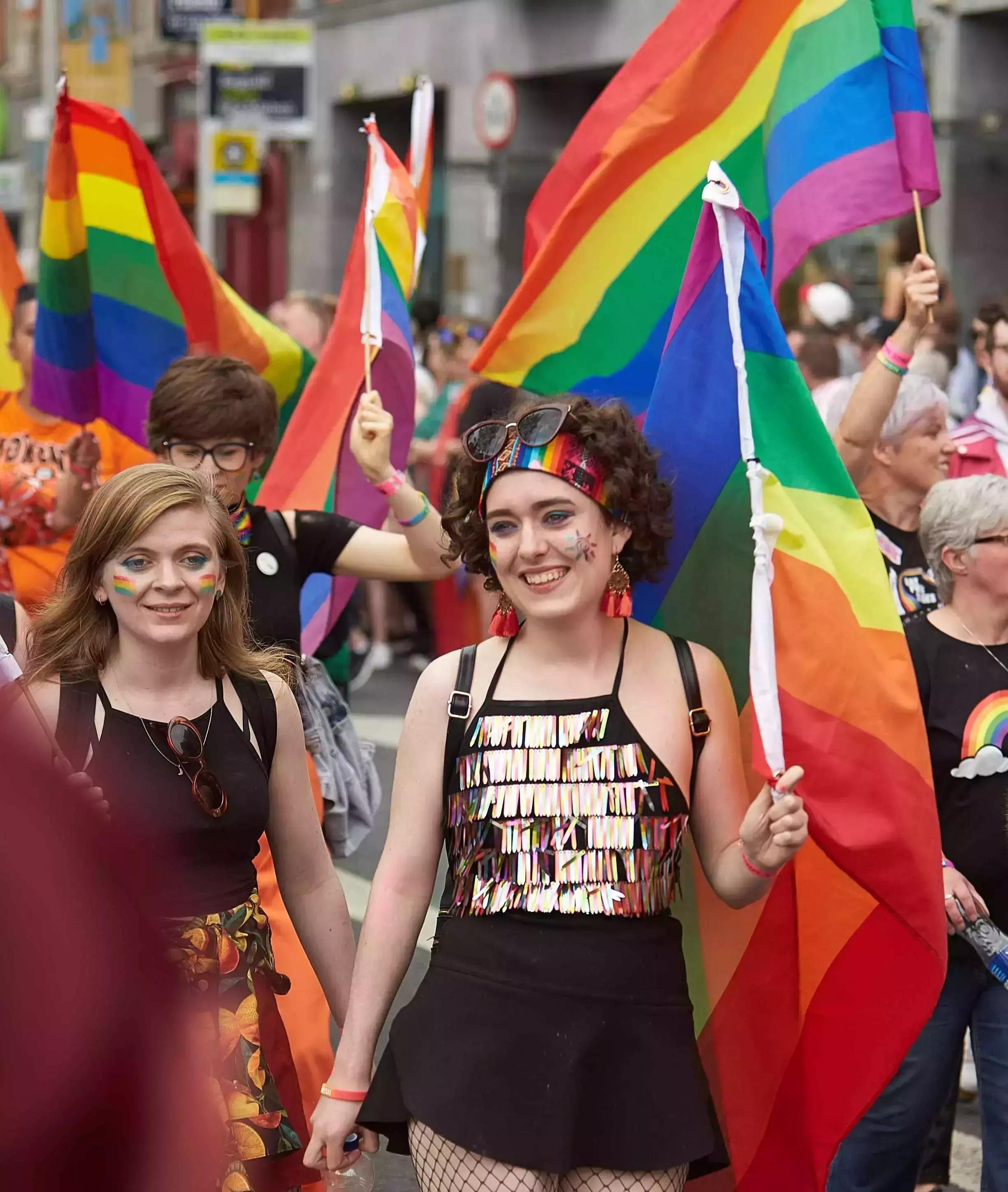
Dublin hasn’t always been the safe and accepting place for the LGBTQ+ community that it is now, but views and laws have drastically changed since homosexuality was decriminalised in 1993, and same-sex marriage was legalised by popular vote in 2015, making Ireland the first country in the world to legalise it in this way.
Dublin is now a thriving hub for all members of the community. The city’s progressive stances on LGBTQ+ make it all the more welcoming and inclusive to people of all backgrounds. To further Dublin’s changing views on LGBTQ+, its annual Pride event sees attendees of more than 70,000 take to the streets in solidarity for the community and its rights.
1. Lisbon, Portugal
Now we come to number 1, the world’s most LGBTQ+ friendly city: Lisbon. The city is a trailblazer in cultivating a safe, supportive, and fun community for queer people. It’s not just the capital that’s gay-friendly; Portugal decriminalised homosexuality in 1982 and was the eighth country in the world to legalise same-sex marriage in 2010.
The city’s chart-topping Equaldex score of 100 solidifies it as an inclusive powerhouse, and Lisbon celebrates in true festive style with a colourful, fun-filled Pride weekend in June. Lisbon also hosts the International Queer Film Festival.
A bipartisan group of U.S. House lawmakers is urging Health and Human Services Secretary Robert F. Kennedy Jr. to block the Trump administration’s plan to eliminate the LGBTQ+ youth services within the 988 Suicide & Crisis Lifeline—an emergency support network that has served more than 1.3 million contacts since its full implementation in 2023.
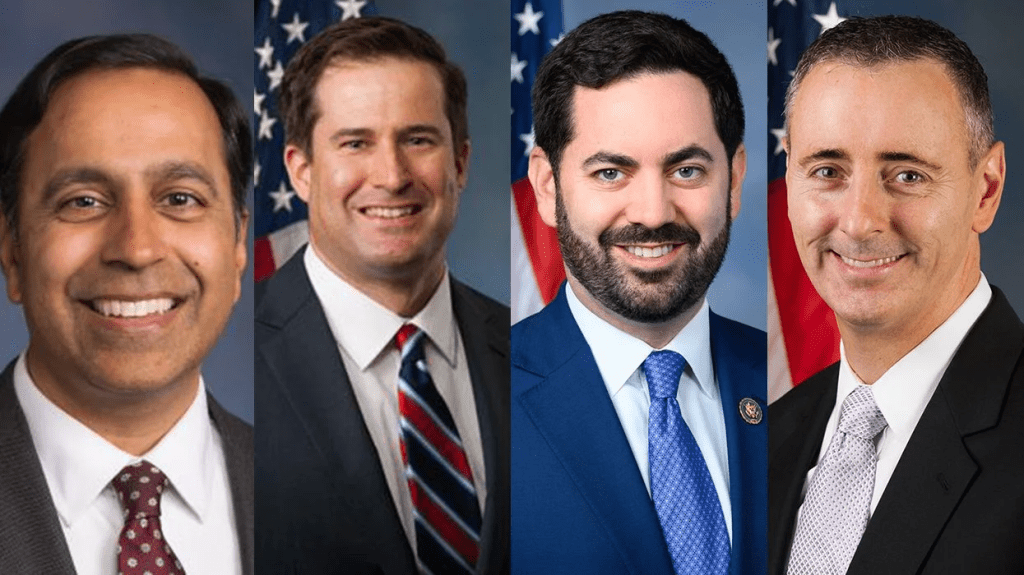
The Wednesday letter, signed by Reps. Raja Krishnamoorthi, a Democrat from Illinois, New YorkRepublican Michael Lawler, Massachusetts Democrat Seth Moulton, and Brian Fitzpatrick, a Republican from Pennsylvania, calls on Kennedy to stop a 30-day phaseout announced by the Substance Abuse and Mental Health Services Administration on June 17. According to internal agency guidance, the LGBTQ+-specific branch of the hotline, which allows callers to “press 3” to connect with affirming counselors, is set to be dismantled by July 17, according to SAMHSA.
“This is not some kind of hotline set by a liberal Democratic administration,” Krishnamoorthi said in an interview with The Advocate Thursday morning. “It was actually signed into law by President Trump. Various Republicans in the Senate and the House supported it.”
Since the line became fully operational in 2023, he noted, “it has received an astonishing 1.3 million calls, texts, and other forms of communication” and was “averaging 2,900 contacts every day” as recently as February.
Krishnamoorthi, who serves as a ranking member of the House Oversight Subcommittee on Health Care and Financial Services, raised the issue sharply during a Wednesday hearing on diversity, equity, and inclusion policy rollbacks. “In the name of expunging DEI, the Trump administration has lurched from the farcical to the cruel,” he said, highlighting the crisis line’s termination as an especially harmful example. “These actions are wrong, but do not compete in cruelty with the ending of a suicide hotline for LGBTQ youth.”
The LGBTQ+ subnetwork of 988 was developed under a bipartisan mandate to offer tailored support to high-risk groups, much like the veteran-specific track within the program. In addition to young people, it has provided critical services to adults experiencing distress related to anti-LGBTQ+ violence, legislation, and rejection.
At the hearing, Krishnamoorthi pressed conservative legal activist Daniel Lennington on whether he disputed Centers for Disease Control and Prevention data from the Trump administration showing LGBTQ+ youth face significantly higher suicide risk. Lennington replied he was “not aware of anything to do with the suicide hotline,” prompting Krishnamoorthi to respond, “That’s the problem—a lack of awareness.”
Krishnamoorthi told The Advocate that the decision to eliminate the program was driven by the Trump administration’s broader campaign against diversity and inclusion initiatives. “Eliminating this lifeline is cruelty because you are essentially discontinuing a service that saves lives,” he said. “In the name of fighting DEI, they’re going to cause a lot of young people to DIE.”
Krishnamoorthi warned that “especially now, during a time when the LGBTQ+ community at large feels tremendous pressure,” the need for the hotline may be “much higher than it was before.”
Krishnamoorthi emphasized the rare bipartisan nature of the letter to Kennedy. “It’s hard to get bipartisan letters, let alone legislation, on topics involving the LGBTQ+ community,” he said. “But this one touches a nerve. I think that young people, whoever they are, still occupy a soft corner in people’s hearts regardless of ideology.”
The Trump administration’s move, first reported in The Advocate in April, was confirmed in the FY2026 budget released during WorldPride in Washington, D.C. Mental health advocates and LGBTQ+ organizations have condemned the proposal as reckless and dangerous.
Mark Henson of The Trevor Project previously told The Advocate the 988 LGBTQ+ subnetwork is “a vital tool” that serves more than 60,000 young people each month. Without it, advocates warn, those calls may go unanswered—or be routed to general crisis lines lacking LGBTQ+ expertise.
In response to a question about his message to young LGBTQ+ people, Krishnamoorthi said he’s met with young people and their parents and understands their pain. “We’ve got to band together at the state level, at the local level to protect whatever rights we can. We must continue to fight for change in the future,” he said.
Krishmamoorthi added, “If we can rally around a group of people, it would be our young people.”
If you or someone you know needs mental health resources and support, please call, text, or chat with the 988 Suicide & Crisis Lifeline or visit 988lifeline.org for 24/7 access to free and confidential services. Trans Lifeline, designed for transgender or gender-nonconforming people, can be reached at (877) 565-8860. The lifeline also provides resources to help with other crises, such as domestic violence situations. The Trevor Project Lifeline,services at TheTrevorProject.org/Help or text START to 678678.
For queer people like me, the desire to move to a different country often stems from a deep curiosity about what lies beyond what we are allowed to embody here in the U.S. — a restlessness, as one interviewee told me, to understand ourselves uninhibited by the weight of social expectations.
Others leave out of fear, scrambling to find a safer haven where they’re not treated like political pawns. With an election marked by an abundance of anti-queer rhetoric from conservatives and even silence from Democrats on trans rights, moving abroad may soon become a reality for many queer Americans.
Navigating the world as queer individuals involves questions that many take for granted: Would I find community? Is the health care affirming? If parts of America do not feel like a queer haven, is there a promised land awaiting somewhere else? As I’ve learned, so many LGBTQ Americans of all ages have found their home abroad — and some of their overseas journeys began with a spontaneous swipe.
When Bill McKinley, 64, matched with a Spaniard named Ricardo on Big Muscle Bears, a dating website, 14 years ago, the Indiana native had no idea his Midwestern life was about to be upended forever.
Growing up between Indianapolis and Muncie, Indiana—a place he describes to me as “the most average town in America”— McKinley was forced into conversion therapy for several years, a life chapter he detailed in a 2022 HuffPost article.
While his parents later converted to The Church of Christ, a more queer-welcoming denomination, their earlier parenting was shaped by their profoundly devout Catholicism. His experiences led to advocacy work as a young adult and he eventually found his support system and became a gay-rights activist, actor and performer.
McKinley always thought he would call the United States home, but after talking to Ricardo for almost a year, he decided to visit him for three weeks in his Madrid home and soon fell in love. Despite returning to Indiana for 11 months, he permanently settled in the Spanish capital in the fall of 2011. On Valentine’s Day 2012, he and Ricardo got married. “I didn’t leave the United States; I came to Ricardo,” he says, when reflecting on the big move.
Now living in Chueca, “the world’s largest gay neighborhood,” as he describes it, McKinley cannot picture himself far from the quaint streets of low-rise, custard-colored buildings that fill Madrid’s downtown. “I can’t imagine going back to the United States,” he says. “I don’t know that we would ever live somewhere else.”
For queer people like McKinley, life outside the American border can offer a renewed sense of freedom and security — whether or not it was longed for — and places like Barcelona, Bogotá or Paris can become havens for the queer community.
Living abroad as a queer American is part of a broad historical trend, with literary icons such as James Baldwin and Audre Lorde standing out as two of its most influential examples. Baldwin settled down in France in 1948 and Lorde spent several years in Berlin in the 80s. Through works like Lorde’s “Berlin Is Hard on Colored Girls” and Baldwin’s ”Giovanni’s Room,” both writers inspired a generation of queer Americans — especially queer people of color — to venture beyond their homeland.
Moved by Baldwin’s legacy, Prince Shakur, a 30-year-old gay artist and author of ”When They Tell You To Be Good,” became curious about Paris. The Jamaican-American writer ended up living there for three years over several intervals. During this time, he became involved in the city’s protest scene, particularly around the Nuit Debout demonstrations.
As a Black American, he was shocked by the way police treated activists in France. “Their relation to Blackness felt a little less violent compared to America,” he tells me. Living there, he says, partly liberated him from certain constraints racial minorities experience in the U.S. “Being queer and Black, I get a little more freedom … that made it easier for me to have fun and feel comfortable.”
The term “freedom” was frequently used by the LGBTQ+ Americans now living abroad whom I spoke with. Moving to Barcelona about two-and-a-half years ago allowed Lars Wenzel, a 30-year-old queer man, to disclose his transness on his own terms. For Wenzel, who was already a foreign exchange student in Italy in 2010, moving there was an affirming experience — one that resonates with many in the LGBTQ community.
“Diasporic travel can be really appealing to queer people, because in terms of relationships with people that have known us since we were little, there’s this framework of, ‘This is who you always were,’” Wenzel says. His words resonate; even though anti-queerness does exist in every corner of the world, there’s something to be said about intentionally distancing yourself from a past that you no longer believe serves you.
In New York, where Wenzel lived before moving to Barcelona, the LGBTQ+ community felt quite siloed to him, especially in nightlife. Each letter stayed within their own bubbles, he says. Barcelona’s queer spaces felt more porous, reflecting a culture that is less fixated on identity compared to the American one. “Even in the Spanish language, how people talk about queerness with terms like travesti and maricón, all these things flow together. It doesn’t feel so important to understand exactly what words you use to describe yourself,” he says. “Queerness feels more cultural than identity-focused.”
Access to free health care is another reason Wenzel decided to settle down in Barcelona. As a trans person, his identity constantly relies on good medical care, he says, but Spain’s universal coverage also provides him with a sense of safety regarding his overall sexual health. According to recent OECD data, 53% of Americans primarily relied on private health insurance, 38% on public coverage, and 9% remained uninsured, whereas the public system in Spain covers over 99% of the population. “Having unprotected sex doesn’t mean that you could be putting someone at risk of a medical bill,” he says. “And there’s very little stigma surrounding STIs and HIV.”
Ben Seaman, a 58-year-old queer man who grew up in a “WASP household with a lot of emotional repression,” as he describes it, between Kansas and Connecticut, echoes Wenzel’s sentiment. A painter and a psychotherapist, Seaman always gravitated toward Spanish people and culture, and since the ’90s, he has been visiting Madrid, a city he initially thought was “a bit behind in terms of technology” compared to New York, but “more open in terms of gay life.”
Once he turned 50 and started to look for places to spend his “third and final childhood,” the Spanish capital was on top of his list. Along with his husband, he spent five weeks there this spring and their connection to the city’s vibrant social fabric grew even stronger. But feeling safe and well-treated by the Spanish health care system was a crucial factor in his decision. “They [healthcare system] are here to help you, and they don’t divide into insured and uninsured,” he says. “They just keep people healthy.” Next month, Seaman will finally settle down in Madrid.
Safety, however, encompasses more than just having access to quality health care. For Lola Mendez, a 35-year-old pansexual journalist who grew up in Kansas and moved to Chiang Mai, Thailand, this past March, the United States’ gun violence epidemic drove her to leave the country. And she doesn’t plan to return anytime soon. “If you’re under 18, your most likely cause of death is a gunshot,” Mendez says. “I can’t live in a society where I could be killed at any given moment.”
And in an increasingly hostile legislative environment for the trans community, some queer Americans have even sought legal protections abroad. Eric (who prefers to use a pseudonym for safety purposes) is a 40-year-old queer person from Arizona who was living in Ohio with his wife and their 5-year-old daughter, a trans girl, when state lawmakers started to push for bills targeting the trans community.
Fearing for their child’s safety, they flew to Ireland in March and applied for asylum there. “We didn’t have plans, we didn’t know anybody here, but we just needed to get out,” he tells me. Although he is still waiting for his case to be resolved, he remains hopeful about their future life in Ireland. “They put us in housing in one of the most conservative counties in the country, so that didn’t super work for us, but it’s already safer than the U.S.,” he says.
After our interview took place, he and his family were moved to Cork, a more progressive city, and their daughter has enrolled in school. “Everyone from teachers to principal were amazing and affirming, and she has a bunch of other little girls trying to make friends with her here,” he said.
Moving to a place that is affirming and protective of queer identity is essential, but for many American immigrants, access to community and LGBTQ spaces is also crucial. After growing up in South Florida and attending college in Maine, Tasha Sandoval, a 33-year-old queer journalist, decided to move to Bogotá, where she was born, in 2019 to reconnect with her roots. She eventually returned to New York, but this March, she took advantage of her work flexibility and gave Bogotá another chance.
While other Colombian places such as Medellín feel relatively conservative, Bogotá stands out as a cosmopolitan and diverse city where the queer community thrives within a vibrant cultural scene, Sandoval says. “This time around feels like it has more potential. I feel more queerness around me,” she adds.
After spending two years in San José, Costa Rica, Aaron Bailey finally built a community there — one centered around queer friendships. The 47-year-old gay Michigan native experienced a midlife crisis in Denver, his former home, and purchased a vacation house in the Central American country, where he eventually found himself spending more time.
The house, located in a tourist and transient area, felt detached from the local society, so he moved to the capital. Bailey describes it as more queer-friendly and safe and says he now feels integrated into the community, and so Costa Rica has come to feel like his new home. “At this point, I can’t imagine leaving Costa Rica; certainly I can’t imagine moving back to the United States,” he says. “I feel really settled and rooted here, and that’s something I haven’t felt in decades in the United States.”
Living abroad has its own set of challenges, and many queer immigrants carry a guilt around leaving loved ones that sinks deep, no matter the number of calls and Sunday morning FaceTimes. The black screen will always look back at you, reminding you of the missed 30th birthday and the wedding you will never attend — but it is a price many deem worth it.
“I will do absolutely everything I can to help any person who wants to get out of the United States get connected with resources,” Wenzel says.
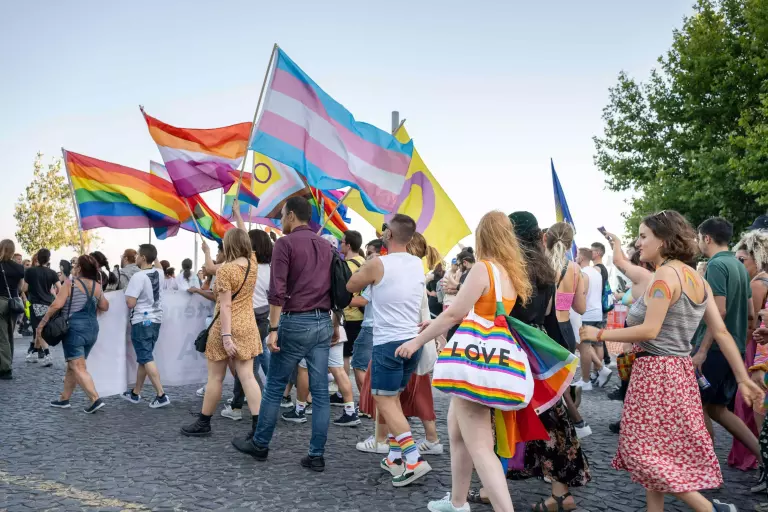
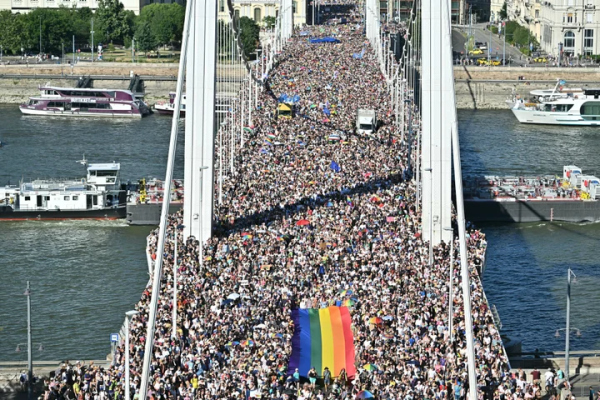
Around 100,000 people defied a government ban and police orders Saturday to march in what organizers called the largest LGBTQ+ Pride event in Hungary’s history in an open rebuke of Prime Minister Viktor Orbán’s government.
Marchers gambled with potential police intervention and heavy fines to participate in the 30th annual Budapest Pride, which was outlawed in March by Orbán’s right-wing populist governing party.
The march began at Budapest City Hall and wound through the city center before crossing the capital’s Erzsébet Bridge over the Danube River. Police diverted the crowd from its planned route to keep it separated from a small group of far-right counterprotesters, while members of Hungary’s LGBTQ+ community and masses of supporters danced to music and waved rainbow and anti-government flags.
One marcher, Blanka Molnár, said it was “a fantastic feeling” that more people had attended the Pride march than ever before despite it being outlawed. She said it was “increasingly important” for Hungarians, “even those who have never been to Pride before,” to push back against the government’s policies.
“This isn’t just about LGBQT+ rights, it’s also about the right to assemble and about standing up for each other and not allowing (the government) to oppress us,” she said.
The massive size of the march, which the government for months had insisted would no longer be permitted in Hungary, was seen as a major blow to Orbán’s prestige, as the European Union’s longest-serving leader’s popularity slumps in the polls where a new opposition force has taken the lead.
Orbán and his party have insisted that Pride, a celebration of LGBTQ+ visibility and struggle for equal rights, was a violation of children’s rights to moral and spiritual development — rights that a recent constitutional amendment declared took precedence over other fundamental protections including the right to peacefully assemble.
The law fast-tracked through parliament in March made it an offense to hold or attend events that “depict or promote” homosexuality to minors underage 18. Orbán earlier made clear that Budapest Pride was the explicit target of the law.
Authorities installed additional cameras throughout the city center before the march, and were expected to use facial recognition tools to identify individuals who attend the banned event. According to the new law, being caught attending Pride could result in fines of up to 200,000 Hungarian forints ($586).
Marcher András Faludy said the “hysteria” that has emerged in Hungary over the Pride march in recent months was “damn pathetic. It’s nonsense.”
“I could use an uglier word because I’m extremely angry, but I won’t,” he added.
The ban was the latest crackdown on LGBTQ+ rights by Orbán’s government, which has already effectively banned both same-sex adoption and same-sex marriage and disallowed transgender individuals from changing their sex in official documents.
Police rejected several requests by organizers in recent weeks to register the Pride march, citing the recent law. But Budapest Mayor Gergely Karácsony joined with organizers and declared it would be held as a separate municipal event — something he said doesn’t require police approval.
But Hungary’s government remained firm, insisting that holding the Pride march, even if it’s sponsored by the city, would be unlawful. Hungary’s justice minister this week warned Karácsony that organizing Pride or encouraging people to attend would be punishable by up to a year in prison.
Many marchers expressed their belief that the Pride march represented a struggle not just for the protections of the rights of sexual minorities, but for the democratic future of their country.
Participant Zsófia Szekér said the number of attendees showed that a major part of society desired a new direction for Hungary.
“I think we can only achieve change if so many people take to the streets,” she said.
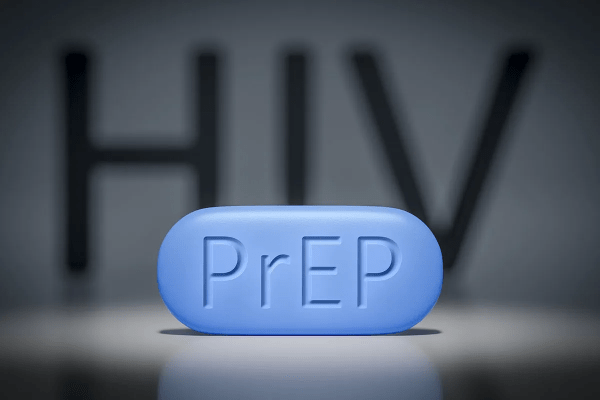
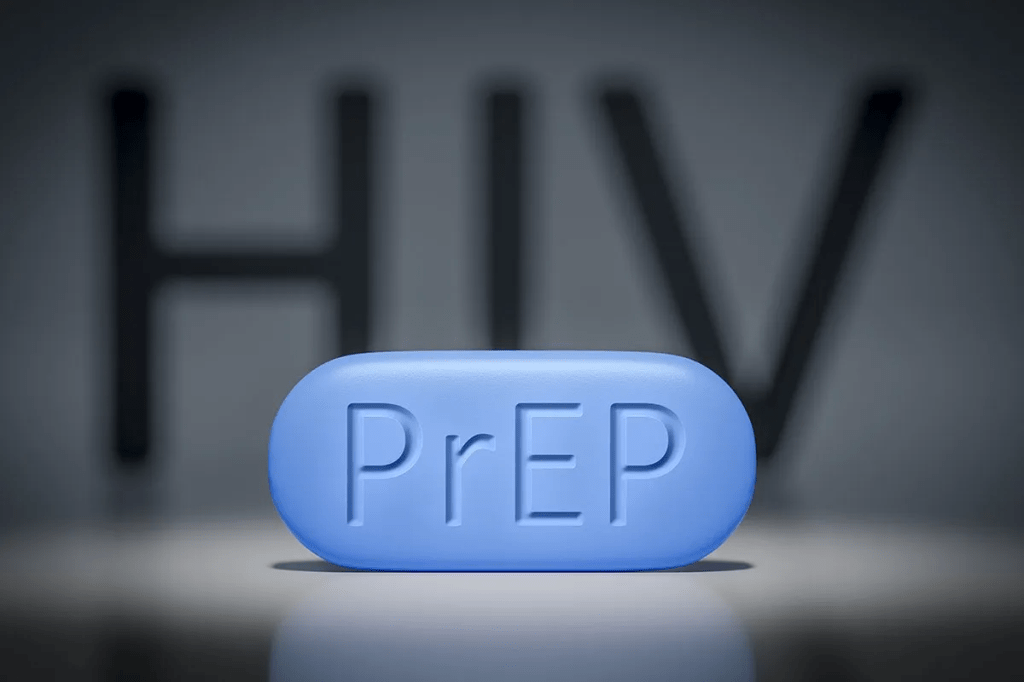
Today (June 27, 2025), the U.S. Supreme Court upheld the constitutionality of the United States Preventive Services Task Force (USPSTF) membership structure and its recommendations for preventive services made after passage of the Affordable Care Act (ACA) in March 2010.
These services—including the HIV prevention medicine PrEP, breast cancer screenings, depression screenings, Hepatitis B and C and other STI counseling and screenings—must be covered by nearly all private insurance plans at no cost to enrollees as mandated by the ACA. This decision in Kennedy v. Braidwood overturns a portion of the Fifth Circuit’s ruling and will have numerous benefits for Americans nationwide, including the LGBTQ+ community who disproportionately rely on PrEP, which when taken as prescribed, reduces the chance of HIV transmission by close to 100%.
Human Rights Campaign’s President Kelley Robinson released the following statement:
“This decision means millions of Americans, for now, can breathe easier, knowing that critical preventive care remains within reach—not a luxury reserved for the privileged few.The LGBTQ+ community has historically faced societal and economic barriers that have worsened health outcomes and widened gaps in healthcare inequality–barriers that have only grown worse as anti-equality lawmakers continue to attack our healthcare. While we’re pleased that the Supreme Court has blocked this attempt to create even more burdens on people seeking lifesaving care, we must remain vigilant. The HHS, under Secretary Robert F. Kennedy Jr, has exhibited an open hostility toward the health needs of LGTBQ+ people and has already undermined critical protections against HIV. We must continue to work to ensure everyone, no matter your sexual orientation, gender identity, race, income or location, can access the care they need to thrive.”
The Supreme Court has ruled in favor of the plaintiffs in Mahmoud v. Taylor, the case brought by parents who said that their First Amendment rights were violated when schools used books that included LGBTQ+ characters.
The decision was 6-3 along ideological lines, with the Republican-appointed justices siding with the religious parents who wanted to opt their children out of reading books like Prince & Knight and Uncle Bobby’s Wedding in the Montgomery County, Maryland, school system.
“The Court does not accept the Board’s characterizations of the LGBTQ+-inclusive instruction as mere ‘exposure to objectionable ideas’ or as lessons in ‘mutual respect,’” Justice Samuel Alito wrote for the majority. “The storybooks unmistakably convey a particular viewpoint about same-sex marriage and gender.”
“Regardless, the question in cases of this kind is whether the educational requirement or curriculum at issue would ‘substantially interfere with the religious development’ of the child or pose ‘a very real threat of undermining’ the religious beliefs and practices the parent wishes to instill in the child.”
“Casting aside longstanding precedent, the Court invents a constitutional right to avoid exposure to ‘subtle’ themes ‘contrary to the religious principles’ that parents wish to instill in their children,” Justice Sonia Sotomayor wrote in her dissenting opinion. “Exposing students to the ‘message’ that LGBTQ people exist, and that their loved ones may celebrate their marriages and life events, the majority says, is enough to trigger the most demanding form of judicial scrutiny.”
The case involved several sets of Christian and Muslim parents who objected to their kids reading books that mentioned LGBTQ+ people. The district had an opt-out policy that they later rescinded because, the district claimed, the opt-outs were becoming “unworkable.”
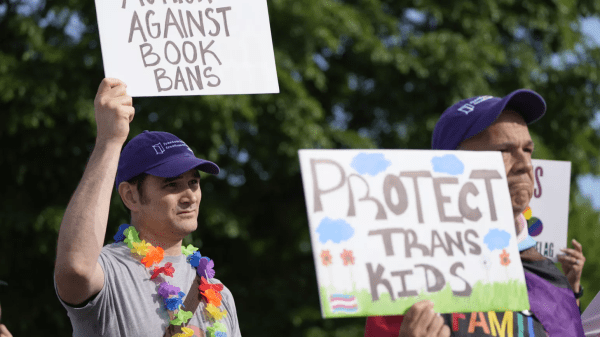
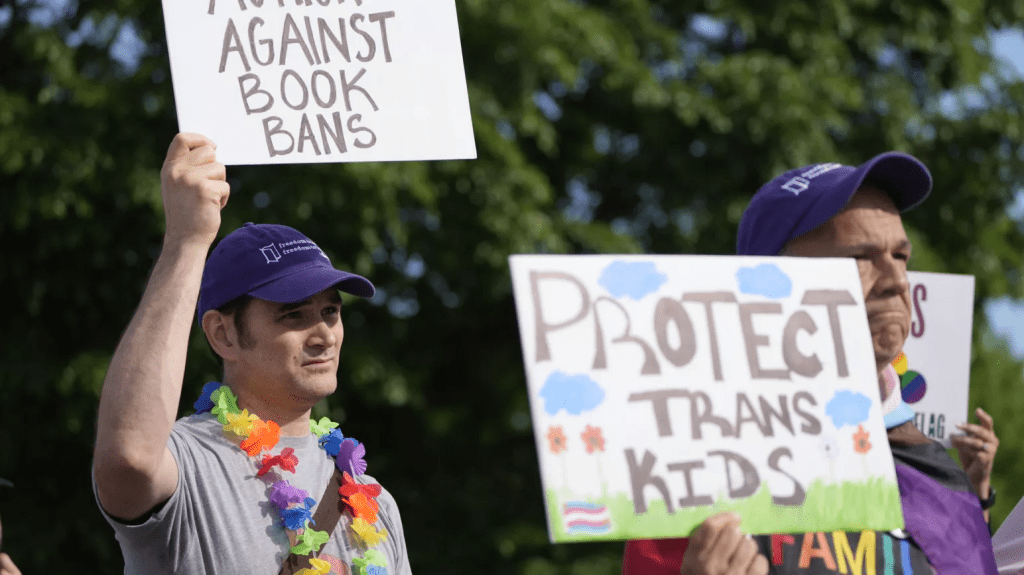
Some parents in the district protested to get the opt-out policy reinstated, while others protested in favor of learning about LGBTQ+ people.
“The books geared to younger kids are just showing a diverse range of families,” said Christina Celenza, a mother of a student in the district, during one of the 2023 protests. “We have a two-mom household, so my wife and I are really proud and out, and, of course, my kid in kindergarten or pre-K is going to probably talk about his family and his two moms.”
The district didn’t budge, so several parents sued. Two lower courts denied them a preliminary injunction, but the Supreme Court just granted them one.
The parents want the courts to ultimately order teachers to notify them of every possible discussion where LGBTQ+ people may come up so that they could opt their children out, lest their kids learn that LGBTQ+ people exist. They claimed that knowing that LGBTQ+ people exist is contrary to their religious beliefs and violates their right to direct their children’s religious upbringing.
Public education advocates warn that the ruling could lead to even more requests for opt-outs of public education on wide-ranging topics including Earth Day, critical thinking, and anti-drug programs.
Free speech and LGBTQ+ advocates denounced the ruling.
“This ruling is a deeply disappointing blow to the right to read under the First Amendment,” said U.S. Free Expression Programs staff attorney for PEN America Elly Brinkley in a statement. “It is a fundamental betrayal of public schools’ duty to prepare students to live in a diverse and pluralistic society. By allowing parents to pull their children out of classrooms when they object to particular content, the justices are laying the foundation for a new frontier in the assault on books of all kinds in schools.”
“While religious liberty is fundamentally important, it should not force public schools to exempt students from lessons that don’t align with their families’ personal religious or cultural beliefs,” said Equality California Executive Director Tony Hoang in a statement. “LGBTQ+ themed books are already among the most banned and challenged in school districts and libraries across the country. Today’s decision will make it even harder for these books to find their way into the hands of students who simply want to read — and who may find validation and acceptance in the process.”
“Today’s ruling does not change schools’ obligation to prepare students to interact with and thrive in a diverse and ever-changing world,” said GLAD Law’s Mary L. Bonauto. “LGBTQ+ people and families exist, students in our public schools have LGBTQ+ parents, and books that include LGBTQ+ people should not be treated differently than those without LGBTQ+ people.”
“The Court’s decision does not require our schools to abandon these efforts. Parents, students, educators, and neighbors can encourage opportunities for learning about diverse people and families by staying involved with school districts, school boards, and in our local communities.”
Healthcare professionals in the United States now have a faster and easier path to work in British Columbia. If you’re a U.S.-trained nurse looking for meaningful work and a stable healthcare system, B.C. just made the move more attractive than ever.
In 2025, the province launched a streamlined credential recognition process, slashing wait times from months to mere days. The result? A massive 127% surge in applications from U.S. nurses. This isn’t just policy on paper, it’s creating real change for health professionals and Canadian patients alike.
If you’ve ever considered working in Canada as a nurse, there has never been a better time.
Why B.C. Is a Top Destination for U.S. Nurses
British Columbia offers more than beautiful landscapes and mild winters. It provides a public healthcare system that values stability, team-based care, and inclusivity, qualities many U.S. nurses now actively seek.
This combination of speed, support, and stability is why over 1,200 healthcare professionals from the U.S., including 413 nurses, have already shown interest.
How the New System Works
Instead of going through multiple layers of red tape, U.S. nurses can now apply directly to the college. B.C.’s healthcare authorities work closely with American regulators to confirm your credentials using shared systems.
This efficient model is designed not only to bring in talent faster but also to ensure quality and safety remain intact. The ultimate goal? More boots on the ground in critical care areas such as cancer treatment, emergency departments, and rural clinics.
Here’s a quick comparison:
Process Step
Old System
New System
Registration Timeline
3–4 months
Few days
Third-party Assessment
Required
Eliminated
Credential Verification
Manual
Automated via database
Support for Applicants
Limited
Full support via Health Match BC
Real Opportunities for Real People
Whether you’re from Washington, Oregon, or California, B.C. wants you. A major recruitment campaign is launching soon in these states, targeting areas where interest is already high.
This isn’t just about filling vacancies. It’s about building a better healthcare system, one that supports team-based care and is culturally aware, inclusive, and patient-first.
Take the new Victoria Primary Care Network Allied Health Centre as an example. Here, nurses, physicians, social workers, and Indigenous wellness providers work side by side to offer complete care. It’s the kind of environment many nurses dream of but struggle to find in the U.S.
Who Is Eligible to Apply?
To qualify for this fast-tracked process, U.S. nurses need:
Proof of nursing education from an accredited U.S. institution
Active nursing license in good standing
No disciplinary action on record
Willingness to live and work in British Columbia
Want to check your eligibility? Book a consultation with RCIC through ImmigCanada and speak with a licensed expert who can guide you every step of the way.
Besides the improved process, many American healthcare professionals are leaving behind the U.S. system for reasons like:
Political uncertainty affecting healthcare rights
Rising health insurance costs
Limited access to team-based care in underfunded facilities
British Columbia offers a safe, stable, and inclusive alternative. Plus, with competitive salaries, government support, and fast registration, it’s not just an option, it’s a smart move.
Ready to Start Your New Life in Canada?
If you’re a qualified nurse in the U.S. and looking for a rewarding career shift, this is your chance. British Columbia is actively welcoming U.S. nurses with open arms and an efficient path to employment.













 fleeredstates.blog
You must be logged in to post a comment.