Kansas Sends Letters To Trans People Demanding The Immediate Surrender Of Drivers Licenses

Read more at Erin in the Morning.

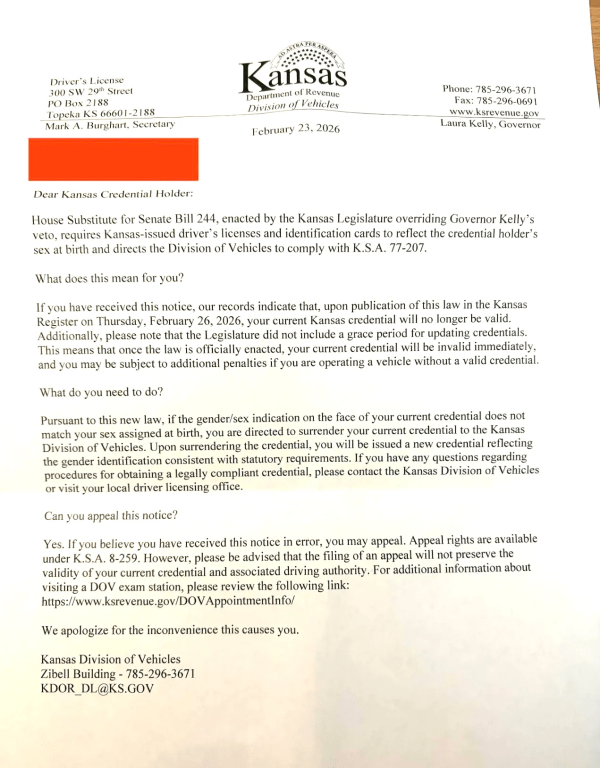
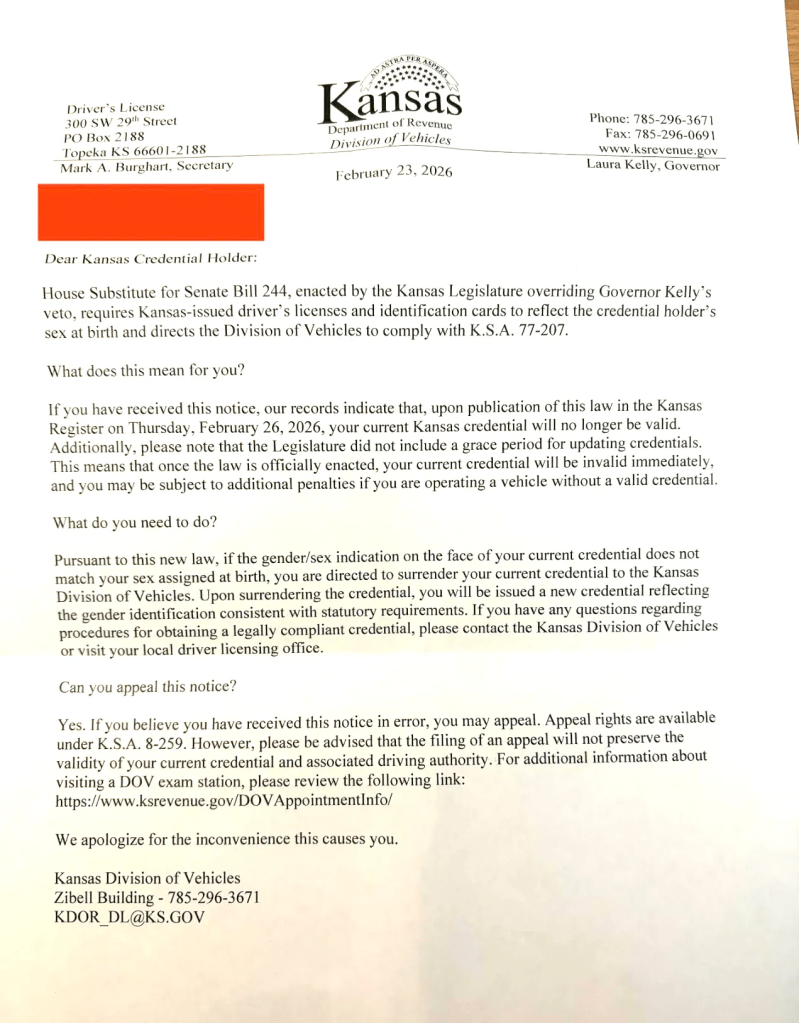
Today, transgender people across Kansas are reporting receiving letters from the Kansas Division of Vehicles stating that they must surrender their driver’s licenses and that their current credentials will be considered invalid upon the law’s publication in the Kansas Register on Thursday. Should any transgender person be caught driving without a valid license, they could face a class B misdemeanor carrying up to six months in jail and a $1,000 fine. Kansas already requires county jails to house inmates according to sex assigned at birth. The letter, obtained by Erin in the Morning, marks one of the most significant erosions of transgender civil rights in the United States to date.

The letter, which has been reported to Erin In The Morning by a Kansas-based activist, states that under House Substitute for Senate Bill 244, Kansas-issued driver’s licenses and identification cards must now reflect the credential holder’s “sex at birth.” It warns that upon the law’s publication in the Kansas Register on Thursday, February 26, current credentials for affected individuals “will no longer be valid.” The Legislature, the letter notes, “did not include a grace period for updating credentials,” and anyone operating a vehicle without a valid credential “may be subject to additional penalties.” Those whose gender marker does not match their sex assigned at birth are directed to surrender their current credential to the Division of Vehicles for reissuance.

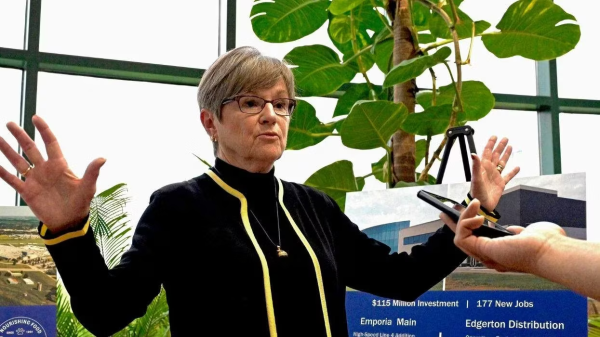
SB 244, also known as the “bathroom bounty” bill, contained heavy identification document bans as well. The bill was rushed through the Kansas Legislature in January using a “gut and go” procedure that bypassed nearly all public input on its key provisions. Governor Laura Kelly vetoed the bill on February 13, calling it “poorly drafted,” but the Legislature overrode her veto days later. In addition to the driver’s license provisions, the law bans transgender people from using bathrooms matching their gender identity in public buildings and creates a bathroom bounty hunter system allowing citizens to sue transgender people they encounter in restrooms for at least $1,000 in damages, including potentially in private restrooms. The bill takes effect immediately upon publication in the Kansas Register rather than the standard July 1 effective date—giving transgender Kansans just days between the override and the invalidation of their identity documents.

The consequences for noncompliance could escalate quickly. Under Kansas law, driving without a valid license is a class B misdemeanor punishable by up to six months in jail and a $1,000 fine—though first-time offenders are more likely to face a citation and fine. A conviction, however, triggers an automatic 90-day license suspension. If a person drives during that suspension, they face a charge of driving on a suspended license, which carries a mandatory minimum of five days in jail. Kansas already requires county jails to house inmates by sex assigned at birth.

The Kansas letters arrive amid an accelerating nationwide campaign to strip transgender people of accurate identification documents. The Trump administration has barred transgender Americans from obtaining passports that reflect their gender identity, a policy the Supreme Court allowed to take effect in November. The Social Security Administration has similarly stopped permitting gender marker updates. At the state level, FloridaTexasIndiana, and other states have moved to block gender marker changes on driver’s licenses or birth certificates. But Kansas appears to be the first state to go further than simply blocking future changes—it is actively invalidating previously issued documents and demanding their surrender.

As a result of this extreme anti-transgender law, the state of Kansas has seen its status deteriorate to a “Do Not Travel” warning in the EITM Trans Risk Map. Transgender people should exercise extreme caution when traveling through the state, and those already living there should take immediate steps to legally protect themselves in the face of laws that could strip their driving privileges, expose them to criminal penalties, and subject them to thousand-dollar bounties simply for using a restroom. For most transgender people who do not already live in Kansas, the risk is now too great to travel there at all.
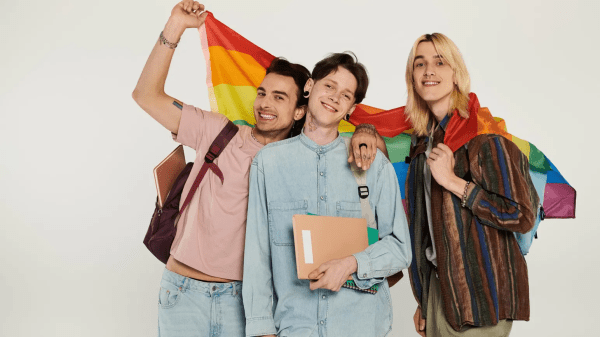
Court shuts down “nakedly hateful” law banning LGBTQ+ student clubs in Texas

Read more at LGBTQ Nation.

In a win for LGBTQ+ Texans, a federal judge has temporarily barred a group of public school districts from enforcing the nation’s first law explicitly banning LGBTQ+ student clubs.

Judge Charles Eskridge of the U.S. District Court for the Southern District of Texas ruled that the state’s Houston, Plano, and Katy school districts could not enforce state law S.B. 12, which passed last year and was called “one of the most nakedly hateful bills we have had on the floor of this House” by out state Rep. Erin Zwiener (D).

Republicans who supported the bill claimed LGBTQ+-supportive clubs are “sexualizing” children.

“We’re not going to allow gay clubs, and we’re not going to allow straight clubs,” said state Rep. Jeff Leach (R). “We shouldn’t be sexualizing our kids in public schools, period. And we shouldn’t have clubs based on sex.”

S.B. 12 was billed as a “Bill of Parental Rights” and also restricted diversity initiatives in public schools and required more parental notification when it comes to mental and physical health in schools.

It also bans teachers from referring to trans students by their preferred first names, even if their parents support their child’s transition. Students have been deadnamed in some school districts while others have complied with the law by calling trans kids by their last names only.

The lawsuit was filed by the ACLU of Texas, Transgender Law Center, and Baker McKenzie on behalf of the Texas American Federation of Teachers (AFT), the Genders & Sexualities Alliance (GSA) Network, Students Engaged in Advancing Texas (SEAT), a teacher, and two students.  

The plaintiffs argued that the law “censors huge swaths of constitutionally protected speech.”

“This win is bigger than me,” said plaintiff Adrian Moore, a Katy ISD student. “It’s a win for all trans students, and students from all backgrounds in my district. Schools should be places where all students feel safe and supported. I hope this lawsuit sends the message that when the LGBTQIA+ community and our allies work in solidarity, we can make a difference.”

Julie Johnson, Moore’s parent, said the ruling is “evidence that justice can sometimes prevail, that speaking up matters, and that it can have a positive impact in the broader community.”

“In a world that feels like basic human dignity is no longer a given right, it means something to my child that their voice was heard,” Johnson said. “In the weeks to come, Adrian will have a name at school. He will no longer be referred to by only his last name, while other students are referred to on a first-name basis. I will see my child’s name listed on programs and playbills at school events. My child will be seen and recognized as the worthy human being he is.”

J. Gia Loving and Maya LaFlamme, co-executive directors at Genders & Sexualities Alliance Network, said the decision “strengthens Texan trans, queer and Two Spirit youth’s right to gather, build connection and safely exist in their schools.”

“GSAs enable students with the skills to build confidence through leadership roles, create spaces of belonging for their peers, and advocate for justice,” they added. “While this is one battle won, our efforts to protect students’ right to safe, inclusive learning spaces and communities will continue. Today and every day, GSAs are here to stay!”

SEAT executive director Cameron Samuels also celebrated the temporary injunction. “Today’s ruling reminds us that queer and trans students’ resilience and joy are here to stay,” Samuels said. “We won’t stop fighting until all Texas students are guaranteed safe and welcoming school environments.”

The federal Equal Access Act requires federally funded public secondary schools to provide equal access to extracurricular student clubs. While that law was passed in 1984 because Christian activists worried that schools might stop Bible clubs from meeting, it has long been used by GSAs to protect their right to meet on school campuses.

GSAs – Gay-Straight Alliances or Gender-Sexuality Alliances – have been targeted by conservatives ever since they were first formed in the 1980s.

In the late 1990s, when Salt Lake City tried to shut down a local school’s GSA, and when they were told they were legally required to give all clubs equal access to school resources, the school board decided to cancel all extracurricular clubs just to stop the GSA, which eventually led to a federal lawsuit. A federal judge ruled that the school district had violated the Equal Access Act and students’ First Amendment rights, which resulted in the district allowing the GSA to meet again.

Netherlands’ first gay prime minister sworn in 

Read more at LGBTQ Nation.

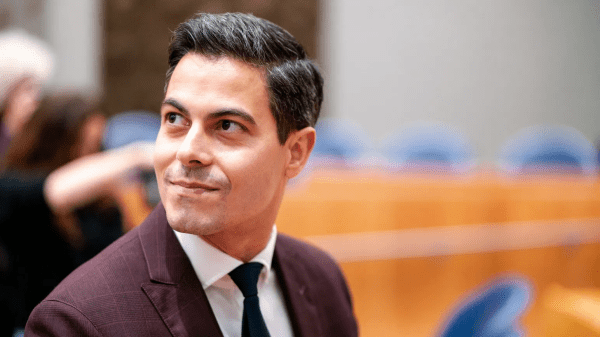
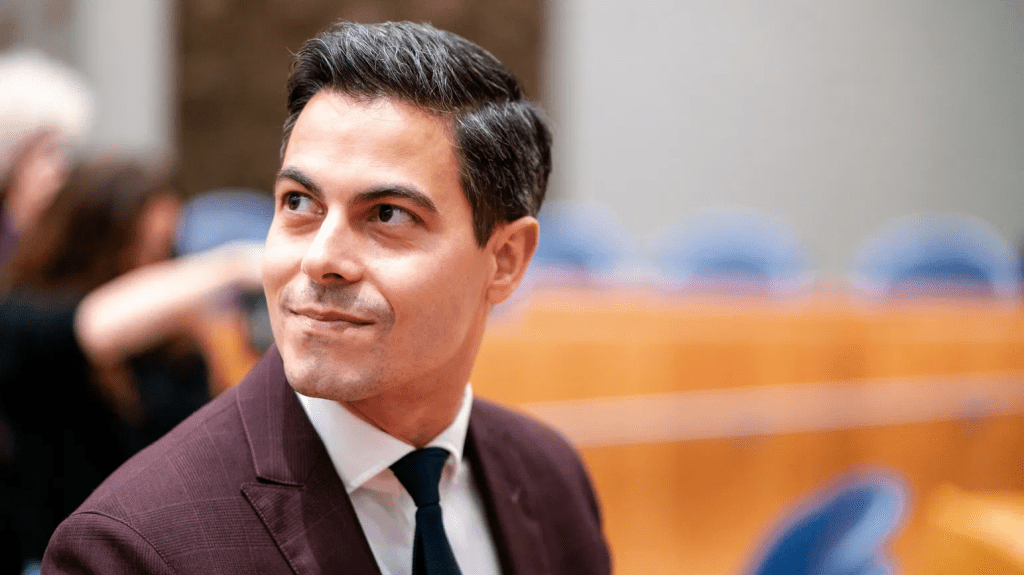
Rob Jetten, who is an out gay man with a fiance, is officially the prime minister of the Netherlands. He is the first out LGBTQ+ person to hold the position.

Dutch King Willem-Alexander swore in Jetten at a ceremony earlier today. At age 38, Jetten is also the youngest person to head the country’s government.

“Proud to be able to do this together,” Jetten wrote in an Instagram post. “In a new phase, with a great responsibility and above all a joint promise to work for everyone in the Netherlands.”

Jetten is a member of the Democrats 66 party, which is considered centrist. He campaigned on a platform that included climate policy, affordable housing, and restoring trust in the government. Gay City News reports that Jetten’s coalition plans to increase military spending to reach the NATO spending target, take a strict approach to asylum immigration, and fund military spending with cuts to healthcare and social welfare programs. The left-wing coalition has denounced these plans.

His campaign focused on a message of “Yes we can” to draw a contrast with his far-right opponent, Geert Wilders, who campaigned on anti-Islam sentiment.

“I think we’ve now shown to the rest of Europe and the world that it is possible to beat the populist movements if you campaign with a positive message for your country,” he said last November.

Jetten is engaged to Olympic hockey player Nico Keenan, posting in 2024 that they are “Soon to be Mr&Mr.”

“I thought it was about time,” Jetten told LINDA.nl. “It just feels great. We’re very happy together.” 

Gay couple from homophobic country is now trying to self-deport after mistreatment ICE detention

Read more at LGBTQ Nation.

A gay couple from Azerbaijan is suffering the current administration’s crusade against immigrants from two sides of a heavy glass partition at an ICE detention facility in Georgia.

“He’s inside, but I’m outside, but I’m living the same situation,” Samir Gadirov, 30, told the Advocate of his husband held in detention. “I’m experiencing the same situation, same feelings.”

Gadirov’s husband, Tural Atakishiyev, 40, was taken into custody in January during a routine immigration check-in in North Carolina, where the couple lives and has a small home renovation business.

The couple met when Gadirov, a permanent U.S. resident, was on vacation in Azerbaijan in 2024. Atakishiyev entered the U.S. with temporary permission, applied for asylum and work authorization, and the couple married last November.

Their marriage opened a path for residency for Atakishiyev, as well, Gadirov said.

But five weeks ago, Atakishiyev was taken into custody. The day still feels unreal, Gadirov said.

He described waiting at the check-in office where Atakishiyev was reporting, and noticing that the staffer was avoiding eye contact. His husband never returned.

The Department of Homeland Security claims Atakishiyev had missed check-ins, which Gadirov disputes. “We never, never missed any of those, and we only followed the rules,” he said. “We applied for asylum, we got married, we applied for I-130, and every legal step that needs to be done, we have done that. But ICE now is lying.”

Now Gadirov drives the six hours from North Carolina to the Stewart Detention Center in southwestern Georgia for his single allotted visit per week with Atakishiyev.

“I can see him through glass windows only,” he said. “The food is awful, and the medication is awful. It’s been like a month, but they have not given him his prescription medication, the pills, because he has panic attacks.”

“He already lost 25 pounds,” Gadirov said.

Now the couple faces a choice: fight their case for months while Atakishiyev remains detained, or “self-deport” to Azerbaijan, where LGBTQ+ people suffer discrimination and worse, and their marriage won’t be recognized.

They’ve chosen the latter.

“I knew the U.S. as a free country,” Gadirov said. “The United States was equal to freedom, but now it’s not.”

Gadirov said his husband’s health mattered more than staying in the United States.

“His mental health is very important to me,” he said. “So, five, six months inside, we don’t want it.”

Now Gadirov is trying to convince DHS, ICE, and an immigration judge to simply let his husband go so the couple can leave the country.

“We’ll have to deal again with ICE to kind of figure out his plane ticket and how we can make this situation as quick as possible,” Gadirov said. “But it seems like it’s very slow.”

In the meantime, Gadirov is thankful for help from a local church and an immigrant advocacy group who’ve started a GoFundMe campaign to help with what comes next for the couple.

Gadirov envisions a life in the country.

“We can live in the countryside, and kind of start our lives from scratch, from zero,” he said.

“He’s my second half,” Gadirov said of Atakishiyev. “If we can be happy as a couple together in Azerbaijan, in the countryside, we are fine with that.”

Hate incidents against LGBTQ+ community on the rise in Texas, across the U.S.: Report

Read more at CBS News.

Hate incidents against the LGBTQ+ community are increasing across the country, including in Texas.

That’s according to a new report by GLAAD, one of the largest LGBTQ+ advocacy organizations in the country.

Data from GLAAD’s 2025 Anti-LGBTQ Extremism Reporting Tracker desk shows that in Texas alone, there were over 60 incidents against members of the community. Those incidents include violent assaults, vandalism, and threats of mass shootings.

“We unfortunately found that there were more than 1,000 of these incidents, and in Texas specifically, we found that Texas was ranked third highest in the U.S.,” said GLAAD’s Sarah Moore. “It’s a snapshot of what LGBTQ people are going through, and not a total, you know, all-encompassing number. We know so many of these stories are not going reported, and if they are being reported, they might be uninvestigated, or they might be dismissed by local police departments.”

The report comes as Texas lawmakers advance policies that advocates said directly impact the LGBTQ+ community, like the so-called “bathroom bill,” which requires people in government buildings and schools to use certain facilities based on the sex they were assigned at birth, as well as the removal of rainbow and decorative crosswalks.

“This isn’t just, you know, something that people are putting into comment sections on Facebook. It’s not just something that we’re using to win political campaigns, but this type of rhetoric is having a very real impact on the lived experience of LGBTQ folks,” Moore said.

In Arlington, organizers of Arlington Pride cancelled this year’s celebration after the city council’s vote to revise the ordinance over concerns it could jeopardize federal funding. Critics said the new version strips away protections for the LGBTQ+ community and other marginalized groups.

“There’s a very strategic political agenda out there to make people feel other,” said Deejay Johannessen, the CEO at the Help Center for LGBTQ+ Health. “It’s showing that they’re less than and people then act upon that because they’re taking the lead from the political leaders.”

Johannessen said while members of the LGBTQ+ community have long faced challenges, the current climate is especially difficult.

“We can have our differences, but everybody has the right to live their lives. and feel safe in their own community,” Johannessen said.

Victoria passes law protecting intersex children from unnecessary surgeries

Read more at Pink News.

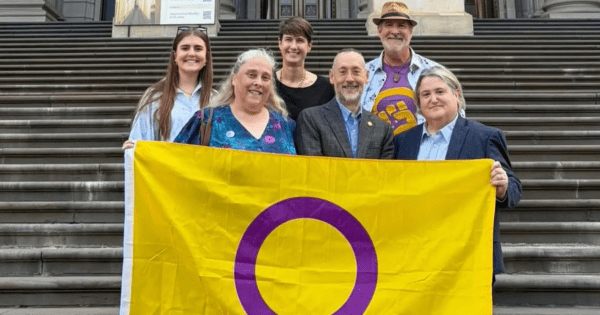
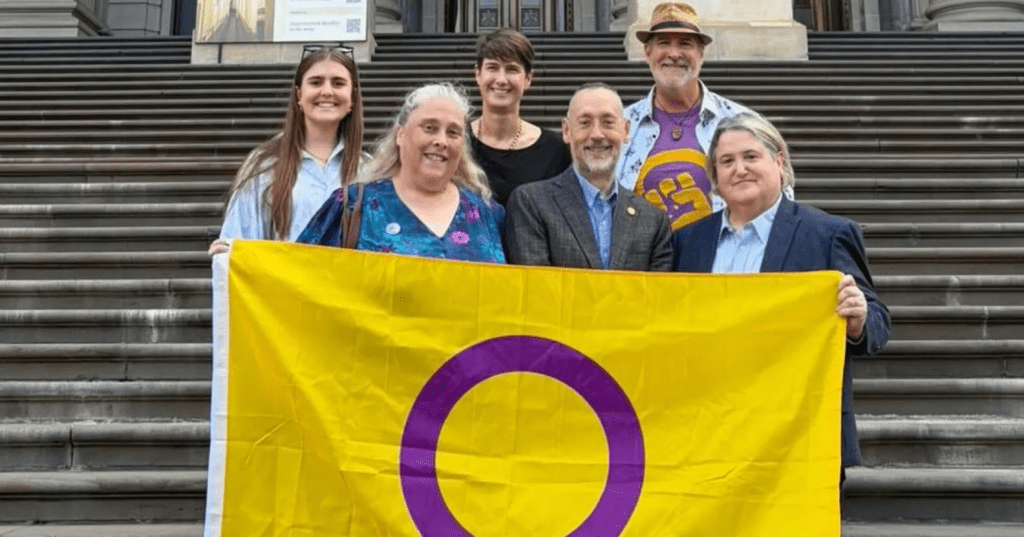
The Victorian Parliament has passed a new law that protects intersex children from being subjected to unnecessary medical procedures without their consent.

The new legislation was passed on 19 February with multipartisan support, 24 votes to 15. It is designed to stop children born with innate variations of sex characteristics from receiving unnecessary surgeries to alter them until they are old enough to decide for themselves.

The reformed bill also includes the formation of a panel of medical experts and people with lived experience to oversee medical treatment plans for intersex children, stricter guidelines on when treatment and surgeries are necessary, support for patients and their families, and continued consent from parents and caregivers for medically-necessary treatments.

In a statement, bioethicist and Executive Director of Intersex Human Rights Australia Dr Morgan Carpenter said: “It is such a powerful moment for the bill to pass with such broad support. Thank you to the members of the Legislative Council, and thank you to the Victorian government for bringing the bill before parliament in an election year.”

Tony Briffa, an intersex advocate and Co-Chair of InterAction for Health and Human Rights, celebrated the victory, saying she is “incredibly proud” that Victoria had taken the historic step for the next generation.

“I have carried the weight of decisions made about my body without my consent — choices that changed my life forever, and that could have waited until I was old enough to understand and speak for myself,” she continued.

“It has taken years of pain and healing to reclaim who I am, unlearn the shame and finally understand that I was always enough. Our bodily differences are a natural part of human diversity. Surgical or hormonal interventions should proceed only where there is clear medical necessity — and where that need outweighs the risk of causing lifelong harm.”

According to Equality Australia, there are at least 40 known variations of intersex characteristics which occur across approximately 1.7 percent of the population.

The consequences of unnecessary surgeries on intersex children include, but are not limited to, loss of sexual function and sensation, loss of fertility, urinary tract issues, a need for ongoing medical treatment or repeat surgeries, incorrect gender assignment, loss of autonomy and negative self-image in later life.

Ken Paxton sues Children’s Health and Dallas doctor for allegedly providing transgender youth care

Read more at KERA News.

Attorney General Ken Paxton sued Children’s Health System of Texas and a Dallas doctor Wednesday for allegedly violating a Texas ban on gender-affirming care for minors.

The AG asked a Collin County judge for a temporary injunction to stop the two defendants from providing any gender-affirming care or filing any claims to Texas Medicaid for that care.

The suit alleges Jason Jarin, a pediatric and adolescent gynecologist at Children’s Health and associate professor at UT Southwestern Medical Center, violated the law with 19 patients. It alleges he violated a 2023 law that prevents health care providers from giving transgender youth puberty blockers, hormone replacement therapy or surgery for the purpose of transitioning — one of a number of Texas laws aimed at limiting the type of care transgender adults and children can receive.

Paxton also argues Jarin filed claims for these services with Texas Medicaid, which doesn’t cover any gender-affirming care.

“This criminal extremist not only permanently harmed children, but he also then defrauded Medicaid and stuck Texas taxpayers with the bill for this insanity,” Paxton wrote in a statement. “Experimental ‘transition’ procedures on minors are illegal, unethical, and will not be tolerated in Texas.”

Jarin told KERA News Wednesday morning he had just learned of the lawsuit, and declined to comment.

Children’s Health told KERA in a statement its “top priority is the health and well-being of the patients and families we serve.”

“We comply with all applicable local, state and federal health care laws. Due to ongoing legal proceedings, we are unable to comment further at this time,” the statement read.

Jarin became an assistant professor at UT Southwestern in 2016 and has published studies on transgender children, according to his faculty profile.

Many of the lawsuit allegations claim he intentionally prescribed extra hormones for transgender kids leading up to Sept. 1, 2023, when the law took effect, so that they could continue to get treatment.

The law, known as Senate Bill 14, did allow for prescriptions to continue for children who were “already subject to a continuing course of treatment that began prior to June 1, 2023,” and children who “attended at least 12 mental health counseling or psychotherapy sessions over a period of at least six months prior to starting treatment,” according to Paxton’s suit. But those prescriptions had to be for the purpose of weaning the patient off the drug.

Jarin is accused of violating SB 14 with 12 of the 19 patients. If found liable, he could lose his medical license — SB 14 requires the Texas Medical Board to revoke the license of any physician who provides gender-affirming care to a child.

Kansas GOP overrides gov’s veto to enact bill that could ban “husbands from wives’ shared hospital rooms”

Read more at LGBTQ Nation.

Republican lawmakers in Kansas overrode Gov. Laura Kelly’s (D) veto of an extreme bathroom bill that Democrats say will ban people from visiting loved ones in hospitals, nursing homes, and dorms if they aren’t of the same sex.

“As I said in my veto statement, this is a poorly drafted bill with significant, far-reaching consequences,” Kelly said in a statement. “Not only will this bill keep brothers from visiting sisters’ dorms and husbands from wives’ shared hospital rooms, it will cost Kansas taxpayers millions of dollars to comply with this very vague legislation.”

Kelly vetoed S.B. 244 last Friday. But, because Republicans have supermajorities in both chambers of the legislature, they were able to override her veto in a party-line vote. The Kansas House of Representatives voted 87-37 in favor of overriding her veto, and the state Senate voted 31-9 in favor. Both votes occurred in the last 24 hours.

“Kansas Democrats are for They/Them,” Senate President Ty Masterson (R) said in a statement. “I will continue to fight for you, and protect women and girls across our state.”

Republicans in the state legislature passed S.B. 244 last month. The bill was originally about gender markers on drivers’ licenses, but Republicans used a sneaky maneuver called “gut-and-go” to hold hearings on the drivers’ license part of the bill and then change the text to include bathroom provisions, without holding hearings on those bathroom provisions.

The bathroom provisions will ban trans people from using facilities that do not align with their sex assigned at birth in government buildings.

The law “obviously discriminates against transgender people in ways that make our lives exponentially more difficult and dangerous,” said state Rep. Abi Boatman (D), who is transgender.

Democrats stressed that the bathroom provisions were poorly written and would affect any situation where people are being housed in shared living spaces, like dorms, nursing homes, and hospitals.

“If your grandfather is in a nursing home in a shared room, as a granddaughter, you would not be able to visit him. If your sister is living in a dorm at K-State, as a brother, you would not be able to visit her in her room,” Kelly said in a statement when vetoing the bill. “I believe the Legislature should stay out of the business of telling Kansans how to go to the bathroom and instead stay focused on how to make life more affordable for Kansans.”

“If you feel you have to accompany your nine-year-old daughter to the restroom at a sporting event, as a father, you would have to either enter the women’s restroom with her or let her use the restroom alone.”

State Sen. Kellie Warren (R) said that the unintended consequences won’t happen because, she told CJ Online, they’re “not the subject of the bill.”

The bill will also ban trans people from getting the gender markers updated on their driver’s licenses. The Kansas Department of Revenue will have to invalidate licenses where the gender marker has been corrected, and the same applies to birth certificates.

European Parliament passes resolution that says trans women are women

Read more at LGBTQ Nation.

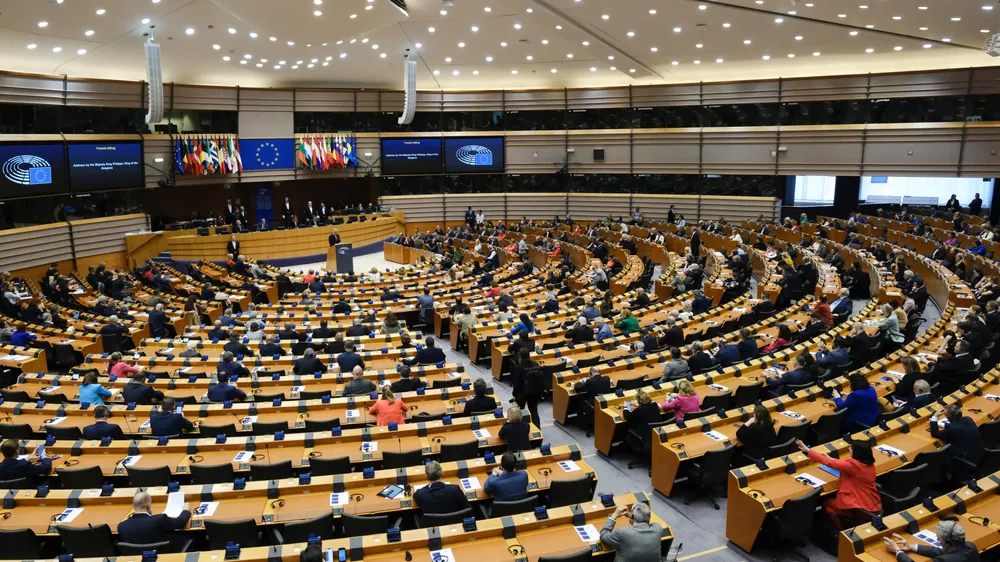
The European Parliament agreed to a resolution that says that trans women are women last Wednesday.

The resolution was to adopt recommendations concerning the European Union’s priorities for the 70th session of the U.N. Commission on the Status of Women, which is set to take place next month in New York. The U.N. Commission on the Status of Women is charged with promoting gender equality across the globe.

Citing the U.N. Convention on the Elimination of All Forms of Discrimination against Women, as well as several other international proclamations, the council set a list of recommendations for the E.U. to pursue at the convention, including: “emphasize the importance of the full recognition of trans women as women, noting that their inclusion is essential for the effectiveness of any gender-equality and anti-violence policies; call for recognition of and equal access for trans women to protection and support services.”

The resolution also mentioned LGBTQ+ people in several other places, including in the statement about needing a “comprehensive tool to monitor and counter democratic backsliding and backsliding in women’s rights” and citing “attacks by anti-gender and anti-rights movements” that “undermine democracy and target women’s and LGBTIQ+ rights.”

The section on funding cuts to non-governmental organizations included “LGBTIQ+ organizations” as needing support. The section on sexual and reproductive health and rights (SRHR) mentioned “access to gender-sensitive mental health services for young women and LGBTIQ+ people.” And a section about the E.U. commitment to foreign policy stressed the need to prioritize “the needs of women and LGBTIQ+ human rights defenders.”

The resolution was adopted in a 340-141 vote, with 68 abstentions.

Independent journalist Erin Reen notes that this now puts the E.U. “on a direct collision course with the United States,” which will also be at the session, a reference to the current presidential administration’s stated policy that trans people’s existence must be denied by the federal government.

While the European Parliament’s recommendations aren’t binding, they are expected to have significant influence on the E.U.’s positions at the forum.

Kansas Gov. Laura Kelly vetoes anti-trans ‘bathroom bounty’ bill

Read more at the Advocate.

Kansas Gov. Laura Kelly has vetoed what LGBTQ+ advocates are calling an anti-transgender “bathroom bounty” bill.

Kelly, a Democrat in a heavily Republican state, Friday vetoed Senate Bill 244, passed by legislators in January along party lines, Republicans for, Democrats against. It would have required trans people to restrooms and other single-sex facilities in government buildings according to their sex assigned at birth, not their gender identity. It further would have required the state to reissue any driver’s licenses or birth certificates that reflected a trans person’s gender identity, replacing that gender marker with one for the sex assigned at birth. It further would have banned multi-occupancy gender-neutral restrooms in government buildings.

It would have imposed a fine on individuals of $1,000 for a second violation of the law and would allow those “aggrieved” by the presence of a trans person to sue for damages of $1,000 or the amount of actual damages. The government entity would be fined $25,000 for the first violation and $125,000 for any subsequent violation. The lawsuit provision is not limited to government buildings.

In her veto message, Kelly called the bill “poorly drafted.”

“This poorly drafted bill will have numerous and significant consequences far beyond the intent to limit the right for trans people to use the appropriate bathroom,” she wrote. “Under this bill: If your grandfather is in a nursing home in a shared room, as a granddaughter, you would not be able to visit him. If your wife is in a shared hospital room, as a husband, you would not be able to visit her. If your sister is living in a dorm at K-State, as a brother, you would not be able to visit her in her room. … I believe the Legislature should stay out of the business of telling Kansans how to go to the bathroom and instead stay focused on how to make life more affordable for Kansans.”

Related: Kansas governor passes law requiring ID to view acts of ‘homosexuality’ online, vetoes anti-LGBTQ+ bill

The legislation is known as a “gut and go” bill because it started out with an altogether different purpose. SB 244 originated as a bill to regulate bail bond companies. A House committee deleted those contents and replaced them with the anti-trans language. The gender marker provisions had a public hearing, but not the bathroom provisions.

“Procedurally, it is the absolute worst bill I have ever heard in the Kansas legislature,” Democratic Rep. Dan Osman said during debate on the measure, according to the Kansas Reflector. “It was done with one purpose and one purpose only — to ensure that the absolute least number of people were available as opponents to this bill and that they were unaware that there would even be a hearing.”

Rep. Abi Boatman, the only trans person currently serving in the legislature, said she felt the bill was aimed at her, the Reflector reports. “I have sat here for five and a half hours and listened to this entire room debate my humanity and my ability to participate in the most basic functions of society,” Boatman, a Democrat who was appointed in January to fill a vacancy, said as the debate ended. “From the bottom of my heart, I hope none of you have to ever sit through something like that.” Another Democrat, Rep. Susan Ruiz, said the legislation “spits on basic human decency.”

Democratic Rep. Alexis Simmons said it’s sexism, not trans women, that is a threat to women’s safety. “Here in this building, as an intern, as a committee assistant, as staff and as a legislator, I have been sexually harassed more than you would believe,” she said, according to the Reflector. “If we’re going to talk about women’s safety, we should address the real trauma, which is how women are treated, not putting the spotlight on one new member of our legislature.”

House Minority Leader Brandon Woodard predicted that if the bill became law, it would be struck down in court. Attorney General Kris Kobach, a Republican, lost a court case dealing with gender markers, he noted. “As long as Kris Kobach’s our attorney general, I think he’s going to continue to lose in court,” Woodard said.

The legislation “would cut directly against the inclusive workplace policies many Kansas cities have already adopted,” a Human Rights Campaign press release notes, and its “broad restrictions across public buildings, including schools, universities, airports, and government offices, would affect large numbers of public-sector employees and contribute to a chilling effect at work.”

An override of Kelly’s veto could happen unless some who supported the bill change their minds. Both the House and Senate passed the legislation with more than the two-thirds majority necessary for an override. Kelly has previously vetoed bills banning gender-affirming care for trans youth and barring them from competing in school sports under their gender identity, but legislators overrode those vetoes, so the bills became law.

Senate President Ty Masterson and House Speaker Dan Hawkins, both Republicans, vowed overrides, The Topeka Capital-Journal reports. “I never thought I’d see the day when our state’s own governor would turn her back on women by forcing them to use bathrooms in public buildings with biological men,” said a statement from Masterson. “Sadly, our governor has decided she will side with they/them over simple, scientific truth. Kansans need not worry — the Kansas Senate will restore sanity and override her veto.”

Related: Kansas public universities end LGBTQ+, DEI programs

LGBTQ+ groups, meanwhile, are praising Kelly’s veto. HRC President Kelley Robinson issued this statement: “The length that Republican lawmakers will go in attacking the transgender community instead of solving real issues facing Kansans is appalling. SB244 is about invading privacy, forcing people into the wrong bathrooms, stripping transgender Kansans of accurate IDs, and inviting government-sanctioned harassment — all pushed through using cynical procedural tricks to silence public opposition. Shameful policies like this are part and parcel of a national right-wing anti-LGBTQ+ campaign, and they don’t make anyone safer. They green light harassment and violence targeting transgender people while opening the door to invasive gender policing that affects everyone.

“We’re grateful to Governor Laura Kelly and Kansas State Rep. Abi Boatman for continuing to stand up for transgender Kansans. They have been consistent, courageous defenders of dignity, privacy, and freedom for all. HRC will work to ensure the legislature sustains the Governor’s veto and gets back to work on policies that support all Kansas families, instead of discriminating against them.”

“It is impossible to overstate the harms this extremist legislation would visit on transgender Kansans and many others if allowed to take effect,” Omar Gonzalez-Pagan, senior counsel and health care strategist at Lambda Legal, added in a press release. “ SB244 would require transgender Kansans to use public facilities that do not align with who they are and to carry inaccurate and conflicting identity documents that cause confusion and expose them to harassment and abuse, and would put a target on their backs through a bounty system that will encourage extreme violations of their privacy by those seeking financial gain. Make no mistake, the unprecedented and unlawful bounty system in this legislation would expose all Kansans — not just those who are transgender — to intrusive and abusive violations of their privacy.”

Blog at WordPress.com.

Up ↑