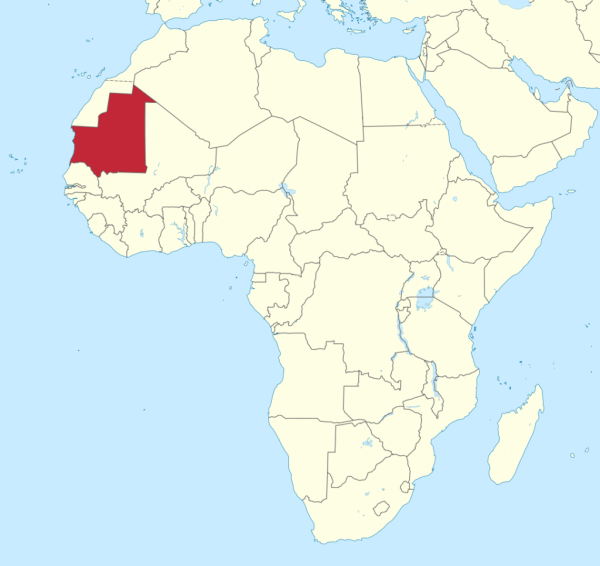
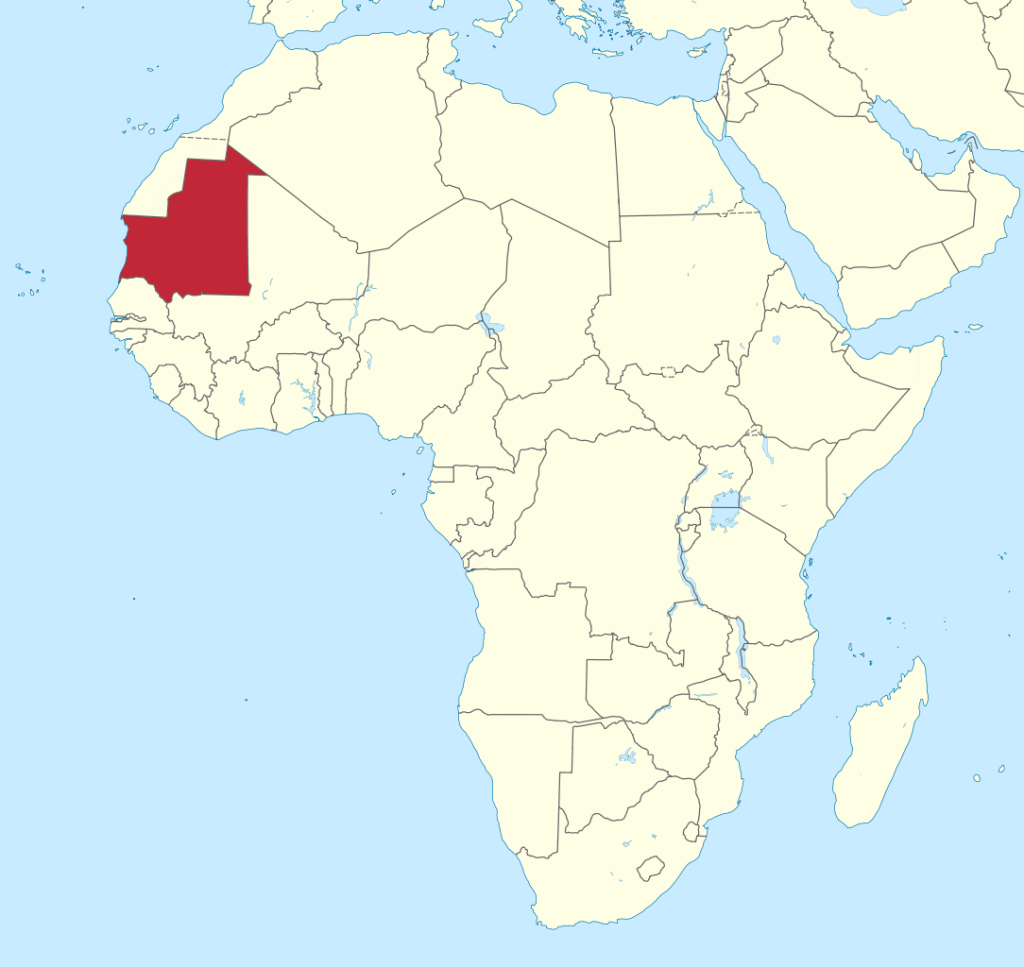
Mauritania criminalizes same-sex sexual activity under its Penal Code, which provides a maximum possible sentence of death by stoning for men. However, in 2021, the government confirmed its de facto moratorium on the death penalty.
There have been reports of people being arrested and detained for these charges in recent years, as well as LGBTIQ people being harassed.
LGBTIQ visibility is fairly low in Mauritania, which contributes to social stigma. Due to the fear of discrimination and rejection, many LGBTIQ people remain private about their identities.
The country became a refuge for Senegalese LGBTIQ people after 2008, when homosexuality became the subject of recurrent public controversies in Senegal. Some Senegalese LGBTIQ people have been granted refugee status by the United Nations High Commissioner for Refugees (UNHCR) but face serious legal dangers, health risks, and social rejection, making it difficult for them to get the help and protection they need.
[Mauritania’s anti-homosexuality law] specifically applies to Muslim men, though it is not clear if it applies equally to non-Muslim men.
There is some evidence of the law being enforced in recent years, with LGBT people being occasionally subject to arrest. A high-profile incident in 2020 saw ten people arrested and detained on same-sex activity charges, with eight of them being prosecuted and sentenced. There have been limited reports of discrimination and violence being committed against LGBT people in recent years, and the lack of reporting is attributed to social stigma.
In January, ten people were arrested and detained after video footage emerged on social media of what was alleged to be a same-sex wedding. [In the capital,] Nouakchott Police Commissioner, Mohamed Ould Nejib, subsequently acknowledged in a television interview that the event had not been a same-sex wedding but was simply a birthday celebration. He indicated that the men had been arrested for “imitating women”. According to the police report, the eight men “confessed that they are homosexuals” during police interrogations, at which they had no legal representation, but these confessions were subsequently refuted during the trial.
Eight of those arrested were subsequently convicted and sentenced to two years’ imprisonment for ‘indecency’ and ‘inciting debauchery’ under Articles 264 and 306 of the Penal Code respectively. One woman received a one-year suspended sentence for participating in ‘inciting debauchery’ by being present at the event. The restaurant owner was acquitted.
The U.S. Department of State evaluated LGBT rights in Mauritania in 2022: The US Department of State found that LGBT persons are reportedly harassed and subjected to violence from the National Police, the General Group for Road Safety, neighbours, and family members. No laws protect LGBT persons from discrimination based on sexual orientation, gender identity or expression, or sex characteristics. LGBT identity is rarely publicly identified or discussed, which observers attributed to the severity of the stigma and the legal penalties attached to it.
Morocco: Morocco has been under a long-term project to revise its legal system, and this year published reforms to the code of criminal procedure that ought to at least make the justice system more fair and limit pre-trial detention. Then again, we’ve also heard reports this year of continued crackdowns on queer people for pro-LGBT expression on the internet. [See “Coalition demands release of Morocco LGBT activist after 100 days in prison” (November 2025)]
Morocco also intends to revise its penal code, and some campaigners have been pushing to delete its sodomy and extramarital sex provisions when that happens, but no progress was made this year. I think the likelihood Morocco actually deletes its sodomy law is very slim.
Meanwhile, in October, the UN Security Council backed Morocco’s plan to resolve the dispute over the Western Sahara/Sahrawi Arab Democratic Republic, which would make it autonomous under Moroccan rule. The UN called on both sides to negotiate an actual settlement, but this seems like a big step toward eliminating an entire country from the map (which would decrease by one the number of states that criminalize homosexuality).
Chad: The government launched a commission on reinstating the death penalty, which was abolished in 2020.
West Africa
Burkina Faso, Mali and Niger: These three states run by military juntas following coups over the past half-decade took steps to deepen their integration into the Alliance of Sahel States (yes, the ASS), which is something between a supranational organization and a proto-state in its own right. They all withdrew from the Economic Community of West African States (ECOWAS), and they announced their intention to withdraw from the International Criminal Court. The states are motivated in part by antipathy to France and the West, Islamic faith, and support for and from Russia, all of which is exemplified in their pursuit of anti-LGBT policies.
Burkina Faso is also considering reinstating the death penalty as it overhauls its penal code, which ought to be a worrying sign. The new code also includes a crime of “promotion of homosexual practices and similar acts.”
Niger held a national conference that voted to extend the junta’s rule by five years and also to oppose any effort to legalize same-sex marriage.
Worryingly, some other neighbors, Chad and Togo (which both criminalize gay sex) have publicly mused about joined the ASS and have even taken some steps to integrate with them.
Of course, if the ASS ever does replace these three to five states, it would at least reduce the number of criminalizing states on the chart.
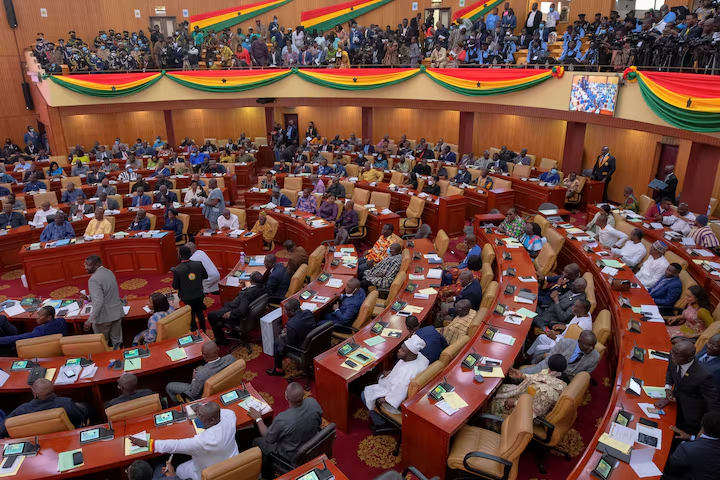
Ghana: A draconian anti-LGBTQ bill modelled after Uganda’s Anti-Homosexuality Act was reintroduced to parliament after a previous version lapsed without the president’s signature before the end of the term. This one is sponsored by a group of opposition MPs, but the government has said it intends to introduce its own version at some point. The current president has strongly suggested he will sign it.
Ghana also ratified the Treaty on the Prohibition of Nuclear Weapons.
The Trump administration used Ghana and Togo as places to deport asylum seekers, including at least one who was seeking asylum due to his sexual orientation.
The constitution review committee proposed an amendment to specifically bar the use of the death penalty. Ghana abolished the penalty in 2023 for ordinary crimes only, and the repeal was not retroactive, so those on death row still face execution.
Liberia: The government undertook a review of its laws for gender discriminatory effects – particularly around marriage, citizenship, rape, and children’s rights – but the review did not take sexual orientation or gender identity into account. I haven’t heard of further action being taken on this file.
The government intervened in the United Methodist Church over its support of same-sex marriage, including a senate investigation and even police detention. The local church has made clear its opposition to same-sex marriage.
A lawmaker was removed from a session of parliament after he disruptively attempted to introduce an anti-LGBT bill that would have imposed criminal penalties on same-sex marriage. Watch out for this to come back.
Nigeria: In a climate of regular violence against queer people, the governor of Kano state submitted a bill to the legislature to criminalize same-sex marriage. It’s already criminalized federally.
The senate was also considering a bill to expand the use of the death penalty.
Gabon: A constitutional ban on same-sex marriage, passed in 2024, took effect in 2025.
Eastern Africa
Kenya: In August, the high court directed the government to protect transgender peoples’ rights, including recognition of their chosen gender and dignified treatment in government custody. The court ordered the government enact a specific Transgender Protection Rights Act or add amendments to that effect to the Intersex Persons Act.
Meanwhile, an MP vowed to bring forward a bill to criminalize LGBTQ advocacy, but he hasn’t done so yet. Parliament was also considering a bill to abolish the death penalty.
Uganda: The World Bank has ended its suspension of lending to Uganda, which was imposed in 2023 after the passage of the Anti-Homosexuality Act. The Bank now claims it has put in place mitigation measures to ensure its funds won’t be used to discriminate, which, frankly doesn’t make a lot of sense.
Tanzania: The government has announced it is moving forward with toughening existing criminal laws banning same-sex intercourse to further ban same-sex relationships and marriages, but I haven’t actually seen legislation come forward yet.
Rwanda: Parliament passed a new health care law that specifically excludes same-sex couples from accessing surrogacy and assisted reproduction.
Mauritius: The UK and Mauritius finalized and published a treaty on the handover of the British Indian Ocean Territory, with the UK maintaining sovereignty over the military base on Diego Garcia. While the treaty hasn’t yet been ratified, once it does the BIOT will cease to exist as a separate jurisdiction where same-sex marriage is legal – unless the UK recreates it in some form to cover Diego Garcia only.
Comoros: Joined the Biological Weapons Convention.
Eritrea: Ratified the Convention on the Rights of Persons with Disabilities.
Southern Africa
Botswana: A lesbian couple filed a constitutional challenge seeking the right to marry, saying the current ban violates various sections of the constitution guaranteeing the right to equality. The high court struck down Botswana’s sodomy law in 2019, in part after finding that the constitutional prohibition on sex discrimination included sexual orientation discrimination, a decision that was upheld by the court of appeal in 2021.
Namibia: We’re still waiting on a ruling from the supreme court on the government’s appeal of 2024’s lower court decision decriminalizing sodomy.
The former president officially vetoed a bill that aimed to criminalize same-sex marriage and LGBT advocacy before leaving office (he signed a different bill late in 2024 that banned same-sex marriage, however). His successor – the country’s first female president – says she’ll fight for equality for everyone but has avoided saying anything about LGBT people. Meanwhile, Equal Namibia was seeking couples who want to challenge the country’s ban on same-sex marriage.
South Africa: The government continued to work on a unified marriage act which will combine several marriage laws for different religious communities and the same-sex Civil Union Act into a single law. It has not yet cleared parliament.
Eswatini: The leading LGBT advocacy group Eswatini Sexual and Gender Minorities went back to court to challenge the government’s decision to deny them a company registration. The supreme court had ordered the government to reconsider their application back in 2023, but the minister’s decision remained the same.
Malawi: The Minister of Justice said the country is committed to abolishing the death penalty, having already completed public consultations, but no bill has been brought forward yet.
Zambia: The constitutional court dismissed a challenge to the country’s sodomy laws, ruling that the court lacked jurisdiction as the challenge needed to be filed before the country’s high court first. The Zambia Civil Liberties Union says they will refile the case.
Zimbabwe: In July, the government launched a legal reform process to recognize the rights of intersex people. We’ll see what comes of this.
The ruling party’s national conference also vowed to intensify and enforce laws banning homosexuality in late 2024, though no new legislation has been put forward.
Not content with holding title to one of the harshest anti-LGBTQ+ laws in the world, Uganda’s parliament is considering a bill that would outlaw identifying as lesbian, gay, bisexual, transgender, or queer.
The country’s Anti-Homosexuality Act, passed in 2023, already provides a sentence of life in prison for gay men who have sexual relations, and in extenuating circumstances, even death.
The new measure would criminalize Ugandans for simply saying they’re anything but straight.
Among more than 30 African nations that ban same-sex relations, the proposed law would be the first to criminalize just identifying as LGBTQ+, according to Human Rights Watch.
The proposed law was introduced with the goal of combating “threats to the traditional, heterosexual family,” according to a copy shared with Reuters.
In an awkward mashup of identifying prohibitions, language in the bill echoes executive orders issued by the U.S. president in his crusade against the transgender community.
The measure mandates punishment of up to 10 years in prison for any person who “holds out as a lesbian, gay, transgender, a queer or any other sexual or gender identity that is contrary to the binary categories of male and female.”
The bill also criminalizes the “promotion” of homosexuality and “abetting” and “conspiring” to engage in same-sex relations.
Much of the bill’s content is revived from the original “Kill the Gays” law, passed in 2013 but overturned by Uganda’s high court on technical grounds.
That law criminalized lesbianism.
“One of the most extreme features of this new bill is that it criminalizes people simply for being who they are as well as further infringing on the rights to privacy, and freedoms of expression and association that are already compromised in Uganda,” said Oryem Nyeko, Uganda researcher at Human Rights Watch.
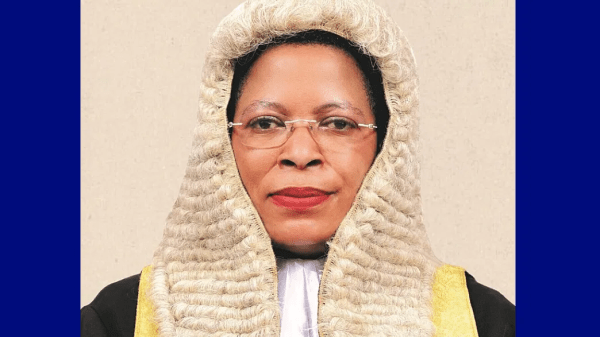
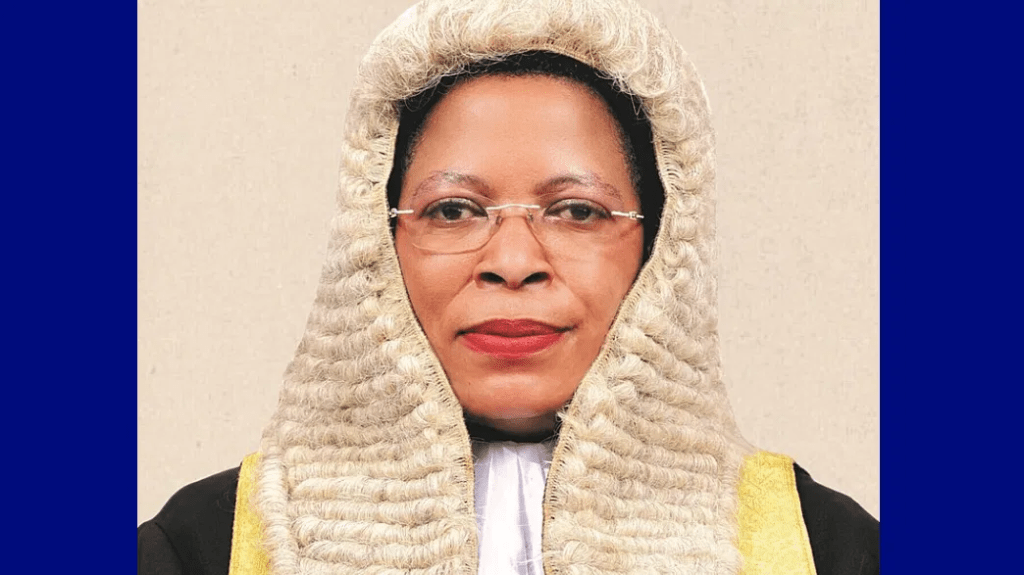
Speaker of the Parliament Anita Among, the rabidly homophobic lawmaker who helped usher the Anti-Homosexuality Act into law, sent the new bill to committee for debate and public hearings after it was read to legislators.
Among urged fellow lawmakers to reject intimidation, referencing threats by Western countries to impose travel bans on those responsible for the legislation.
“This business of intimidating that ‘you will not go to America,’ what is America?” she asked.
Ugandan lawmakers, the speaker prominent among them, have for years warned of “degenerate Western values” threatening Ugandan families and sovereignty.
Among was urged on in her anti-Western pose by Russia’s ambassador to Uganda, who encouraged her to fast-track the “Kill the Gays” law through parliament in 2023. It passed overwhelmingly and was cheered by lawmakers.
“This is the time you are going to show us whether you’re a homo or you’re not,” Among told the packed chamber.
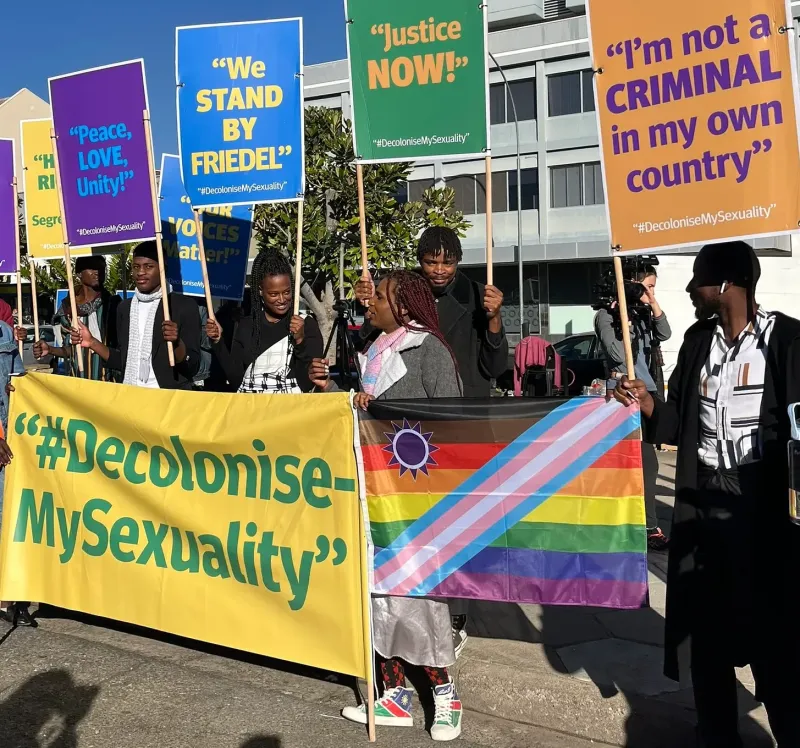
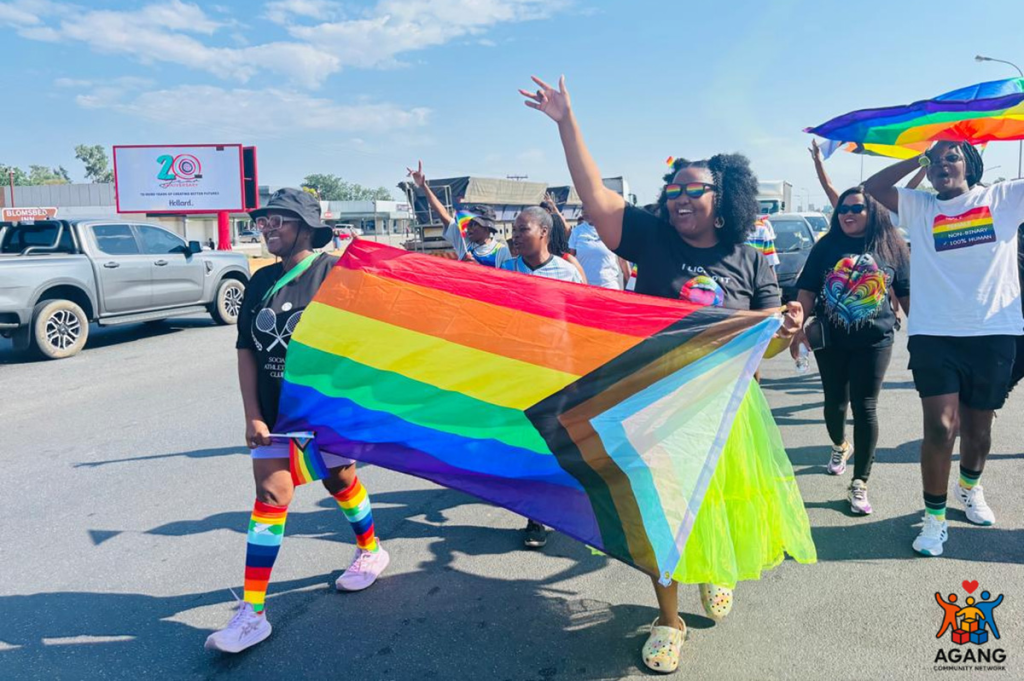
“When the sun rose on 1 Nov., 2025, Pride morning in Palapye, the open space where the march was scheduled to begin was empty. I stood there trying to look calm, but inside, my chest felt tight. I was worried that no one would come. It was the first-ever Pride in Palapye, a semi-urban village where cultural norms, religious beliefs, and tradition are deeply woven into everyday life.
I kept asking myself if we were being naive. Maybe people weren’t ready. Perhaps fear was going to win. For the first 30 minutes, it was me, a couple of religious leaders and a handful of parents. That was it. The silence was loud, and every second felt like it stretched into hours. I expected to see the queer community showing up in numbers, draped in color and excitement. Instead, only the wind was moving.
But slowly, gently, just like courage often arrives, people started to show up with a rainbow flag appearing from behind a tree and a hesitant wave from someone standing at a distance.
That’s when I understood that people weren’t late, just that they were afraid. And their fear made sense. Showing up openly in a small community like Palapye is a radical act. It disrupts silence. It challenges norms. It forces visibility. Visibility is powerful, but it is never easy. We marched with courage, pulling from the deepest parts of ourselves. We marched with laughter that cracked through the tension. We marched not because it was easy, but because it was necessary,” narrates activist Seipone Boitshwarelo from AGANG Community Network, which focuses on families and friends of LGBTIQ+ people in Botswana. She is also a BW PRIDE Awards nominee for the Healing and Justice Award, a category which acknowledges contributions to wellness, mental health, and healing for the LGBTIQ+ community across Botswana.
Queer Pride is Botswana Pride!
Pride is both a celebration and a political statement. It came about as a response to systemic oppression, particularly the criminalization and marginalization of LGBTIQ+ people globally, including in Botswana at some point. It is part of the recognition, equality, and assertion of human rights. It also reminds us that liberation and equality are not automatically universal, and continued activism is necessary. A reminder of the famous saying by Fannie Lou Hamer, “Nobody is free until everybody’s free.”
The 2023 Constitutional Review process made one thing evident, which is that Botswana still struggles to acknowledge the existence of LGBTIQ+ people as full citizens. Instead of creating a democratic space for every voice, the process sidelined and erased an entire community. In Bradley Fortuin’s analysis of the Constitutional review and its final report, he highlighted how this erasure directly contradicts past court decisions that explicitly affirmed the right of LGBTIQ+ people to participate fully and openly in civic life. When the state chooses to ignore court orders and ignore communities, it becomes clear that visibility must be reclaimed through alternative means. This is why AGANG Community Network embarked on Palapye Pride. It is a radical insistence on belonging, rooted in community and strengthened through intersectionality with families, friends, and allies who refuse to let our stories be erased.
Motho ke motho ka batho!
One of the most strategic decisions made by the AGANG Community Network was to engage parents, religious leaders, and local community members, recognizing their value in inclusion and support. Thus, their presence in the march was not symbolic, but it was intentional.
Funding for human rights and LGBTIQ+ advocacy has been negatively impacted since January 2025, and current funding is highly competitive, uneven and scarce, especially for grassroots organizations in Botswana. The Palapye Pride event was not funded, but community members still showed up and donated water, a sound system, and someone even printed materials. This event happened because individuals believed in its value and essence. It was a reminder that activism is not always measured in budgets but in willingness and that “motho ke motho ka batho!” (“A person is a person because of other people!”).
Freedom of association for all
In March 2016, in the the Attorney General of Botswana v. Rammoge and 19 Others case, also known as the LEGABIBO registration case, the Botswana Court of Appeal stated that “members of the gay, lesbian, and transgender community, although no doubt a small minority, and unacceptable to some on religious or other grounds, form part of the rich diversity of any nation and are fully entitled in Botswana, as in any other progressive state, to the constitutional protection of their dignity.” Freedom of association, assembly, and expression is a foundation for civic and democratic participation, as it allows all citizens to organize around shared interests, raise their collective voice, and influence societal and cultural change, as well as legislative reform.
The Botswana courts, shortly after in 2021, declared that criminalizing same-sex sexual relations is unconstitutional because they violated rights to privacy, liberty, dignity, equality, and nondiscrimination. Despite these legal wins, social stigma, cultural, and religious opposition continue to affect the daily lived experience of LGBTIQ+ people in Botswana.
The continuation of a declaration
AGANG Community Network is committed to continuing this work and creating safe and supportive spaces for LGBTIQ+ people, their families, friend, and allies. Pride is not just a day of fun. It is a movement, a declaration of queer existence and recognition of allyship. It is healing and reconciliation while amplifying queer joy.
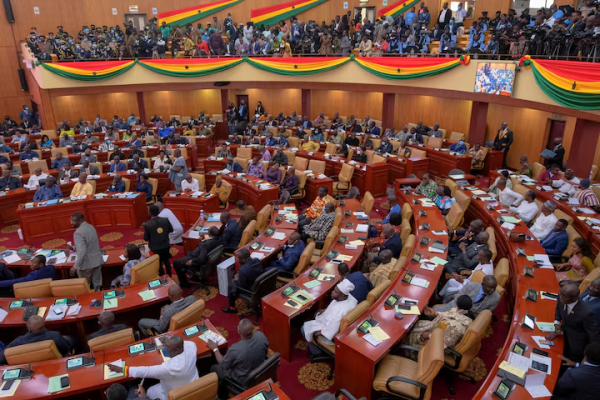
ACCRA, March 3 (Reuters) – Ghanaian lawmakers have reintroduced a bill that would become one of Africa’s most restrictive pieces of anti-LGBTQ legislation, three sponsors told Reuters, after an earlier attempt to enact it fell short because of legal challenges.
Same-sex sexual acts are currently punishable by up to three years in prison in Ghana. The bill would increase the maximum penalty to five years and also impose jail time for the “willful promotion, sponsorship, or support of LGBTQ+ activities”.
Ghana’s parliament approved the bill in February 2024 but then-President Nana Akufo-Addo did not sign it before his term ended and John Dramani Mahama took office in January.
Any bill passed by parliament must go to the president to be signed into law.
Ruling party lawmakers Samuel Nartey George and Emmanuel Kwasi Bedzrah and opposition lawmaker John Ntim Fordjour told Reuters the same bill had been reintroduced in parliament on February 25, sponsored by 10 lawmakers in total.
The bill intensifies a crackdown on the rights of LGBTQ people and those accused of “promotion” of sexual and gender minority rights.
Va-Bene Elikem Fiatsi, a Ghanaian trans woman and LGBTQ activist, told Reuters the bill’s reintroduction was “disheartening and hard to process” but that pro-LGBTQ activism would continue.
The fate of the legislation is unclear. Mahama has said he’d prefer a government-sponsored law rather than one sponsored by parliamentarians.
Last year Ghana’s finance ministry warned that the bill, if signed into law, could jeopardise $3.8 billion in World Bank financing and derail a $3 billion loan package from the International Monetary Fund.
Past polling has shown a lack of tolerance for LGBTQ people in Ghana and Fordjour said the country no longer needed to fear economic sanctions.
“The global political climate is favorable for conservative values as demonstrated in the bold conservative pronouncements of (U.S.) President Donald Trump,” he said.


 fleeredstates.blog
You must be logged in to post a comment.