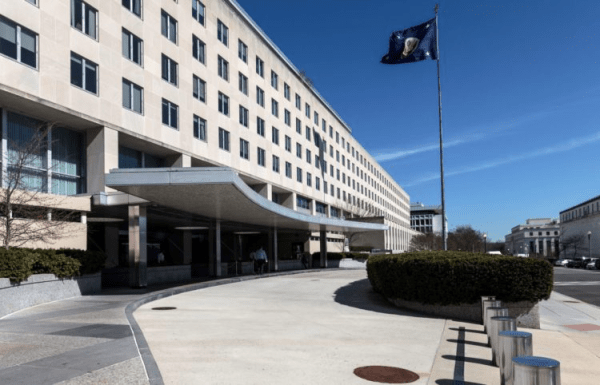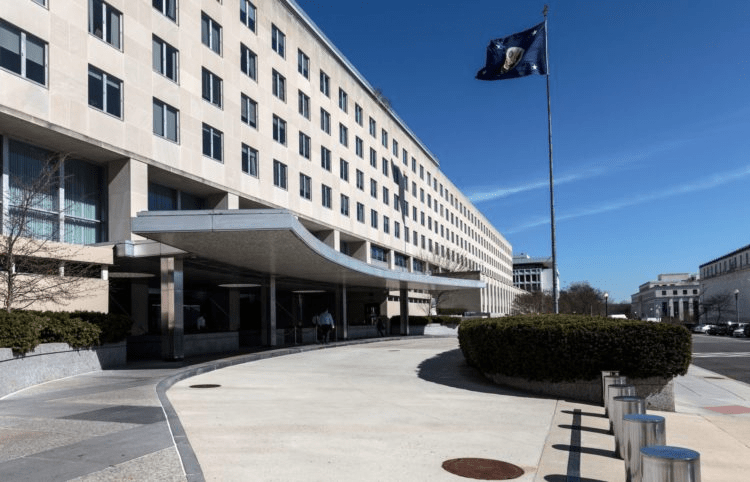
State Department Removes Anti-LGBTQ+ Violence From Human Rights Report Draft

Read more at Huff Post.

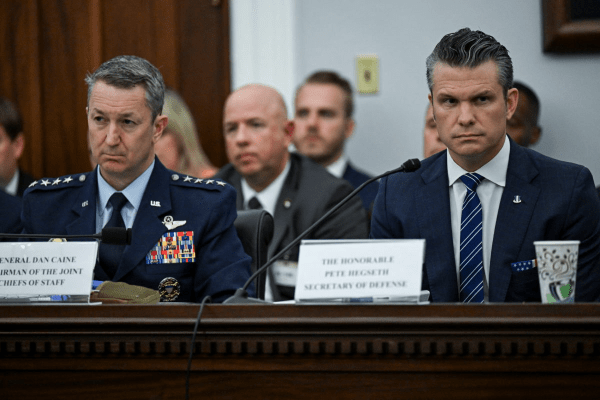
The Trump administration has removed all references to violence against LGBTQ+ people and gender-based violence in drafts of the State Department’s much anticipated annual report on international human rights.

The draft of the report, which was leaked to and first reported by The Washington Post on Wednesday, scales back its critiques of abuses in countries with a record of human rights abuses. In particular, the Post learned of drafts of human rights reports for El Salvador, Israel and Russia that completely excise references of LGBTQ+ people and violence toward those communities.

The erasure of LGBTQ+ people and the abuses they face in the draft report underscores the Trump administration’s intention to scale back references to human rights broadly and take its anti-LGBTQ+ agenda worldwide.

“The 2024 Human Rights report has been restructured in a way that removes redundancies, increases report readability and is more responsive to the legislative mandate that underpins the report,” a senior State Department official, speaking on the condition of anonymity to brief the news media, told reporters on Wednesday. “The human rights report focuses on core issues.”

The State Department did not immediately respond to HuffPost’s request for comment.

In a section about El Salvador, the draft report notes the country had “no credible reports of significant human rights abuses.” In a previous report from 2023, the State Department found “significant human rights issues” in El Salvador, including “politically motivated killings” and “harsh and life-threatening prison conditions.”

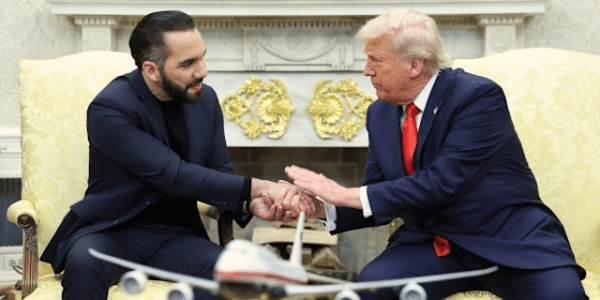
This spring, President Donald Trump secured a multimillion-dollar deal with El Salvador’s President Nayib Bukele to allow 252 Venezuelan men in the U.S. to be deported and housed within the country’s notorious new Terrorism Confinement Center, known as CECOT.

After being jailed for more than 120 days at CECOT, the men, most of who had no criminal history, told stories of being physically and mentally abused for days on end.

Jerce Reyes Barrios, one of the men held at CECOT, told HuffPost reporters Jessica Schulberg and Matt Shuham about his harrowing experience inside the prison. Reyes Barrios recalled a prison official saying, “Welcome to hell on earth, where you’ll be condemned to spend the rest of your lives; where I’m going to make sure that you never eat chicken or meat again.”

Andry José Hernández Romero, a gay Venezuelan makeup artist, alleged that CECOT guards groped him and forced him to perform oral sex while he was in solitary confinement.

A former State Department employee, Keifer Buckingham, said the removal of references to violence against LGBTQ+ people was a “glaring omission,” especially when it comes to Russia. In 2023, Russia’s supreme court deemed what it called an “international LGBT public movement” as extremist, and the courts began their first convictions of people last year under the order.

In February of 2024, a man in Volgograd was found guilty of “displaying the symbols of an extremist organisation” after posting a photo of the LGBTQ pride flag on social media. That same month, a woman near Moscow was sentenced to five days detention for wearing frog-shaped earrings that were rainbow colored.

The drafts of the reports for El Salvador and Russia were marked “finalized,” and the draft for Israel was marked “quality check,” according to the Post. It is still unclear when the reports, which are typically released to the public each March or April, will be sent to Congress and then the public, and if they will include these omissions.

U.S. diplomats have released the State Department’s annual human rights reports for nearly 50 years. Historically their findings have been widely read and anticipated by foreign leaders and diplomats, and have been used in legal proceedings both domestically and abroad.

However, this year human rights advocates decried the news about the ways in which the Trump administration has softened the descriptions of human rights abuses, especially the violence against LGBTQ+ people.

Uzra Zeya, the CEO of Human Rights First, an international human rights nonprofit, said in a statement that the changes were “a radical break” from the original goal to “objectively and even-handedly describe the human rights situation in every country and territory in the world.”

“This severely undermines their credibility and value in guiding U.S. decision-making on a wide range of critical foreign policy issues. Purging mention of elections, corruption, and global human rights abuses against LGBTQI+ persons, persons with disabilities, women and girls, refugees and other vulnerable groups runs counter to American interests and values and makes Americans abroad less safe and informed,” she continued.

Amanda Klasing, the national director of government relations for Amnesty International, said in a statement that she believes the mandate to scale back the report came from Secretary of State Marco Rubio, who instructed employees to delete sections that included stories from survivors of human rights violations and to ignore instances of repression in certain countries.

“The secretary’s instructions were to cut everything not legislatively mandated, but the leaked documents appear to show effort to narrow the scope of what the world hears about human rights abuses around the world,” she wrote.

“The downplaying or exclusion of key issues, such as discrimination and attacks on civil society, from this year’s report will hinder efforts from governments and civil society organizations around the world to respond to these abuses,” she continued.

The Trump administration’s erasure of LGBTQ+ people and gender-based violence has continued on other international stages. At a United Nations meeting in June, a U.S. delegate spent much of her time in a routing meeting on pollution to discuss the United States’ new “national position” on gender.

“Use of the term ‘gender’ replaces the biological category of sex with an ever-shifting concept of self-assessed gender identity and is demeaning and unfair, especially to women and girls,” the delegate said.

In at least six speeches before the United Nations, U.S. delegates have condemned what it calls “gender ideology,” and pushed the Trump administration’s support for recognizing so-called “biological sex,” according to ProPublica.

During his first day in office, Trump signed an executive declaring that the federal government only recognizes “two sexes, male and female,” and signaled that all references to “gender” would thus be replaced with the term “biological sex.”

See where gender identity care is restricted and where it’s protected across the US

Read more at CNN.

The US Supreme Court’s decision to uphold Tennessee’s ban on gender identity care for transgender minors earlier this summer has fueled ongoing polarization around LGBTQ issues and controversial policies across the nation. The high court has also agreed to take on more cases dealing with trans rights in its next session that begins in October.

Twenty-seven states have passed laws limiting access to gender identity health care for transgender children and teenagers, according to KFF, a nonpartisan health policy think tank. An estimated 40% of trans youth ages 13 to 17 live in these states.

VIEW GRAPHIC IN THE ORIGINAL ARTICLE.

There have already been more anti-LGBTQ bills introduced in state legislatures so far this year than in any full year since at least 2020, a CNN analysis of American Civil Liberties Union data found. These bills span various aspects of everyday life, including bathroom access, school sports and identification documents.

CNN is tracking where these laws are being passed and where these bills are being introduced. This story will be updated.

Gender identity care includes medically necessary, evidence-based care that uses a multidisciplinary approach to help a person transition from their assigned sex— the one the person was designated at birth — to their affirmed gender, the gender by which one wants to be known.

Most of the states limiting gender identity care for trans minors adopted their bans in 2023, a record-breaking year for such laws. So far this year, one state — Kansas — has passed a ban, prohibiting the use of state funds to provide or subsidize health care for transgender youth.

Not all laws are currently being enforced, however. The ban in Arkansas has been permanently blocked by a federal court, though the state said it would appeal the ruling. Montana’s ban is also permanently blocked, according to KFF. Though Arizona has a 2022 law on the books banning surgical care for transgender minors, Democratic Gov. Katie Hobbs signed an executive order in 2023 ensuring access to gender identity health care.

VIEW GRAPHIC IN THE ORIGINAL ARTICLE.

Another record year for anti-LGBTQ bills

Nearly 600 anti-LGBTQ bills have been introduced into state legislatures as of July 11, which is already more than any other year on record, according to the ACLU.

Education and health care continue to be key targets. There were more bills restricting student and educator rights — enforcing school sports bans and targeting students’ access to facilities consistent with their gender identities, for example — than any other category of bills, according to a CNN analysis of ACLU data.

VIEW GRAPHIC IN THE ORIGINAL ARTICLE.

Legislators in Texas have introduced 88 anti-LGBTQ bills so far this year, more than double the number of bills being considered in any other state. Four of those — including one that limits changes to gender markers on state medical records — have been passed into law.

In late July, Texas lawmakers are reconvening for a 30-day special session. On the agenda is a transgender bathroom bill.

Lawmakers in every state, except for Vermont, have filed at least one anti-LGBTQ bill in 2025, according to a CNN analysis. Twenty-two states have signed those bills into law.

VIEW GRAPHIC IN THE ORIGINAL ARTICLE

Why Every Realtor Needs MULTIPLE State Licenses—Protect Yourself from Political Fallout

Are you a real estate agent in a politically unstable or conservative state? Discover why smart REALTORS® are getting licensed in multiple states to protect their careers from sudden political shifts, discrimination, or licensing denial. In this video, we explain:

✅ Why holding real estate licenses in multiple states is crucial in 2025

✅ How anti-LGBTQ+ laws and political agendas are threatening professionals

✅ Steps to apply for additional real estate licenses quickly and affordably

✅ Best states to consider for backup licensure

✅ Real stories from agents facing political backlash

Real estate license reciprocity allows licensed agents to obtain a license in another state without completing all standard pre-licensing education requirements. Reciprocity agreements vary by state, with some offering full reciprocity to all states and others providing partial or no reciprocity. Below is a summary of reciprocity agreements and the associated education requirements for select states:

Alabama Reciprocity: Full reciprocity with all states. Requirements: Complete a 6-hour course in Alabama real estate law and pass the Alabama portion of the licensing exam.

Colorado Reciprocity: Full reciprocity with all states. Requirements: Pass the Colorado state portion of the real estate exam.

Florida Reciprocity: Mutual recognition agreements with Alabama, Arkansas, Connecticut, Georgia, Illinois, Kentucky, Mississippi, Nebraska, Rhode Island, and West Virginia. Requirements: Pass a 40-question Florida-specific real estate law exam with a score of at least 30.

Georgia Reciprocity: Full reciprocity with all states. Requirements: Hold a current, active license in another state and pass the Georgia state portion of the licensing exam. Illinois Reciprocity: Reciprocity agreements with Colorado, Connecticut, Florida, Georgia, Indiana, Iowa, Nebraska, and Wisconsin. Requirements: Pass the Illinois state portion of the licensing exam.

Mississippi Reciprocity: Full reciprocity with all states. Requirements: Pass the Mississippi state portion of the licensing exam.

Virginia Reciprocity: Full reciprocity with all states. Requirements: Complete a 60-hour “Principles of Real Estate” course and pass the Virginia state portion of the licensing exam.

Wisconsin Reciprocity: Reciprocity agreements with Illinois and Indiana. Requirements: Agents from these states are exempt from Wisconsin’s education requirement; agents from other states must complete a 13-hour education requirement.

It’s important to note that many states without formal reciprocity agreements may still allow experienced agents to waive certain requirements, such as the national portion of the licensing exam or pre-licensing education. However, they often require completion of state-specific education or examinations. For example:

Iowa: Offers reciprocity with Arkansas, Georgia, Louisiana, Massachusetts, Minnesota, Mississippi, and North Dakota. Applicants must prove they took the real estate exam in another state, submit their certificate and license history, and undergo a criminal background check.

Kentucky: Offers reciprocity with Ohio, Tennessee, and West Virginia. Requirements vary based on the state and license type but generally include completing a 40-hour reciprocal license course and submitting to a background check.

South Carolina: Extends reciprocity to licenses from other states held within six months before applying. Brokers must have been active for at least three years. Additional requirements include passing the state portion of the exam and submitting certification(s) of licensure from any jurisdictions in which you’ve held a license in the last five years. For the most accurate and up-to-date information, it’s advisable to consult the real estate commission or regulatory authority of the state where you seek licensure.

Poll of scientists shows large majority weighing leaving US

*This is being reported by The Hill.

More than three-quarters of scientists in the U.S are weighing leaving the country and are looking at Europe and Canada as their top relocation spots, according to a survey released Thursday

The scientific journal Nature poll found that 75.3 percent of scientists are considering leaving the U.S. after the administration cut funding for research. Nearly a quarter of respondents, 24.7 percent, disagreed. 

The highest contingent of researchers who are looking to move out of the country were those who are early in their careers. Nearly 550, out of 690 who responded to the survey, said they are considering leaving the U.S. Out of the 340 Ph.D. students, 255 shared the same inclination, the poll found.

The administration, along with tech billionaire and close Trump adviser Elon Musk, with the help of the Department of Government Efficiency, has terminated entire agencies and made cuts in the last two months in an effort to shrink the size and scope of the federal government.

Some of those reductions were felt at the National Institutes of Health (NIH), where all grants for equity issues, which encompass studying Black maternal health and HIV, were canceled. The cap on indirect costs of NIH grants was capped at 15 percent. 

The NIH was also ordered recently to halt efforts to terminate the funding for grants intended for hospitals, universities and other institutions by a federal judge after numerous lawsuits. 

Former Health and Human Services (HHS) Secretary Kathleen Sebelius said she was concerned about the recent cuts to grants flowing through the NIH. 

“I’m worried on a lot of fronts,” Sebelius said Wednesday. “The kinds of cuts that were just announced are devastating and will set science back and set research back.”

These cuts have also affected the National Oceanic and Atmospheric Administration (NOAA), which has been hit with layoffs.

More than three-quarters of Americans, 76 percent, said they have a great or fair amount of confidence in scientists to do what is best for the public, according to a Pew Research Center survey that was published in mid-November last year. The figure was a minor uptick from October 2023, when 73 percent of respondents said the same. 

Around 1,650 people responded to Nature’s survey. The margin of error and the dates the survey was conducted were not available to The Hill.

Trump administration cancels at least 68 grants focused on LGBTQ health questions

*This is reported by WFMY 2.

 A surge of grant cancellations hit researchers focused on the health of gay, lesbian and transgender people last week, as the Trump administration continues to target what it describes as ideologically driven science.

Last week the U.S. government terminated at least 68 grants to 46 institutions totaling nearly $40 million when awarded, according to a government website. Some of the grant money has already been spent, but at least $1.36 million in future support was yanked as a result of the cuts, a significant undercount because estimates were available for less than a third of grants.

Most were in some way related to sexual minorities, including research focused on HIV prevention. Other canceled studies centered on cancer, youth suicide and bone health.

Health and Human Services spokesman Andrew Nixon said the agency is “dedicated to restoring our agencies to their tradition of upholding gold-standard, evidence-based science.” The grants were awarded by the National Institutes of Health, an agency under HHS.

One canceled project at Vanderbilt University had been following the overall health of more than 1,200 LGBTQ people age 50 and older. Most of the money has been spent from the grant funding the project, but it was up for renewal in April, said Tara McKay, who leads Vanderbilt’s LGBTQ+ Policy Lab.

She said the grant won’t be renewed because of the termination, which jeopardizes any long-term results. Still, the Vanderbilt project had already generated two dozen published papers, including work used to train doctors to provide better care to LGBTQ people, increasing the likelihood of cancer screenings and other preventive care.

“That saves us a lot of money in health care and saves lives,” McKay said.

Insights from minority populations can increase knowledge that affects everyone, said Simon Rosser, who studies cancer in gay and bisexual men at the University of Minnesota.

“We now no longer have anywhere studying LGBT cancer in the United States,” said Rosser, who saw his grants canceled on Friday.

“When you decide to cancel all the grants on sexual minorities, you really slow down scientific discovery, for everyone,” Rosser said. Young researchers will lose their jobs, and the field as a whole will suffer, he added.

“It’s a loss of a whole generation of science,” Rosser said.

Termination letters seen by The Associated Press gave as reasons that the research was “unscientific” or did “nothing to enhance the health of many Americans.”

That language felt personal and stinging, McKay said.

“My project’s been accused of having no benefit to the American people. And, you know, queer and trans folks are Americans also,” McKay said.

State Department to remove LGBTQ information from annual human rights report

*This is being reported by the Washington Blade

The State Department has not commented a report that indicates it plans to remove LGBTQ-specific information from their annual human rights report.

Politico on March 19 reported the Trump-Vance administration “is slashing the State Department’s annual human rights report — cutting sections about the rights of women, the disabled, the LGBTQ+ community, and more.” The Politico article notes it obtained “documents” and spoke with “a current and a former State Department official who were familiar with the plan.”

“We are not previewing the human rights report at this time,” a State Department spokesperson told the Washington Blade on March 21.

Congress requires the State Department to release a human rights report each year. 

The 2023 report specifically noted Uganda’s Anti-Homosexuality Act that contains a death penalty provision for “aggravated homosexuality.” The 2022 report highlighted, among other things, anti-LGBTQ crackdowns in Afghanistan, Russia, and Hungary and so-called conversion therapy.

President Donald Trump since he took office has signed a number of executive orders that have specifically targeted the LGBTQ and intersex community. These include the “Defending Women from Gender Ideology Extremism and Restoring Biological Truth to the Federal Government” directive that, among other things, bans the State Department from issuing passports with “X” gender markers.

The State Department has eliminated references to transgender travelers from its travel advisories. Germany, Denmark, and Finland have issued travel advisories for trans and nonbinary people who are planning to visit the U.S.

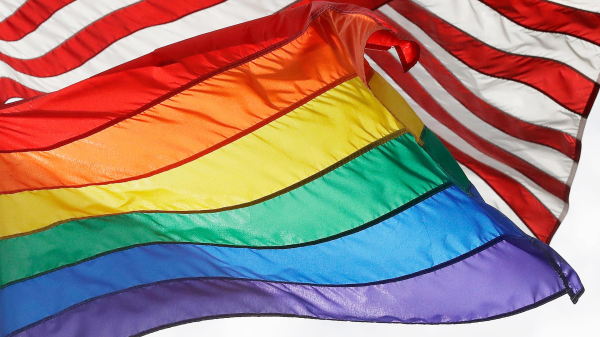
A directive that Secretary of State Marco Rubio issued bans embassies and other U.S. diplomatic institutions from flying the Pride flag. (Former President Joe Biden in March 2024 signed a government spending bill with a provision that banned Pride flags from flying over U.S. embassies.)

The U.S. has withdrawn from the U.N. LGBTI Core Group, a group of U.N. member states that have pledged to support LGBTQ and intersex rights, and the Organization of American States’ LGBTI Core Group. The Trump-Vance administration’s decision to suspend most U.S. foreign aid spending has been a “catastrophe” for the global LGBTQ and intersex rights movement.

NIH at DOGE Behest Cancels Nearly $2.2 Million in University Minority Research Grants

*The below is part of a larger report from Ohio’s NBC4.

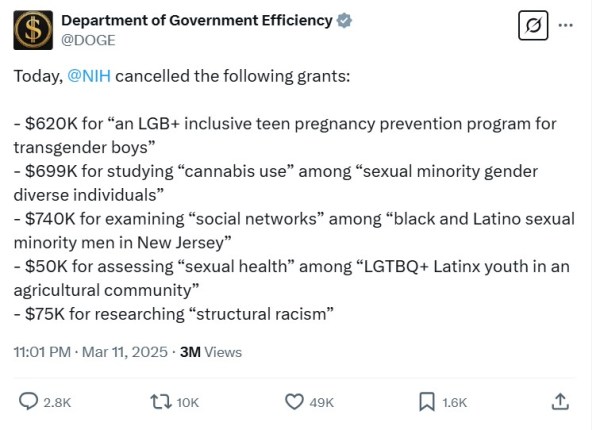
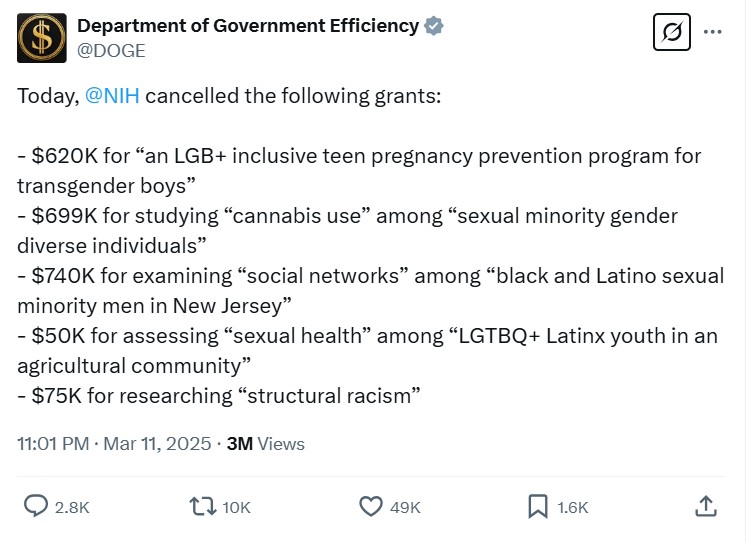
Nearly $2.2 million worth of grant funding for university research was cancelled earlier this month by the NIH at the behest of DOGE. The majority of the funding dealt with the LGBTQ community. The remainder was specific to structural racism.

The report of course stems from a post on X by DOGE “itself”. The news article does confirm the cancellation of the cannabis use study funding. Others have not been independently verified as having been cancelled.

Denmark warns transgender travelers to US

*This is being reported by The Hill

Denmark is advising its transgender and nonbinary citizens to proceed with caution when traveling to the U.S., according to a new advisory. 

An update made Thursday to the Danish foreign ministry’s webpage on travel to the U.S. recommends trans people contact the U.S. embassy in Copenhagen before visiting the country, which under the new Trump administration has enacted several policies targeting transgender rights. 

The advisory does not explicitly mention President Trump or his administration but comes as the State Department suspended a policy allowing trans, nonbinary and intersex Americans to update the sex designations on their passports, causing confusion and concern among travelers over whether it is safe for them to fly. The department previously allowed U.S. passport holders to self-select their sex designations, including an “unspecified” gender marker denoted by the letter X. 

Seven trans and nonbinary Americans are challenging the new policy, which stems from a Jan. 20 executive order declaring the U.S. recognizes only two sexes — male and female — in federal court. 

“If your passport has the gender designation X or you have changed gender, it is recommended to contact the U.S. embassy prior to travel for guidance on how to proceed,” reads the advisory from the Danish foreign ministry. 

The addition comes one week after Finland issued a similar advisory for transgender residents seeking visas to the U.S.

“If the gender listed on the applicant’s passport does not match the gender assigned at birth, the US authorities may deny the application for a travel permit or visa,” Finland’s Ministry of Foreign Affairs said, citing Trump’s executive order. “Please check the entry requirements with the US authorities in advance.” 

Other countries, including Germany and the United Kingdom, recently issued travel advisories to the U.S. after reports of citizens being detained at the border. 

US drops to record low in 2025 World Happiness Report: See global rankings

*This is being reported by USA Today.

The United States is continuing its downward path on the global World Happiness Report, having dropped to a record low on the global rankings list.

Last year, the U.S. fell out of the top 20 for the first time in the report’s history, landing at No. 23. The 2025 report, published Thursday, shows Americans dropping another level down to No. 24.

Several organizations conduct the annual report that ranks countries from the most to least overall happiness. Once again, Nordic countries lead the list, dominating the top 4 spots.

The World Happiness Report also shares illuminating information such as the fact that declining joy and social trust is a contributor to a rise of political polarization in the U.S. and parts of Europe.

Here’s what to know what about this year’s report, including the global rankings and how researchers calculate joy.

Who are the 25 happiest countries?

  1. Finland
  2. Denmark
  3. Iceland
  4. Sweden
  5. Netherlands
  6. Costa Rica
  7. Norway
  8. Israel
  9. Luxembourg
  10. Mexico
  11. Australia
  12. New Zealand
  13. Switzerland
  14. Belgium
  15. Ireland
  16. Lithuania
  17. Austria
  18. Canada
  19. Slovenia
  20. Czechia
  21. United Arab Emirates
  22. Germany
  23. United Kingdom
  24. United States
  25. Belize

Costa Rica and Mexico enter the top 10 for first time

Costa Rica and Mexico both made their top 10 debut on the World Happiness Report this year, coming in at the No. 6 and No. 10 spots, respectively.

European nations Lithuania (No. 16), Slovenia (No. 19) and Czechia (No. 20) are continuing upward trends, according to the report.

The report also listed three nations that have improved happiness since the ranking began in 2012: Serbia (No. 31), Bulgaria (No. 81), and Georgia (No. 91).

What increases happiness in countries?

Several factors are linked to overall wellbeing, from meal sharing to income and employment status, according to the report.

The report states that households of four to five people typically enjoy the highest happiness levels in Mexico and Europe, though many people in Europe live on their own. Researchers also suggest that social connections are vital for young adults to avoid the toxic effects of stress.

The report suggests that countries where acts of generosity and kindness are frequent often lead to less despair related deaths such as suicide or drug overdose.

What is the World Happiness Report?

The World Happiness Report is a partnership between Gallup, the University of Oxford’s Wellbeing Research Centre, the UN Sustainable Development Solutions Network and the WHR (World Happiness Report) Editorial Board offering insight on happiness levels globally.

“The World Happiness Report reflects a worldwide demand for more attention to happiness and well-being as criteria for government policy,” according to its website. “It reviews the state of happiness in the world today and shows how the science of happiness explains personal and national variations in happiness.”

How do World Happiness Report researchers measure happiness?

According to the UN’s Sustainable Development Solutions Network, global researchers analyze data from the Gallup World Poll.

The poll gathers responses from over 100,000 people from all around the world.

People in different countries rank their happiness by imagining a ladder with 10 steps. The first and lowest step of the ladder represents the worst of the worst a person’s life can be. The tenth and highest step represents a person’s best life. Researchers then ask people which step they believe they’re on.

World Happiness Report: What factors impact happiness?

The UN’s Sustainable Development Solutions Network lists six factors that can explain the different levels of happiness.

  • Social Support: This is the best predictor of happiness. If people feel like they have at least one person they can reach out to when they’re in need, they are more likely to feel secure.
  • GDP per capita: This is how much a country produces divided by its population.
  • A healthy life expectancy: Researchers look at the physical and mental health of a country’s population.
  • Freedom to make life choices: This plays a key role in how happy one feels.
  • Generosity: This factor looks at how charitable a country’s people are.
  • Perception of Corruption: How corrupt are a country’s government and business policies? This factor looks at both and researchers use what they find to estimate happiness levels.

Blog at WordPress.com.

Up ↑