In Arizona last week, a cisgender male 8th grader was “physically removed” from tryouts for his school’s boys’ basketball team because an error on his original birth certificate incorrectly identified him as being born female.
It’s the latest episode in a “gender ideology”-inspired nightmare for the teenager, Laker Jackson, and his family.
“I’m sad for everybody that it’s come down to this,” mom Becky Jackson told KNXV News in Phoenix.
The Kafkaesque drama was inspired by a clerical mistake 14 years ago, when hospital staff mistakenly identified Becky Jackson’s newborn son as a girl. It was an error Laker’s parents never noticed.
“I give him the birth certificate and they’re like, ‘Did you know this says female?’” Becky Jackson recalled about handing over enrollment paperwork to a school administrator last year.
“I was like, ‘What?’” Becky Jackson said. “I was like, ‘Oh man, that’s so funny.’ So we come home, everyone’s laughing.”
The busy mom of six said correcting the document wasn’t a priority.
“So we just put it in the drawer and moved on,” she said.
The mix-up didn’t cause issues until recently, she told AZ Family.
Last spring, school staff began treating Jackson as female, Becky Jackson said.
The district removed Laker Jackson from an all-boys gym class and mandated he use a separate restroom, despite the family’s assertion that their son is a cisgender boy, assigned male at birth.
Becky’s mom had already started work on changing Laker Jackson’s birth certificate, but “it’s not something that you can fix quickly. You have to have an affidavit signed,” she said.
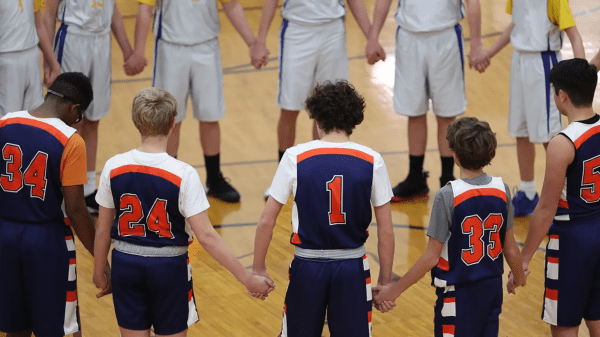
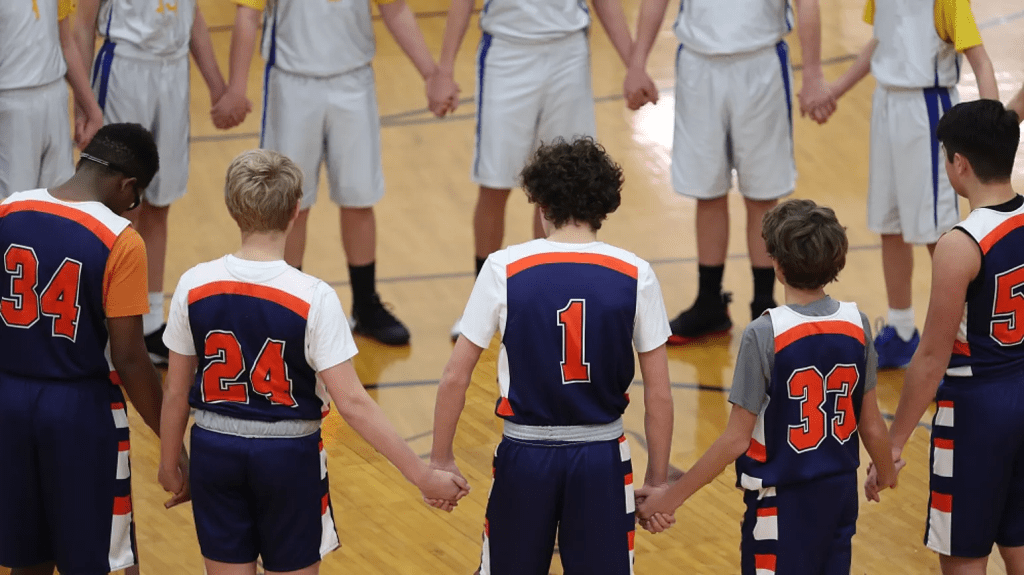
In the meantime, the 14-year-old continued training to make the boys’ basketball team at his Mesa high school, a 7th to 12th-grade school in the Queen Creek Unified School District.
Becky Jackson said she received the corrected birth certificate over the summer and provided the district with the revised document, along with a doctor’s note confirming Laker’s sex.
But Queen Creek administrators said it wasn’t enough, standing by a rule stating that the school’s determination of a student’s sex would rely solely on an original birth certificate.
“They sent the athletic director of Eastmark High to physically remove Laker from the basketball tryouts in front of all of his friends, in front of the coach,” Becky Jackson said.
“I am a biological boy. I was born a boy,” said Laker Jackson, who heard from friends on the basketball team that “they were talking about it for the entire tryout and even the next day’s tryouts because they were really confused.”
After the family continued to raise objections to Laker Jackson’s treatment, a letter from an administrator said genetic testing to confirm their claim that the child is a boy “could be considered.”
“They may consider changing it if we get chromosomal testing. They didn’t say they would,” Laker’s mom said. She estimated the cost at $1500.
“So who’s going to pay that?” she asked.
In a statement, the district said it was “committed to ongoing dialogue.”
Becky Jackson also said her son will try out for a girls’ team if that’s what it comes to.
The ordeal is a prime example of what activists have long warned: that anti-trans policies are bad for everyone. It’s also quite ironic, considering the very people who want to stop anyone assigned male at birth from playing on girls’ sports teams may wind up forcing a cisgender boy to do just that.
A federal judge in Arizona has ruled that transgender people are no longer required to get gender-affirming surgeries in order to update their birth certificates to align with their gender identity. The Arizona Department of Health Services has 120 days to comply with the ruling.
“We are grateful that the Court ruled in Plaintiffs’ favor and found that this outdated requirement violated Plaintiffs’ constitutional rights,” said Rachel Berg, a staff attorney for the National Center for LGBTQ Rights (NCLR), which filed the case on behalf of four trans youths. “We are thrilled that the Arizona Department of Health Services will be permanently enjoined from enforcing this irrational and overly burdensome requirement, and Plaintiffs will be able to amend their birth certificates to reflect who they are.”
The ruling instructs the Arizona Department of Health Services to ignore the state’s law that requires proof of surgery to be able to amend gender markers on a birth certificate. A correction of one’s gender marker on the document still requires a doctor to attest that the patient is living as a different gender from the one assigned at birth.
The Arizona Attorney General’s Office represented the state health department. The office told the Arizona Daily Star that they are studying the ruling while deciding whether to launch an appeal on the matter.
In August last year, the same federal judge, James Soto (who was appointed by former President Barack Obama), made a similar ruling recommending that the Department of Health Services reconsider the surgical requirement for amending a birth certificate.
Soto highlighted that the requirement risked forcing trans people into unnecessary surgeries in order to live authentically or risk outing themselves in potentially dangerous situations. After a failure to act from the Department of Health Services, this week’s ruling from Judge Soto takes the matter out of their hands.
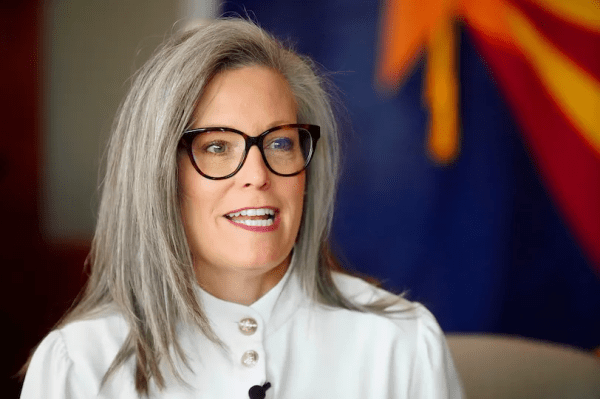
Earlier this year, Arizona Republicans tried to pass legislation to ban gender marker changes on trans people’s birth certificates entirely. While that bill passed both the state’s House and Senate, it was vetoed by Democratic Gov. Katie Hobbs.
If the Arizona ruling withstands an appeal, it’ll leave only 10 states that require proof of surgery for trans people to correct their birth certificate gender markers. However, several states still refuse to allow trans people to update their gender markers in any way.
The requirement for trans people to receive surgery to update their gender markers is discriminatory, can force people to have surgeries they don’t want, and can cause particular issues for minors who cannot access gender-affirming care.
As Soto noted in his 2024 ruling, “Not every transgender person needs surgery to complete a gender transition. Starting social transitioning and other recommended therapy may eliminate the need for any potential surgical intervention.”
These requirements can mean that minors, regardless of whether they wish to pursue gender-affirming surgeries later in life, are stuck for many years with documentation that includes an incorrect marker. That can lead to situations where a trans person is forced to out themselves, which — aside from being mentally damaging — can also put them at risk for physical harm, given the current climate towards trans people.
In a statement, NCLR noted, “For young people, their birth certificate impacts everything from school records to camp registration. ”
Finally, in most cases the surgeries required for a trans person to update their birth certificate in these states result in sterilization. That forces them to either give up on having biological kids one day, go through expensive processes to preserve their sperm or eggs, or requires them to put off updating their documents until after having children.
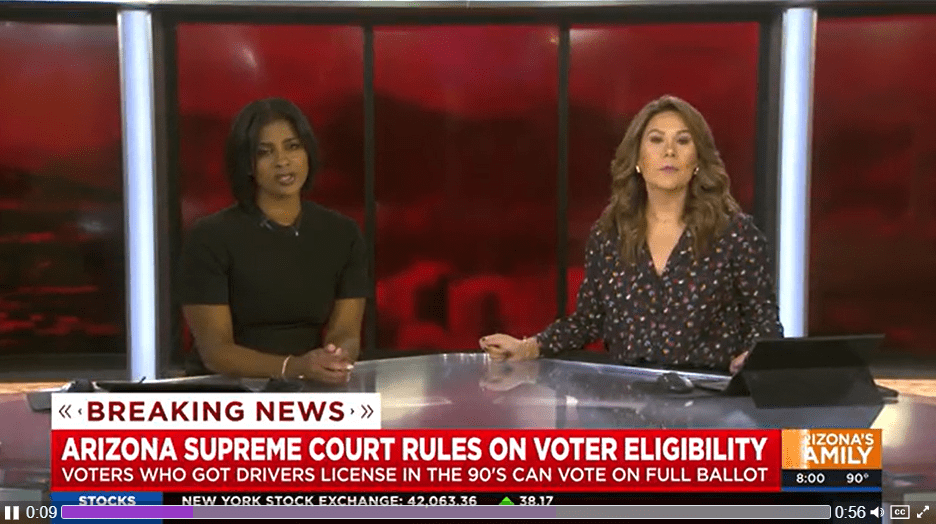
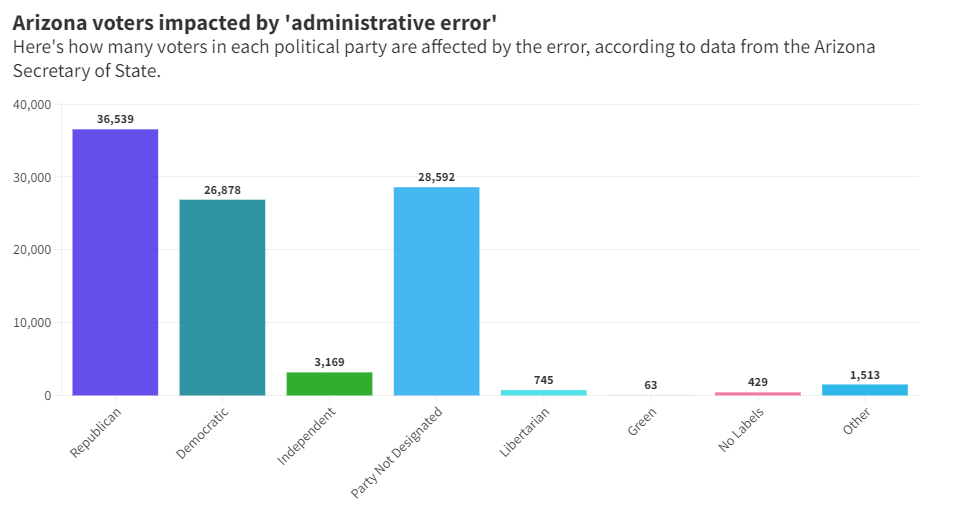
PHOENIX (AZFamily/AP) — The Arizona Supreme Court ruled on Friday that nearly 98,000 voters whose citizenship documents had not been confirmed can cast their full ballots in the upcoming November election, including in state and local races.
The court determined that Maricopa County Recorder Stephen Richer and other county recorders do not have the authority to restrict voters to federal-only ballots, as these individuals had registered to vote long ago.
“We are unwilling on these facts to disenfranchise voters en masse from participating in state contests,” Chief Justice Ann Scott Timmer wrote in the ruling. “Doing so is not authorized by state law and would violate principles of due process.”
While county recorders are obligated to verify citizenship, the court found no evidence suggesting that the affected voters are not U.S. citizens. As Chief Justice Timmer explained, “Fontes and Richer acknowledge that ‘[i]t is possible that Affected Voters have, in fact, provided satisfactory evidence of DPOC [documentary proof of citizenship].’”
The court also noted the urgency of the situation, with Timmer stating, “This Court has also accepted original special action jurisdiction over election matters in which there is a need for immediate relief based on rapidly approaching election deadlines and where the key facts are not in dispute.”
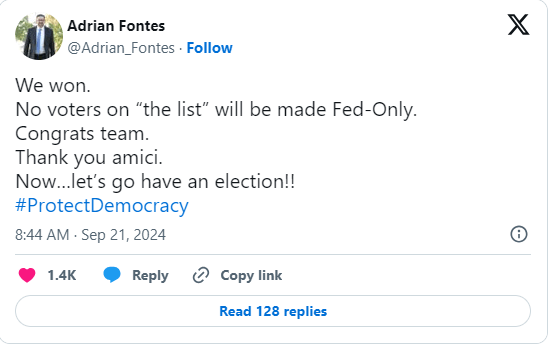
Maricopa County Elections Director Adrian Fontes celebrated the ruling, calling it “a significant victory for those whose fundamental right to vote was under scrutiny.” He continued, “The court faced a stark choice: to allow voters to participate in just a few federal races on a limited ballot, or to make their voices heard across hundreds of decisions on a full ballot that includes a variety of local and state offices. We deeply appreciate the Arizona Supreme Court for their prompt and just resolution.”
Meanwhile, Maricopa County Recorder Stephen Richer, a Republican, expressed gratitude to the court, stating, “Thank you Arizona Supreme Court for your extremely quick and professional review of this matter.”
The issue stemmed from a 2004 Arizona law requiring residents to provide documentary proof of citizenship (DPOC) to register as “full-ballot voters,” allowing them to vote in all federal, state, and local races. Voters who fail to provide proof of citizenship are restricted to voting only in federal races.
The controversy arose when a problem was discovered in how duplicate driver’s licenses were issued, which meant certain voters who had received a license before October 1, 1996, may not have citizenship records on file.
Fontes and Richer had been at odds over the status these voters should hold. Richer, seeking clarity, asked the high court to intervene.
Arizona’s swing state status is unique in that it distinguishes between voters who can participate only in federal elections and those eligible to vote in federal, state, and local elections. To qualify for the latter, voters must submit proof of citizenship.
As a Florida elementary school grapples with a growing measles outbreak, the state’s top health official is providing advice that contradicts scientific consensus, potentially putting unvaccinated children at risk of contracting one of the most contagious pathogens on Earth, according to clinicians and public health experts.
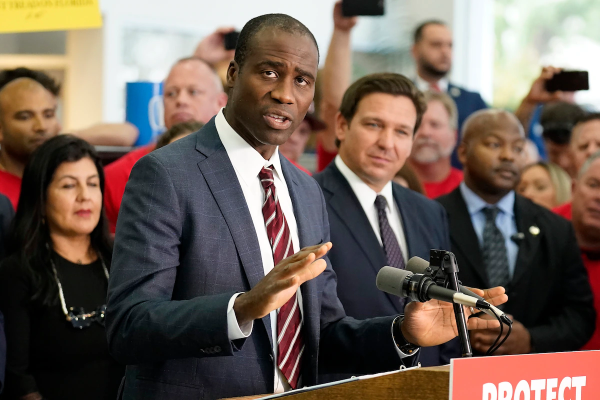
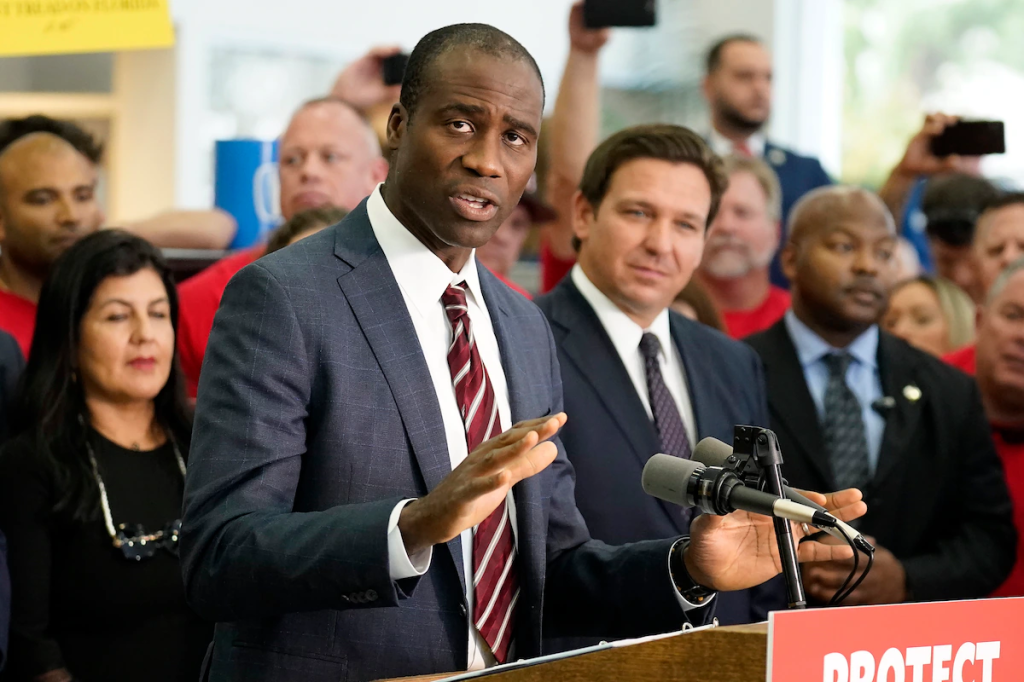
In a letter to parents at a Fort Lauderdale-area school following six confirmed measles cases, Florida Surgeon General Joseph A. Ladapo failed to urge parents to vaccinate their children or to keep unvaccinated students home as a precaution.
Instead of following the “normal” recommendation that parents keep unvaccinated children home for up to 21 days — the incubation period for measles — Ladapo stated that the state health department “is deferring to parents or guardians to make decisions about school attendance.”
Ladapo’s controversial decision continues a pattern of defying public health norms, especially regarding vaccines. Last month, he called for halting the use of mRNA coronavirus vaccines, a move widely condemned by the public health community.
Ben Hoffman, president of the American Academy of Pediatrics, criticized Florida’s guidance, stating that it contradicts longstanding and widely accepted public health recommendations for measles, a disease that can lead to severe complications, including death.
“It contradicts everything I’ve ever heard and read,” Hoffman stated. “It goes against our policy and what the Centers for Disease Control and Prevention would recommend.”
In 2024, measles outbreaks have surged, with the CDC recording at least 26 cases across 12 states, doubling the count from the previous year. Apart from the six cases identified in the Florida school, instances have been documented in Arizona, California, Georgia, Maryland, Minnesota, Missouri, New Jersey, New York City, Ohio, Pennsylvania, and Virginia.
The surge in measles outbreaks is attributed to the increasing number of parents seeking exemptions from childhood vaccinations. This trend has emerged in the wake of political opposition to COVID-19 mandates and widespread dissemination of misinformation regarding vaccine safety.
In January, the CDC issued a caution to healthcare providers to remain vigilant for additional measles cases. Contagion can occur from four days before the onset of a rash until four days after.
Because measles virus particles can persist in the air and on surfaces for up to two hours after an infected individual departs, up to 90 percent of non-immune individuals may contract measles if exposed. Those who have been infected or have received both doses of the MMR vaccine are 98 percent protected and highly unlikely to contract the disease. This is why public health officials usually recommend vaccination during outbreaks.
“The measles outbreak in Florida schools is a result of too many parents failing to ensure their children are protected by the safe and effective measles vaccine,” explained John P. Moore, a professor of microbiology and immunology at Weill Cornell Medical College. “And why is that? It’s because anti-vaccine sentiment in Florida is propagated from the top of the public health hierarchy: Joseph Ladapo.”
When requested for comment, the Florida health department provided a link to Ladapo’s letter.
Ladapo’s reluctance to utilize public health measures mirrors the efforts of conservative and libertarian factions to weaken public health’s capacity to control diseases such as the highly contagious measles. In an outbreak in Ohio that commenced in late 2022, most of the 85 afflicted children were eligible for vaccination, but their parents opted against it, according to officials. In 2021, the state legislature curtailed health officials’ authority to mandate quarantine for individuals suspected of having an infectious disease.
Ladapo’s communication with parents arrives amidst increased concern regarding the public health impacts of anti-vaccine sentiment, an ongoing issue that has resulted in declines in childhood immunization rates in various areas across the United States. Federal data released last year revealed that the percentage of kindergartners exempted from at least one state-required childhood vaccination reached its highest level yet during the 2022-2023 school year, standing at 3 percent.
According to Paul Offit, a pediatric infectious diseases expert at Children’s Hospital of Philadelphia, Ladapo’s neglect to promote vaccination puts children at risk.
“In light of the data showing measles as the most contagious vaccine-preventable disease, surpassing even influenza or COVID, is Ladapo attempting to suggest otherwise?” Offit questioned in an email.
Measles is highly contagious, spreading swiftly, particularly affecting young children who receive their first dose of the vaccine between 12 to 15 months of age. The CDC advises two doses of the MMR vaccine, with the second typically administered between 4 to 6 years old.
When measles vaccination coverage falls below 95 percent, it undermines herd immunity, facilitating the virus’s rapid spread. While Florida’s overall vaccination coverage stands at 90.6 percent, it doesn’t pinpoint areas with potentially lower coverage rates.
If unvaccinated individuals fail to adhere to public health guidelines and stay home from school during the contagious period, the outbreak could escalate dramatically, posing a significant community risk. Patsy Stinchfield, President of the National Foundation for Infectious Diseases and a nurse practitioner in Minneapolis, has firsthand experience managing measles outbreaks, including the 2017 outbreak in Minnesota, which impacted 75 individuals, predominantly unvaccinated children.
Approximately 1 in 5 unvaccinated individuals in the United States who contract measles require hospitalization, as reported by the CDC. Among children, up to 1 out of 20 develop pneumonia, which is the leading cause of death from measles in this age group. Additionally, around 1 child out of every 1,000 with measles experiences brain swelling, which can result in seizures and long-term consequences such as deafness or intellectual disability. Unvaccinated infants who contract measles face an even graver risk, with 1 in 600 developing a fatal neurological complication that may remain latent for years.
This week, officials at Manatee Bay Elementary School, located approximately 20 miles west of Fort Lauderdale, confirmed six cases of measles. According to Broward County Schools Superintendent Peter B. Licata, out of the school’s 1,067 students, 33 have not been vaccinated with the MMR vaccine. During a school board meeting on Wednesday, Licata provided this information. Additionally, a district official mentioned that the district has organized “four vaccination opportunities,” comprising two sessions held at the school and two at other venues within the community.
Florida health officials reported the first case on Friday, involving a third-grade child with no travel history abroad.
School officials redirected inquiries to the Broward County school district, which stated it is adhering to guidance from the state health department.
The highest court in Arizona has granted the state’s attorney general an additional 90 days to determine further legal steps in the case regarding a nearly 160-year-old near-total abortion ban.
In Phoenix, Arizona’s highest court extended the deadline for the state’s attorney general by another 90 days to determine additional legal steps in the case concerning a nearly 160-year-old near-total ban on abortion, which lawmakers recently voted to repeal.
The recent order from the Arizona Supreme Court maintains the current law permitting abortion up to 15 weeks of pregnancy. It also grants Attorney General Kris Mayes an extended period to deliberate on whether to appeal the case to the U.S. Supreme Court.
Mayes expressed appreciation for the order, noting that the earliest the 1864 law can now be enforced is September 26. This timeline factors in the additional 90 days granted by the recent order, along with an additional 45 days outlined in a separate case.
“I am committed to ensuring that doctors can administer medical care based on their professional judgment, rather than adhering to the beliefs of legislators from 160 years ago,” Mayes affirmed.
In April, the Arizona Supreme Court reinstated an older law devoid of exceptions for rape or incest, permitting abortions solely in cases where the mother’s life is at risk. The majority opinion hinted at the possibility of doctors facing prosecution and potential imprisonment for up to five years if found guilty.
The Legislature narrowly voted to repeal the Civil War-era law, but its repeal won’t come into effect until 90 days after the conclusion of the current annual session. It has remained uncertain whether there would be a window during which the older ban could be enforced before the repeal becomes effective.
Despite the latest delay, the anti-abortion group defending the ban, Alliance Defending Freedom, stated that it would continue to fight.
“The pro-life law in Arizona has safeguarded unborn children for over a century,” stated Jake Warner, the group’s senior counsel. “We remain committed to defending unborn children and advocating for genuine support and healthcare for families in Arizona.”
Angela Florez, CEO of Planned Parenthood Arizona, appreciated the decision, stating that the organization “will persist in offering abortion care up to 15 weeks of pregnancy, prioritizing patient access to abortion care for as long as legally feasible.”
Florida first. Alabama follows. Legislators in Louisiana and Ohio are currently debating legislation that is similar to the Florida statute. A similar bill will be his top priority during the following session, according to Texas Governor Greg Abbott.
At least a dozen states across the country are proposing new legislation that, in some ways, will resemble Florida’s recent contentious bill, which some opponents have dubbed “Don’t Say Gay.”




 fleeredstates.blog
You must be logged in to post a comment.