
*This is reported by LGBTQ Nation.
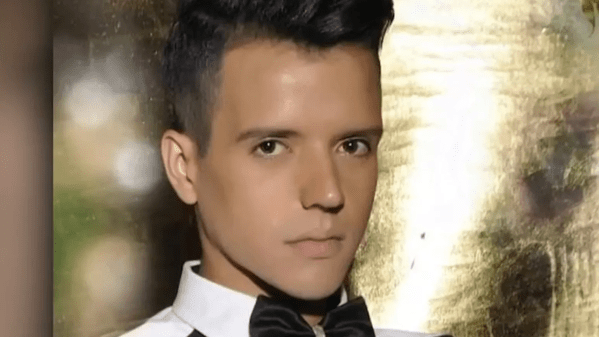
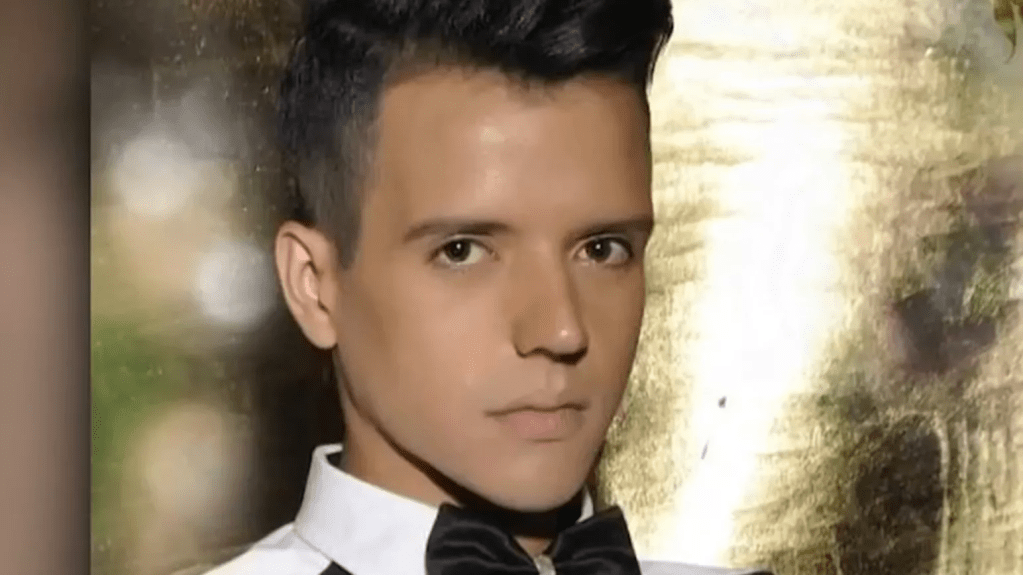
Out gay Rep. Robert Garcia (D-CA) talked to LGBTQ Nation about a new letter signed by a coalition of 50 other Democratic congress members demanding that the State Department conduct a wellness check on Andry José Hernández Romero, an openly gay 32-year-old Venezuelan makeup artist who was detained by Immigration and Customs Enforcement (ICE) on March 15 despite legally applying for asylum in the U.S. after fleeing anti-gay persecution in his home country.
Hernández Romero legally entered the U.S. last year via San Diego and passed a credible fear interview for his official asylum process but was arrested by ICE two days before his scheduled court hearing. For the last 86 days, he has been imprisoned at the Centro de Confinamiento del Terrorismo (CECOT), an El Salvador prison known for its human rights abuses. The letter’s signatories are demanding that the State Department facilitate his access to legal counsel and immediately facilitate his release, having presented no evidence of any crimes or wrongdoing.
Romero’s family and lawyers have had no contact with him in more than a month,” the letter states. “His mother does not even know whether he is alive. Given both the well-documented concerns about conditions at CECOT and the history of anti-LGBTQI+ persecution in El Salvador, there is serious cause for concern about Mr. Hernández Romero’s well-being.”
Romero was among 260 Venezuelans accused by the presidential administration of being members of Tren de Aragua, a terrorist group. A disgraced former police sergeant’s report accused Hernández Romero of having crown tattoos associated with the transnational Tren de Aragua gang. But both the Venezuelan government and Hernández Romero’s lawyer have said he has no connections whatsoever to the gang, and his family has said that his crown tattoos are in honor of his hometown’s annual Three Kings Day festival.
“The idea that our country said, ‘Come to your asylum appointment,’ and then we send him to a country he’s not even from — and we’re unwilling to check how he’s doing — is so wrong, and more people need to know Andrew’s story,” Garcia told LGBTQ Nation. “Our Constitution is clear that both citizens and non-U.S. citizens in the United States have a right to due process, and he has never even had a chance to see a judge or for anyone to rule. No one can prove that he was gang-affiliated, because he was not. He was described as a very sweet and gentle person by his family, and we just need to bring attention to his case.”
On April 21, Garcia and three other Congress members sent a letter to Secretary of State Marco Rubio and U.S. Ambassador William Duncan, urging them to confirm Hernández Romero’s safety through a wellness check inside CECOT. That month, Garcia visited El Salvador with a delegation of three other Democratic lawmakers. Though the delegation met with U.S. Embassy officials, the ambassador, and human rights advocates, they weren’t allowed to see Hernández Romero.
In a May 14 hearing, Homeland Security Secretary Kristi Noem refused Garcia’s request to let Romero’s mother know if he’s still alive — Noem callously claimed that prison is outside of her “jurisdiction” and told Garcia to ask the President or the Salvadoran government instead.
Political pundits have noted that the administration could proactively negotiate for Hernández Romero’s release but has so far refused to. In late May, a federal judge dismissed Hernández Romero’s asylum case, making it even harder to ensure his return to the United States. Hernández Romero’s deportation violated his constitutional rights to due process and his sexual orientation puts him at grave risk inside CECOT, Garcia says.
While Garcia admits that the State Department ignored his first letter, he told LGBTQ Nation, “With this [new] letter … a much broader coalition of folks are signed on, and so we’re hopeful that that continues to get more attention.”
The new letter’s signatories include Garcia and other out Democratic Congress members including Rep. Mark Takano (CA), Rep. Becca Balint (VT), Rep. Mark Pocan (WI), Rep. Sarah McBride (D-DE), and notable congressional allies like Rep. Alexandria Ocasio-Cortez (D-NY), Rep. Rashida Tlaib (MI), Rep. Jasmine Crockett (D-TX), and Sen. Adam Schiff (CA).
Garcia added that the American Civil Liberties Union (ACLU) has been actively involved with Hernández Romero’s legal team and hopes to pressure the administration to ensure that Hernández Romero is still alive.
Though LGBTQ+ people from all over the world have long come to the U.S. for the freedom to live authentically as themselves, Garcia acknowledges that queer would-be asylum seekers are currently scared and don’t see the U.S. as a place of refuge at the moment.
As an immigrant to the U.S. himself, Garcia told LGBTQ Nation, “What’s important is that the United States fight for folks that fight for a country that can still be welcoming of other people…. Our asylum system right now is broken and it we need to get back to a place where asylum is done as it has been in the U.S. We have a history in this country of welcoming people that are being persecuted in other countries, and that seems to be not the case right now, and I think it’s really horrible to see.”
Garcia has warned that — by kidnapping Hernández Romero and other undocumented immigrants off U.S. streets — the president has violated due process, the Constitution, and democratic norms in an attempt to intimidate immigrant communities. Federal courts and the U.S. Supreme Court have agreed, demanding that the administration return some detainees stateside and provide greater transparency about its immigration processes and possible defiance of court orders.
“If they’re going to break the Constitution, to illegally take someone that was in an asylum process to a foreign country, then that means that they’re going to continue to break due process, and that means that everyone is at risk in our country,” Garcia told LGBTQ Nation. “I think it’s a slippery slope — now we know that U.S. citizens have been deported, [including] children without any sort of due process. So this is only going to get more difficult if people aren’t engaged.”
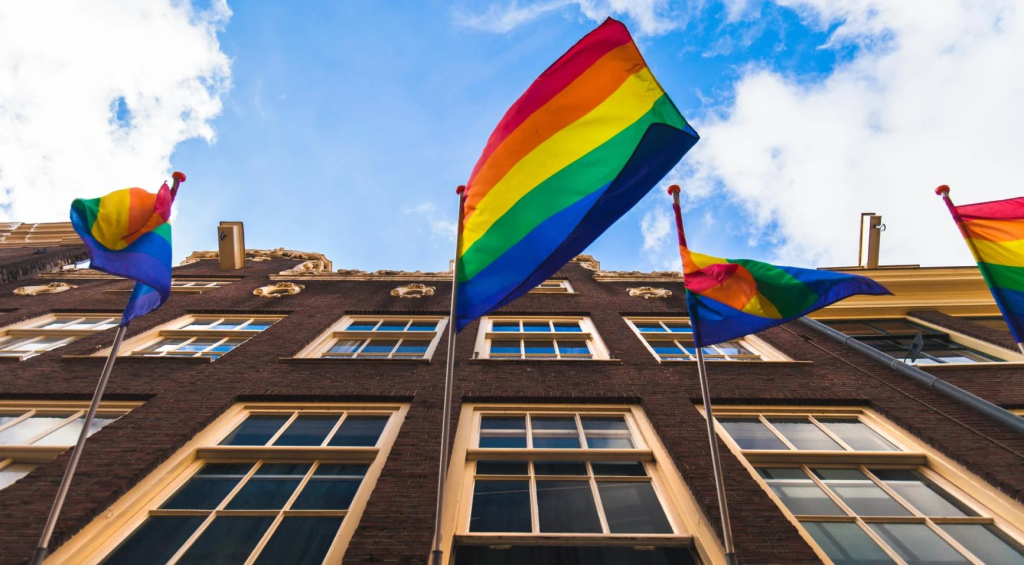
“I think Pride Month, especially in Andrea’s case, provides an opportunity for more folks to hear his story,” he added.



 fleeredstates.blog
You must be logged in to post a comment.