A Texas statute scheduled for implementation on January 1 is impacting employment positions at public universities, including the University of Texas at Austin.
As per information from our media associates at the Austin American-Statesman, 14 fellows at UT will be without employment at the university due to Senate Bill 17, a recent law restricting diversity, equity, and inclusion (DEI) efforts at state public institutions.
The law mandates that these institutions cease any unequal treatment or “special privileges” based on race or ethnicity, along with programs “conceived or executed in relation to race, color, ethnicity, gender identity, or sexual orientation.”
Typically spanning one year, the Public Voices Fellowship offers fellows mentorship and research training. This fellowship is affiliated with The OpEd Project, a nationwide initiative with the goal of diversifying and altering the narrative by influencing those who contribute to historical writings.
The University of Texas (UT) was among the 35 collaborators of the fellowship, and notably one of the few public universities participating.
As per The Statesman, the fellowship was inclusive but specifically focused on elevating voices that are underrepresented, particularly those of women and people of color.
UT has initiated the internal dissemination of guidelines outlining its approach to adhering to SB 17. However, comprehensive public guidance from the university is still pending release.
AUSTIN, Texas (AP) — A Texas judge ruled Friday the state’s abortion ban has proven too restrictive for women with serious pregnancy complications and must allow exceptions without doctors fearing the threat of criminal charges.
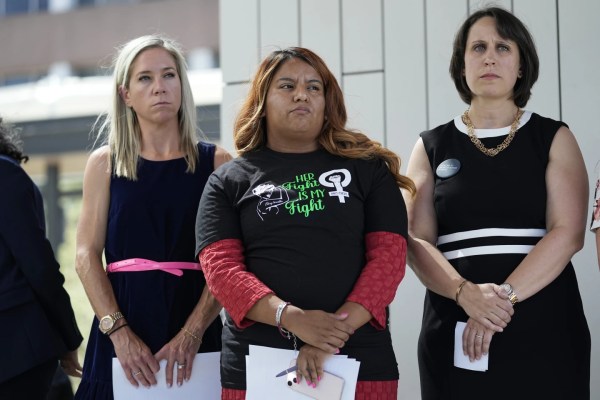
Amanda Zurawski, who developed sepsis and nearly died after being refused an abortion where her water broke at 18 weeks, left, and Samantha Casiano, who was forced to carry a nonviable pregnancy to term and give birth to a baby who died four hours after birth, center, stand with their attorney Molly Duane outside Travis Country Courthouse, Wednesday, July 19, 2023, in Austin, Texas. A Texas judge ruled Friday, Aug. 4, 2023, the state’s abortion ban has proven too restrictive for women with serious pregnancy complications and must allow exceptions without doctors fearing the threat of criminal charges. The challenge is believed to be the first in the U.S. brought by women who have been denied abortions since the Supreme Court last year overturned Roe v. Wade, which for nearly 50 years had affirmed the constitutional right to an abortion.
The ruling was the first to undercut Texas’ law since it took effect in 2022 and delivers a major victory to abortion rights supporters, who see the case as a potential blueprint to weaken restrictions elsewhere that Republican-led states have rushed to implement.
However, the injunction was immediately blocked by an appeal to the Texas Supreme Court, the state attorney general’s office said.
”The trial court’s injunction is ineffective, and the status quo remains in effect,” spokesperson Paige Willey said in an email.
State District Judge Jessica Mangrum’s ruling granted a temporary injunction that prevents Texas from enforcing the ban against physicians who in their “good faith judgment” end a pregnancy that, because of complications, creates a risk of infection or is otherwise unsafe for the woman to continue.
The injunction also applies to women who have a condition “exacerbated by pregnancy” who can’t be effectively treated during their term. It also covers cases where the fetus has a condition that makes it unlikely to survive after birth.
“For the first time in a long time, I cried for joy when I heard the news,” lead plaintiff Amanda Zurawski said in a statement. “This is exactly why we did this. This is why we put ourselves through the pain and the trauma over and over again to share our experiences and the harms caused by these awful laws.”
Mangrum’s decision said the injunction would run until the completion of the case, which is scheduled for a trial to begin next March 25.
However, the state’s immediate appeal “stays an activist Austin judge’s attempt to override Texas abortion laws pending a ruling by the Texas Supreme Court,” said a statement from First Assistant Attorney General Brent Webster.
The immediate impact of Mangrum’s decision also was unclear in a state where all abortion clinics have shuttered in the past year.
The challenge to the state law is believed to be the first in the U.S. brought by women who have been denied abortions since the Supreme Court last year overturned Roe v. Wade, which for nearly 50 years had affirmed the constitutional right to an abortion.
In a six-page ruling, the judge found that portions of the abortion law violated the rights afforded to pregnant people under the Texas Constitution.
The court found that the patients challenging the law each experienced “emergent medical conditions” during pregnancy that risked their health or lives “and required abortion care.”
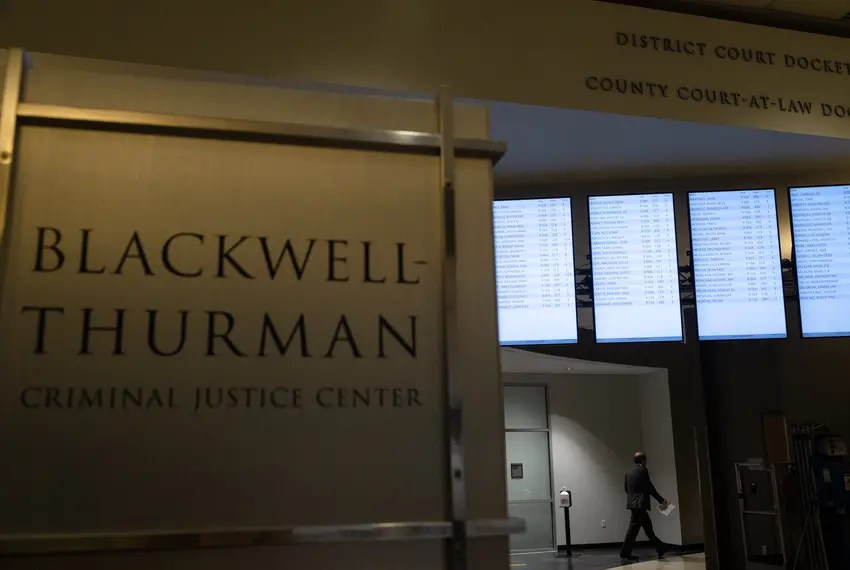
Screens display case information on May 9 at the Travis County Criminal Court at the Blackwell-Thurman Criminal Justice Center in Austin.
The Texas Senate recently approved a bill that enables the removal of locally elected prosecutors from office if they choose not to enforce specific laws. This legislation is part of a broader initiative by Republicans to address concerns regarding “rogue” district attorneys in large, left-leaning counties in Texas. These prosecutors have publicly stated their intention to refrain from prosecuting abortion cases and, in some instances, have implemented policies related to the prosecution of low-level theft and drug offenses.
State Senator Joan Huffman, a Republican from Houston and the sponsor of the bill, emphasized the need for a mechanism to hold prosecutors accountable for their refusal to enforce laws passed by the Texas Legislature or any legislative body. The bill aims to address the perceived noncompliance with established laws by prosecutors in certain jurisdictions.
It’s important to note that the bill’s passage by the Texas Senate does not guarantee its enactment into law. The bill will need to go through further legislative processes, including consideration by the Texas House of Representatives, before it can be signed into law by the governor.



 fleeredstates.blog
You must be logged in to post a comment.