
Read more at Erasing 76 Crimes.
East and Southeast Asia
Japan: The long slow march to eventual same-sex marriage continued in Japan in 2025, with resolution still looking a year or more away. Three more high courts ruled on the constitutionality of the same-sex marriage ban. Those in Nagoya and Osaka found the ban unconstitutional, but a Tokyo high court ruled it constitutional. Together with three other courts that found the ban unconstitutional, that creates a circuit split that will have to be resolved by the supreme court, where a case has already been filed.
A further case has also been filed to the supreme court by a transgender woman who is seeking to have her legal gender changed without ending her marriage to her wife. Lower courts in Kyoto and Osaka ruled against her this year.
In what’s perhaps a bad sign for all this, the supreme court ruled against a married binational same-sex couple who were seeking a residence visa for the non-Japanese partner.
But that hasn’t stopped other progress on relationship recognition. Following last year’s supreme court ruling that same-sex partners should be entitled to surviving family benefits for victims of crime, the government announced in January that dozens of laws that applied to common-law couples would now apply to same-sex couples. These included domestic violence laws, leases and rents, and disaster support, but excluded over 120 laws such as social security and pensions. And the government proposed an assisted reproduction bill that specifically excludes same-sex couples and bans surrogacy.
And Okinawa prefecture enacted a same-sex partnership registry in 2025, while Nagasaki has announced plans to introduce one in 2026. That’ll bring the total to 32/47 prefectures and more than 500 municipalities representing more than 90% of the population.
Japan elected its first female prime minister this year, and she’s a conservative hardliner who has expressed strong opposition to same-sex marriage, so the odds of legislative advancements look slim for the next few years.
China: The government’s attitude toward the LGBTQ community turned icy again this year, with a deepening crackdown on queer expression, including ordering the removal of gay networking apps from app stores, censorship of foreign films to remove queer characters, and arrests of gay erotica writers.
In Hong Kong, the government failed to meet a court-imposed deadline to enact a civil partnership bill, after the legislature voted down the government’s very weak bill in September by a 71-14 margin. It’s unclear what couples can do from here.
Earlier in the year, a Hong Kong court ruled that banning trans people from using gender appropriate toilets was unconstitutional.
Taiwan: The government introduced bills that would open assisted reproduction to single women and same-sex couples, although it does not include surrogacy, which it says will be considered later.
A lawsuit was filed challenging the surgery requirement to change legal gender.
Taiwan was supposed to host WorldPride this year, but it withdrew back in 2022 when WorldPride ordered that it should not use the name “Taiwan” in the event name. The event was instead held in Washington, DC.
South Korea: A life partnership bill was proposed but has not advanced at all in the legislature. Meanwhile, two couples filed a case at the supreme court seeking same-sex marriage rights. And the government announced it would count same-sex couples as “spouses” in its next census.
The newly appointed minister for gender equality said she would make passing a long-stalled anti-discrimination bill, with protections for LGBT people, a priority. So far, no news on that front.
Thailand: Last year’s same-sex marriage and adoption law came into effect in January 2025, making Thailand the first place in southeast Asia to legalize it. Still, married couples continue to face legal discrimination when it comes to accessing surrogacy and residency permits for binational couples.
But a promised gender recognition law never materialized.
Vietnam: The government cracked down on some gay events this year, following a change in leadership of the Communist Party. Talk of expanding LGBT rights and possible same-sex marriage is likely dead for a while.
A long-stalled gender affirmation bill did not advance in 2025.
The government reduced the number of crimes that are eligible for the death penalty from 18 to 10, which it is explicitly pitching as a step toward abolition.
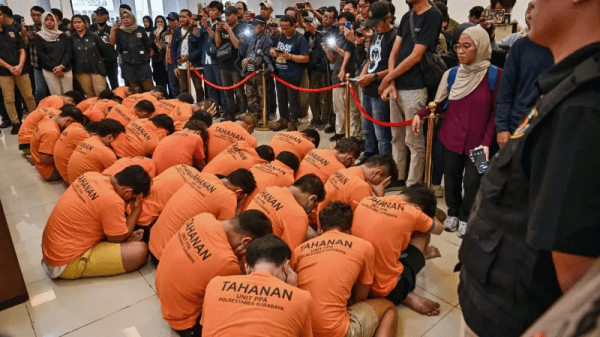
Indonesia: Multiple raids took plays on gay events and gay bars, in what looks like a deepening crackdown on queer people. A bill was also introduced that would ban LGBTQ behavior online.
Indonesia’s new criminal code moves the death penalty from the primary form of punishment to an alternative punishment, which is a baby step toward abolition.
Malaysia: You guessed it, crackdowns on gay events here, too.
Kelantan state amended its shariah-based criminal code to remove sections on sodomy, which the constitutional court said were redundant considering it’s already covered under federal law.
One bright spot – the government is beginning a study in the new year on full abolition of the death penalty. It took a step toward this in 2023 by abolishing mandatory death penalties from its criminal code.
Singapore: Parliament passed a workplace discrimination law that specifically excludes protections for LGBTQ people.
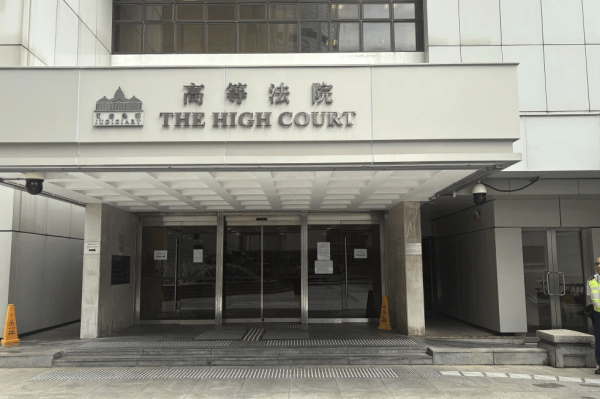
The high court dismissed an appeal seeking abolition of mandatory death penalties from the criminal code, but plaintiffs have said they will appeal.
Philippines: The supreme court ruled that homosexuality was grounds for annulment of a marriage.
Aklan province passed a non-discrimination ordinance.
Timor-Leste: The country joined the ASEAN bloc, and also the Southeast Asian Nuclear Weapons Free Zone.
Central and South Asia
Kazakhstan: The nation enacted a Russia-inspired “LGBT propaganda” law, which includes punishments of a fine and ten days in prison.
Krygyzstan: The government attempted to reintroduce the death penalty for sex crimes involving children this year – which seems to me like a common pretext for a witch hunt against queer people. Fortunately, the president submitted the proposed constitutional amendments to the constitutional court, which ruled that they were unconstitutional, as the current constitution explicitly prohibits reintroducing the death penalty, and doing so would violate Kyrgyzstan’s obligations under international treaties it has signed.
Kyrgyzstan also signed, but has not ratified the Treaty on the Prohibition of Nuclear Weapons.
Afghanistan: In July, the International Criminal Court issued warrants for two Taliban leaders for their alleged crimes against women, girls, and the LGBTQ community – the first time the ICC has sought warrants for crimes against LGBTQ people.
Pakistan: The government introduced a bill to eliminate the death penalty for two crimes, part of an association agreement with the European Union.
India: The central government took steps to ensure equality for same-sex couples under a number of laws and programs – though it still opposes same-sex marriage. The government was ordered to review all laws and promote equality when the supreme court shot down a marriage case in 2023. The court also considered and refused a petition to revisit that decision this year. Still, lots of other laws are being challenged in the courts by queer couples, including a domestic violence law which is phrased such that it only applies to husband-and-wife pairs, and equal income tax treatment.
Also this year, the court directed the government to review how it is implementing rights for trans people and to review sex education to ensure it is inclusive. A separate case was filed at the supreme court seeking distinct legal recognition for intersex people, as apart from transgender people. The high court of Andra Pradesh state ruled that transgender women are women under domestic violence law. The Kerala high court ruled that the state must issue a birth certificate to a child of a trans person that identifies its parents as “parents,” not “mother and father.” A judge in Madras ruled that same-sex couples have a right to a family life together, and cannot be forcibly separated by disapproving parents.
Karnataka state passed a hate crime and hate speech law that includes protections for LGBT people, and issued new regulations banning anti-LGBTQ discrimination in child protection services. Tamil Nadu state has made LGBTQ sensitivity training mandatory for all doctors.
Bangladesh: I must’ve edited a dozen or more stories about violent attacks on queer people in Bangladesh at 76crimes.com this year.
Bhutan: The government issued a set of film regulations that includes a prohibition on incitement to hatred or violence based on sexual orientation or gender.
Nepal: We still haven’t gotten a final decision from the supreme court on same-sex marriage, but the leading LGBT organization has counted 17 same-sex couples who’ve gotten married in the country since the 2023 ruling legalized it. Nevertheless, Wikipedia editors continue to claim that Nepal is not a same-sex marriage country.
The first gender-affirming surgery was performed in the country in June, and it is now considered available there.
Sri Lanka: There has been no progress on a bill to decriminalize gay sex – and the local Catholic bishop is whipping up conspiracy-based opposition to it. Last year, the island passed a Women Empowerment Act that included a prohibition on discrimination based on sexual orientation or gender identity.
Middle East
Israel: Well, at least the war in Gaza has mostly cooled down this year, although it’s clear that the suffering continues and it looks like we’ve just reached a pause in hostilities rather than a cessation.
On LGBT issues, Israel registered its first adoption by a same-sex couple in January. Same-sex adoption had been legal on paper for years, but in practice, the administration threw up so many roadblocks, it couldn’t happen until a supreme court ruling last year ordered the government to stop putting same-sex couples at the back of the adoption queue.
The opposition brought a bill to create civil (secular) marriage (including same-sex marriage) and a couples registry to a vote in the Knesset last week, but despite getting some cross-party support, it failed to pass.
Israel is expected to go to vote on a new Knesset by October 2026, and polling is currently very tight between the government and opposition blocs, but ten months is a long time in Israeli politics. While we can all hope that Netanyahu and his allies are given a thumping defeat next year – anything would be better than this government’s record on Palestinian and LGBTQ rights – the opposition may not be able to deliver same-sex marriage, as its current leading figure has stated his opposition to it in the past.
Lebanon: The state ratified the Convention on the Rights of Persons with Disabilities.
Oman: The country ratified the International Covenant on Civil and Political Rights, effective Feb 2026. This is a pretty major development, as international jurisprudence holds that the ICCPR requires decriminalization of sodomy.




 fleeredstates.blog
You must be logged in to post a comment.