New Jersey LGBTQ Advocates from Garden State Equality Say They’ll Continue to Pushback with Facts

*This was first published by GLAAD.

LGBTQ activists in New Jersey say they’re fortunate to live in New Jersey as the new administration kicks-off its term by attacking the transgender community and diversity initiatives. Advocates at Garden State Equality say New Jersey sets a standard for legal equality that can inspire states throughout the country.

As part of its education and advocacy “Going Local” programming across the country, the GLAAD Media Institute (GMI) – GLAAD’s training, research and consulting division – convened meetings with local leaders and community advocates at Garden State Equality and throughout the nation. Attendees who complete a program or session with the GLAAD Media Institute are immediately deemed GLAAD Media Institute Alumni, who are equipped to maximize community impact by leveraging their own story for culture change.

The state is known for its tough pro-equality laws like New Jersey Law Against Discrimination (LAD), which is considered one of the most comprehensive anti-discrimination laws in the country. Yet, new laws in the state legislature help combat a rise of LGBTQ disinformation and hate speech, straight out of Project 2025. The anti-LGBTQ hate machine has affected dozens of Jersey school board’s policies on book bans, critical race theory, and sex education.

Since Garden State Equality’s founding in 2004, over “230 LGBTQ civil rights laws” have been enacted at the state, county, and local levels. According to the organization’s website, that’s “more laws in less time than in any other state in American history.”  

On a federal level, President Trump began his second term signing executive orders to dispute the fact that transgender and gender diverse people exist. On Trump’s first days in office he signed an executive order titled Defending Women From Gender Ideology Extremism and Restoring Biological Truth to the Federal Government. The order is used to delegitimize trans truth, history, and science, which promptly raised concerns over a federal ban of the “x” gender marker for people of nonbinary, trans or gender nonconforming experience in the United States. 

“As of today, it will henceforth be the official policy of the United States government that there are only two genders, male and female,” President Trump incorrectly said upon signing the order.

Garden State Equality says they’re ready to resist these efforts by the current administration, and continue to encourage diversity, equity, and inclusion (DEI) programs, while uplifting best practices for LGBTQ youth and adult community members as they have within their state government, says advocates. 

“We want our youth to understand that they don’t just live in a bubble here in New Jersey, that the work that they are doing to be activists here in our state is going to influence other states and other students across the nation,” Natalie Hernandez  told GLAAD. 

Natalie Hernandez, Project Manager & Trainer
Natalie Hernandez, camp director and project manager & trainer; Screenshot by Lana Leonard

Hernandez is the Camp Director of Garden State Equality’s Changemakers Youth Leadership summer program. Empowering youth leaders helps inform the work of other departments and so forth, it’s a collaborative effort to fight for legal equality for the state organization. 

Hime Sarah Thomas, project manager and trainer with the Education and Youth Development Department, grew up in a queer family who introduced Thomas to Garden State Equality through the Changemakers Youth Leadership summer program. Thomas works to encourage youth to become “changemakers” by giving them an outlet to express their frustrations, and amplify their voices.

Only a small number of youth actually transition: less than one-tenth of one percent of teenagers with private insurance in the United States are transgender and receive gender-related medicine, according to a study by JAMA Pediatrics

“These youth need a space where they can talk about all the things that are happening in the news and the world because they don’t have the autonomy to be able to vote and make those choices on who is representing them,” Thomas said.  

For Aisling MacDonald, a project manager for the organization’s Training and Trans Resiliency Program, which advocates for the wellness of transgender and gender nonconforming adults and families moving into New Jersey for their LGBTQ protections.

“Our world is ever evolving. There are some very legitimate anxieties, and also… we are really, really fortunate to live here,” MacDonald said. 

MacDonald spends much of her day building coalition relationships and legal resources for name changes and documents for trans people who have been under attack on social media, through legislation, and the news. 

Hime Sarah Thomas, project manager & trainer; Screenshot by GLAAD
Hime Sarah Thomas, project manager & trainer; Screenshot by Lana Leonard

“My experience as a woman of trans experience who is from some very particular demographics, and a very particular flavor of multiple marginalizations, is that we do not have a lot of trust for systems, institutions and legislators, especially,” MacDonald said. “And I think more than anything else in 2025 we have an opportunity to build a different kind of community.”

These insights into the LGBTQ community of Asbury Park lead into a larger narrative about community needs in New Jersey and beyond. Even still, Garden State Equality recognizes that there are hurdles that must still be overcome. 

More about the GLAAD Media Institute: The GLAAD Media Institute provides training, consultation, and actionable research to develop an army of social justice ambassadors for all marginalized communities to champion acceptance and amplify media impact. Using the best practices, tools, and techniques we’ve perfected over the past 30 years, the GLAAD Media Institute turns education into armor for today’s culture war—transforming individuals into compelling storytellers, media-savvy navigators, and mighty ambassadors whose voices break through the noise and incite real change. Activate with the GLAAD Media Institute now at glaad.org/institute

Trump two-gender edict would upend “X” identity on passports

This article first appeared on CNN.com

The federal government is set to only recognize two sexes, male and female, under an executive order that President Donald Trump is soon expected to sign.

The order would reverse efforts by the Biden administration to broaden gender identity designations, including on passports.

“As of today, it will henceforth be the official policy of the United States government that there are only two genders, male and female,” Trump said during his inaugural address Monday, taking an early step to fulfill one of his culture war campaign promises.

The order, a Trump administration official told reporters Monday, is aimed at “defending women from gender ideology extremism and restoring biological truths to the federal government.” Male and female “are sexes that are not changeable, and they are grounded in fundamental and incontrovertible reality,” the official said.

The federal government would also shift from using the term “gender” to “sex,” and that sex would be “an individual’s immutable biological classification,” the official said.

All government agencies would ensure that official documents, including passports and visas, “reflect sex accurately,” the official said. Also, departments running federal prisons, migrant shelters, rape shelters and other “intimate spaces” would be directed to protect single-sex spaces for privacy. And employee records would also adhere to the executive order, as would federal departments’ messaging.

“Agencies are no longer going to promote gender ideology through communication forms and other messages,” the official said, adding that grants and contracts would be reviewed to ensure that “federal funds shall not be used to promote gender ideology.”

Reversing Biden expansion

Trump’s executive order would dismantle efforts by the Biden administration to be more inclusive of Americans’ gender identification.

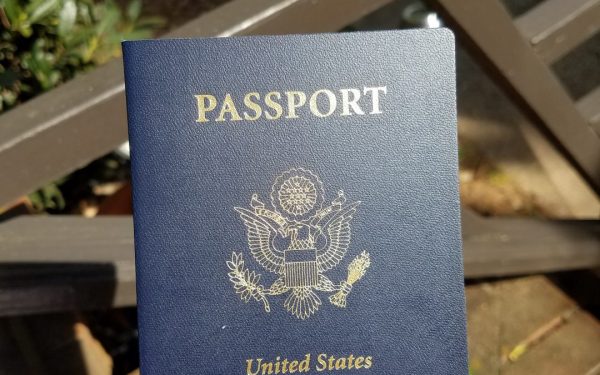
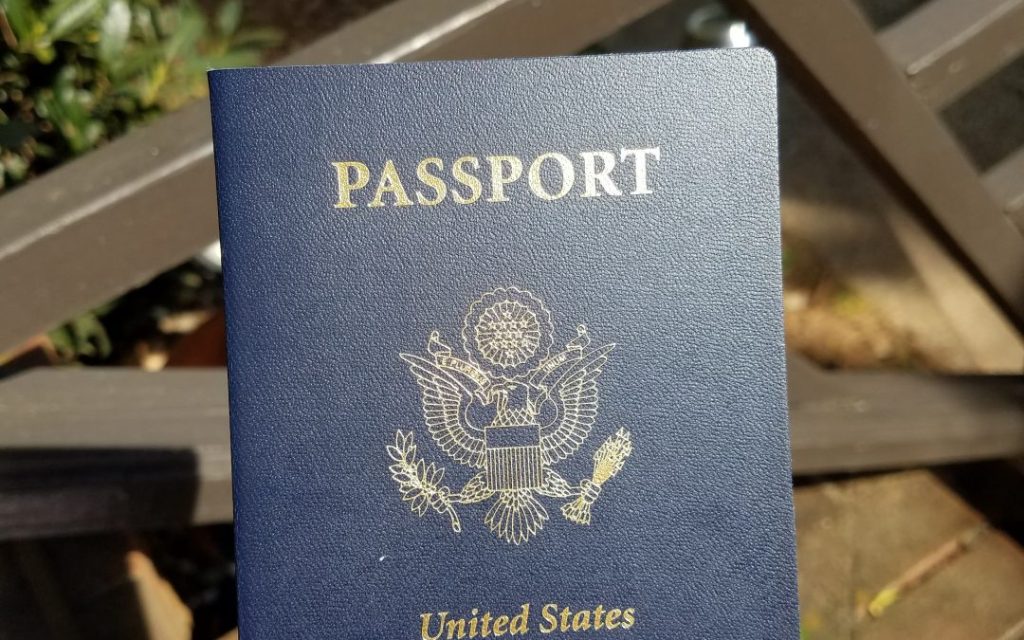
As of 2022, US citizens have been able to select “X” as their gender marker on passports. One’s marker does not need to match the gender on citizenship documents or photo ID, nor is medical documentation needed to change one’s gender, according to the State Department.

“We promote the freedom, dignity, and equality of all people – including LGBTQI+ individuals,” the department’s website says. “We are demonstrating this commitment to better serve all U.S. citizens, regardless of gender identity.”

Later that year, Americans were able to start changing their sex identification with the Social Security Administration without needing to provide medical certification. However, Social Security’s record systems still require a designation of male or female, though the administration said it was exploring policy and systems updates to support an “X” designation.

“The Social Security Administration’s Equity Action Plan includes a commitment to decrease administrative burdens and ensure people who identify as gender diverse or transgender have options in the Social Security number card application process,” said Kilolo Kijakazi, the administration’s acting commissioner at the time.

LGBTQ+ rights have long been at the mercy of public opinion. This November will be no different.

This blog is originally appeared at LGBTQ Nation.

LGBTQ+ ballot initiatives have long served as a wedge issue, mobilizing conservative voters and influencing the rights and freedoms typically protected by law. The 2024 election follows this tradition, with LGBTQ+ civil rights once again being subjected to public debate.

In New York, voters will decide whether to include sexual orientation, gender identity, and gender expression in the state’s anti-discrimination amendment. Meanwhile, reproductive rights will also be up for a vote in 10 other states.

California, Colorado, and Hawaii voters will decide this November whether to repeal their states’ constitutional bans on same-sex marriage.

Since 1998, same-sex unions have consistently been the top issue on state referendums. In that time, 34 states have put the question to voters, with many passing constitutional amendments that prohibited same-sex marriage. These amendments were often used as a political tool to mobilize conservative voters, particularly in the 2004 election when 11 states approved such bans, helping to boost George W. Bush’s campaign.

Marriage equality consistently lost at the ballot box until 2012, when voters in Maine, Maryland, Minnesota, and Washington approved same-sex marriage, signaling a shift in public opinion that had been building since around 2009, when support for same-sex marriage crossed the 50% threshold in national polls.

In 2015, the Supreme Court’s landmark Obergefell v. Hodges decision struck down all state constitutional amendments banning same-sex marriage, declaring such bans unconstitutional. However, these amendments remain in place in several state constitutions. Activists are now pushing to repeal them, especially in light of concerns that the conservative-leaning Supreme Court could overturn Obergefell, as Justice Clarence Thomas hinted after the court struck down Roe v. Wade.

The Origins of Ballot Initiatives on LGBTQ+ Rights

California’s 1978 election introduced the first state ballot initiative related to LGBTQ+ rights—Proposition 6, also known as the Briggs Initiative. Sponsored by Orange County legislator John Briggs, the initiative sought to ban anyone who engaged in “public homosexual activity” from working in California public schools. The proposal was part of a broader wave of anti-gay activism spurred by Anita Bryant’s 1977 “Save Our Children” campaign in Florida, which successfully repealed Dade County’s anti-discrimination ordinance based on sexual orientation. Harvey Milk played a pivotal role in organizing the opposition to Prop 6, which was defeated by a 16-point margin.

Since then, other states have introduced ballot initiatives aimed at legalizing or banning discrimination based on sexual orientation or gender identity. Over time, voters have increasingly supported anti-discrimination measures. In 1988, Oregon voters overturned the governor’s authority to ban discrimination based on sexual orientation. In 2018, Massachusetts voters upheld a law prohibiting discrimination based on gender identity.

Maine and Oregon: Key States in the Fight for LGBTQ+ Rights

Maine and Oregon have consistently put LGBTQ+ rights to a vote. In Maine, voters initially blocked same-sex marriage in 2009, but then approved it by the same 53% margin in 2012. Maine also rejected anti-LGBTQ+ discrimination protections in 1998 and 2000, only to approve them in 2005. In Oregon, voters defeated a “don’t say gay” measure in 2000 by a narrow 5.7% margin.

Many states also used ballot measures to resist the inclusion of sexual orientation as a protected identity in anti-discrimination laws. In the 1990s, voters in Oregon, Idaho, and Maine approved such measures, protecting sexual orientation as a legally recognized identity.

The Impact of Other Ballot Measures on LGBTQ+ Rights

It’s not just LGBTQ+-specific ballot measures that impact the community. Other laws, such as voter ID requirements in Arkansas and North Carolina, disproportionately affect trans individuals and other marginalized LGBTQ+ people, limiting their ability to vote.

In addition to these referendums, the candidates voters elect at the state level will play a critical role in shaping LGBTQ+ rights. Republican-led legislatures have introduced or passed hundreds of bills targeting LGBTQ+ individuals, particularly in areas such as gender-affirming health care, bathroom access, inclusive education, and sports participation. Supporting state-level and local candidates who champion LGBTQ+ rights will have long-term implications, even if certain issues are not directly decided by referendum.

Civil Rights and Public Opinion

The fight for civil rights has a long history of being put to public referendum. Since 1868, issues related to race, sex, and disability have often been decided by voters, with initial support for discrimination gradually giving way to support for equality. While women’s rights gained public approval in the 1970s, LGBTQ+ rights did not see widespread support until the 2000s.

The question of whether civil rights should be determined by public opinion, rather than by courts or legislatures, has allowed forms of discrimination—such as racism, sexism, and homophobia—to become entrenched in law. Although public opinion on LGBTQ+ rights is often divided and fluid, most polls now show a majority in favor of anti-discrimination laws for LGBTQ+ individuals.

The Importance of Voting

With LGBTQ+ rights on the ballot this November, it’s more crucial than ever to vote. In addition to ballot measures, the elected officials who hold office at the state and local levels will have the power to pass or block pro-equality legislation, impacting LGBTQ+ rights for years to come. Whether through referendums or legislative action, LGBTQ+ rights remain at stake, and your vote matters.

Make your voice heard—not just on ballot measures, but by choosing candidates who will protect and advance equality for all.

Blog at WordPress.com.

Up ↑