Inside The Great Queer American Exodus

*This is reported by HuffPost.

For queer people like me, the desire to move to a different country often stems from a deep curiosity about what lies beyond what we are allowed to embody here in the U.S. — a restlessness, as one interviewee told me, to understand ourselves uninhibited by the weight of social expectations.

Others leave out of fear, scrambling to find a safer haven where they’re not treated like political pawns. With an election marked by an abundance of anti-queer rhetoric from conservatives and even silence from Democrats on trans rights, moving abroad may soon become a reality for many queer Americans.

Navigating the world as queer individuals involves questions that many take for granted: Would I find community? Is the health care affirming? If parts of America do not feel like a queer haven, is there a promised land awaiting somewhere else? As I’ve learned, so many LGBTQ Americans of all ages have found their home abroad — and some of their overseas journeys began with a spontaneous swipe.

When Bill McKinley, 64, matched with a Spaniard named Ricardo on Big Muscle Bears, a dating website, 14 years ago, the Indiana native had no idea his Midwestern life was about to be upended forever.

Growing up between Indianapolis and Muncie, Indiana—a place he describes to me as “the most average town in America”— McKinley was forced into conversion therapy for several years, a life chapter he detailed in a 2022 HuffPost article.

While his parents later converted to The Church of Christ, a more queer-welcoming denomination, their earlier parenting was shaped by their profoundly devout Catholicism. His experiences led to advocacy work as a young adult and he eventually found his support system and became a gay-rights activist, actor and performer.

McKinley always thought he would call the United States home, but after talking to Ricardo for almost a year, he decided to visit him for three weeks in his Madrid home and soon fell in love. Despite returning to Indiana for 11 months, he permanently settled in the Spanish capital in the fall of 2011. On Valentine’s Day 2012, he and Ricardo got married. “I didn’t leave the United States; I came to Ricardo,” he says, when reflecting on the big move.

Now living in Chueca, “the world’s largest gay neighborhood,” as he describes it, McKinley cannot picture himself far from the quaint streets of low-rise, custard-colored buildings that fill Madrid’s downtown. “I can’t imagine going back to the United States,” he says. “I don’t know that we would ever live somewhere else.”

For queer people like McKinley, life outside the American border can offer a renewed sense of freedom and security — whether or not it was longed for — and places like Barcelona, Bogotá or Paris can become havens for the queer community.

Living abroad as a queer American is part of a broad historical trend, with literary icons such as James Baldwin and Audre Lorde standing out as two of its most influential examples. Baldwin settled down in France in 1948 and Lorde spent several years in Berlin in the 80s. Through works like Lorde’s “Berlin Is Hard on Colored Girls” and Baldwin’s ”Giovanni’s Room,” both writers inspired a generation of queer Americans — especially queer people of color — to venture beyond their homeland.

Moved by Baldwin’s legacy, Prince Shakur, a 30-year-old gay artist and author of ”When They Tell You To Be Good,” became curious about Paris. The Jamaican-American writer ended up living there for three years over several intervals. During this time, he became involved in the city’s protest scene, particularly around the Nuit Debout demonstrations.

As a Black American, he was shocked by the way police treated activists in France. “Their relation to Blackness felt a little less violent compared to America,” he tells me. Living there, he says, partly liberated him from certain constraints racial minorities experience in the U.S. “Being queer and Black, I get a little more freedom … that made it easier for me to have fun and feel comfortable.”

The term “freedom” was frequently used by the LGBTQ+ Americans now living abroad whom I spoke with. Moving to Barcelona about two-and-a-half years ago allowed Lars Wenzel, a 30-year-old queer man, to disclose his transness on his own terms. For Wenzel, who was already a foreign exchange student in Italy in 2010, moving there was an affirming experience — one that resonates with many in the LGBTQ community.

“Diasporic travel can be really appealing to queer people, because in terms of relationships with people that have known us since we were little, there’s this framework of, ‘This is who you always were,’” Wenzel says. His words resonate; even though anti-queerness does exist in every corner of the world, there’s something to be said about intentionally distancing yourself from a past that you no longer believe serves you.

In New York, where Wenzel lived before moving to Barcelona, the LGBTQ+ community felt quite siloed to him, especially in nightlife. Each letter stayed within their own bubbles, he says. Barcelona’s queer spaces felt more porous, reflecting a culture that is less fixated on identity compared to the American one. “Even in the Spanish language, how people talk about queerness with terms like travesti and maricón, all these things flow together. It doesn’t feel so important to understand exactly what words you use to describe yourself,” he says. “Queerness feels more cultural than identity-focused.”

Access to free health care is another reason Wenzel decided to settle down in Barcelona. As a trans person, his identity constantly relies on good medical care, he says, but Spain’s universal coverage also provides him with a sense of safety regarding his overall sexual health. According to recent OECD data, 53% of Americans primarily relied on private health insurance, 38% on public coverage, and 9% remained uninsured, whereas the public system in Spain covers over 99% of the population. “Having unprotected sex doesn’t mean that you could be putting someone at risk of a medical bill,” he says. “And there’s very little stigma surrounding STIs and HIV.”

Ben Seaman, a 58-year-old queer man who grew up in a “WASP household with a lot of emotional repression,” as he describes it, between Kansas and Connecticut, echoes Wenzel’s sentiment. A painter and a psychotherapist, Seaman always gravitated toward Spanish people and culture, and since the ’90s, he has been visiting Madrid, a city he initially thought was “a bit behind in terms of technology” compared to New York, but “more open in terms of gay life.”

Once he turned 50 and started to look for places to spend his “third and final childhood,” the Spanish capital was on top of his list. Along with his husband, he spent five weeks there this spring and their connection to the city’s vibrant social fabric grew even stronger. But feeling safe and well-treated by the Spanish health care system was a crucial factor in his decision. “They [healthcare system] are here to help you, and they don’t divide into insured and uninsured,” he says. “They just keep people healthy.” Next month, Seaman will finally settle down in Madrid.

Safety, however, encompasses more than just having access to quality health care. For Lola Mendez, a 35-year-old pansexual journalist who grew up in Kansas and moved to Chiang Mai, Thailand, this past March, the United States’ gun violence epidemic drove her to leave the country. And she doesn’t plan to return anytime soon. “If you’re under 18, your most likely cause of death is a gunshot,” Mendez says. “I can’t live in a society where I could be killed at any given moment.”

And in an increasingly hostile legislative environment for the trans community, some queer Americans have even sought legal protections abroad. Eric (who prefers to use a pseudonym for safety purposes) is a 40-year-old queer person from Arizona who was living in Ohio with his wife and their 5-year-old daughter, a trans girl, when state lawmakers started to push for bills targeting the trans community.

Fearing for their child’s safety, they flew to Ireland in March and applied for asylum there. “We didn’t have plans, we didn’t know anybody here, but we just needed to get out,” he tells me. Although he is still waiting for his case to be resolved, he remains hopeful about their future life in Ireland. “They put us in housing in one of the most conservative counties in the country, so that didn’t super work for us, but it’s already safer than the U.S.,” he says.

After our interview took place, he and his family were moved to Cork, a more progressive city, and their daughter has enrolled in school. “Everyone from teachers to principal were amazing and affirming, and she has a bunch of other little girls trying to make friends with her here,” he said.

Moving to a place that is affirming and protective of queer identity is essential, but for many American immigrants, access to community and LGBTQ spaces is also crucial. After growing up in South Florida and attending college in Maine, Tasha Sandoval, a 33-year-old queer journalist, decided to move to Bogotá, where she was born, in 2019 to reconnect with her roots. She eventually returned to New York, but this March, she took advantage of her work flexibility and gave Bogotá another chance.

While other Colombian places such as Medellín feel relatively conservative, Bogotá stands out as a cosmopolitan and diverse city where the queer community thrives within a vibrant cultural scene, Sandoval says. “This time around feels like it has more potential. I feel more queerness around me,” she adds.

After spending two years in San José, Costa Rica, Aaron Bailey finally built a community there — one centered around queer friendships. The 47-year-old gay Michigan native experienced a midlife crisis in Denver, his former home, and purchased a vacation house in the Central American country, where he eventually found himself spending more time.

The house, located in a tourist and transient area, felt detached from the local society, so he moved to the capital. Bailey describes it as more queer-friendly and safe and says he now feels integrated into the community, and so Costa Rica has come to feel like his new home. “At this point, I can’t imagine leaving Costa Rica; certainly I can’t imagine moving back to the United States,” he says. “I feel really settled and rooted here, and that’s something I haven’t felt in decades in the United States.”

Living abroad has its own set of challenges, and many queer immigrants carry a guilt around leaving loved ones that sinks deep, no matter the number of calls and Sunday morning FaceTimes. The black screen will always look back at you, reminding you of the missed 30th birthday and the wedding you will never attend — but it is a price many deem worth it.

“I will do absolutely everything I can to help any person who wants to get out of the United States get connected with resources,” Wenzel says.

Best Places for LGBTQ People to Retire Abroad

*This is reported by Kiplinger.

An irrefutable reality of being a member of the LGBTQ community, at any age, is that you must give more thought than non-LGBTQ people about where to live. What are the local laws that apply to LGBTQ people regarding workplace and housing discrimination, marriage equality and conversion therapy? What does available public polling reveal about acceptance of the LGBTQ community? Even if you’re not married and don’t plan to be, or even if you no longer work, such laws — or the absence of them — suggest to LGBTQ folks how safe and welcoming the locale will be for them.

The above is true whether you’re LGBTQ and 30 — or a gay retiree. You can’t just spin the globe. If you’re LGBTQ and are considering retiring abroad, it is incumbent on you to do more due diligence than your straight friends and family members would have to do in the same situation.

Best places for LGBTQ people to retire abroad

If you enlist the services of a lawyer who specializes in retirement abroad, you have to ask more questions; you have to spend more late nights googling; and you have to read more articles like this one, in which we examine the knotty issues related to gay retirement outside the U.S., include advice from both experts and expats, and make some (hopefully helpful) recommendations.

If everything falls into place, you can breathe a sigh of relief once you’re in the midst of your retirement abroad. Chris Young and Jon Kinnally, who both worked in the television industry — Young was a writer for Comedy Central, and Kinnally was a writer and producer for the sitcoms Will & Grace and Ugly Betty — lived most recently in Los Angeles before the couple moved to Spain. They chose Sitges, a vibrant, walkable beach town about 45 minutes from Barcelona. “It’s so open. You see gay and lesbian couples holding hands. And you can be old and gay here, which you can’t be in L.A.,” Young says, not entirely joking.

Below, we recommend some beautiful and culturally rich countries where LGBTQ folks can retire happily and safely. But just as the U.S. isn’t uniform in terms of acceptance, neither are most countries. The LGBTQ community scarcely needs to be told that the more populous and diverse the area — in the U.S., that means urban or coastal, or both — the more accepting the area tends to be.

But it’s worth repeating. As the founder and managing director of Mitos Relocation Solutions, Federica Grazi helps expats retire in Greece and other European countries, and she is quick to note that not all of Greece is like the gay magnets of Athens and Mykonos. “I would not recommend that gay couples move to the countryside, where there are traditional communities and not many expats — it would be harder to integrate there,” she counsels, but the same might be said of France, Spain, Italy — or the U.S.

With that in mind, here’s our hot list of retirement places.

Spain

Spain is well-known as one of the most LGBTQ-friendly countries in the world. Spain legalized same-sex marriage in 2005, a full decade before the U.S. Naturally, this factored into Young’s and Kinnally’s decision to move to Sitges, a global destination for gay tourism.

The two appreciate the fact that the resort town, while heavily gay — with a spate of gay bars, nightclubs, and hotels — is demographically diverse. “It’s not a gay ghetto,” Young says. “Sitges is a great mix,” Kinnally adds. “It’s different than a place like Provincetown. There are kids running through the streets, old Spanish ladies, and gay couples — all mixing together. It’s kind of a utopia if you want to retire.”

With health care costing the couple only 250 euros a month and three-course lunches priced from 15 to 17 euros, they can breathe easy about expenses and work on their respective book projects. (Kinnally’s I’m Prancing as Fast as I Can comes out in August.) Of the major cities, Barcelona is a gay mecca, and Madrid boasts Chueca, a festive gay neighborhood.

Greece

While same-sex marriage was only recently legalized in 2024, same-sex sexual activity was decriminalized in Greece in 1951, which compares favorably to the U.S., which granted this right far later — in 2003. Likewise, employment discrimination against gays and lesbians has been illegal in Greece since 2005 (with gender-identity protections following later), while the U.S. did not grant this protection at the federal level until 2020.

Athens boasts a large and thriving LGBTQ community, especially in the Gazi neighborhood, and the Cycladic island of Mykonos is arguably the world’s most popular summer destination for the LGBTQ community, with famous gay beaches like Elia and Super Paradise.

Former New Yorker Daniel Rentillo says that even the small, low-key island of Symi, where he retired, is a comfortable place to be LGBTQ, and he’s noticed more gay couples visiting and even making moves to relocate to the island. The fact that Greece enjoys excellent health care and a relatively low cost of living makes this country of cultural antiquities, plentiful beaches, mild weather, and fresh seafood a fine choice for retirees — LGBTQ or not.

Malta

Not only was employment discrimination against the LGBTQ community banned here, and same-sex sexual activity decriminalized years before the U.S. made these civil rights moves, but the island nation of Malta was also the first European country to ban conversion therapy. Supermajorities of Maltese support civil rights and marriage equality.

With a tiny population of half a million people living on three sunny, inhabited islands (Malta, Gozo, and Camino), the country is located south of Sicily, enjoying a similar Mediterranean climate and stunningly clear waters to swim in, especially at the natural coves at St. Peter’s Pool.

Valetta is the pedestrian-friendly capital and is the best place for gays to hole up, along with nearby Sliema. “Everyone accepts the LGBTQ community today,” says Matthew Cassar, a citizenship advocate and lawyer based in Sliema. “No one would conceive of discrimination,” noting that “there is no opposition party” set on scaling back the community’s rights. One of Cassar’s clients, worried for his transgender daughter’s rights and safety in the U.S. under the Trump administration, is in the middle of the citizenship process.

The country has two official languages: Maltese and English.

Australia

For more than a decade, public polling has shown support for gay rights and marriage quality surpassing the 70% mark. And some advances have been swift and recent: Since 2021, the country has outlawed the so-called gay panic defense, legalized marriage equality, and banned conversion therapy (in regions representing 85% of the population). In 2013, Australia implemented federal protections based on sexual orientation, gender identity, and intersex status.

Though marriage equality did not arrive in Australia until 2018, the capital of Sydney has embraced gay culture for decades: The annual Gay and Lesbian Mardi Gras, one of the world’s biggest LGBTQ celebrations, has been going strong since the 1970s. While Sydney, Adelaide and Brisbane have gay neighborhoods, the LGBTQ presence in Melbourne is more spread out.

Most retirees will find a pathway to relocate through the expensive ($500,000 to $750,000) Investor Retirement Visa. Still, it is cheaper to live in Sydney than in New York or San Francisco.

For those seeking a mild climate, beautiful cities, a friendly populace, excellent health care, and zero language barrier, “Oz” (the affectionate slang for Australia) may be the ticket.

Costa Rica

Costa Rica’s former president, Carlos Alvarado Quesada, was a notable reformer and advocate in the area of LGBTQ rights, garnering global attention when he publicly apologized for the country’s past persecution and discrimination of gays, calling it “shameful.” Same-sex marriage became legal in 2020, which was also the year that hate crimes and blackmail based on sexual orientation were criminalized. (Transgender rights already had been significantly expanded in 2018.)

A center of eco-tourism and sustainable well-being with no standing army, tropical Costa Rica has long been regarded as a kind of peaceable utopia for expats. With the Caribbean Sea on one side and the Pacific on the other, Costa Rica is known for its lush landscape and hot springs.

Costa Rica’s healthcare system frequently ranks as one of the best globally. The country’s high-quality healthcare has made it a health tourism destination.

Gay life is centered in the capital city of San Jose and the carefree beach resort town of Manuel Antonio. Retirees will find the country very affordable, even with household help.

The Netherlands

The first country in the world to legalize same-sex marriage (in 2001) also banned discrimination based on gender identity, gender expression, and sex characteristics in 2019. Not only do most Dutch people support LGBTQ rights; many Dutch, especially those under 40, can’t even comprehend the discrimination faced by the community in other countries.

It would be an understatement to say that you can be comfortably gay in Amsterdam, with Reguliersdwarsstraat the most prominent LGBTQ area. This world-class city is postcard-perfect, teeming with cyclists, and is pedestrian-friendly (just mind the bike lanes). The visa system is straightforward and leads to residency. English is widely spoken, and the cultural opportunities seem endless.

On the downside, the country’s cost of living can feel a little pricey for those living outside major U.S. cities, and the weather in the Netherlands is rainier and chillier than in southern Europe.

Thailand

In 2024, Thailand made headlines when it became the first UN member state to approve a marriage equality law, and the country, with its myriad cultural and recreation opportunities, has long been popular with LGBTQ tourists. Therefore, LGBTQ couples and individuals may want to consider Thailand, but only if they’re of a certain stripe: adventurous and very well-traveled; tolerant of tropical heat; and veterans of previous vacations or work stints in the country.

In an exotic culture so far from friends and loved ones, it’s best to have an expat community already in place if you’re thinking of moving there. In addition, though Thailand offers the LGBTQ community a range of protections and anti-discrimination laws, local attitudes are still evolving, and social interactions should be carefully navigated (cue the established expat scene).

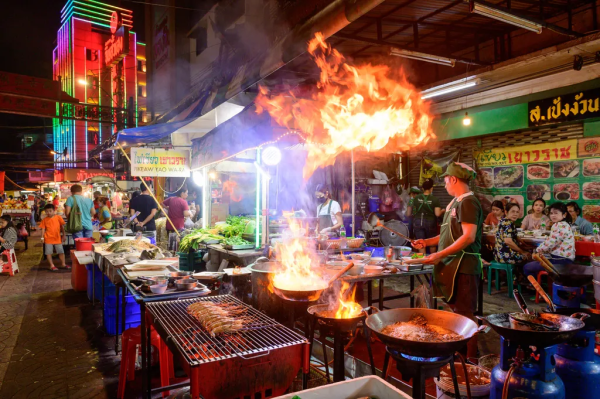
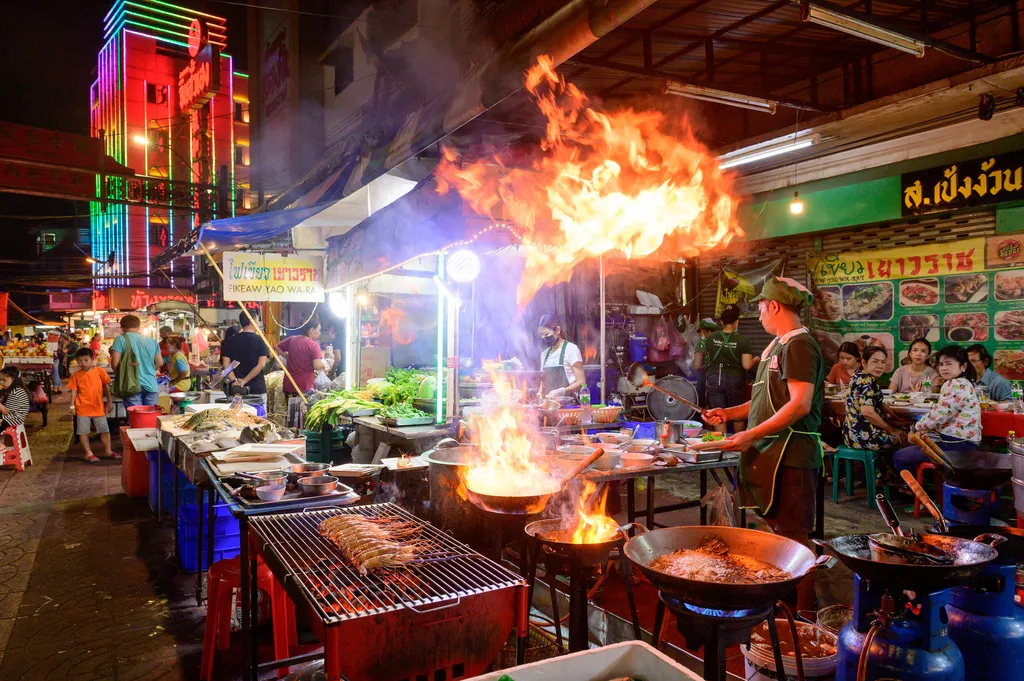
That said, this is a very inexpensive country with kind people. And if you love Thai food, having pad see ew where it was invented will be a revelation. The capital, Bangkok, is a uniquely stimulating place, where a ride on long-tailed boat along the Chao Phraya River may get you to your destination faster than an open tuk-tuk (taxi), given the city’s notoriously heavy traffic.

If you prefer a slower pace and a coastal setting, you can always base yourself in the resort areas of Phuket or Ko Samui, the latter the island where season 3 of The White Lotus was filmed.

Blog at WordPress.com.

Up ↑