Trump Admin Quietly Changes State Department Page To Indicate It May Invalidate Trans Passports

Read more at Erin in the Morning.

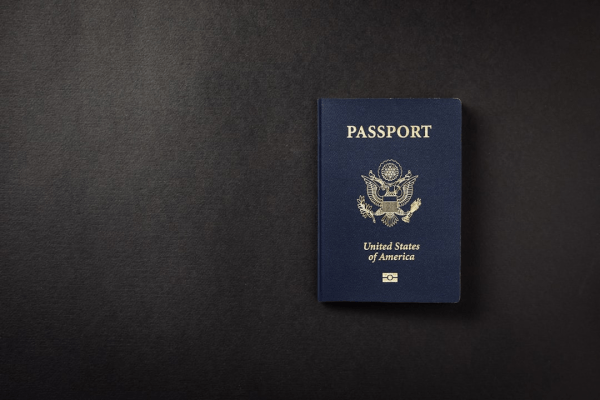
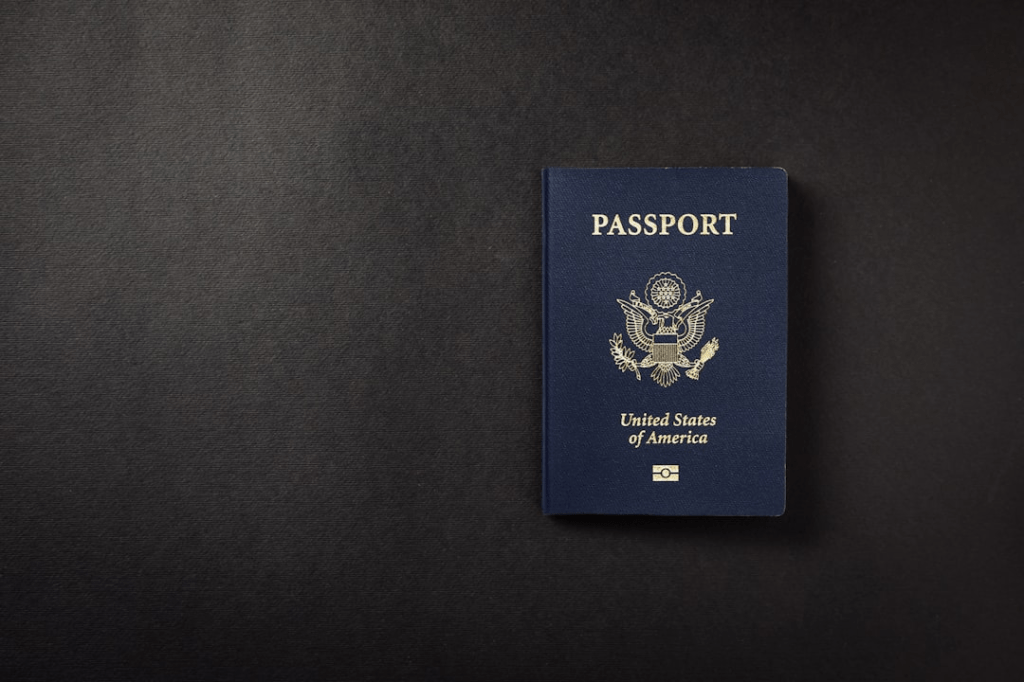
The State Department quietly updated its website this week to signal that the Trump administration may move to invalidate passports held by transgender Americans, following a Supreme Court emergency ruling that overturned earlier protections on gender-marker updates. The change was first spotted by journalist Aleksandra, who writes as Transitics on Substack. Until recently, the website assured transgender passport holders that their documents would “remain valid until [their] expiration date.” As of Thursday morning, that language had been replaced with: “A passport is valid for travel until its date of expiration, until you replace it, or until we invalidate it under federal regulations.” The new phrasing has sparked alarm across the transgender community, with one government source telling Erin in the Morning that there is growing interest within the administration in exploring some level of revocations.

The change comes one week after the Supreme Court issued an emergency ruling allowing the Trump administration’s passport restrictions on transgender people to take effect. In that decision, the Court concluded that the administration is likely to prevail in ongoing litigation, and rejected the argument that the policy was driven by “a bare desire to harm a politically unpopular group.” This conclusion stands in stark contrast to the administration’s own executive orders enabling the passport crackdown, which describe transgender people as inherently “wrong,” “dishonorable,” and “socially coercive.”

“The Court ignores these critical limits on its equitable discretion today. The Government seeks to enforce a questionably legal new policy immediately, but it offers no evidence that it will suffer any harm if it is temporarily enjoined from doing so, while the plaintiffs will be subject to imminent, concrete injury if the policy goes into effect,” responded Justice Jackson in her dissent.

Previously, there were signs that a Trump administration victory in court could trigger efforts to invalidate transgender people’s passports. As first reported by Erin in the Morninga single paragraph in a government filing stated that “if the government prevails in this case and the Department proceeds to revoke and replace passports issued pursuant to the preliminary injunction, the Department will incur additional administrative costs.” At the time, some observers dismissed this as routine legal positioning. But the State Department’s latest website change suggests the administration may, in fact, be preparing to take exactly that step.

One government source familiar with internal discussions said such conversations are indeed underway, though any revocation effort would be difficult to carry out and would almost certainly ensnare some cisgender people by mistake. According to the source, the most likely targets would be passport holders with X markers and those who updated their documents through the affidavit process—a temporary pathway created under lower-court rulings that allowed transgender people to obtain corrected passports if they signed a sworn statement attesting to their gender identity. At the time, EITM reported that the State Department was collecting data on every person who signed the affidavit in case a ruling like this arrived, enabling the government to potentially invalidate those passports. Now, that appears to be one of the avenues the administration is actively considering.

For those who updated their passports before this administration, any attempt to revoke those documents would be far more complicated. The process would be costly, the relevant information is not easily accessible, and such actions would almost certainly run into additional legal hurdles and face separate court challenges. And for anyone whose passport the government does seek to change, the law guarantees an appeal with a hearing on request—an extraordinarily expensive and resource-intensive process for an agency that is not equipped to handle a surge of such cases.

When asked what the process would look like for transgender people traveling overseas if their passports were revoked, the source told EITM that those individuals would likely be contacted and instructed to report to the nearest U.S. embassy or consulate to replace their passport or receive special guidance. Such a requirement could severely disrupt international travel for transgender people. For now, however, any move in this direction appears to be weeks or even months away—if the administration chooses to pursue it at all.

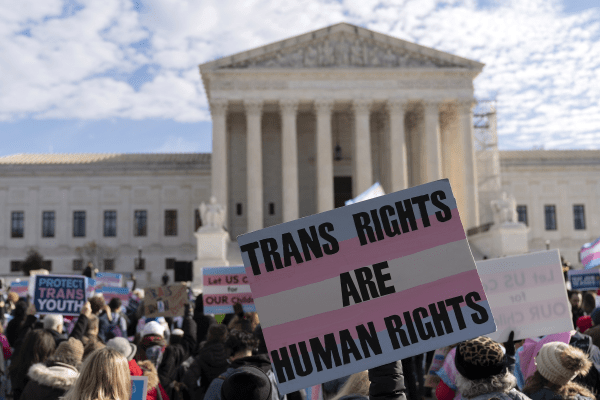
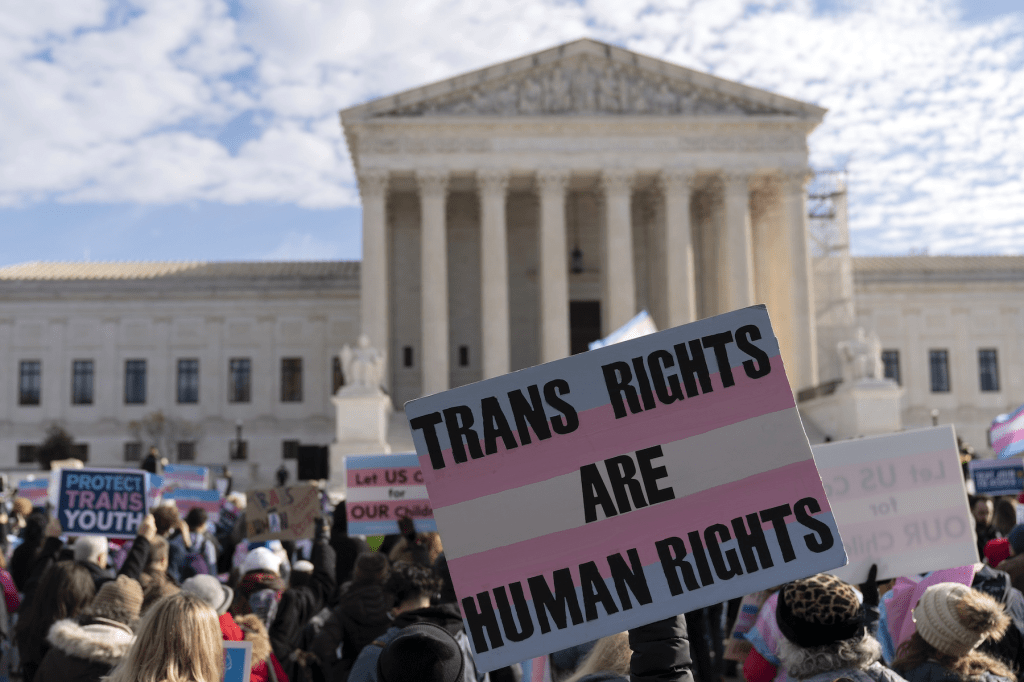
Meanwhile, the case will continue in the lower courts, a process that could drag on for years. And while those courts could, in theory, rule in favor of transgender plaintiffs, recent Supreme Court actions suggest the justices are prepared to side with the administration on virtually any policy targeting trans people. The Court is already set to hear a case in January that will determine whether transgender Americans receive equal protection under the law at all, and the memory of the Skrmetti decision—upholding bans on trans youth care—still hangs heavily over the legal landscape. In the meantime, transgender people in the United States are left to navigate shifting rules in nearly every aspect of daily life under an administration and a Republican Party intent on making that life as difficult as possible.

Supreme Court reinstates Trump administration’s transgender passport policy

Read more at The Hill.

The Supreme Court on Thursday ruled President Trump’s State Department can prohibit transgender Americans from listing their gender identity on their passports, for now. 

It hands another legal victory for Trump in his efforts to eviscerate what his administration calls “gender ideology.” The Justice Department brought the emergency appeal after lower courts blocked the passport policy for being rooted in “irrational prejudice.” 

“Displaying passport holders’ sex at birth no more offends equal protection principles than displaying their country of birth—in both cases, the Government is merely attesting to a historical fact without subjecting anyone to differential treatment,” the majority wrote in its unsigned ruling

The ruling appeared to be along the court’s 6-3 ideological lines, though the justices do not have to publicly disclose their votes. 

In dissent, the court’s liberals called the ruling “pointless but painful perversion.” 

“Such senseless sidestepping of the obvious equitable outcome has become an unfortunate pattern,” wrote Justice Ketanji Brown Jackson, joined by Justices Elena Kagan and Sonia Sotomayor. 

“So, too, has my own refusal to look the other way when basic principles are selectively discarded,” the dissent continued. 

Solicitor General D. John Sauer called lower rulings blocking the administration’s policy “untenable,” casting them as infringing on Trump’s constitutional authority over foreign affairs. 

“The President’s choice to revert to prior policy and rely on biological sex—a choice that bound the State Department—should be the last place for novel equal-protection claims or Administrative Procedure Act objections,” Sauer wrote in court filings. 

The State Department policy requires passport holders to use their sex assigned at birth as their sex designation, prohibiting transgender people from matching it with their gender identity. The policy also removed the option for people to select “X,” leaving male and female as the only two options. 

“This new policy puts transgender, nonbinary, and intersex people in potential danger whenever they use a passport,” American Civil Liberties Union (ACLU) attorney Chase Strangio warned in court filings. 

Strangio and the ACLU represent transgender and nonbinary Americans who are suing over the State Department’s changes. 

They argue it violates federal law and constitutional equal protection rights, convincing a federal district judge appointed by former President Biden and later the 1st U.S. Circuit Court of Appeals to halt the policy.  

It marked the latest case implicating Trump’s Day 1 executive order that cracks down on what he calls “gender ideology” to reach the Supreme Court. Previously, the justices issued emergency orders allowing the administration to enforce its transgender troops ban and cancel diversity-linked health grants. 

Cisgender male student kicked off boys’ basketball team due to birth certificate error in nightmarish ordeal

Read more at LGBTQ Nation.

In Arizona last week, a cisgender male 8th grader was “physically removed” from tryouts for his school’s boys’ basketball team because an error on his original birth certificate incorrectly identified him as being born female.

It’s the latest episode in a “gender ideology”-inspired nightmare for the teenager, Laker Jackson, and his family.

“I’m sad for everybody that it’s come down to this,” mom Becky Jackson told KNXV News in Phoenix.

The Kafkaesque drama was inspired by a clerical mistake 14 years ago, when hospital staff mistakenly identified Becky Jackson’s newborn son as a girl. It was an error Laker’s parents never noticed.  

“I give him the birth certificate and they’re like, ‘Did you know this says female?’” Becky Jackson recalled about handing over enrollment paperwork to a school administrator last year.

“I was like, ‘What?’” Becky Jackson said. “I was like, ‘Oh man, that’s so funny.’ So we come home, everyone’s laughing.”

The busy mom of six said correcting the document wasn’t a priority.

“So we just put it in the drawer and moved on,” she said.

The mix-up didn’t cause issues until recently, she told AZ Family.

Last spring, school staff began treating Jackson as female, Becky Jackson said.

The district removed Laker Jackson from an all-boys gym class and mandated he use a separate restroom, despite the family’s assertion that their son is a cisgender boy, assigned male at birth.

Becky’s mom had already started work on changing Laker Jackson’s birth certificate, but “it’s not something that you can fix quickly. You have to have an affidavit signed,” she said.

In the meantime, the 14-year-old continued training to make the boys’ basketball team at his Mesa high school, a 7th to 12th-grade school in the Queen Creek Unified School District.

Becky Jackson said she received the corrected birth certificate over the summer and provided the district with the revised document, along with a doctor’s note confirming Laker’s sex.

But Queen Creek administrators said it wasn’t enough, standing by a rule stating that the school’s determination of a student’s sex would rely solely on an original birth certificate.

“They sent the athletic director of Eastmark High to physically remove Laker from the basketball tryouts in front of all of his friends, in front of the coach,” Becky Jackson said.

“I am a biological boy. I was born a boy,” said Laker Jackson, who heard from friends on the basketball team that “they were talking about it for the entire tryout and even the next day’s tryouts because they were really confused.”  

After the family continued to raise objections to Laker Jackson’s treatment, a letter from an administrator said genetic testing to confirm their claim that the child is a boy “could be considered.”

“They may consider changing it if we get chromosomal testing. They didn’t say they would,” Laker’s mom said. She estimated the cost at $1500.

“So who’s going to pay that?” she asked.

In a statement, the district said it was “committed to ongoing dialogue.”

Becky Jackson also said her son will try out for a girls’ team if that’s what it comes to.

The ordeal is a prime example of what activists have long warned: that anti-trans policies are bad for everyone. It’s also quite ironic, considering the very people who want to stop anyone assigned male at birth from playing on girls’ sports teams may wind up forcing a cisgender boy to do just that.

Virgin Islands make history by allowing trans & intersex people to change their gender markers

Read more at LGBTQ Nation.

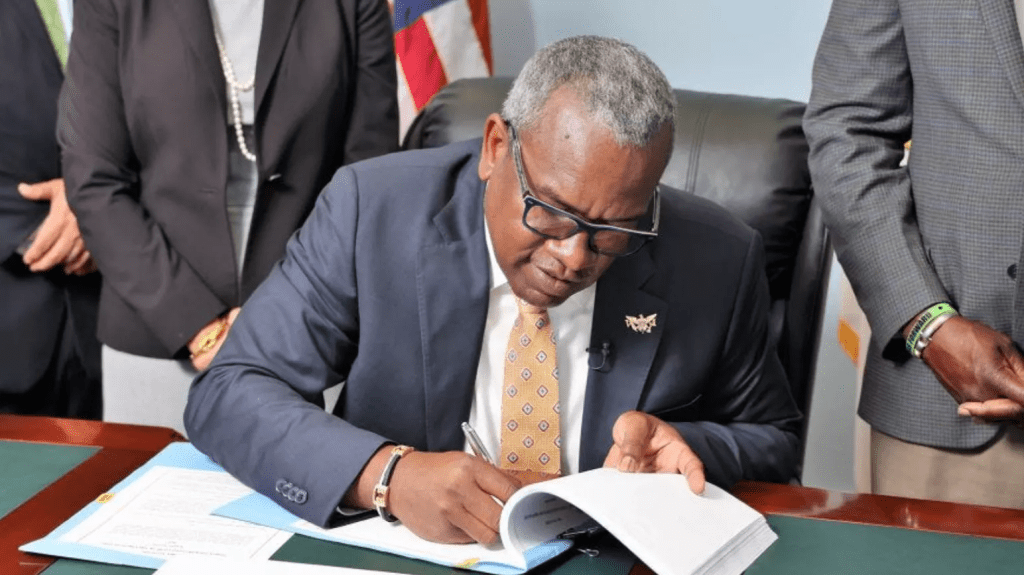
U.S. Virgin Islands (USVI) Gov. Albert Bryan Jr. (D) submitted a bill to the legislature last year that would have allowed trans and intersex people in the territory to change the gender marker on their official documents. The measure didn’t advance past a committee hearing.

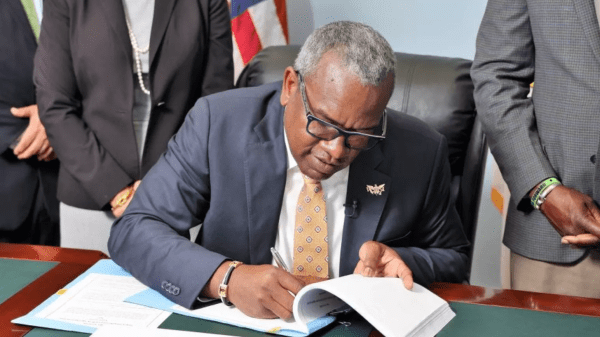
So, last Wednesday, the governor enacted the policy anyway by signing an executive order, making the change to USVI policy. His order marked the first instance ever of official recognition of trans people in the territory, according to Transitics.

“Virgin Islanders have reached out to our administration seeking a way to have their documents reflect who they truly are,” Gov. Bryan said in a statement following the signing ceremony. “This Executive Order provides a fair and compassionate process where none existed before. It ensures that our government recognizes and respects the lived realities of all our residents.”

Intersex Virgin Islanders and trans individuals with a court order stating they’ve had “surgical, hormonal, or other treatment for the purpose of gender transition,” can now easily revise the gender markers on both their birth certificates and government-issued ID cards.

The Virgin Islands counts itself as one of the friendlier territories for the trans community. It’s the only U.S. territory that prohibits discrimination based on sexual orientation and gender identity, and there have been no known attempts to restrict gender-affirming care in the USVI. There are no restrictions on trans student-athletes in girls’ sports in the territory’s schools, and no bathroom bans relating to gender identity.

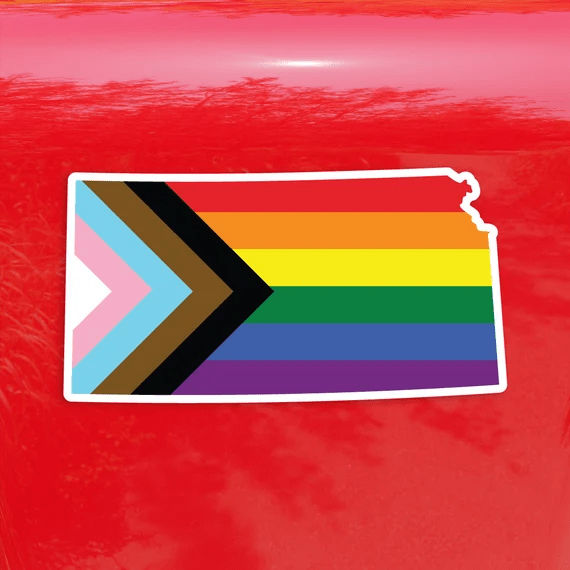
Six states and no U.S. territories deny citizens the ability to change a gender marker on birth certificates, including Texas, Florida, Tennessee, Iowa, Kansas, and Oklahoma. That number drops to four for state IDs.

Revised documents on island will now use the term “gender” rather than “sex” for the new designations.

Under the new process, an individual aged 18 or older, or a parent or guardian on behalf of a minor, may request a gender marker change from the issuing agency in writing.

One of two alternative documents must accompany the request: a statement, “signed under penalty of perjury,” from a licensed healthcare provider who has treated or evaluated the individual, confirming they have an “intersex condition” and that a gender designation change is appropriate; or, a judicial order from the Virgin Islands or another jurisdiction granting a gender change designation may be submitted in lieu of a healthcare provider’s statement.

A requirement for a healthcare provider’s attestation that an applicant has had surgery or gender-affirming care was deemed unfair by critics of Bryan’s 2024 legislative proposal, who called it a burden on individuals lacking health insurance.

The governor noted his action aligns the Virgin Islands with at least 25 states, Puerto Rico, and the District of Columbia, which have adopted administrative procedures for amending gender designations on birth certificates, and more than 30 states, Puerto Rico, and D.C., which have similar processes for driver’s licenses.

“Our administration remains committed to fairness, dignity, and respect for every Virgin Islander,” Gov. Bryan added. “This Executive Order brings the Virgin Islands in line with modern standards of inclusion and ensures that all residents have access to accurate and affirming government identification.”

CBP Enforces Binary Sex Codes and Enhanced US Passport Validation in APIS

Read more at Greenberg Traurig.

U.S. Customs and Border Protection (CBP) has issued updates to the Advance Passenger Information System (APIS) requirements that may affect business travelers and airlines. These changes, implemented in response to Executive Order 14168, “Defending Women from Gender Ideology Extremism and Restoring Biological Truth to the Federal Government” issued in January 2025, introduce enhanced validation requirements for passenger data submitted by commercial air carriers.

Key Changes Overview

Sex Field Requirements: Effective Oct. 14, 2025, CBP systems will only accept “M” (Male) or “F” (Female) in the sex field of APIS transmissions. Any other characters will result in an “X Response-Insufficient Information” error, requiring airlines to resubmit the passenger data with corrected information.

U.S. Passport Format Validation: Starting Oct. 6, 2025, CBP will implement stricter validation for U.S. passport numbers transmitted through APIS.

Implementation Timeline

  • Sept. 17, 2025: Testing environment (EDU) available for sex field validation changes.
  • Sept. 24, 2025: Testing environment available for U.S. passport format validation.
  • Oct. 6, 2025: U.S. passport format validation goes live in production.
  • Oct. 14, 2025: Sex field validation goes live in production.

U.S. Passport Number Format Requirements

Valid U.S. passport numbers must follow one of these formats:

Option 1: Numeric Format

  • Nine numeric digits
  • Must have a numerical value of 4XXXXXXXX or higher

Option 2: Alpha-Numeric Format

  • Nine characters total
  • First character must be A, X, Y, or Z
  • Followed by exactly eight numeric digits

The leading alpha characters indicate passport type:

  • A: Regular passport
  • X: Diplomatic passport
  • Y: Official passport
  • Z: Service passport

Impact on Business Travel

Employer Considerations:

  • Review travel policies and booking procedures with travel management companies;
  • Ensure corporate travel booking systems capture accurate passenger information;
  • Brief frequent business travelers on the importance of providing exact passport details; and
  • Consider potential delays if incorrect information requires resubmission.

Employees Considerations:

  • Double-check that passport information matches exactly what is on the physical document when booking travel;
  • Verify that airlines have the correct sex designation as listed on the passport;
  • Allow additional time for potential rebooking if passenger information errors occur; and
  • Ensure the U.S. passport number format is valid if traveling on a U.S. passport.

Carrier Responsibilities

Airlines remain responsible for comparing travel documents passengers present with the information transmitted to CBP. Airline carriers must ensure accuracy in all APIS data submissions, including traveler sex designation and passport number formatting.

Practical Considerations

  1. Document Verification: Provide passport information exactly as it appears on travel documents.
  2. Sex Designation Accuracy: Ensure the sex designation transmitted to CBP matches exactly what appears on passports, regardless of personal identification.
  3. Passport Updates: Consider whether passport updates may be necessary to ensure smooth travel.
  4. Early Booking: Complete travel bookings in advance to allow time for any necessary corrections.
  5. Travel Management: Work with experienced travel agencies familiar with APIS requirements.
  6. Communication: Ensure clear communication between travelers, booking agents, and airlines regarding exact document details.

Special Considerations

Document Inconsistencies: If travelers’ passports contains a sex designation that differs from their current identification, airlines must still transmit the information exactly as it appears on their passport documents. CBP systems will only accept the “M” or “F” designation that matches travel documents.

Non-Binary Passport Designations: Passports issued with “X” or other non-binary markers will be rejected by CBP systems, requiring resubmission with valid documentation showing “M” or “F” designation.

Passport Updates: Travelers experiencing documentation inconsistencies may wish to consult with the relevant passport issuing authority about available options for updating travel documents.

Takeaways

The implementation of these changes may cause initial adjustment periods. Business travelers and employers should work closely with their travel management companies to enhance compliance with these new requirements. Providing accurate and complete travel documentation remains essential for efficient international travel.

57% of LGBTQ+ people have made major life changes since Donald Trump’s election: report

Read more at the Advocate.

Life for LGBTQ+ people has gotten worse since Donald Trump was elected for a second term — and they’re been forced to make major changes to protect themselves.

Since the November election, the majority (57 percent) of LGBTQ+ people — including 84 percent of transgender and nonbinary people — have made significant life decisions, according to a new report from the Movement Advancement Project. This includes considering or actually moving to a different state, considering or actually finding a different job, attempting to update legal name or gender markers on identity documents, and crossing state lines to receive medical care.

While nearly half of all trans people (43 percent) and one quarter of all LGBTQ+ people (25 percent) have considered moving to a different state, only 9 percent of trans people and 5 percent of all LGBTQ+ people report they’ve actually moved since November.

Part of what is forcing their hands is the increased discrimination and violence against queer people, as 60 percent of LGBTQ+ people, including 82 percent of trans and nonbinary people, report that they or an immediate family member have had at least one negative experience related to being LGBTQ+ since the November, 2024 election.

Trans respondents reported these experiences nearly twice as often as all LGBTQ+ respondents, with 56 percent saying they or an immediate family member have been discriminated against due to being LGBTQ+, and 53 percent saying they have been harassed online.

Six in 10 LGBTQ+ people say they are worried about the impacts of Trump’s anti-LGBTQ+ policies on them or their families. For trans people, the number is nine in 10. Trans people are also significantly more likely to say they are “very worried,” with 60 percent agreeing compared to 36 percent of all LGBTQ+ people.

“As political attacks on LGBTQ people by federal, state, and local governments continue into the future, it is likely that these impacts will only accumulate,” the report concludes. “While the survey illustrates some of the many ways LGBTQ people are taking action to protect not only themselves but also their broader community, it is vital that people beyond LGBTQ people join in these efforts to protect their LGBTQ neighbors, friends, and family members, and to stop the ongoing attacks on LGBTQ people.”

Kansas Supreme Court Delivers Big Win For Driver’s License Gender Markers

Read more at Erin in the Morning.

After a grueling two-year fight, starting on Tuesday, the Kansas Department of Revenue (KDOR) will resume issuing accurate driver’s licenses to transgender Kansans, a spokesperson for the ACLU of Kansas told Erin in the Morning.

Last week, the Kansas Supreme Court declined to hear Attorney General Kris Kobach’s request to uphold a district court order preventing the state from updating IDs for trans residents. And while there is still a fight ahead, it marks a notable victory for trans people in a state that has been holding their driver’s licenses hostage for years.

“I want every transgender Kansan to be able to live their lives authentically,” said Kathryn Redman, a 65-year-old resident and a plaintiff in the case, Kansas v. Harper, brought on by the ACLU and Stinson LLP.

AG Kobach asserted that the courts needed to put a stop to the license updates indefinitely, claiming it would interfere with law enforcement’s ability to identify and apprehend criminal suspects. The Court of Appeals called this “mere speculation.”

“There is no hidden agenda,” Redman told Erin in the Morning. “All I tried to accomplish and what I have accomplished by my transition is, I now live my life at peace with myself.”

In theory, the case should now be returned to a new trial court for final resolution. But the conservative Kobach doesn’t want to let that happen. He and other Republican officials have sought to call a special legislative session on the matter—a process they were already undertaking in a transparent attempt at gerrymandering, and it has seen renewed fanfare in light of the court events this past week.

The fight to strip trans Kansans of their rights, state Senate President Ty Masterson wrote in an Oct. 1 letter, is considered “even more important than redistricting.” He called on the Kansas State Republican Caucus to simply “add a few words” to state law to stop Kansans from updating their gender markers.

The legal proceedings have ricocheted from court to court since July 2023, when legislators overrode Democratic Governor Laura Kelly’s veto on Senate Bill 180. The anti-trans law takes after legislation proposed by right-wing, anti-trans organizations, misleadingly dubbed the “Women’s Bill of Rights.” In practice, the only thing the bill does is codify sex segregation and target the equal rights of transgender people. It makes no mention of forcing Kansans to carry a driver’s license with an inaccurate gender marker.

“Rather than accepting the decisions of the two highest courts in our state, Mr. Kobach is resorting to backroom attempts to change the law and shut the courts out of our government so he can have full, unchecked power,” Micah Kubic, executive director of the ACLU of Kansas, said in a statement. “This is, simply put, a power grab by the attorney general that goes beyond his baseline of cheap political theater and wasteful litigation.”

Kubic denounced Kobach’s “extremist and discriminatory agenda,” adding that it “threatens not just the privacy and agency of all Kansans but also the very checks and balances of our state government.”

US appeals court rejects Trump bid to restore passport policy targeting transgender people

Read more at Reuters.

A federal appeals court on Thursday declined to allow U.S. President Donald Trump’s administration to refuse to issue passports to transgender and nonbinary Americans that reflect their gender identities.

A three-judge panel of the Boston-based 1st U.S. Circuit Court of Appeals declined, opens new tab to put on hold an injunction issued by a trial judge barring the U.S. Department of State from enforcing a policy it adopted at Trump’s direction.

“We’re thankful the court rejected this effort by the Trump administration to enforce their discriminatory and baseless policy,” said Li Nowlin-Sohl, a lawyer with the American Civil Liberties Union, which pursued the case.

The White House had no immediate comment.

The lawsuit is one of several concerning an executive order Trump signed after returning to office on January 20 directing the government to recognize only two biologically distinct sexes, male and female.

The Republican president’s order also directed the State Department to change its policies to only issue passports that “accurately reflect the holder’s sex.”

The State Department subsequently changed its passport policy to “request the applicant’s biological sex at birth,” rather than permit applicants to self-identify their sex, and to only allow them to be listed as male or female.

Before Trump, the State Department for more than three decades allowed people to update the sex designation on their passports.

In 2022, Democratic President Joe Biden’s administration allowed passport applicants to choose “X” as a neutral sex marker on their passport applications, as well as being able to self-select “M” or “F” for male or female.

Transgender, nonbinary and intersex people represented by the ACLU sued, arguing the policy unlawfully prevented them from obtaining passports consistent with their gender identities or with an “X” sex designation.

U.S. District Judge Julia Kobick agreed, saying the State Department’s policy was arbitrary and was rooted in an irrational prejudice toward transgender Americans that violated their equal protection rights under the U.S. Constitution’s Fifth Amendment.

Kobick, a Biden appointee, initially issued a narrow injunction covering six individual plaintiffs but in June expanded it nationwide after granting the case class action status.

The 1st Circuit panel, comprised of three Biden appointed judges, said the administration failed to make a strong showing that an agency action implementing a presidential directive was unreviewable or meaningfully engage with Kobick’s conclusion the policy reflected “unconstitutional animus toward transgender Americans.”

New immigration policy bans visas for trans athletes: “Not in the national interest”

Read more at LGBTQ Nation.

U.S. Citizenship and Immigration Services (USCIS) has issued policy updates “effective immediately” to prevent trans women athletes abroad from entering the country to compete in sports competitions.

The agency said the updates are in accordance with an executive order against trans athletes that directed the Department of Homeland Security to bar entry to trans women from other countries who want to play sports in the United States.

The policy change is especially significant since the United States is set to host the 2028 Summer Olympics in Los Angeles.

The press release, issued on August 4, consistently misidentifies trans women as men.

“USCIS will affirmatively protect all-female athletic opportunities by granting certain athlete-related petitions and applications, that had previously been abused and offered to men, only to women, ensuring that male aliens seeking immigration benefits aren’t coming to the U.S. to participate in women’s sports,” it said, explaining the new eligibility policies for “extraordinary ability” visas.

“This policy update clarifies that USCIS considers the fact that a male athlete has been competing against women as a negative factor in determining whether the alien is among the small percentage at the very top of the field,” the release continued, saying the agency “does not consider a male athlete who has gained acclaim in men’s sports and seeks to compete in women’s sports in the United States to be seeking to continue work in his area of extraordinary ability.”

“Male athletes seeking to enter the country to compete in women’s sports do not substantially benefit the United States,” the agency claimed, “and it is not in the national interest to the United States to waive the job offer and, thus, the labor certification requirement for male athletes whose proposed endeavor is to compete in women’s sports.”

A statement from USCIS spokesperson Matthew Tragesser further emphasized the administration’s hostility to trans athletes and its refusal to address them by their actual genders.

“Men do not belong in women’s sports,” Tragesser said. “USCIS is closing the loophole for foreign male athletes whose only chance at winning elite sports is to change their gender identity and leverage their biological advantages against women.”

“It’s a matter of safety, fairness, respect, and truth that only female athletes receive a visa to come to the U.S. to participate in women’s sports.” He then claimed the administration “is standing up for the silent majority who’ve long been victims of leftist policies that defy common sense.”

The administration has been targeting trans folks abroad as part of its overall crackdown on trans participation in sports.

In February, the State Department told U.S. immigration officials around the world to deny visas to transgender athletes attempting to enter the U.S. and to permanently ban any athletes who “misrepresent” their birth sex on visa applications.

The February 24 message, authored by Secretary of State Marco Rubio, directs U.S. consulates and immigration offices worldwide to ban trans visa applicants under a section of the 1952 Immigration and Nationality Act that issues a “permanent fraud bar” for people who lie on their visa applications.

In addition to targeting trans athletes abroad, the executive order directs the Department of Justice to prosecute schools that allow trans female athletes in female sports programs. It also threatens to prevent cisgender U.S. athletes from competing in international sports competitions that allow international trans athletes to compete alongside cis athletes.

“Many educational institutions and athletic associations have allowed men to compete in women’s sports,” the order states, misgendering trans female athletes. “This is demeaning, unfair, and dangerous to women and girls, and denies women and girls the equal opportunity to participate and excel in competitive sports.”

“Therefore, it is the policy of the United States to rescind all funds from educational programs that deprive women and girls of fair athletic opportunities, which results in the endangerment, humiliation, and silencing of women and girls and deprives them of privacy,” the order continues. “It shall also be the policy of the United States to oppose male competitive participation in women’s sports more broadly, as a matter of safety, fairness, dignity, and truth.”

Trans athletes have argued that anti-trans politicians who talk about “protecting women’s sports” never fight to get increased funding or discourage the sexist discrimination and sexual abuse that keep many female athletes from competing in the first place.

Cuba now allows trans people to change ID gender markers without requiring surgery

Read more at LGBTQ Nation.

The island nation of Cuba will now allow transgender people to change the gender markers on their government-issued identity cards without having to undergo “bottom surgery,” a legal change long sought by the country’s trans and nonbinary communities.

On July 18, the country’s National Assembly of People’s Power (NAPP) approved a law allowing people to change their gender markers without first requiring a court-approved document proving that applicants had undergone genital affirming surgeries.

This new law is one of several recently approved by the NAPP to update the technology and policies of the nation’s record-keeping system. Cuba’s new Civil Registry code will now recognize unmarried couples’ emotional unions or cohabitation agreements, providing some legal recognition of various domestic partnerships.

In 2008, Cuba became the first Latin American country to provide comprehensive coverage for gender-affirming surgeries and related medical care. However, despite the country having the highest per capita population of medical doctors in the world, years-long U.S. trade embargo against the nation has prevented many doctors from accessing the hormone replacement medications and surgical supplies they need, according to a 2024 report from Teen Vogue.

Additionally, years worth of budget cuts by the Cuban government have forced many medical professionals to leave the island nation in search of higher-paying work abroad. As a result, trans Cubans must self-medicate using hormones purchased on the internet, something that can present risks since patients must then undergo the physical and psychological side effects without medical consultation.

CENESEX, the government-funded LGBTQ+ rights organization, ostensibly schedules trans-related healthcare for citizens. But one trans person told the aforementioned publication that the organization never contacted them back when they tried to schedule such care. CENESEX didn’t respond to the publication’s request for comment, and a security guard at the organization’s office said that CENESEX was closed and was only seeing patients “on an as-needed basis.”

Same-sex marriage is legal in Cuba. It was legalized on September 27, 2022, following a national referendum where a majority of Cubans voted in favor of a new family code that includes the legalization of same-sex marriage. The new family code also included provisions for same-sex adoption and surrogacy.

Although Cuban law currently prohibits “discrimination based on sexual orientation in employment, housing, statelessness, or access to education or health care,” the international LGBTQ rights site Alturi.com said, “Nonetheless, societal discrimination based on sexual orientation or gender identity persists.”

Blog at WordPress.com.

Up ↑