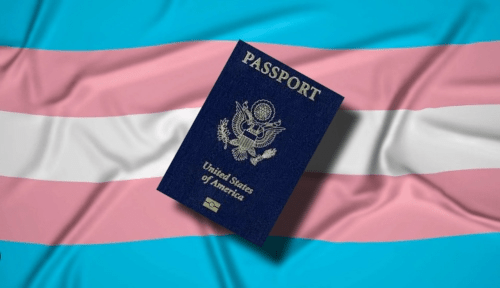
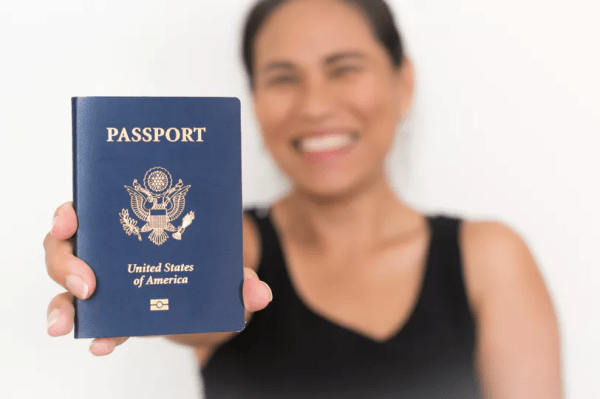
A federal appeals court on Thursday declined to allow U.S. President Donald Trump’s administration to refuse to issue passports to transgender and nonbinary Americans that reflect their gender identities.
A three-judge panel of the Boston-based 1st U.S. Circuit Court of Appeals declined, opens new tab to put on hold an injunction issued by a trial judge barring the U.S. Department of State from enforcing a policy it adopted at Trump’s direction.
“We’re thankful the court rejected this effort by the Trump administration to enforce their discriminatory and baseless policy,” said Li Nowlin-Sohl, a lawyer with the American Civil Liberties Union, which pursued the case.
The White House had no immediate comment.
The lawsuit is one of several concerning an executive order Trump signed after returning to office on January 20 directing the government to recognize only two biologically distinct sexes, male and female.
The Republican president’s order also directed the State Department to change its policies to only issue passports that “accurately reflect the holder’s sex.”
The State Department subsequently changed its passport policy to “request the applicant’s biological sex at birth,” rather than permit applicants to self-identify their sex, and to only allow them to be listed as male or female.
Before Trump, the State Department for more than three decades allowed people to update the sex designation on their passports.
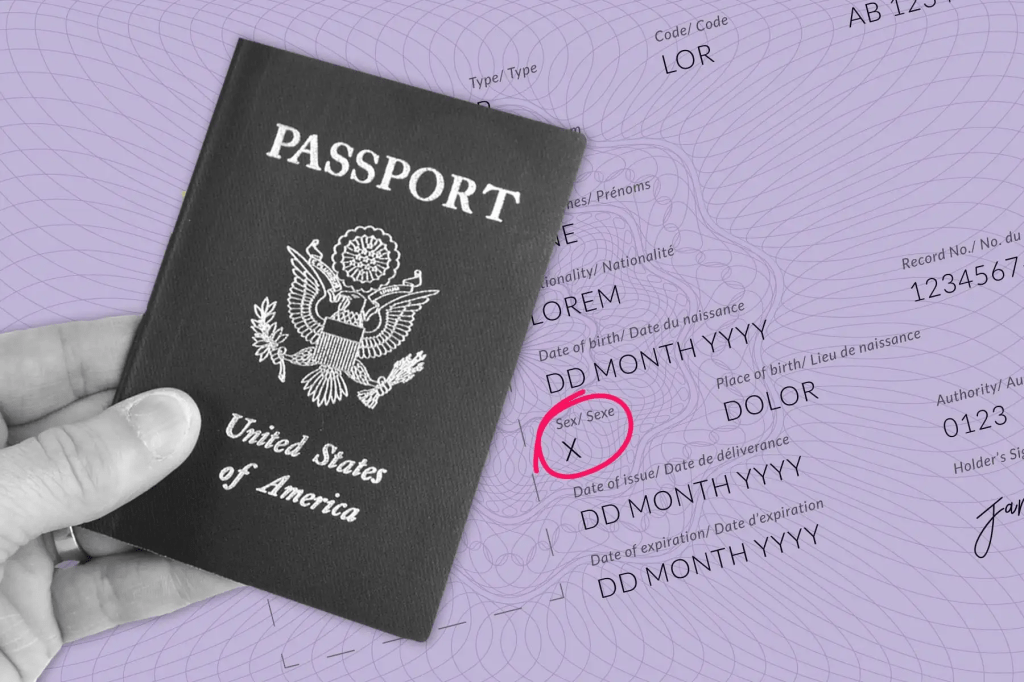
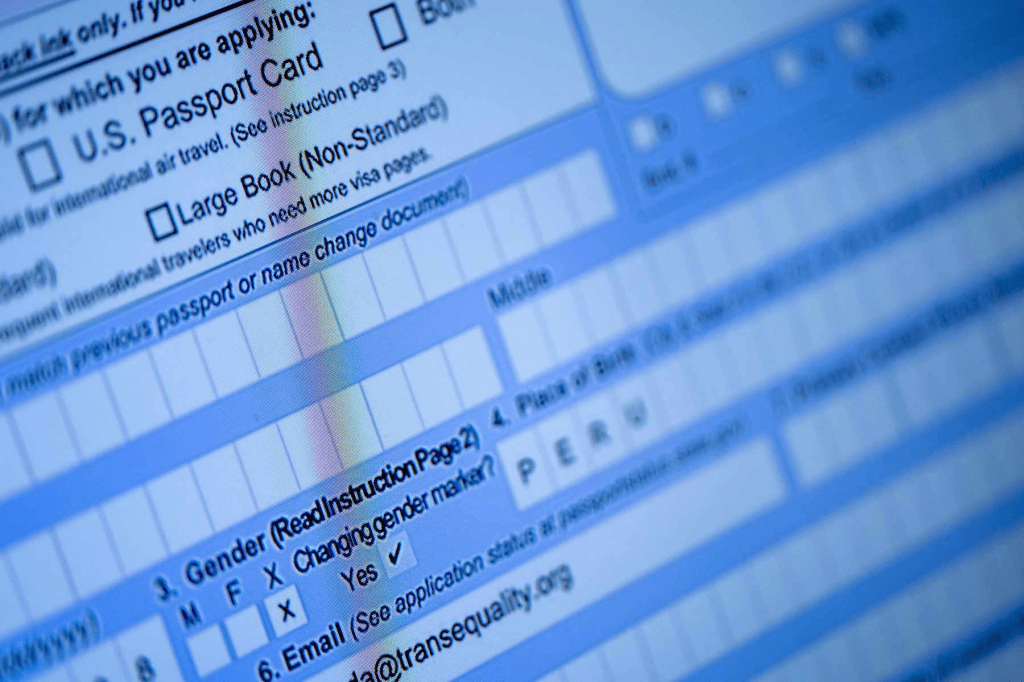
In 2022, Democratic President Joe Biden’s administration allowed passport applicants to choose “X” as a neutral sex marker on their passport applications, as well as being able to self-select “M” or “F” for male or female.
Transgender, nonbinary and intersex people represented by the ACLU sued, arguing the policy unlawfully prevented them from obtaining passports consistent with their gender identities or with an “X” sex designation.
U.S. District Judge Julia Kobick agreed, saying the State Department’s policy was arbitrary and was rooted in an irrational prejudice toward transgender Americans that violated their equal protection rights under the U.S. Constitution’s Fifth Amendment.
Kobick, a Biden appointee, initially issued a narrow injunction covering six individual plaintiffs but in June expanded it nationwide after granting the case class action status.
The 1st Circuit panel, comprised of three Biden appointed judges, said the administration failed to make a strong showing that an agency action implementing a presidential directive was unreviewable or meaningfully engage with Kobick’s conclusion the policy reflected “unconstitutional animus toward transgender Americans.”
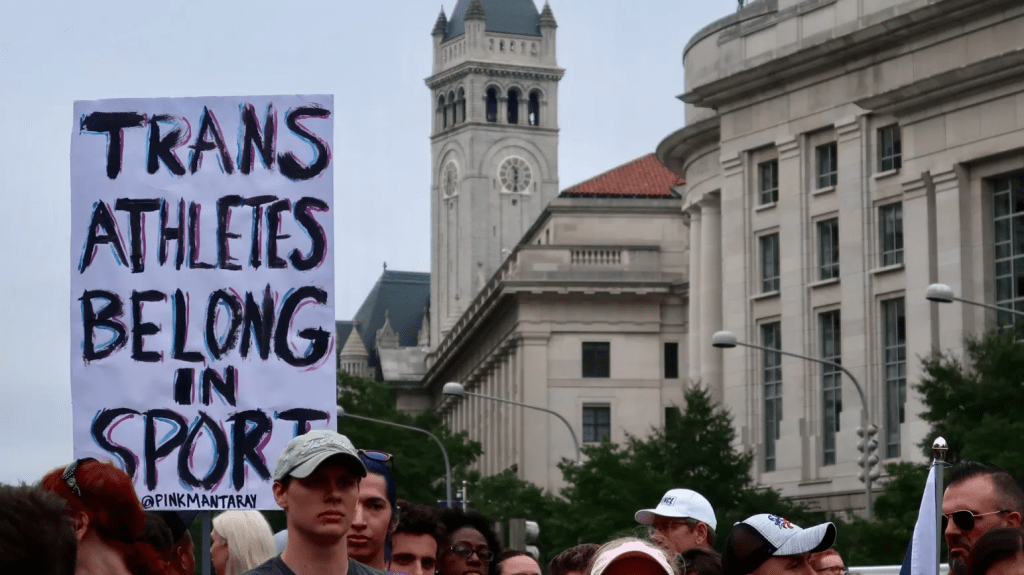
U.S. Citizenship and Immigration Services (USCIS) has issued policy updates “effective immediately” to prevent trans women athletes abroad from entering the country to compete in sports competitions.
The agency said the updates are in accordance with an executive order against trans athletes that directed the Department of Homeland Security to bar entry to trans women from other countries who want to play sports in the United States.
The policy change is especially significant since the United States is set to host the 2028 Summer Olympics in Los Angeles.
The press release, issued on August 4, consistently misidentifies trans women as men.
“USCIS will affirmatively protect all-female athletic opportunities by granting certain athlete-related petitions and applications, that had previously been abused and offered to men, only to women, ensuring that male aliens seeking immigration benefits aren’t coming to the U.S. to participate in women’s sports,” it said, explaining the new eligibility policies for “extraordinary ability” visas.
“This policy update clarifies that USCIS considers the fact that a male athlete has been competing against women as a negative factor in determining whether the alien is among the small percentage at the very top of the field,” the release continued, saying the agency “does not consider a male athlete who has gained acclaim in men’s sports and seeks to compete in women’s sports in the United States to be seeking to continue work in his area of extraordinary ability.”
“Male athletes seeking to enter the country to compete in women’s sports do not substantially benefit the United States,” the agency claimed, “and it is not in the national interest to the United States to waive the job offer and, thus, the labor certification requirement for male athletes whose proposed endeavor is to compete in women’s sports.”
A statement from USCIS spokesperson Matthew Tragesser further emphasized the administration’s hostility to trans athletes and its refusal to address them by their actual genders.
“Men do not belong in women’s sports,” Tragesser said. “USCIS is closing the loophole for foreign male athletes whose only chance at winning elite sports is to change their gender identity and leverage their biological advantages against women.”
“It’s a matter of safety, fairness, respect, and truth that only female athletes receive a visa to come to the U.S. to participate in women’s sports.” He then claimed the administration “is standing up for the silent majority who’ve long been victims of leftist policies that defy common sense.”
The administration has been targeting trans folks abroad as part of its overall crackdown on trans participation in sports.
In February, the State Department told U.S. immigration officials around the world to deny visas to transgender athletes attempting to enter the U.S. and to permanently ban any athletes who “misrepresent” their birth sex on visa applications.
The February 24 message, authored by Secretary of State Marco Rubio, directs U.S. consulates and immigration offices worldwide to ban trans visa applicants under a section of the 1952 Immigration and Nationality Act that issues a “permanent fraud bar” for people who lie on their visa applications.
In addition to targeting trans athletes abroad, the executive order directs the Department of Justice to prosecute schools that allow trans female athletes in female sports programs. It also threatens to prevent cisgender U.S. athletes from competing in international sports competitions that allow international trans athletes to compete alongside cis athletes.
“Many educational institutions and athletic associations have allowed men to compete in women’s sports,” the order states, misgendering trans female athletes. “This is demeaning, unfair, and dangerous to women and girls, and denies women and girls the equal opportunity to participate and excel in competitive sports.”
“Therefore, it is the policy of the United States to rescind all funds from educational programs that deprive women and girls of fair athletic opportunities, which results in the endangerment, humiliation, and silencing of women and girls and deprives them of privacy,” the order continues. “It shall also be the policy of the United States to oppose male competitive participation in women’s sports more broadly, as a matter of safety, fairness, dignity, and truth.”
Trans athletes have argued that anti-trans politicians who talk about “protecting women’s sports” never fight to get increased funding or discourage the sexist discrimination and sexual abuse that keep many female athletes from competing in the first place.
The island nation of Cuba will now allow transgender people to change the gender markers on their government-issued identity cards without having to undergo “bottom surgery,” a legal change long sought by the country’s trans and nonbinary communities.
On July 18, the country’s National Assembly of People’s Power (NAPP) approved a law allowing people to change their gender markers without first requiring a court-approved document proving that applicants had undergone genital affirming surgeries.
This new law is one of several recently approved by the NAPP to update the technology and policies of the nation’s record-keeping system. Cuba’s new Civil Registry code will now recognize unmarried couples’ emotional unions or cohabitation agreements, providing some legal recognition of various domestic partnerships.
In 2008, Cuba became the first Latin American country to provide comprehensive coverage for gender-affirming surgeries and related medical care. However, despite the country having the highest per capita population of medical doctors in the world, years-long U.S. trade embargo against the nation has prevented many doctors from accessing the hormone replacement medications and surgical supplies they need, according to a 2024 report from Teen Vogue.
Additionally, years worth of budget cuts by the Cuban government have forced many medical professionals to leave the island nation in search of higher-paying work abroad. As a result, trans Cubans must self-medicate using hormones purchased on the internet, something that can present risks since patients must then undergo the physical and psychological side effects without medical consultation.
CENESEX, the government-funded LGBTQ+ rights organization, ostensibly schedules trans-related healthcare for citizens. But one trans person told the aforementioned publication that the organization never contacted them back when they tried to schedule such care. CENESEX didn’t respond to the publication’s request for comment, and a security guard at the organization’s office said that CENESEX was closed and was only seeing patients “on an as-needed basis.”
Same-sex marriage is legal in Cuba. It was legalized on September 27, 2022, following a national referendum where a majority of Cubans voted in favor of a new family code that includes the legalization of same-sex marriage. The new family code also included provisions for same-sex adoption and surrogacy.
Although Cuban law currently prohibits “discrimination based on sexual orientation in employment, housing, statelessness, or access to education or health care,” the international LGBTQ rights site Alturi.com said, “Nonetheless, societal discrimination based on sexual orientation or gender identity persists.”
After two weeks of noncompliance with a court order from a class action lawsuit, the State Department’s help page, updated two days ago, indicates that transgender people can get a passport with their authentic gender at least temporarily, as Orr. Vs. Trump moves through the legal process.
On June 17, 2025, U.S. District Judge Julia Kobick in Boston expanded a preliminary injunction she issued in April that allowed six transgender and nonbinary individuals who challenged the policy to obtain passports consistent with their gender identities or with an “X” sex designation while the lawsuit moves forward, Reuters Reports.
Kobick did so after concluding the policy the U.S. Department of State adopted pursuant to an executive order Trump signed likely discriminated on the basis of sex and was rooted in an irrational prejudice toward transgender Americans that violated the U.S. Constitution’s Fifth Amendment.
A federal judge on Tuesday blocked President Donald Trump’s administration from refusing to issue passports to transgender and nonbinary Americans nationwide that reflect their gender identities.
U.S. District Judge Julia Kobick in Boston expanded, opens new tab a preliminary injunction she issued in April that allowed six transgender and nonbinary individuals who challenged the policy to obtain passports consistent with their gender identities or with an “X” sex designation while the lawsuit moves forward.
Kobick did so after concluding the policy the U.S. Department of State adopted pursuant to an executive order Trump signed likely discriminated on the basis of sex and was rooted in an irrational prejudice toward transgender Americans that violated the U.S. Constitution’s Fifth Amendment.
While Kobick’s April ruling was limited in its scope, the judge, an appointee of Democratic President Joe Biden, on Tuesday granted the case class action status and halted the policy’s enforcement against transgender, nonbinary and intersex passport holders.
Kobick said granting class action status to two categories of passport holders was appropriate given that the administration’s actions affected them uniformly “by preventing them from obtaining passports with a sex marker consistent with their gender identity.”
Li Nowlin-Sohl, a lawyer for the plaintiffs at the American Civil Liberties Union, called the ruling “a critical victory against discrimination and for equal justice under the law.”
White House spokeswoman Anna Kelly in a statement called the decision “yet another attempt by a rogue judge to thwart President Trump’s agenda and push radical gender ideology that defies biological truth.”
The case is one of several concerning an executive order Trump signed after returning to office on January 20 directing the government to recognize only two biologically distinct sexes, male and female.
The order also directed the State Department to change its policies to only issue passports that “accurately reflect the holder’s sex.”
The State Department subsequently changed its passport policy to “request the applicant’s biological sex at birth,” rather than permit applicants to self-identify their sex, and to only allow them to be listed as male or female.
Prior to Trump, the State Department for more than three decades allowed people to update the sex designation on their passports.
In 2022, the Biden administration allowed passport applicants to choose “X” as a neutral sex marker on their passport applications, as well as being able to self-select “M” or “F” for male or female.
Transgender woman Michelle Rosenblum, of Ventura, California, has been planning a family vacation to Hawaii, but recent law changes regarding identification documents have made her wary of travel.
After President Donald Trump’s election to a second term last November, Rosenblum had been rushing to get her identification in order as a safety precaution.
According to Rosenblum, she updated her California birth certificate to show she had transitioned and renewed her passport.
Rosenblum was shocked to receive a letter from the State Department telling her she needed to correct her information on her passport application to show her biological sex at birth.
As Rosenblum prepares to fly, she fears that the discrepancies between her California Real ID and her passport will create problems when traveling. While the federal government requires Real ID for air travelers, states oversee the gender marker listed on the IDs.
Rosenblum is now debating traveling with a stack of documents, such as her birth certificate, Social Security card, and a court order showing her gender change.
Rosenblum tells The Los Angeles Times, “In the 10 years that I’ve been transitioned, I have never felt like, ‘Whoa, I need to get all my papers together.’ I was never concerned about traveling.”
Rosenblum’s experience echoes similar concerns that trans people have about traveling, as noted in a recent survey conducted by the Williams Institute at the UCLA School of Law. In the survey, 302 trans, nonbinary, and other gender non-conforming American adults were surveyed — nearly a third said they were travelling less frequently as a result of the 2024 election.
Though the survey was conducted a month before Trump’s official inauguration. Trump’s campaign focused heavily on attacking the rights of trans people. On the day of his inauguration, President Trump issued an executive order directing the federal government to no longer acknowledge the existence of trans people in any capacity. This led the State Department, which issues passports to U.S. citizens, to announce they no longer accept gender markers that do not align with a person’s sex assigned at birth.
Trump’s continual attacks on the trans community in his official capacity as president have emboldened many GOP members to begin proposing anti-trans legislation in their home states, making travel even less desirable.
In the survey, nearly 70% of respondents said they’d be less willing to vacation in states they viewed as more hostile to trans people, particularly states that hold a GOP majority.
The survey also showed that 48% of respondents were considering moving to or had already moved to states they viewed as safer, particularly states with a liberal majority, such as Washington, California, New York, and Minnesota.
Lead author of the survey, Abbie Goldberg, wrote, “When you feel that you need to consider moving, you’ve been pushed to a certain point…. If you’re a trans person living in the U.S., particularly in a state with not a lot of protections and some explicitly anti-trans legislation, you’re thinking about your physical safety, your children’s safety at school, the possibility you could be fired from your job, and no way to push back.”
Rosenblum said she is grateful to live in California, where she is protected by anti-discrimination laws but as she gets ready for vacation, she said, “It feels like people are trying to shove me back into the closet.”
U.S. District Judge Julia E. Kobick has issued a partial preliminary injunction against the Trump administration’s executive order barring trans people from changing the gender markers on their passports.
Kobick’s decision mandates that six of seven trans and nonbinary plaintiffs in a lawsuit filed by the American Civil Liberties Union (ACLU) receive passports that accurately reflect their gender identities. This includes allowing an X marker for those who do not identify as male or female.
“The Executive Order and the Passport Policy on their face classify passport applicants on the basis of sex and thus must be reviewed under intermediate judicial scrutiny,” Kobick stated, as reported by the Associated Press. “That standard requires the government to demonstrate that its actions are substantially related to an important governmental interest. The government has failed to meet this standard.”
She agreed that the plaintiffs could successfully prove the administration’s order is “based on irrational prejudice toward transgender Americans,” is “arbitrary and capricious,” and “was not adopted in compliance with the procedures required by the Paperwork Reduction Act and Administrative Procedure Act.”
“This ruling affirms the inherent dignity of our clients, acknowledging the immediate and profound negative impact that the Trump administration’s passport policy would have on their ability to travel for work, school, and family,” said Jessie Rossman, legal director at ACLU of Massachusetts, in a statement. “By forcing people to carry documents that directly contradict their identities, the Trump administration is attacking the very foundations of our right to privacy and the freedom to be ourselves. We will continue to fight to rescind this unlawful policy for everyone so that no one is placed in this untenable and unsafe position.”
The ACLU also plans to file a motion requesting Kobick’s decision apply to all trans and nonbinary people across the country.
“This decision is a critical victory against discrimination and for equal justice under the law,” said Li Nowlin-Sohl, senior staff attorney for the ACLU’s LGBTQ & HIV Project. “But it’s also a historic win in the fight against this administration’s efforts to drive transgender people out of public life. The State Department’s policy is a baseless barrier for transgender and intersex Americans and denies them the dignity we all deserve. We will do everything we can to ensure this order is extended to everyone affected by the administration’s misguided and unconstitutional policy so that we all have the freedom to be ourselves.”
The ACLU filed Orr v. Trumpin February after the president signed an executive order declaring that there were only two immutable genders: male and female. Afterward, Secretary of State Marco Rubio ordered that all passport applications requesting an “X” gender marker be suspended, as well as any applications listing a person’s gender identity rather than the sex they were assigned.
“I thought that 18 years after transitioning, I would be able to live my life in safety and ease,” trans man and plaintiff Reid Solomon-Lane said in a statement when the lawsuit was filed. “Now, as a married father of three, Trump’s executive order and the ensuing passport policy have threatened that life of safety and ease. If my passport were to reflect a sex designation that is inconsistent with who I am, I would be forcibly outed every time I used my passport for travel or identification, causing potential harm to my safety and my family’s safety.”
The lawsuit argues the passport policy is a violation of the Constitution’s Equal Protection and Due Process clauses and is also a violation of the First Amendment by compelling speech from trans, nonbinary, and intersex passport holders.
The Trump administration has argued the policy will not harm anyone.
“Some Plaintiffs additionally allege that having inconsistent identification documents will heighten the risk that an official will discover that they are transgender,” the Justice Department said. “But the Department is not responsible for Plaintiffs’ choice to change their sex designation for state documents but not their passport.”
A federal judge on Friday blocked the Trump administration from enacting a policy that bans the use of “X” marker used by many nonbinary people on passports as well as the changing of gender markers.
In an executive order signed in January, the president used a narrow definition of the sexes instead of a broader conception of gender. The order says a person is male or female and it rejects the idea that someone can transition from the sex assigned at birth to another gender. The framing is in line with many conservatives’ views but at odds with major medical groups and policies under former President Joe Biden.
U.S. District Judge Julia Kobick, who was appointed by President Joe Biden, sided with the American Civil Liberties Union’s motion for a preliminary injunction, which stays the action while the lawsuit plays out.
“The Executive Order and the Passport Policy on their face classify passport applicants on the basis of sex and thus must be reviewed under intermediate judicial scrutiny,” Kobick wrote. “That standard requires the government to demonstrate that its actions are substantially related to an important governmental interest. The government has failed to meet this standard.”
The ACLU, which sued the Trump administration on behalf of five transgender Americans and two nonbinary plaintiffs, said the new policy would effectively mean transgender, nonbinary and intersex Americans could not get an accurate passport.
“We all have a right to accurate identity documents, and this policy invites harassment, discrimination, and violence against transgender Americans who can no longer obtain or renew a passport that matches who they are,” ACLU lawyer Sruti Swaminathan said.
In response to the lawsuit, the Trump administration argued the passport policy change “does not violate the equal protection guarantees of the Constitution.” They also contended that the president has broad discretion in setting passport policy and that plaintiffs would not be harmed by the policy, since they are still free to travel abroad.
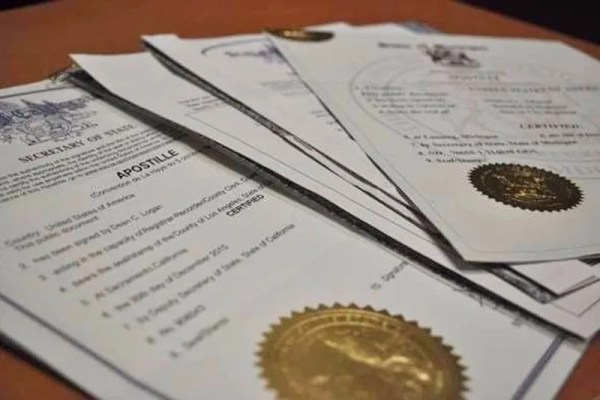
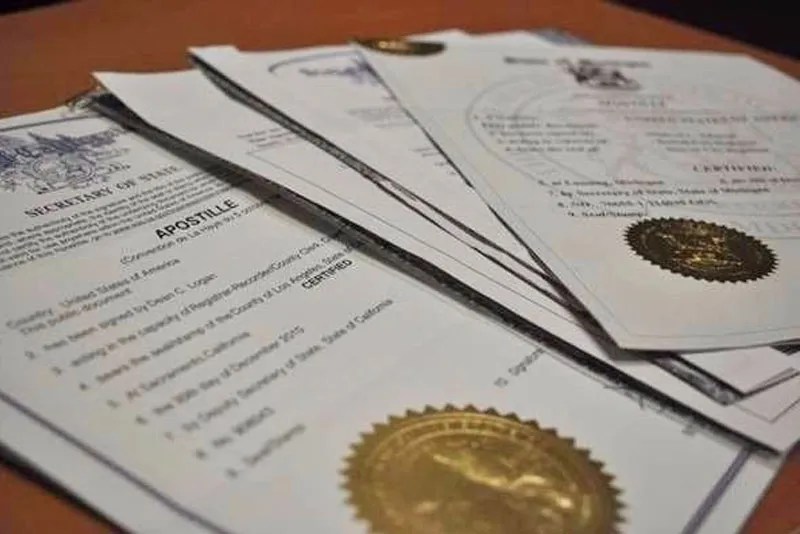
Moving overseas is a whirlwind of logistics, from packing boxes to visa applications. Amidst the chaos, you might encounter a term that sounds like a fancy pastry: “apostille.” But it’s far from edible; it’s a crucial authentication for your documents. So, when exactly do you need an apostille stamp for your international move?
The simple answer: whenever you need to prove the authenticity of a public document issued in one country for use in another country that is a member of the Hague Apostille Convention. This convention streamlines the legalization process, making it easier for documents to be recognized internationally.
Think of it as a global stamp of approval. But what kinds of documents might require this stamp when you’re relocating?
Common Documents Needing an Apostille:
Birth Certificates: Essential for proving your identity and family relationships, especially when registering children in a new country or applying for residency.
Marriage Certificates: Necessary for legal recognition of your marriage abroad, especially for visa applications or property purchases.
Divorce Decrees: Required for legal recognition of your marital status in your new country.
Educational Documents (Diplomas, Transcripts): Often needed for employment or further education in your destination country.
Background Checks/Police Clearances: Frequently requested for visa applications or employment.
Power of Attorney: If you’re authorizing someone to act on your behalf in your home country while you’re abroad, an apostille is vital.
Business Documents: If you’re relocating your business or starting a new one, articles of incorporation, certificates of good standing, and other business-related documents might require an apostille.
Why is an Apostille Necessary?
Foreign governments need assurance that your documents are genuine. An apostille confirms that the signature, seal, or stamp on the document is authentic and was issued by a competent authority. Without it, your documents might be rejected, delaying your move or hindering your ability to access essential services.
The Process:
The process of obtaining an apostille varies by country and even by state within the US. Typically, you’ll need to:
Identify the issuing authority: Determine which government agency issued the document (e.g., state registrar for birth certificates, secretary of state for business documents).
Obtain a certified copy: Ensure you have a certified copy of the original document.
Submit the document to the designated authority: In the US, this is usually the Secretary of State’s office.
Pay the required fee: Apostille services usually involve a fee.
Planning Ahead is Key:
Don’t wait until the last minute to obtain your apostilles. The process can take time, and delays can disrupt your moving plans. Research the specific requirements of your destination country and start the process well in advance.
By understanding when and why you need an apostille, you can navigate the bureaucratic hurdles of moving overseas with greater ease, ensuring your documents are recognized and accepted in your new home.
*We are providing this as information only. Please consult an attorney and/or government officials for more detailed information on when this may be necessary.
The State Department is no longer issuing U.S. passports with “X” gender markers and has suspended processing all applications from Americans seeking to update their passports with a new gender marker. This suspension, made in response to President Donald Trump’s executive order signaling his administration’s opposition to gender diversity, affects all transgender and nonbinary Americans, including those currently traveling or overseas.
The agency says that it will issue guidance on previously issued passports with an “X” marker and that more information will be available on its travel website. However, no formal policy has been released, which is fueling confusion among trans and nonbinary people trying to update their documents.
That includes Ash Lazarus Orr, a trans activist living in West Virginia. Orr applied to update their name and gender marker on their passport on January 16 — days before Trump was sworn into office.He paid $300 for expedited service, but his paperwork wasn’t processed until January 22. When Orr called the agency’s hotline for Americans waiting on passports who have upcoming international travel, they were told that the agency had no guidance to offer and that their documents had been “set aside.”
Now Orr is without his passport, without his birth certificate and without his marriage license. Over the phone, he was told that his documents are being held in San Francisco, where they were originally being processed.
“They have my documentation that is very personal to me, and they cannot tell me if I’m going to be getting that back,” they said.
The American Civil Liberties Union has warned trans and nonbinary Americans that if they submit a new application to change the gender marker on their passport, they risk losing access to their passport and supporting documents while their application is being processed. An ACLU spokesperson attributed this information to reports of discrimination received through the organization’s online intake form, as well as direct conversations with people who have described this happening to them.
Trump’s executive order directed federal agencies to require that government-issued identification documents, including passports and visas, reflect sex assigned at birth. Since this order states that it is the policy of the United States to recognize two sexes, male and female, and that these sexes are not changeable, “the department’s issuance of U.S. passports will reflect the individual’s biological sex,” an agency spokesperson said in an emailed statement on Friday evening. Under Trump’s executive order, “sex” explicitly excludes gender identity.
Secretary of State Marco Rubio reportedly instructed agency staff on Thursday to implement that executive order as it pertains to passports immediately, as first reported by The Guardian and The Intercept.Now, Orr is without his personal identity documents six weeks before pre-planned international travel and in the middle of planning a move out of West Virginia.
The Biden administration made it easier for trans and nonbinary people to update their federal identity documents. Accurate and consistent gender markers on identity documents dramatically reduces the risk that trans people will face violence, harassment and discrimination, according to the Movement Advancement Project, which tracks LGBTQ+ policy.
The dismantling of this policy has radical consequences, said a former State Department official who spoke on condition of anonymity due to fear of lingering retaliation from the agency under the Trump administration. Not only does it force transgender people to carry identity documents that don’t accurately reflect their identity, this move also signals globally that U.S. policy on trans rights is moving backward, they said.
“The confusion that this decision creates is intentional. It is designed to make things harder for trans and nonbinary people,” they said.
When The 19th called the National Passport Information Center on January 23 to ask for more information, an employee on the technical support desk said that the State Department is aware of Trump’s executive order and that guidance will be posted online once information is available.
Erin Ryan Heyneman, a nonbinary person living in Massachusetts, called that same hotline. They don’t need to renew their passport; they said they just wanted to find out what was going on. Although they feel safe in their state, which has nondiscrimination protections in place for LGBTQ+ people, they still felt the need to act because of the way confusion can endanger their wider community.
“People just really don’t know who to believe or what to believe,” they said. More LGBTQ+ people need to seek information from trusted sources, they said. But when trying to seek that information from an official source, Heyneman was met with more uncertainty. The employee on the phone was sympathetic, but they had no information about passports being confiscated.
As Orr waits to learn whether they will get their passport back due to federal anti-trans policies, they are facing down the prospect of leaving their home because of transphobia within the state.
West Virginia has become increasingly hostile to trans and nonbinary people like himself amid a surge in anti-trans rhetoric across the country, and Orr expects a surge in state anti-trans bills introduced in West Virginia’s next legislative session. After receiving death threats and recently being attacked inside a men’s bathroom, he doesn’t leave the house without his spouse.
“I can’t stay in the state. And it’s heartbreaking, because I love it here. I love the people, but it is truly, at this point in time, it’s either I leave or I die,” they said.





 fleeredstates.blog
You must be logged in to post a comment.