The State Department is blocking new passports for trans Americans

*This was originally published on 19thNews.org

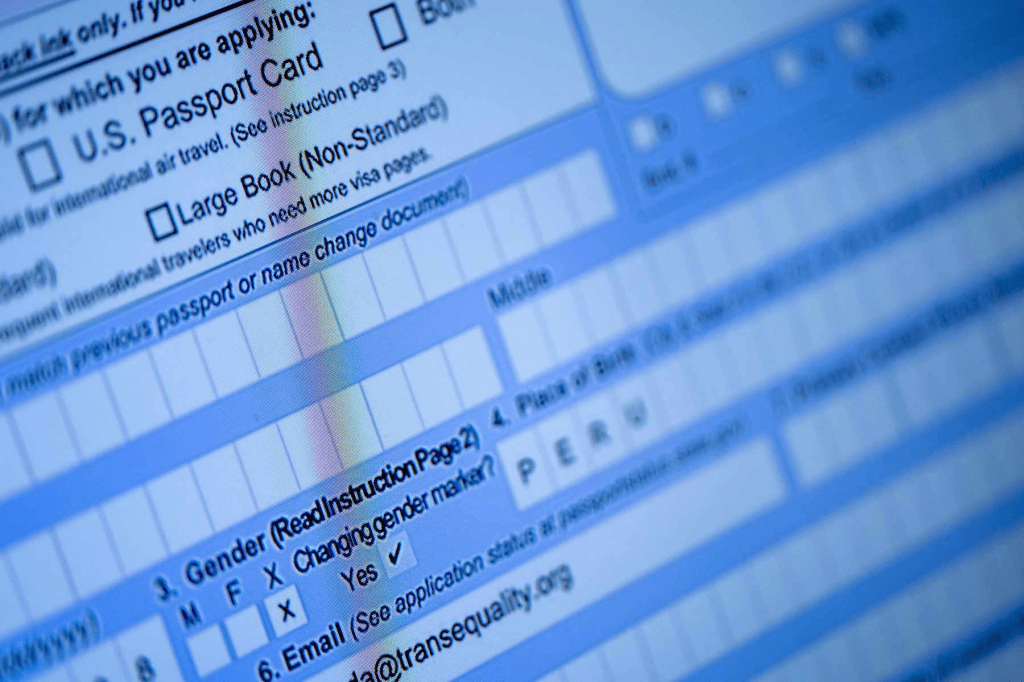
The State Department is no longer issuing U.S. passports with “X” gender markers and has suspended processing all applications from Americans seeking to update their passports with a new gender marker. This suspension, made in response to President Donald Trump’s executive order signaling his administration’s opposition to gender diversity, affects all transgender and nonbinary Americans, including those currently traveling or overseas. 

The agency says that it will issue guidance on previously issued passports with an “X” marker and that more information will be available on its travel website. However, no formal policy has been released, which is fueling confusion among trans and nonbinary people trying to update their documents. 

That includes Ash Lazarus Orr, a trans activist living in West Virginia. Orr applied to update their name and gender marker on their passport on January 16 — days before Trump was sworn into office. He paid $300 for expedited service, but his paperwork wasn’t processed until January 22. When Orr called the agency’s hotline for Americans waiting on passports who have upcoming international travel, they were told that the agency had no guidance to offer and that their documents had been “set aside.” 

Now Orr is without his passport, without his birth certificate and without his marriage license. Over the phone, he was told that his documents are being held in San Francisco, where they were originally being processed. 

“They have my documentation that is very personal to me, and they cannot tell me if I’m going to be getting that back,” they said. 

The American Civil Liberties Union has warned trans and nonbinary Americans that if they submit a new application to change the gender marker on their passport, they risk losing access to their passport and supporting documents while their application is being processed. An ACLU spokesperson attributed this information to reports of discrimination received through the organization’s online intake form, as well as direct conversations with people who have described this happening to them. 

Trump’s executive order directed federal agencies to require that government-issued identification documents, including passports and visas, reflect sex assigned at birth. Since this order states that it is the policy of the United States to recognize two sexes, male and female, and that these sexes are not changeable, “the department’s issuance of U.S. passports will reflect the individual’s biological sex,” an agency spokesperson said in an emailed statement on Friday evening. Under Trump’s executive order, “sex” explicitly excludes gender identity.

Secretary of State Marco Rubio reportedly instructed agency staff on Thursday to implement that executive order as it pertains to passports immediately, as first reported by The Guardian and The Intercept. Now, Orr is without his personal identity documents six weeks before pre-planned international travel and in the middle of planning a move out of West Virginia. 

The Biden administration made it easier for trans and nonbinary people to update their federal identity documents. Accurate and consistent gender markers on identity documents dramatically reduces the risk that trans people will face violence, harassment and discrimination, according to the Movement Advancement Project, which tracks LGBTQ+ policy.

The dismantling of this policy has radical consequences, said a former State Department official who spoke on condition of anonymity due to fear of lingering retaliation from the agency under the Trump administration. Not only does it force transgender people to carry identity documents that don’t accurately reflect their identity, this move also signals globally that U.S. policy on trans rights is moving backward, they said. 

“The confusion that this decision creates is intentional. It is designed to make things harder for trans and nonbinary people,” they said.

When The 19th called the National Passport Information Center on January 23 to ask for more information, an employee on the technical support desk said that the State Department is aware of Trump’s executive order and that guidance will be posted online once information is available. 

Erin Ryan Heyneman, a nonbinary person living in Massachusetts, called that same hotline. They don’t need to renew their passport; they said they just wanted to find out what was going on. Although they feel safe in their state, which has nondiscrimination protections in place for LGBTQ+ people, they still felt the need to act because of the way confusion can endanger their wider community.

“People just really don’t know who to believe or what to believe,” they said. More LGBTQ+ people need to seek information from trusted sources, they said. But when trying to seek that information from an official source, Heyneman was met with more uncertainty. The employee on the phone was sympathetic, but they had no information about passports being confiscated. 

As Orr waits to learn whether they will get their passport back due to federal anti-trans policies, they are facing down the prospect of leaving their home because of transphobia within the state. 

West Virginia has become increasingly hostile to trans and nonbinary people like himself amid a surge in anti-trans rhetoric across the country, and Orr expects a surge in state anti-trans bills introduced in West Virginia’s next legislative session. After receiving death threats and recently being attacked inside a men’s bathroom, he doesn’t leave the house without his spouse. 

“I can’t stay in the state. And it’s heartbreaking, because I love it here. I love the people, but it is truly, at this point in time, it’s either I leave or I die,” they said.

Trump two-gender edict would upend “X” identity on passports

This article first appeared on CNN.com

The federal government is set to only recognize two sexes, male and female, under an executive order that President Donald Trump is soon expected to sign.

The order would reverse efforts by the Biden administration to broaden gender identity designations, including on passports.

“As of today, it will henceforth be the official policy of the United States government that there are only two genders, male and female,” Trump said during his inaugural address Monday, taking an early step to fulfill one of his culture war campaign promises.

The order, a Trump administration official told reporters Monday, is aimed at “defending women from gender ideology extremism and restoring biological truths to the federal government.” Male and female “are sexes that are not changeable, and they are grounded in fundamental and incontrovertible reality,” the official said.

The federal government would also shift from using the term “gender” to “sex,” and that sex would be “an individual’s immutable biological classification,” the official said.

All government agencies would ensure that official documents, including passports and visas, “reflect sex accurately,” the official said. Also, departments running federal prisons, migrant shelters, rape shelters and other “intimate spaces” would be directed to protect single-sex spaces for privacy. And employee records would also adhere to the executive order, as would federal departments’ messaging.

“Agencies are no longer going to promote gender ideology through communication forms and other messages,” the official said, adding that grants and contracts would be reviewed to ensure that “federal funds shall not be used to promote gender ideology.”

Reversing Biden expansion

Trump’s executive order would dismantle efforts by the Biden administration to be more inclusive of Americans’ gender identification.

As of 2022, US citizens have been able to select “X” as their gender marker on passports. One’s marker does not need to match the gender on citizenship documents or photo ID, nor is medical documentation needed to change one’s gender, according to the State Department.

“We promote the freedom, dignity, and equality of all people – including LGBTQI+ individuals,” the department’s website says. “We are demonstrating this commitment to better serve all U.S. citizens, regardless of gender identity.”

Later that year, Americans were able to start changing their sex identification with the Social Security Administration without needing to provide medical certification. However, Social Security’s record systems still require a designation of male or female, though the administration said it was exploring policy and systems updates to support an “X” designation.

“The Social Security Administration’s Equity Action Plan includes a commitment to decrease administrative burdens and ensure people who identify as gender diverse or transgender have options in the Social Security number card application process,” said Kilolo Kijakazi, the administration’s acting commissioner at the time.

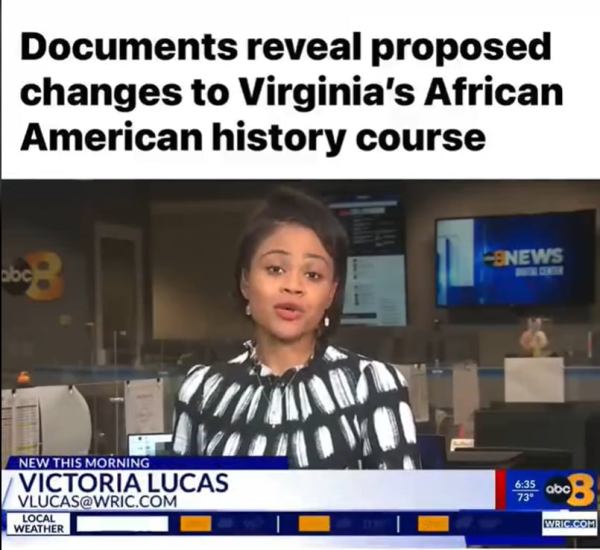
Documents reveal proposed changes to Virginia’s African American history course

RICHMOND, Va. (WRIC) — Virginia’s Department of Education has proposed significant revisions to an African American history elective offered in 89 schools. Documents reveal plans to remove content on “implicit bias” and replace terms like “racism” with “discriminatory practices” in the course curriculum.

The proposed changes, detailed in documents obtained by the nonpartisan watchdog American Oversight and shared with The Washington Post, include dozens of recommended revisions to the course’s content and curriculum outline. These recommendations have not yet been implemented and are not currently scheduled to take effect as the course is still under review by the state education department, according to spokesperson Todd Reid.

The review is part of the department’s compliance with Republican Governor Glenn Youngkin’s first executive order, which prohibits the use of “inherently divisive concepts” in K-12 education. The proposed revisions address a range of topics, including the history of racism in the U.S., Richmond’s role in the slave trade, economic disparity, redlining, systemic racism, the Black Lives Matter movement, and even the size of Africa on maps.

Former Governor Ralph Northam (D) established the course and created a commission to develop it. Last school year, over 1,700 students were enrolled in this elective, which is offered at 89 schools across 45 divisions in Virginia.

American Oversight requested records from the Virginia Department of Education related to changes in public education curriculum prompted by Youngkin’s executive order. Among the proposed revisions are the removal of definitions of “Black joy,” content on equity and implicit bias, and the sentence “Institutional racism remains” from the course’s objectives.

Other proposed changes include replacing terms like “rise of racism” and “white supremacy” with “discriminatory practices” and “racial violence.” The department also suggested altering the course’s content on societal and economic changes after Reconstruction, changing “mostly-white legislatures in the South” to “state legislatures in the South.”

Additional revisions involve modifying course content on topics like the Eugenics movement and the impact of “white moderates” on civil rights progress. For instance, a lesson on “Economic Disparity and Privilege” would remove a paragraph detailing the effects of white privilege.

“These documents reveal attempts to whitewash and erase America’s legacy of racism, similar to actions seen in other states like Florida,” said Chioma Chukwu, interim executive director of American Oversight.

The course aims to provide a comprehensive exploration of African American history with a specific focus on Virginia, acknowledging both positive and negative historical aspects. Youngkin has expressed a similar sentiment about teaching history inclusively.

The proposed changes align with Youngkin’s broader efforts to focus education on race, history, and gender, and to restrict critical race theory from the curriculum.

In 2023, Youngkin reviewed a proposed Advanced Placement African American studies course to ensure it complied with his executive order. The course was found to be in compliance.

Youngkin’s administration has faced criticism for its review process of K-12 history standards and for the tip line created to report “inherently divisive practices,” which led to backlash and lawsuits over the records collected. Reid noted that since the course was created by Northam’s directive and the education department does not develop courses, it is unique and lacks a standardized review process.

Blog at WordPress.com.

Up ↑