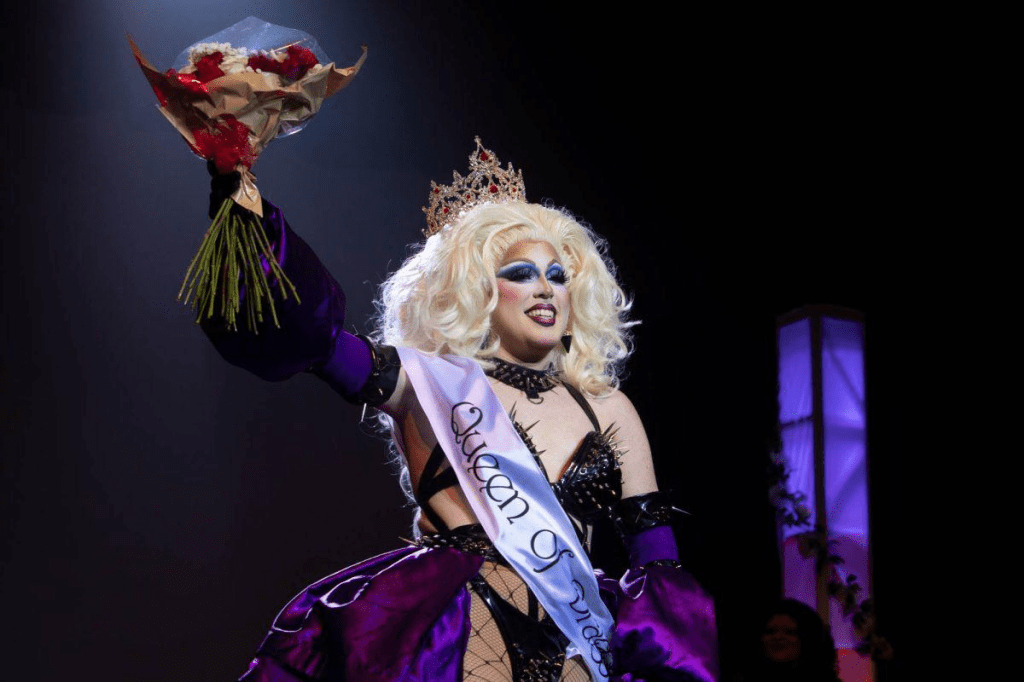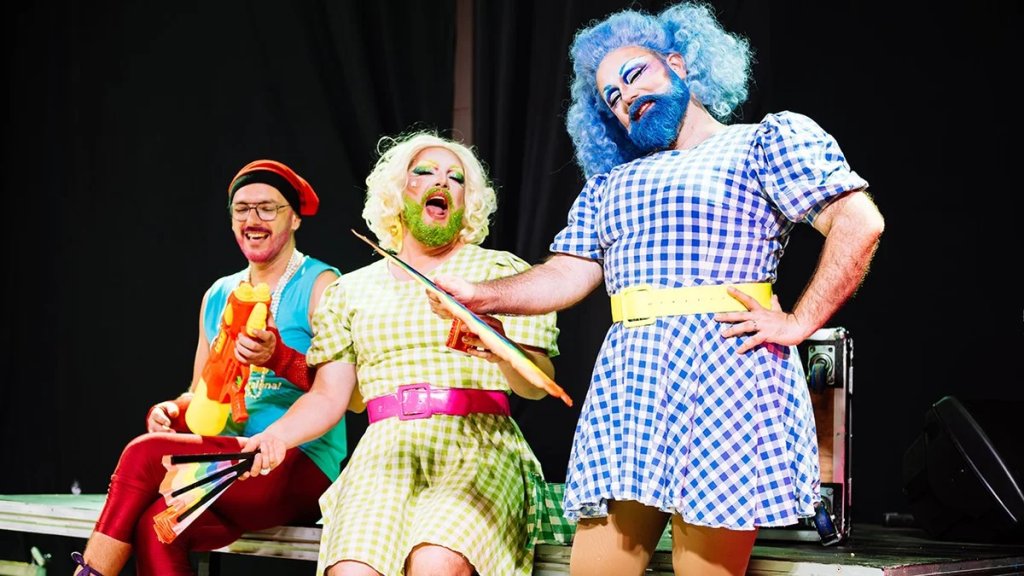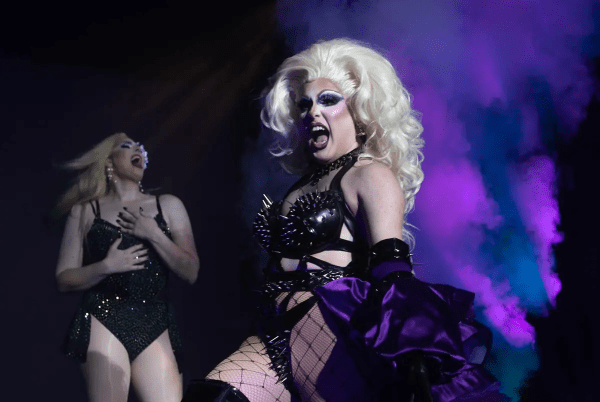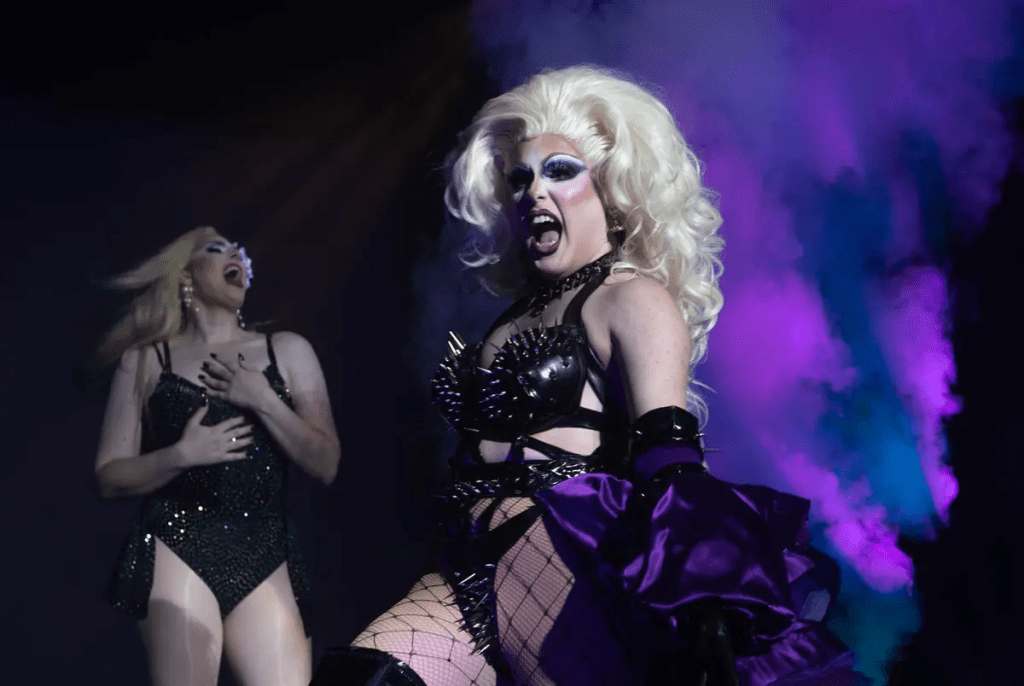
Federal appeals court revives Texas’ drag ban and lifts injunction

Read more at LGBTQ Nation.

A U.S. Court of Appeals just reversed a ruling made by a District Court judge in 2023, overturning his permanent injunction against Texas’ wide-reaching and vaguely worded drag ban, which the judge claimed infringed on First Amendment rights.

The plaintiffs in The Woodlands v. Paxton issued a joint statement, saying, “Today’s decision is heartbreaking for drag performers, small businesses, and every Texan who believes in free expression. Drag is not a crime. It is art, joy, and resistance — a vital part of our culture and our communities. We are devastated by this setback, but we are not defeated. […] We will not stop until this unconstitutional law is struck down for good.”

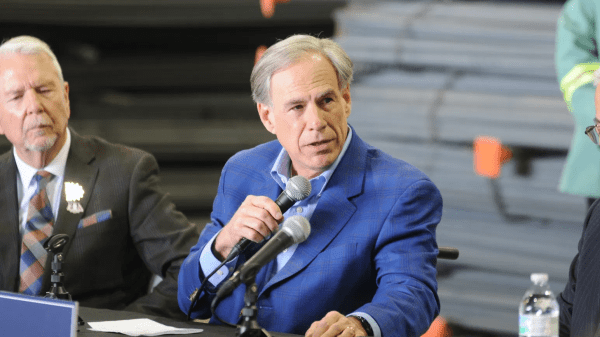
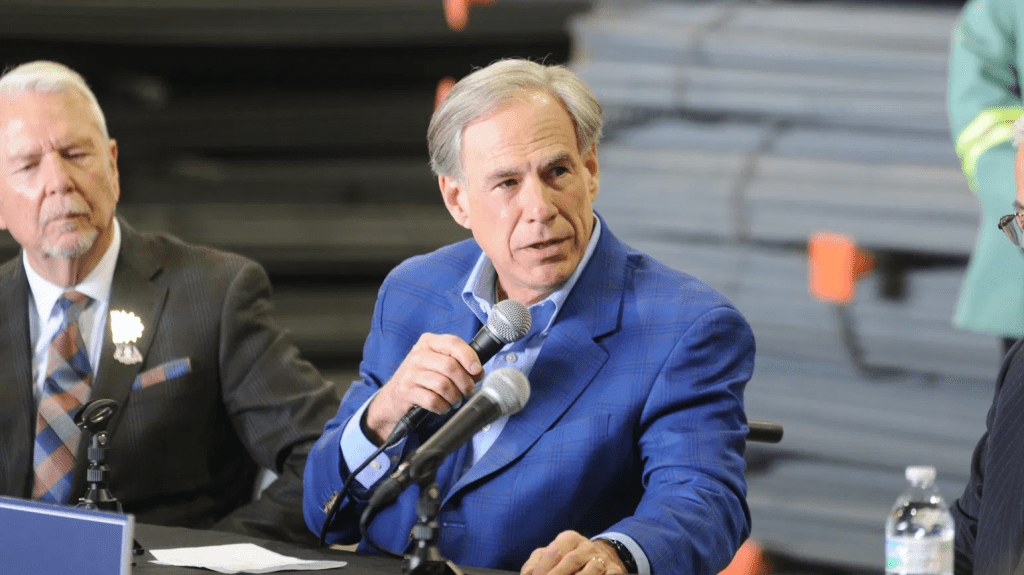
Texas S.B. 12 was signed into law in June 2023 by Gov. Greg Abbott (R) and was set to go into effect on September 1 of the same year. While the bill ostensibly made it a crime to provide “sexually oriented performances” in a commercial space, on public property, or in the presence of minors, the language of the bill and the rhetoric around it made it clear that it was intended to target drag shows in particular.

The law was quickly challenged by LGBTQ+ advocacy groups and drag groups, including The Woodlands Pride, Abilene Pride Alliance, and 360 Queen Entertainment. The case of The Woodlands v. Paxton went to U.S. District Court Judge David Hittner, who originally placed a temporary injunction on the law when plaintiffs’ arguments made it clear that the bill would impinge their First Amendment rights if it was allowed to go into effect. Hittner then doubled down by extending the injunction and then making it permanent in September 2023.

At the time, Hittner wrote that the bill “impermissibly infringes on the First Amendment and chills free speech,” while making it clear that he felt the bill discriminated on point of view, was overly broad, and vague. “Not all people will like or condone certain performances,” Hittner continued in his original decision. “This is no different than a person’s opinion on certain comedy or genres of music, but that alone does not strip First Amendment protection.”

The U.S. Court of Appeals for the Fifth Circuit made a majority ruling today to reverse Hittner’s ruling and remanded the case back to his court. The justices declared that most of the plaintiffs in the case did not have the requisite standing to bring the lawsuit in the first place, as they found the performances of The Woodlands Pride and Abilene Pride insufficiently sexual to have a real risk of punishment under the law’s wording.

They now require that Hittner revisit the case, focusing only on the claims from 360 Queen Entertainment, whose performances include simulated sexual acts and include other features more likely to be targeted by S.B. 12. They are also requiring Hittner to make his new decision under the standard established in the Supreme Court case for Moody v. NetChoice, which set the precedent for First Amendment challenges to only be viable if the law is unconstitutional more than it is constitutional.

One of the Appeals Court judges partially dissented, presenting concerns that the decision “turns a blind eye to the Texas Legislature’s avowed purpose: a statewide ‘drag ban.’” In doing so, he highlighted the rhetoric used by Republicans during the bill’s passage, which clearly expressed their intent, regardless of the letter of the law.

Both Texas and many of its cities already have laws on the books that protect minors from witnessing sexually explicit performances. Gov. Abbott shared on X/Twitter an article titled “Texas Governor Signs Law Banning Drag Performances in Public,” adding the words “That’s right.” Similarly, Lt. Gov. Dan Patrick (R) said it was to “ban children’s exposure to drag shows.” The author of the bill, state Sen. Bryan Hughes (R), provided “drag shows” as an example of the “sexually explicit performances” that would be prohibited.

While the intent is clear from the comments of those involved, the bill’s original text demonstrates the motivations that underpinned it. An earlier version of the bill has a line under the definitions of “features” in “sexual conduct” that includes “a male performer exhibiting as a female, or a female performer exhibiting as a male, who uses clothing, makeup, or other similar physical markers and who sings, lip syncs, dances, or otherwise performs before an audience.” That definition would include everything from Tom Holland’s Lip Sync Battle appearance to cosplayers.

The House Committee report from May 26, 2023, shows the line removed. Instead, the definition of “sexually oriented performances” is edited to include “exhibition of sexual gesticulations using accessories or prosthetics that exaggerate male or female sexual characteristics,” which clearly targets breast forms and packers common in drag shows.
20 police raided a gay bar for a “compliance check.” Then the patrons did something surprising.

*This is being reported by LGBTQ Nation.

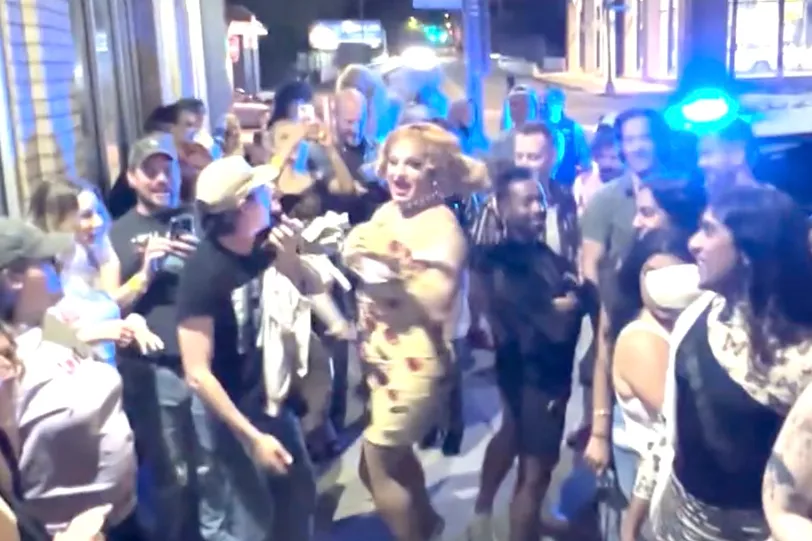
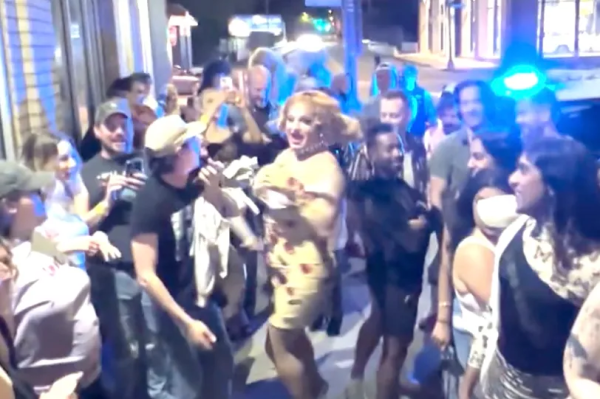
In a moment of resistance and queer solidarity, a drag show went on despite patrons and performers being kicked out of a bar by about 20 police officers in bulletproof vests.

Police raided Pittsburgh LGBTQ+ venue P Town Bar on Friday in the middle of a drag event.

Drag artist Indica was performing alongside trans model and nightlife legend Amanda Lepore when police began to gather in the back of the establishment, QBurgh reported. When Indica finished her rendition of “Bohemian Rhapsody,” police directed patrons to exit the bar but did not explain why beyond saying it was a “compliance check.”

“We waited 30 minutes outside for them to inspect every crevice,” Indica told QBurgh. But the patrons and performers refused to let the cops quash their spirit and instead created their own public performance space.

Video captured during the wait shows the crowd belting Chappell Roan’s Pink Pony Club while Indica dances up and down the sidewalk, collecting tips.

“Guess what, divas?” she said when the performance ended. “This is why queer people have gotta stick the f*ck together in 2025… Make some noise for the queer people in your life everybody.” The crowd cheered.

QBurgh described the moment as one of “resistance, solidarity, and improvisational beauty” and one that “reminded everyone there that drag isn’t just entertainment, it’s political. And when the music stops, the queens don’t.”

Police proceeded to allow 70 people to reenter the bar, saying it had been over capacity with the 130 people who were in attendance.

“The raid was a jarring experience in 2025,” one witness said. “Dozens of state police, geared up with bulletproof vests, flooded the bar and told us to get out. None of the officers would explain what was happening. We stood in the rain for maybe 30 minutes or so until most patrons were let back in. Fortunately the situation was calm and orderly, but they really just overtook this queer space with an entire fleet of police to ‘count heads’ or whatever their excuse was.”

Corey Dunbar, a security guard for P Town Bar, praised the way the staff handled the incident, saying they “ensured patrons’ safety and nerves during the process” since “many people were shaken up.”

State police told QBurgh the raid was instigated by the Allegheny County Nuisance Bar Task Force. It is not known who made the initial complaint that led the cops there.

Witnesses said officers would not look the queens in the eye and would not answer their questions about why things like this never happen at straight bars. Indica also said that some officers even asked to take selfies with Lepore.

University of North Texas pauses drag performances

*This is being reported by the North Texas Daily.

UNT System Chancellor Michael Williams sent a directive on March 28 to the presidents of each university campus, informing them of a pause on any drag performances on campus or any state-funded facilities, effective immediately. 

The directive states that the pause is supported by the Board of Regents to comply with state and federal laws and executive orders.

“As a public university it is our responsibility to comply with all applicable federal and state laws and executive orders while balancing our duty to carry out our core missions of teaching, learning and research,” Williams said in the directive. 

The directive says the university will “wait on a definitive ruling on litigation against other Texas universities” before providing “necessary guidance.”

Nicole King, the Student Government Association’s director of advocacy, said Elizabeth With, senior vice president for Student Affair had reached out to the GLAD Queer Alliance  – a student organization aimed at representing the needs and concerns of the queer community – and the Sigma Lambda Gammas – a sorority focused on empowerment for women of all cultural backgrounds –  to “inform them about this new decision.”

The two student organizations at the university had previously planned drag shows for April.

The GLAD Queer Alliance was planning to hold the GLAD Queer Alliance UNT Drag Show 2025 on April 10 in the Emerald Ballroom in the University Union. 

UNT Gammas Drag Night with the Gammas was slated to be held on April 11 in the Lyceum Theatre in the University Union. 

The Daily could not confirm whether the two events will be moved off-campus at the time of writing. 

Other Texas universities have enforced drag bans in the previous months in what they say is a response to President Donald Trump’s January 20 Executive Order “defending women from gender ideology extremism” and Gov. Greg Abbott’s letter stating that Texas “recognizes only two sexes,” though neither reference drag specifically. 

The Texas A&M Board of Regents voted to ban drag shows on its campus on Feb. 28, according to an article from The Battalion. Following the ban, the Texas A&M Queer Empowerment Council retained legal counsel from the Foundation for Individual Rights and Expression and filed a lawsuit against the Board of Regents on March 24. 

The court granted a preliminary injunction – which preserves the status quo until a final judgment can be made  – that barred the board from enforcing its ban, allowing the QEC to hold its annual “Draggieland” on campus on March 27. 

The University of Texas System Board of Regents announced on March 18 that UT will no longer be permitted to fund or host drag shows on campus, according to an article from The Daily Texan. 

“All activities at UT institutions are expected to comply with all applicable federal, state and local laws and executive orders, including any restrictions on the use of public funds,” Board Chairman Kevin Eltife said in a statement. “Our public university facilities, supported by taxpayers, will not serve as venues for drag shows.”

The ban followed a letter Tarrant County Judge Tim O’Hare sent to UT Board of Regents Chairman Kevin Eltife urging him to ban drag shows on UT System campuses. In the letter, O’Hare cites President Trump’s Executive Order and Gov. Greg Abbott’s letter urging compliance as reasons for his request. 

“Rather than promoting anything to do with education, drag shows and related events denigrate women,” O’Hare said in the letter. “Drag shows highlight men reducing the perception of women to stereotypes and body parts. I would be encouraged to see the UT System focus on fostering environments of learning and not use resources to prop up sexually-oriented events.”

The most recent pause on drag performances mirrors last year’s cancellation of the University Program Council’s Drag Show because of governmental scrutiny. 

Last May, the UPC Drag Show and University Libraries’ Campus Pride Week were canceled by the UNT System’s Office of General Counsel due to Senate Bill 17. 

SB 17, signed into law by Gov. Greg Abbott in 2023, prohibits Texas public institutions of higher education from undertaking diversity, equity and inclusion efforts and from requiring employees to participate in DEI training or make DEI statements. 

GLAD, being a student organization and therefore exempt from SB17, took over the show’s planning and hosted the event in the University Union. 

The university’s chapter of the Young Democratic Socialists of America posted about the recently announced pause on drag on its Instagram page after being made aware of the directive by King.

“THIS IS BLATANT FACISM,” YDSA said in a post on Instagram.“UNT CONTINUES TO PRIORITIZE GOVERNMENT FUNDING OVER THE RIGHTS OF THEIR STUDENTS.”

YDSA said in a direct message to the Daily that they “absolutely condemn” the university’s decision. 

“The UNT administration’s capitulation to the Abbott and Trump administrations show they do not care about the wellbeing of their students, and the principles of their university,” YDSA said.“Drag will always exist, no matter what legislator or administrator has to say about it.”

The Daily reached out to the university communications team but did not receive a response in time for publication. 

Student group challenges Texas A&M drag ban

*This was reported by The Hill.

A group of students is suing the Texas A&M University System after a vote last week banned all drag performances from taking place on its 11 campuses. 

The resolution and subsequent lawsuit, filed Wednesday in the Southern District of Texas, are the latest developments in a yearslong battle within one of the nation’s largest university systems over on-campus drag performances. 

Texas A&M’s Board of Regents voted almost unanimously late last month in favor of a resolution that states drag events are inconsistent with the system’s “mission and core values, including the value of respect for others.” 

The resolution says drag shows are “likely to create or contribute to a hostile environment for women” in violation of university anti-discrimination policies and Title IX, the federal civil rights law against sex discrimination. “These events often involve unwelcome and objectively offensive conduct based on sex for many members of the respective communities of the universities, particularly when they involve the mockery or objectification of women,” the resolution says. 

The document directs the system’s chancellor and the president of each university to prohibit drag shows from taking place on campus, citing an executive order from President Trump that proclaims the government recognizes only two sexes, male and female, and broadly prevents federal funds from being used to promote what Trump and his administration have called “gender ideology.” 

The resolution also acknowledges a Jan. 30 letter from Texas Gov. Greg Abbott (R) commanding state agencies to implement Trump’s order. 

“Given that both the System and the Universities receive significant federal funding, the use of facilities at the Universities for Drag Show Events may be considered promotion of gender ideology in violation of the Executive Order and the Governor’s directive,” the resolution says. 

federal lawsuit filed Wednesday by students at Texas A&M University, the system’s flagship institution, argues the resolution violates their First Amendment rights and the Texas Open Meetings Act, which requires governmental bodies to post a meeting’s location and agenda at least 72 hours in advance. 

The resolution’s adoption means “Draggieland,” an annual drag competition at A&M, will need to find a new host. The event scheduled for March 27 had been set to take place at the school’s Rudder Theater. 

“We refuse to let Texas A&M dictate which voices belong on campus,” the students, known collectively as the Queer Empowerment Council, said in a statement. “Drag is self-expression, drag is discovery, drag is empowerment, and no amount of censorship will silence us.” 

A spokesperson said the A&M University System had received the lawsuit and was in the process of reviewing it.

“Public universities can’t shut down student expression simply because the administration doesn’t like the ‘ideology’ or finds the expression ‘demeaning,’” said Adam Steinbaugh, an attorney at the nonprofit Foundation for Individual Rights and Expression (FIRE), which is representing the Queer Empowerment Council in court. 

The organization also represented students at West Texas A&M University in a 2023 lawsuit over the university president’s decision to cancel a charity drag show on campus. West Texas A&M University President Walter Wendler argued drag performances degrade women and compared them to blackface. 

“If other students dislike or disagree with Draggieland, the solution is simple: don’t go,” said Jeff Zeman, another FIRE attorney. “Or they could organize a protest, as students opposing drag have in the past. The First Amendment protects drag and the ability to criticize drag — and it forbids the government silencing the side it disagrees with.” 

A Texas state law against drag performances was ruled unconstitutional in 2023. U.S. District Judge for the Southern District of Texas David Hittner, a former President Reagan appointee, ruled that drag is expressive conduct protected by the First Amendment.

Last week, the Supreme Court turned away a case challenging similar restrictions on drag in Tennessee, leaving that law partially intact.

Tennessee drag ban will stay as SCOTUS refuses to hear case, but artists ‘refuse to be silenced’

*This was reported by The Advocate.

The U.S. Supreme Court has refused to hear a lawsuit challenging Tennessee‘s drag ban, leaving in place an appeals court ruling upholding the law.

The state’s controversial Adult Entertainment Act, passed in 2023, prohibits “adult cabaret entertainment” on public property or in any location where minors could view it. Thelaw defines such entertainment as performances that are “adult-oriented” and “harmful to minors,” including acts by topless dancers, go-go dancers, exotic dancers, strippers, and “male or female impersonators.”

Friends of George’s Inc., a Memphis-based theater group known for its drag performances, filed a lawsuit against the AEA, arguing that the ban is overly broad and vague, and effectively criminalizes their performances.The Sixth Circuit Court of Appeals dismissed the legal challenge in Julyy, claiming that the plaintiffs did not have standing to sue. The decision reversed a lower court’s ruling that had declared the law unconstitutional.

separate lawsuit against the ban is still ongoing, brought by the American Civil Liberties Union on behalf of Blount County Pride. Organizers filed the suit after District Attorney General Ryan Desmond threatened to prosecute anyone violating the law during a 2023 Pride festival.

Friends of George’s denounced the Supreme Court’s ruling in a statement, maintaining that “this ruling does not define us — we do. And we refuse to be silenced.”

“Friends of George’s Theatre Company will continue exercising our First Amendment right — bringing inclusive, joyful art to our community while raising thousands for charities that uphold dignity and respect for all,” the group said. “Oppression is nothing new to the LGBTQ+ community. Every attempt to silence us has only made us louder, stronger, and more relentless. This moment is no different.”

“To our trans siblings who have led this fight from the start — you are not alone. Your courage fuels us. Your struggle is our struggle. We stand with you,” they continued. “To every performer, artist, and activist — keep using your voice, your craft, your presence. Every soapbox is sacred, and we will not step off it. To our supporters, friends, and allies — this fight is bigger than us. It’s about life, liberty, and the pursuit of happiness — for everyone. We will resist with joy, art, and the unshakable belief that laughter is defiance.”

Texas A&M System bans drag shows from its universities

*This was reported by The Texas Tribune.

The Texas A&M University System Board of Regents on Friday passed a resolution banning all drag performances from taking place on its 11 university campuses.

This means that Draggieland, a beloved annual event scheduled for March 27 at the Rudder Theatre on the College Station campus, will have to find a new venue. Students have also held drag shows at Texas A&M University Corpus Christi and East Texas A&M University.

The move potentially sets up another First Amendment fight between students and university administrators.

The resolution says the board recognizes the need for universities to foster a sense of community and belonging among students but adds that drag shows are “inconsistent with [the system’s] mission and core values, including the value of respect for others.”

The resolution also says drag shows are “likely to create or contribute to a hostile environment for women,” contrary to university and federal anti discrimination policies.

“These events often involve unwelcome and objectively offensive conduct based on sex for many members of the respective communities of the universities, particularly when they involve the mockery or objectification of women,” the resolution says.

The resolution says having on-campus drag shows may be seen as promoting gender ideology and that both President Donald J. Trump and Gov. Greg Abbott have said federal and state funds may not be used for that purpose. It directs the system’s chancellor and the president of each institution to implement the policy, including canceling any upcoming drag shows.

The vote was unanimous. Regent Mike Hernandez III was absent.

The Queer Empowerment Council, a student group that hosts Draggieland and other LGBTQ+ events at Texas A&M University, said in a statement Friday evening that it was “profoundly disheartened” by the decision.

“The power of drag as a medium of art is undeniable, serving as a platform for self-discovery, inclusivity, and celebration of diversity. QEC firmly believes that the Board of Regents’ decision undermines these values, which are vital to fostering a supportive and inclusive environment for all students,” the council said.

It is exploring whether it can hold Draggieland on the same or a different date at a different venue.

“We are committed to ensuring that our voices are heard, and that Draggieland will go on, no matter the obstacles we face,” the group said.

In 2023, West Texas A&M University President Walter Wendler canceled an on-campus drag show, similarly arguing such performances degrade women.

The students said his comments were off base and sued him for violating their First Amendment rights as well as a state law that prohibits universities from barring student organizations from using their facilities on the basis of the political, religious, philosophical, ideological or academic viewpoints the organizations express. The court has allowed Wendler’s cancellation to stand while it makes a decision.

“They are imposing a restraint on an entire category of protected speech under the First Amendment and in no public college campus should that ever occur per our Constitution,” said JT Morris, senior attorney at the Foundation for Individual Rights and Expression, of the regent’s decision Friday. Morris is representing the students in the West Texas A&M case.

Civil rights groups also condemned the resolution. Ash Hall, policy and advocacy strategist for LGBTQIA+ rights at the ACLU of Texas, said the West Texas A&M lawsuit plus one her organization spearheaded and ultimately blocked a statewide ban on drag shows “makes this kind of absurd.”

“To do this now, while that’s already happening, is a waste of time and resources and makes it seem like the Board of Regents is more focused on culture wars than educating their students,” they said.

Sofia Sepulveda, field director for Equality Texas, noted that not all drag is performed by men.

“Women performers also delight in a chance to poke fun at stereotypes that have held women back for generations,” she said.

She also criticized the gender disparities among the flagship’s faculty.

“If A&M is worried about creating a hostile environment for women, then why don’t they hire more women?” Sepulveda said. “Right now, only 40% of the faculty at Texas A&M are women, 60% are men. That’s a serious issue.”

Draggieland organizers have said the event is an important outlet for the LGBTQ+ community at a time when it has come under attack from conservative policymakers in Texas and across the nation.

Students raised funds to keep the show going when the university stopped sponsoring it in 2022. In the years since, they’ve seen LGBTQ+ representation and resources on campus diminish.

Last year, Texas A&M University cut an LGBTQ+ studies minor and stopped offering gender-affirming care at the Beutel Student Health Center. In a statement Friday afternoon, the university said it had begun coordinating with the division of student affairs to notify student organizations about the board’s decision.

Regents were also expected to discuss Friday who should be the system’s next leader after Chancellor John Sharp retires this year. Regents met in Houston earlier this week to interview candidates. They did not make a decision on a finalist Friday.

LGBTQ advocates fear Iowa bill targeting ‘obscenity’ would deter drag performances

*This was originally published by the Des Moines Register.

Exposing minors to an “obscene performance” would be a crime under a bill winding through the Iowa Senate that critics fear could discourage drag shows and spur lawsuits against venues offering LGBTQ pride programming.

The legislation, Senate File 116, would make knowingly exposing anyone younger than 18 to such a performance an aggravated misdemeanor, as well as knowingly selling a ticket or admitting a minor to a venue where such a performance is held.

Similar to legislation that was introduced but did not pass last year, the bill that advanced out of subcommittee Wednesday defines “obscene performance” as one that exposes genitals, invokes sexual acts or “appeals to the prurient interest and is patently offensive.”

“I brought this bill forward because I had constituents complain to me about performances that, if not meeting the definition of obscenity in our law, at least approach that definition, and concerned about this in our communities and the exposure of minors to it,” said Sen. Sandy Salmon, R-Janesville, who was part of a group of GOP lawmakers who introduced the legislation.

Critics argue the bill would encourage frivolous lawsuits

Keenan Crow, policy and advocacy director for One Iowa, a statewide LGBTQ advocacy organization, raised concerns with a provision establishing a private civil cause of action allowing parents of minor children to sue to determine whether something is obscene.

The bill states “a cause of action may be brought against any person that has knowingly disseminated or exhibited obscene material to the minor or who engaged in or caused or allowed a person to knowingly engage in an obscene performance in the presence of the minor.” It sets the minimum award of damages at $10,000.

While drag shows are not explicitly labeled in the bill as obscene performances, those opposed to the legislation fear it would target drag performances.

“What we are doing is we are allowing parents to target these venues for SLAPP suits, Strategic Lawsuits Against Public Participation, which are not designed to actually win the suit,” Crow said. “They are designed to make venues spend money and to reconsider hosting drag events entirely, lest they be sued on the off chance that it meets the obscenity definition, which obviously Drag Story Time does not.”

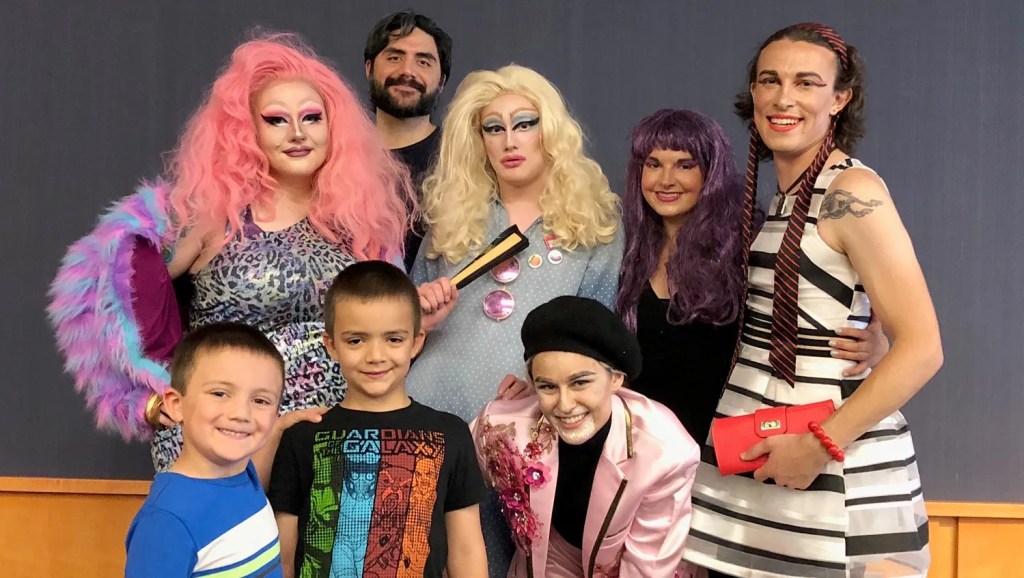
Drag Story Time events are sometimes held at libraries or other venues where drag performers read stories to children. In recent years, the events have increasingly been at the center of a larger GOP-led effort to restrict public drag events as conservative critics suggest they “sexualize” children.

Sen. Janice Weiner, D-Iowa City, said she worried the provision would incentivize frivolous lawsuits.

“This bill, as written, could encourage potential frivolous or bad actors to shake down local governments and private businesses, and that’s the taxpayer on the hook,” said Weiner, who opposed the bill.

Elizabeth Hall, a local trans woman, said bills targeting the LGBTQ population create “an aura of fear” among trans people that has pushed those she knows into psychiatric care.

“We fear for our communities,” Hall said. “We fear for our lives, and even if the particulars of how this bill would come into effect aren’t necessarily like that extreme, that fear still has a tangible effect on our lives and has caused so many people that I know to reach ends that I fear have continued to lead to detrimental effects.”

Supporters say the bill ensures performances shown to minors are ‘age appropriate’

Ryan Benn, a lobbyist for the conservative religious group The Family Leader, said the group supported the law because obscene materials that may be illegal to show children in movies or other material are not illegal to perform.

“I think it fixes that loophole,” Benn said.

Sen. Jeff Taylor, R-Sioux Center, said he would like to see a more clear definition of a “performance,” but overall obscenity is rarely prosecuted.

“In general, obscenity does not have constitutional protection in terms of freedom of speech,” Taylor said. “Something that’s obscene is, by definition, not protected by the First Amendment, and that’s regardless whether you’re sharing that with adults or with children. But to me, especially in the case of children, I feel like this is appropriate.”

Sen. Cherielynn Westrich, R-Ottumwa, said she supported the bill to protect children from obscenities.

“I think that what the one thing that we all in this room have agreed on is that we need to protect children from those sort of obscene or performances that are sexual in nature,” Westrich said.

Bill would repeal exemptions for public institutions

Melissa Peterson, with the Iowa State Education Association, said the group opposed the bill, especially a proposal to repeal an Iowa code section that allows minors to access appropriate material for educational purposes, at art exhibitions or in public libraries.

She said Senate File 496, the 2023 state law that requires school staff to remove books depicting sex acts, already sought to establish what content was age appropriate by existing obscenity standards.

“We worked closely together in a compromised fashion to come with what we thought would be considered age appropriate, and we would really like to see that exemption maintained for public institutions that are public spaces,” Peterson said.

Weiner also opposed repealing the exemption for public institutions.

“To repeal it is in some ways to admit that this bill really isn’t about obscenity,” Weiner said.

Blog at WordPress.com.

Up ↑