The Education Department announced Monday it has formally rescinded the Biden-era Title IX interpretation that gave sex-based discrimination protections to students on the basis of sexual orientation and gender identity.
Schools now must go back to the Title IX code as held under the previous Trump administration in 2020, which the department says will protect women’s sports.
“Thanks to today’s action, the published Title IX regulations faithfully reflect court orders and Congressional intent — reducing confusion for parents, students, and educational institutions. We will continue to relentlessly champion equal opportunity for all Americans and hold accountable any school or college that violates the rights, privacy, or athletic opportunities of our women and girls,” Education Secretary Linda McMahon said.
And the administration has pursued its own definition since President Trump returned to office, making deals with schools such as the University of Pennsylvania to take transgender athletes out of their women’s programs.
Opponents of the move say it will harm transgender athletes and weaken protections for sexual assault victims.
“Sexual harassment and assault continue to be pervasive in schools and, to the fullest extent possible, we should be working to enforce the laws that protect student survivors of sexual violence. Yet, Education Secretary Linda McMahon and the Trump administration have decided to ignore what survivors need, instead weaponizing Title IX to attack trans students,” said Shiwali Patel, senior director of education justice at the National Women’s Law Center.
The adult entertainment portal Erobella, responsible for the Sexually Liberal City Index, just released a new study ranking U.S. universities by how LGBTQ+-inclusive they are.
Erobella recently published the Out on Campus: The LGBTQ+ College Index 2026, which measures how “supportive and inclusive” the universities across the country are. The study examined whether universities have professionally staffed LGBTQ+ centers, provide gender-inclusive housing, have written policies that protect trans students from discrimination, have a student health insurance plan that covers gender-affirming care, and allow chosen names and pronouns to be used on official records.
Out on Campus also analyzed the city where the school is located by measuring its score on the Human Rights Campaign’s Municipal Equality Index, the number of LGBTQ+ venues nearby, and whether there is a local PFLAG chapter.
“For LGBTQ+ students, knowing how supportive and inclusive a university really is can make a meaningful difference,” said Brenda Jensen from Erobella’s data and research team. “With the Out on Campus Index, we want to create greater transparency and show which universities are providing concrete support and resources for LGBTQ+ students — while also highlighting where there is still room for improvement.”
Since the Campus Pride Index was shut down after serving as the go-to source for finding LGBTQ+-friendly universities for the past 18 years, this study is more important than ever for students seeking a four-year institution that provides trans and other LGBTQ+ students with support and protection.
New York University came out on top as the most LGBTQ+ friendly university in the country, while at the other end of the spectrum, 81 colleges hold or have sought religious exemptions under Title IX to legally permit discrimination based on sexual orientation and gender identity. Every school in the bottom 15 is also a religious institution from the South, while not a single Southern school made it into the top ten.
All 1,718 schools in the study started with a score of zero and earned points for the support they provide to LGBTQ+ students and for how LGBTQ+-friendly the city is, but the bottom 15 schools never scored a single point.
Students at 11 Texas A&M University System schools will see fewer classes related to LGBTQ literature, climate change and women writers meet graduation requirements under a proposal to remove more than 200 classes from general-education course lists.
System regents voted Thursday to scale back the classes that qualify after a review prompted by a new state law that requires public university boards to examine what classes undergraduates must take regardless of their majors.
Regents must ensure those courses “are foundational and fundamental” for a college education and that they prepare students for civic life and the workforce, according to Senate Bill 37. The law also requires public university governing boards to consider the potential tuition, fee and time costs of those requirements to students.
“The universities did a credible job in streamlining their various course listings of what most of us agreed could be described as somewhat bloated,” regent Sam Torn said. “There is still much work to be done in the near future … to reach our goal of fully preparing students for the modern world in which they will live.”
The agenda packet contains 360 entries marked “remove” across 11 universities’ general-education course lists. However, some courses appear more than once because they are listed under multiple departments or in more than one general-education category.
Texas A&M University in College Station has the most entries being removed with 103. Texas A&M-San Antonio has 76; Tarleton State University has 48; and West Texas A&M and Texas A&M University-Texarkana each have 21. The other six universities have between 13 and 18 removal entries on their lists.
Of the courses set to be removed at the flagship school are introduction to women’s and gender studies; LGBTQ literatures; introduction to Latinx literature studies; women writers; introduction to race and ethnicity; gender and health; Blacks in the United States; Bible as literature and climate change.
Leonard Bright, president of the American Association of University Professors chapter at Texas A&M-College Station, slammed the latest course review as an overreach of SB 37. Bright said the pattern of courses up for removal suggest the regents are bending to conservative pressure.
“This is a political decision,” Bright said. “You are basically telling us now that the globalness that it once valued and said that it was going to protect is no longer a priority. …They’re going to basically whitewash our programs.”
Bright raised concerns about whether students will be prepared without these courses that he said are foundational to their understanding of the world.
In a written statement, Texas A&M System spokesman Chris Bryan said each university conducted its own course-by-course review. He did not identify who at each campus conducted the review or explain why particular courses were recommended for removal.
Bryan said the reviews determined only which courses should count toward the core curriculum and that “it was not a determination of whether a particular subject is appropriate for study or whether a course may be offered.”
Universities may continue offering the courses outside of the core, he said.
“Each institution’s core varies because its mission and academic offerings are different, but all were reviewed against the same requirements in state law and system policy,” he said.
The system’s review, which must be done at least once every five years, comes ahead of a Jan. 1 deadline.
Courses up for removal lists at other system schools range from those that study women in the U.S. to those that study literature from authors of various ethnicities.
For example, at Prairie View A&M, a historically Black university, the removal list includes Mexican-American culture and sociology of minorities. A course titled diversity was on the removal list for East Texas A&M.
Of the system’s 12 universities, Texas A&M-Central Texas has no removal entries. That school does not offer the lower-level core courses at issue as it serves transfer students who typically complete those requirements at community colleges or other universities.
The agenda listed 27 entries marked “add” at seven universities.
Those additions include human nutrition at Texas A&M in College Station, precalculus at Prairie View A&M, Mexican American literature at Texas A&M International, professional ethics and environmental sustainability at Texas A&M-Kingsville, astronomy and anatomy courses at West Texas A&M.
The core curriculum review is separate from a policy A&M regents adopted last fall after conservative backlash over a classroom lesson on gender identity.
That policy bars any academic course from advocating “race or gender ideology, or topics related to sexual orientation or gender identity.” Only specific non-core or graduate courses can receive an exception, with prior written approval from the university’s chief executive and a demonstrated necessary educational purpose.
Gender ideology was defined by the regents as treating self-assessed gender identity as replacing, or more legitimate than, biological sex. The policy states race ideology includes concepts that shame people, assign them racial guilt or portray them as oppressors or lesser contributors because of their race or ethnicity.
The American Association of University Professors and four A&M System professors, including Bright, sued the system in an attempt to block the policy on Aug. 3, arguing it violates their First Amendment rights. A judge has not yet ruled in the case.
Texas A&M is not alone in reviewing its core offerings under SB 37, though universities are taking different approaches.
The University of Texas is also considering cutting more than 100 core courses as part of an overhaul of the general education curriculum after the provost’s office determined the classes were too “narrow.” A handful of the courses on the chopping block mirror those up for removal at A&M.
UT students would instead take a course covering each of 12 specified subject areas, including Western civilization, American politics, world politics and cultures, science, computer science and artificial intelligence, and “Great Questions of Human Life.”
For nearly two decades, LGBTQ+ students looking for a college could turn to the Campus Pride Index for something most college rankings didn’t provide: a way to evaluate how welcoming and safe a campus might actually be for them.
Launched in 2007, the free database evaluated participating colleges on more than 50 measures across eight areas, including LGBTQ-inclusive policies, housing, campus safety, student life, counseling, health services and institutional support. Students and families could search hundreds of participating schools and compare their LGBTQ+ resources and policies.
However, there are some with short lists of favorites.
The Princeton Review publishes a list of 25 LGBTQ-friendly colleges based on student surveys, while BestColleges released a 2026 list of schools meeting criteria including nondiscrimination protections, gender-inclusive housing and restrooms, and an LGBTQ+ resource center. The Consortium of Higher Education LGBT Resource Professionals also maintains a directory of campus LGBTQ+ centers.
But those resources don’t allow a student to investigate and compare hundreds of individual campuses using the same detailed criteria. A 2025 study published in the Journal of Homosexuality examined 1,756 four-year nonprofit U.S. colleges and universities and found that only 14 percent had a dedicated LGBTQ+ resource center.
College admissions professionals have begun discussing how to fill the void that Campus Pride created. In a 2026 newsletter for the New York State Association for College Admission Counseling, Erica Padilla and Marie Nocella called the Campus Pride Index “a useful tool” and noted that, for many LGBTQ+ students, “this was the only tool at their disposal, especially if their environment lacked supportive adults.”
Students with supportive families can share that work with parents or guardians. Students who aren’t out at home may have to conduct it quietly and alone. For them, determining whether a college is affordable and academically appropriate may not be enough. They also have to answer another question: Will I be safe here?
Unless someone else creates a comprehensive solution, much of the work will continue to fall on students. That can mean digging through individual college websites for nondiscrimination policies, gender-inclusive housing, healthcare, LGBTQ+ organizations, bias-reporting procedures and other indicators of campus climate. For LGBTQ+ students, these steps add layers of research — and uncertainty — to an already complicated and stressful college search.
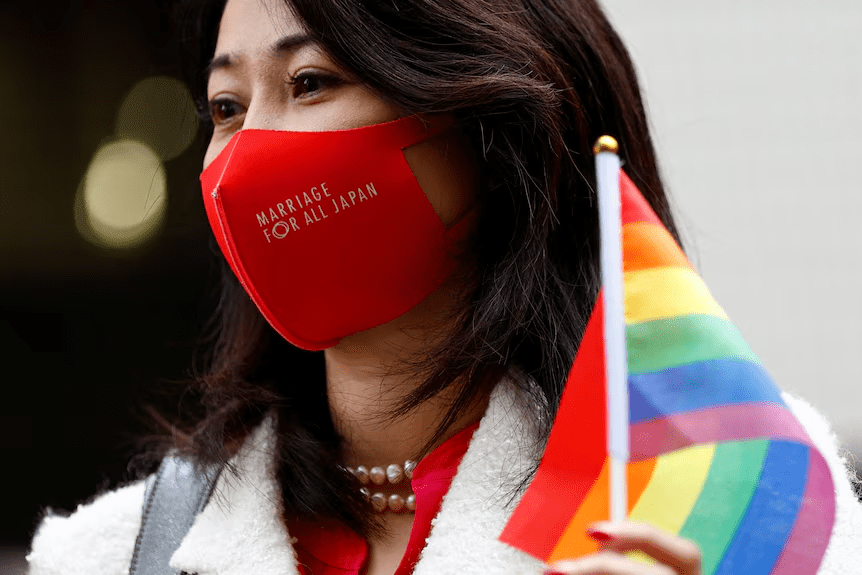
Japan is set to roll out nationwide LGBTQIA+ education for the first time in schools, workplaces, universities and homes.
Japanese media reports that the plan is designed to promote public understanding and awareness of gender and sexual diversity in the country, which has not legalised same-sex marriage.
The draft program reportedly notes that LGBTQIA+ people can “experience confusion, anxiety and difficulties in daily life due to insufficient public understanding.”
The scheme has been years in the making, with the Act on the Promotion of Public Understanding of the Diversity of Sexual Orientation and Gender Identity passed in 2023, requiring the creation of a plan.
The final plan is yet to be made public, with experts also awaiting more detail.
Reports suggest schools are set to provide information to students about sexually and gender-diverse people, while also ensuring that pupils have adequate access to social workers and counsellors.
Universities would revise curricula to ensure that people training to become healthcare professionals and teachers have in-depth knowledge of sexual diversity.
Videos, leaflets and training videos promoting awareness, diversity and academic research will be combined with stronger consultation schemes to measure the public’s understanding of sexual diversity.
Yearly reports on the program, public understanding and related policies will be introduced, with the overall scheme to be reviewed once every three years.
The plan was presented to and approved by the ruling Liberal Democratic Party (LDP) earlier this month, and is expected to be signed off by Prime Minister Takaichi Sanae’s cabinet soon.
‘Great initial step’
Alisha Khojanazar is a molecular neuroscience research technician at Okinawa Institute of Science and Technology and identifies as a “woman of transgender origin”.
She welcomed the education plan as a “great initial step”.
“I think it will help a lot, especially young adults and queer adolescents who are just discovering their identities or genders,”
she said.
“If it would lead to some kind of broader protection by law, that would be great. But with the current political climate in Japan, I would love it to be more inclusive.”
She told the ABC her university was very welcoming to the LGBTQIA+ community, with gender-neutral bathrooms and pride celebrations held regularly, but said the country had a long way to go.
“It’s very hard to meet someone who is open and queer and Japanese,” she said, adding many people in the country were reluctant to speak freely about their sexuality or gender.
Yui Oizumi, a student at Sophia University in Tokyo, identifies as queer.
She described the education plan as a “baby step” that would have some positive effects.
“Training teachers and employers to be mindful is good. But at the same time, I think it’s not really going to do much to change the perception of regular everyday people and how they think about queer people,” she said.
“I think that’s going to take more time and more conscious effort through media as well.”
She said outright homophobia was rare in Japan, but she constantly ran into people who did not understand that she was queer.
“That is such an alien concept that people are like, ‘What do you mean? That doesn’t make any sense.’ And that’s kind of where the struggle lies the most for me,” she said.
She added that friends of hers in a lesbian relationship had been denied rental properties because they were in a same-sex relationship, and believed an anti-discrimination law would better protect the community.
Gay rights in Japan
There are no national laws outlawing discrimination against gay people in Japan, but some local government areas and labour laws offer some protections.
Japan is the only member of the G7 to not legalise gay marriage.
The Japanese government also does not recognise the marriages of same-sex couples if they were legally married in other countries.
Kazuyoshi Kawasaka, an expert in LGBTQIA+ rights in Japan at The University of Tokyo, said the government had decided against anti-discrimination laws to appease conservative factions of the LDP.
Ms Takaichi opposes same-sex marriage, despite previously saying that “there should be no prejudice against sexual orientation or gender identity”.
“The LDP is very conservative, especially for promoting traditional family values. So that is very tricky for the LGBTQ activists in Japan,” Dr Kawasaka said.
“I think that a bigger [anti-discrimination law] protection is much more effective, actually,” he said.
Political scientist at Monash University Charles Crabtree said education was a good starting point.
“Misinformation or a cloudy sense of ‘the other’, whatever that ‘other’ is, impedes individuals’ ability to empathise with those who are different from them,” Dr Crabtree said.
“Education can have an effect, but it depends on what that content is and how much it foregrounds lived experiences, and potentially even highlights the experiences of discrimination that people within this community have felt.”
He described the issue of same-sex marriage in Japan as “rather dire” but said opposition to legalising it was possibly not as strong as it seemed.
In 2024, Dr Crabtree published a public opinion survey of people in Japan as part of the Stanford Japan Barometer, which is believed to be the largest semi-regular opinion poll published of the Japanese public.
Of the 8,000 respondents, 47 per cent were in favour of legalising gay marriage, with 16 per cent opposed and 37 per cent neutral on it.
“It’s hard to characterise exactly what that 37 per cent means, but it suggests to us that there are people who may be potentially malleable in terms of their views,” Dr Crabtree said.
“On the whole, we found this to be a much more rosy picture than what we had seen from other survey data.
“Education efforts might help nudge neutrals to more positive levels of support, which all might matter because higher levels of public support might encourage more dramatic and meaningful government action.”
He said the data found younger people were much more in favour of same-sex marriage than older people in Japan.
Ms Takaichi also received a lot of support from young people, he added, something that could have spurred on the draft education plan.
In November last year Tokyo High Court ruled in favour of Japan’s same-sex marriage ban, saying it did not violate key elements of the country’s constitution.
However the judge noted that “it is inevitable that constitutional violations will arise” and that “the issue should first be thoroughly deliberated in the Diet [Japan’s national parliament].”
It was the final ruling of six court cases across the country, with the issue now awaiting a Supreme Court ruling.
The Acceptance Academy Community School, a private, nonprofit middle school serving LGBTQ+ students, bullied youth, and those who struggle to thrive in traditional school environments, is now accepting applications for the August 2026 semester at its Boca Raton campus.
Serving students in grades 6 through 8, The Acceptance Academy is the first school of its kind in Florida and participates in the Step Up for Students scholarship (voucher) program.
“Students at The Acceptance Academy Community School will receive a strong academic foundation in a safe, inclusive, and welcoming environment,” said Stephen Gaskill, co-founder and president of The Acceptance Academy Foundation, the 501(c)(3) organization that operates the school. “We focus not only on academic excellence but also on character development, giving students the opportunity to learn and grow alongside peers who share similar experiences.”
The need for specialized, supportive educational environments is increasing. According to a recent report from the Gay, Lesbian, and Straight Education Network (GLSEN), many students reported a more hostile school climate during the 2024–2025 academic year amid heightened anti-LGBTQ+ rhetoric. Key findings include:
Two in three students reported feeling unsafe due to their sexual orientation, gender identity, or gender expression
Only one in three LGBTQ+ students frequently look forward to attending school
More than half (53%) experienced LGBTQ+-related discrimination, including restricted access to facilities aligned with their gender identity
“Students succeed when they feel supported—by both their peers and the adults around them,” said Dr. Mindy Koch, Ed.D., co-founder and principal of The Acceptance Academy Community School. “Our classrooms emphasize critical thinking, problem-solving, and real-world application, preparing students to navigate life with confidence.”
The school is located in the heart of Boca Raton and offers access to a state-of-the-art gym, music room, library, extracurricular programs, and after-school activities.
Applications are now open for the August semester. Small class sizes ensure personalized, hands-on learning, allowing every student to actively participate and excel. Students from Palm Beach and Broward Counties are welcome, whether transitioning from public school, private school, or homeschooling.
“There’s a real demand for a safe space for kids to learn and to be themselves and middle school years are particularly the time when kids are starting to grow. That’s why we’re focusing on that age area,” Gaskill said.
“Hopefully a school like this gives them the opportunity to figure out how to negotiate and work together with other people who are not totally like them and be successful in the world,” Dr. Koch explained.
But the idea of a school focused on LGBTQ+ students is also raising questions, including concerns about safety.
“What kind of security measures do you plan to have around the school? Because there may be people who would, you hate to say it, may want to act out against the LGBTQ community if they know a number of students are here,” we asked Gaskill. “Well, certainly we hope that that’s not the case, but we have significant security and the building is secure and I just want to leave it that,” he said.
We also asked people in the community what they think.
“The kids want it then I want it. But realistically speaking, I’m not sure that’s such a good idea. If you’re ridiculed in school, I think you have to learn with it when you’re that age,” said Richard Young, a Boca Raton resident.
“I think we need to support it as a community,” said Sal Cohen, a Wellington resident.
“I think it’s a wonderful idea and very needed,” said Donna Traum, a Boca Raton resident.
Tuition is approximately half the cost of many private schools in Palm Beach County. Tuition is $20,000 a year. With an $8,000 state voucher, families would pay about $12,000. The first day of classes for the 2026–2027 school year is Monday, August 10, 2026.
The Acceptance Academy Foundation also welcomes tax-deductible contributions from individuals and organizations to support its mission.
The Acceptance Academy Foundation was founded by Dr. Mindy Koch and Stephen Gaskill, both of whom bring decades of experience in education and public service and share a commitment to the school’s long-term success.
Dr. Mindy Koch has served in Florida’s education system for more than 40 years as a teacher, department chair, administrator, and principal across elementary, middle, and high school levels in Broward and Palm Beach Counties. An award-winning educator, she has developed curricula, managed faculty, and overseen institutional budgets. She also founded Educational Extra, Inc., a SACS-accredited nonprofit providing summer academic programs. Dr. Koch serves as principal of The Acceptance Academy Community School.
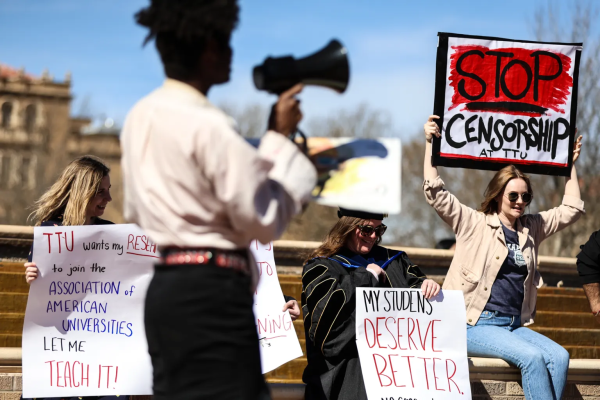
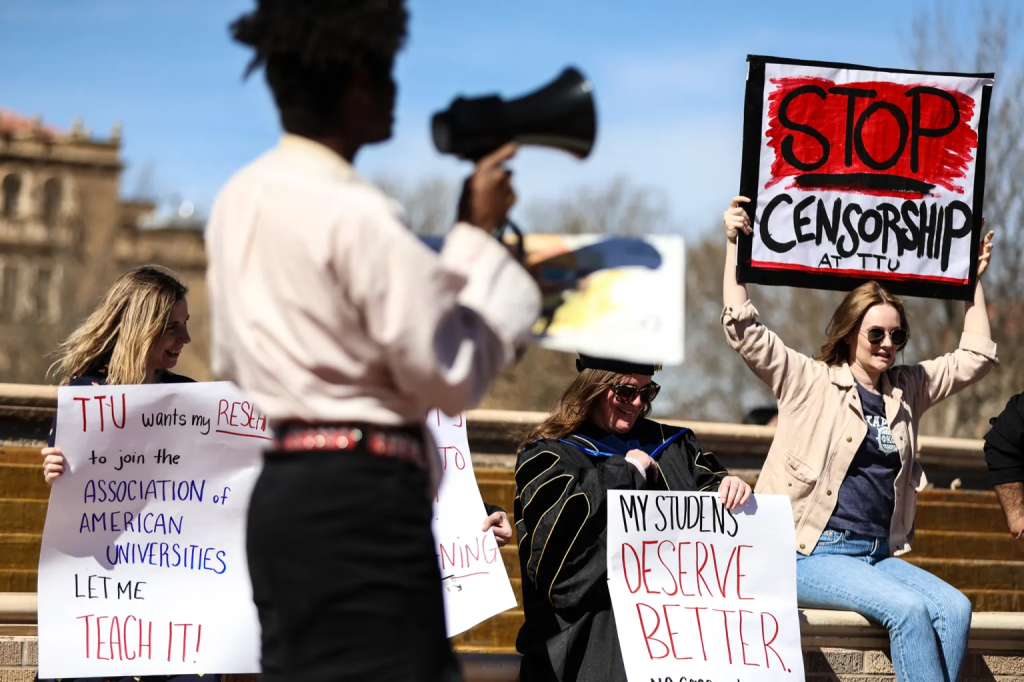
Texas Tech University System’s chancellor on Friday ordered campuses to phase out academic programs “centered on” sexual orientation and gender identity — a dramatically expanded policy that also places limits on what can be researched and which faculty can be hired.
Chancellor Brandon Creighton’s memo gives provosts until June 15 to identify targeted programs and requires the system’s five universities to freeze admissions and halt students from declaring majors in the phased out programs. Students already enrolled can finish their degrees.
Offerings that appear most likely to be affected include Texas Tech University’s women’s and gender studies undergraduate minor and graduate certificate, as well as women’s and gender studies minors at Midwestern State University and Angelo State University.
The memo also says graduate theses and dissertations may center on gender identity and sexual orientation only as a temporary exception for currently enrolled students and that future faculty hiring will “prioritize recruitment in alignment with this memorandum.”
Faculty, it says, must recognize only “two human sexes” and not teach gender identity as a spectrum or more than two genders as fact — policies Creighton introduced last year.
In core and lower-level undergraduate courses, the memo says instructors generally cannot assign materials that are “centered on” or “include” sexual orientation or gender identity and defined the concepts:
“Centered on” is when course content, readings, assignments or lectures that have sexual orientation or gender identity “as the primary subject, main theoretical framework, central narrative or driving pedagogical purpose.”
“Includes” means “these themes are present, but serve only as secondary background context, demographic data points, or minor components of a broader academic subject.”
If an industry-standard textbook contains such content, the memo says faculty do not have to redact it, but they cannot highlight it, test students on it or spend class time on it.
The memo makes some exceptions for upper-level undergraduate and graduate courses, including analysis of active public policy and legal disputes, historical subjects such as the AIDS epidemic where sexual orientation or gender identity is inseparable from the topic, datasets that include those variables and some clinical, counseling or psychology instruction.
The memo also says “currently employed faculty members may continue to research and publish topics of their choosing,” but future faculty will be recruited and hired in accordance with the memo’s priorities.
Jen Shelton, an associate professor of English who has taught at Texas Tech for 25 years, said the provost’s office had repeatedly assured faculty that their research would not be affected. She said this feels like a “betrayal.”
“The good news is I think the whole university has been betrayed. I think even the provost did not expect it to look like this because it’s people from the provost’s office who have been coming to us and saying, ‘Don’t worry. This part is all going to be fine,’” Shelton said in an interview with The Texas Tribune.
Cailyn Green, a Texas Tech junior studying human development with a minor in community, family and addiction science, said the memo left her feeling that the university can no longer provide “an honest education.”
Green said one of her professors would not answer in class whether material about racial disparities in pregnancy outcomes would still be taught, instead asking to discuss it privately.
“At the rate that we’re going, I’m not going to be able to continue learning everything that I need to know in my degree, and I won’t be able to help people,” said Green, who works in Section 8 housing, helping low-income residents connect with food, health care and other assistance.
Paul Ingram, a Texas Tech associate professor of psychological sciences, said students had been calling him all day, some saying they regretted coming to Texas Tech. He said a graduate student had already dropped out because of the earlier memos and another graduate student is writing a dissertation on gender that, under the new policy, could not be proposed again.
He said faculty across the university are openly discussing looking for other jobs.
“Everyone sees that the grass isn’t always greener on the other side, but this grass is looking pretty dead,” Ingram said.
Antonio Ingram, a senior counsel at the NAACP Legal Defense Fund, said the memo appears to target perspectives involving gender identity and sexual orientation for political reasons, not academic purposes, raising serious constitutional concerns because public universities cannot discriminate based on viewpoint.
Antonio Ingram also questioned the memo’s prohibition against teaching “as absolute truth” that people are inherently racist, sexist or oppressiveand that “individuals bear responsibility or guilt for actions of others of the same race or sex.” Ingram said there is no definition of “absolute truth,” creating vagueness that may deter teaching about systemic racism, reparations and the history of enslavement.
“I think in many ways, this is a doubling down on a political project that is not meant to help students. It is really meant to uphold a political worldview that, you know, Chancellor Creighton couldn’t enact legislatively and is now doing through his role as chancellor,” Ingram said.
In a statement, Creighton said he and the system’s regents are “focused on ensuring our academic programs are rigorous, relevant, and produce degrees of value.”
“That focus is matched by our unwavering support for the First Amendment and the open exchange of ideas that define a public university. Texas Tech will continue to be a national leader on both fronts,” he said.
Some students have supported the system limiting classroom discussion of sex and gender. In an October interview with the Tribune, Preston Parsons, president of the campus Turning Point USA chapter, said he believed the policy protected students and that professors who disagree should speak up outside the classroom.
“There’s a right and a wrong way to do everything, and I don’t believe the classroom is the right place to do that,” said Parsons, who wasn’t available to comment on Friday’s memo.
Creighton served nearly two decades as a Republican state lawmaker and authored major higher education reforms before he became chancellor in November. In December, he ordered faculty to submit for review course content touching on race, sex, gender identity and sexual orientation. If campus leaders wanted to keep the information in a course and it was not required for professional licensure, certification or patient care, they had to forward it to the Board of Regents for final review. Regents were expected to take up the issue publicly at their Feb. 26 meeting but did not, leaving professors in limbo.
Speaking at the Texas Public Policy Foundation’s summit in Austin on Thursday, Creighton said Texas Tech had “built an AI algorithm” to help review courses and would release findings within days.
At the summit, Creighton said what some faculty call “academic drift” had left “quite a bit of garbage in curriculum” on university campuses across the country. He said the Texas Tech University System has “a very good plan in place” to address that.
“I believe it will produce the best curriculum in America, and I believe it will be a national model once we’re finished,” he said.
In a news release Friday, the system said that of the 1,403 courses initially identified, only 92 were reviewed by the board of regent’s Academic, Clinical and Student Affairs Committee and fewer than 60 were recommended for modification. Another 299 were “proactively modified” before reaching the committee.
Creighton has framed the push at Texas Tech as a way to steer the university toward degrees that lead to high-paying jobs in high-demand fields. He made the same arguments for bills he wrote in 2023 to ban diversity, equity and inclusion in higher education and in 2025 to expand regents’ control over curriculum.
Shelton said that view misses a central role of college, which is to teach students how to interpret the world around them, ask hard questions and think through unfamiliar problems. This memo, she said, “impoverishes” students “not just as future workers, but as human beings.”
As the Trump administration continues to curtail federal education protections – with particular cruelty aimed at LGBTQ+ students – lawmakers in Maryland have advanced a sweeping bill to protect marginalized students against discrimination in virtually all educational institutions in the state.
H.B. 649, named the Advancing Equal Educational Opportunities for All Students in Maryland Act, creates stronger enforcement mechanisms against “discrimination and retaliation” based on “race, color, national origin, ethnicity, ancestry, religion, sex, pregnancy, sexual orientation, gender identity, disability, age, or marital status.”
The legislation allows students and families to report discrimination to either the state superintendent or the Maryland Commission on Civil Rights to investigate. It also gives students and families the right to sue an educational institution directly. It broadly defines an educational institution as any pre-K program, elementary school, secondary school, institution of postsecondary education, institution of higher education, or any other program that culminates in a certificate, diploma, or degree.
The bill also says that the state may withhold funding from a school in violation of the anti-discrimination protections and may also withhold funding if a school does not remedy the problem once it’s found.
Cleveland Horton II, the executive director of the Maryland Commission on Civil Rights, told Fox Baltimorethat the bill is “about making sure that when Maryland students experience discrimination, there is a clear, reliable, and timely place to turn at the state level.”
“This bill addresses a state-level enforcement gap in education discrimination, particularly in higher education. This bill is not intended to replace the Office of Civil Rights, but again, to provide a state-level parallel safeguard, and to reduce the over-reliance on the federal capacity.”
In written testimony in favor of the bill, the ACLU of Maryland emphasized that passage is “urgent.”
“When the current president was inaugurated in January 2026, there were over 270 pending complaints from Maryland residents through OCR [The federal Office for Civil Rights]. Many or perhaps most of these cases have already been dismissed without an investigation. With the dismantling of USDE and OCR, Maryland must fill the gap to ensure that the civil rights of all Maryland students are protected and upheld.”
The ACLU also pointed out that current Maryland anti-discrimination law does not cover students in higher education: “These students must rely on federal anti-discrimination laws. And with the aforementioned changes at the federal level, Maryland families have fewer practical options for filing complaints with the OCR.”
Religious institutions, on the other hand, have expressed concern.
“We are deeply concerned that H.B. 649 proposes that religious and faith-based schools would have their decisions judged by a State commission that will not respect or consider the sincerely held religious beliefs of the school or, accordingly, their constitutional rights,” the Maryland Catholic Conference said in written testimony, according to Fox Baltimore. “Allowing a commission that is unrelated to educational practices and procedures to literally police faith-based schools regarding broad terms of discrimination, potentially resulting in a cause of action which could result in compensatory or punitive monetary damages, is clearly unconstitutional and an overreach.”
Nevertheless, the bill passed the state House of Delegates 100-35 and is now being considered in the state Senate.
On March 19, the University of North Texas (UNT) in Denton announced it would cut over 70 courses, including its LGBTQ Studies course, as part of broader budget reductions.
President Harrison Keller and Provost Michael A. McPherson sent a statement detailing the upcoming budget cuts for the fall 2026 semester.
The university plans to eliminate over 70 programs, including courses, minors, and certificates. The cuts are expected to save $45 million.
The university cited declining enrollment, particularly among international students, as the reason for its significant budget cuts.
The enrollment decline contributed to a $32 million budget deficit for the upcoming fiscal year.
The university will allow currently enrolled students to complete their degree programs. New students will not be able to register for these majors or courses.
The cuts include three master’s programs, one undergraduate major, 25 undergraduate minors, 21 graduate programs, and 21 undergraduate certificates.
UNT ordered a review of its courses last fall as part of the budget planning process.
Some courses, including LGBTQ Studies and Women’s and Gender Studies, were eliminated as part of the budget cuts.
Texas university systems reviewed courses in response to federal directives issued during the Trump administration.
The review was conducted in response to H.B. 229, which recognizes only two genders, male and female.
UNT has not confirmed whether the law influenced its decision to cut certain programs.
The university also plans to eliminate the Department of Linguistics, citing a “consistent decline.”
UNT said it continues to monitor its strategic budgeting model, which began in fall 2024, amid declining enrollment and sponsored research.
Monitoring the strategic budgeting model has helped identify budgeting issues for the upcoming school year.
University officials emphasized the importance of the budget plan in maintaining program quality and financial stability.
Harrison Keller said, “We will continue to make strategic investments for the health of the university. Most importantly, we remain steadfast in our commitment to the long-term success of our students.”
UNT stated it aims to support staff and faculty as part of its long-term planning.
Keller and McPherson added at the end of their letter on March 19 that, “By making these difficult but necessary decisions, we will be able to strengthen the quality and impact of our current academic programs while investing in new areas that help us build momentum for the future.”
Campus Reform has reached out to the university for further comment.
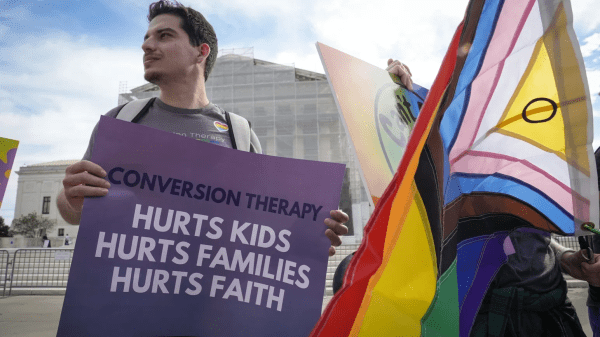
The Supreme Court yesterday blocked a law in California that bans teachers from outing trans kids to their parents from going into effect. The decision was 6-3, with the six Republican appointees opposing trans rights and the three Democratic appointees taking the side of trans kids.
The case involves teachers from Escondido Union School District who claim that their Christian faith requires them to out trans kids to their parents. They argue that their “right to exercise [their] own religious beliefs” is being violated by the district policy, which was established in response to 2016 legal guidance from the California Department of Education advising districts not to out students.
Trans and nonbinary youth can be put at risk of parental rejection and homelessness if outed to their parents.
In early January, a panel of judges on the Ninth Circuit U.S. Court of Appeals issued a stay to Benitez’s injunction, allowing California to enforce its trans youth protections as appeals work their way through the legal system.
But the teachers appealed to the Supreme Court, which sided with them and granted their emergency request for a stay.
The Court issued an 18-page unsigned ruling that said they believe that the parents are “likely to succeed on the merits” of their religious freedom claim, which was that there is a “right of parents to guide the religious development of their children” that also implies a right to know how their children are presenting their gender at school. The Court said that not outing kids to their parents is an even “greater… intrusion on the parents’ free exercise rights” than schools letting kids read books with LGBTQ+ characters, which the Court also ruled schools couldn’t do in its Mahmoud v. Taylor ruling last year.
In her dissent, Justice Elena Kagan wrote that this case shows how the “emergency docket can malfunction” because the case involved “novel legal questions” that the Court is ruling on with “inadequate briefing.”
“The Court is impatient: It already knows what it thinks, and insists on getting everything over quickly,” she wrote, noting that the federal appeals court hasn’t even ruled on the appeals in the case yet.
On the more substantive issues, Kagan wrote that the Constitution makes no mention of parental rights and that the conservatives on the Court relied on the Due Process Clause, which they usually read narrowly. She pointed out that the idea that women have a right to control their own bodies elicits “outright hostility” from her conservative colleagues when it’s suggested to be part of the Constitution’s due process protections. But now the same conservatives found that that clause gives parents the right to know how their children are presenting their genders at school.
She added that parents’ rights have to be balanced against the “critical interests in the care and education of children” that the state has, and that they needed to follow “ordinary processes” to address that balance.
Outing trans youth to their parents puts them at increased risk of homelessness, according to the Williams Institute. Not only that, they might still be exploring their identities and need to exercise control over their coming-out process.
“Transition isn’t a flick of a switch; it’s a complex, gradual, weaving journey of identity,” Connie Walden, a trans woman, wrote to the New York Times in 2023.
“My own transition started in high school. At what stage between my experimenting with makeup now and then to asking specific friends to call me Connie would I have officially, suddenly, socially transitioned? When should I have been robbed of the right to come out to my own family, to decide when to include them in my own process?”
“I recognize the pain of well-meaning parents who feel that their child kept such a large ‘secret’ from them. Yet with transition being a gradual process of experimentation, there is no big secret. There’s only kids slowly figuring out who they are, like all other kids.”






You must be logged in to post a comment.