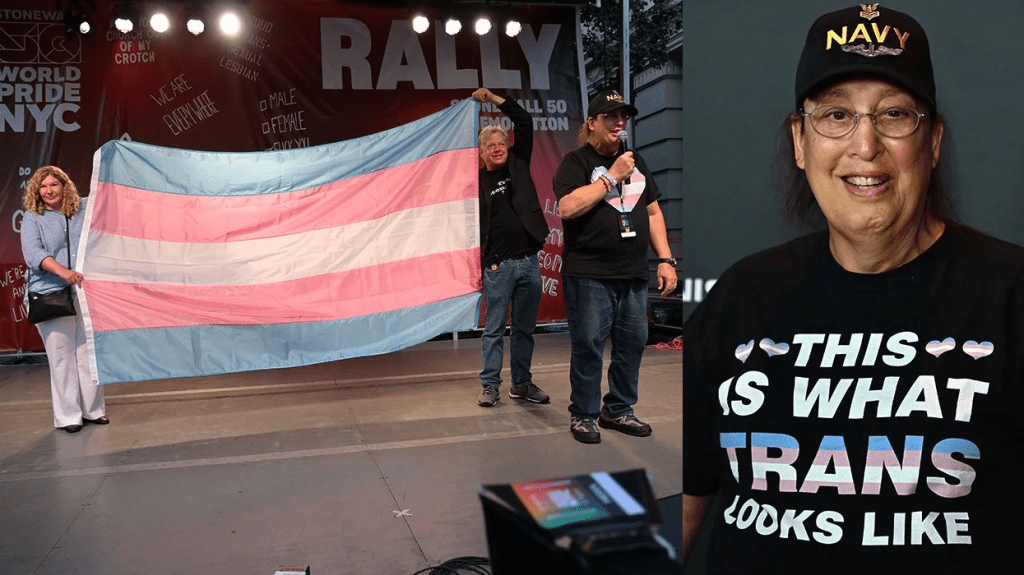
Monica Helms, the Navy veteran and creator of the original transgender pride flag, is fleeing the country due to anti-LGBTQ persecution.
She and her wife, Darlene Wagner, launched a GoFundMe earlier this year to facilitate their move abroad.
“We are worried there’s a possibility something could happen where we end up getting arrested just for being who we are,” Helms said in an interview with the Bay Area Reporterwhen the fundraiser first kicked off.
The couple currently lives in Georgia, which Erin in the Morning’s newest risk assessment map labeled as a “high risk” area for transgender people. Helms is by no means the only transgender refugee fleeing the United States. In May, a Williams Institute poll found that nearly half of all trans adult respondents had considered moving out of state or out of the country.
Since 2023, almost three dozen anti-trans bills have been introduced in Georgia, four of which have passed, according to the Trans Legislation Tracker. There was a ban on trans girls playing on scholastic women’s sports teams, a ban on using state funds to provide transition-related health care to incarcerated people, a ban on providing evidence-based medical treatment for minors with gender dysphoria, and the Georgia Religious Freedom Restoration Act—which does not explicitly target trans people, but is likely to make it easier to discriminate against them using religion as a legal defense. (Thankfully, there have been some successful and ongoing legal challenges to many of these policies.)
NBC’s Jo Yurcaba profiled families of trans kids moving to places like Australia and New Zealand. Hannah Kreager, a 22-year-old trans woman from Arizona, filed a groundbreaking asylum claim in Canada earlier this year; if granted, it would mark the first time a trans person from the United States would be given asylum in another country due to their LGBT status.
Of course, all of these stories come with the presumption of privilege. Trans people in these scenarios may have had familial support and/or a source of income or wealth that enabled them to uproot their lives to a safer place. Others resort to bouncing from state to state to receive care, uprooting their lives to live in a more tolerant community or traveling across state or international lines periodically to access health care.
As for Helms, she vowed to continue to fight for trans people no matter where she lives. “We will not abandon our activism,” she wrote in her GoFundMe.
Helms designed the transgender pride flag after having a conversation with the creator of the bisexual pride flag in 1999, she told the Bay Area Reporter. She has said it is important to her that it remains open and free to use for the public. The pink, white, and blue flag has become a household symbol for trans people and their loved ones.
“No matter how you fly it, it’s always correct, which signifies finding correctness in our own lives,” Helms said.
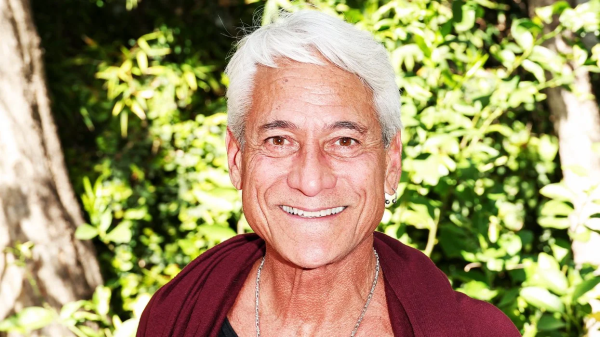
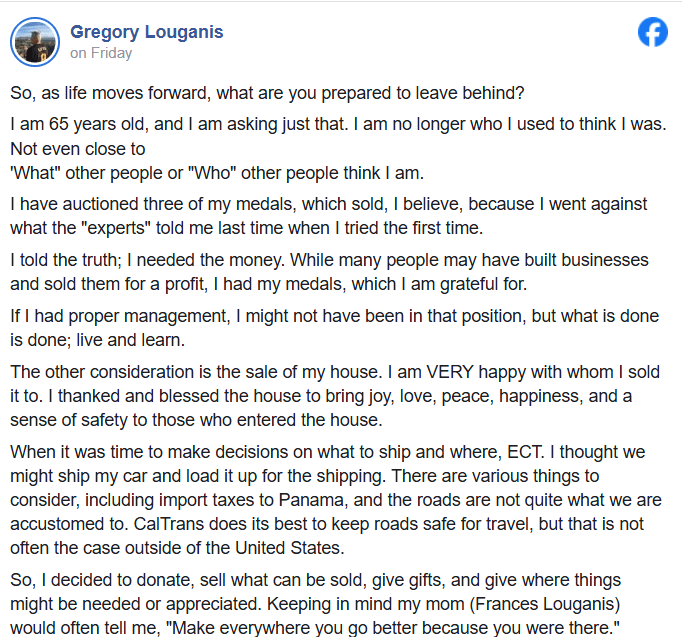
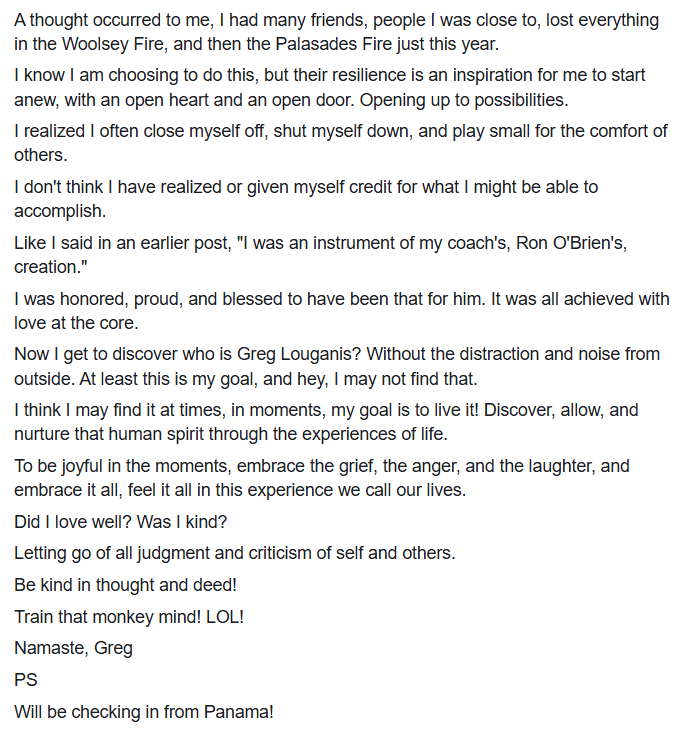
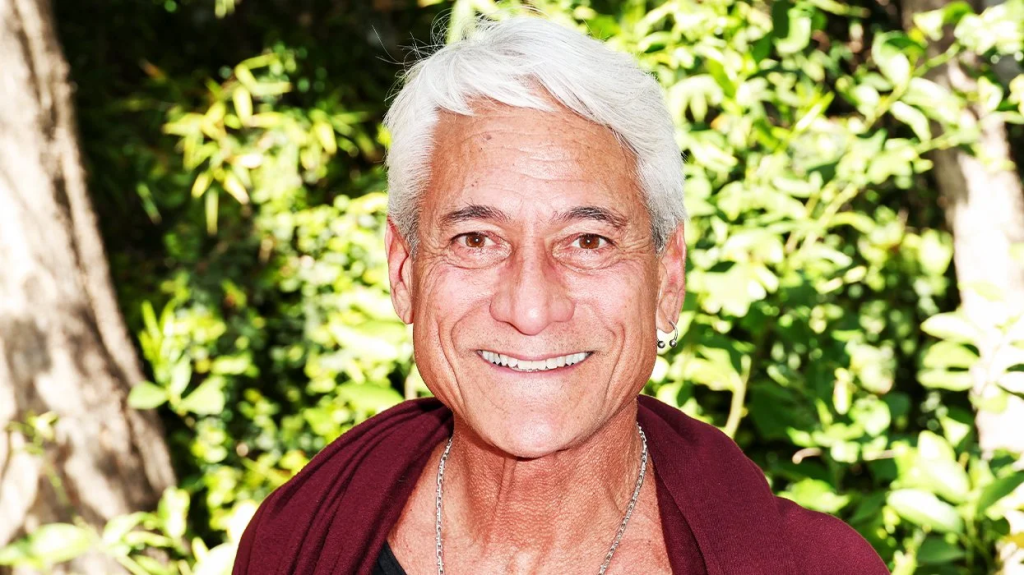
Out Olympic gold medalist, Greg Louganis, shared the details of his move to Panama in a statement uploaded to his Facebook page on Friday. In the post, Louganis, who came out as gay in 1994 and shared that he was HIV-positive in 1995, auctioned and sold three of his five Olympic medals. According to Cllct.com, he sold two gold and one silver medal for $430,865—his first silver medal from the 1976 Olympics, a gold from the 1984 games in Los Angeles, and another gold from the 1988 Seoul Olympic games.
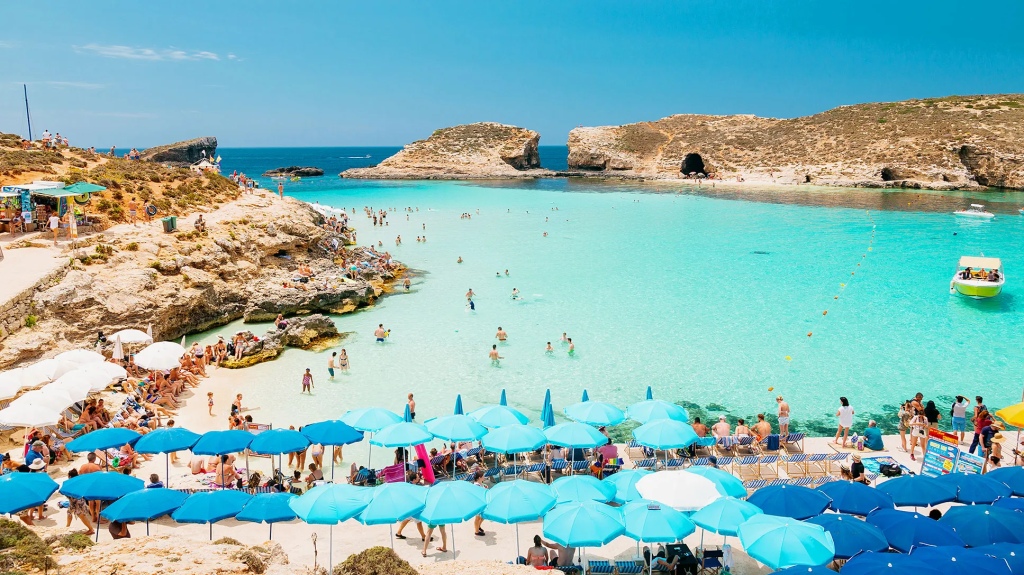
Moving to a new country is a big decision, and for LGBTQ Americans, finding a place that is not only welcoming but also legally protective is a top priority. While many European nations have made significant strides in LGBTQ+ rights, one country consistently stands out for its progressive laws and accepting culture: Malta. This tiny island nation in the heart of the Mediterranean has become a beacon of hope, earning a reputation as one of the most LGBTQ-friendly countries in the world.
Malta’s journey to becoming an LGBTQ+ rights leader is a remarkable story of rapid progress. For several years, it has topped the ILGA-Europe’s Rainbow Map, a ranking of 49 European countries based on their legal and policy practices for LGBTQ+ people. This isn’t a fluke; it’s the result of a concerted effort to enshrine equality into law. Same-sex sexual activity was decriminalized in 1973, but the most significant changes have happened in the last decade.
In 2014, Malta legalized civil unions, giving same-sex couples the same rights and responsibilities as married couples, including the right to adopt children. Just three years later, in 2017, the country took the monumental step of legalizing same-sex marriage, a move that replaced the traditional “husband and wife” with the gender-neutral term “spouses”. This wasn’t just a legal formality; it was a powerful statement of inclusion.
Beyond relationship recognition, Malta has also been a trailblazer in other areas. In 2016, it became the first country in the European Union to ban conversion therapy, a harmful and discredited practice [4]. The Gender Identity, Gender Expression and Sex Characteristics Act of 2015 allows transgender people to change their legal gender without the need for surgery or a medical diagnosis, a process based on self-determination [5]. The country also provides gender-affirming care and has banned intersex infant surgeries without medical necessity. These protections extend to employment, housing, and healthcare, ensuring that LGBTQ+ individuals are shielded from discrimination in their daily lives.
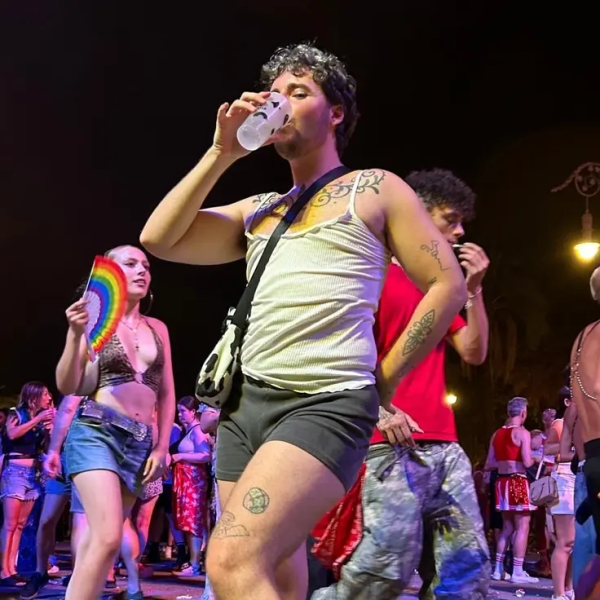
While a country’s legal framework is crucial, the lived experience is just as important. Malta’s culture, while traditionally Catholic, has shown a remarkable shift toward acceptance. Public displays of affection are generally well-received, and the LGBTQ+ community is active and visible. Valletta, the capital, and nearby Sliema are known for their vibrant scenes, with dedicated gay bars, clubs, and events, including a lively Pride celebration in September. Rabat has also been mentioned.
So How Do I Get There?
As with any country friendly to immigration, you have options. You can try out living there first simply by applying for a Digital Nomad visa, and become a full time paid blogger. There are other programs to establish residence, which include investing locally. You can buy or rent property as well.
For LGBTQ Americans considering a move abroad, Malta offers a compelling combination of legal protections, a high degree of social acceptance, and a beautiful, sunny, and historic location. The country’s commitment to equality is not just a passing trend; it’s a foundational principle that makes it an ideal place to call home.
Better Abroad? explores the lives of expatriates around the world who have uprooted their lives to move across physical and emotional boundaries in search of a better life. Through an artful lens, historical and cultural context, and engaging and authentic interviews, viewers will get to know each expat intimately—deeply feeling the experience of each character through their own narrative. Episodes will explore the critical moments or events that motivated their decisions as well as the peaks and valleys of their life-changing journeys. In this raw but beautiful look at the complexities of expat life, this series will provide viewers with a new thought provoking experience in each episode. Different expats on different paths. Different countries. One question. Is life Better Abroad?
We sit down and discuss this topic with Liz and Sarah.
If you’re an LGBTQ person looking for a better place, listen to Shasta as she tells you about Mexico.
For many LGBTQ+ Americans, the current political climate in the U.S. feels increasingly hostile and unsafe. In this video, we explore what it’s like to escape to Mexico — a country with growing LGBTQ+ protections, thriving queer communities, and a much lower cost of living.
We’ll cover: ✅ The most LGBTQ-friendly cities in Mexico ✅ Visa and residency basics for U.S. citizens ✅ Healthcare access and affordability ✅ Safety and community support ✅ Stories from real LGBTQ+ expats who made the move
From Mexico City’s vibrant queer scene to the laid-back beach towns of Puerto Vallarta and Mérida, discover why more and more LGBTQ+ people are finding freedom, safety, and joy south of the border.
🧭 Whether you’re looking for adventure, community, or simply peace of mind, this video will help you weigh your options and envision a new life abroad.
For queer people like me, the desire to move to a different country often stems from a deep curiosity about what lies beyond what we are allowed to embody here in the U.S. — a restlessness, as one interviewee told me, to understand ourselves uninhibited by the weight of social expectations.
Others leave out of fear, scrambling to find a safer haven where they’re not treated like political pawns. With an election marked by an abundance of anti-queer rhetoric from conservatives and even silence from Democrats on trans rights, moving abroad may soon become a reality for many queer Americans.
Navigating the world as queer individuals involves questions that many take for granted: Would I find community? Is the health care affirming? If parts of America do not feel like a queer haven, is there a promised land awaiting somewhere else? As I’ve learned, so many LGBTQ Americans of all ages have found their home abroad — and some of their overseas journeys began with a spontaneous swipe.
When Bill McKinley, 64, matched with a Spaniard named Ricardo on Big Muscle Bears, a dating website, 14 years ago, the Indiana native had no idea his Midwestern life was about to be upended forever.
Growing up between Indianapolis and Muncie, Indiana—a place he describes to me as “the most average town in America”— McKinley was forced into conversion therapy for several years, a life chapter he detailed in a 2022 HuffPost article.
While his parents later converted to The Church of Christ, a more queer-welcoming denomination, their earlier parenting was shaped by their profoundly devout Catholicism. His experiences led to advocacy work as a young adult and he eventually found his support system and became a gay-rights activist, actor and performer.
McKinley always thought he would call the United States home, but after talking to Ricardo for almost a year, he decided to visit him for three weeks in his Madrid home and soon fell in love. Despite returning to Indiana for 11 months, he permanently settled in the Spanish capital in the fall of 2011. On Valentine’s Day 2012, he and Ricardo got married. “I didn’t leave the United States; I came to Ricardo,” he says, when reflecting on the big move.
Now living in Chueca, “the world’s largest gay neighborhood,” as he describes it, McKinley cannot picture himself far from the quaint streets of low-rise, custard-colored buildings that fill Madrid’s downtown. “I can’t imagine going back to the United States,” he says. “I don’t know that we would ever live somewhere else.”
For queer people like McKinley, life outside the American border can offer a renewed sense of freedom and security — whether or not it was longed for — and places like Barcelona, Bogotá or Paris can become havens for the queer community.
Living abroad as a queer American is part of a broad historical trend, with literary icons such as James Baldwin and Audre Lorde standing out as two of its most influential examples. Baldwin settled down in France in 1948 and Lorde spent several years in Berlin in the 80s. Through works like Lorde’s “Berlin Is Hard on Colored Girls” and Baldwin’s ”Giovanni’s Room,” both writers inspired a generation of queer Americans — especially queer people of color — to venture beyond their homeland.
Moved by Baldwin’s legacy, Prince Shakur, a 30-year-old gay artist and author of ”When They Tell You To Be Good,” became curious about Paris. The Jamaican-American writer ended up living there for three years over several intervals. During this time, he became involved in the city’s protest scene, particularly around the Nuit Debout demonstrations.
As a Black American, he was shocked by the way police treated activists in France. “Their relation to Blackness felt a little less violent compared to America,” he tells me. Living there, he says, partly liberated him from certain constraints racial minorities experience in the U.S. “Being queer and Black, I get a little more freedom … that made it easier for me to have fun and feel comfortable.”
The term “freedom” was frequently used by the LGBTQ+ Americans now living abroad whom I spoke with. Moving to Barcelona about two-and-a-half years ago allowed Lars Wenzel, a 30-year-old queer man, to disclose his transness on his own terms. For Wenzel, who was already a foreign exchange student in Italy in 2010, moving there was an affirming experience — one that resonates with many in the LGBTQ community.
“Diasporic travel can be really appealing to queer people, because in terms of relationships with people that have known us since we were little, there’s this framework of, ‘This is who you always were,’” Wenzel says. His words resonate; even though anti-queerness does exist in every corner of the world, there’s something to be said about intentionally distancing yourself from a past that you no longer believe serves you.
In New York, where Wenzel lived before moving to Barcelona, the LGBTQ+ community felt quite siloed to him, especially in nightlife. Each letter stayed within their own bubbles, he says. Barcelona’s queer spaces felt more porous, reflecting a culture that is less fixated on identity compared to the American one. “Even in the Spanish language, how people talk about queerness with terms like travesti and maricón, all these things flow together. It doesn’t feel so important to understand exactly what words you use to describe yourself,” he says. “Queerness feels more cultural than identity-focused.”
Access to free health care is another reason Wenzel decided to settle down in Barcelona. As a trans person, his identity constantly relies on good medical care, he says, but Spain’s universal coverage also provides him with a sense of safety regarding his overall sexual health. According to recent OECD data, 53% of Americans primarily relied on private health insurance, 38% on public coverage, and 9% remained uninsured, whereas the public system in Spain covers over 99% of the population. “Having unprotected sex doesn’t mean that you could be putting someone at risk of a medical bill,” he says. “And there’s very little stigma surrounding STIs and HIV.”
Ben Seaman, a 58-year-old queer man who grew up in a “WASP household with a lot of emotional repression,” as he describes it, between Kansas and Connecticut, echoes Wenzel’s sentiment. A painter and a psychotherapist, Seaman always gravitated toward Spanish people and culture, and since the ’90s, he has been visiting Madrid, a city he initially thought was “a bit behind in terms of technology” compared to New York, but “more open in terms of gay life.”
Once he turned 50 and started to look for places to spend his “third and final childhood,” the Spanish capital was on top of his list. Along with his husband, he spent five weeks there this spring and their connection to the city’s vibrant social fabric grew even stronger. But feeling safe and well-treated by the Spanish health care system was a crucial factor in his decision. “They [healthcare system] are here to help you, and they don’t divide into insured and uninsured,” he says. “They just keep people healthy.” Next month, Seaman will finally settle down in Madrid.
Safety, however, encompasses more than just having access to quality health care. For Lola Mendez, a 35-year-old pansexual journalist who grew up in Kansas and moved to Chiang Mai, Thailand, this past March, the United States’ gun violence epidemic drove her to leave the country. And she doesn’t plan to return anytime soon. “If you’re under 18, your most likely cause of death is a gunshot,” Mendez says. “I can’t live in a society where I could be killed at any given moment.”
And in an increasingly hostile legislative environment for the trans community, some queer Americans have even sought legal protections abroad. Eric (who prefers to use a pseudonym for safety purposes) is a 40-year-old queer person from Arizona who was living in Ohio with his wife and their 5-year-old daughter, a trans girl, when state lawmakers started to push for bills targeting the trans community.
Fearing for their child’s safety, they flew to Ireland in March and applied for asylum there. “We didn’t have plans, we didn’t know anybody here, but we just needed to get out,” he tells me. Although he is still waiting for his case to be resolved, he remains hopeful about their future life in Ireland. “They put us in housing in one of the most conservative counties in the country, so that didn’t super work for us, but it’s already safer than the U.S.,” he says.
After our interview took place, he and his family were moved to Cork, a more progressive city, and their daughter has enrolled in school. “Everyone from teachers to principal were amazing and affirming, and she has a bunch of other little girls trying to make friends with her here,” he said.
Moving to a place that is affirming and protective of queer identity is essential, but for many American immigrants, access to community and LGBTQ spaces is also crucial. After growing up in South Florida and attending college in Maine, Tasha Sandoval, a 33-year-old queer journalist, decided to move to Bogotá, where she was born, in 2019 to reconnect with her roots. She eventually returned to New York, but this March, she took advantage of her work flexibility and gave Bogotá another chance.
While other Colombian places such as Medellín feel relatively conservative, Bogotá stands out as a cosmopolitan and diverse city where the queer community thrives within a vibrant cultural scene, Sandoval says. “This time around feels like it has more potential. I feel more queerness around me,” she adds.
After spending two years in San José, Costa Rica, Aaron Bailey finally built a community there — one centered around queer friendships. The 47-year-old gay Michigan native experienced a midlife crisis in Denver, his former home, and purchased a vacation house in the Central American country, where he eventually found himself spending more time.
The house, located in a tourist and transient area, felt detached from the local society, so he moved to the capital. Bailey describes it as more queer-friendly and safe and says he now feels integrated into the community, and so Costa Rica has come to feel like his new home. “At this point, I can’t imagine leaving Costa Rica; certainly I can’t imagine moving back to the United States,” he says. “I feel really settled and rooted here, and that’s something I haven’t felt in decades in the United States.”
Living abroad has its own set of challenges, and many queer immigrants carry a guilt around leaving loved ones that sinks deep, no matter the number of calls and Sunday morning FaceTimes. The black screen will always look back at you, reminding you of the missed 30th birthday and the wedding you will never attend — but it is a price many deem worth it.
“I will do absolutely everything I can to help any person who wants to get out of the United States get connected with resources,” Wenzel says.
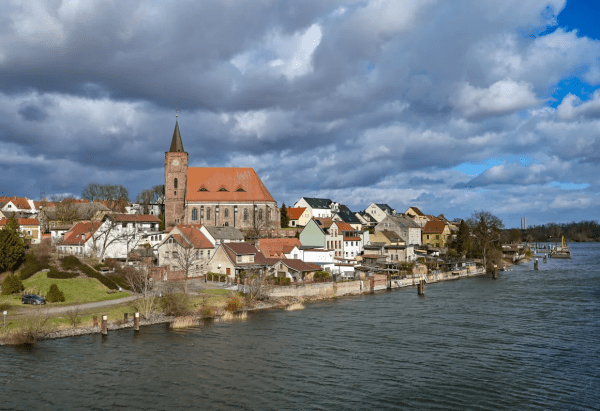
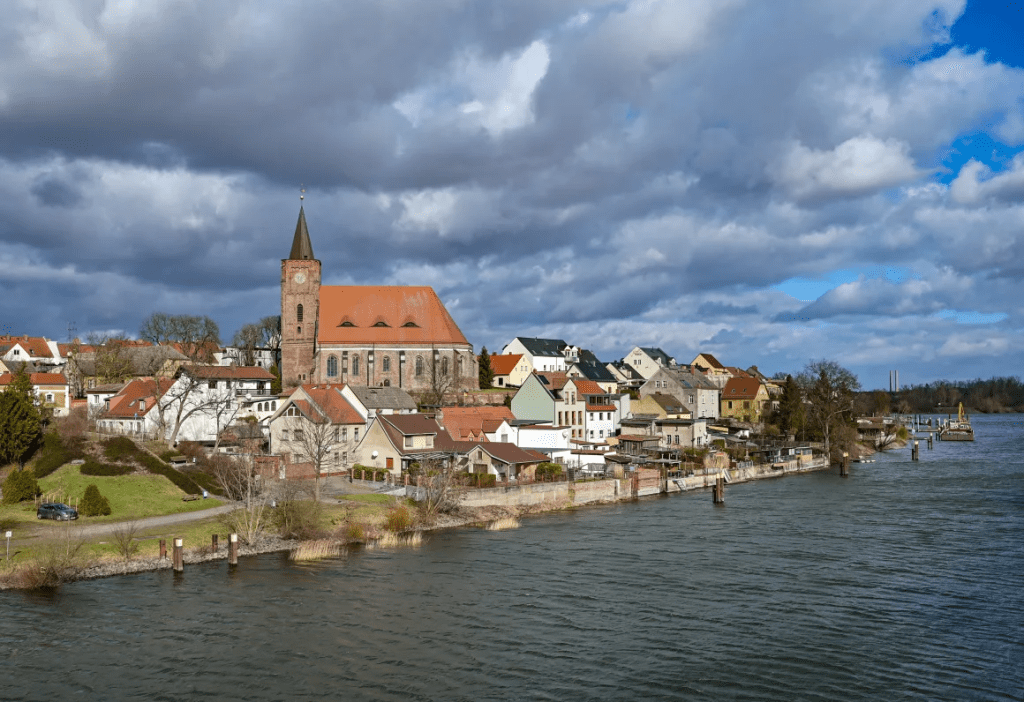
A town in eastern Germany is offering two weeks free accommodation to encourage people to relocate there in a bid to boost its population.
Eisenhüttenstadt, which sits on the border with Poland around 60 miles from the German capital Berlin, is offering a 14-day trial stay for potential new residents, according to a statement from the local council on May 13.
“The project is aimed at anyone interested in moving to Eisenhüttenstadt—such as commuters, those interested in returning to the town, skilled workers, or self-employed individuals seeking a change of scenery,” it said, with applications open until the beginning of July.
Selected participants will live for free in a furnished apartment from September 6-20 as part of an “innovative immigration project” named “Make Plans Now,” said the council.
They “will have the opportunity to get to know the life, work and community of (Eisenhüttenstadt) in a 14-day living trial — for free and in the middle of the town,” reads the statement.
In order to help participants get a feel for the town, the council will lay on a number of activities including a tour, a factory tour and various outings.
The council will also encourage participants to stay permanently, with local businesses offering internships, job shadowing and interview opportunities.
Founded in 1950, Eisenhüttenstadt, which can be translated as Steel Mill Town, was the first fully planned town built under the socialist government of the former East Germany.
Sitting on the banks of the Oder River, socialist planners built the town around a huge steelworks.
Previously known as Stalinstadt, or Stalin Town, after former Soviet leader Joseph Stalin, it was renamed after East and West Germany reunified following the fall of the Berlin Wall in 1989.
Like many towns and cities in the former East Germany, it has seen its population decline since reunification, from a peak of more than 50,000 to the current level of around 24,000, local official Julia Basan told local media outlet RBB24.
The scheme aims to attract more permanent residents, particularly skilled workers, said Basan.
Today, Eisenhüttenstadt is home to the largest integrated steelworks in eastern Germany, which employs 2,500 people, as well as being a hub for metals processing.
Many of the socialist-era buildings are listed as historical monuments and the openness of the town’s layout is striking, attracting visitors interested in architecture.
One recent new arrival said that the architecture was responsible for his decision to move to the town.
It was “a complete coincidence,” the man said in a video posted on the town hall Instagram account.
“We were travelling to Ratzdorf with friends and drove through Karl-Marx-Straße. And I saw these houses, this architecture that completely blew me away and I said to my wife, ‘I’m going to move here,’” he said.
The man later organized a tour of the town with a local historian to learn more.
“After the tour we were so blown away by this architecture, that was actually the trigger,” he said.
What happens when real estate meets resistance, advocacy, and identity? In this candid conversation, LGBTQ+ real estate professionals Callen Jones, Bob McCranie, Kimber Fox, and Leslie Wilson sit down to discuss the evolving challenges of being openly queer in an industry—and a country—facing political pushback.
🏳️🌈 Topics covered include: How anti-LGBTQ+ legislation affects clients and agents The role of advocacy in real estate Why “just doing business” isn’t neutral anymore Personal stories from the frontlines of inclusion in housing
📍 Whether you’re an agent, ally, or advocate, this video unpacks the real stakes of LGBTQ+ visibility in today’s market.
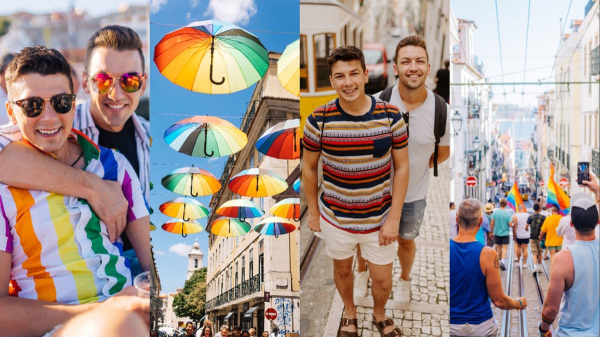
We sit down and chat with Josh Polanco, an expat living and working as a real estate agent in Lisbon.
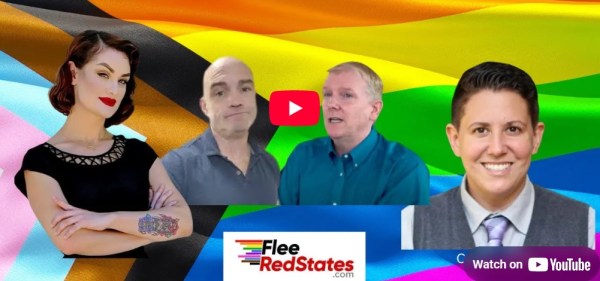
More and more LGBTQ Americans are choosing to move abroad—and Portugal is rising to the top of the list. In this video, we explore why Portugal is becoming a haven for LGBTQ individuals seeking safety, civil rights, and a better quality of life amidst growing political threats in the United States.
From inclusive laws and national healthcare to thriving queer communities in Lisbon and Porto, Portugal offers a refreshing contrast to the increasingly hostile policies emerging in red states across the U.S. This video is part of the Flee Red States project, a movement dedicated to helping LGBTQ people identify safer, more welcoming places to live—both within the U.S. and abroad.
As the Trump administration and the Republican Party work to dismantle LGBTQ civil rights protections, Flee Red States provides tools, support, and real-world stories to empower our community to make informed decisions about relocation. Whether you’re just curious or seriously planning your next chapter, this video is for you.
Spain has consistently ranked high for quality of life, and there are numerous compelling reasons why expats should consider making it their new home:
Lifestyle and Culture:
High Quality of Life: Spain frequently tops rankings for quality of life, with expats reporting high satisfaction with the climate, culture, and overall living conditions.
Laid-back Lifestyle: Spaniards are known for their relaxed and friendly approach to life, prioritizing enjoyment and social connections over stress. This can be a refreshing change for those accustomed to a faster pace.
Rich Culture and History: Spain boasts a diverse cultural heritage, with influences from various civilizations evident in its architecture, language, and traditions. There are numerous festivals and celebrations throughout the year.
Outdoor Activities: With varied topography and a pleasant climate, Spain offers a wide range of outdoor activities, from skiing in the Sierra Nevada to watersports along its extensive coastline.
Gastronomy: Spanish cuisine is world-renowned, emphasizing fresh, local ingredients and social dining. Tapas culture is a significant part of Spanish social life.
Cost of Living:
Affordable: Generally, the cost of living in Spain is considered affordable compared to many other Western European countries and the United States. This includes rent, groceries, and dining out.
Regional Variations: The cost of living can vary significantly depending on the city and region, with major cities like Madrid and Barcelona being more expensive than smaller towns.
Healthcare:
Excellent Healthcare System: Spain has a highly-rated universal healthcare system (Sistema Nacional de Salud – SNS) that provides free or low-cost basic services to residents.
Accessibility for Expats: Expats can access the public healthcare system once registered, often tied to employment or residency. Private health insurance is also available and relatively affordable.
Community and Integration:
Welcoming Environment: Spaniards are generally known for their friendliness and hospitality, making it easier for expats to feel at ease and integrate.
Large Expat Communities: Spain has a significant number of expats, particularly in major cities and coastal areas, fostering a diverse and supportive environment. It’s often easy to find communities based on nationality or interests.
Climate and Geography:
Pleasant Climate: Many regions of Spain enjoy a mild climate with plenty of sunshine, encouraging an active outdoor lifestyle year-round.
Diverse Landscapes: From the northern coast with its surfing culture to the Mediterranean beaches and the mountainous regions, Spain offers a variety of landscapes to explore.
Transportation:
Modern and Affordable: Spain has a well-developed and affordable transportation system, including high-speed trains, metro networks, buses, and trams, especially in urban areas.
Things to Consider:
Language: While English is spoken in tourist areas and by some expats, learning Spanish is crucial for full integration and daily life, especially in more local settings.
Bureaucracy: Navigating administrative processes can sometimes be challenging.
Job Market: Depending on your profession, the job market might differ from your home country. Salaries may also be lower in some sectors.
Overall, Spain offers a compelling combination of a high quality of life, affordable living, excellent healthcare, and a welcoming culture, making it an attractive destination for expats seeking a fulfilling experience abroad.
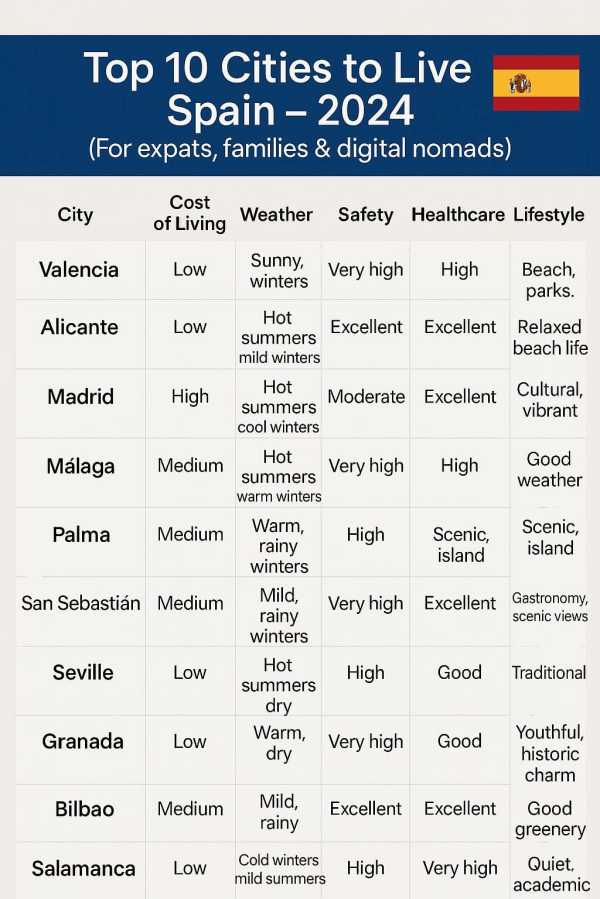
Want to live in Spain? Consider these top 10 cities.




 fleeredstates.blog
You must be logged in to post a comment.