Best Places for LGBTQ People to Retire Abroad

*This is reported by Kiplinger.

An irrefutable reality of being a member of the LGBTQ community, at any age, is that you must give more thought than non-LGBTQ people about where to live. What are the local laws that apply to LGBTQ people regarding workplace and housing discrimination, marriage equality and conversion therapy? What does available public polling reveal about acceptance of the LGBTQ community? Even if you’re not married and don’t plan to be, or even if you no longer work, such laws — or the absence of them — suggest to LGBTQ folks how safe and welcoming the locale will be for them.

The above is true whether you’re LGBTQ and 30 — or a gay retiree. You can’t just spin the globe. If you’re LGBTQ and are considering retiring abroad, it is incumbent on you to do more due diligence than your straight friends and family members would have to do in the same situation.

Best places for LGBTQ people to retire abroad

If you enlist the services of a lawyer who specializes in retirement abroad, you have to ask more questions; you have to spend more late nights googling; and you have to read more articles like this one, in which we examine the knotty issues related to gay retirement outside the U.S., include advice from both experts and expats, and make some (hopefully helpful) recommendations.

If everything falls into place, you can breathe a sigh of relief once you’re in the midst of your retirement abroad. Chris Young and Jon Kinnally, who both worked in the television industry — Young was a writer for Comedy Central, and Kinnally was a writer and producer for the sitcoms Will & Grace and Ugly Betty — lived most recently in Los Angeles before the couple moved to Spain. They chose Sitges, a vibrant, walkable beach town about 45 minutes from Barcelona. “It’s so open. You see gay and lesbian couples holding hands. And you can be old and gay here, which you can’t be in L.A.,” Young says, not entirely joking.

Below, we recommend some beautiful and culturally rich countries where LGBTQ folks can retire happily and safely. But just as the U.S. isn’t uniform in terms of acceptance, neither are most countries. The LGBTQ community scarcely needs to be told that the more populous and diverse the area — in the U.S., that means urban or coastal, or both — the more accepting the area tends to be.

But it’s worth repeating. As the founder and managing director of Mitos Relocation Solutions, Federica Grazi helps expats retire in Greece and other European countries, and she is quick to note that not all of Greece is like the gay magnets of Athens and Mykonos. “I would not recommend that gay couples move to the countryside, where there are traditional communities and not many expats — it would be harder to integrate there,” she counsels, but the same might be said of France, Spain, Italy — or the U.S.

With that in mind, here’s our hot list of retirement places.

Spain

Spain is well-known as one of the most LGBTQ-friendly countries in the world. Spain legalized same-sex marriage in 2005, a full decade before the U.S. Naturally, this factored into Young’s and Kinnally’s decision to move to Sitges, a global destination for gay tourism.

The two appreciate the fact that the resort town, while heavily gay — with a spate of gay bars, nightclubs, and hotels — is demographically diverse. “It’s not a gay ghetto,” Young says. “Sitges is a great mix,” Kinnally adds. “It’s different than a place like Provincetown. There are kids running through the streets, old Spanish ladies, and gay couples — all mixing together. It’s kind of a utopia if you want to retire.”

With health care costing the couple only 250 euros a month and three-course lunches priced from 15 to 17 euros, they can breathe easy about expenses and work on their respective book projects. (Kinnally’s I’m Prancing as Fast as I Can comes out in August.) Of the major cities, Barcelona is a gay mecca, and Madrid boasts Chueca, a festive gay neighborhood.

Greece

While same-sex marriage was only recently legalized in 2024, same-sex sexual activity was decriminalized in Greece in 1951, which compares favorably to the U.S., which granted this right far later — in 2003. Likewise, employment discrimination against gays and lesbians has been illegal in Greece since 2005 (with gender-identity protections following later), while the U.S. did not grant this protection at the federal level until 2020.

Athens boasts a large and thriving LGBTQ community, especially in the Gazi neighborhood, and the Cycladic island of Mykonos is arguably the world’s most popular summer destination for the LGBTQ community, with famous gay beaches like Elia and Super Paradise.

Former New Yorker Daniel Rentillo says that even the small, low-key island of Symi, where he retired, is a comfortable place to be LGBTQ, and he’s noticed more gay couples visiting and even making moves to relocate to the island. The fact that Greece enjoys excellent health care and a relatively low cost of living makes this country of cultural antiquities, plentiful beaches, mild weather, and fresh seafood a fine choice for retirees — LGBTQ or not.

Malta

Not only was employment discrimination against the LGBTQ community banned here, and same-sex sexual activity decriminalized years before the U.S. made these civil rights moves, but the island nation of Malta was also the first European country to ban conversion therapy. Supermajorities of Maltese support civil rights and marriage equality.

With a tiny population of half a million people living on three sunny, inhabited islands (Malta, Gozo, and Camino), the country is located south of Sicily, enjoying a similar Mediterranean climate and stunningly clear waters to swim in, especially at the natural coves at St. Peter’s Pool.

Valetta is the pedestrian-friendly capital and is the best place for gays to hole up, along with nearby Sliema. “Everyone accepts the LGBTQ community today,” says Matthew Cassar, a citizenship advocate and lawyer based in Sliema. “No one would conceive of discrimination,” noting that “there is no opposition party” set on scaling back the community’s rights. One of Cassar’s clients, worried for his transgender daughter’s rights and safety in the U.S. under the Trump administration, is in the middle of the citizenship process.

The country has two official languages: Maltese and English.

Australia

For more than a decade, public polling has shown support for gay rights and marriage quality surpassing the 70% mark. And some advances have been swift and recent: Since 2021, the country has outlawed the so-called gay panic defense, legalized marriage equality, and banned conversion therapy (in regions representing 85% of the population). In 2013, Australia implemented federal protections based on sexual orientation, gender identity, and intersex status.

Though marriage equality did not arrive in Australia until 2018, the capital of Sydney has embraced gay culture for decades: The annual Gay and Lesbian Mardi Gras, one of the world’s biggest LGBTQ celebrations, has been going strong since the 1970s. While Sydney, Adelaide and Brisbane have gay neighborhoods, the LGBTQ presence in Melbourne is more spread out.

Most retirees will find a pathway to relocate through the expensive ($500,000 to $750,000) Investor Retirement Visa. Still, it is cheaper to live in Sydney than in New York or San Francisco.

For those seeking a mild climate, beautiful cities, a friendly populace, excellent health care, and zero language barrier, “Oz” (the affectionate slang for Australia) may be the ticket.

Costa Rica

Costa Rica’s former president, Carlos Alvarado Quesada, was a notable reformer and advocate in the area of LGBTQ rights, garnering global attention when he publicly apologized for the country’s past persecution and discrimination of gays, calling it “shameful.” Same-sex marriage became legal in 2020, which was also the year that hate crimes and blackmail based on sexual orientation were criminalized. (Transgender rights already had been significantly expanded in 2018.)

A center of eco-tourism and sustainable well-being with no standing army, tropical Costa Rica has long been regarded as a kind of peaceable utopia for expats. With the Caribbean Sea on one side and the Pacific on the other, Costa Rica is known for its lush landscape and hot springs.

Costa Rica’s healthcare system frequently ranks as one of the best globally. The country’s high-quality healthcare has made it a health tourism destination.

Gay life is centered in the capital city of San Jose and the carefree beach resort town of Manuel Antonio. Retirees will find the country very affordable, even with household help.

The Netherlands

The first country in the world to legalize same-sex marriage (in 2001) also banned discrimination based on gender identity, gender expression, and sex characteristics in 2019. Not only do most Dutch people support LGBTQ rights; many Dutch, especially those under 40, can’t even comprehend the discrimination faced by the community in other countries.

It would be an understatement to say that you can be comfortably gay in Amsterdam, with Reguliersdwarsstraat the most prominent LGBTQ area. This world-class city is postcard-perfect, teeming with cyclists, and is pedestrian-friendly (just mind the bike lanes). The visa system is straightforward and leads to residency. English is widely spoken, and the cultural opportunities seem endless.

On the downside, the country’s cost of living can feel a little pricey for those living outside major U.S. cities, and the weather in the Netherlands is rainier and chillier than in southern Europe.

Thailand

In 2024, Thailand made headlines when it became the first UN member state to approve a marriage equality law, and the country, with its myriad cultural and recreation opportunities, has long been popular with LGBTQ tourists. Therefore, LGBTQ couples and individuals may want to consider Thailand, but only if they’re of a certain stripe: adventurous and very well-traveled; tolerant of tropical heat; and veterans of previous vacations or work stints in the country.

In an exotic culture so far from friends and loved ones, it’s best to have an expat community already in place if you’re thinking of moving there. In addition, though Thailand offers the LGBTQ community a range of protections and anti-discrimination laws, local attitudes are still evolving, and social interactions should be carefully navigated (cue the established expat scene).

That said, this is a very inexpensive country with kind people. And if you love Thai food, having pad see ew where it was invented will be a revelation. The capital, Bangkok, is a uniquely stimulating place, where a ride on long-tailed boat along the Chao Phraya River may get you to your destination faster than an open tuk-tuk (taxi), given the city’s notoriously heavy traffic.

If you prefer a slower pace and a coastal setting, you can always base yourself in the resort areas of Phuket or Ko Samui, the latter the island where season 3 of The White Lotus was filmed.

Italy curbs citizenship rules to end tenuous descendant claims

*This is reported by Reuters.

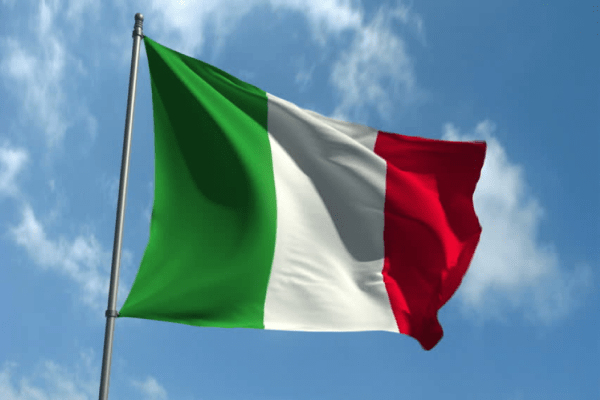
 Italy’s government tightened its citizenship laws on Friday, preventing people from delving deep back into their family history to try to claim a much sought-after Italian passport.

Under existing rules, anyone who can prove they had an Italian ancestor who was alive after March 17, 1861, when the Kingdom of Italy was created, can seek citizenship.

However, Foreign Minister Antonio Tajani said the system was being abused, with would-be Italians swamping consulates abroad for requests for passports, which provide visa-free entry to more countries than almost any other nationality.

As a result, in future only individuals with at least one parent or grandparent born in Italy, a European Union member state, will automatically qualify for citizenship by descent.

“Being an Italian citizen is a serious thing. It’s not a game to get a passport that allows you to go shopping in Miami,” Tajani told a press conference.

The foreign ministry said there had been a surge in people abroad being granted citizenship, particularly in South America, where millions of Italians emigrated in the 19th and 20th centuries, often to escape grinding poverty back home.

Between 2014 and 2024, the number of Italians living abroad rose by 40%, from 4.6 million to 6.4 million, many registering thanks to their newfound nationality. In Argentina alone, citizenship recognitions jumped to 30,000 in 2024 from 20,000 in 2023, while Brazil saw a rise to 20,000 from 14,000.

Tajani said companies were making a fortune by helping people track down their long-forgotten ancestors and seek birth certificates needed for applications – clogging up municipal offices with their demands for documentation.

“We are striking down very hard against those who want to make money from the opportunity of becoming an Italian citizen,” Tajani said, adding that in future, nationality requests would be handled directly in Rome to free up overburdened consulates.

Italy has a population of around 59 million, which has been shrinking for the past decade. The foreign ministry has estimated that under the old rules, 60 to 80 million people worldwide were eligible for citizenship.

Prime Minister Giorgia Meloni has previously suggested that Italy could overcome its demographic decline by seeking Christians of Italian ancestry from nations like Venezuela.

Critics of ancestry-based citizenship say it is grossly unfair, offering nationality to people who had no meaningful connection with Italy.

By contrast, the children of migrants born and raised in Italy who speak Italian fluently, have to wait until they are 18 before being able to apply for a passport.

Poll of scientists shows large majority weighing leaving US

*This is being reported by The Hill.

More than three-quarters of scientists in the U.S are weighing leaving the country and are looking at Europe and Canada as their top relocation spots, according to a survey released Thursday

The scientific journal Nature poll found that 75.3 percent of scientists are considering leaving the U.S. after the administration cut funding for research. Nearly a quarter of respondents, 24.7 percent, disagreed. 

The highest contingent of researchers who are looking to move out of the country were those who are early in their careers. Nearly 550, out of 690 who responded to the survey, said they are considering leaving the U.S. Out of the 340 Ph.D. students, 255 shared the same inclination, the poll found.

The administration, along with tech billionaire and close Trump adviser Elon Musk, with the help of the Department of Government Efficiency, has terminated entire agencies and made cuts in the last two months in an effort to shrink the size and scope of the federal government.

Some of those reductions were felt at the National Institutes of Health (NIH), where all grants for equity issues, which encompass studying Black maternal health and HIV, were canceled. The cap on indirect costs of NIH grants was capped at 15 percent. 

The NIH was also ordered recently to halt efforts to terminate the funding for grants intended for hospitals, universities and other institutions by a federal judge after numerous lawsuits. 

Former Health and Human Services (HHS) Secretary Kathleen Sebelius said she was concerned about the recent cuts to grants flowing through the NIH. 

“I’m worried on a lot of fronts,” Sebelius said Wednesday. “The kinds of cuts that were just announced are devastating and will set science back and set research back.”

These cuts have also affected the National Oceanic and Atmospheric Administration (NOAA), which has been hit with layoffs.

More than three-quarters of Americans, 76 percent, said they have a great or fair amount of confidence in scientists to do what is best for the public, according to a Pew Research Center survey that was published in mid-November last year. The figure was a minor uptick from October 2023, when 73 percent of respondents said the same. 

Around 1,650 people responded to Nature’s survey. The margin of error and the dates the survey was conducted were not available to The Hill.

This scenic town in Croatia is selling houses for just 13 cents—but there’s a catch

*This is being reported by CNBC. We are also unsure if it applied to legally married same sex couples, since Croatia has a different law with similar rights for same sex couples under the Life Partnership Act, which is not marriage equality.

Forget a penny for your thoughts; what about 13 cents for a house in Croatia?

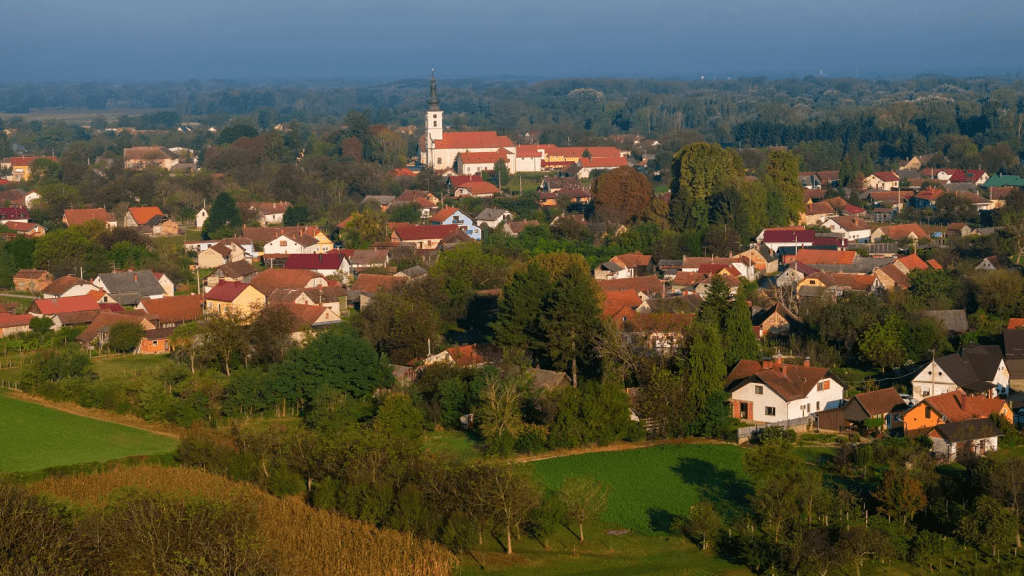
Legrad, a town in northern Croatia, has been trying to get more people to settle in the area by offering houses for pennies. It’s an initiative they started in 2018.

The small town, with around 2,000 people, borders Hungary and has seen its population dwindle since the collapse of the Austro-Hungarian empire in 1918.

In January, government officials announced another batch of houses is ready for sale at just 13 cents.

To be eligible to buy one of the houses, applicants must be under 45 years old, in a marital or extramarital partnership, and have no criminal record.

Most notably, if you want to snag one of these low-cost homes, applicants can’t already own property — though officials don’t specify if that means in Croatia or anywhere else in the world.

Local Croatian media outlet HRT reported that since the program started in 2018, there are more children today than there were five years ago, and as a result, they’re even building a new daycare center.

“A total of five houses ready for occupancy have been sold. Three families have already moved in, and what delights us is that all three families welcomed a new member during their move-in. This has increased the number of children in the daycare center,” Ivan Sabolić, the mayor of Legrad, told HRT.

In 2021, Legrad put up 19 empty houses and abandoned construction sites for sale at the price of 1 kuna, Croatia’s currency at the time. Seventeen were sold, according to Reuters. The houses were in various states of disrepair, so to help out, the municipality said it would pay $25,000 kuna (about $3,558) for any necessary renovations.

For new residents who wanted to buy a privately owned home, the town offered to cover 20% of the price or up to 35,000 kuna (about $5,056). It’s unclear if the town will offer the same incentives this time around.

Croatia isn’t the first country to take this kind of approach to bringing new life to their shrinking populations. Mussomeli, a town in Sicily, went viral for selling off deteriorating homes for 1 euro.

“The Sopranos” and “Good Fellas” star Lorraine Bracco also bought into this trend when she purchased a 1 euro home in a different Italian town called Sambuca di Sicilia.

Move Abroad Con in San Antonio May 23-25. Get Your FleeRedStates Discount!

Embark on a journey to transform your future at Expatsi’s Move Abroad Con 2025 in vibrant San Antonio, Texas! 

This one-of-a-kind event is your gateway to unlocking the possibilities of living overseas. Dive into practical insights, expert advice, and inspiring stories as we empower you to turn your global dreams into reality. Whether you’re planning your first move or looking to expand your horizons, this conference will equip you with the tools and confidence to take the leap.”

And to help you make that leap, we have a referral link to use in order to register for the conference, as well as a coupon code that will get you 10% off!

Please visit the site and sign up at this link>> https://mac.heysummit.com/?ac=ihfj3xKe

During checkout, use the referral coupon code “fleeredstates”.

A little bird told us that someone from FleeRedStates may be one of the presenters at the conference. You don’t want to miss it!

Are You Really You? Using Documents to Move Overseas

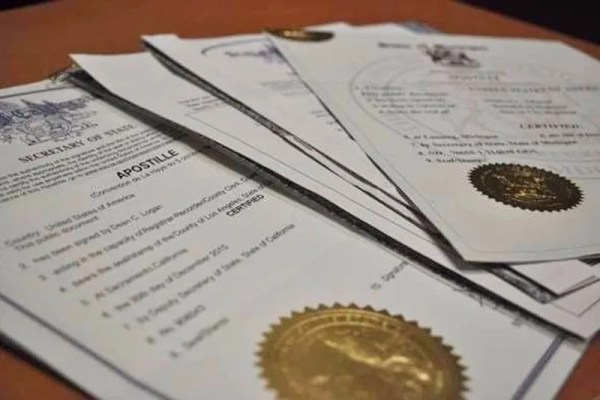
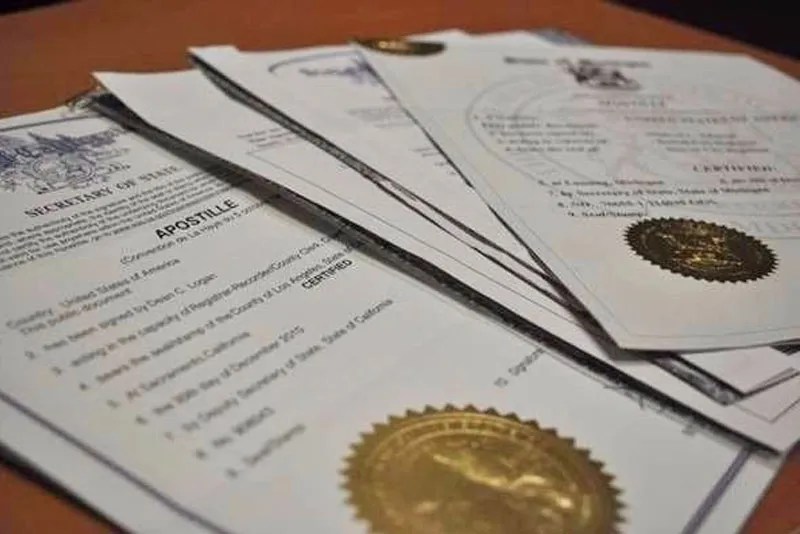
Moving overseas is a whirlwind of logistics, from packing boxes to visa applications. Amidst the chaos, you might encounter a term that sounds like a fancy pastry: “apostille.” But it’s far from edible; it’s a crucial authentication for your documents. So, when exactly do you need an apostille stamp for your international move?

The simple answer: whenever you need to prove the authenticity of a public document issued in one country for use in another country that is a member of the Hague Apostille Convention. This convention streamlines the legalization process, making it easier for documents to be recognized internationally.

Think of it as a global stamp of approval. But what kinds of documents might require this stamp when you’re relocating?

Common Documents Needing an Apostille:

  • Birth Certificates: Essential for proving your identity and family relationships, especially when registering children in a new country or applying for residency.
  • Marriage Certificates: Necessary for legal recognition of your marriage abroad, especially for visa applications or property purchases.
  • Divorce Decrees: Required for legal recognition of your marital status in your new country.
  • Educational Documents (Diplomas, Transcripts): Often needed for employment or further education in your destination country.
  • Background Checks/Police Clearances: Frequently requested for visa applications or employment.
  • Power of Attorney: If you’re authorizing someone to act on your behalf in your home country while you’re abroad, an apostille is vital.
  • Business Documents: If you’re relocating your business or starting a new one, articles of incorporation, certificates of good standing, and other business-related documents might require an apostille.

Why is an Apostille Necessary?

Foreign governments need assurance that your documents are genuine. An apostille confirms that the signature, seal, or stamp on the document is authentic and was issued by a competent authority. Without it, your documents might be rejected, delaying your move or hindering your ability to access essential services.

The Process:

The process of obtaining an apostille varies by country and even by state within the US. Typically, you’ll need to:

  1. Identify the issuing authority: Determine which government agency issued the document (e.g., state registrar for birth certificates, secretary of state for business documents).
  2. Obtain a certified copy: Ensure you have a certified copy of the original document.
  3. Submit the document to the designated authority: In the US, this is usually the Secretary of State’s office.
  4. Pay the required fee: Apostille services usually involve a fee.

Planning Ahead is Key:

Don’t wait until the last minute to obtain your apostilles. The process can take time, and delays can disrupt your moving plans. Research the specific requirements of your destination country and start the process well in advance.

By understanding when and why you need an apostille, you can navigate the bureaucratic hurdles of moving overseas with greater ease, ensuring your documents are recognized and accepted in your new home.

*We are providing this as information only. Please consult an attorney and/or government officials for more detailed information on when this may be necessary.

Blog at WordPress.com.

Up ↑