First US homeless shelter for transgender people opens in New York City 

Read more at The Hill.

The nation’s first shelter for transgender and gender-nonconforming people experiencing homelessness opened its doors this week in New York City. 

The shelter, a joint venture between a local LGBTQ nonprofit and the city government, will provide transitional housing and specialized services for trans New Yorkers who are homeless, including mental health support and job training and placement. The city is fully funding the facility in Long Island City, which will cost $65 million to operate through 2030, the local news outlet Gothamist reported

“It’s been just a labor of love to watch it manifest, to hear from community what it is that they want to see in a project, in a program, and to watch other community advocates become excited about it as well,” said Sean Ebony Coleman, founder and CEO of Destination Tomorrow, the organization that will manage the shelter. 

The shelter’s name, Ace’s Place, honors Coleman’s late mother, who would have turned 72 this week.

“Ace was my mom’s nickname, and she dealt with her own challenges and struggles, but the one thing was that she always had a home because my grandmother made sure of it,” Coleman told The Hill in an interview on Wednesday. “Regardless of what my mom’s struggles were, she always had a safe place that she could come and reset and recenter. I thought that was the best way to honor her memory, while also doing the same thing for community members.” 

With 150 beds — housed in 100 single bedrooms and 25 doubles — residents will each have access to their own restroom and two commercial kitchens. One of the kitchens will be used as a teaching space for the shelter’s culinary arts and hospitality program, Coleman said, part of its commitment to facilitating economic mobility. 

Ace’s Place will also have a full-time, onsite psychiatric nurse practitioner who will work closely with social workers and other credentialed staff providing mental health support, according to a news release announcing the shelter’s opening. Added onsite clinical staff will provide health education through coaching and counseling sessions, and yoga and meditation classes are also available to residents. 

Coleman and Destination Tomorrow plan to work closely with New York City officials in operating the shelter, Coleman said. 

“We couldn’t be prouder to make this historic announcement that strongly affirms our values and commitment to strengthening the safety net for transgender New Yorkers at a time when their rights are roundly under attack,” New York City Department of Social Services Commissioner Molly Wasow Park said in a statement, referencing a string of recent Trump administration actions targeting transgender Americans. 

Joslyn Carter, administrator for the city’s Department of Homeless Services, said Ace’s Place is the nation’s first city-funded shelter of its kind. “New York City has long been a leader in advancing LGBTQ+ rights,” she said. 

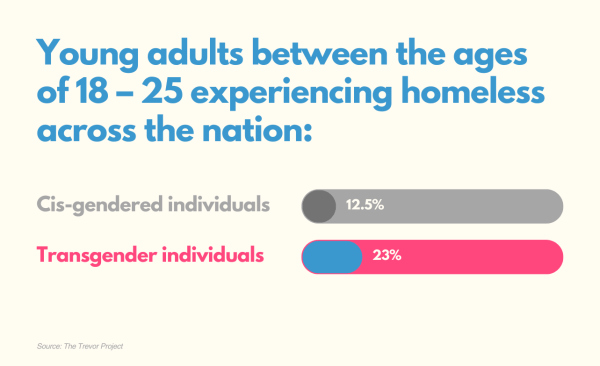
In the U.S., LGBTQ people experience homelessness at disproportionately higher rates than heterosexual and cisgender people, studies on the subject have found. Roughly 17 percent of lesbian, gay and bisexual adults have experienced homelessness at some point in their lives, the Williams Institute reported in 2020, and more than 8 percent of transgender people said they were homeless in the past year. 

A 2018 National Alliance to End Homelessness analysis of Department of Housing and Urban Development (HUD) data found that transgender people accounted for approximately 0.6 percent of the general population and 0.5 percent of the nation’s total homeless population. The U.S. Transgender Survey, the largest survey of transgender people in the U.S., reported in 2024 that 30 percent of respondents said they had experienced homelessness in their lifetime. 

Reported rates of homelessness are even higher among transgender people of color; more than half of Black transgender women who took the U.S. Trans Survey in 2015 said they experienced homelessness in their lifetime. Nearly 60 percent of Native American transgender women also reported experiencing homelessness, as did 49 percent of trans women of Middle Eastern descent and 51 percent of multiracial trans women. 

“For far too long, Transgender and non-binary people — especially Black and Brown Trans people — have been forced to navigate systems never built for us,” said Bryan Ellicott-Cook, a New York City-based transgender rights advocate, in a statement about the opening of Ace’s Place. “This shelter, created for Trans people by Trans people, represents safety, dignity, and a tangible investment in our community’s right not only to survive, but to thrive. It continues to show what we have always known — that Trans people are the ones taking care of each other, from elders to youth, from healthcare to housing and beyond.”

Texas House advances bill that would prohibit land sales to people and entities from certain countries

*This is reported by KERA News.

The Texas House agreed late Thursday to let the governor determine the countries whose residents, governments and other entities could be banned from buying property here.

Members granted the governor such power when they amended Senate Bill 17, whose real estate sales restrictions were limited to countries that the U.S. national director of intelligence has designated as national security threats. Currently, that list includes only China, Iran, North Korea and Russia.

After giving the governor the ability to expand the list of restricted countries, the House then gave SB 17 preliminary approval in a 85-60 vote. The bill now heads back to the Senate.

State Rep. Nate Schatzline, the Republican from Fort Worth who introduced the amendment, said the goal was to make sure that any threats to Texas could quickly be addressed.

“Our governor can act swiftly rather than waiting for a year for that to be added into the [director of national intelligence’s] designated country list,” he said.

That amendment drew rebuke from Democrats.

“This gives the governor unfettered power to add whatever county he wants to in this bill,” said state Rep. Gene Wu, chair of House Democratic Caucus. “It’s kind of dangerous to say one person can decide whatever country he or she wants to add to this without any oversight, without any controls — this is the definition of overreach.”

Schatzline’s amendment also allows the governor to bar people “transnational criminal organizations” to the list of entities barred from buying Texas property. Schatzline pointed to the Venezuelan gang Tren de Aragua as an example.

State Rep. Cole Hefner, the Mt. Pleasant Republican carrying SB 17 in the lower chamber, described the bill during Thursday’s hourslong debate as “securing Texas land and natural resources and making sure that this precious resource does not fall prey to adversarial nations and oppressive regimes that wish to do us harm.”

The bill’s advancement came over opposition from Democrats who are concerned that it could be used to potentially discriminate against Asian Americans.

The bill will need one more House vote before it goes back to the Senate. The upper chamber previously approved a version of the bill, but House members amended several key portions of it Thursday.

The Senate’s previous version would have exempted anyone or any entity that leased the property to someone else for under 100 years. The House limited that exemption to property leased to someone else for one year or less. Rep. Mitch Little called the 100-year lease exemption “a loophole that you could drive a Mack truck through.”

The House also previously amended the bill to exempt lawful permanent residents.

But Democrats failed to make changes to the bill several times Thursday. Their failed amendments included provisions that would have exempted visa holders such as medical students and researchers, performers and athletes. They also raised concerns that the law could hurt the Texas economy.

SB 17 is Brenham Republican Sen. Lois Kolkhorst’s second attempt at limiting who can buy property in Texas. Similar legislation she authored in 2023 died in the House. In committee hearings this year, she described the legislation as protecting Texas’ assets from “hostile nations.”

“This is a matter of national security,” she said in March. “Texas must act now to protect our land, food sources, water, and natural resources.”

A batch of new, more conservative lawmakers were elected to the House last year, giving new life to legislation that struggled in previous sessions. Chief among those measures are the creation of school vouchers.

If passed, the bill goes into effect Sept. 1 and would only apply to purchases or acquisitions after that date.

It would require the attorney general’s office to create a process to investigate possible violations and refer the matter to a district court. If the court finds a violation, it would be authorized to order the purchaser to divest from the property either by selling it or terminating the lease, according to the House Research Organization’s most recent analysis of the bill. The court also would be required to refer the matter for potential criminal offenses.

The amount of Texas property owned by entities from outside the U.S. is not tracked in detail, aside from agricultural land. But Joshua Blackman, a constitutional law professor at South Texas College of Law, said it is likely a very small fraction. In the U.S. overall, Chinese investors own less than 1% of total foreign-held acreage, according to 2021 data from the U.S. Department of Agriculture. Investors from Russia, Iran and North Korea collectively own less than 3,000 acres.

But to Abraham George, chair of the Texas Republican Party, 1% is too much — which is why the bill was a party priority.

Rep. Angie Chen Button, who was only the second Asian American woman to serve in the Legislature and whose parents fled from China, also spoke in support of the bill Thursday night, saying the bill aims to “protect our freedom, liberty and national security.” She introduced a similar bill last session.

Some Asian Texans are concerned the bill would create animosity and “state-sanctioned racial profiling,” said Lily Trieu, executive director of the civic engagement group Asian Texans for Justice.

The bill doesn’t prohibit purchases of land based on national origin, which would violate federal civil rights laws. Instead, it prohibits people based on their permanent residence.

Wu, who immigrated to the United States from China as a child, said the bill could impact not just Chinese people in Texas, but members of all Asian communities in the state.

“Nobody knows the difference between Chinese, Japanese, Vietnamese and Korean, right? Nobody knows what your immigration status is,” he said in an interview. “When they discriminate against you … when they look for people to assault, they don’t really care what you are. They care that you have Asian face.”

Trieu said the group’s No. 1 concern is that individuals shouldn’t be conflated with governments.

“Just like how no one here would want to travel to another country and be held individually accountable for what Governor Abbott does or what President Donald Trump does,” she said.

“These individuals should not be held accountable for what the government of their national origin does, or what their ideology is, or what, you know, the government does as an entity.”

Trieu said the group was formed to engage Asian Texans in civic participation such as voting, but this bill galvanized people into getting involved in legislation.

Wu expects the bill is just the start of that. And even with its passage, he sees it as a loss for the Republican Party because it could push Asian American voters to shift to the Democratic Party in the 2026 midterm elections.

“I think the Republicans are heading into gale force winds in 2026 if they want to alienate and make enemies of an entire community who for a large part has stayed out of politics,” he said in an interview.

Ts Madison’s ‘Starter House’ opens its doors to trans women in Atlanta

*This is being reported by Out.com

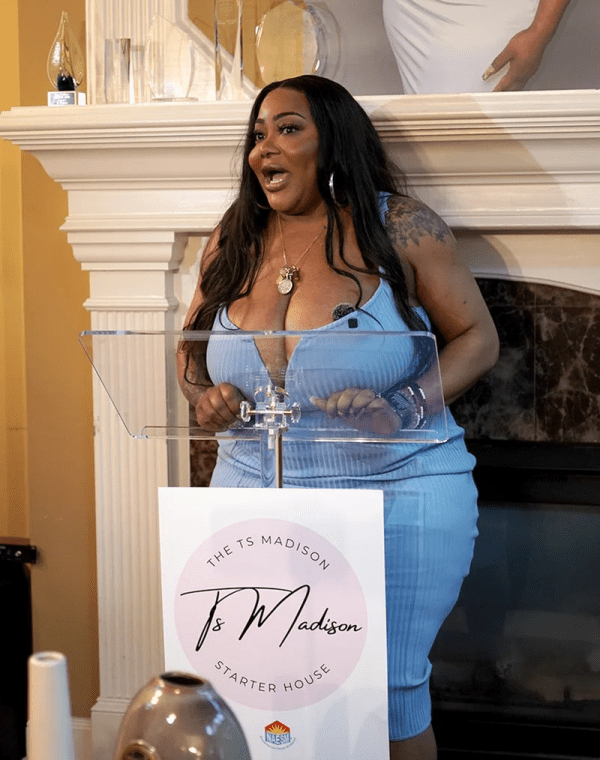
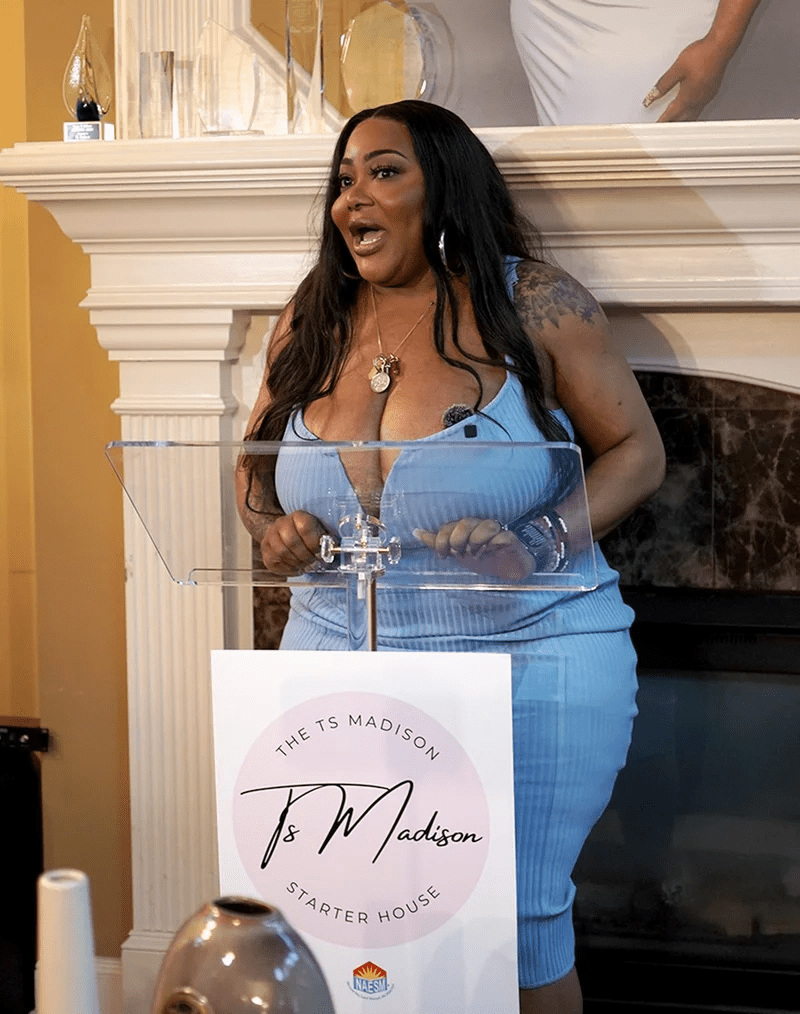
Trans icon Ts Madison has now opened a groundbreaking new initiative — dubbed as a “Starter House” — for trans women in Atlanta, GA, coinciding with 16th annual Transgender Day of Visibility. The trans advocate has partnered with NAESM, a historic Black HIV/AIDS organization, to launch a groundbreaking housing initiative aimed at supporting Black trans women engaged in sex work.

Located in Ts Madison’s former residence, the facility offers Black trans individuals access to safe housing, gender-affirming healthcare, economic opportunities, and holistic support.

The grand opening stirred deep emotions for the RuPaul’s Drag Race judge. “This morning I was having withdrawals because this is a big thing. Like, this is my house. I’m like, I’m giving my house to the community. That means people are going to be transitioning in and out and in and out of this house. I built a legacy here, but I’m still attached to this house. These are girls that are disenfranchised. These are girls that are homeless. These are girls that are trying to find another way in their life.”

The Ts Madison Starter House is part of A New Way of Life’s SAFE Housing Network, a global coalition of over 30 organizations focused on providing reentry support for women who have been incarcerated. Founded in 1998, the SAFE Housing Network aims to reduce incarceration rates in the U.S. by offering safe housing, assisting individuals in healing from the trauma of their experiences, and empowering them to take a leadership role in the movement to end mass incarceration.

Dominique Morgan, the Executive Director of the project, emphasized the importance of community support. “I think so many of us feel the fear of what’s happening in this climate, and so many folks feel like, oh my goodness, are we going to make it. And what today really symbolizes for me is that we have answers happening all over the place, and that we have the power to decide how we show up for each other.”

This facility will serve as a vital stepping stone for women, providing safe, affirming housing that prioritizes dignity and stability. To learn more and/or make a donation to the project, visit the official page for the Ts Madison Starter house.

Why Every Realtor Needs MULTIPLE State Licenses—Protect Yourself from Political Fallout

Are you a real estate agent in a politically unstable or conservative state? Discover why smart REALTORS® are getting licensed in multiple states to protect their careers from sudden political shifts, discrimination, or licensing denial. In this video, we explain:

✅ Why holding real estate licenses in multiple states is crucial in 2025

✅ How anti-LGBTQ+ laws and political agendas are threatening professionals

✅ Steps to apply for additional real estate licenses quickly and affordably

✅ Best states to consider for backup licensure

✅ Real stories from agents facing political backlash

Real estate license reciprocity allows licensed agents to obtain a license in another state without completing all standard pre-licensing education requirements. Reciprocity agreements vary by state, with some offering full reciprocity to all states and others providing partial or no reciprocity. Below is a summary of reciprocity agreements and the associated education requirements for select states:

Alabama Reciprocity: Full reciprocity with all states. Requirements: Complete a 6-hour course in Alabama real estate law and pass the Alabama portion of the licensing exam.

Colorado Reciprocity: Full reciprocity with all states. Requirements: Pass the Colorado state portion of the real estate exam.

Florida Reciprocity: Mutual recognition agreements with Alabama, Arkansas, Connecticut, Georgia, Illinois, Kentucky, Mississippi, Nebraska, Rhode Island, and West Virginia. Requirements: Pass a 40-question Florida-specific real estate law exam with a score of at least 30.

Georgia Reciprocity: Full reciprocity with all states. Requirements: Hold a current, active license in another state and pass the Georgia state portion of the licensing exam. Illinois Reciprocity: Reciprocity agreements with Colorado, Connecticut, Florida, Georgia, Indiana, Iowa, Nebraska, and Wisconsin. Requirements: Pass the Illinois state portion of the licensing exam.

Mississippi Reciprocity: Full reciprocity with all states. Requirements: Pass the Mississippi state portion of the licensing exam.

Virginia Reciprocity: Full reciprocity with all states. Requirements: Complete a 60-hour “Principles of Real Estate” course and pass the Virginia state portion of the licensing exam.

Wisconsin Reciprocity: Reciprocity agreements with Illinois and Indiana. Requirements: Agents from these states are exempt from Wisconsin’s education requirement; agents from other states must complete a 13-hour education requirement.

It’s important to note that many states without formal reciprocity agreements may still allow experienced agents to waive certain requirements, such as the national portion of the licensing exam or pre-licensing education. However, they often require completion of state-specific education or examinations. For example:

Iowa: Offers reciprocity with Arkansas, Georgia, Louisiana, Massachusetts, Minnesota, Mississippi, and North Dakota. Applicants must prove they took the real estate exam in another state, submit their certificate and license history, and undergo a criminal background check.

Kentucky: Offers reciprocity with Ohio, Tennessee, and West Virginia. Requirements vary based on the state and license type but generally include completing a 40-hour reciprocal license course and submitting to a background check.

South Carolina: Extends reciprocity to licenses from other states held within six months before applying. Brokers must have been active for at least three years. Additional requirements include passing the state portion of the exam and submitting certification(s) of licensure from any jurisdictions in which you’ve held a license in the last five years. For the most accurate and up-to-date information, it’s advisable to consult the real estate commission or regulatory authority of the state where you seek licensure.

Ground broken for LGBTQ-focused senior housing in Pittsburgh

*This was published by The Advocate

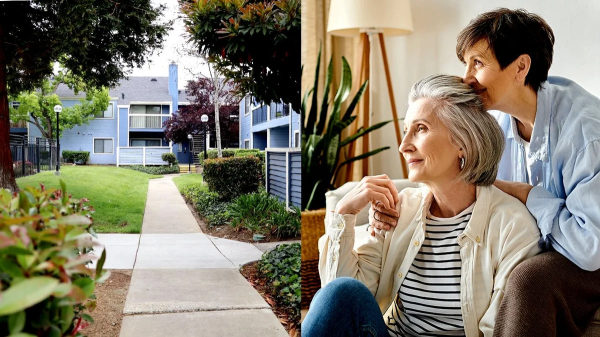
Ground has been broken in Pittsburgh for what will be the first LGBTQ-focused senior housing complex in western Pennsylvania and the second in the state overall.

Groundbreaking took place Thursday for the Mosaic Apartments in the city’s Oakland neighborhood, which is home to the University of Pittsburgh and Carnegie Mellon University, along with museums, health care providers, and an eclectic mix of shops and restaurants. The 48-unit complex will open in the fall of 2025, according to local media.

The affordable housing development is a project of Presbyterian SeniorCare Network, which was approached about seven years ago by the Persad Center, a provider of LGBTQ-affirming mental health services.

“One of their staff members said, ‘Can you build us an apartment building?’ It was a beautiful opportunity for us to enhance our mission and help a greatly underserved and often discriminated-against population,” Jim Pieffer, president and CEO of Presbyterian SeniorCare, told TV station WTAE.

Presbyterian SeniorCare raised $30 million for the complex but was able to acquire the land for free thanks to the University of Pittsburgh and its medical center, Pieffer told another station, KDKA.

Persad Center CEO Martin Healey told KDKA that LGBTQ+ people sometimes encounter problems in senior housing. “It’s scary — you sometimes have to go back into the closet,” he said. “There’s not necessarily a safe space all the time. … We’ve seen situations where they have fear and have isolation and loneliness that hopefully this type of place will break.”

“My hope is that this is the start of something far bigger and far greater for our community, not just here in Pittsburgh, but more across the country,” he added.

By 2030, there will be 7 million LGBTQ+ seniors in the U.S., SAGE National Resource Center on LGBTQ+ Aging estimates.

Prospective Mosaic Apartments residents can begin applying next March.

HUD Secretary Turner Halts Equal Access Rule Enforcement

*This is reporting by NILHC.org


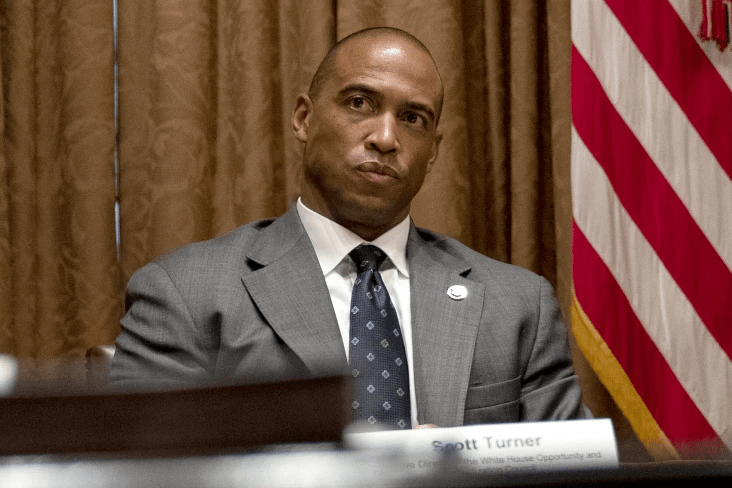
On February 7, HUD Secretary Scott Turner announced HUD will stop enforcing the 2016 Equal Access Rule, which requires housing, facilities, and services funded through HUD’s Office of Community Planning and Development (CPD) to ensure equal access to programs for individuals based on their gender identity without intrusive questioning or being asked to provide documentation. Secretary Turner stated that the action “will ensure housing programs, shelters and other HUD-funded providers offer services to Americans based on their sex at birth.” NLIHC will continue to advocate for equal access and fair housing for LGBTQ+ people. 

In a press conference following Secretary Turner’s first address to HUD, Turner stated, “I am directing HUD staff to halt any pending or future enforcement actions related to HUD’s 2016 Equal Access Rule, which, in essence, tied housing programs, shelters and other facilities funded by HUD to far-left gender ideology.” Turner continued: “We, at this agency, are carrying out the mission laid out by President Trump on January 20th when he signed an executive order to restore biological truth to the federal government.” 

Weakening the Equal Access Rule and its enforcement mechanisms is unacceptable. Access to shelter is a basic, fundamental necessity. LGBTQ youth are more than twice as likely to experience homelessness than their non-LGBTQ peers, and black LGBTQ youth have the highest rates of youth homelessness. One in three transgender people will experience homelessness in their lifetime, and 70% of trans people who have used a shelter have experienced harassment. NLIHC will continue to work with LGBTQ advocates to ensure that everyone has access to safe, decent, affordable housing. 

Read the statement from Secretary Turner here

View the press conference here.  

Read more about the Equal Access Rule here.

Blog at WordPress.com.

Up ↑