Texas Education Agency will take control of Houston ISD | The Texas Tribune

This blog originally appeared at THE TEXAS TRIBUNE.

The announcement comes almost four years after the agency first moved to take over the district.

Millard House II, superintendent of the Houston Independent School District, delivers the HISD State of the Schools Address in Houston on March 3, 2023. The Texas Education Agency will replace House and the district’s school board as part of a state takeover. Credit: Joseph Bui for The Texas Tribune.

Sign up for The Brief, The Texas Tribune’s daily newsletter that keeps readers up to speed on the most essential Texas news.


After a prolonged legal battle and weeks of speculation, the Texas Education Agency on Wednesday confirmed it’s removing Houston Independent School District’s democratically elected school board and superintendent, effectively putting the state in charge of its largest school district.

Houston ISD, with 276 schools and an enrollment of nearly 200,000 students, will now be the largest district the agency has taken over since 2000, when it first intervened in a struggling school district.

Superintendent Millard House II and the current school board will finish out the school year, but the TEA will replace them after June 1 with “a board of managers.”

The Texas Tribune thanks its sponsors. Become one.

The TEA commissioner decides how long the board is in place. Usually, this sort of takeover has lasted two to six years.

The agency will host community meetings in the coming weeks to explain how the takeover will take place.

The move is in response to years of poor academic outcomes at a single campus in the district, Phillis Wheatley High School, and allegations of misconduct from school board members. TEA Commissioner Mike Morath said state law requires his agency to either close that campus or appoint a new board to oversee the district.

Texas passed a law in 2015 mandating a state takeover if a school district or one of its campuses receives failing grades from the TEA for five consecutive years. Phillis Wheatley reached that threshold in 2019.

Catch up on education news with our weekly newsletter

Education Weekly Roundup newsletter

Catch up on education news with our weekly newsletter

Browse all newsletters at texastribune.org/newsletters.

Morath and the agency moved to force out the district’s school board that same year. The district pushed back and sued, but the Texas Supreme Court ruled in January that the agency could move forward with its plan to take over the district.

“Even with a delay of three full years caused by legal proceedings, systemic problems in Houston ISD continue to impact students most in need of our collective support,” Morath wrote in a letter to district leaders Wednesday.

Read more: https://www.texastribune.org/2023/03/15/texas-education-houston-isd-takeover/

Arizona’s Supreme Court has granted the attorney general an additional 90 days to develop her strategy for the abortion ban | ABCNews.go

The highest court in Arizona has granted the state’s attorney general an additional 90 days to determine further legal steps in the case regarding a nearly 160-year-old near-total abortion ban.

In Phoenix, Arizona’s highest court extended the deadline for the state’s attorney general by another 90 days to determine additional legal steps in the case concerning a nearly 160-year-old near-total ban on abortion, which lawmakers recently voted to repeal.

The recent order from the Arizona Supreme Court maintains the current law permitting abortion up to 15 weeks of pregnancy. It also grants Attorney General Kris Mayes an extended period to deliberate on whether to appeal the case to the U.S. Supreme Court.

Mayes expressed appreciation for the order, noting that the earliest the 1864 law can now be enforced is September 26. This timeline factors in the additional 90 days granted by the recent order, along with an additional 45 days outlined in a separate case.

“I am committed to ensuring that doctors can administer medical care based on their professional judgment, rather than adhering to the beliefs of legislators from 160 years ago,” Mayes affirmed.

In April, the Arizona Supreme Court reinstated an older law devoid of exceptions for rape or incest, permitting abortions solely in cases where the mother’s life is at risk. The majority opinion hinted at the possibility of doctors facing prosecution and potential imprisonment for up to five years if found guilty.

The Legislature narrowly voted to repeal the Civil War-era law, but its repeal won’t come into effect until 90 days after the conclusion of the current annual session. It has remained uncertain whether there would be a window during which the older ban could be enforced before the repeal becomes effective.

Despite the latest delay, the anti-abortion group defending the ban, Alliance Defending Freedom, stated that it would continue to fight.

“The pro-life law in Arizona has safeguarded unborn children for over a century,” stated Jake Warner, the group’s senior counsel. “We remain committed to defending unborn children and advocating for genuine support and healthcare for families in Arizona.”

Angela Florez, CEO of Planned Parenthood Arizona, appreciated the decision, stating that the organization “will persist in offering abortion care up to 15 weeks of pregnancy, prioritizing patient access to abortion care for as long as legally feasible.”

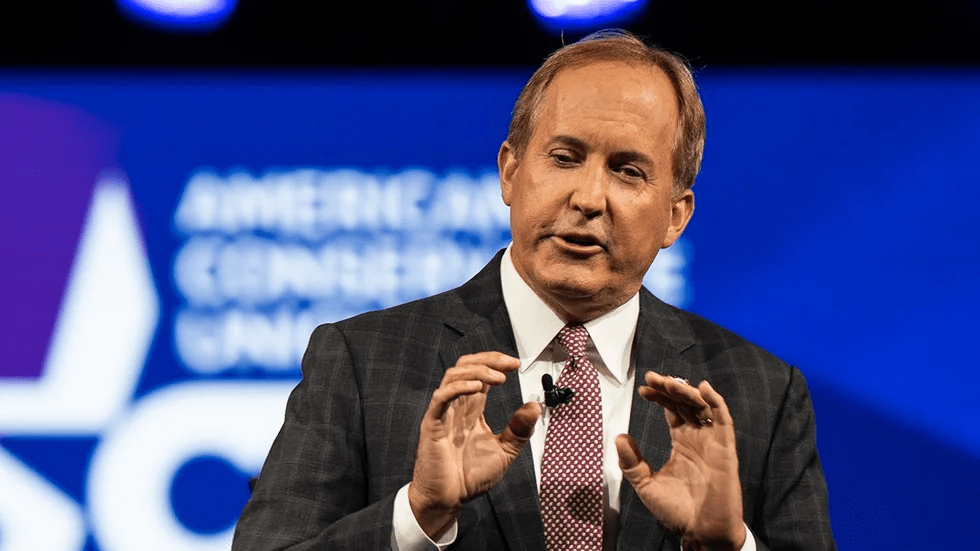
Texas Attorney General Ken Paxton persists in targeting transgender individuals, once again requesting data from out-of-state sources.

This blog originally appeared at Advocate.


Texas Attorney General Ken Paxton has once more sought medical records from a transgender healthcare provider in another state, even though he lacks legal jurisdiction.

Without legal jurisdiction, Texas Attorney General Ken Paxton has once more sought medical records from a transgender healthcare provider in another state.


The recent request was directed to QueerMed, a telehealth clinic in Georgia that caters to patients nationwide. Dr. Izzy Lowell, the founder of the organization, verified Paxton’s inquiry to the Houston Chronicle but refrained from providing details about the subsequent actions the group plans to take in response.

“I’m not breaking any laws,” she told the outlet. “We are doing everything by the book according to state law.”


This marks the second identified inquiry from Paxton, who previously demanded in November that the Seattle Children’s Hospital furnish information related to the count of Texas minors undergoing gender-affirming care at the clinic, their diagnoses, prescribed medications, and even guidance on gradually discontinuing such treatments.


In December, a judge in Washington prevented the hospital from disclosing the records, citing the state’s recently enacted shield laws that protect patients from civil or criminal legal actions for procedures prohibited in other states, such as gender-affirming care or abortions. Following this, Seattle Children’s Hospital filed a lawsuit against Paxton, urging him to halt the investigation.

Paxton has refrained from making public comments on the Seattle case or the inquiry in Georgia. His office has opted not to disclose details about other ongoing inquiries involving transgender health providers.

Texas is among 23 states that have implemented prohibitions on gender-affirming care for minors, contrary to abundant medical evidence. Organizations such as the American Medical Association, the American Psychiatric Association, the American Academy of Pediatrics, the American Academy of Child & Adolescent Psychiatry, the World Medical Association, and the World Health Organization collectively endorse the evidence-based and medically necessary nature of gender-affirming care for both adults and minors.

In his capacity as the attorney general of Texas, Paxton lacks jurisdiction over healthcare provided in other states, regardless of the patients’ place of residence. Despite Paxton’s request, Lowell affirmed that she is “not going to stop or be intimidated.”

“The unfairness and blatant discrimination and harassment and persecution of trans people in this country right now is outrageous, and I’m only becoming more and more passionate about it as things have gotten worse,” she continued.

Texas may soon have a process to remove local prosecutors who won’t pursue abortion, election cases

This blog originally appeared at The Texas Tribune.

The bill would allow for the removal of prosecutors who adopt any policy to not pursue certain crimes, including some low-level theft and drug charges. The Senate’s version will need to be reconciled with the House, which had carved out some exemptions.

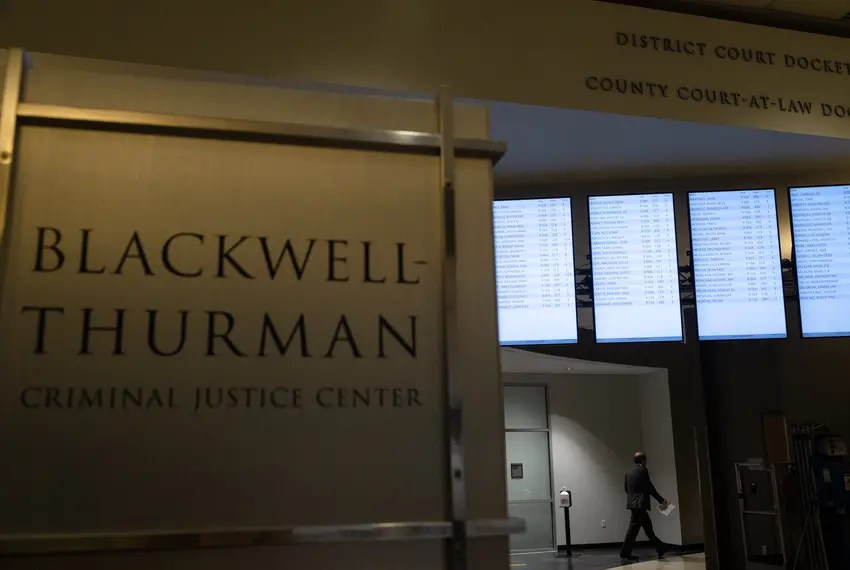
Screens display case information on May 9 at the Travis County Criminal Court at the Blackwell-Thurman Criminal Justice Center in Austin.

The Texas Senate recently approved a bill that enables the removal of locally elected prosecutors from office if they choose not to enforce specific laws. This legislation is part of a broader initiative by Republicans to address concerns regarding “rogue” district attorneys in large, left-leaning counties in Texas. These prosecutors have publicly stated their intention to refrain from prosecuting abortion cases and, in some instances, have implemented policies related to the prosecution of low-level theft and drug offenses.

State Senator Joan Huffman, a Republican from Houston and the sponsor of the bill, emphasized the need for a mechanism to hold prosecutors accountable for their refusal to enforce laws passed by the Texas Legislature or any legislative body. The bill aims to address the perceived noncompliance with established laws by prosecutors in certain jurisdictions.

It’s important to note that the bill’s passage by the Texas Senate does not guarantee its enactment into law. The bill will need to go through further legislative processes, including consideration by the Texas House of Representatives, before it can be signed into law by the governor.

CLICK HERE TO SEE FULL BLOG: https://www.texastribune.org/2023/05/19/senate-prosecutors-abortion-voter-fraud/

Blog at WordPress.com.

Up ↑