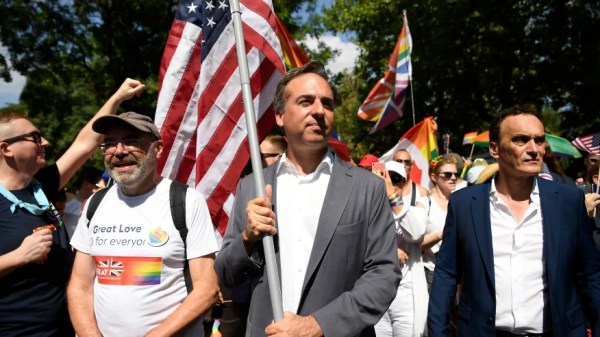
America is copying Hungary’s Anti-LGBTQ playbook

Read more at Metro Weekly.

The summer of 1985, I turned 16. In Belgium. While I lived primarily in rural, red Florida, summers sometimes had me staying with Dad’s family. At the time, my Army father was assigned to the American embassy in Brussels. With $100 in American Express “travelers’ cheques,” our go-to global currency of the time, it was a thrilling summer.

In Florida, I would’ve spent those months mopping floors or working the grill at a mall job. Instead, I had urban mass transit and could drink in bars. Granted, my Euro ’80s summer was more Depeche Mode than anything as explicit as Call Me By Your Name. Though virginal, at least I passed for something seedier one afternoon.

On a gray August Sunday, I was to meet my pal, Alex. Forget texting, as we didn’t even have email yet. Phone tag was possible, but nobody wanted to leave a message with somebody’s parents. We’d usually just make a vague plan in person. Probably, the previous Friday, it was, “Let’s meet by Rainbow Sunday round 4.” Ironic that a bar in 1985 could be called “Rainbow,” yet have no LGBTQ connection whatsoever. It was, loosely, an American-themed bar, popular with the small cohort of American teens in the city.

As I stood outside in whatever place of Brussels was near Rainbow, I did not know I was to be stood up. In what I thought was my coolest new piece of clothing, a plaid blue-and-white sport coat I’d bought in a cheap-chic bin in Italy, I waited. I checked my Swatch as the minutes passed. At least an hour went by before two Brussels police officers approached me. They wanted to see my “papers.” This was a new experience. The two suspicious policemen were asking me questions in French, which I did my best to translate. Was I meeting someone? Where did I live? How long had I been waiting? It seemed rather invasive, but they were cops, and I was 16.

Back home, my dad told me bluntly that the cops obviously thought I was a sex worker. I knew that new coat looked hot! Then again, the only attention I got was from the police. Ouch.

A few weeks later, I told this story to my mom. Her own upbringing took her from Baltimore to Switzerland to Brazil. With that background, she rather patriotically told me that being asked for your “papers” was relatively common outside of the U.S. We Americans, she opined, were used to a degree of anti-authoritarian freedom not found elsewhere. So, “land of the free” was more than jingoistic marketing? Great!

While I’d never been asked for my papers in my home country, I’m not sure I’d ever perceived it as free as my mother had. Sure, there were plenty of scary Soviet stories during the Cold War, the nightmare of the Khmer Rouge my father had seen firsthand…. But I was familiar with Reagan’s arguably racist drug war, kid-glove approach to Apartheid, and support for dictators like Augusto Pinochet and Ferdinand Marcos. At 16, I was definitely more cynical than my mother.

Sadly, today I have more reason than ever to be. Though I guess it’s not cynicism so much as disgust, anger, and resistance to our government’s new police state. A few years ago, I interviewed a man, Butch Merritt, who told tales of working clandestinely for Nixon’s citizen-surveillance machine. I was shocked when he recalled scooping up protest petitions and sign-up sheets from shops and venues around Dupont Circle, which he’d turn over to his FBI or police handlers.

The tools the federal government — along with several other governments around the world — is setting on America makes stealing a petition from Community Bookshop on P Street seem quaint. Hello, Facial-Recognition Technology.

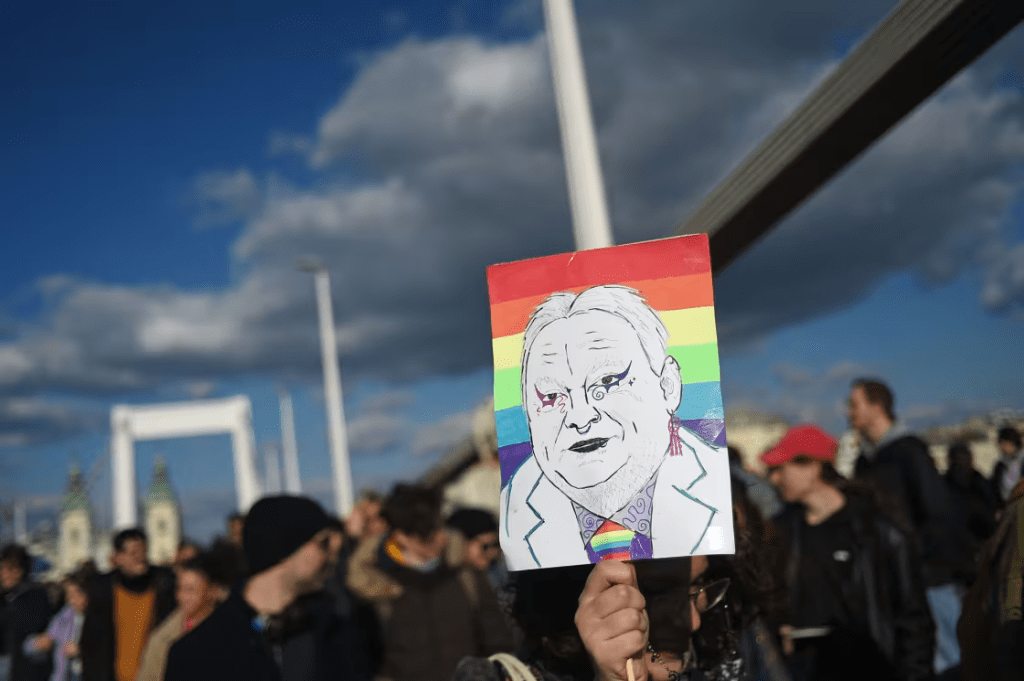
Sure, so many of us use facial recognition to get into our phones and think nothing of it. It did not seem so innocent, however, when Hungary’s authoritarian government passed a law in March allowing it to use the tech to identify anyone who dared to show their face, literally, at Budapest Pride this year. At least Pride-goers threw that threat back in the horrible government’s face, with attendance hitting more than 100,000.

It is a very short line from Budapest to the “Ballroom,” considering the current regime of Viktor Orbán is celebrated in Trump World. The administration’s attacks on universities, media, and law firms reek of Orbán.

So, while I’m shocked to learn that ICE and its adjacent goons have rolled out handheld facial recognition tech across the country, to what is likely an unprecedented level, I’d be embarrassingly naive to be surprised.

Rep. Bennie Thompson (D-Miss.), a veteran of the civil rights movement and ranking member of the House Homeland Security Committee, last month told 404 Media, as reported by Common Dreams, “ICE using a mobile biometrics app in ways its developers at CBP never intended or tested is a frightening, repugnant, and unconstitutional attack on Americans’ rights and freedoms.” Amen.

Now that Trump has issued National Security Presidential Memorandum 7, we are all suspects. “There are common recurrent motivations and indicia uniting this pattern of violent and terroristic activities under the umbrella of self-described ‘anti-fascism,’” reads NSPM-7, in part. “Common threads animating this violent conduct include anti-Americanism, anti-capitalism, and anti-Christianity; support for the overthrow of the United States Government; extremism on migration, race, and gender; and hostility towards those who hold traditional American views on family, religion, and morality.”

Are my views on gender “extreme”? Am I “hostile” toward systems that have long been used to oppress me? Are you? Who knows? Who defines these vague, subjective terms? I’m guessing it’s the folks who have decided to throw facial-recognition tech into the surveillance mix, with little, if any, legal restraint. The use of this technology is apparently new enough, that no one has bothered to set down laws to restrain it. Instead, we have protocols and suggestions as the only limits on an administration that delights in destroying whatever stands in its way.

COVID has waned, but this new Big Brother era may soon have us all masking up again for our personal safety, whether for Pride or protests.


Hungary Curbs LGBTQ Rights With Constitutional Amendment

Read more at MSN.

Hungary’s parliament passed constitutional changes to clamp down on LGBTQ rights and potentially suspend some dual citizenships, bolstering Prime Minister Viktor Orban’s campaign to promote what he calls traditional values.

Facing a galvanized political opposition that has fueled large protests in Budapest in recent months, Orban has sought to stir his conservative base ahead of parliamentary elections next year.

The constitutional amendments passed Monday state that there are only two sexes, man and woman. The changes, said to intend protect children, have been interpreted as a broad crackdown on pride parades and other public displays that run counter to Orban’s traditional-values campaign.

Another change in the constitution allows for the suspension of citizenship for Hungarians who possess another citizenship outside of the European Union and could be deemed a threat to national security.

The amendments echo legislation passed last month. The constitutional amendments were passed with resounding support in parliament, where Orban’s Fidesz Party holds 135 of 199 seats.

“We’re protecting children’s development, affirming that a person is born either male or female, and standing firm against…foreign interference,” Orban wrote on X.

Orban, who has enjoyed unrivaled popularity in Hungary during his four consecutive terms since 2010, is facing his first possible challenge in opposition leader Peter Magyar. The politician has gained a following in the past year over accusations of corruption leveled at the prime minister and Fidesz.

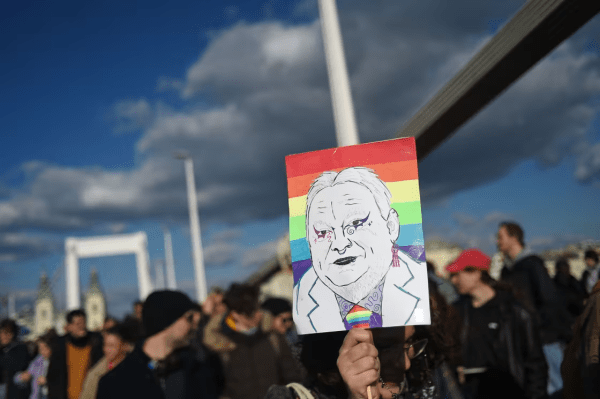
Orban has denied any wrongdoing and has referred to opposition politicians, judges and journalists as bugs that needed to be removed from society.

Around 100,000 March In Budapest Pride In Open Defiance Of Hungary’s Ban

*This is reported by Huffpost.

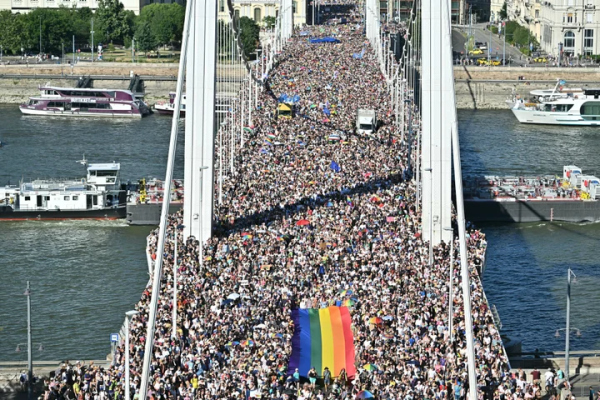
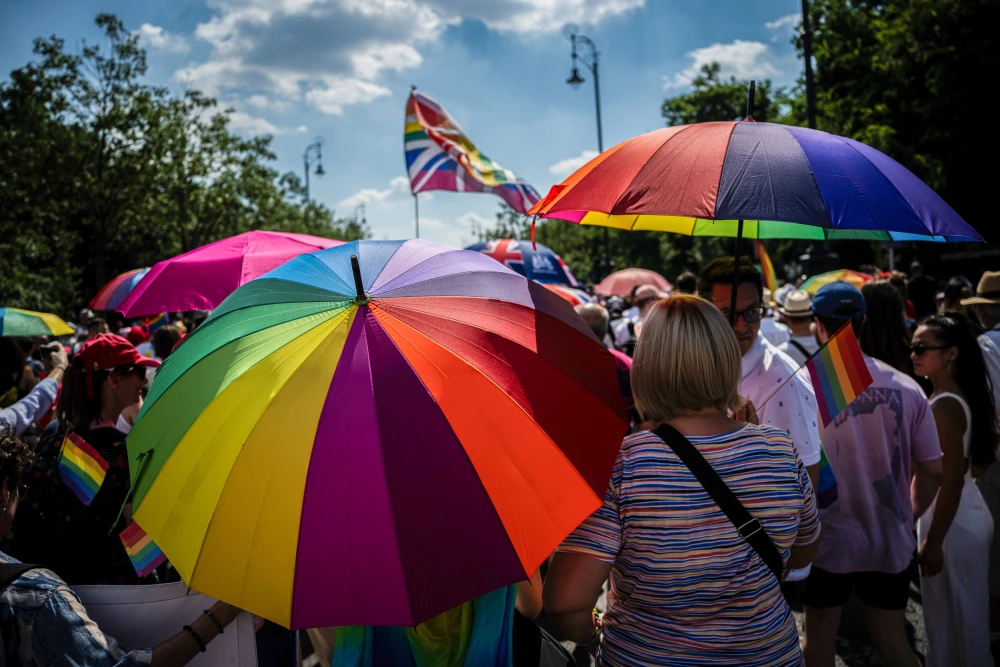
Around 100,000 people defied a government ban and police orders Saturday to march in what organizers called the largest LGBTQ+ Pride event in Hungary’s history in an open rebuke of Prime Minister Viktor Orbán’s government.

Marchers gambled with potential police intervention and heavy fines to participate in the 30th annual Budapest Pride, which was outlawed in March by Orbán’s right-wing populist governing party.

The march began at Budapest City Hall and wound through the city center before crossing the capital’s Erzsébet Bridge over the Danube River. Police diverted the crowd from its planned route to keep it separated from a small group of far-right counterprotesters, while members of Hungary’s LGBTQ+ community and masses of supporters danced to music and waved rainbow and anti-government flags.

One marcher, Blanka Molnár, said it was “a fantastic feeling” that more people had attended the Pride march than ever before despite it being outlawed. She said it was “increasingly important” for Hungarians, “even those who have never been to Pride before,” to push back against the government’s policies.

“This isn’t just about LGBQT+ rights, it’s also about the right to assemble and about standing up for each other and not allowing (the government) to oppress us,” she said.

The massive size of the march, which the government for months had insisted would no longer be permitted in Hungary, was seen as a major blow to Orbán’s prestige, as the European Union’s longest-serving leader’s popularity slumps in the polls where a new opposition force has taken the lead.

Orbán and his party have insisted that Pride, a celebration of LGBTQ+ visibility and struggle for equal rights, was a violation of children’s rights to moral and spiritual development — rights that a recent constitutional amendment declared took precedence over other fundamental protections including the right to peacefully assemble.

The law fast-tracked through parliament in March made it an offense to hold or attend events that “depict or promote” homosexuality to minors underage 18. Orbán earlier made clear that Budapest Pride was the explicit target of the law.

Authorities installed additional cameras throughout the city center before the march, and were expected to use facial recognition tools to identify individuals who attend the banned event. According to the new law, being caught attending Pride could result in fines of up to 200,000 Hungarian forints ($586).

Marcher András Faludy said the “hysteria” that has emerged in Hungary over the Pride march in recent months was “damn pathetic. It’s nonsense.”

“I could use an uglier word because I’m extremely angry, but I won’t,” he added.

The ban was the latest crackdown on LGBTQ+ rights by Orbán’s government, which has already effectively banned both same-sex adoption and same-sex marriage and disallowed transgender individuals from changing their sex in official documents.

Police rejected several requests by organizers in recent weeks to register the Pride march, citing the recent law. But Budapest Mayor Gergely Karácsony joined with organizers and declared it would be held as a separate municipal event — something he said doesn’t require police approval.

But Hungary’s government remained firm, insisting that holding the Pride march, even if it’s sponsored by the city, would be unlawful. Hungary’s justice minister this week warned Karácsony that organizing Pride or encouraging people to attend would be punishable by up to a year in prison.

Many marchers expressed their belief that the Pride march represented a struggle not just for the protections of the rights of sexual minorities, but for the democratic future of their country.

Participant Zsófia Szekér said the number of attendees showed that a major part of society desired a new direction for Hungary.

“I think we can only achieve change if so many people take to the streets,” she said.

Hungary passes constitutional amendment to ban LGBTQ+ public events, seen as a major blow to rights

*This is being reported by CNN.

Hungary’s parliament on Monday passed an amendment to the constitution that allows the government to ban public events by LGBTQ+ communities, a decision that legal scholars and critics call another step toward authoritarianism by the populist government.

The amendment, which required a two-thirds vote, passed along party lines with 140 votes for and 21 against. It was proposed by the ruling Fidesz-KDNP coalition led by populist Prime Minister Viktor Orbán.

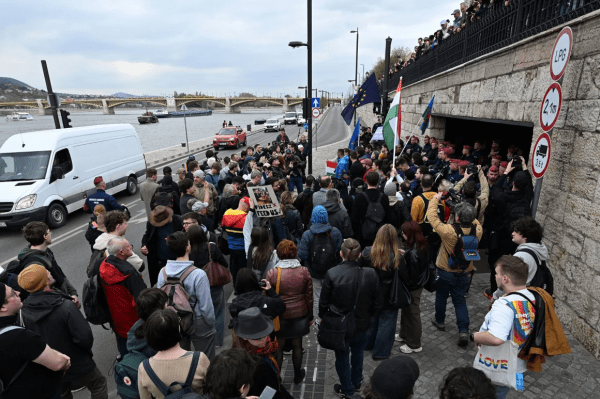
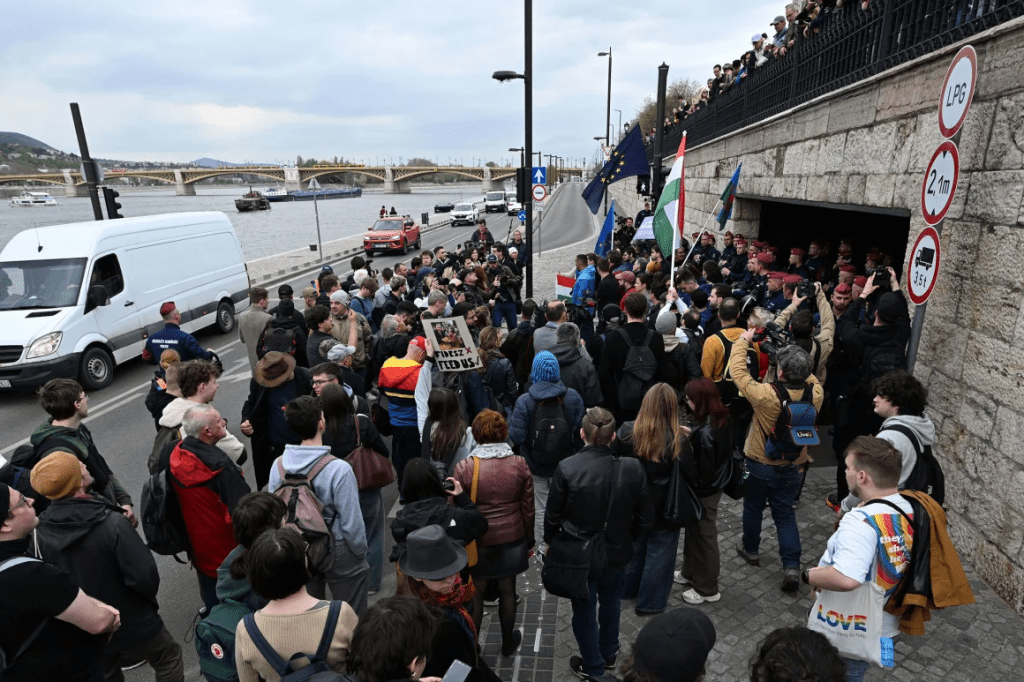
Ahead of the vote — the final step for the amendment — opposition politicians and other protesters attempted to blockade the entrance to a parliament parking garage. Police physically removed demonstrators, who had used zip ties to bind themselves together.

The amendment declares that children’s rights to moral, physical and spiritual development supersede any right other than the right to life, including that to peacefully assemble. Hungary’s contentious “child protection” legislation prohibits the “depiction or promotion” of homosexuality to minors aged under 18.

The amendment codifies a law fast-tracked through parliament in March that bans public events held by LGBTQ+ communities, including the popular Pride event in Budapest that draws thousands annually.

That law also allows authorities to use facial recognition tools to identify people who attend prohibited events — such as Budapest Pride — and can come with fines of up to 200,000 Hungarian forints ($546).

Dávid Bedő, a lawmaker with the opposition Momentum party who participated in the attempted blockade, said before the vote that Orbán and Fidesz for the past 15 years “have been dismantling democracy and the rule of law, and in the past two or three months, we see that this process has been sped up.”

He said as elections approach in 2026 and Orbán’s party lags in the polls behind a popular new challenger from the opposition, “they will do everything in their power to stay in power.”

Opposition lawmakers used air horns to disrupt the vote, which continued after a few moments.

Hungary’s government has campaigned against LGBTQ+ communities in recent years, and argues its “child protection” policies, which forbid the availability to minors of any material that mentions homosexuality, are needed to protect children from what it calls “woke ideology” and “gender madness.”

Critics say the measures do little to protect children and are being used to distract from more serious problems facing the country and mobilize Orbán’s right-wing base ahead of elections.

“This whole endeavor which we see launched by the government, it has nothing to do with children’s rights,” said Dánel Döbrentey, a lawyer with the Hungarian Civil Liberties Union, calling it “pure propaganda.”

Constitution recognizes two sexes

The new amendment also states that the constitution recognizes two sexes, male and female, an expansion of an earlier amendment that prohibits same-sex adoption by stating that a mother is a woman and a father is a man.

The declaration provides a constitutional basis for denying the gender identities of transgender people, as well as ignoring the existence of intersex individuals who are born with sexual characteristics that do not align with binary conceptions of male and female.

In a statement on Monday, government spokesperson Zoltán Kovács wrote that the change is “not an attack on individual self-expression, but a clarification that legal norms are based on biological reality.”

Döbrentey, the lawyer, said it was “a clear message” for transgender and intersex people: “It is definitely and purely and strictly about humiliating people and excluding them, not just from the national community, but even from the community of human beings.”

The amendment is the 15th to Hungary’s constitution since Orbán’s party unilaterally authored and approved it in 2011.

Facial recognition to identify demonstrators

Ádám Remport, a lawyer with the HCLU, said that while Hungary has used facial recognition tools since 2015 to assist police in criminal investigations and finding missing persons, the recent law banning Pride allows the technology to be used in a much broader and problematic manner. That includes for monitoring and deterring political protests.

“One of the most fundamental problems is its invasiveness, just the sheer scale of the intrusion that happens when you apply mass surveillance to a crowd,” Remport said.

“More salient in this case is the effect on the freedom of assembly, specifically the chilling effect that arises when people are scared to go out and show their political or ideological beliefs for fear of being persecuted,” he added.

Suspension of citizenship

The amendment passed Monday also allows for Hungarians who hold dual citizenship in a non-European Economic Area country to have their citizenship suspended for up to 10 years if they are deemed to pose a threat to public order, public security or national security.

Hungary has taken steps in recent months to protect its national sovereignty from what it claims are foreign efforts to influence its politics or even topple Orbán’s government.

The self-described “illiberal” leader has accelerated his longstanding efforts to crack down on critics such as media outlets and groups devoted to civil rights and anti-corruption, which he says have undermined Hungary’s sovereignty by receiving financial assistance from international donors.

In a speech laden with conspiracy theories in March, Orbán compared people who work for such groups to insects, and pledged to “eliminate the entire shadow army” of foreign-funded “politicians, judges, journalists, pseudo-NGOs and political activists.”

Protesters rally for the fourth week against Hungary’s law banning LGBTQ Pride events

*This is reported by NBCNews.

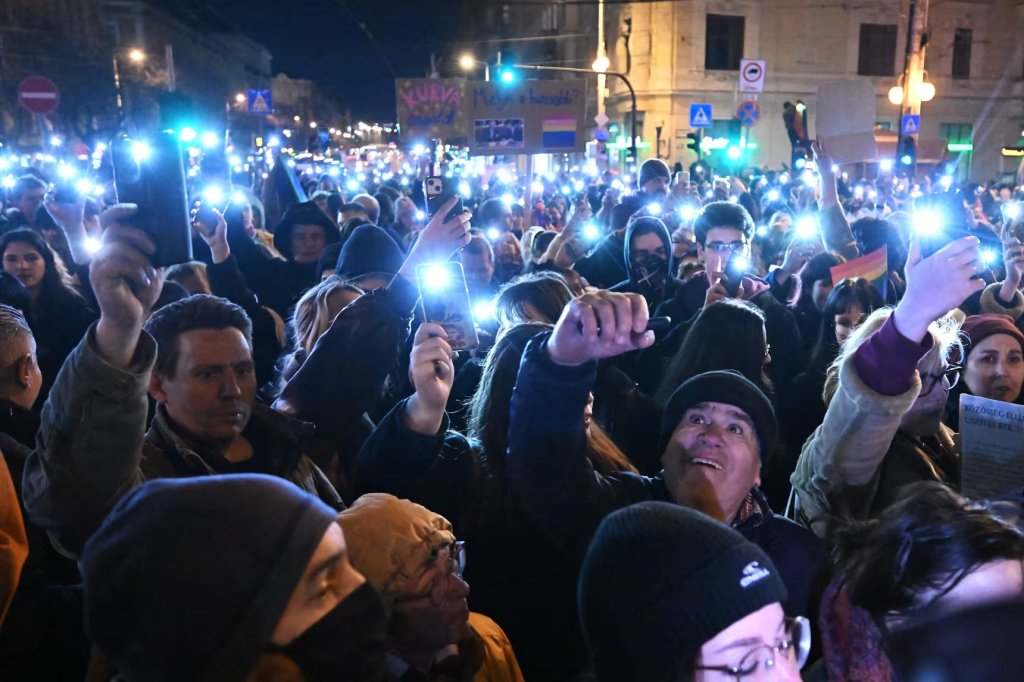
Thousands of protesters rallied for the fourth week in Hungary’s capital on Tuesday, denouncing a new law passed by populist Prime Minister Viktor Orbán’s nationalist government banning LGBTQ Pride events.

The legislation, fast-tracked through parliament in March, prohibits events depicting homosexuality to those under the age of 18 and has drawn comparisons to Russia’s anti-LGBTQ policies. It comes as Orbán’s administration is increasingly accused of democratic backsliding ahead of national elections next year.

The weekly protests in Budapest have persisted, and on Tuesday, demonstrators filled the Erzsébet Bridge over the Danube, demanding the withdrawal of the law. Some planned to remain on the bridge throughout the night and said there were plans to shut down all five central Danube bridges.

No violence was immediately reported.

The law makes it an offense to hold or attend events such as Pride, which some legal experts and human rights groups say is Orbán’s latest crackdown on Hungary’s LGBTQ community and an arbitrary restriction on the right to assembly.

Viktória Vajda, one of the protesters, said the time for trying to find common ground with Orbán’s government “has passed.”

“If we don’t stand up for the rights of minorities and for our own fundamental rights, then who will when they come for us?” she said. “We’ve reached the point where we have to stand up and say, ‘No more’.”

The protests have defied police orders to disperse from bridges and main thoroughfares in Budapest. And in a rare instance of a street protest outside the Hungarian capital, several hundred demonstrators in the eastern city of Miskolc also protested on Tuesday against the law.

Orbán, who critics say has eroded Hungary’s democracy and overseen widespread corruption, has in recent years taken aim at the country’s LGBTQ community, prohibiting same-sex adoption and — in a 2021 “child protection” law — banning any LGBTQ content including in television, films, advertisements and literature that is available to those under 18.

As part of the new law, authorities may use facial recognition tools to identify those who attend prohibited events — such as the popular Budapest Pride, which draws tens of thousands each year — and can issue fines for violators of up to 200,000 Hungarian forints ($545).

Orbán’s party is pushing for a constitutional amendment next week that will codify the ban on public LGBTQ events. The Hungarian leader has also pledged to introduce new legislation that will ban demonstrators from blocking traffic on bridges and busy roads, arguing the right of assembly and expression cannot override the rights of commuters.

János Stummer, a member of the opposition Momentum party who was at the protest, said that while the ban on Pride was harmful to members of the LGBTQ community, the law is also about “Orbán unilaterally, arbitrarily deciding which events can be held in this country and which cannot.”

Orbán’s government argues that it’s protecting children from “sexual propaganda.”

But with Orbán’s party lagging in polls, critics views the legislation as part of a broader effort to scapegoat sexual minorities and mobilize his conservative base.

Thousands take to the streets after Hungary passes anti-LGBTQ law banning Pride events

*This is being reported by NBC.

A new anti-LGBTQ law banning Pride events and allowing authorities to use facial recognition software to identify those attending the festivities was passed in Hungary on Tuesday, leading to a large demonstration on the streets of Budapest.

Several thousand protesters chanting anti-government slogans gathered after the vote outside Hungary’s parliament. They later staged a blockade of the Margaret Bridge over the Danube, blocking traffic and disregarding police instructions to leave the area.

The move by Hungarian lawmakers is part of a crackdown on the country’s LGBTQ+ community by the nationalist-populist party of Prime Minister Viktor Orbán, who is an ally of Russian President Vladimir Putin and U.S. President Donald Trump.

The measure, which is reminiscent of similar restrictions against sexual minorities in Russia, was passed in a 136-27 vote. The law, supported by Orbán’s Fidesz party and their minority coalition partner the Christian Democrats, was pushed through parliament in an accelerated procedure after being submitted on Monday.

Opposing legislators led a vivid protest in the legislature involving rainbow-colored smoke bombs.

At the protest outside parliament, Evgeny Belyakov, a Russian citizen who immigrated to Hungary after facing repression in Russia, said the legislation went at the heart of people’s rights to peacefully assemble.

“It’s quite terrifying to be honest, because we had the same in Russia. It was building up step by step, and I feel like this is what is going on here,” he said. “I just only hope that there will be more resistance like this in Hungary, because in Russia we didn’t resist on time and now it’s too late.”

The bill amends Hungary’s law on assembly to make it an offense to hold or attend events that violate Hungary’s contentious “child protection” legislation, which prohibits the “depiction or promotion” of homosexuality to minors under 18.

Attending a prohibited event will carry fines up to 200,000 Hungarian forints ($546), which the state must forward to “child protection,” according to the text of the law. Authorities may use facial recognition tools to identify individuals attending a prohibited event.

In a statement on Monday after lawmakers first submitted the bill, Budapest Pride organizers said the aim of the law was to “scapegoat” the LGBTQ+ community in order to silence voices critical of Orbán’s government.

“This is not child protection, this is fascism,” wrote the organizers of the event, which attracts thousands each year and celebrates the history of the LGBTQ+ movement while asserting the equal rights of the gay, lesbian, bisexual and transgender community.

Following the law’s passage Tuesday, Budapest Pride spokesperson Jojó Majercsik told The Associated Press that despite Orbán’s yearslong effort to stigmatize LGBTQ+ people, the organization had received an outpouring of support since the Hungarian leader hinted in February that his government would take steps to ban the event.

“Many, many people have been mobilized,” Majercsik said. “It’s a new thing, compared to the attacks of the last years, that we’ve received many messages and comments from people saying, ‘Until now I haven’t gone to Pride, I didn’t care about it, but this year I’ll be there and I’ll bring my family.’”

Government crackdown

The new legislation is the latest step against LGBTQ+ people taken by Orbán, whose government has passed other laws that rights groups and other European politicians have decried as repressive against sexual minorities.

In 2022, the European Union’s executive commission filed a case with the E.U.’s highest court against Hungary’s 2021 child protection law. The European Commission argued that the law “discriminates against people on the basis of their sexual orientation and gender identity.”

Hungary’s “child protection” law — aside from banning the “depiction or promotion” of homosexuality in content available to minors, including in television, films, advertisements and literature — also prohibits the mention of LGBTQ+ issues in school education programs, and forbids the public depiction of “gender deviating from sex at birth.”

Booksellers in Hungary have faced hefty fines for failing to wrap books that contain LGBTQ+ themes in closed packaging. Critics have argued Orbán’s campaign amounts to an attempt to cut LGBTQ+ visibility, and that by tying it to child protection, it falsely conflates homosexuality with pedophilia.

Hungary’s government argues that its policies are designed to protect children from “sexual propaganda.”

Is Orbán trying to distract the electorate?

Hungary’s methods resemble tactics by Putin, who in December 2022 expanded Russia’s ban on “propaganda of nontraditional sexual relations” from minors to adults, effectively outlawing any public endorsement of LGBTQ+ activities.

Orbán, in power since 2010, faces an unprecedented challenge from a rising opposition party as Hungary’s economy struggles to emerge from an inflation and cost of living crisis and an election approaches in 2026.

Tamás Dombos, a project coordinator at Hungarian LGBTQ+ rights group Háttér Society, said that Orbán’s assault on minorities was a tactic to distract voters from more important issues facing the country. He said allowing the use of facial recognition software at prohibited demonstrations could be used against other protests the government chooses to deem unlawful.

“It’s a very common strategy of authoritarian governments not to talk about the real issues that people are affected by: the inflation, the economy, the terrible condition of education and health care,” Dombos said.

Orbán, he continued, “has been here with us for 15 years lying into people’s faces, letting the country rot basically, and then coming up with these hate campaigns.”

Hungary’s government targets LGBTQ community, dual citizens in proposed constitutional changes

*This is being reported by NBC.

Hungary’s governing party has proposed constitutional changes that could mean a ban on an annual march celebrating the LGBTQ community and the expulsion of citizens with dual citizenship if they are deemed to pose a threat to the country’s sovereignty.

Nationalist Prime Minister Viktor Orban has repeatedly criticized LGBTQ people and pledged to crack down on foreign funding of independent media and nongovernmental organizations in Hungary in recent weeks, after his ally, U.S. President Donald Trump, paused funding from the U.S. Agency for International Development.

Trump’s steps prompted speculation that Orban would be emboldened and clamp down on media deemed to be unfriendly.

“The corruption network that rules the entire Western world of politics and media must be eliminated,” Orban told parliament on Feb. 24, adding that his government would “go to the wall” with the new laws.

The governing Fidesz party submitted its proposed amendments to the constitution late on Tuesday.

According to the proposed amendments, the constitution would add an amendment emphasizing the protection of children’s physical, mental and moral development over all other rights.

The new law could pave the way for a ban on the annual Pride March by LGBTQ communities as the event could be considered harming children and protecting their development would supersede the right to assemble.

Orban’s government is targeting the Pride March ahead of elections next year.

Another of the amendments states that Hungarian nationals who also hold a citizenship of another country can be expelled “if their actions pose a threat to Hungary’s national sovereignty, public order, territorial integrity or security.”

The changes will also enshrine in the constitution that Hungary will recognize only two sexes, male and female, an idea that Trump has also backed.

The proposed changes will also enshrine the right to cash payments in the constitution, embracing an idea the Hungarian far-right has backed because of a lack of trust in banks, draft legislation on the parliament’s website showed.

Orban, in power since 2010, faces elections in 2026 with the economy just moving out of an inflation crisis and with a surging new opposition party posing the strongest challenge yet to his rule.

A majority of European countries have voted to recognize and honor LGBTQ+ parents.

This blog originally appeared at LGBTQ Nation.

The European Union will support families regardless of how the child was conceived or born.


The European Union has voted to endorse parenthood, inclusive of same-sex parents, across the continent.


The European Certificate of Parenthood will acknowledge parenthood irrespective of the method of conception, birth, or family structure, ensuring associated rights to education, healthcare, custody, and succession.


The decision upholds the rights of same-sex parents throughout the EU, irrespective of individual country policies, provided the child is born in a member state.


Nations can establish their regulations on recognizing certain forms of parenthood, such as surrogacy. However, once a certificate is approved in one member country, it must be acknowledged in all of them. States can only reject a parenthood certificate if it is “manifestly incompatible with public order” in specified cases.


The European Certificate of Parenthood will not serve as a replacement for national documents. Instead, it will be accessible online and available for citizens across all EU countries. Once issued, it must be recognized and honored.


“No child should face discrimination based on their lineage or birth circumstances. Presently, children can legally lose parental recognition when crossing into another Member State. This is unacceptable,” emphasized Maria-Manuel Leitão-Marques, a Member of the European Parliament from Portugal. “With this vote, we are moving closer to the objective of ensuring that parenthood recognized in one Member State holds true across all Member States.”


The measure would safeguard over two million children.


“This provision is necessary to safeguard the fundamental rights of minors regardless of the sexual orientation of their parents and regardless of how they were born,” said Italian MEP Sabrina Pignedoli. “Anyone who is a father or mother in one Member State will, in fact, be automatically recognized in all other Member States and will, therefore, be able to move freely with their children throughout Europe.”


“Today, unfortunately, this is not the case in Hungary, Poland, or Bulgaria, countries that do not recognize parenthood established in another state in the cases of LGBT parents,” Pignedoli continued. “Even in Italy, as is known, there is strong discrimination, and the judicial authority often has to intervene to re-establish the rights recognized abroad.”


In Italy, as in other conservative countries, anti-abortion and anti-LGBTQ+ groups opposed the measure.

After receiving approval from the European Parliament, the measure must now secure unanimous passage from the governments of all member countries.

Thousands march at Budapest Pride as LGBTQ+ community voices anxiety over Hungary’s restrictive laws

This blog originally appeared at Kxan.

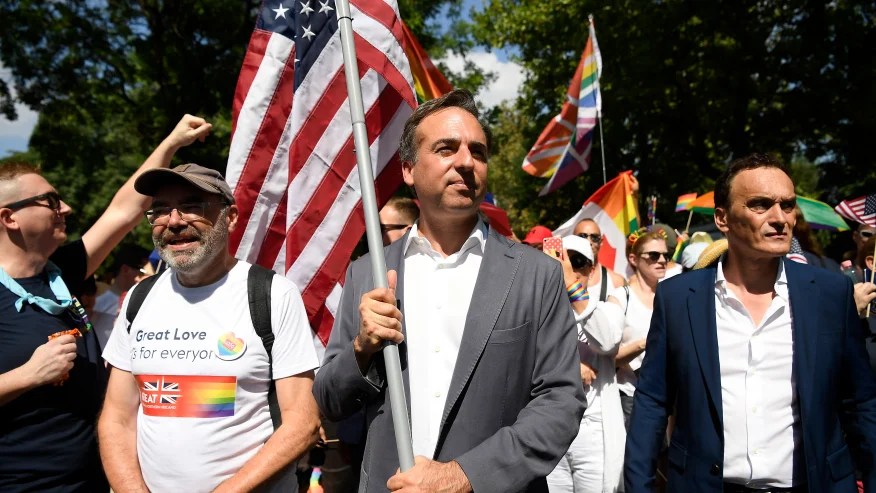
US Ambassador to Hungary David Pressman holds his country’s flag as he participates in the 28th Budapest Pride parade in Budapest, Hungary, Saturday, July 15, 2023.

BUDAPEST, Hungary (AP) — Thousands of participants of the Budapest Pride march wound through the streets of the Hungarian capital on Saturday with marchers voicing their anxiety over the increasing pressure on the LGBTQ+ community from the country’s right-wing government.

The 28th annual event comes as the country’s laws, which ban the depiction of homosexuality or gender transition, to minors under 18 have begun to be applied with increasing regularity, resulting in fines and other penalties for those who disseminate LGBTQ+ content.

Before the march, which began in Budapest’s city park, Pride organizer Jojo Majercsik said that while the laws, passed in 2021, didn’t have immediate practical effects, they are now increasingly being used to crack down on LGBTQ+ visibility.

“You can now see how the propaganda law passed two years ago is being applied in practice and how the public discourse has become more angry,” Majercsik said, referring to the 2021 law. “It is now apparent how they are trying to limit the rights of LGBTQ people in the media world, in the world of movies, films and books.”

Majercsik pointed to a number of recent instances of media content that depicted LGBTQ+ people being restricted. This week, a national bookseller was fined around $36,000 for placing a popular LGBTQ+ graphic novel in its youth literature section, and for failing to place it in closed packaging as required by law.MOST READ: 2 dead after crash on SH 71

Additionally, a 30-second animated campaign video produced by Budapest Pride — in which two female characters meet and touch foreheads — was ruled unsuitable for audiences under 18 by Hungary’s media authority, and may therefore only be broadcast between 10 p.m. and 5 a.m.

click here to see full blog: https://www.kxan.com/news/international/ap-thousands-march-at-budapest-pride-as-lgbtq-community-voices-anxiety-over-hungarys-restrictive-laws/?fbclid=IwAR3LcMK1tRrt5Ks-40dEQsnKJJ49HNYTpNW3GTE9kB9uf7nc1DQL7OewqxM

Blog at WordPress.com.

Up ↑