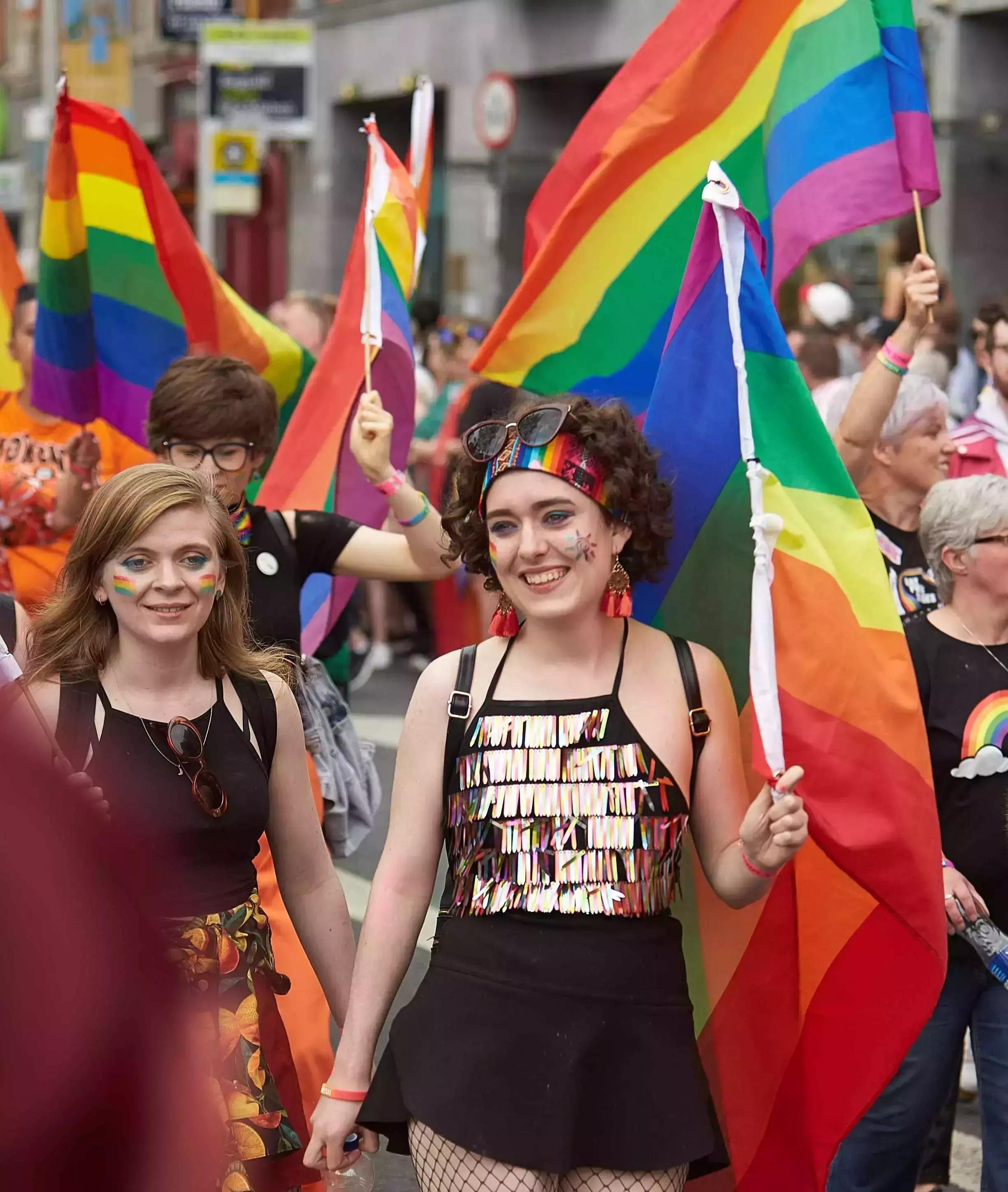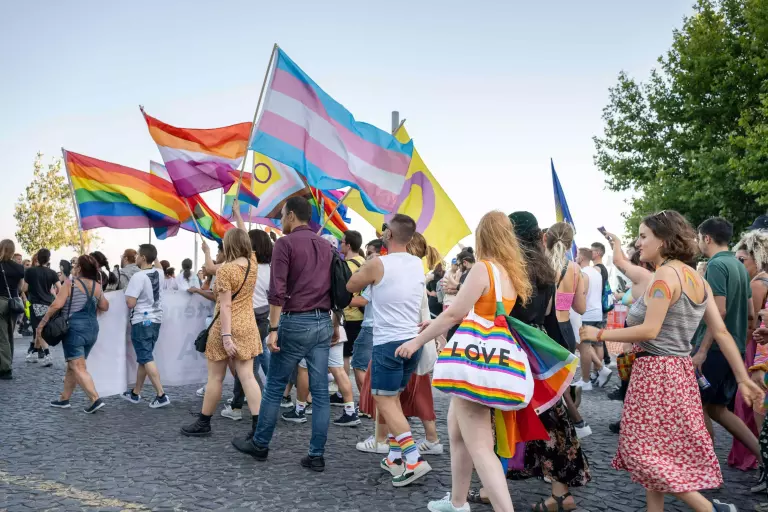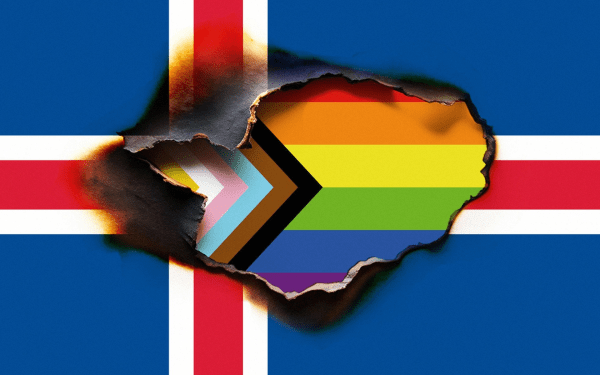
How inclusive Iceland succumbed to ‘trans madness’

Read more at Telegraph UK.

Iceland, birthplace of the literary tradition of the saga, is a nation of just 390,000 people. It is renowned for its progressive values: peace, wellbeing and human rights. At present, however, this small island is home to a monumental division.

After a chequered history with lesbian and gay rights, things looked positive when the country legalised same-sex marriage in 2010. But having achieved its aims, the gay rights movement turned to genderism. And this is now having serious consequences for anyone who refuses to believe that it is safe (or indeed possible) to change sex.

I arrive in the capital city of Reykjavik on a freezing February morning, and meet with Eldur Smári Kristinsson at the end of an hour’s drive through lava fields. As the international liaison for LGB Alliance Iceland – a group of about 10 women and men keen to prioritise same-sex rights over gender identity – he is keen to discuss the ideological capture of the nation he refers to as “Gender Gilead” [a reference to the dystopian regime in Margaret Atwood’s novel The Handmaid’s Tale].

Kristinsson is tall, smartly turned out, and would not look out of place in a university lecture theatre. Proudly gay, he travels far and wide, speaking at conferences on the harms of transitioning gender-nonconforming children. “Who knows if these kids would end up being lesbian or gay? But even if they don’t, we should allow children to play with the toys they wish to, and not tie them to sex stereotypes,” he says.

He is currently under police investigation for alleged hate speech in three posts on X, one of which criticises men taking the medication domperidone to induce lactation and “breastfeed” infants. “I am facing two years in prison,” he tells me, “for speaking out about child safeguarding.” It was the LGBT organisation Samtökin ’78 (originally the Lesbian and Gay Association of Iceland) that reported him to police.

My mission is to establish whether Iceland has, as Kristinsson claims, signed up to the most extreme version of transgender ideology on the planet, and whether or not it could come to pass in Britain, bearing in mind the level of pushback from feminists here, which resulted in the Supreme Court ruling in April 2025 that references to “sex”, “man” and “woman” refer to biological sex only.

At my hotel in central Reykjavik, I meet a number of Kristinsson’s allies – all of whom have encountered hostility and social exclusion for speaking out. Anna*, a 40-year-old lesbian who teaches at a primary school in northern Iceland, tells me: “Iceland is, without a doubt, the most captured country in terms of trans madness.”

Like Kristinsson, Anna is a member of LGB Alliance Iceland. As things stand, she says, schools tell young children they can change sex, which confuses and distresses them.

The 2010 marriage equality law plunged the Lesbian and Gay Association of Iceland into an existential crisis which culminated with its rebranding – as the National Queer Organisation of Iceland (Samtökin ’78) – and expanded its agenda to include the “trans child”.

A further controversial decision came in 2015, when Samtökin ’78 classified BDSM (bondage, discipline and sadomasochism) as a sexual orientation. It also partnered with Reykjavik city council to produce sex education posters for schools which promoted both BDSM and multiple-partner relationships to children as young as five.

Four years later, following lobbying by Samtökin ’78 and others, the Gender Autonomy Act was introduced, making it possible for anyone over the age of 15 to self-identify as the opposite sex, without requiring medical, psychiatric or judicial approval. This extends to name changes on all legal documents, including birth certificates.

Freyja* is a legal scholar, based in neighbouring Norway, who attempted to meet with Icelandic lawyers to advise on how the law might be halted on the grounds that it flouted international human rights treaties. She says the laws were introduced “almost secretly – there was barely any consultation with the general public, and it appeared to be a stitch-up between Samtökin ’78 and the government”.

Kristinsson tells me that this change in the law led to an exponential surge in numbers of “trans children”, most of whom were young girls from upper-class backgrounds, many of them under the “neurodivergence” umbrella. The statistics bear him out; by 2025, 0.5 per cent of Icelandic children had changed their sex markers with the National Registry – approximately 13 times the per-capita rate of neighbouring Denmark.

As the only country in the World Economic Forum to have eliminated more than 90 per cent of wage and opportunity inequality, Iceland is proud of its record on gender equality. Women now hold 48 per cent of seats in Iceland’s parliament, and comprise 60 per cent of its law students.

Iceland is often classed as the best country in the world in which to be a woman, yet those hard-won rights are being given away in the name of trans inclusion; Icelandic feminists have caved in to bullying and gaslighting.

This former beacon of gender equality has become a totalitarian regime, and the top-down ideological capture is affecting children, institutions and society at large – with chilling implications.

The children’s ombudsman, Salvör Nordal, grants me an interview. When I ask whether she has come across the issue of children wishing to identify as the opposite sex, she tells me that, post-Covid, her office has seen a significant decrease in interest and lobbying relating to gender identity and the trans issue.

Citing a national Icelandic medical survey, she says: “There was a group of children that were one third maybe with autism, one third truly trans, and one third with some other complication or other.

“It has been two or three years since this issue was on my desk,” she adds. Back then, she says, there were parents of three- and four-year-olds who were claiming to have a trans child. “And they had changed their names. So, we were concerned about that.”

Nordal’s comment about survey data showing that some children are “truly trans” leads me to ask whether, in her opinion, trans children exist, in that they are trapped in the wrong body? “It’s not my role to decide,” she says, explaining that her job is to think about children’s rights, rather than to have opinions about medical or psychological issues. “We have other professionals to do that. I focus on what is important for my job. We need to listen to children. This is a very difficult track to take.”

Icelandic law also recognises the sex changes of foreign visitors. In 2025, a trans “refugee” from the United States turned up in Iceland, attempting to claim asylum. “Alexandra” (a “stay-at-home mother”) claimed to be fleeing anti-trans persecution in Minnesota. His claim was not upheld. After Alexandra was told by police to go to the US Embassy in Iceland for help, his appointed spokesman said it was like “deporting Afghan women to the Taliban”.

My earlier trips to Iceland were to speak at conferences on male violence, organised by Stígamót, a well-known women’s organisation. But when I attempted to make contact with old friends in the feminist world, I was either ghosted or subjected to lecturing about “inclusivity” and “trans rights”. Even the hard-line feminists have capitulated – including those previously brave enough to take on pimps and pornographers.

In 2020, lesbian singer-songwriter Iva Marín Adrichem sang in the national final of the Eurovision Song Contest. Born blind, she had been included – as a high-profile Icelander – in an Icelandic tourist board film to encourage more disabled visitors to the country.

“I was cut out of the film because someone made a fuss about my views on gender,” she tells me when we have lunch together in Reykjavik, “ironically, in the name of diversity and inclusion.”

The trans trend spreads from the elite: both the bishop of Iceland and the rector of the Iceland Academy of the Arts have spoken proudly of being mothers to “trans children”.

The head of transgender medicine at Iceland’s state hospital is Asa Radix, a Canadian living in Iceland, who was appointed in 2025. Radix is also the president of WPATH, the World Professional Association for Transgender Health. WPATH was exposed by investigative journalists as a group of trans rights activists whose practice raises significant questions about the nature of gender-affirming care and the evidence base for WPATH’s widely followed guidelines.

Iceland’s reputation in transgender healthcare is seen by other countries with self-ID laws, and those looking to establish them, as a gold standard model. In 2025, Mary Butler, junior health minister for mental health in Ireland, travelled to Iceland to take part in a “knowledge exchange” project organised by the Icelandic ministry for health. The Irish delegation met with gender clinicians and people with “lived experience” of gender medicine. The official purpose of that visit was to inform the development of the new model for gender healthcare in Ireland.

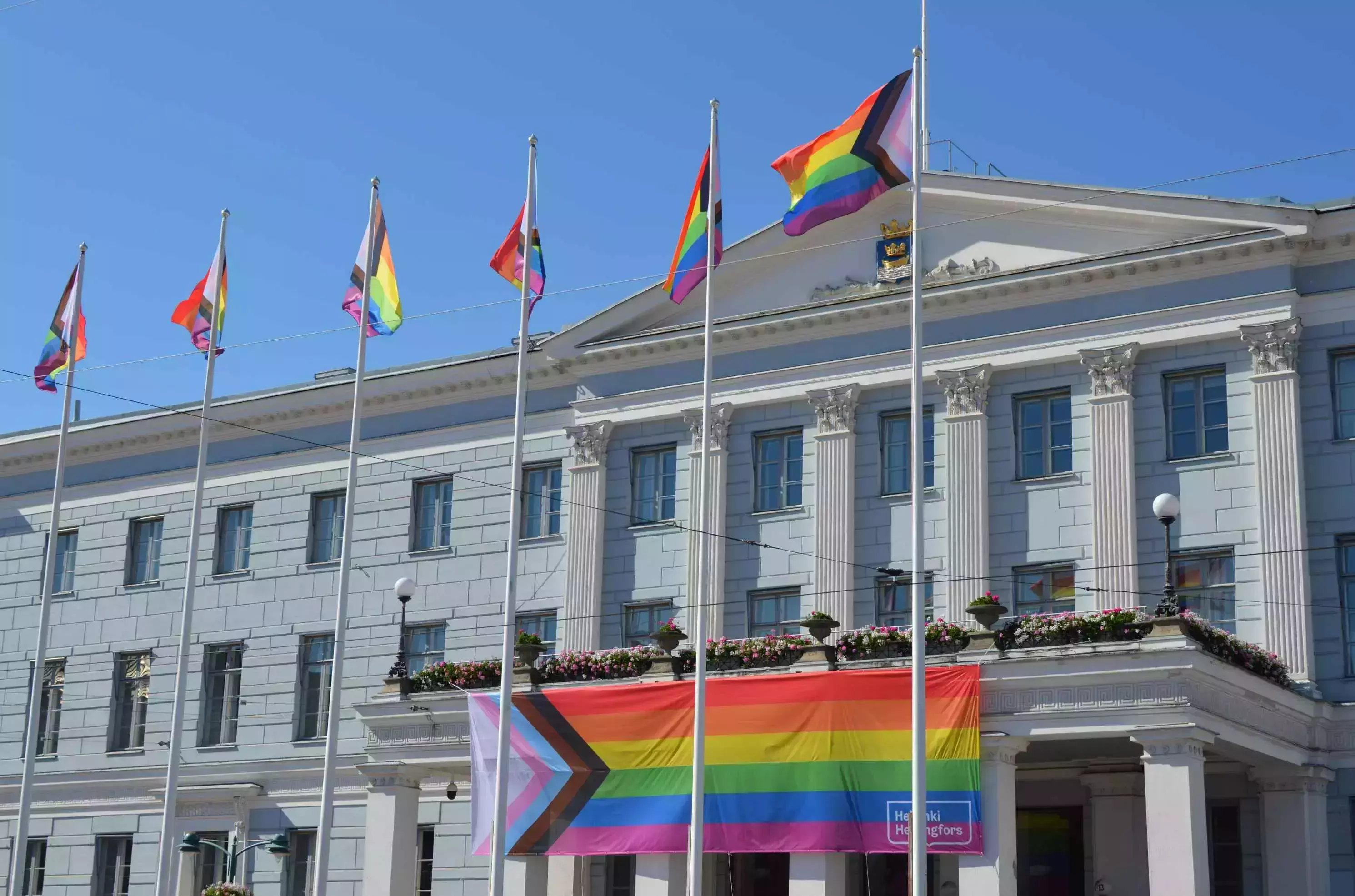
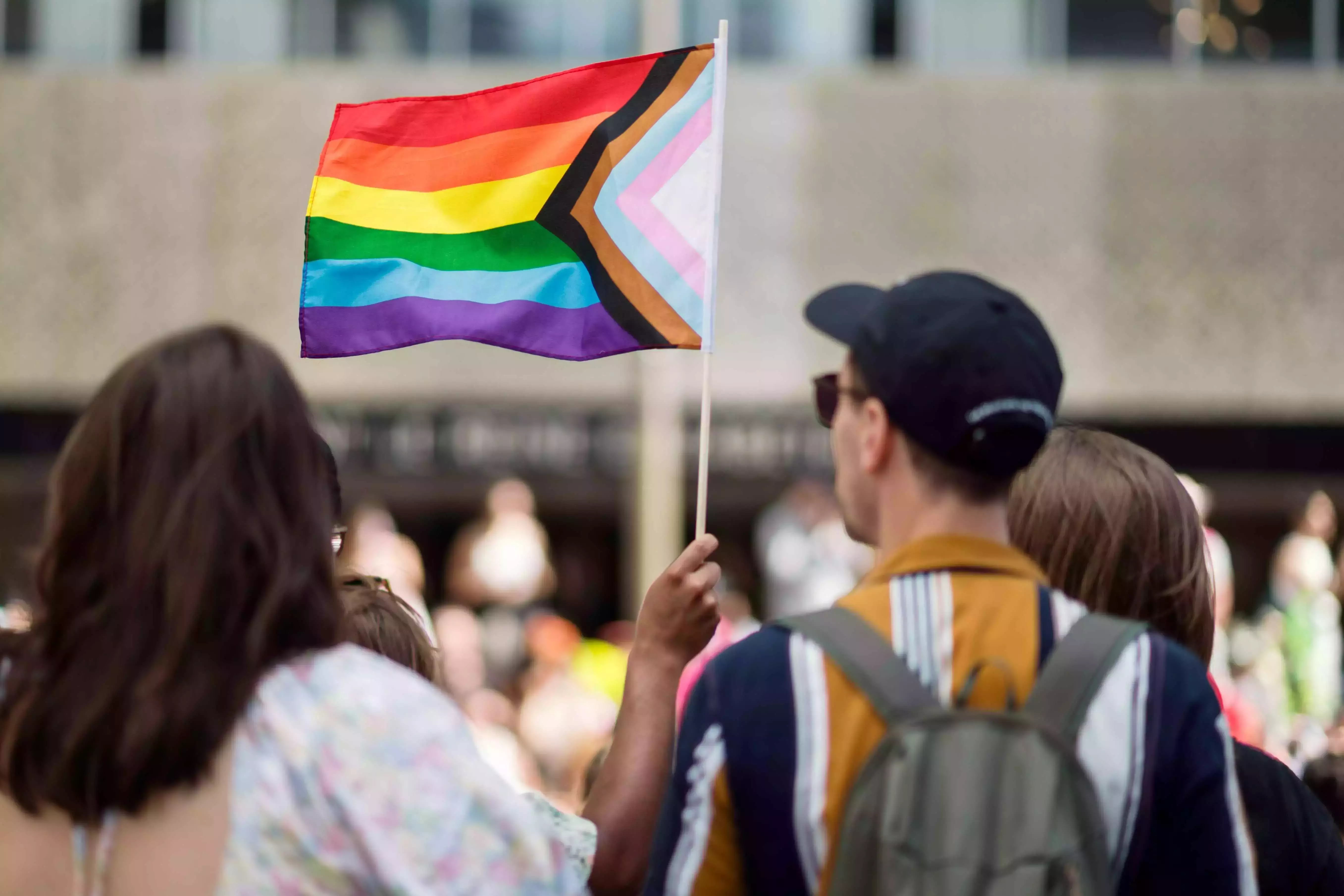
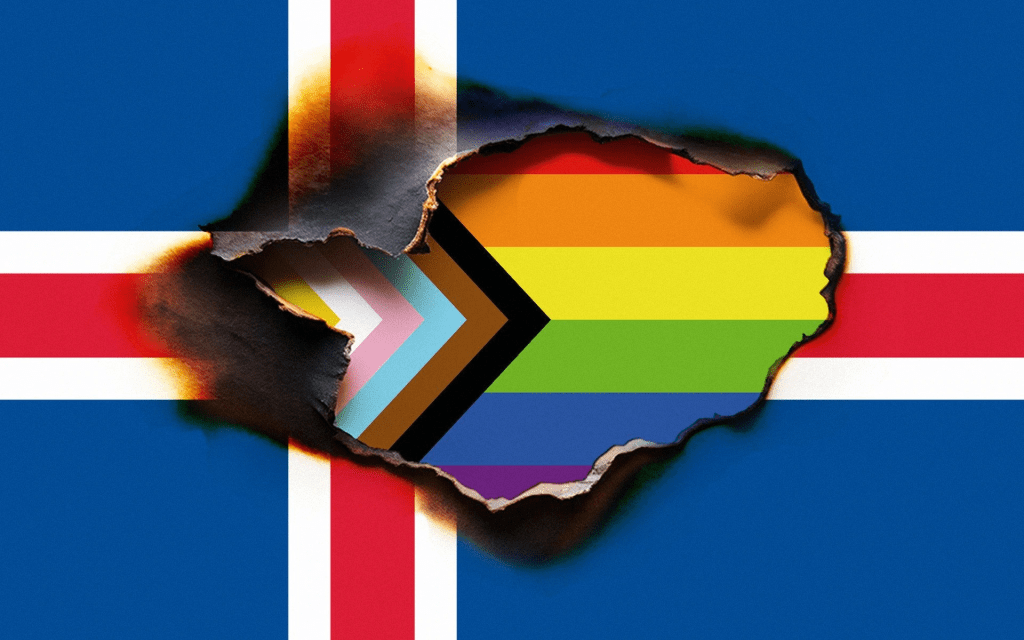
Iceland’s national flag is fast being replaced by the “Progress flag” – on churches, schools, government buildings and police stations. And the fact that rainbows painted on road surfaces are commonplace, even in tiny villages with fewer than 200 residents, signals a quasi-religious reformation: the teachings of postmodernist theorists Michel Foucault and Judith Butler have supplanted those of Jesus Christ.

The headquarters of the bishop of Iceland is in a purpose-built building in Reykjavik’s centre. I cold-call, hoping to catch Gudrún Karls Helgudóttir, who has been outspoken in support of her own trans-identified child and her commitment to the LGBT community. The church once ran an advertisement campaign featuring a trans Jesus Christ, complete with breasts, on Reykjavik’s buses.

Helgudóttir is unavailable, but her secretary, Eva Björk Valdimarsdóttir, invites me into a space generously adorned with pride, progress and trans flags, as well as an ornament of the drag act RuPaul. Valdimarsdóttir is a “big fan” of Drag Race.

When I ask how the Icelandic church became so focused on the inclusion of LGBT people, she explains that both the former bishop and the church had poor reputations as a result of having denied equal marriage rights to lesbians and gay men, and wanted to compensate for this stain on the church’s history. She says that the Bible, if read properly, does not pour scorn on same-sex couples, and that it is not God’s will to deny same-sex people who love each other to marry. “God does not discriminate,” she says.

Next, I ask about child safeguarding – for example, if a trans-identified man were to accompany children on a church trip. As a “trans woman”, would he be assigned to the girls’ sleeping quarters? “Those people are valid and their identities are valid,” she tells me. We go back to the Bible and what Jesus said. “He especially stood with marginalised people.”

I ask her whether God ever makes mistakes, and whether a child can be born in the wrong body. Before answering, she wants to make sure it will be specified that this is only her opinion. “There are not just two sexes, male and female. It is not that simple.”

How does that work, though, for children who want to be medicalised? “They have a long waiting list, then they have their specialists. I don’t think the church needs to decide anything for them.”

At this stage, Valdimarsdóttir asks if she can speak personally, rather than in her role as secretary to the bishop. She says trans women are as trustworthy as “cis” (biological) women, and that some people are “in between” male and female.

I ask, can a baby be born in the “wrong body”? “Should that child not live?” she replies. “And is this child not perfect as they are also in their minds and in their spirit, in what they say they are?”

Reykjavik-based father Alexandre Da Rocha meets me for coffee to talk about the conflict between him and his former partner over their son. When the child came home from school saying he wanted to be a girl, and was affirmed by his mother, Da Rocha made it clear that he disagreed, resulting in the case being referred to the family court by the mother. In November last year, the court decided that the boy’s mother would have sole custody, having previously shared it with the father.

“In the judgment, it was made clear that I am a good father, a good parent, and that there was no question over that. It is, I am certain of it, because I have refused to affirm my son as a girl,” Da Rocha says.

His lawyer, Hilmar Gardars Thorsteinsson, tells me that the problem in such cases, where one parent is in dispute with the other over children who wish to change sex, is halting the process before the prescribing of puberty blockers.

“It is almost always affirmed by teachers, for example, and then they are recommended to get puberty blockers at around 11 or 12,” he says. “I don’t know exactly the number, but I think it’s around 100 kids under 18 undergoing something like this.”

The following morning, I head to Laugardalslaug swimming baths, one of many across the city. Swimming is sacred to Icelandic people and a big part of their culture. The rules are strict: you are not allowed into the water until you have thoroughly showered. There are posters of stick figures on the walls with arrows pointing towards the armpits and genitalia. How will this work with “trans women” using the female showers, I wonder?

After explaining my purpose in visiting Iceland, I have a conversation with a young, muscle-bound man who works there. “Do you have single-sex communal showers?” I ask. “Yes,” he replies, “there are female showers and male showers.”

“But if I said I was a trans man, would I be allowed to go and shower in the men’s shower room?” His female colleague answers: “The communal showers are not single-sex but you can ask for a private cubicle if you wish.”

I seek clarification: “So are there no single-sex facilities at all?” This question is met with bafflement, so I try again. “Do any women ever ask for the mixed facilities?”

“No,” comes the response.

Ina Steinke has travelled a considerable distance across Iceland to meet with me. She got to know Kristinsson and the others speaking out because she hates the idea that the right to free speech is under threat. After our visit to the swimming pool, she appears angry at what she heard.

“There’s not even a warning,” says Steinke.“Being at risk of seeing a naked man in the women’s showers is this new reality. In our culture, it’s not an issue to be naked in front of other women, it’s part of our heritage. Also, sex offences – it’s nothing new to Icelandic people, but now, we can’t complain about the naked man; we can’t point out the sex of the person that rapes you.”

My final stop before leaving Reykjavik is to the mayoral hustings, where Ari Edwald, the candidate for the socially conservative Midflokkurinn (“Centre”) party, is due to give a speech. During the Q&A, I ask what he would do, if elected, to end the inclusion of gender ideology in schools. His is the only party to have spoken out against gender ideology and its effects on children.

School should not be a place of indoctrination, he responds, adding that contested ideas from sociologists and queer theorists in universities should not be taught as fact. If elected, he will do his part to wind this nonsense up.

With the help of lawyers, LGB Alliance Iceland is preparing various legal routes to challenging transgender practices against Icelandic youth. It is also looking at how to reverse so-called “conversion therapy” legislation, which would effectively criminalise any therapist or counsellor that doesn’t affirm a child presenting as transgender.

Da Rocha, the father desperately trying to stop his child from starting on a path towards changing his sex, is appealing the decision of the family court to deny him joint custody of his son. “If he decided to be gay when he grows up, then fine,” he tells me, but to do something he can never reverse would be terrible for him.”

Meanwhile, Kristinsson is keen to find out what is happening with his criminal case, as it has been several months since he was charged with hate crime offences. I accompany him to the main police station in Reykjavik.

Article 233A of the penal code forbids ridicule, slander and hatred towards those with protected characteristics: in this case, trans-identified people. As he awaits his turn at the security screen, he tells me: “I have the legal label of ‘criminal suspect.’”

“We’ve been looking for you,” says a uniformed officer when she finally appears. “You need to come back and be interrogated for another crime, on Friday.”

*Names have been changed
Top LGBTQ+ friendly countries in 2026

Read more at QNotes Carolinas.

For LGBTQ+ people, safety has never been an abstract idea. Concerns for our community show up in legislation, healthcare and how the government treats its citizens. In the United States, where LGBTQ+ rights are being rolled back at both the state and federal level following President Donald Trump’s reelection, many people are quietly asking the same question: where, if anywhere, does stability still exist, and what does real safety actually look like?

That question shapes real decisions. Not just about travel, but about long-term plans, family, work, medical care  and whether it is possible to build a future without constant political uncertainty. International data from organizations including ILGA-Europe and Equaldex, alongside migration analysis and residency reporting from Get Golden Visa, points to a widening global divide. Some countries are strengthening legal protections and expanding access to care. Others are narrowing definitions of who is protected under the law, often by targeting transgender people first and testing how much rollback the public will tolerate.

The countries highlighted here represent a snapshot of places that currently offer strong legal protections and relative social stability for LGBTQ+ people. This is by no means an exhaustive list, and conditions can change quickly as governments shift and political climates evolve. Still, these examples help illustrate what safety looks like when it is embedded into legal systems, healthcare infrastructure, and public accountability, rather than left to cultural goodwill or temporary leadership.

One country that consistently ranks at the top is Malta. It has held the number one position on ILGA-Europe’s Rainbow Index for multiple consecutive years, a reflection of both legal protections and enforcement. Same-sex marriage has been legal since 2017, conversion therapy is banned nationwide, and gender identity is explicitly protected under the constitution. Legal gender recognition is based on self-determination, without medical or psychiatric requirements, and those protections extend into healthcare, employment, education, and family law, creating long-term security rather than symbolic inclusion.

Iceland also continues to stand out for both legal protections and social acceptance. Same-sex marriage has been legal since 2010, non-binary gender markers are recognized, and gender-affirming care is available through the public healthcare system. Comprehensive anti-discrimination laws are paired with high levels of public trust in institutions, which means LGBTQ+ protections are not constantly relitigated or politicized, but treated as settled rights reflected in daily life.

.Finland has taken meaningful steps in recent years, particularly for transgender people. A 2023 update to its law allows transgender adults to change their gender through self-determination, removing medical gatekeeping that had long been criticized by advocacy groups. While non-binary recognition remains limited, Finland’s strong social safety net and political consensus around equality have kept LGBTQ+ rights largely outside culture war framing, offering stability rather than constant legal vulnerability.

Spain has long been viewed as one of Europe’s most LGBTQ+-affirming countries, and recent legislation has reinforced that reputation. Same-sex marriage has been legal since 2005, and a 2023 gender self-identification law allows people to change legal gender without medical or psychological evaluations. Conversion therapy is banned, and public opinion surveys consistently show strong support for LGBTQ+ equality, particularly in major cities where protections are paired with visible community infrastructure.

In North America, Canada has become a focal point for LGBTQ+ Americans seeking stability. Same-sex marriage has been legal since 2005, non-binary gender markers are available on federal identification, and conversion therapy was banned nationwide in 2022. Advocacy organizations and international reporting have documented a rise in inquiries from U.S. LGBTQ+ residents since the 2024 election, especially among transgender people weighing whether legal protections at home will continue to erode.

The Netherlands remains one of the most legally secure environments for LGBTQ+ people. As the first country to legalize same-sex marriage, it continues to offer robust anti-discrimination protections and publicly funded gender-affirming healthcare. For some U.S. citizens, the Dutch-American Friendship Treaty has made relocation more feasible, a trend that has accelerated since the 2024 US presidential election.

None of these countries are immune to political change, and none represent a perfect solution. But in 2026, they show what becomes possible when LGBTQ+ safety is treated as a structural commitment rather than a cultural preference. As rights erode in some places, the countries that choose to protect them are defining where dignity, stability, and the possibility of a future still exist.

Lisbon Portugal ranks as the top LGBTQ friendly city in the world

Pride Month is not quite over yet! Just in time for some more LGBTQ friendliness is this list from Big 7 Enjoy Travel. They rank the top 30 LGBTQ friendly cities on the planet.

For a city to rank highly as LGBTQ+ friendly, first and foremost, it needs to protect LGBTQ+ people with laws and legislation. Then, it needs a vibrant gay nightlife and dating scene, whether within a gay village or across the city. Either way, there needs to be a safe community for LGBTQ+ people, as well as open-minded citizens and low levels of hate crime.

Ranking criteria:

  • Gay Index Rating – measures how safe a country is for LGBT people, considering the legal situation and living conditions
  • Equality Index Rating – measures the status of LGBT rights, laws, and freedoms as well as public attitudes towards LGBT people
  • Is the city’s country a member of the United Nations LGBTI Core Group?
  • How big is their Pride celebration?
  • Does that city have a gay village/gay community?

The final scores show the Top 30 LGBTQ+ Friendly Cities in the World! Here’s your ultimate gay-friendly travel list…

30. Vienna, Austria

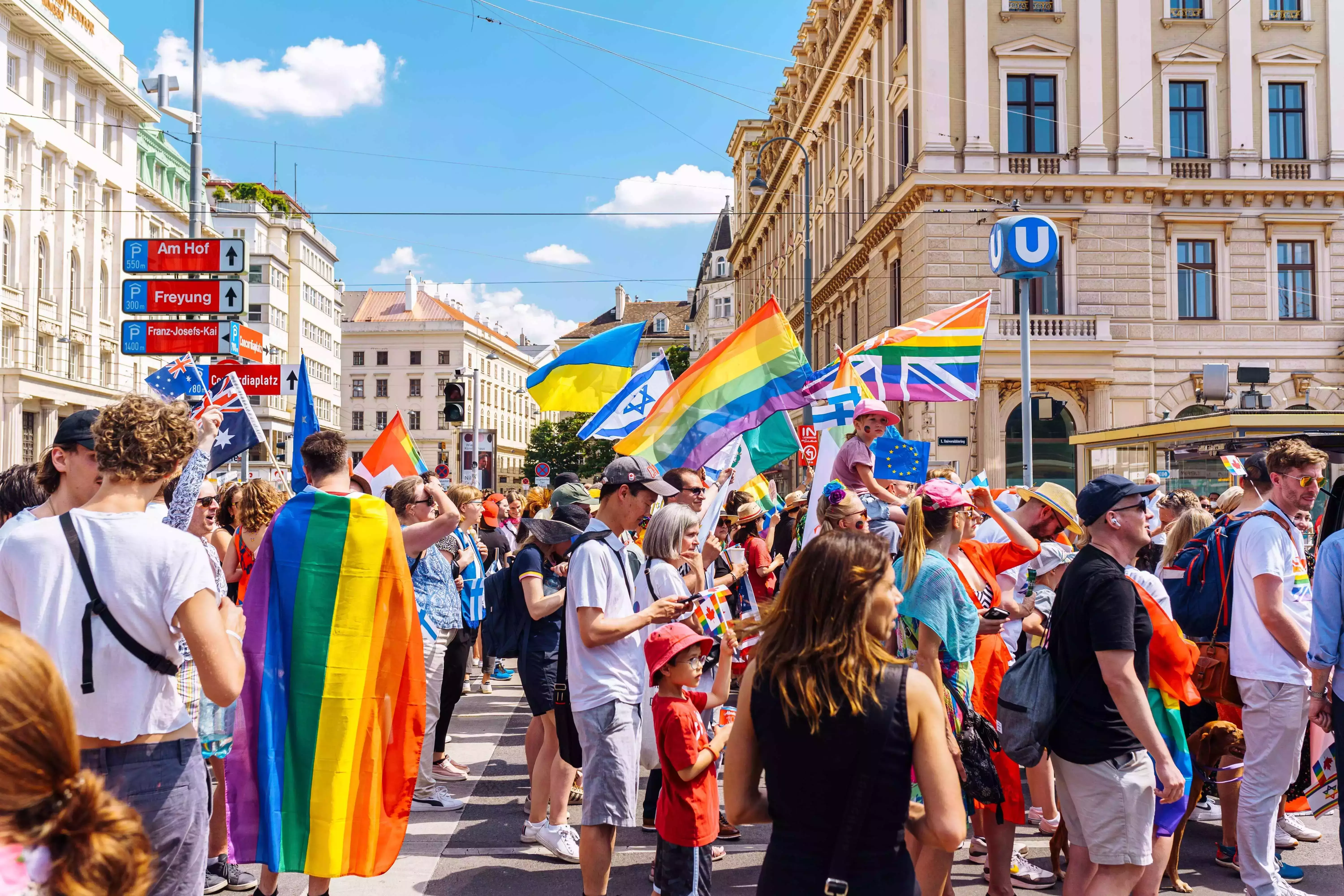
Vienna is widely known for its gender, disability, LGBTQ and racial inclusivity and equality, with many parades, pride events and specialist causes. While Vienna doesn’t have a specific gay village or district, its Naschmarkt area is full of gay bars and clubs, making it a hotspot for LGBTQ+ members. 

 Vienna has also hosted the EuroPride and hosts an annual citywide Pride parade in June. Vienna is also an LGBTI Core Group member and has a reasonably high Gay Index Rating, making it a safe and appealing place for LGBTQ+ members. It’s safe to say that Vienna is a welcoming and inclusive city for not just LGBTQ+ people, but for everyone, no matter your sexuality, gender, religion or ethnic group.

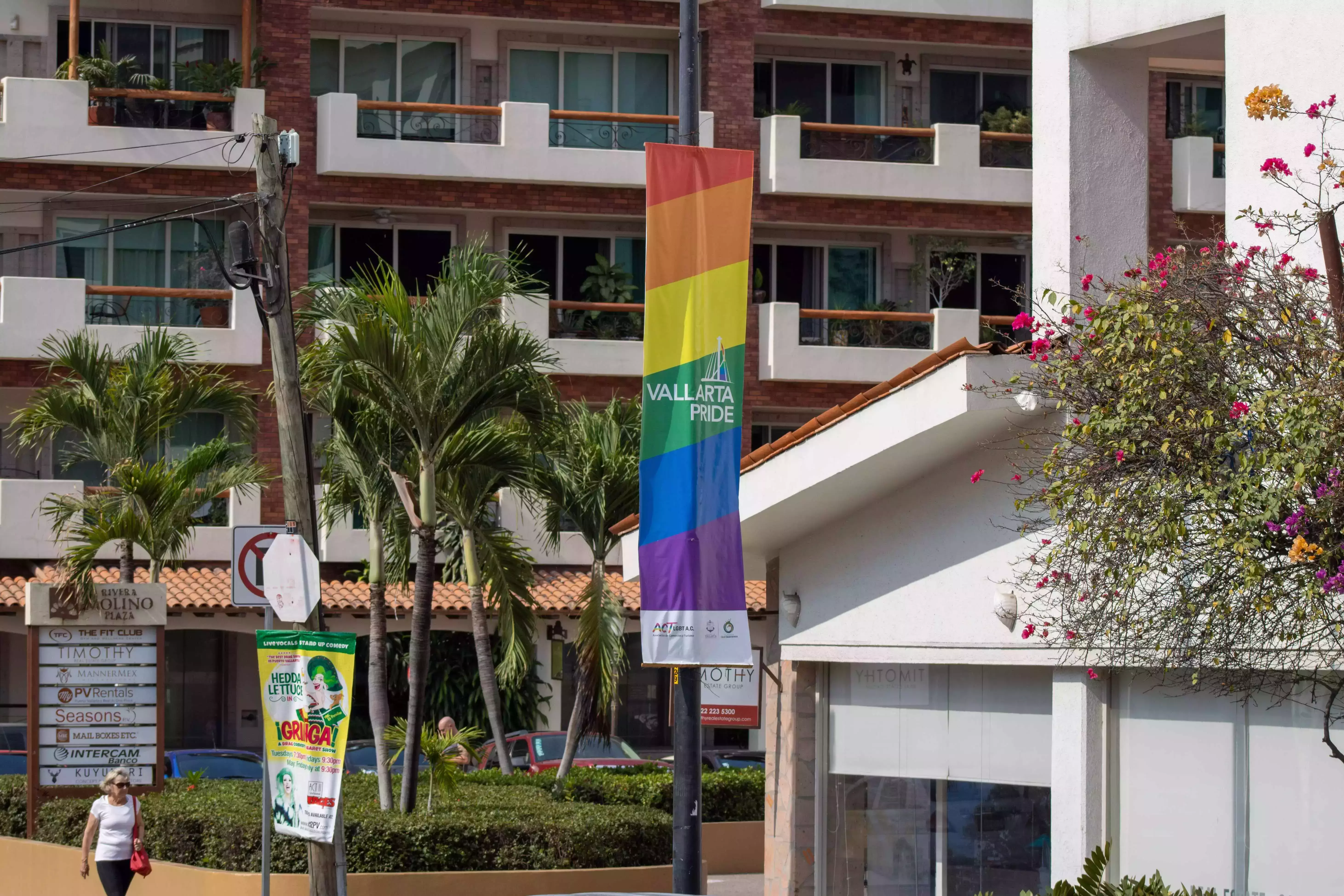
29. Puerto Vallarta, Mexico

You may not have heard of this city against its larger and more tourist-centred neighbours of Mexico City and Cancun, but Puerto Vallarta deserves to be celebrated for its strong LGBTQ+ representation and inclusivity. According to our rankings, Puerto Vallarta scored highly in terms of Gay Index Rating, and attendance to the city’s annual Pride event is significant.

 Puerto Vallarta has been cited as the ‘gay capital of Mexico’, thanks to its bustling Zona Romantica area, which is heavily centred around LGBTQ+, with vibrant gay bars, inclusive hotels and lively clubs. While you’re likely to find LGBTQ+ friendly areas across Mexico, Puerto Vallarta is one of the best places to celebrate being a member of the community.

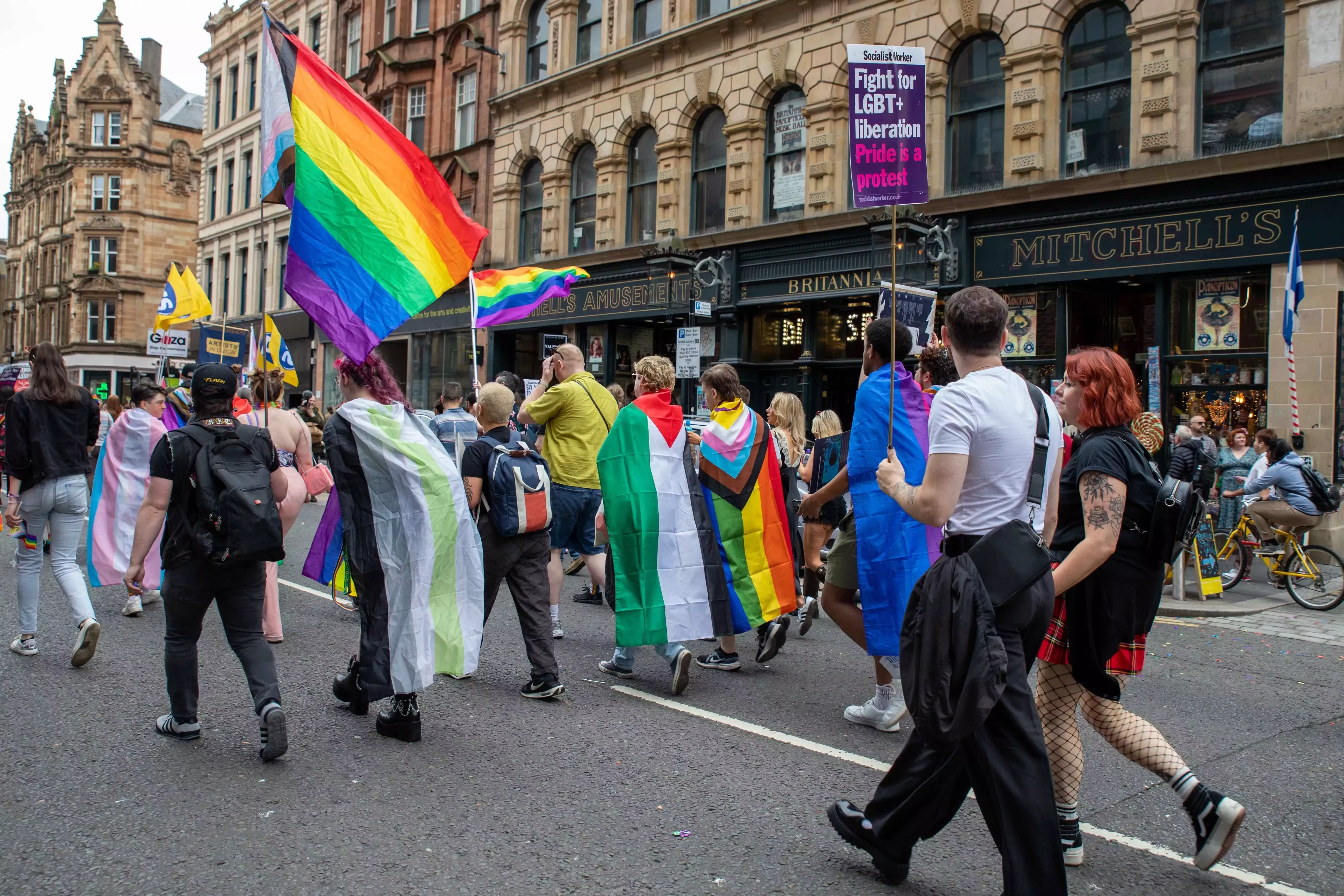
28. Glasgow, UK 

Glasgow, Scotland’s largest city, is a hub for inclusivity, with its lively Merchant City district being the LGTBQ+ capital. You can expect to find a variety of LGBTQ+ friendly bars and clubs, as well as a welcoming and open-minded atmosphere. Glasgow’s annual pride event amasses thousands of attendees each year, seeing proud members of the community come together to march and parade, surrounded by the signature rainbow flags. 

 Glasgow’s quality of life and general acceptance for the LGBTQ+ community is high, giving an indication of how strong its LGBTQ+ community and representation is. The city is also an LGBTI Core Group Member. 

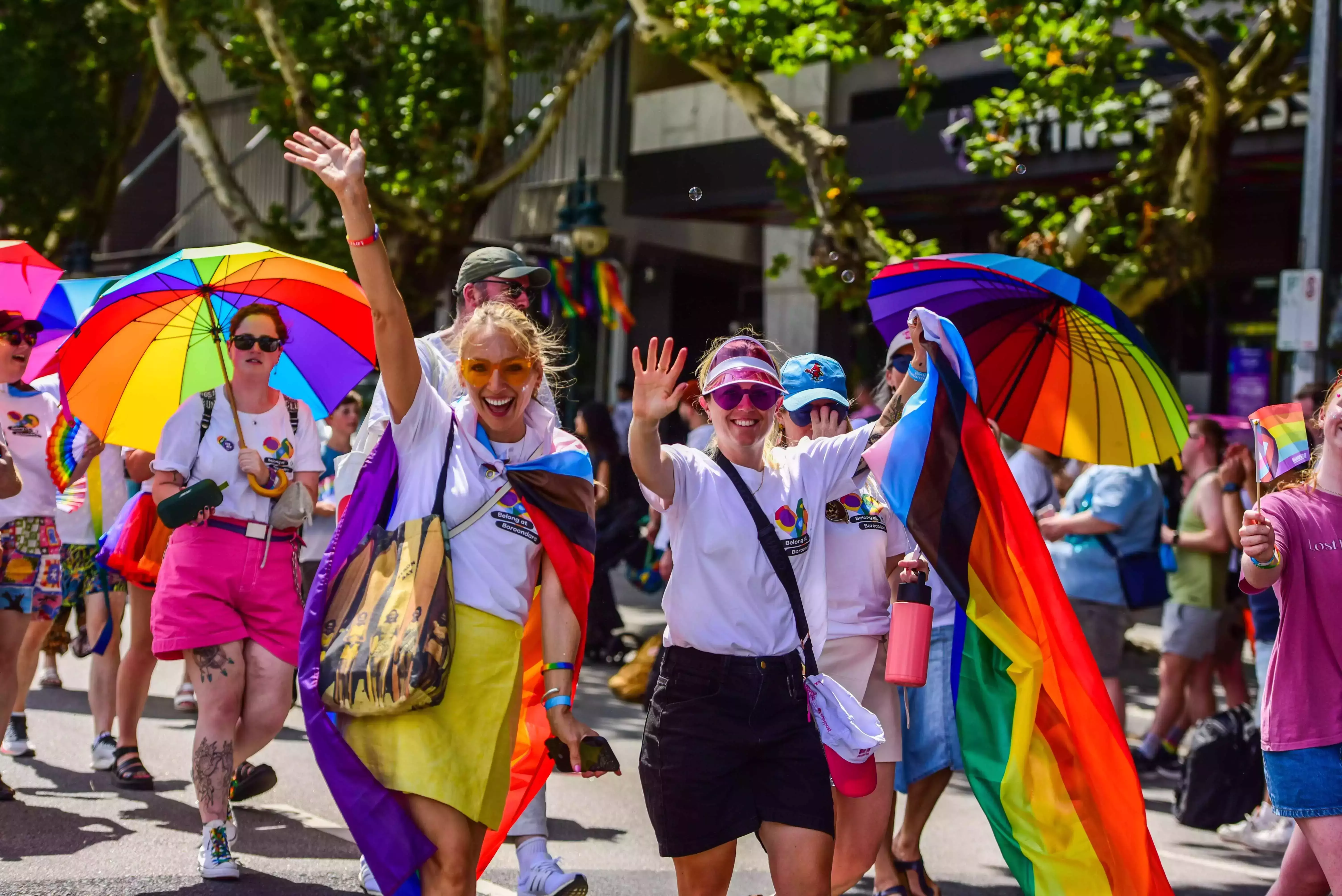
27. Melbourne, Australia

Melbourne is generally an accepting city for most types of groups within society, which gives an indication as to its welcoming and inclusive atmosphere. It scores highly on the Gay Index Rating, and is a member of the LGBTI Core Group, as well as scoring highly on the Equaldex Score. But, data aside, there is a thriving and welcoming community right at its core that appeals to all groups in society, whether members of the LGBTQ+ community or not.

Its annual Pride march has also surpassed 60,000 attendees in recent years. Melbourne’s Fitzroy area is considered to be the ‘gay village’, with a number of LGBTQ+ friendly bars and clubs and a buzzing atmosphere both before and after dark, but generally no matter where you go in Melbourne you’ll be met with a warm and friendly welcome. 

26. Taipei, Taiwan

You may not commonly associate Taiwan with LGBTQ+ communities, but its capital Taipei has one of the largest LGBTQ+ presences, with a vibrant LGBTQ+ presence in its Ximen Red House area of the city, which features a lively and bustling scene with bars and clubs. Taipei is known for its inclusivity, and is perhaps a hidden gem amongst the most LGBTQ+ friendly cities, but definitely worth a visit. Taipei also hosts its annual Pride march, which is considered to be the largest of its kind in East Asia, seeing an attendance of more than 120,000 in recent years. 

25. Barcelona, Spain

Barcelona, along with Madrid, are widely known as the LGBTQ+ capitals of Spain, with a high Gay Index Rating and a large Pride attendance across each city. Barcelona and the rest of Spain are highly regarded for their acceptance of the LGBTQ+ community, as Spain was one of the first countries in the world to legalise gay marriage in 2005. Barcelona has a thriving LGBTQ+ scene, with an abundance of gay bars, clubs and even beaches that cater to the LGBTQ + community – no matter where you go in Barcelona, you’ll be welcomed with open arms regardless of your sexual orientation or gender. 

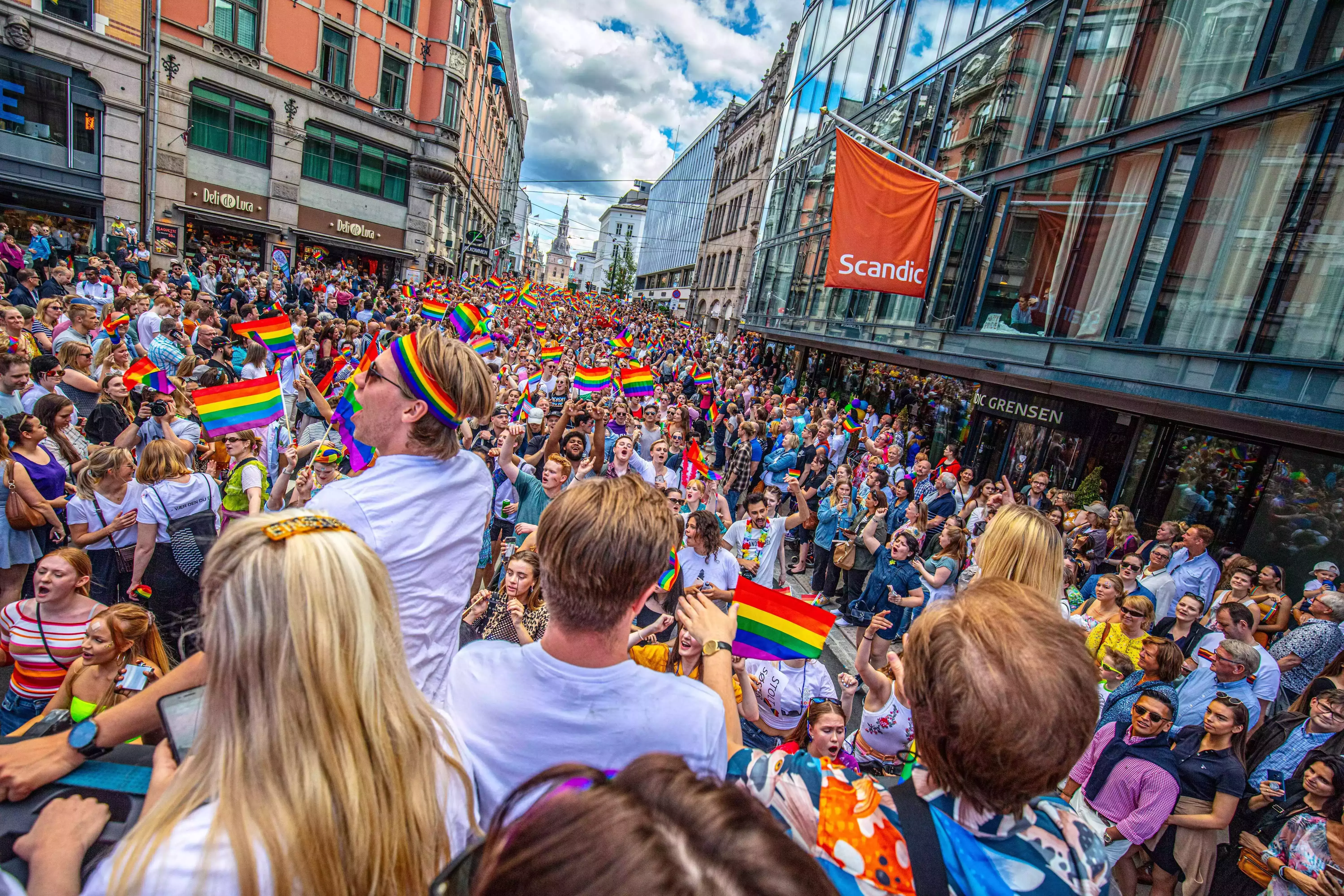
24. Oslo, Norway

Norway is commonly associated with being a liberal, inclusive and welcoming country, and its capital Oslo comes out on top in terms of LGBTQ+ representation and inclusivity. The city has high Equaldex Score and Gay Index Rating, so is a must-visit for members of the LGBTQ+ community. Did you know that Oslo also hosts an annual Pride event that has amassed around 90,000 attendees in recent years? Oslo’s main LGBTQ+ friendly area is Grünerløkka, where you’ll find a large collection of LGBTQ+ friendly bars, restaurants and clubs, although the city as a whole is welcoming and accepting no matter where you go.  

23. Helsinki, Finland

Scoring highly on both the Equaldex and Gay Index Rating, as well as having a large Pride attendance and overall LGBTQ+ presence, Helsinki is one of the best places to be if you want to feel welcomed with open arms in every corner of the city, no matter your sexual orientation, gender or who you identify as. 

Helsinki’s annual Pride march and parade typically sees more than 100,000 attendees, giving an idea of how inclusive the city really is. Finland is known for being a progressive and liberal country, and same-sex marriage has been legal in the country since 2017, having been decriminalised since the early 1970s and views changing in the early 80s.

22. Montreal, Canada

Montreal is one of the LGBTQ+ capitals of Canada, celebrating the community with a designated ‘gay village’ district and a large attendance to the city’s annual Pride events. Montreal is considered a trailblazer in terms of promoting and accepting LGBTQ+ rights, as Quebec was the first province of Canada to ban discrimination around sexuality and sexual orientation in 1977. As with much of the rest of Canada, Montreal has since adopted a liberal and accepting stance on LGBTQ+ communities, and scores highly on both the Equaldex and Gay Index rankings. 

21. Buenos Aires, Argentina

Argentina’s capital is often cited as the ‘gay capital of South America’, with a downtown district that is rife with gay bars, restaurants and clubs, and a high Gay Index Rating. Argentina was also the first Latin-American country to legalise same-sex marriage in 2010, and has since become the place to be in terms of inclusivity and LGBTQ+ rights.

Buenos Aires also has a large Pride attendance and citywide celebrations, with a thriving LGBTQ+ presence that makes the city rank highly for equality, inclusivity and representation. Aside from the obvious inclusivity that Buenos Aires offers, the city is a vibrant social hub and welcomes people from all social groups and communities.

20. Reykjavik, Iceland

Reykjavik has long been considered a haven for LGBTQ+ members and most groups in society, and although the city may be small, it packs a punch in terms of LGBTQ+ rights and representation. Reykjavik’s most recognisable street is so iconic thanks to its rainbow road, which indicates and highlights Reykjavik’s support for equality surrounding the LGBTQ+ community. Reykjavik’s Pride event is a large-scale affair, with thousands of locals and tourists attending to show their support. Reykjavik also has one of the highest Gay Index Ratings and Equaldex Scores. 

19. Bogotá, Colombia

Although Bogota has the lowest Equaldex score, it has a high Gay Index Rating and a vibrant gay village that features what is considered to be the largest gay club in South America, Theatron.

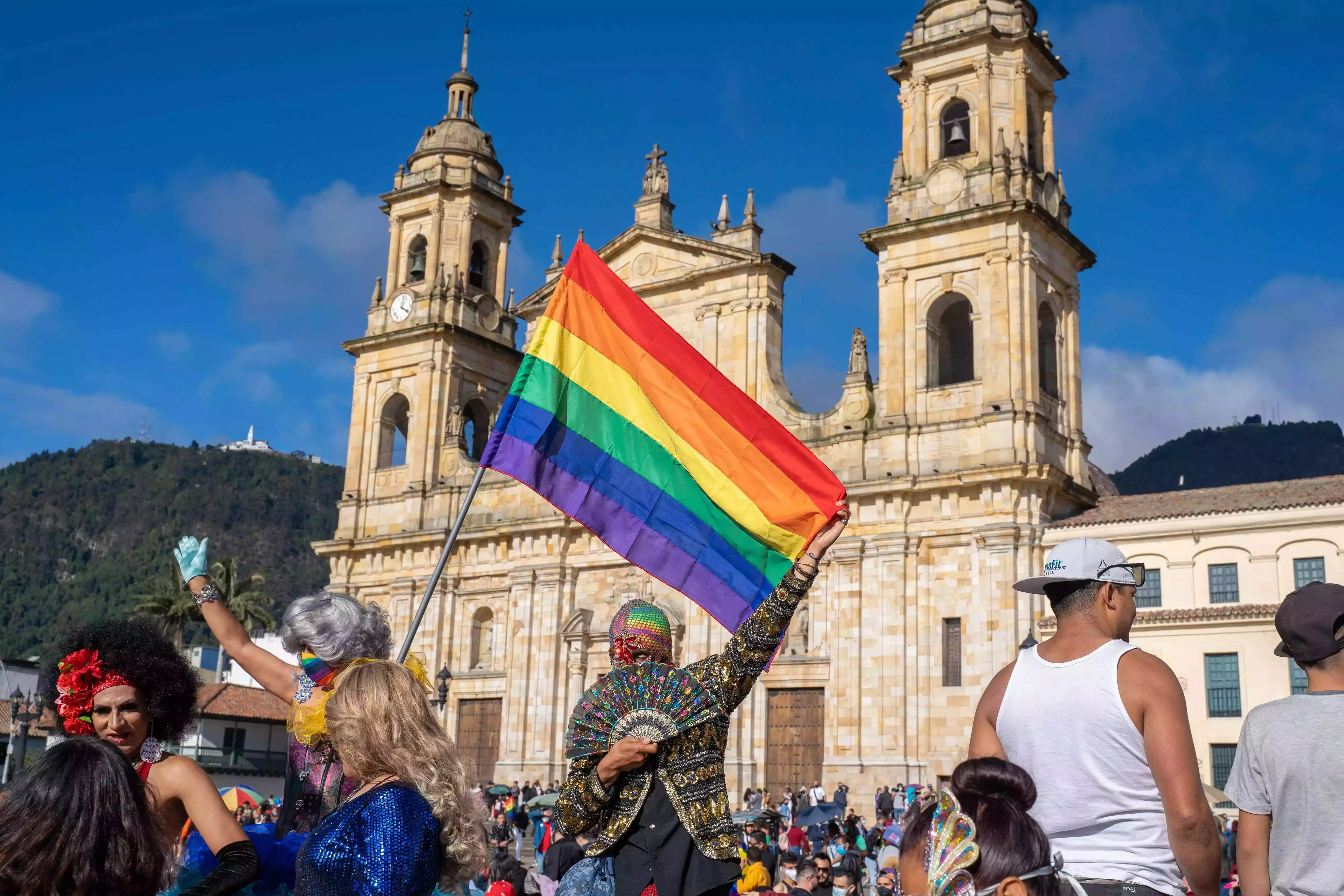
Bogota’s annual Pride event has also seen crowd sizes of more than 100,000 people, making it one of the largest Pride celebrations around. It’s clear that Bogota is a friendly, inclusive and welcoming place for every tourist, whether they’re part of the LGBTQ+ community or not.

18. Valletta, Malta

This small city packs an almighty punch in terms of LGBTQ+ inclusivity. Valletta ranks highly on both Gay Index Rating and Equaldex, with scores of 8.5 and 100, respectively, giving an idea of how supportive the city is for the rights of LGBTQ+. Valletta also sees a large turnout for its annual Pride festival and march, and has hosted the widely renowned EuroPride in 2023, adding to Valletta’s reputation as one of the most LGBTQ+ friendly cities in Europe. 

17. Copenhagen, Denmark

The Scandinavian countries are known for their progressiveness, inclusivity, liberal stances and welcoming and accepting cultures, especially when it comes to LGBTQ+ rights and support. Copenhagen, Denmark’s capital, is known for its lively and thriving LGBTQ+ community, with many gay bars and clubs, as well as a large Pride event. Denmark was one of the first countries in Europe to legalise gay marriage in 2012, and has recognised and accepted homosexuality since the 1930s. 

16. Cape Town, South Africa

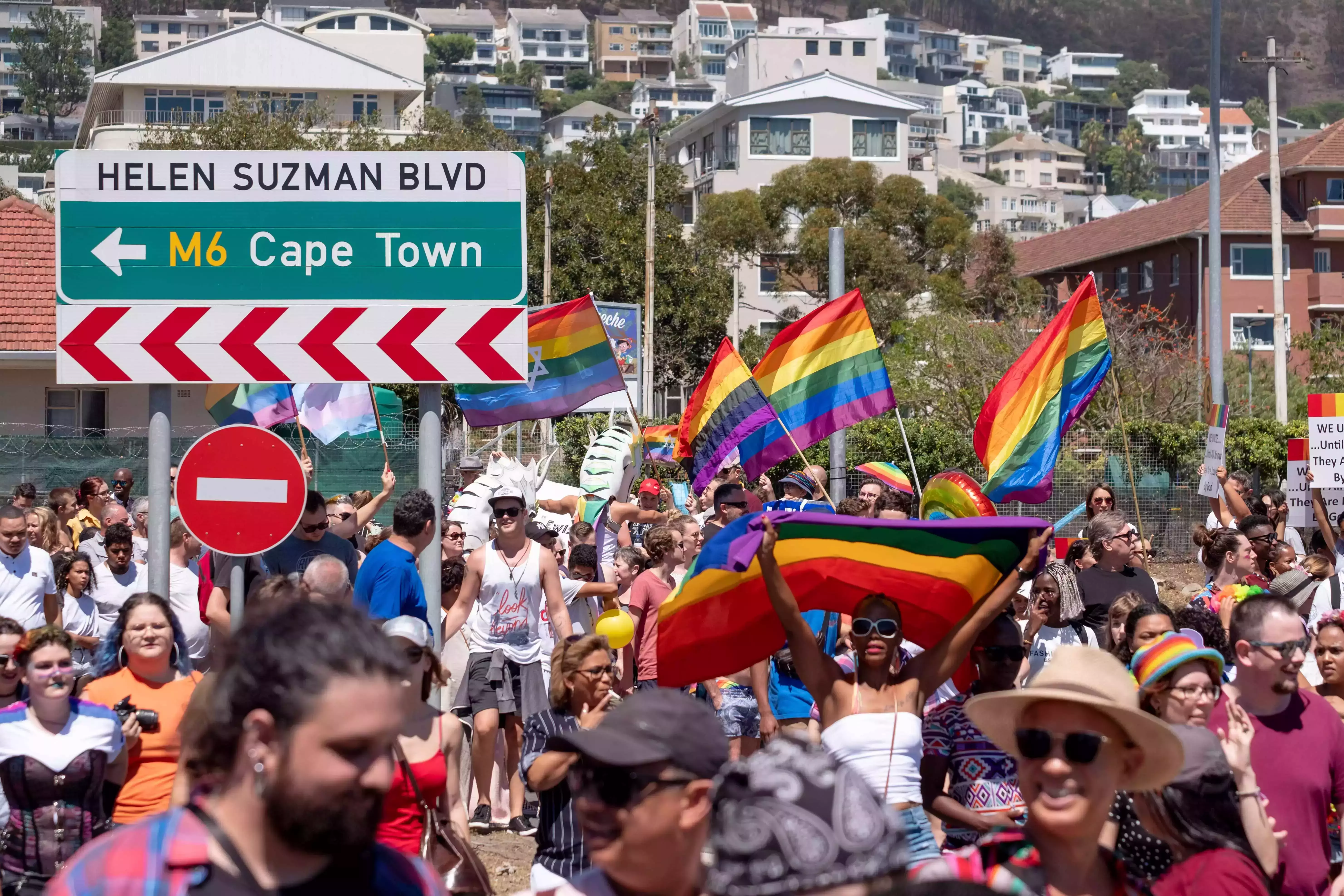
South Africa is a trailblazer for LGBTQ+ rights on the continent, becoming the first country in Africa to legalise same sex marriage in 2006, and Cape Town is at the heart of this legacy. The progressive and inclusive stance makes the city both welcoming and fun for queer locals and visitors, with a schedule of gay-friendly events throughout the year. The coastal capital bursts into the colours of Pride every February/March, and other vibrant celebrations include the Mother City Queer Project and the Out in Africa Film Festival. The De Waterkant neighbourhood is the city’s LGBTQ+ hub, with gay-owned bars, gyms, shops, and cafes, as well as the iconic rainbow crossing – a visual representation of South Africa’s anti-discrimination laws.

15. Mexico City, Mexico

Mexico City was the first Latin American city to legalise same-sex marriage in 2007, and since then, the city has upheld their views and stances on LGBTQ+ support. The city celebrates with one of the world’s largest Pride events, having been attended by more than 1 million people in recent years.

Mexico City scores well on the Gay Index and Equaldex Rating, and its Zona Rosa region is one of the liveliest LGBTQ+ hubs around. It’s safe to say that you’ll be welcomed and supported as a member of the LGBTQ+ community in Mexico City.

14. Cologne, Germany

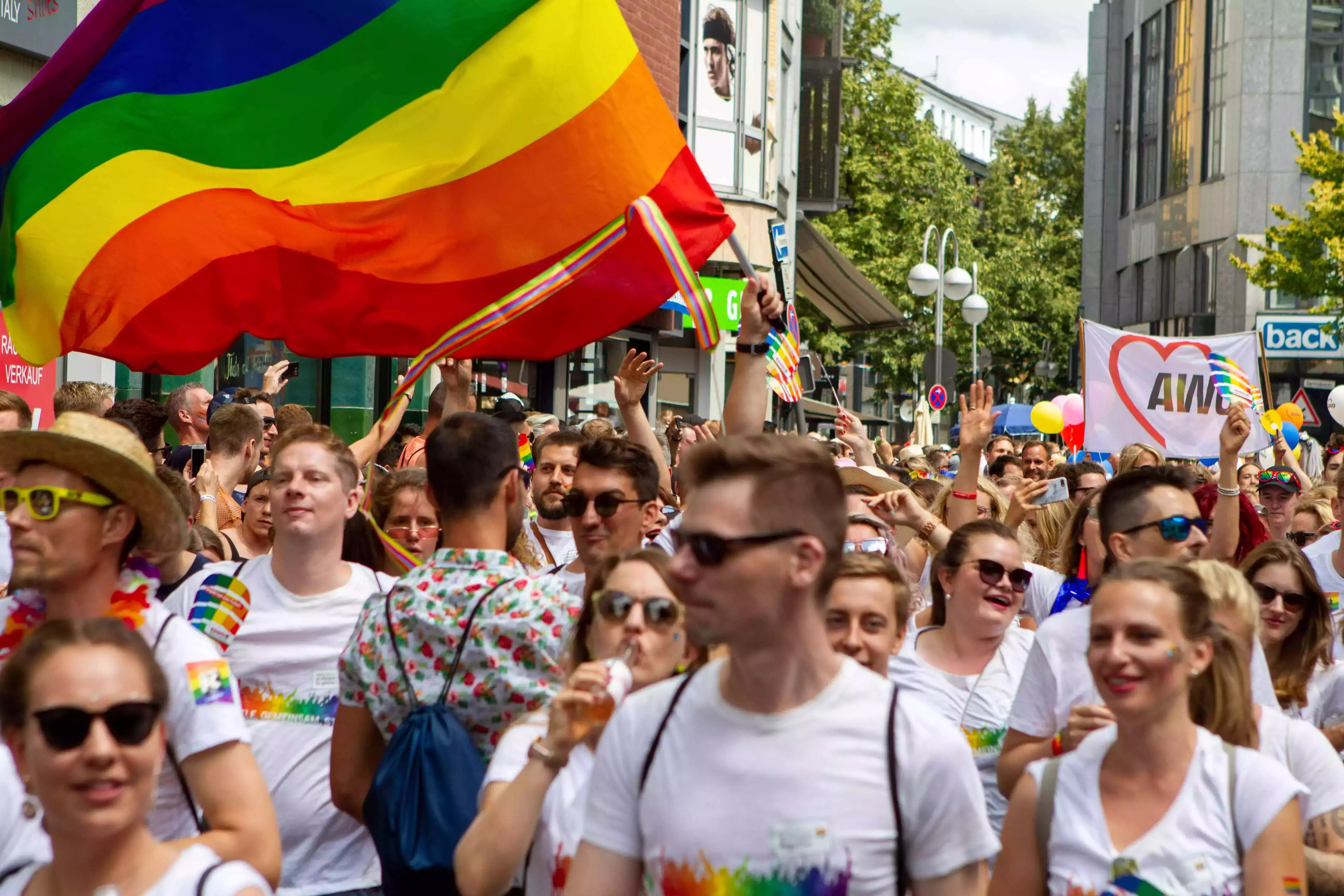
Although this city underperforms on the Gay Index Rating, its quality of life and inclusivity for members of the LGBTQ+ community far outweigh this. Cologne’s Pride is the largest in Germany and one of the largest in Europe, with over 1 million attendees in recent years.

Cologne is also often considered by many as the ‘gay capital of Germany’, thanks to its large-scale Pride attendance and modern and progressive views on the LGBTQ+ community and rights. Cologne is a vibrant and lively city, with a population that is accepting, friendly and welcoming to every tourist, no matter their social group or community.

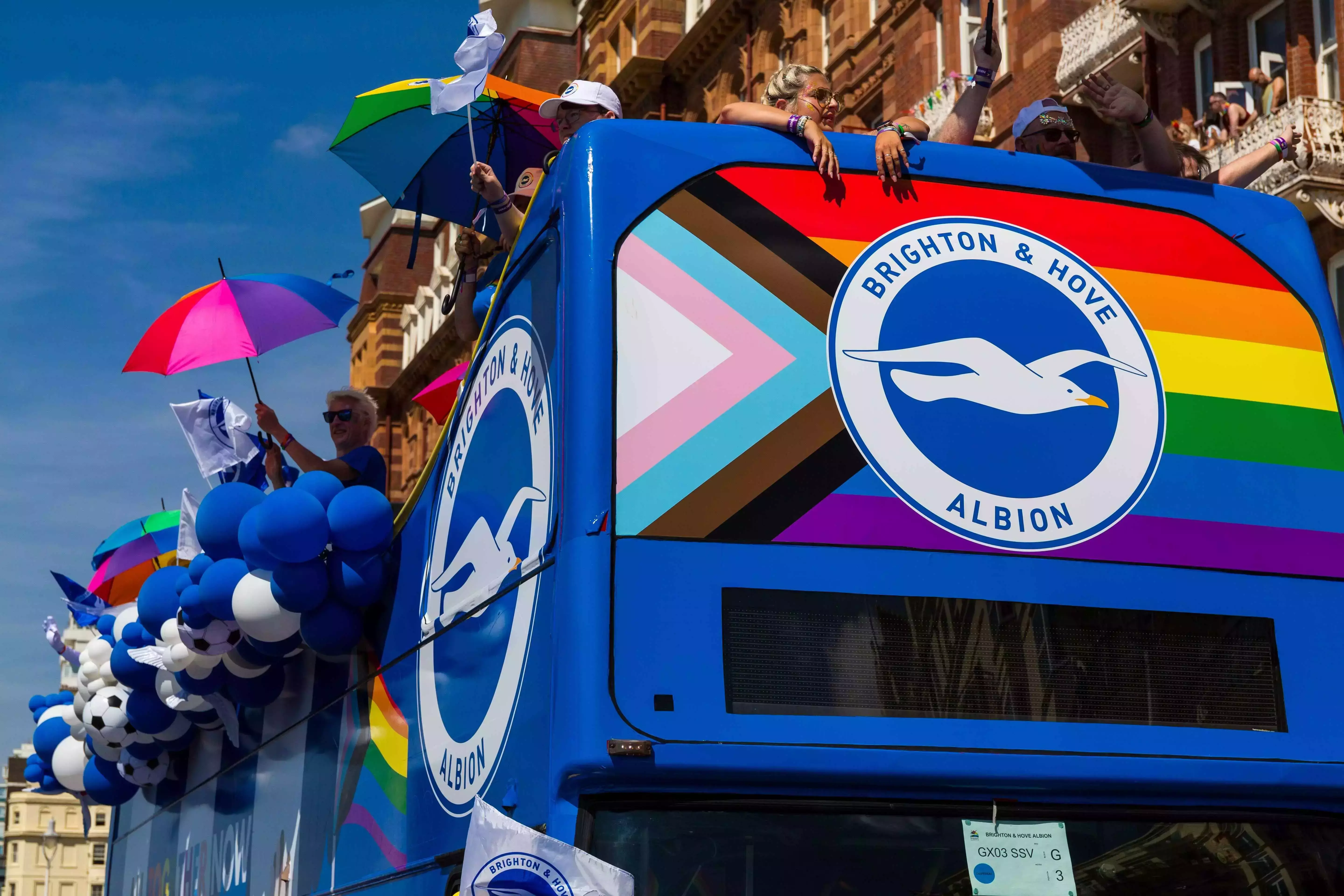
13. Brighton, UK

Brighton has a reputation in the UK for being the ‘gay capital’, with a strong sense of community, support and representation for all members of the LGBTQ+ community. Brighton has long had a reputation for its LGBTQ+ scene, dating back to the 1930s, when the city flourished as an inclusive and openly LGBTQ+ space.

The city has since embraced its LGBTQ+ population with an annual large-scale Pride event that sees more than 500,000 attendees. The city is well known for its Pride event, which has been cited as the best in the UK, and its resident gay village and LGBTQ+ district of Kemptown is rife with inclusive bars, clubs and spaces.

12. Paris, France

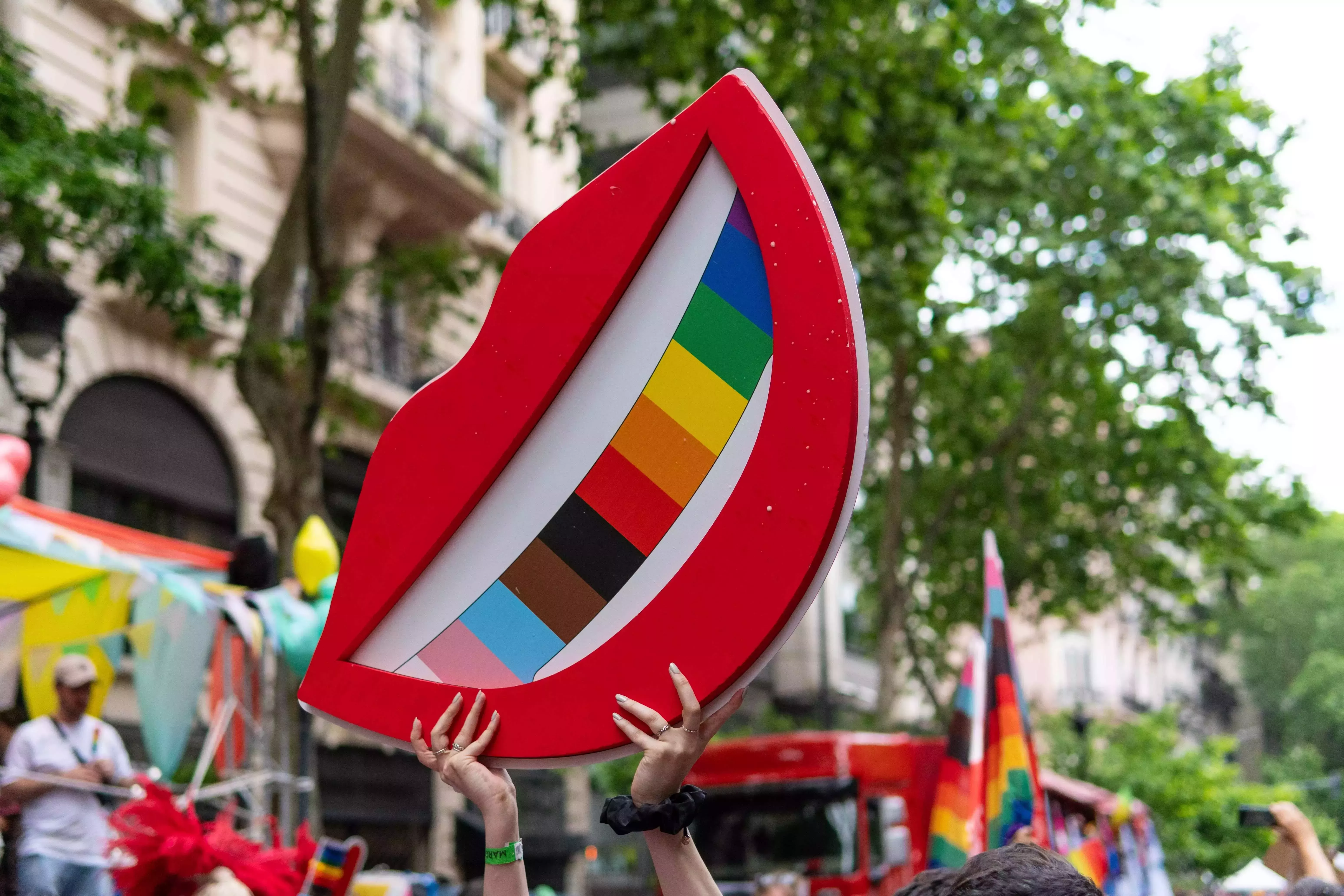
Paris really comes out on top with its diversity and inclusion for all groups in society. Paris’s annual pride event regularly attracts more than 700,000 attendees, and its vibrant and thriving Marais district is associated with a large LGBTQ+ population. Paris and France as a whole legalised same-sex marriage in 2013, making them one of the first countries/cities in Europe to do so.

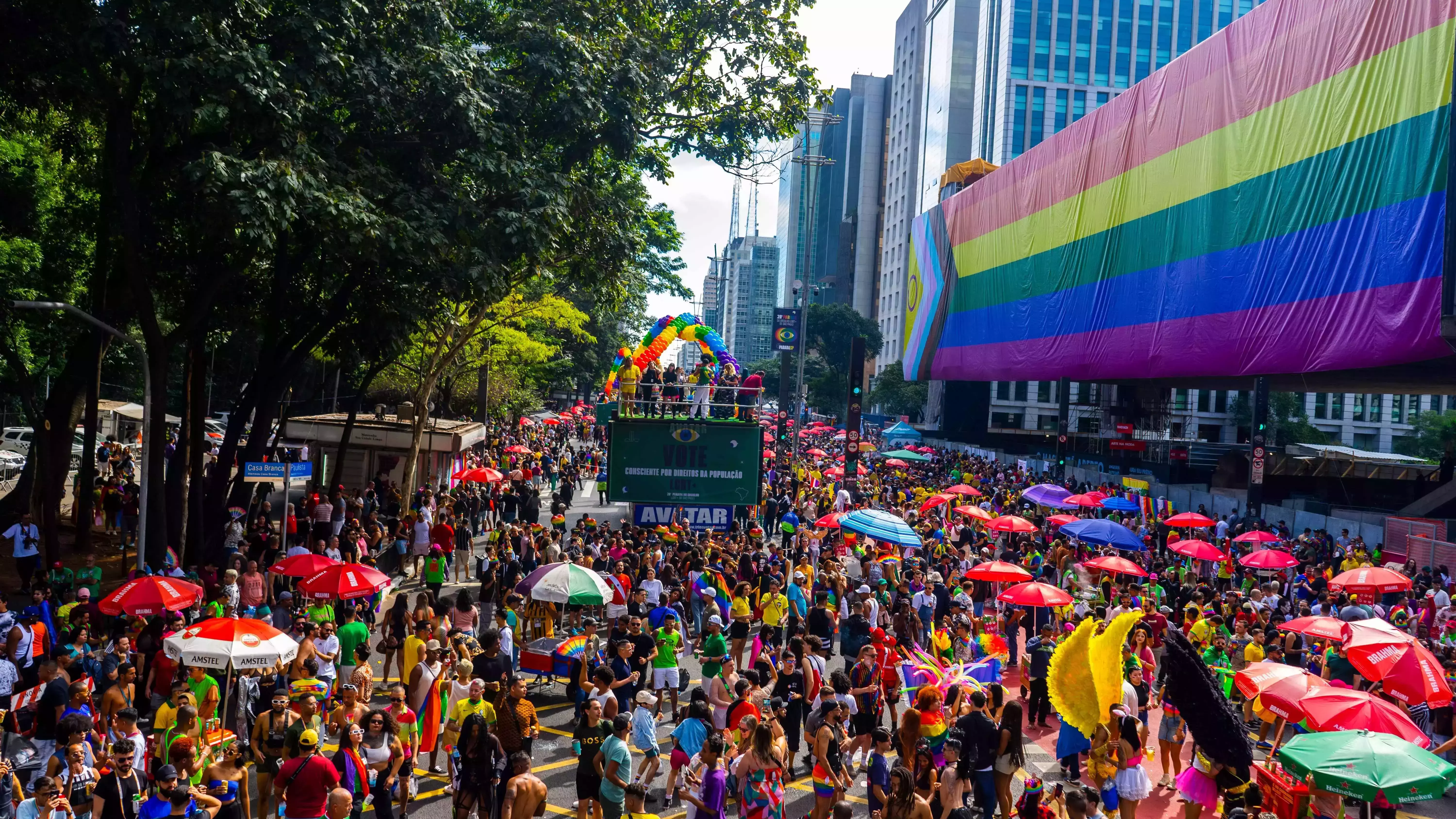
11. São Paulo, Brazil

If there’s one thing Brazil knows how to do, it’s throw spectacular street parties and parades. São Paulo’s annual Pride is often considered to be the largest in the world, with more than three million attendees in recent years. São Paulo has also featured in the Guinness World Record for the size and scale of its Pride event. 

What’s more, the city is a hub for all things LGBTQ+, with a lively district dedicated to welcoming and representing its LGBTQ+ population. Although the city has a relatively low Gay Index Rating and Equaldex Score, its citywide celebration of LGBTQ+ is enough to make it rank highly for best LGBTQ+ friendly cities. 

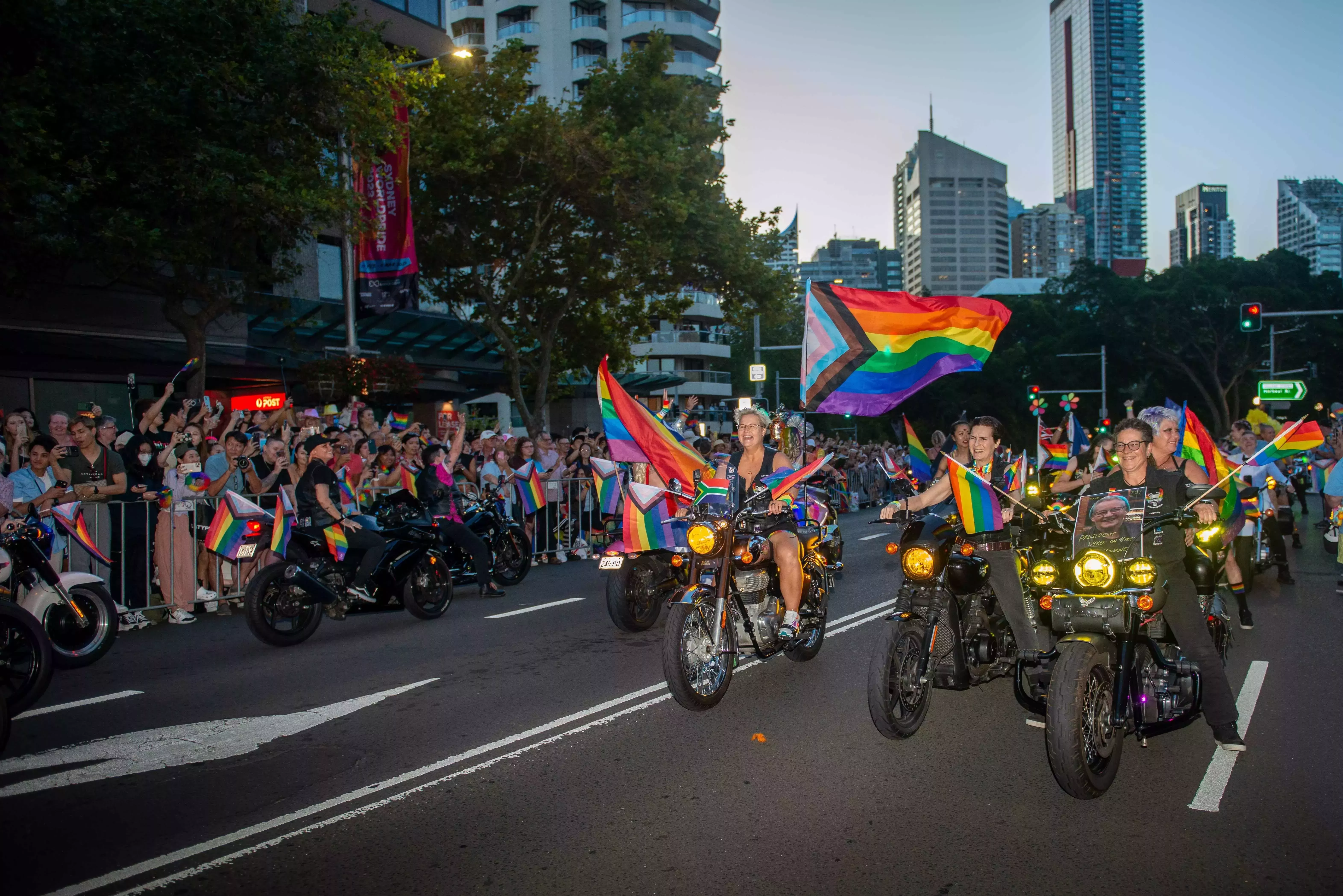
10. Sydney, Australia

Sydney is one of the most LGBTQ+ friendly cities in the world, and the gay capital of Australia, with its annual Gay and Lesbian Mardi Gras festival leading the way in LGBTQ+ representation and support. Sydney’s Darlinghurst region is considered the gay hub of the city, and has a lengthy history of supporting and upholding LGBTQ+ community rights. Sydney ranks highly on both the Equaldex and Gay Index rankings, and it is a member of the Core LGBTI Group. 

 Sydney and Australia as a whole have a long history of protecting and supporting the rights of LGBTQ+ members, as homosexuality was decriminalised in the state of New South Wales in 1984, and same-sex marriage was legalised in Australia in 2017. Its annual Gay and Lesbian Mardi Gras event also sees attendees of more than 200,000, making it the largest Pride event in Australia and Oceania as a whole. 

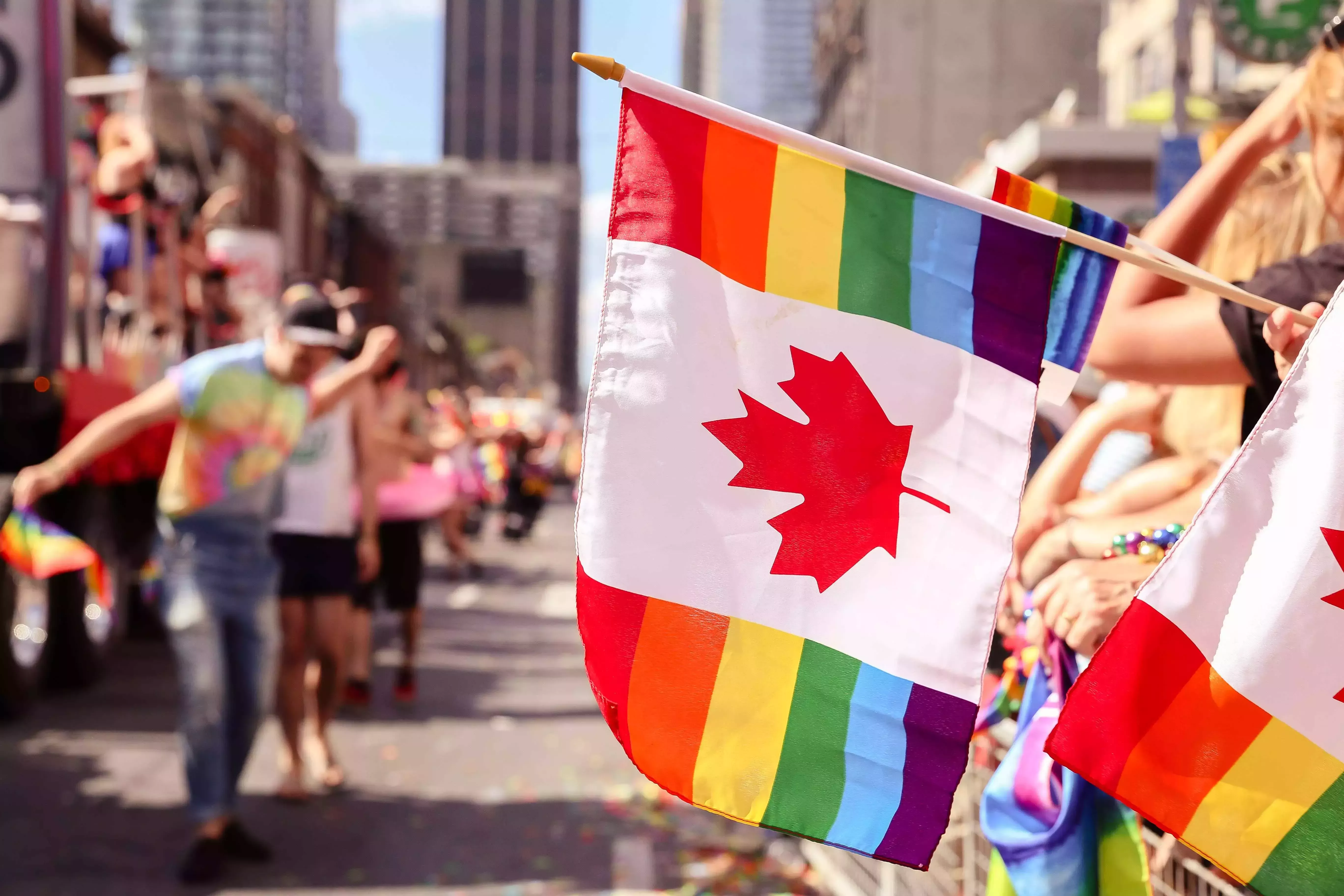
9. Toronto, Canada 

Canada’s largest city hosts the country’s largest Pride event, with just shy of 3 million attendees in recent years, making it North America’s largest and most spectacular Pride Event. Toronto is a buzzing hub for queer peoples, and is one of the most LGBTQ+ friendly cities in the world. Its Church and Wellesley district is the focal point for the LGBTQ+ community, as it is rife with bars, clubs and spaces that are openly supportive. 

In terms of statistics, Toronto has a Gay Index Score of 8 and an Equaldex Score of 100, making it one of the best cities for the community. Toronto and Canada as a whole’s LGBTQ+ history is lengthy, with homosexuality becoming decriminalised in the late 1960s, and same-sex marriage being legalised in 2003 in Ontario Province, with the rest following suit not long after.

8. San Francisco, USA

San Francisco is a trendy and diverse Californian city, considered the gay capital of the state. The city is often ranked highly among the world’s most LGBTQ+ friendly cities, and has a sprawling LGBTQ+ scene and district that makes it welcoming and appealing to all members of the community. The city’s annual Pride event is also one of the largest in the US and the world, with around 1 million attendees in recent years. San Francisco and California State are known for their more liberal and progressive views on several matters, not just gay rights, so it makes sense that San Francisco adopts the same inclusive views and atmosphere. 

San Francisco ranks at 8.5 on the Gay Index Ranking and at 100 on the Equaldex, giving an indication of its support of LGBTQ+ rights and representation. San Francisco was also one of the first cities in the US to allow same-sex marriage in 2004, despite it not being legal statewide until 2013. Since this, San Francisco has been recognised as one of the LGBTQ+ capitals of the US. 

7. Amsterdam, Netherlands

Did you know that the Netherlands was the first country in the world to legalise same-sex marriage in 2001? The city is home to some of the most progressive and liberal views on LGBTQ+ communities in the world. It also has one of the longest LGBTQ+ histories, with homosexuality apparently being decriminalised as far back as 1811, and gay bars and clubs being established in the late 1920s. Since then, Amsterdam and the Netherlands as a whole have become inclusive, supportive and proud of their resident LGBTQ+ communities. 

 Amsterdam itself has a Gay Index ranking of 8, and an Equaldex score of 100, and its lively Canal Parade Pride event sees attendee numbers of more than 500,000, making Amsterdam’s Pride scene one of the largest in Europe and the world. Amsterdam’s Reguliersdwarsstraat region is the most significant LGBTQ+ area in the city, with a collection of LGBTQ+ friendly establishments, bars, clubs and restaurants. 

6. Berlin, Germany

Berlin has a lengthy history of supporting and protecting LGBTQ+ rights, and is one of Germany’s ‘gay capitals’, and certainly one of the ‘gay capitals’ of Europe. The city has, for a long time, recognised and respected the rights of LGBTQ+ members, with a thriving gay village and a strong sense of community and inclusivity across the city. 

Berlin ranks highly on the Gay Index and has a high Equaldex score, demonstrating how inclusive and safe it is for proud LGBTQ+ members. Its annual Pride event attracts between 500,000-1 million attendees, with the whole city and tourists coming together to support the community and partake in parades and marches. Germany is known for its progressive and liberal stance on LGBTQ+ rights and protection, so it makes sense that Berlin is a thriving hub for community members. 

5. Madrid, Spain

With a thriving LGBTQ+ culture, Europe’s largest Pride event with more than 2 million attendees, and a plethora of LGBTQ+ friendly bars, clubs and restaurants, Madrid is definitely the place to be. Spain was one of the first countries in the world to legalise same-sex marriage in 2005, and homosexuality was legalised in 1979. 

Madrid has a thriving LGBTQ+ community and scene, and caters to the community in a number of inclusive ways. Its Pride event is one of the city’s most important events of the year, and sees well over 2 million people attend each year. Madrid also has one of the highest Gay Index scores and an Equaldex score of 100. 

4. London, UK

London is associated with a thriving and strong LGBTQ+ presence, and a number of gay bars, restaurants and exclusive LGBTQ+ spaces. Soho is the beating heart of the LGBTQ+ community, with a wide range of LGBTQ+ friendly spaces, but most of London is accepting and inclusive towards the community. Not only does London score highly on both the Gay Index and Equaldex rankings, but since the late 1960s, views and laws surrounding same-sex activities have become much more liberal and accepting, with same-sex marriage becoming officially legal across the UK in 2013. 

London’s annual Pride event sees a turnout of more than 1 million people, making it one of the largest Pride events in the world. London also has a lengthy and significant LGBTQ+ history, with activism, marches and events being at the forefront. It’s safe to say that London is not only the capital of the UK, but it is one of the capitals of the world when it comes to LGBTQ+ rights and acceptance.

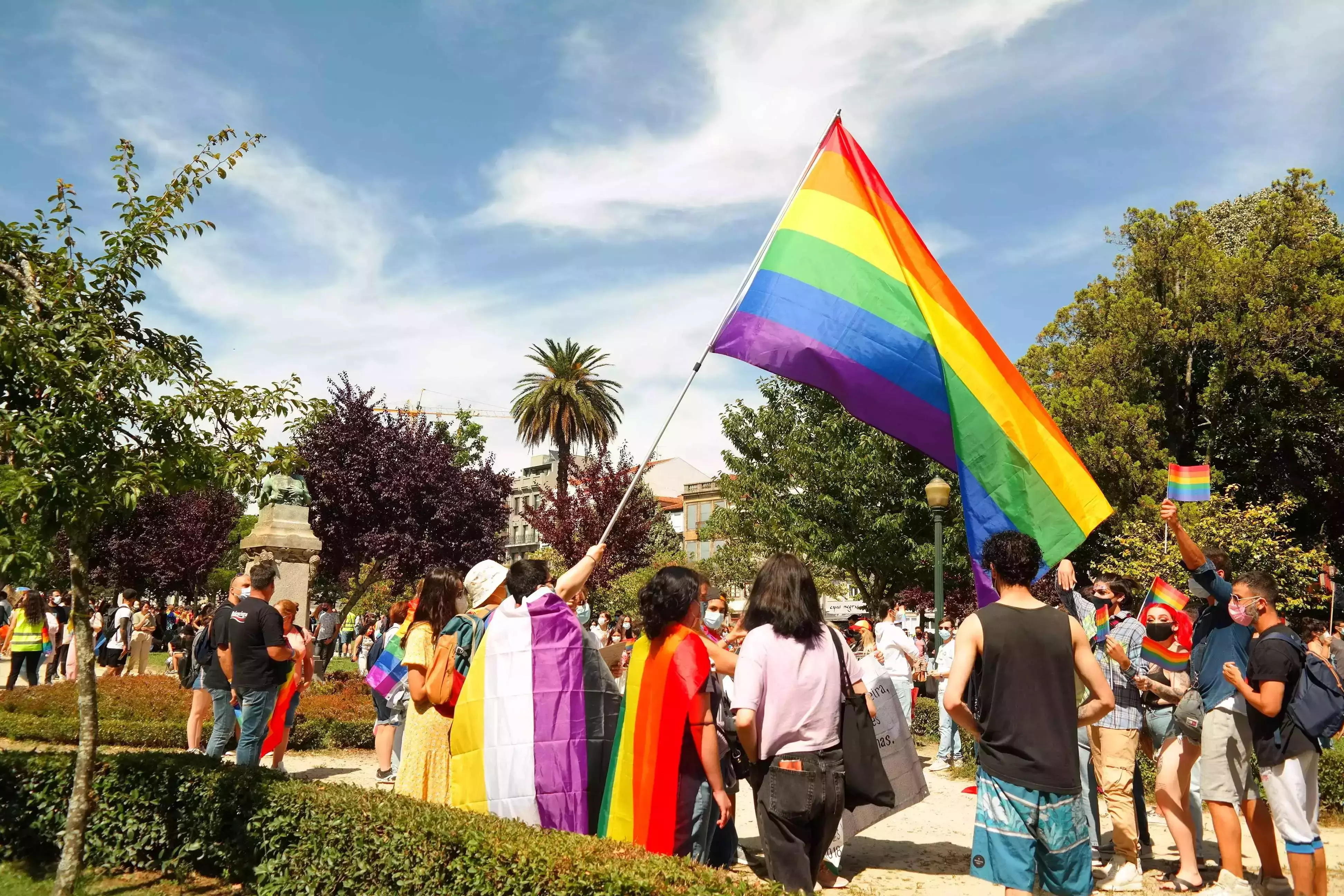
3. Porto, Portugal

First and foremost, Portugal was one of the first countries to legalise same-sex marriage in 2010, with its cities of Lisbon and Porto becoming thriving LGBTQ+ hubs since.

,Porto’s main LGBTQ+ district is Galerias de Paris and several other spots around the city, but the city as a whole has an inclusive and accepting feel no matter where you go. Although Porto has one of the lowest Gay Index scores of 6.9, it makes up for it with its Pride celebration that sees a significant turnout and its high Equaldex score of 93. 

2. Dublin, Ireland

Dublin hasn’t always been the safe and accepting place for the LGBTQ+ community that it is now, but views and laws have drastically changed since homosexuality was decriminalised in 1993, and same-sex marriage was legalised by popular vote in 2015, making Ireland the first country in the world to legalise it in this way. 
Dublin is now a thriving hub for all members of the community. The city’s progressive stances on LGBTQ+ make it all the more welcoming and inclusive to people of all backgrounds. To further Dublin’s changing views on LGBTQ+, its annual Pride event sees attendees of more than 70,000 take to the streets in solidarity for the community and its rights. 

1. Lisbon, Portugal

Now we come to number 1, the world’s most LGBTQ+ friendly city: Lisbon. The city is a trailblazer in cultivating a safe, supportive, and fun community for queer people. It’s not just the capital that’s gay-friendly; Portugal decriminalised homosexuality in 1982 and was the eighth country in the world to legalise same-sex marriage in 2010. 

The city’s chart-topping Equaldex score of 100 solidifies it as an inclusive powerhouse, and Lisbon celebrates in true festive style with a colourful, fun-filled Pride weekend in June. Lisbon also hosts the International Queer Film Festival.

10 Unique And Safe Places To Get Married If You’re Gay

Check out this slideshow put together and posted to MSN.

While some places still make same-sex marriage complicated (or even illegal), others celebrate it fully, offering welcoming venues and stunning locations for your big day. If you’re looking for somewhere unique, safe, and unforgettable to say “I do,” these destinations offer the perfect mix of charm, romance, and friendliness toward the queer community.

The cities mentioned in the slideshow are:

Amsterdam Netherlands

Queenstown New Zealand

Toronto Canada

Cape Town South Africa

Reykjavik Iceland

Barcelona Spain

Valleta Malta

Sydney Australia

Mexico City Mexico

Copenhagen Denmark

Each town on the slide deck has a short excerpt about why the author included them. Be sure to read it.

Also be sure to check out our world map for more info on moving to various countries.

15 Best Countries for LGBTQ Expats – NBC News

This blog originally appeared at NBC News.

Prior to this week’s stunning presidential election results, a number of LGBTQ advocates and celebrities threatened to leave the U.S. should Donald Trump be elected. Now that the real estate mogul and reality TV star is America’s president-elect, NBC OUT has compiled a handy list of LGBTQ-friendly countries for U.S. expatriates.

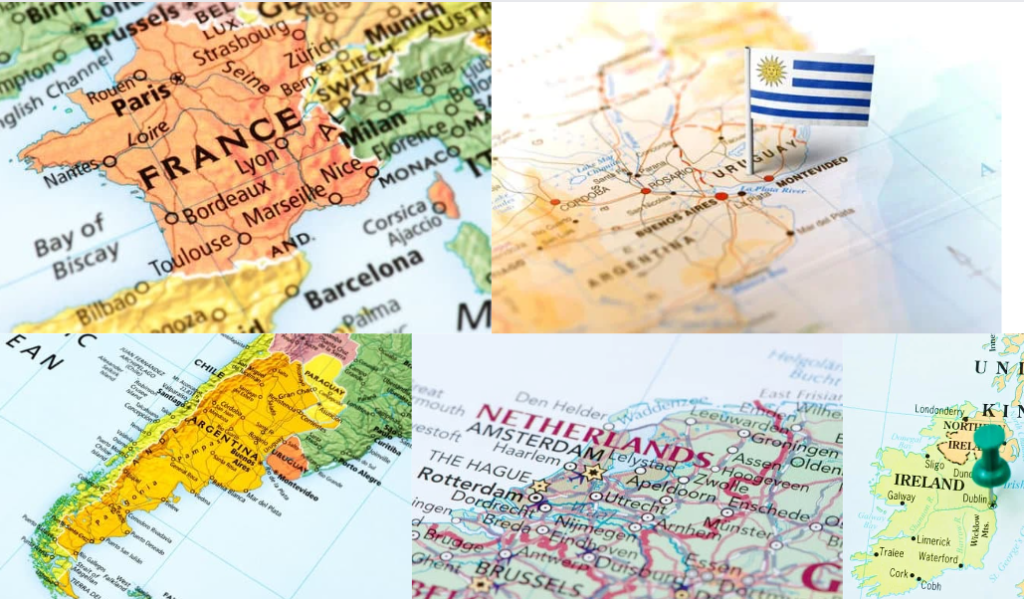
Argentina, Belgium,Canada, Denmark,France, Iceland,Ireland,Luxembourg,New Zealand,The Netherlands,
Norway,South Africa, Spain, Sweden,Uruguay,

Read Full Article – https://www.nbcnews.com/feature/nbc-out/15-best-countries-lgbtq-expats-n683201


If you’re ready to look for a better state or county for you and your family (or family of choice), reach out to us at www.FleeRedStates.com

Blog at WordPress.com.

Up ↑