Referral claims for refugee protection in Canada from people in the U.S. have already surpassed last year’s total, based on data from Immigration and Refugee Board of Canada (IRB). These referrals also spiked the last time President Donald Trump was in office.
While there were 204 U.S. claim referrals to the board’s Refugee Protection Division total last year, 245 claims were referred to the RPD from January through June of this year. Trump was inaugurated in January.
For some perspective, there were 216 referrals listed from Afghanistan during that same time period this year, 62 listed from El Salvador, 2,784 listed from Mexico, 265 listed from Palestine, 260 listed from Syria, 403 listed from Venezuela and 131 listed from Yemen.
At the start of former President Joe Biden’s term in 2021, there were 118 claim referrals from the U.S., with the same number the following year – both a drop from 154 in 2020. In 2023, the number of referrals increased to 157.
However, back in 2013 – the first year that the IRB has data for – there were just 69 referrals. That was during the second term of former President Barack Obama, and while he was in office during 2014 and 2015 referrals were at 88 and 69 respectively. They increased to 129 in 2016, when Trump was campaigning against Democratic candidate and former Secretary of State Hillary Clinton.
During Trump’s first year in office in 2017, the referrals skyrocketed to 869. In 2018, they were still higher at 642, followed by 423 in 2019.
When asked by Newsweek about the referral increase this year, White House Deputy Press Secretary Anna Kelly said: “Why does Newsweek care about this .00007 percent of the population who want higher taxes, worse health care, and anti-American trade policies?”
Bloomberg reported this week that officials from the U.S. and Canada are expected to discuss tariffs soon. That outlet has also reported on an influx of people from the U.S. attempting to cross the border into Canada. It said that “during the first six days of July, Canadian officials at the Saint-Bernard-de-Lacolle border crossing – the busiest land port between New York and Quebec – received 761 asylum claims, a more than 400% increase from the same period a year ago.”
In Canada, refugee advocates, federal government departments and immigration lawyers were already bracing for asylum claimants from the U.S. in January, according to the CBC.
“With Trump, crystal balls are hard to keep clear,” said Gabriela Ramo, past chair of the Canadian Bar Association’s immigration section, per the outlet.
In addition to the crackdown on illegal immigration, reasons why people might be seeking to leave the U.S. cited by Newsweek include U.S. policy shifts and court rulings have restricted access to gender-affirming care, limited who can serve in the military, and imposed rules on participation in sports and the use of certain facilities. This month, Audacy reported that the president’s approval rating even among his own party was slipping. This Tuesday, Gallup reported that Trump’s polling was “tepid” this month at 40%. Economist approval tracking updated Tuesday showed that his rating was up slightly compared to the previous week at 41%.
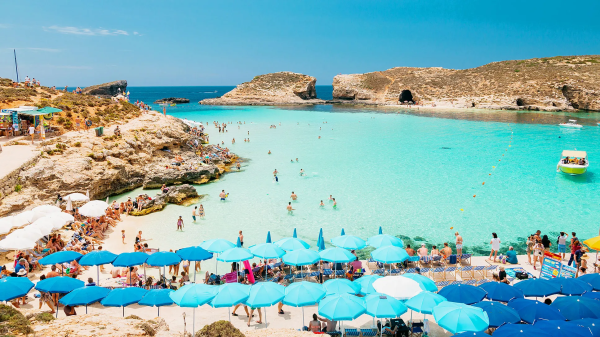
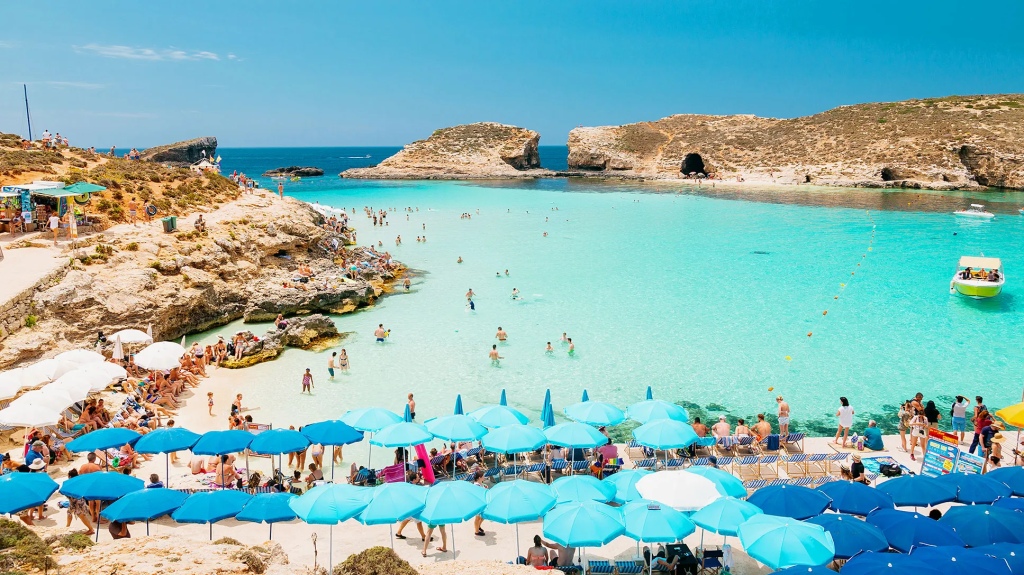
Moving to a new country is a big decision, and for LGBTQ Americans, finding a place that is not only welcoming but also legally protective is a top priority. While many European nations have made significant strides in LGBTQ+ rights, one country consistently stands out for its progressive laws and accepting culture: Malta. This tiny island nation in the heart of the Mediterranean has become a beacon of hope, earning a reputation as one of the most LGBTQ-friendly countries in the world.
Malta’s journey to becoming an LGBTQ+ rights leader is a remarkable story of rapid progress. For several years, it has topped the ILGA-Europe’s Rainbow Map, a ranking of 49 European countries based on their legal and policy practices for LGBTQ+ people. This isn’t a fluke; it’s the result of a concerted effort to enshrine equality into law. Same-sex sexual activity was decriminalized in 1973, but the most significant changes have happened in the last decade.
In 2014, Malta legalized civil unions, giving same-sex couples the same rights and responsibilities as married couples, including the right to adopt children. Just three years later, in 2017, the country took the monumental step of legalizing same-sex marriage, a move that replaced the traditional “husband and wife” with the gender-neutral term “spouses”. This wasn’t just a legal formality; it was a powerful statement of inclusion.
Beyond relationship recognition, Malta has also been a trailblazer in other areas. In 2016, it became the first country in the European Union to ban conversion therapy, a harmful and discredited practice [4]. The Gender Identity, Gender Expression and Sex Characteristics Act of 2015 allows transgender people to change their legal gender without the need for surgery or a medical diagnosis, a process based on self-determination [5]. The country also provides gender-affirming care and has banned intersex infant surgeries without medical necessity. These protections extend to employment, housing, and healthcare, ensuring that LGBTQ+ individuals are shielded from discrimination in their daily lives.
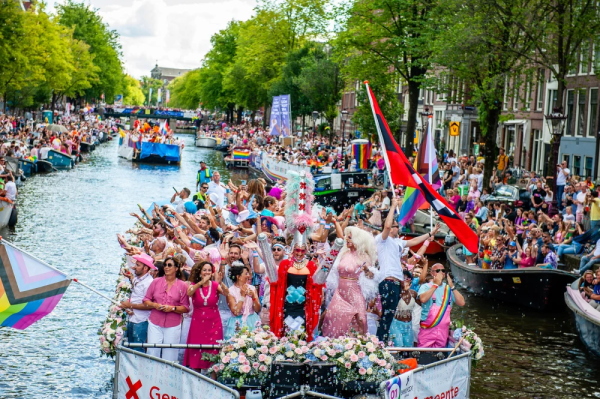
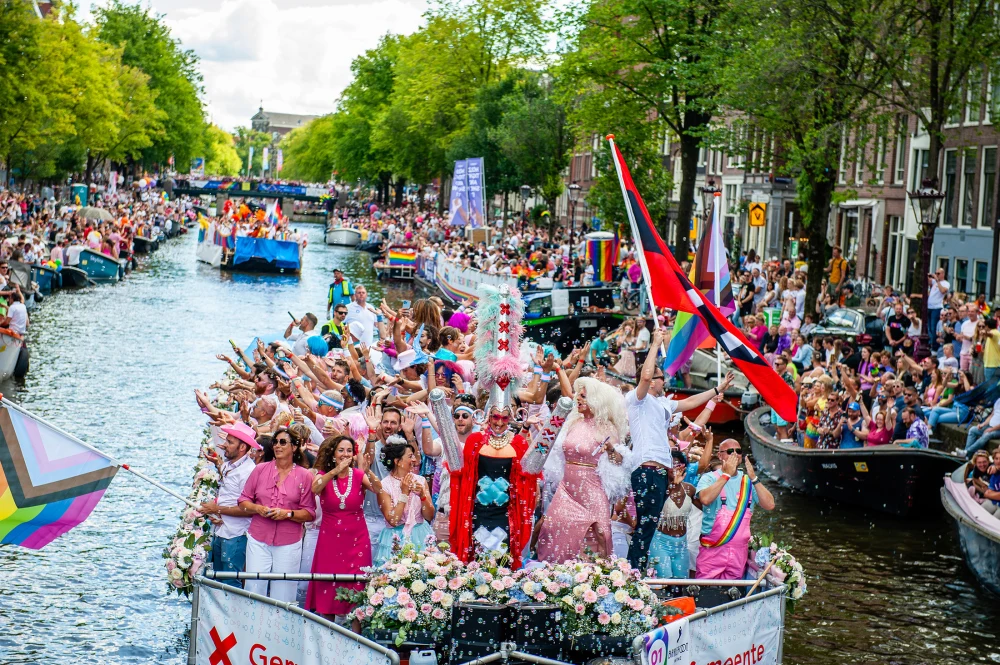
While a country’s legal framework is crucial, the lived experience is just as important. Malta’s culture, while traditionally Catholic, has shown a remarkable shift toward acceptance. Public displays of affection are generally well-received, and the LGBTQ+ community is active and visible. Valletta, the capital, and nearby Sliema are known for their vibrant scenes, with dedicated gay bars, clubs, and events, including a lively Pride celebration in September. Rabat has also been mentioned.
So How Do I Get There?
As with any country friendly to immigration, you have options. You can try out living there first simply by applying for a Digital Nomad visa, and become a full time paid blogger. There are other programs to establish residence, which include investing locally. You can buy or rent property as well.
For LGBTQ Americans considering a move abroad, Malta offers a compelling combination of legal protections, a high degree of social acceptance, and a beautiful, sunny, and historic location. The country’s commitment to equality is not just a passing trend; it’s a foundational principle that makes it an ideal place to call home.
Better Abroad? explores the lives of expatriates around the world who have uprooted their lives to move across physical and emotional boundaries in search of a better life. Through an artful lens, historical and cultural context, and engaging and authentic interviews, viewers will get to know each expat intimately—deeply feeling the experience of each character through their own narrative. Episodes will explore the critical moments or events that motivated their decisions as well as the peaks and valleys of their life-changing journeys. In this raw but beautiful look at the complexities of expat life, this series will provide viewers with a new thought provoking experience in each episode. Different expats on different paths. Different countries. One question. Is life Better Abroad?
We sit down and discuss this topic with Liz and Sarah.
If you’re an LGBTQ person looking for a better place, listen to Shasta as she tells you about Mexico.
For many LGBTQ+ Americans, the current political climate in the U.S. feels increasingly hostile and unsafe. In this video, we explore what it’s like to escape to Mexico — a country with growing LGBTQ+ protections, thriving queer communities, and a much lower cost of living.
We’ll cover: ✅ The most LGBTQ-friendly cities in Mexico ✅ Visa and residency basics for U.S. citizens ✅ Healthcare access and affordability ✅ Safety and community support ✅ Stories from real LGBTQ+ expats who made the move
From Mexico City’s vibrant queer scene to the laid-back beach towns of Puerto Vallarta and Mérida, discover why more and more LGBTQ+ people are finding freedom, safety, and joy south of the border.
🧭 Whether you’re looking for adventure, community, or simply peace of mind, this video will help you weigh your options and envision a new life abroad.
It had been months since Alex and Lucy, a trans couple from Arizona, felt safe enough to hold hands in public. They rediscovered that pleasure after moving to Amsterdam this year.
The couple, who did not want to give their last names because of the sensitivity of the subject, decided to leave the United States soon after Donald Trump was re-elected last year.
They arrived in the Netherlands on Jan. 19, the day before Trump was inaugurated and swiftly issued an executive order saying the government would only recognize two sexes — male and female.
“We’re both visibly trans and faced growing discrimination. It ramped up right after the election,” said Lucy, sitting alongside Alex in their De Pijp apartment in Amsterdam’s south.
“It felt like people had taken off their masks — waiting for an excuse to finally say what they wanted. We went from being tolerated to openly despised,” she added.
Alex, who is disabled, feared staying put might also mean losing access to their federal health insurance.
“In the end, it became a matter of life and death,” Alex said.
In his first six months in office, Trump has enacted multiple policies affecting the lives of LGBTQ Americans in areas from healthcare to legal recognition and education.
In the face of this rollback of rights, some LGBTQ people have voted with their feet.
While there is little official data, LGBTQ people and activists told the Thomson Reuters Foundation that many people head to Portugal and Spain, while Costa Rica and Mexico are also popular destinations, alongside France and Thailand.
The Netherlands stands out, though, for its strong legal protections, its record on LGBTQ+ inclusivity, and due to a Dutch–American Friendship Treaty (DAFT) and its affiliated visa.
DAFT — established as a 1956 act of Cold War cooperation — enables U.S. citizens to live and work in the Netherlands if they start a small business investing at least 4,500 euro ($5,200), can secure Dutch housing, and are able to prove they have enough money to live on.
The permit is valid for two years and can be renewed.
“Europe was always on the cards, but the Netherlands had a really high percentage of queer folks, and we knew people here (who) were trans and happy,” said Lucy, who got a DAFT visa.
‘Numbers increasing’
While the Dutch Immigration and Naturalization Service (IND) does not keep statistics on the sexual orientation or gender identity of DAFT applicants, overall applications have increased since 2016, with January 2025 registering the highest number of any single month on record — 80.
“The numbers are increasing. We don’t know why,” said Gerard Spierenburg, IND spokesperson.
Immigration lawyers also report an increase.
“From the day after the election, my inbox began filling up with requests of U.S. citizens wanting to move to the Netherlands,” said lawyer Jonathan Bierback, adding that about a fifth came from the LGBTQ+ community.
Three other lawyers in Amsterdam confirmed the trend in interviews with the Thomson Reuters Foundation.
Jack Mercury, a trans adult performer from California, moved to Amsterdam almost a year and a half ago — “literally the moment I knew Trump was going to be re-elected”.
He said the DAFT visa was “one of the few financially accessible visas” for him.
He now lives in west Amsterdam with a partner and two cats.
“The words to describe the U.S. in the last 100 days are uncertainty and fear. For trans people, it’s fear that they’ll lose access to healthcare, rights like housing or the ability to work. And for gay people and lesbians, it’s that they will become the next targets,” Mercury said.
This year, more than 950 anti-trans bills were introduced in U.S. state legislatures, according to the Trans Legislation Tracker, of which 120 have passed, 647 failed, and 186 are still under consideration.
“I feel very lucky. I know many people who cannot afford to move, because they’re not high earners, they are sick, have family or children,” said Mercury.
His friend Topher Gross, a trans hair stylist from New York who has been in Amsterdam for four years, offered housing tips and recommended a lawyer.
“Everyone’s exploring any possible way to get out,” said Gross. “But not everyone can — many trans people of colour can’t afford to leave. It’s terrifying.”
He noted that the climate of fear was exacerbated by deportations under Trump’s crackdown on illegal immigration.
“Basic rights are being stripped away.”
Jess Drucker, an LGBTQ relocation expert with U.S.-based Rainbow Relocation, said many U.S. clients choose to go Dutch.
“People see how quickly rights can erode, with the global rise of right-wing extremism, and want to move somewhere where those rights are more likely to hold,” Drucker said.
“We’ve seen a major increase in requests for consultations. We are absolutely full.”
Because not everyone can afford a DAFT visa, the Dutch NGO LGBT Asylum Support is urging the government to consider asylum options for LGBTQ Americans.
Spokesperson Sandro Kortekaas said about 50 trans Americans had contacted the group since Trump’s inauguration.
In June, the group asked the government to reassess the status of the United States as a safe country for queer asylum seekers. However, Bierback does not expect success as such a shift would be seen “as a provocation towards the U.S.”
Spierenburg from the IND said there had been more asylum applications from the United States this year than last, although the numbers were still low — 33 against 9 in 2024.
Lucy and Alex are grateful for their new life.
“When I came here, I felt more at home than I ever did. I have so much hope,” said Lucy.
But she does worry that a future Dutch administration — a right-wing coalition collapsed in June — could kill off DAFT.
“I’m really concerned that the treaty is going to be damaged by current political agendas. And so I’m doing everything I can to make sure that I stay within the rules. I don’t want to be extradited for any reason.”
In this candid conversation, LGBTQ+ real estate professionals Cassie Villela, Bob McCranie, Kimber Fox, and Leslie Wilson sit down to discuss the evolving challenges of being openly queer in an industry—and a country—facing political pushback.
🏳️🌈 Topics covered include:
How anti-LGBTQ+ legislation affects clients
The role of advocacy in real estate
Why “just doing business” isn’t neutral anymore
Personal stories from the frontlines of inclusion in housing
📍 Whether you’re an agent, ally, or advocate, this video unpacks the real stakes of LGBTQ+ visibility in today’s market.
For queer people like me, the desire to move to a different country often stems from a deep curiosity about what lies beyond what we are allowed to embody here in the U.S. — a restlessness, as one interviewee told me, to understand ourselves uninhibited by the weight of social expectations.
Others leave out of fear, scrambling to find a safer haven where they’re not treated like political pawns. With an election marked by an abundance of anti-queer rhetoric from conservatives and even silence from Democrats on trans rights, moving abroad may soon become a reality for many queer Americans.
Navigating the world as queer individuals involves questions that many take for granted: Would I find community? Is the health care affirming? If parts of America do not feel like a queer haven, is there a promised land awaiting somewhere else? As I’ve learned, so many LGBTQ Americans of all ages have found their home abroad — and some of their overseas journeys began with a spontaneous swipe.
When Bill McKinley, 64, matched with a Spaniard named Ricardo on Big Muscle Bears, a dating website, 14 years ago, the Indiana native had no idea his Midwestern life was about to be upended forever.
Growing up between Indianapolis and Muncie, Indiana—a place he describes to me as “the most average town in America”— McKinley was forced into conversion therapy for several years, a life chapter he detailed in a 2022 HuffPost article.
While his parents later converted to The Church of Christ, a more queer-welcoming denomination, their earlier parenting was shaped by their profoundly devout Catholicism. His experiences led to advocacy work as a young adult and he eventually found his support system and became a gay-rights activist, actor and performer.
McKinley always thought he would call the United States home, but after talking to Ricardo for almost a year, he decided to visit him for three weeks in his Madrid home and soon fell in love. Despite returning to Indiana for 11 months, he permanently settled in the Spanish capital in the fall of 2011. On Valentine’s Day 2012, he and Ricardo got married. “I didn’t leave the United States; I came to Ricardo,” he says, when reflecting on the big move.
Now living in Chueca, “the world’s largest gay neighborhood,” as he describes it, McKinley cannot picture himself far from the quaint streets of low-rise, custard-colored buildings that fill Madrid’s downtown. “I can’t imagine going back to the United States,” he says. “I don’t know that we would ever live somewhere else.”
For queer people like McKinley, life outside the American border can offer a renewed sense of freedom and security — whether or not it was longed for — and places like Barcelona, Bogotá or Paris can become havens for the queer community.
Living abroad as a queer American is part of a broad historical trend, with literary icons such as James Baldwin and Audre Lorde standing out as two of its most influential examples. Baldwin settled down in France in 1948 and Lorde spent several years in Berlin in the 80s. Through works like Lorde’s “Berlin Is Hard on Colored Girls” and Baldwin’s ”Giovanni’s Room,” both writers inspired a generation of queer Americans — especially queer people of color — to venture beyond their homeland.
Moved by Baldwin’s legacy, Prince Shakur, a 30-year-old gay artist and author of ”When They Tell You To Be Good,” became curious about Paris. The Jamaican-American writer ended up living there for three years over several intervals. During this time, he became involved in the city’s protest scene, particularly around the Nuit Debout demonstrations.
As a Black American, he was shocked by the way police treated activists in France. “Their relation to Blackness felt a little less violent compared to America,” he tells me. Living there, he says, partly liberated him from certain constraints racial minorities experience in the U.S. “Being queer and Black, I get a little more freedom … that made it easier for me to have fun and feel comfortable.”
The term “freedom” was frequently used by the LGBTQ+ Americans now living abroad whom I spoke with. Moving to Barcelona about two-and-a-half years ago allowed Lars Wenzel, a 30-year-old queer man, to disclose his transness on his own terms. For Wenzel, who was already a foreign exchange student in Italy in 2010, moving there was an affirming experience — one that resonates with many in the LGBTQ community.
“Diasporic travel can be really appealing to queer people, because in terms of relationships with people that have known us since we were little, there’s this framework of, ‘This is who you always were,’” Wenzel says. His words resonate; even though anti-queerness does exist in every corner of the world, there’s something to be said about intentionally distancing yourself from a past that you no longer believe serves you.
In New York, where Wenzel lived before moving to Barcelona, the LGBTQ+ community felt quite siloed to him, especially in nightlife. Each letter stayed within their own bubbles, he says. Barcelona’s queer spaces felt more porous, reflecting a culture that is less fixated on identity compared to the American one. “Even in the Spanish language, how people talk about queerness with terms like travesti and maricón, all these things flow together. It doesn’t feel so important to understand exactly what words you use to describe yourself,” he says. “Queerness feels more cultural than identity-focused.”
Access to free health care is another reason Wenzel decided to settle down in Barcelona. As a trans person, his identity constantly relies on good medical care, he says, but Spain’s universal coverage also provides him with a sense of safety regarding his overall sexual health. According to recent OECD data, 53% of Americans primarily relied on private health insurance, 38% on public coverage, and 9% remained uninsured, whereas the public system in Spain covers over 99% of the population. “Having unprotected sex doesn’t mean that you could be putting someone at risk of a medical bill,” he says. “And there’s very little stigma surrounding STIs and HIV.”
Ben Seaman, a 58-year-old queer man who grew up in a “WASP household with a lot of emotional repression,” as he describes it, between Kansas and Connecticut, echoes Wenzel’s sentiment. A painter and a psychotherapist, Seaman always gravitated toward Spanish people and culture, and since the ’90s, he has been visiting Madrid, a city he initially thought was “a bit behind in terms of technology” compared to New York, but “more open in terms of gay life.”
Once he turned 50 and started to look for places to spend his “third and final childhood,” the Spanish capital was on top of his list. Along with his husband, he spent five weeks there this spring and their connection to the city’s vibrant social fabric grew even stronger. But feeling safe and well-treated by the Spanish health care system was a crucial factor in his decision. “They [healthcare system] are here to help you, and they don’t divide into insured and uninsured,” he says. “They just keep people healthy.” Next month, Seaman will finally settle down in Madrid.
Safety, however, encompasses more than just having access to quality health care. For Lola Mendez, a 35-year-old pansexual journalist who grew up in Kansas and moved to Chiang Mai, Thailand, this past March, the United States’ gun violence epidemic drove her to leave the country. And she doesn’t plan to return anytime soon. “If you’re under 18, your most likely cause of death is a gunshot,” Mendez says. “I can’t live in a society where I could be killed at any given moment.”
And in an increasingly hostile legislative environment for the trans community, some queer Americans have even sought legal protections abroad. Eric (who prefers to use a pseudonym for safety purposes) is a 40-year-old queer person from Arizona who was living in Ohio with his wife and their 5-year-old daughter, a trans girl, when state lawmakers started to push for bills targeting the trans community.
Fearing for their child’s safety, they flew to Ireland in March and applied for asylum there. “We didn’t have plans, we didn’t know anybody here, but we just needed to get out,” he tells me. Although he is still waiting for his case to be resolved, he remains hopeful about their future life in Ireland. “They put us in housing in one of the most conservative counties in the country, so that didn’t super work for us, but it’s already safer than the U.S.,” he says.
After our interview took place, he and his family were moved to Cork, a more progressive city, and their daughter has enrolled in school. “Everyone from teachers to principal were amazing and affirming, and she has a bunch of other little girls trying to make friends with her here,” he said.
Moving to a place that is affirming and protective of queer identity is essential, but for many American immigrants, access to community and LGBTQ spaces is also crucial. After growing up in South Florida and attending college in Maine, Tasha Sandoval, a 33-year-old queer journalist, decided to move to Bogotá, where she was born, in 2019 to reconnect with her roots. She eventually returned to New York, but this March, she took advantage of her work flexibility and gave Bogotá another chance.
While other Colombian places such as Medellín feel relatively conservative, Bogotá stands out as a cosmopolitan and diverse city where the queer community thrives within a vibrant cultural scene, Sandoval says. “This time around feels like it has more potential. I feel more queerness around me,” she adds.
After spending two years in San José, Costa Rica, Aaron Bailey finally built a community there — one centered around queer friendships. The 47-year-old gay Michigan native experienced a midlife crisis in Denver, his former home, and purchased a vacation house in the Central American country, where he eventually found himself spending more time.
The house, located in a tourist and transient area, felt detached from the local society, so he moved to the capital. Bailey describes it as more queer-friendly and safe and says he now feels integrated into the community, and so Costa Rica has come to feel like his new home. “At this point, I can’t imagine leaving Costa Rica; certainly I can’t imagine moving back to the United States,” he says. “I feel really settled and rooted here, and that’s something I haven’t felt in decades in the United States.”
Living abroad has its own set of challenges, and many queer immigrants carry a guilt around leaving loved ones that sinks deep, no matter the number of calls and Sunday morning FaceTimes. The black screen will always look back at you, reminding you of the missed 30th birthday and the wedding you will never attend — but it is a price many deem worth it.
“I will do absolutely everything I can to help any person who wants to get out of the United States get connected with resources,” Wenzel says.
Healthcare professionals in the United States now have a faster and easier path to work in British Columbia. If you’re a U.S.-trained nurse looking for meaningful work and a stable healthcare system, B.C. just made the move more attractive than ever.
In 2025, the province launched a streamlined credential recognition process, slashing wait times from months to mere days. The result? A massive 127% surge in applications from U.S. nurses. This isn’t just policy on paper, it’s creating real change for health professionals and Canadian patients alike.
If you’ve ever considered working in Canada as a nurse, there has never been a better time.
Why B.C. Is a Top Destination for U.S. Nurses
British Columbia offers more than beautiful landscapes and mild winters. It provides a public healthcare system that values stability, team-based care, and inclusivity, qualities many U.S. nurses now actively seek.
This combination of speed, support, and stability is why over 1,200 healthcare professionals from the U.S., including 413 nurses, have already shown interest.
How the New System Works
Instead of going through multiple layers of red tape, U.S. nurses can now apply directly to the college. B.C.’s healthcare authorities work closely with American regulators to confirm your credentials using shared systems.
This efficient model is designed not only to bring in talent faster but also to ensure quality and safety remain intact. The ultimate goal? More boots on the ground in critical care areas such as cancer treatment, emergency departments, and rural clinics.
Here’s a quick comparison:
Process Step
Old System
New System
Registration Timeline
3–4 months
Few days
Third-party Assessment
Required
Eliminated
Credential Verification
Manual
Automated via database
Support for Applicants
Limited
Full support via Health Match BC
Real Opportunities for Real People
Whether you’re from Washington, Oregon, or California, B.C. wants you. A major recruitment campaign is launching soon in these states, targeting areas where interest is already high.
This isn’t just about filling vacancies. It’s about building a better healthcare system, one that supports team-based care and is culturally aware, inclusive, and patient-first.
Take the new Victoria Primary Care Network Allied Health Centre as an example. Here, nurses, physicians, social workers, and Indigenous wellness providers work side by side to offer complete care. It’s the kind of environment many nurses dream of but struggle to find in the U.S.
Who Is Eligible to Apply?
To qualify for this fast-tracked process, U.S. nurses need:
Proof of nursing education from an accredited U.S. institution
Active nursing license in good standing
No disciplinary action on record
Willingness to live and work in British Columbia
Want to check your eligibility? Book a consultation with RCIC through ImmigCanada and speak with a licensed expert who can guide you every step of the way.
Besides the improved process, many American healthcare professionals are leaving behind the U.S. system for reasons like:
Political uncertainty affecting healthcare rights
Rising health insurance costs
Limited access to team-based care in underfunded facilities
British Columbia offers a safe, stable, and inclusive alternative. Plus, with competitive salaries, government support, and fast registration, it’s not just an option, it’s a smart move.
Ready to Start Your New Life in Canada?
If you’re a qualified nurse in the U.S. and looking for a rewarding career shift, this is your chance. British Columbia is actively welcoming U.S. nurses with open arms and an efficient path to employment.
We sit down and chat with Josh Polanco, an expat living and working as a real estate agent in Lisbon.
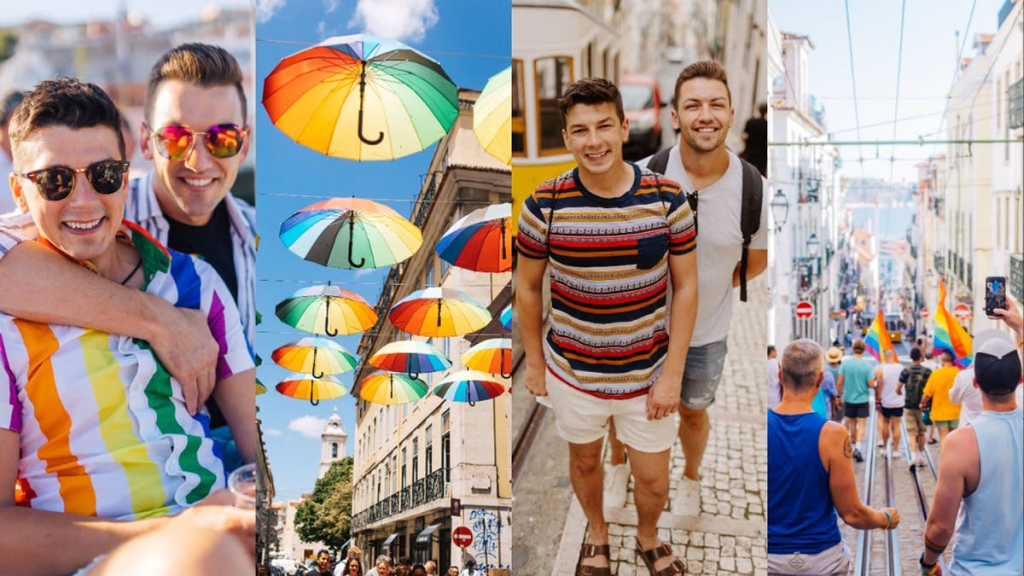
More and more LGBTQ Americans are choosing to move abroad—and Portugal is rising to the top of the list. In this video, we explore why Portugal is becoming a haven for LGBTQ individuals seeking safety, civil rights, and a better quality of life amidst growing political threats in the United States.
From inclusive laws and national healthcare to thriving queer communities in Lisbon and Porto, Portugal offers a refreshing contrast to the increasingly hostile policies emerging in red states across the U.S. This video is part of the Flee Red States project, a movement dedicated to helping LGBTQ people identify safer, more welcoming places to live—both within the U.S. and abroad.
As the Trump administration and the Republican Party work to dismantle LGBTQ civil rights protections, Flee Red States provides tools, support, and real-world stories to empower our community to make informed decisions about relocation. Whether you’re just curious or seriously planning your next chapter, this video is for you.







 fleeredstates.blog
You must be logged in to post a comment.